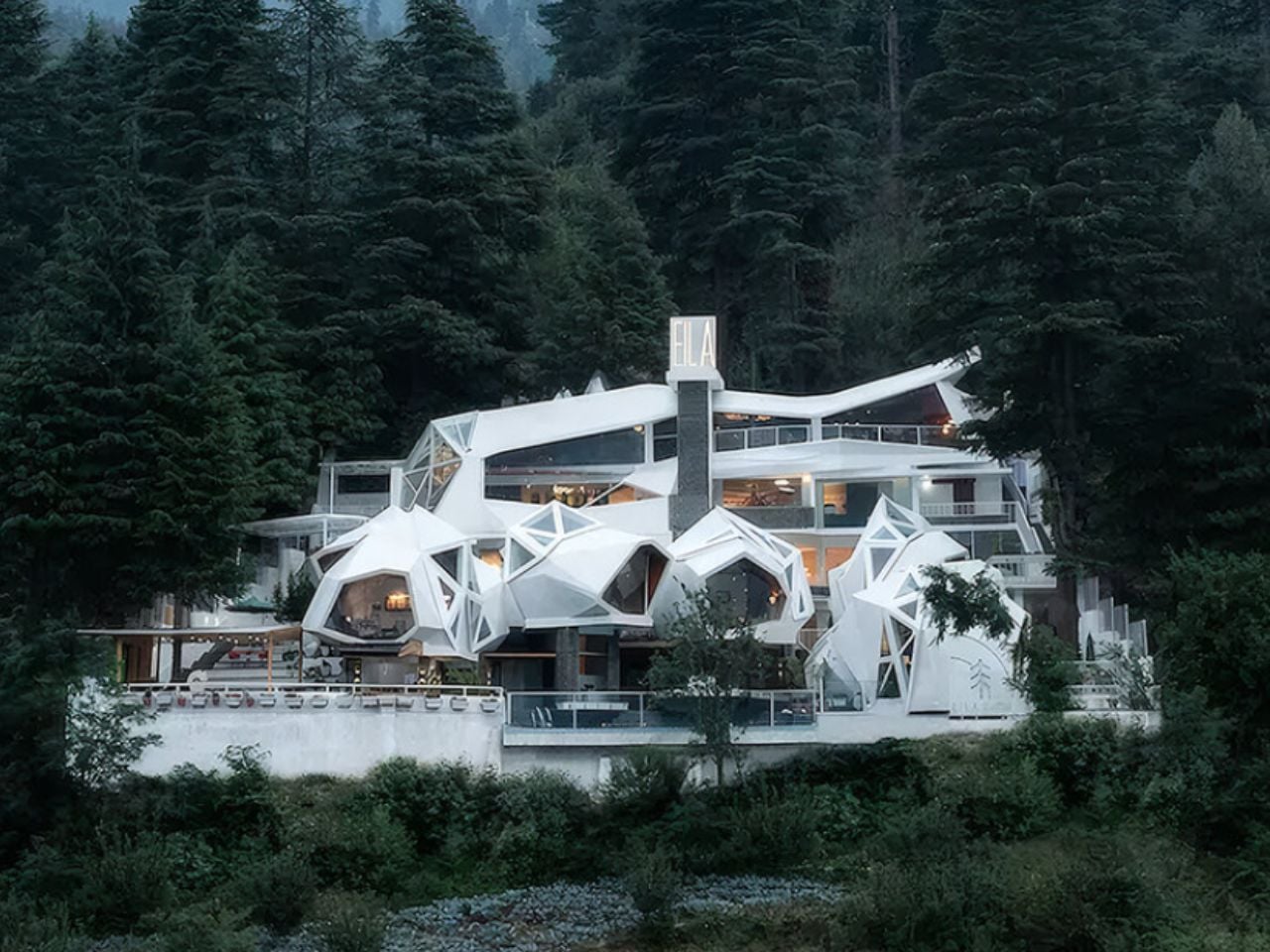
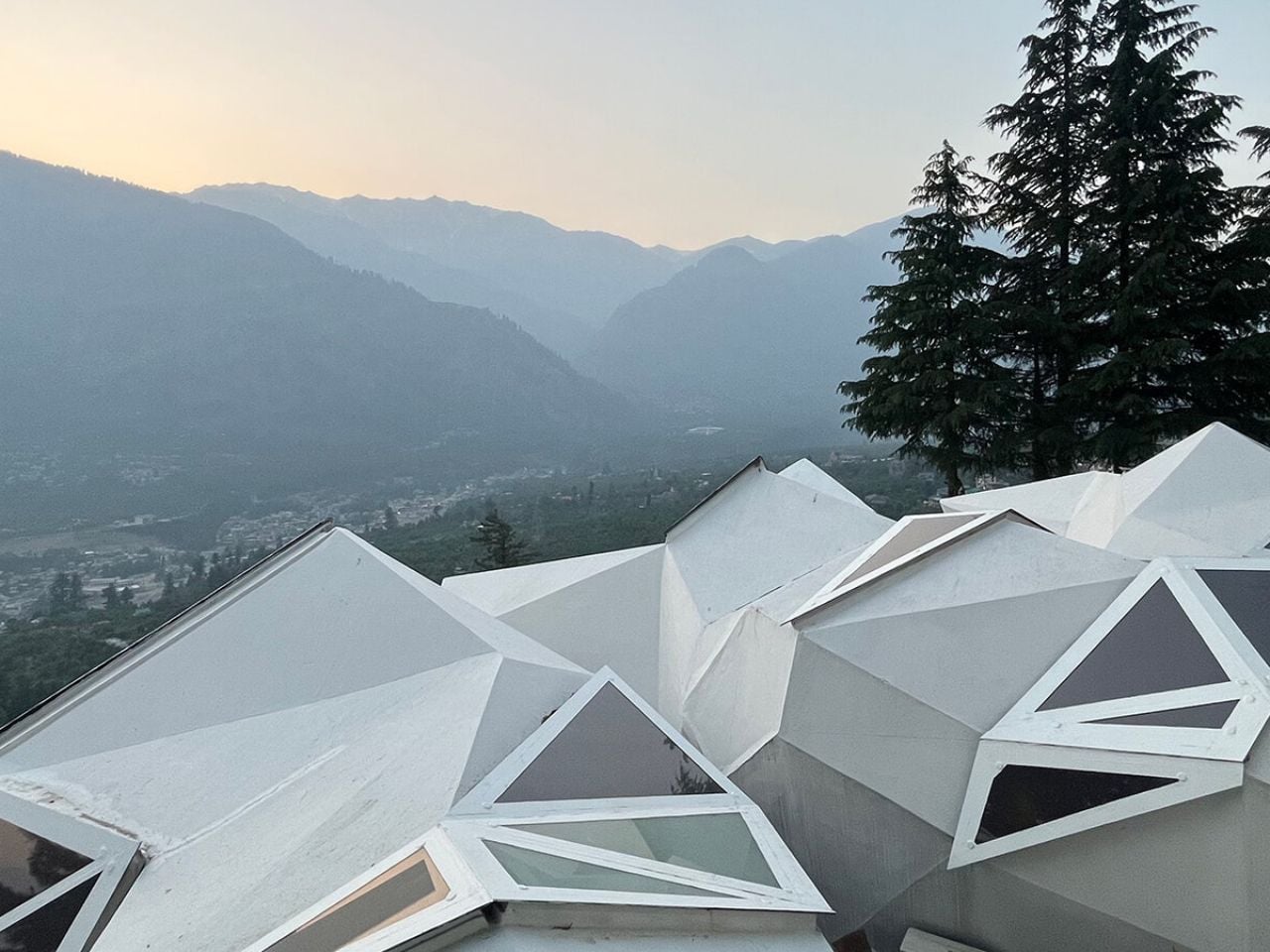
High above the Naggar valley in Himachal Pradesh, Eila reveals itself slowly. It is not the kind of resort that announces its presence with grand façades or rigid terraces. Instead, it feels as if the architecture has quietly grown out of the mountainside. Soft, organic forms follow the contours of the land, echoing the rhythms of the terrain rather than resisting them. Designed by MOFA Studio, the art retreat treats architecture as a natural extension of the landscape. Shaped through advanced computational design, the cottages respond to the slope, the light, and the horizon, creating spaces that feel less constructed and more discovered.
The masterplan follows a stepped strategy that respects the steep terrain. Rather than flattening the hillside, the retreat is organized as a gentle terraced descent that preserves topsoil and natural rainwater paths. This decision is both ecological and experiential. It protects the site while also shaping the visitor’s journey. The sequence begins at the Gate of Confluence, a stone inscribed pavilion that marks the transition into Eila’s creative world. From here, the path moves gradually downward through shared and quiet spaces, allowing art, landscape, and architecture to unfold together.
Designer: MOFA Studio
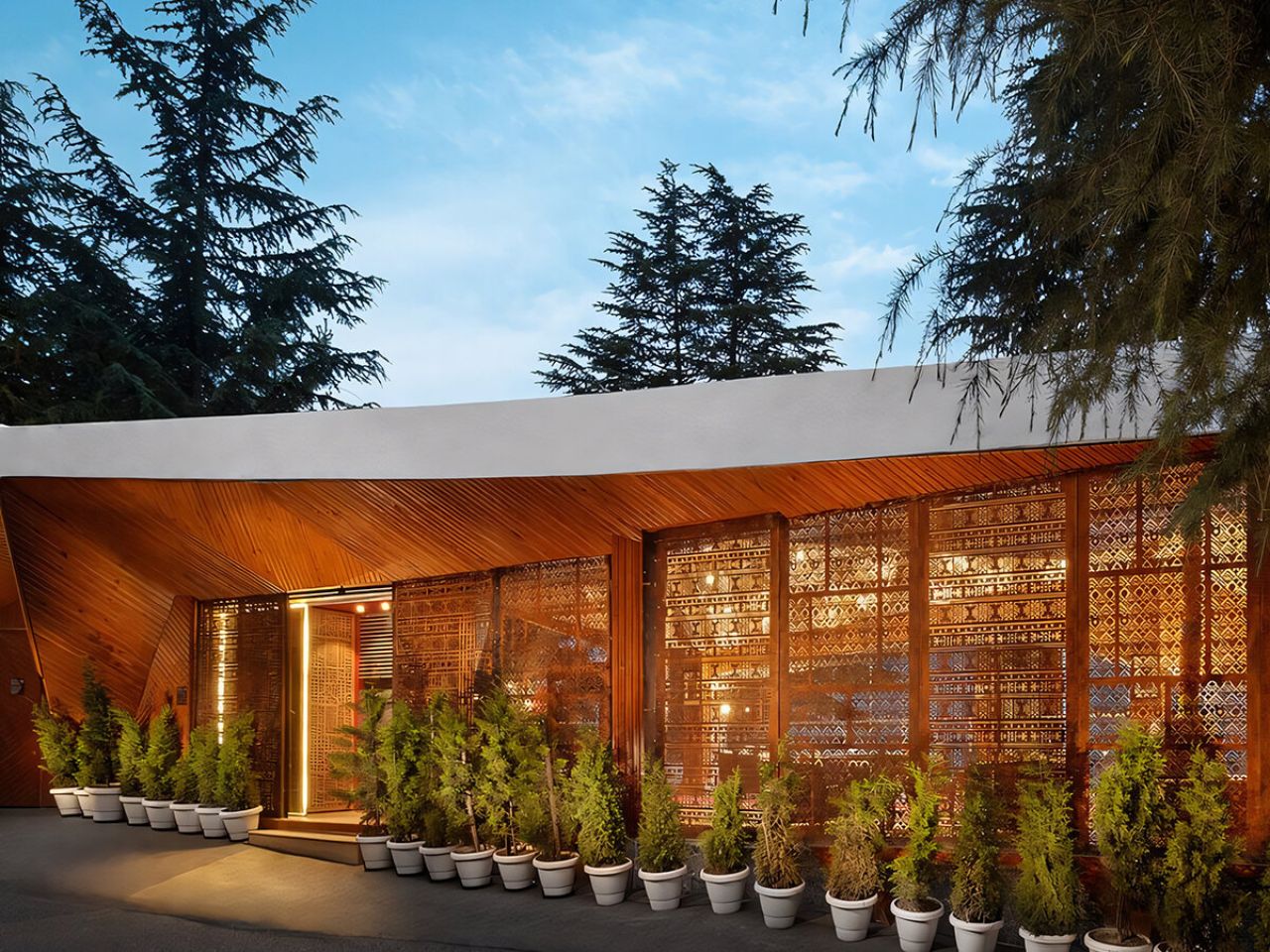
MOFA Studio, founded in 2007 by architect Manish Gulati, approaches design through what it calls a five-dimensional framework: spatial, ecological, social, temporal, and systemic fluidity. At its core, this philosophy places life before form. Buildings are meant to adapt to their context rather than impose themselves upon it. At Eila, this thinking is supported by the use of artificial intelligence as a creative collaborator. Working alongside a research-driven team, AI tools help refine structural and environmental performance, while the final decisions remain guided by human intuition. The project reflects almost two decades of the studio’s exploration into systems-led, non-conformist architecture.
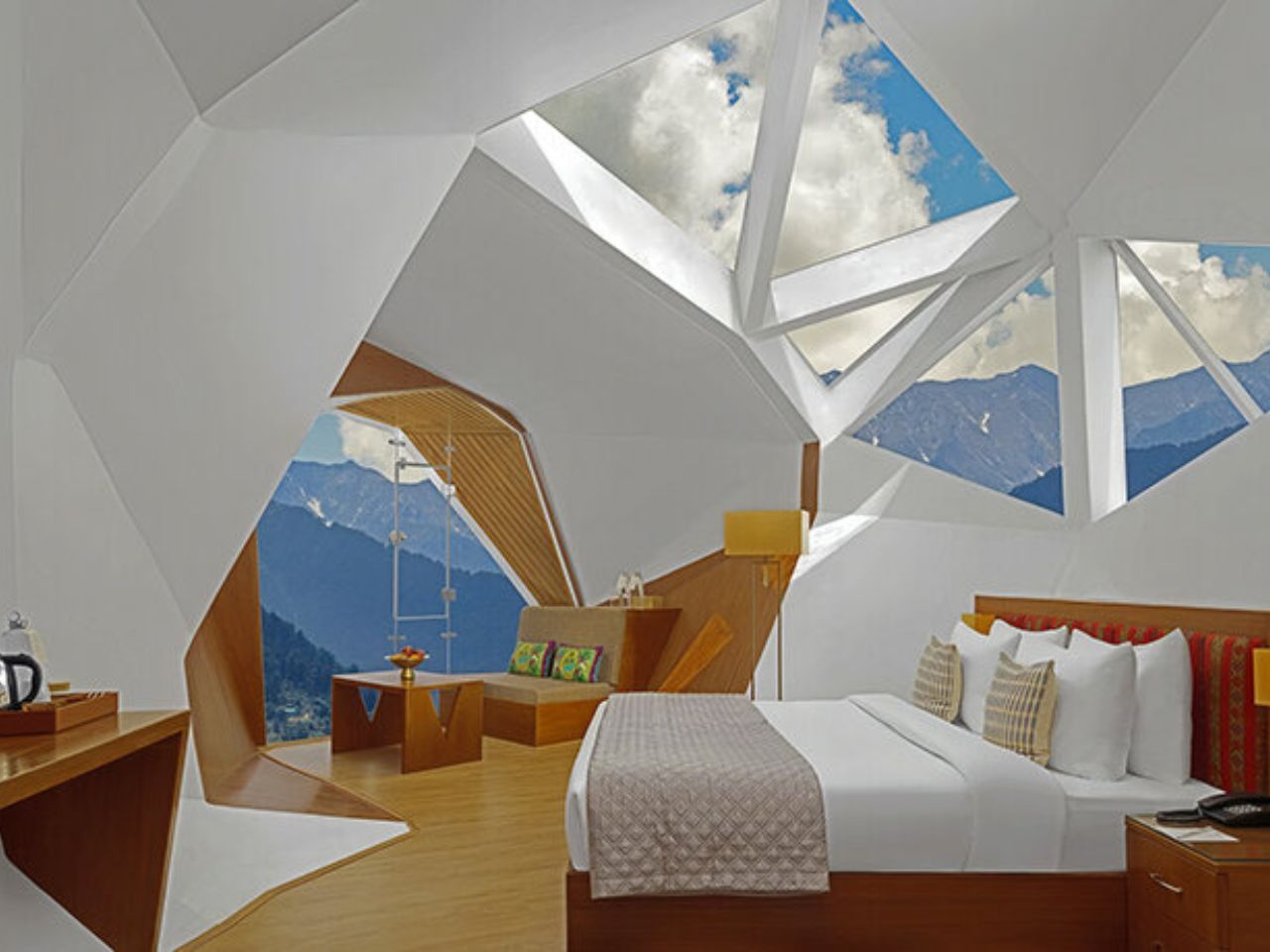
The most distinctive element of Eila is its biomorphic shells. These pod-like cottages, built from lightweight steel frames and thin concrete shells, are designed as insulated enclosures that reduce energy demand while keeping the overall footprint low. Their rounded forms are structurally efficient and visually subtle, allowing the retreat to blend into the sensitive Himalayan setting. Each cottage is carefully placed to capture wide, uninterrupted views of the valley, turning the mountains into an ever-changing backdrop.
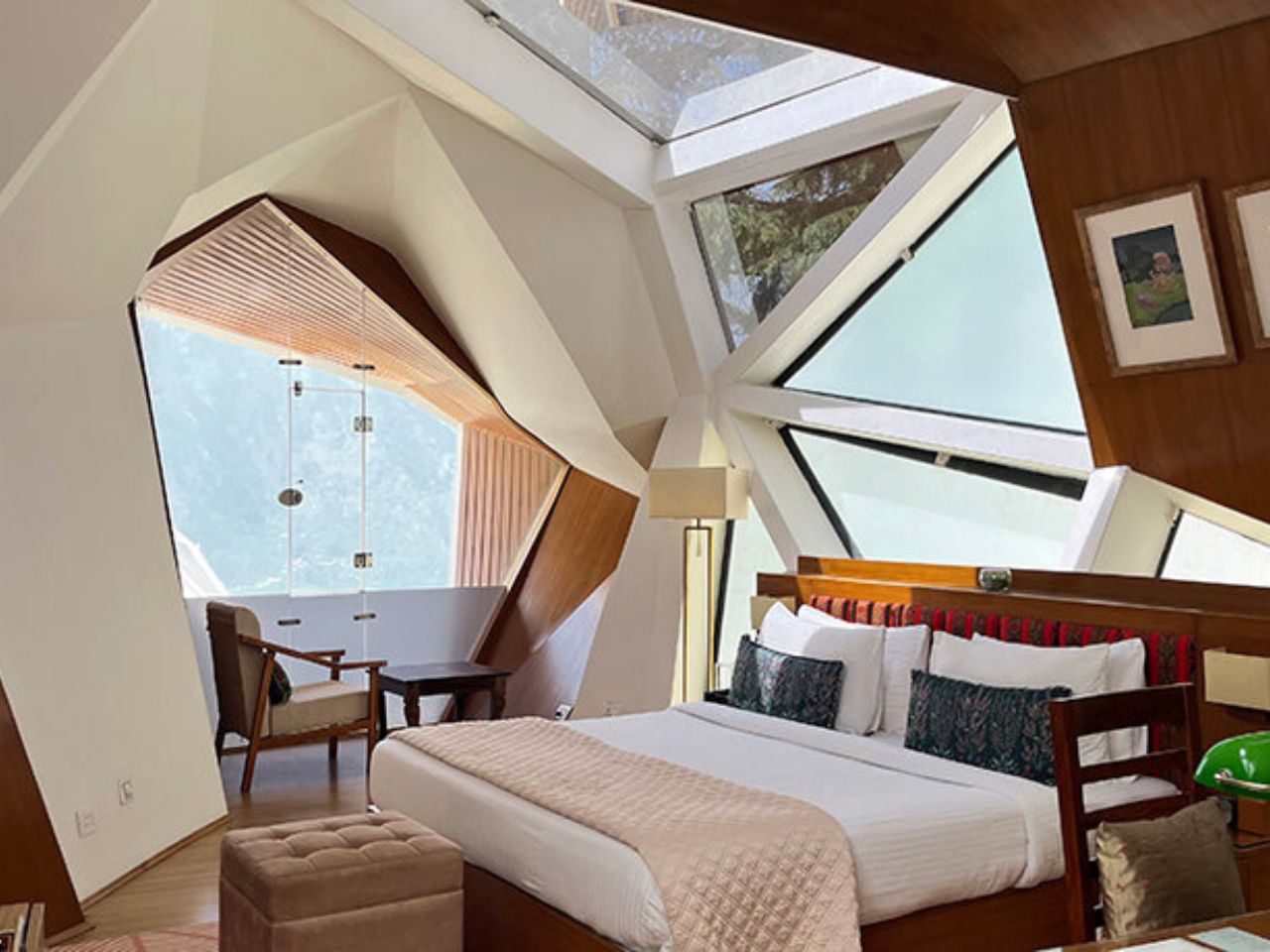
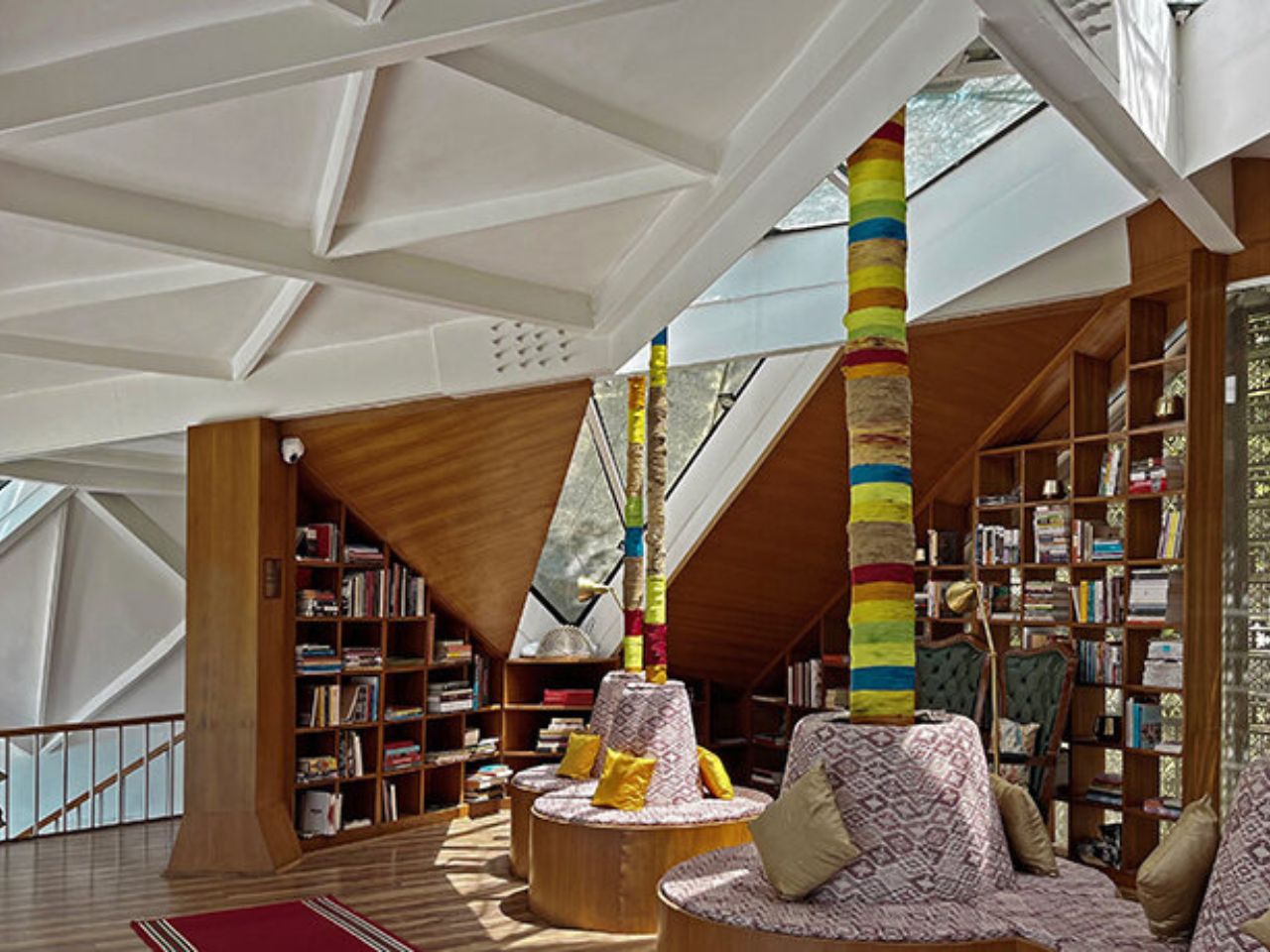
Openings throughout the architecture are treated as visual instruments rather than just windows. Skylights and apertures are positioned to draw the landscape deep into the interiors. From almost every angle, the valley appears framed like a living mural. Light, shadow, and scenery become part of everyday life, keeping the architecture in constant dialogue with its surroundings.
At Eila, art is not treated as decoration but as the foundation of the experience. Under the art direction of client Shri Rama Shankar Singh and his daughter Palak Singh, creativity is woven into daily rituals. One of the first spaces visitors encounter is the Kitaabkhana, a library where light filters softly through jaali screens and embroidery frame lamps. Communal areas such as the open-air amphitheatre and the heated infinity pool are aligned with the horizon, allowing social activity to merge with the vastness of the valley. Even the masterplan is presented as an artwork, reinforcing the idea that art, architecture, and life belong to the same continuous field.
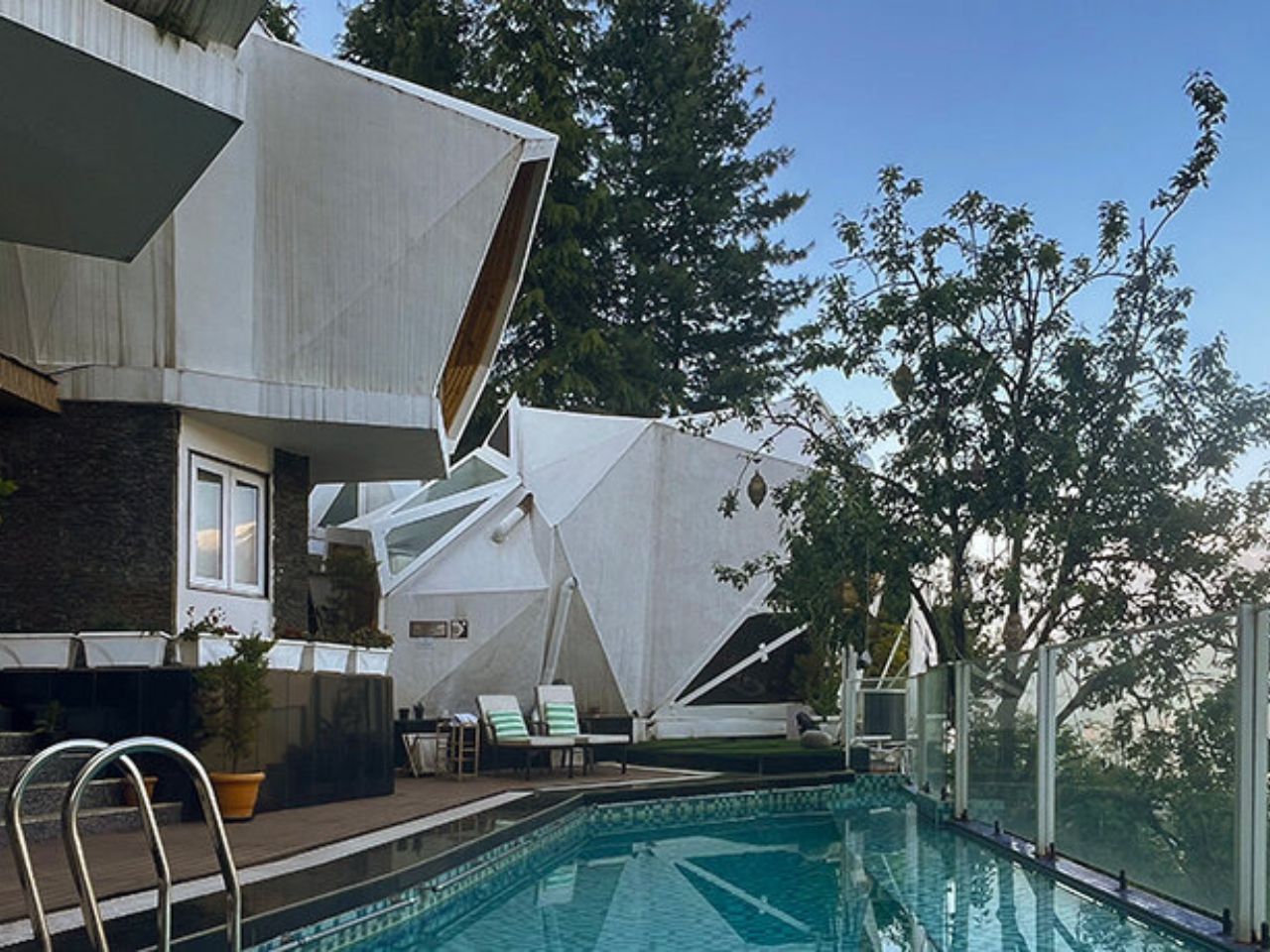
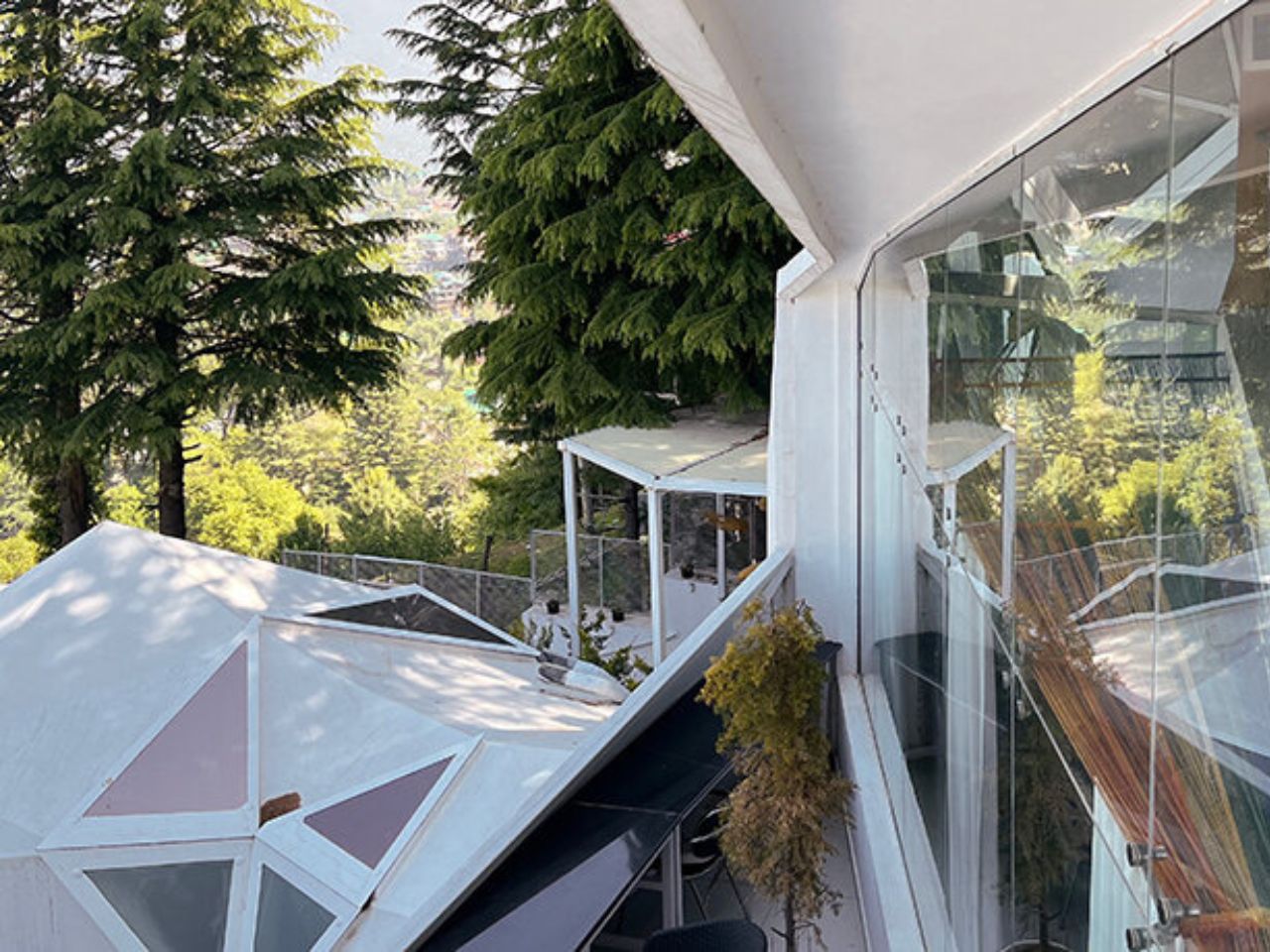
Material choices further ground the project in its context. Much of the construction relies on locally sourced materials, reducing transportation emissions and supporting regional building practices. The lightweight frame and thin shell system use less material overall, helping the retreat remain visually quiet against the Himalayan backdrop. Over time, the concrete shells are intended to host local vegetation, gradually blending into the ecology around them. In this way, the architecture is not seen as a finished object, but as something that evolves with the landscape.
Eila is the result of a twenty-year collaboration between Manish Gulati and Shri Rama Shankar Singh. It represents a long process of questioning, refining, and aligning form with place. Every curve, opening, and pathway reflects an effort to resonate with the history and spirit of the valley. The final result is a retreat that does not compete with nature, but settles gently into it, as if it has always belonged there.
SHARE