PROS:
- Confident design language stands out in crowded EV segment
- Spacious interior with flat floor improves daily usability
- Physical controls reduce distraction and improve driving confidence
- Fast charging capability shortens long distance travel stops
- Strong warranty coverage builds long term ownership confidence
CONS:
The electric crossover has settled into a strange kind of visual politeness. Smooth surfaces, quiet cabins, and interfaces that treat personality as noise have become the default, especially in the wake of Tesla’s influence on the category.
Hyundai’s IONIQ 5 doesn’t play that game. This is a review of the 2025 Hyundai IONIQ 5 Limited AWD, a trim that uses retro reference and daily usability as its counterpoint to the category’s prevailing minimalism. It’s using nostalgia as a design tool rather than a styling costume, borrowing the posture of the 1974 Pony Coupe Concept and re translating it through crisp surfacing, pixelated light signatures, and proportions that look more like a hatchback that grew up than a crossover that learned manners.
I spent about a week with a 2025 IONIQ 5 Limited AWD. The car’s confidence reads immediately in photos, but it lands harder in person, where the edges, the glasshouse placement, and the stance feel intentionally un typical for this segment.
Exterior form language
From a distance, the silhouette does most of the work. The long wheelbase stretches the car low, and the greenhouse sits rearward enough that the roofline feels fast without chasing coupe cosplay.
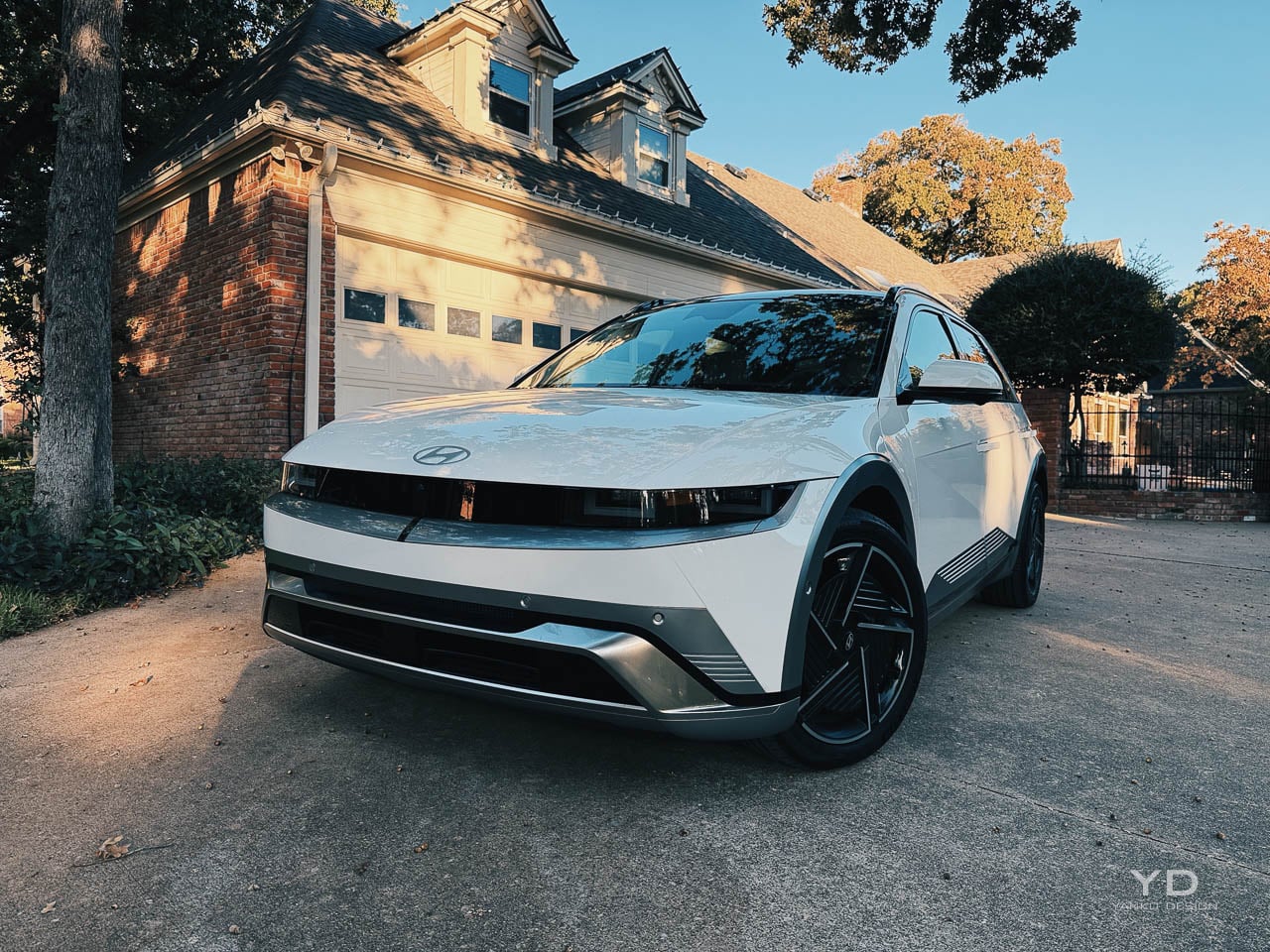
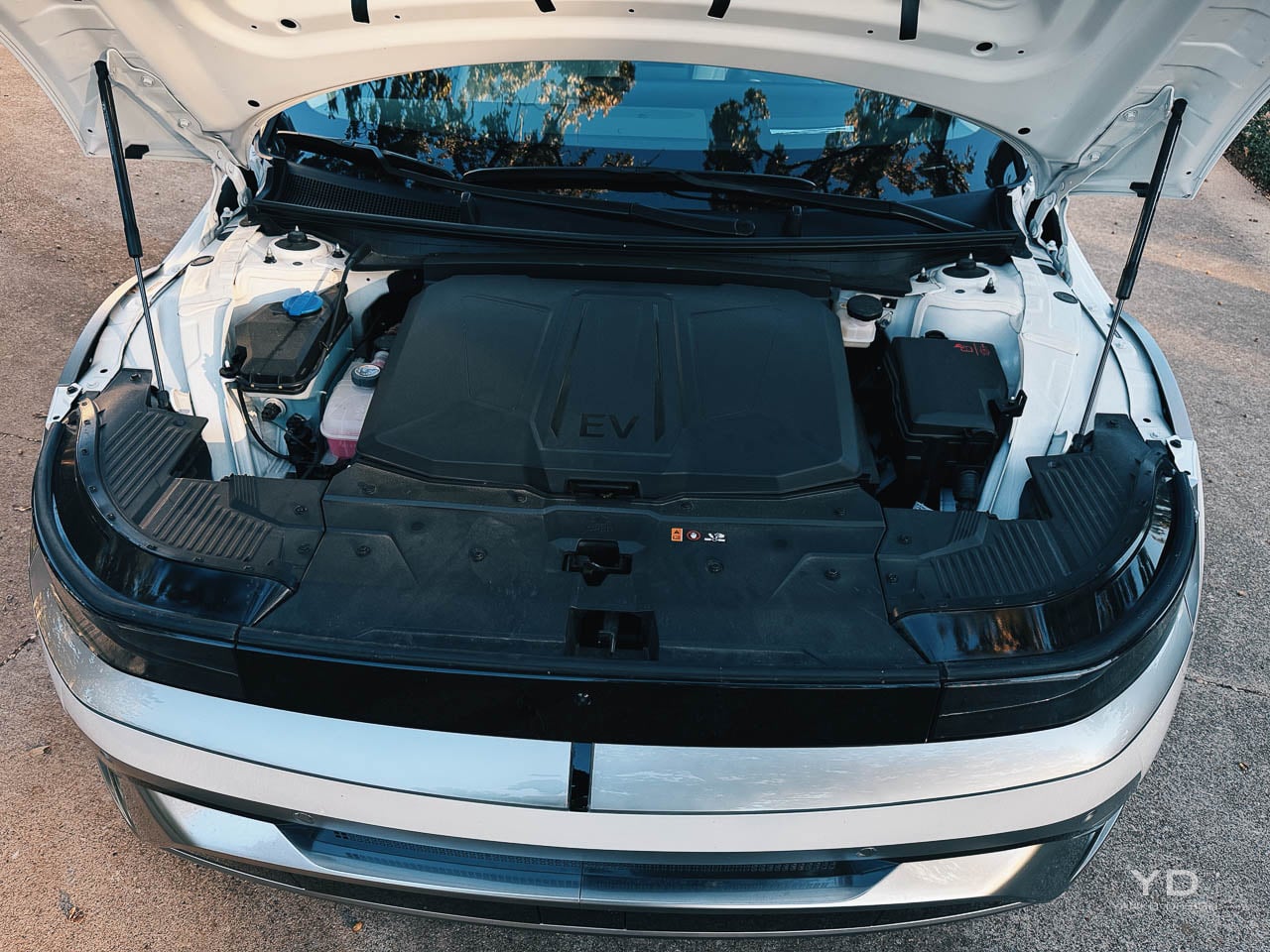
The clamshell hood is a smart visual move because it makes the front end look uninterrupted, almost like a single pressed sheet pulled tight over the architecture. It’s also a practical one, since the panel gaps are cleaner than you expect from a mass market EV.
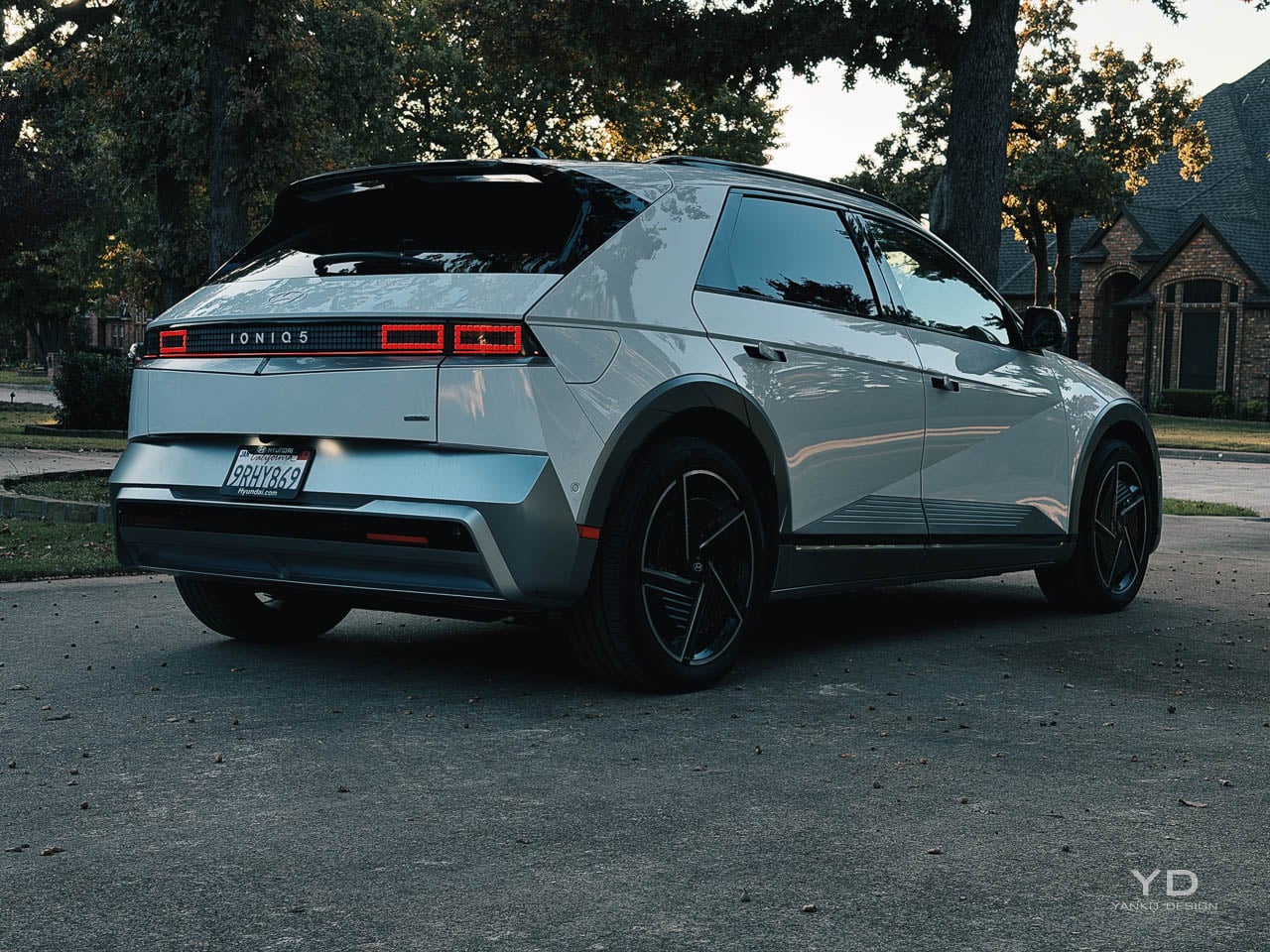
Parametric Pixel lighting is the detail everyone remembers, and it earns that attention. The square motif gives the front and rear a kind of digital legibility, like the car is speaking in a grid rather than a curve.
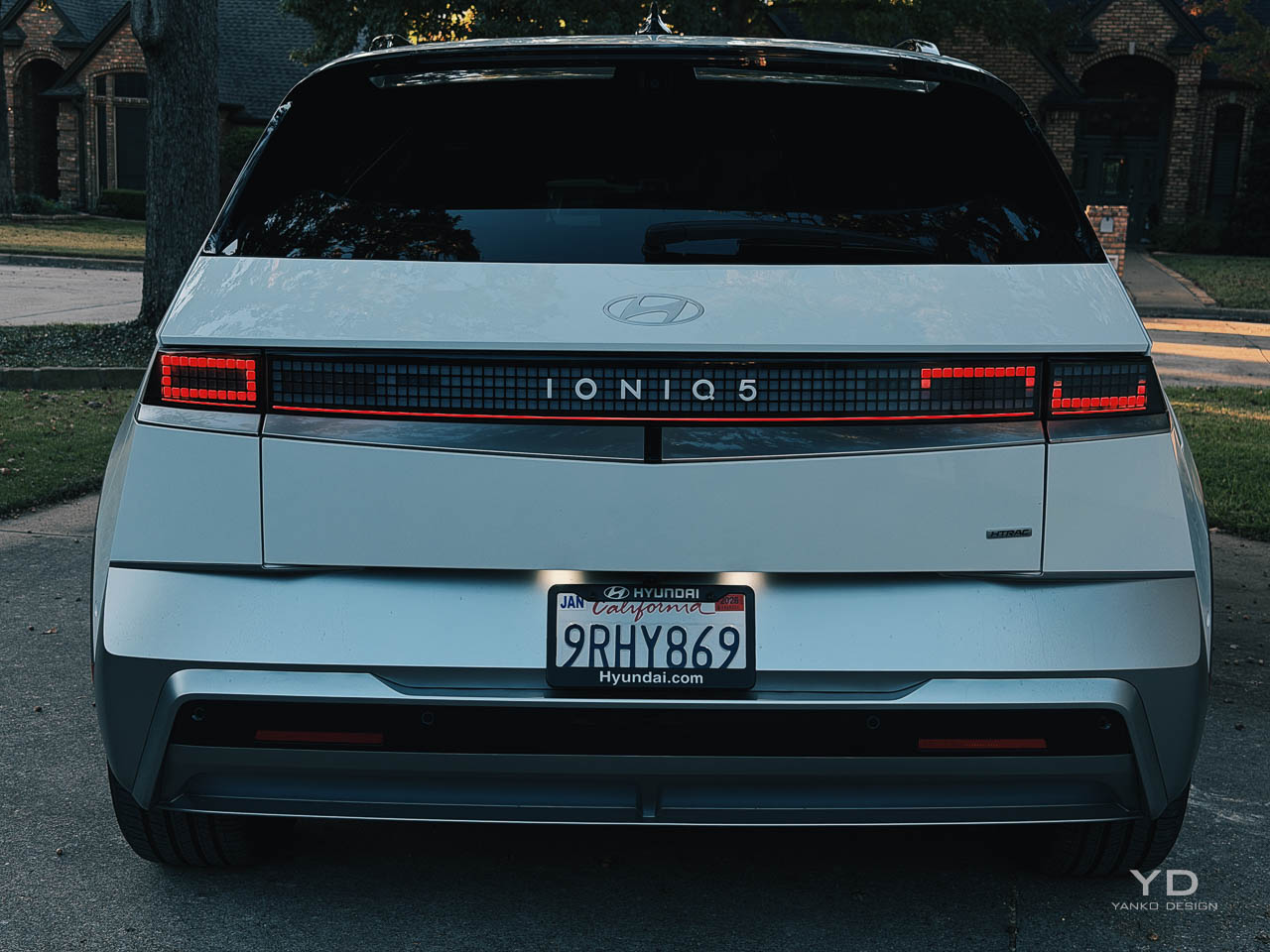
At night, the effect is crisp rather than theatrical. The sequential turn signals move through those pixel clusters with a controlled cadence that feels engineered, not animated for show.
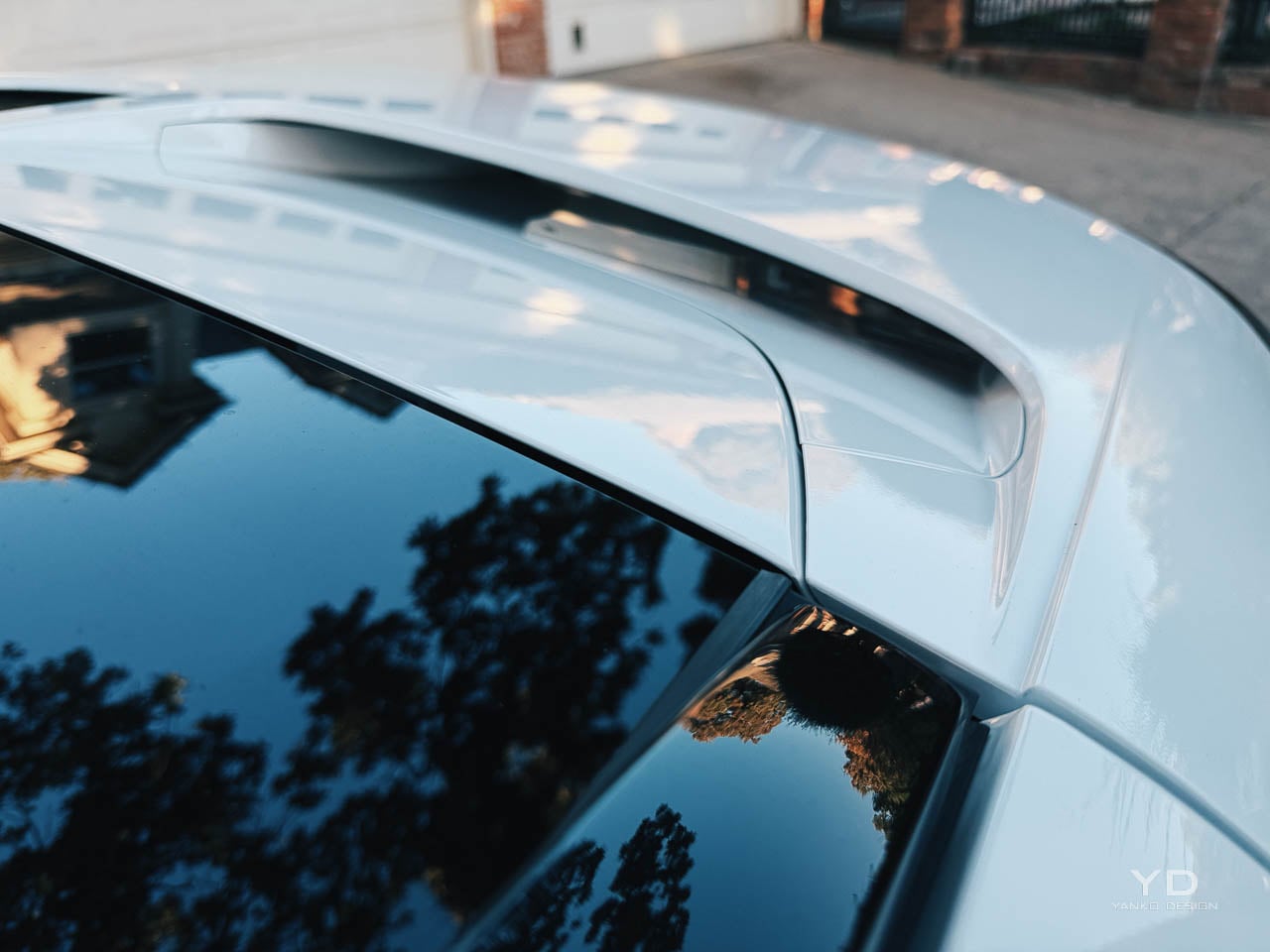
Up close, the surfacing avoids the common crossover trick of hiding bulk in soft transitions. Hyundai uses flat planes broken by sharp creases, and the light behaves differently as the car rotates through the day, which makes the body feel more intentional than most of its rounded competitors.

The 20 inch wheels on the Limited trim fit the stance well, and you feel the design priority here. More aero coverage would help efficiency, but the open, geometric wheel design matches the car’s pixel language, and that coherence matters when the whole car is trying to be a statement.
Interior architecture
The platform advantage shows itself the moment you step in. The same long wheelbase and clean exterior geometry that make the car look planted also buy you interior length, so the flat floor feels like a design consequence, not a packaging trick.
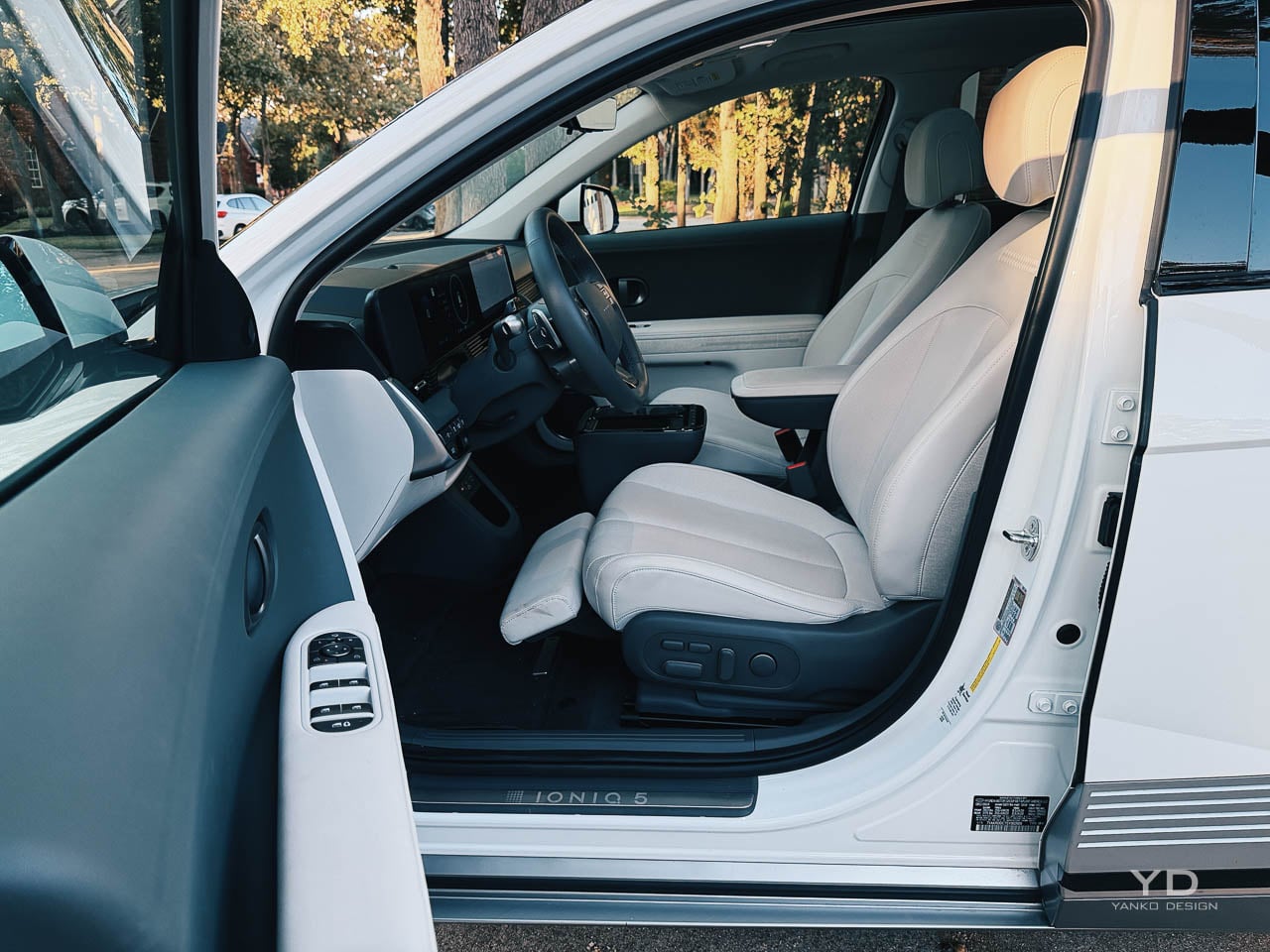
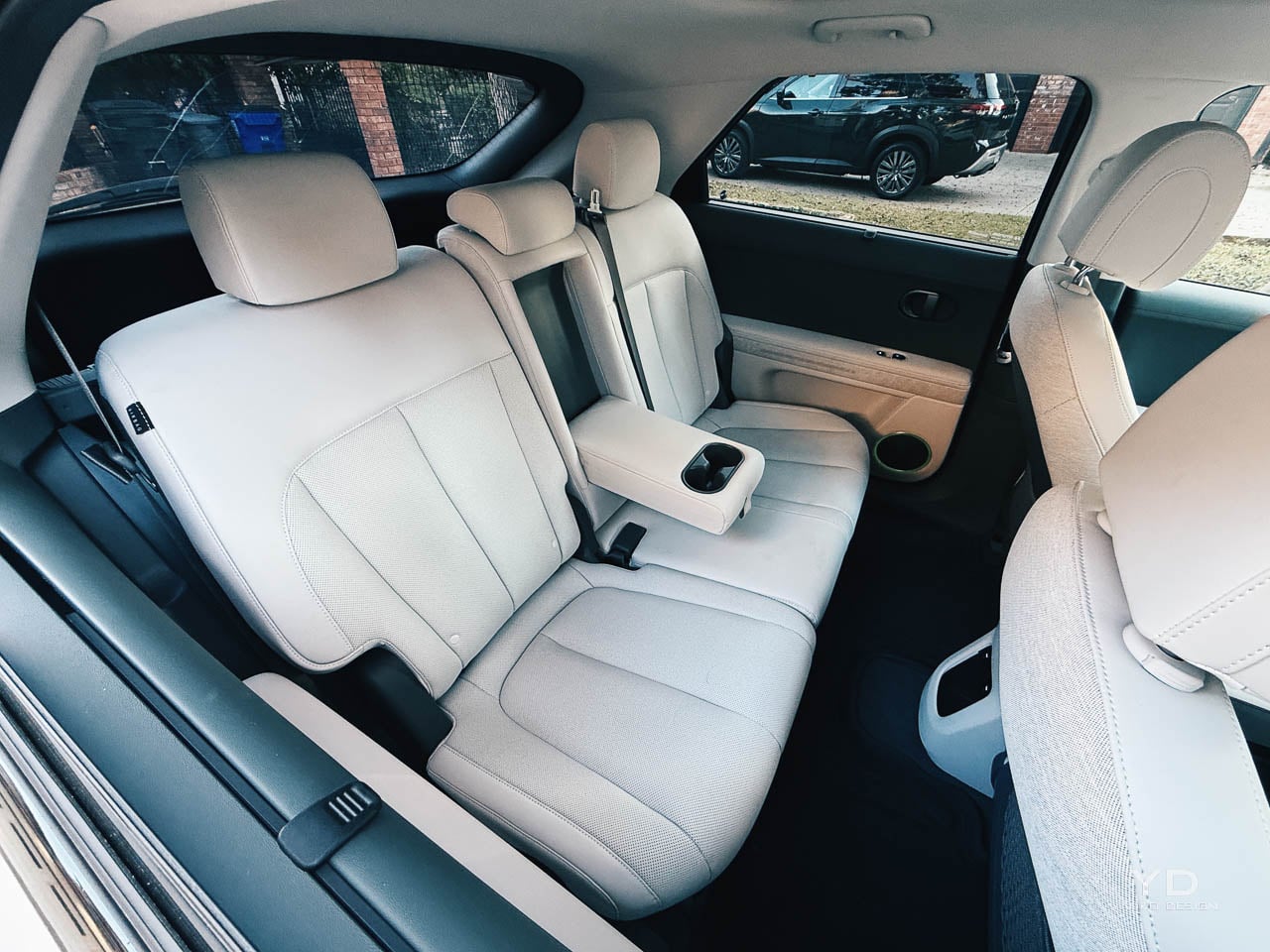
Without a tunnel, the cabin reads as a continuous volume rather than two rows of seats separated by architecture. That spatial openness isn’t just a spec sheet win. It changes posture, movement, and how the interior feels during daily use, especially when you are sliding bags around, shifting seats, or simply stretching out.
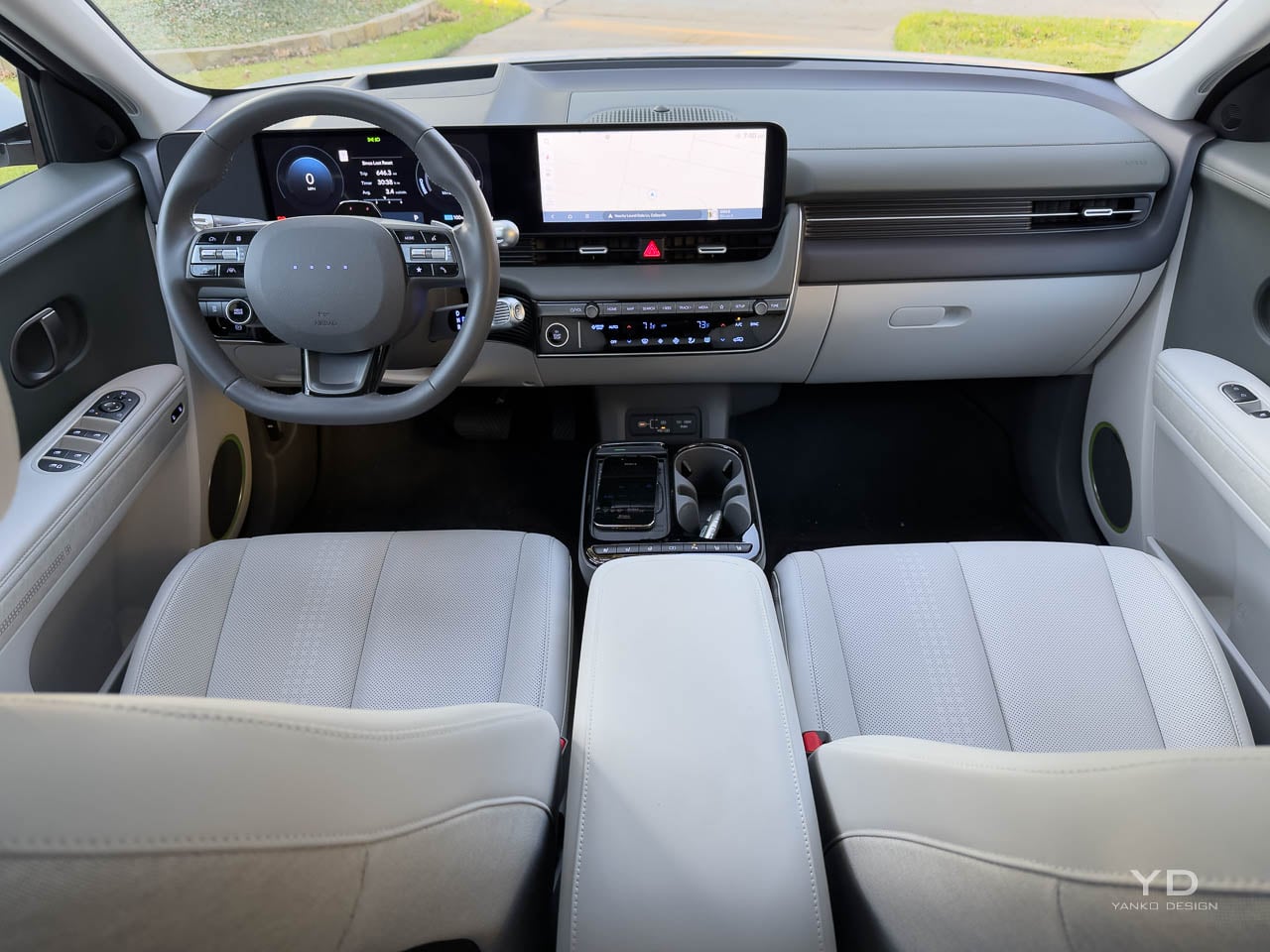

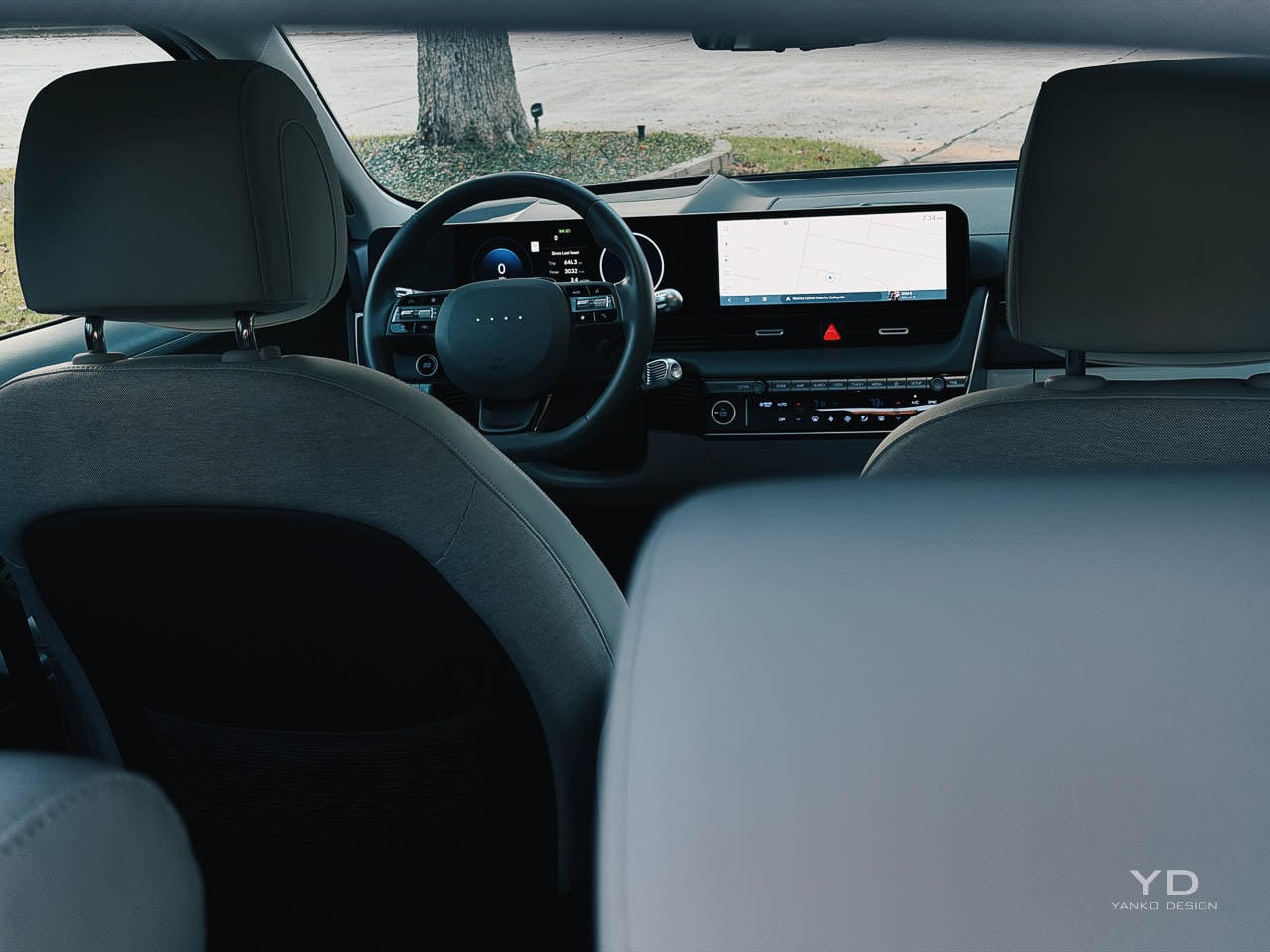
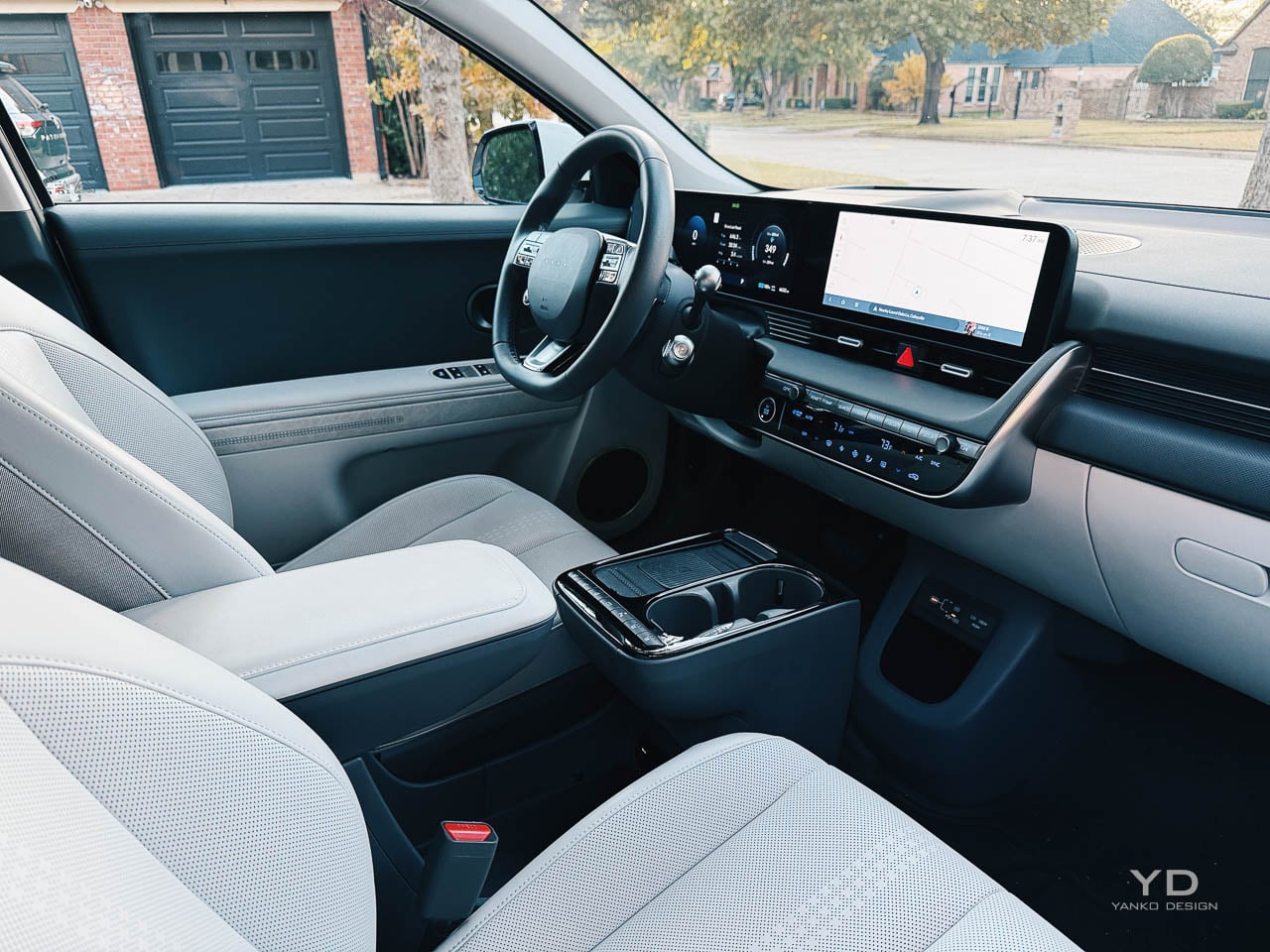
The dash is intentionally horizontal, with dual 12.3 inch displays under a single glass panel. The layout is clean, but what matters more is that it still respects how people drive, with real climate controls that don’t require you to hunt through menus.
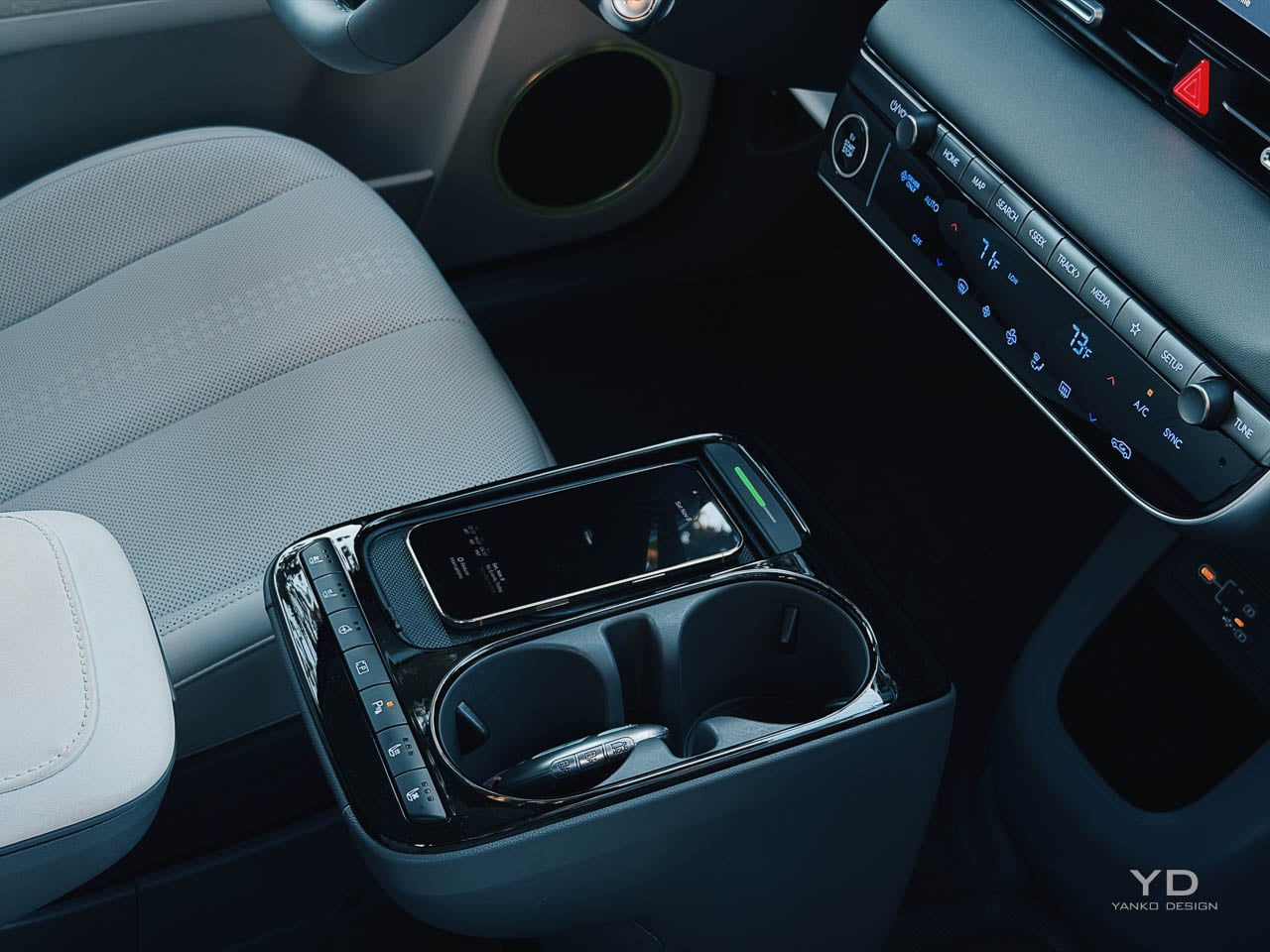
The sliding center console is a small design flex that becomes a real advantage. It lets the cabin behave like a space, not a fixed cockpit, and that matters in a car that wants to feel like a lounge without turning into a gimmick.
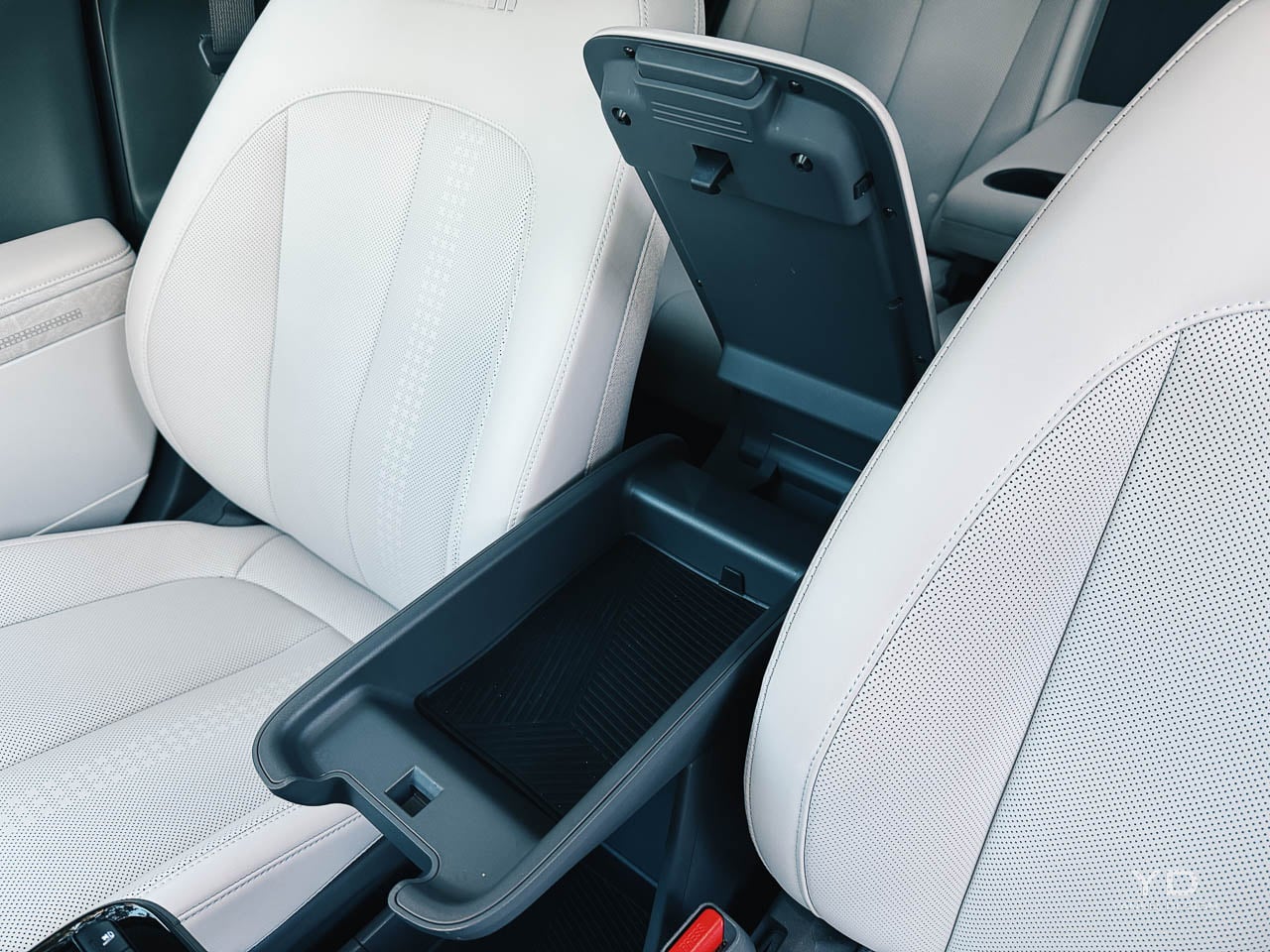
Rear legroom is one of the IONIQ 5’s quiet strengths. The long wheelbase and flat floor make the second row feel more like a class above, and the center seat does not punish you with the usual foot splay.
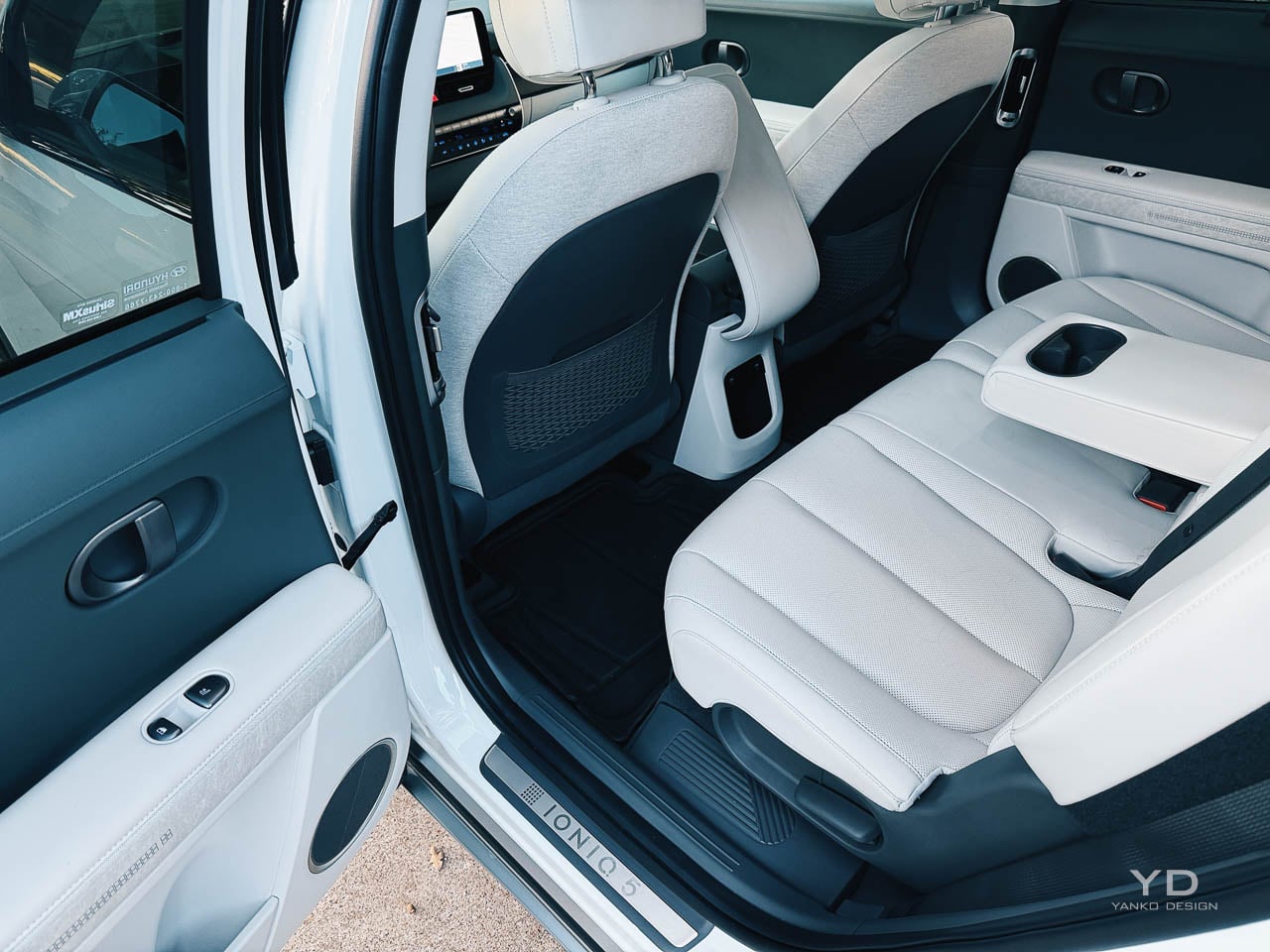
Material composition
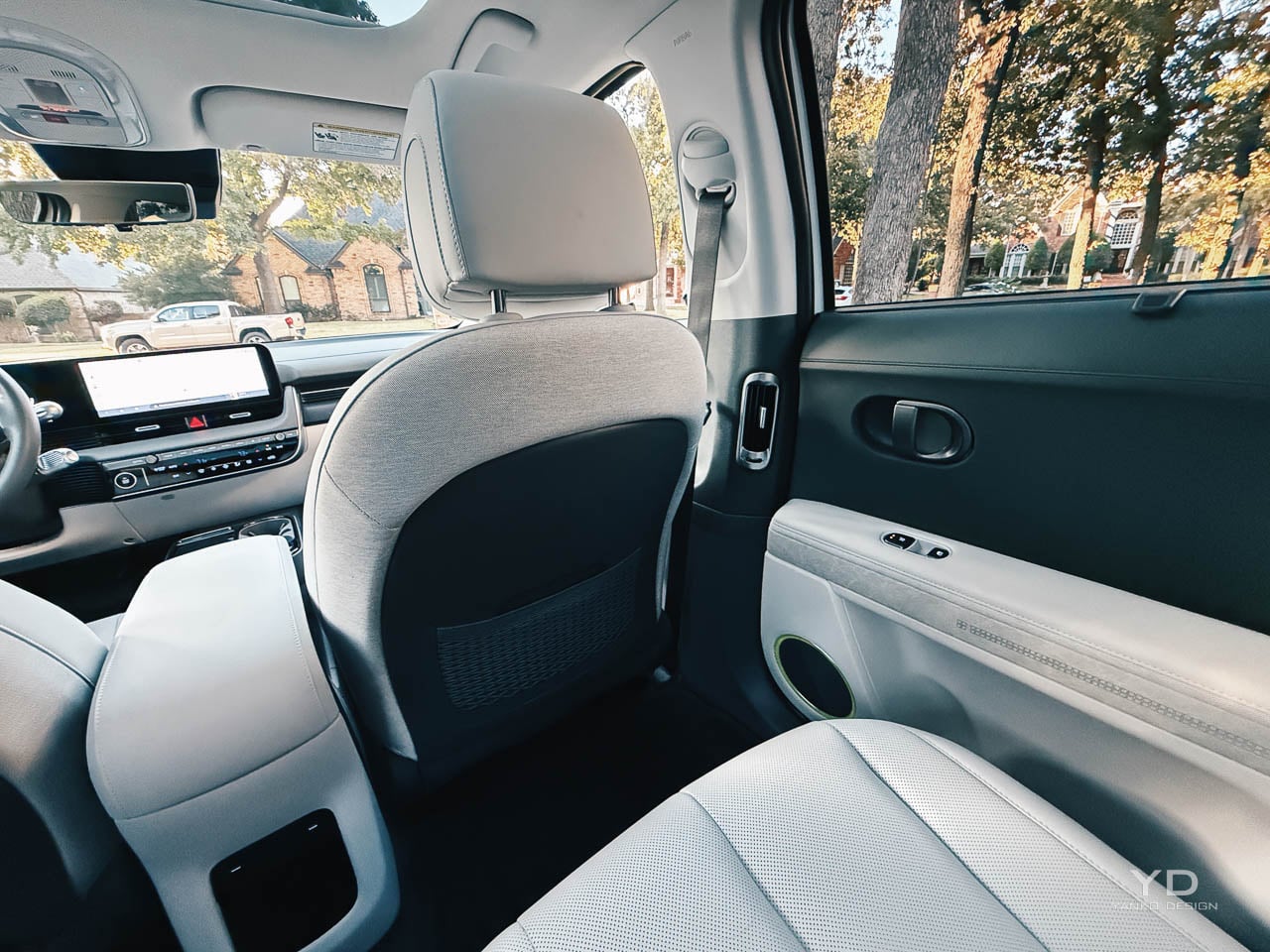
Hyundai leans into sustainable materials without turning the cabin into a sermon. Recycled and bio based inputs are present, but the car does not label itself as virtuous, which is a more confident way to do it.
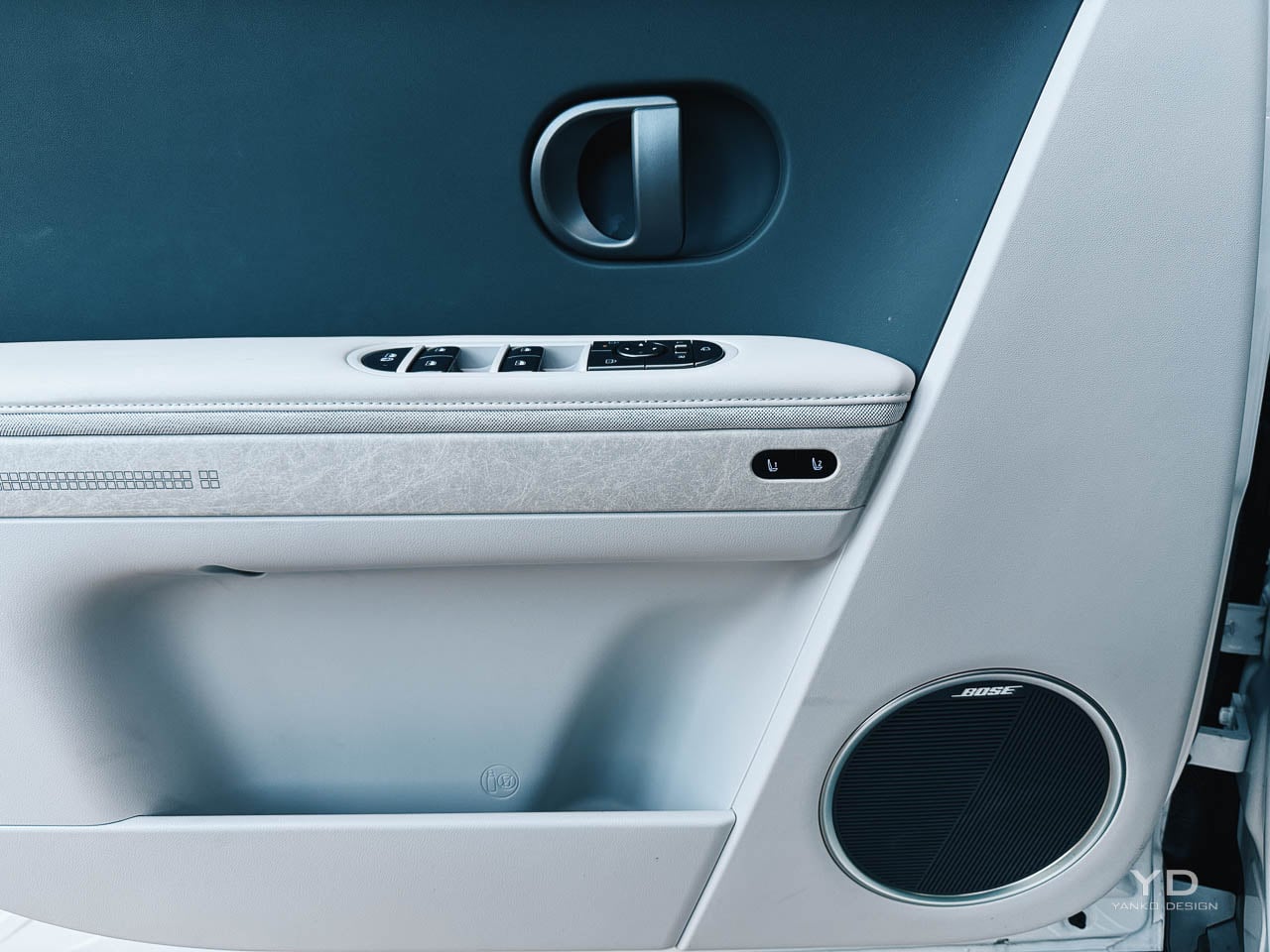
The material hierarchy feels deliberate. Soft touch surfaces land where you actually rest your hands, and harder plastics retreat to lower zones where durability matters more than theater.
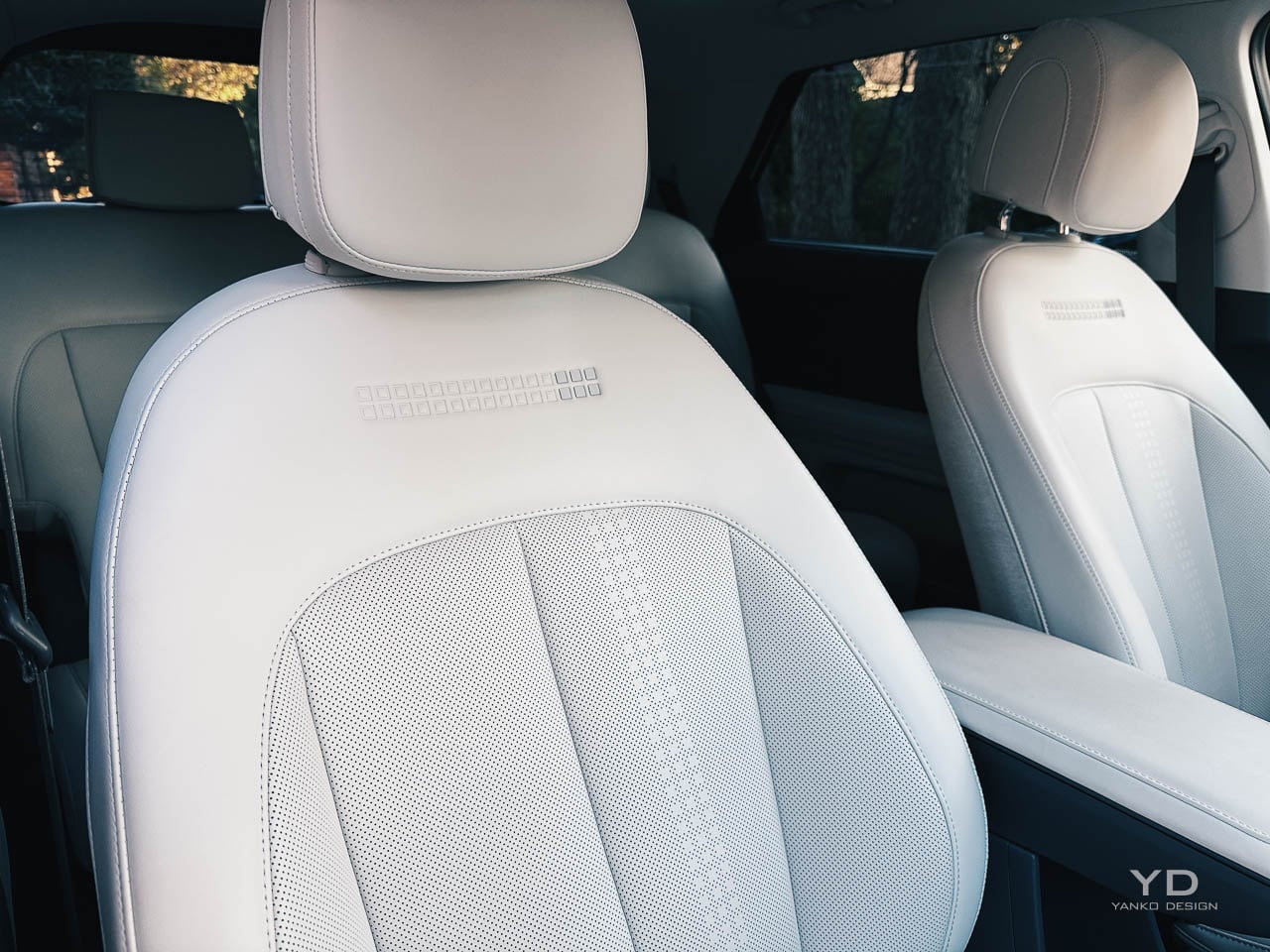
Acoustic isolation is better than you expect at highway speeds. Wind stays subdued for an upright windshield, and road texture comes through as a muted signal rather than a constant hiss, which makes the cabin feel more premium than the badge suggests.
Those material choices also set up the longer question: how well does this cabin, and the tech that lives inside it, age over years of use.
Sustainability and lifecycle
The IONIQ 5’s sustainability story isn’t only that it’s an EV. It’s also about how the product behaves across years, because electrification only feels like progress if the pack, the software, and the charging routine don’t turn into anxiety later.
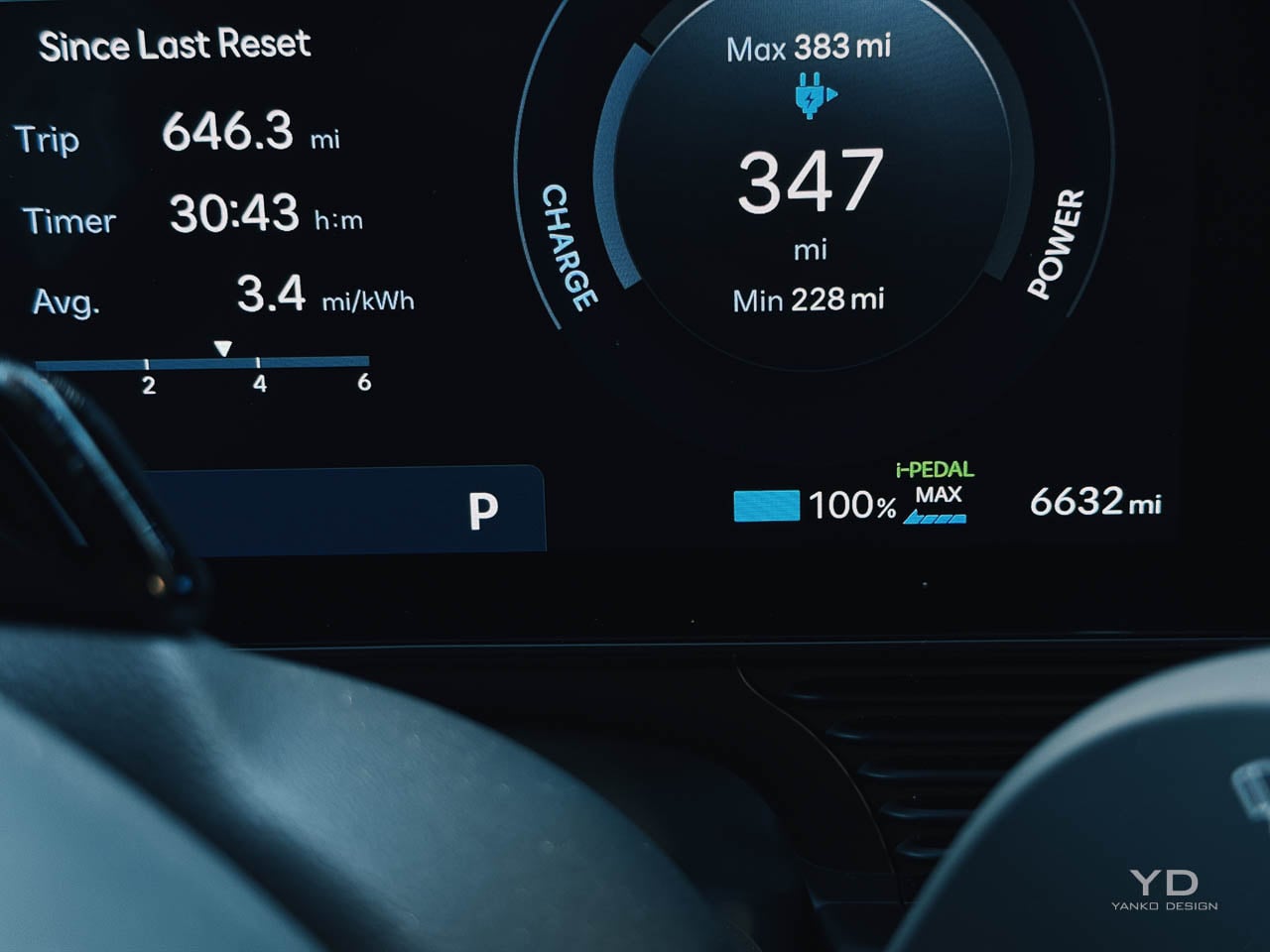
On the power side, the most important environmental benefit is simple: no tailpipe emissions during driving. The more subtle win is how regenerative braking changes the car’s energy rhythm in traffic, turning stop and go into recaptured momentum rather than pure waste.
Battery confidence is a design feature in its own right, because trust changes how you drive and how long you keep the car. Hyundai’s hybrid and electric battery warranty language sets a clear expectation that capacity will not fall below 70 percent of original capacity during the warranty period, which helps put a hard boundary around the usual degradation fear that follows EV ownership.
That’s where the cabin material story, the battery story, and the software story connect. Recycled or bio based trim is a surface level sustainability signal, but longevity is the deeper one, because a car that still feels current, quiet, and psychologically trustworthy five years in is the car that gets kept, not replaced.
In practice, this shows up in boring ownership moments. You’re juggling a commute week and a weekend trip, and you realize you aren’t bracing for a surprise range drop, a glitchy interface, or a cabin that’s started to rattle. That’s the density test. If the car stays calm when your week isn’t, it earns the right to stay in your driveway longer.
Charging also has a sustainability dimension that’s easy to ignore. Faster DC charging can reduce dwell time, but it can also encourage more frequent high power sessions. In practice, the cleanest routine is still boring: charge at home on Level 2 when you can, then treat high power charging as the travel tool, not the daily habit.
Software’s part of longevity now. Hyundai’s infotainment OTA approach, including a defined cadence of updates, is a quiet way of keeping the cabin’s interface from aging faster than the hardware, even if it isn’t the same always evolving story that Tesla sells. It isn’t about constant novelty. It’s about avoiding the kind of slow interface decay that makes a cabin feel old before the materials wear out.
Technology integration
If sustainability is partly about how long the car stays pleasant to use, the interface matters. The interface design is clean in the way Hyundai usually is. The instrument cluster prioritizes range and speed clearly, and the center screen uses a tile logic that responds quickly without feeling like it’s trying to be a phone.
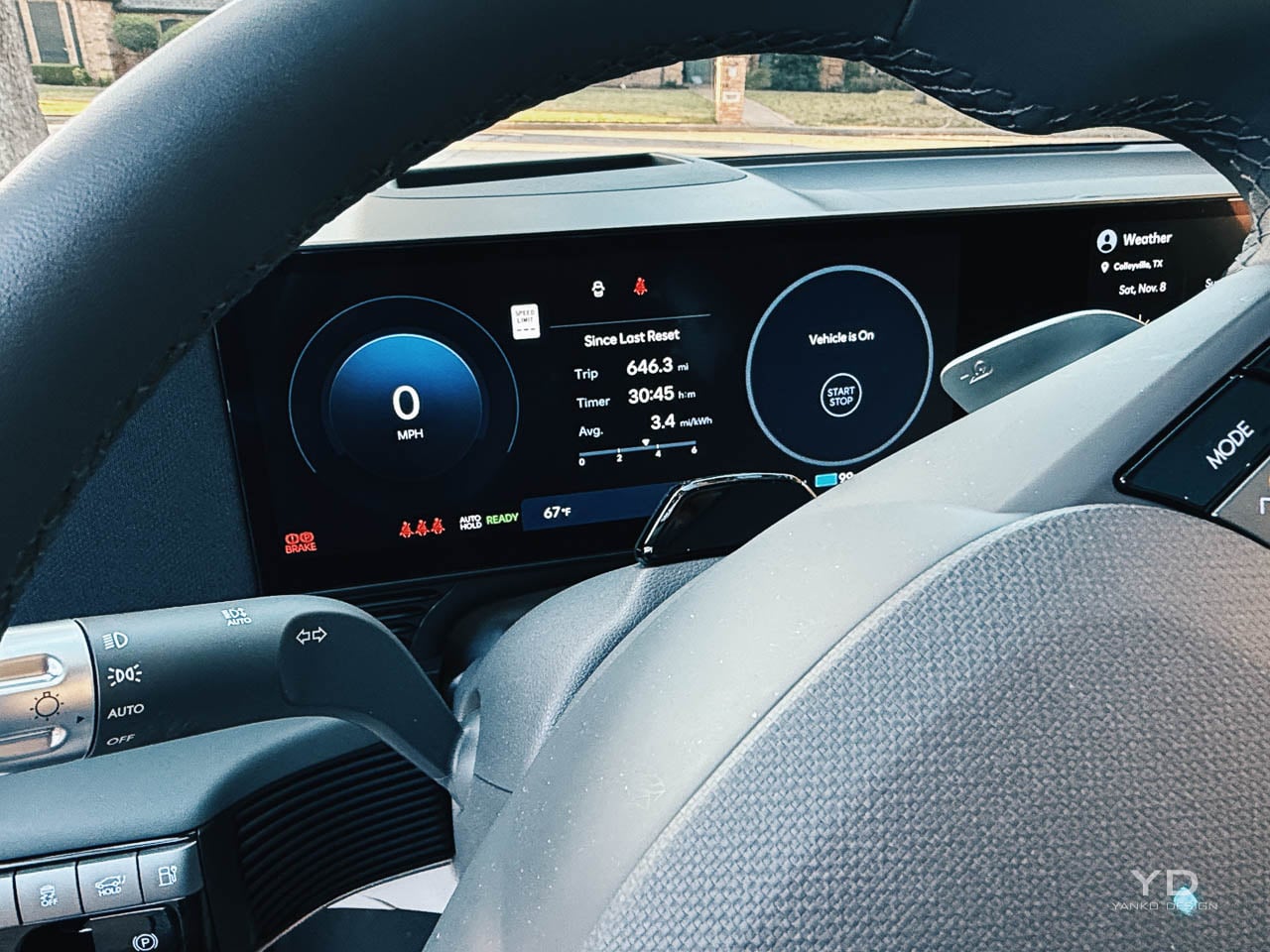
There’s a quiet design decision here that reads better the longer you live with it: the screens don’t try to replace the cabin, they support it. That restraint reduces cognitive load in motion, and it keeps the interior from feeling like a tablet that happens to have seats.
The interesting implication is that the IONIQ 5 can feel modern without demanding constant attention. You spend less time managing the interface, and more time noticing how the space actually works.
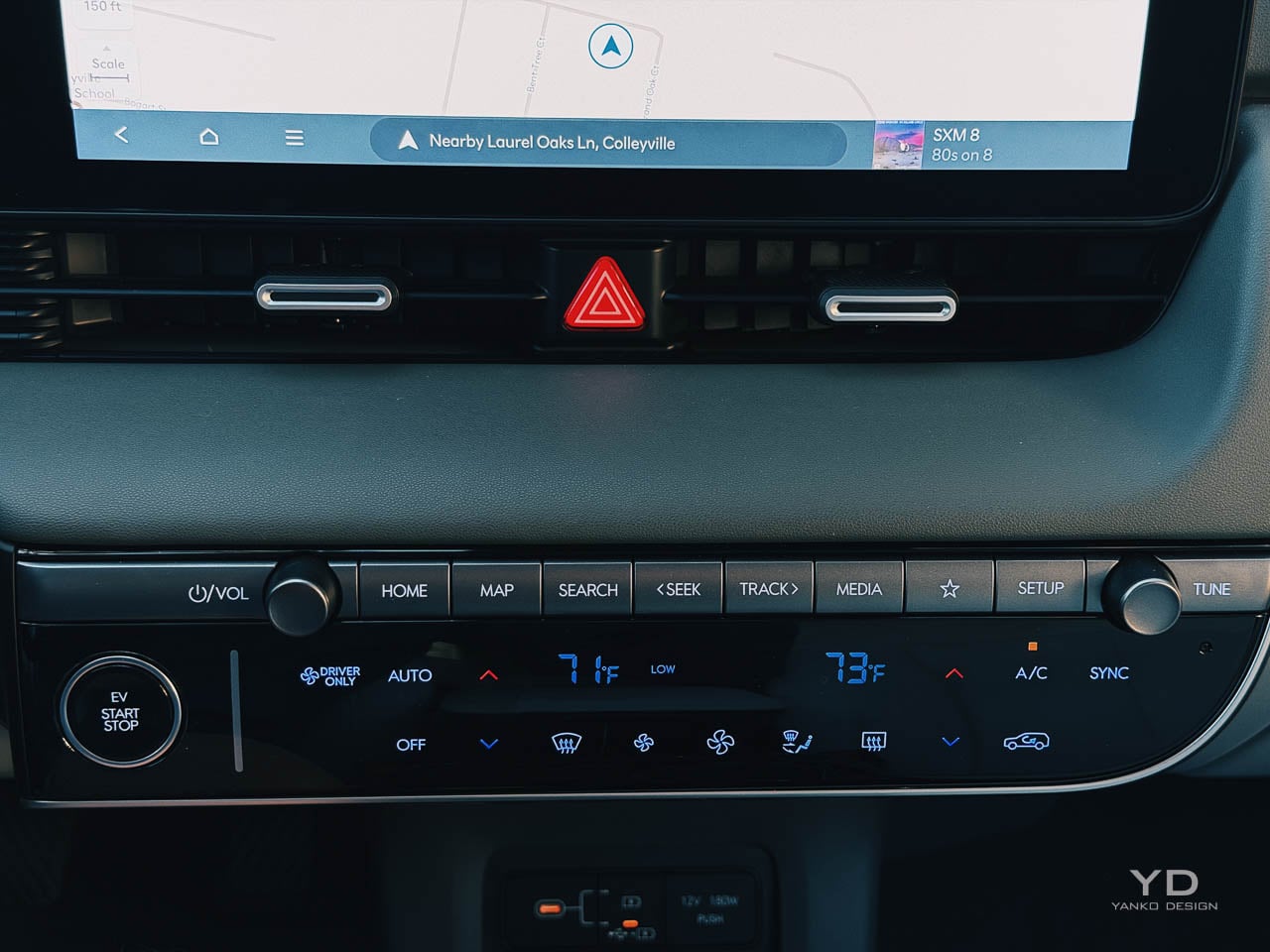
The best part is still the decision to keep key functions physical. Climate toggles give you tactile confirmation, and volume control stays a knob, which means your muscle memory can do its job.
BlueLink remote functions are useful rather than exciting. Pre conditioning and charge management work reliably, but the software experience doesn’t feel like the reason you buy the car, which is a compliment in a segment where infotainment can become the whole personality.
Over the air updates exist, but they don’t define the ownership story the way they do with Tesla. The IONIQ 5 feels finished at purchase in a traditional sense, which some buyers will prefer, and others will see as less future proof.
Powertrain character
The Limited AWD’s dual motor layout delivers power in the way modern EVs usually do: immediate, quiet, and oddly composed even when you floor it. The acceleration is the kind that makes merges feel casual rather than dramatic.
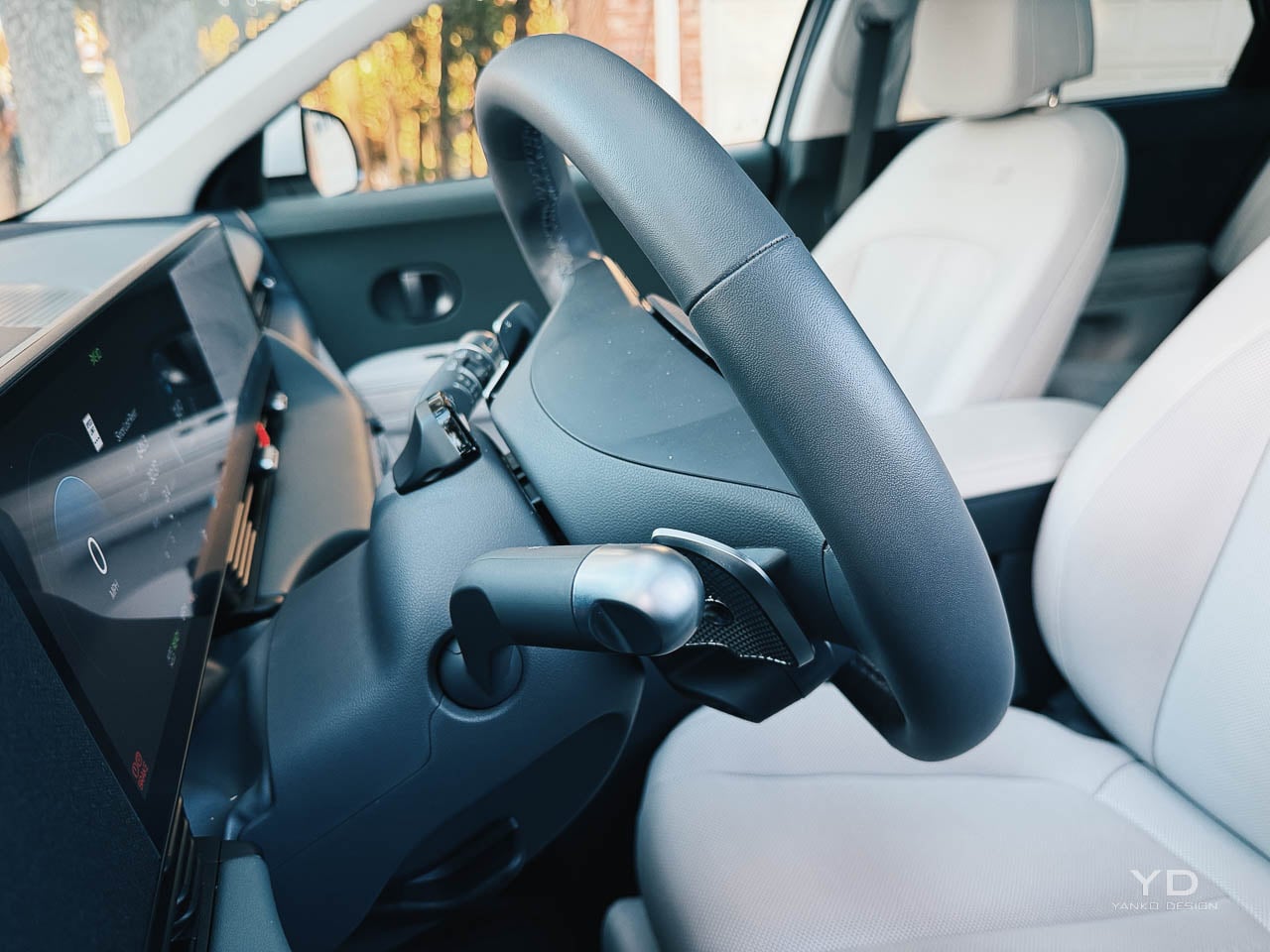
Regenerative braking control through steering wheel paddles is a good piece of interaction design. You can tune the car from near coasting to one pedal driving quickly, and the strongest setting becomes natural once your foot stops expecting engine braking cues.
Brake feel is a small but important confidence marker in a heavy EV. The pedal stayed consistent rather than turning mushy after repeated stops, and that steadiness pairs well with the regen paddles, because the car stops feeling like a computer negotiating with your right foot and starts feeling like a tool you can place precisely.
Daily reality
EPA range numbers are always conditional, and the IONIQ 5’s no different. Hyundai lists the 2025 IONIQ 5 Limited AWD at an EPA estimated 269 miles on a full charge, while other drivetrains reach as high as 318 miles, depending on trim and configuration.
Speed, temperature, climate settings, and wheel choice can all move the real number in ways that matter on a trip.
In my time with the car, steady highway driving at typical interstate speeds pulled the effective range down noticeably, while city driving benefited from regen and felt closer to the optimistic story. That swing is normal, but it is worth stating plainly because it changes how you plan charging.
The lived part is the mental math. You start glancing at the next stop earlier than you think you will, then you settle into a routine where you treat home charging as your default and fast charging as a planned tool, which is when the car stops feeling like a project.
Charging is the real unlock, assuming you have access to the right equipment. The E GMP architecture supports very high DC fast charging rates, and on a compatible high output charger the stop time feels more like a short break than a long pause.
Home charging is where the car becomes easy. Plugging in overnight turns range into an every morning default, and the question shifts from can I make it to do I want to plan for the occasional longer day.
Cargo space is usable, but the packaging has the usual EV tradeoffs. The load floor sits higher than some rivals, and tall items feel the difference, even if the overall volume is competitive.
Competitive context
All of that lands differently depending on what you are cross shopping.
The Tesla Model Y remains the benchmark because the charging ecosystem and software cadence are still a category advantage. Tesla’s minimalism is also consistent, even if it feels sterile to some buyers.
The IONIQ 5 counters with design presence and interior warmth. Physical controls, a more generous sense of space, and a cabin that feels intentionally composed rather than stripped make it a better fit for people who want the car to feel designed, not optimized.
Kia’s EV6 is the closest alternative because it shares the underlying platform. The EV6 leans sportier in stance and body language, while the IONIQ 5 leans architectural and lounge like. The choice isn’t about capability so much as which philosophy feels more like you.
Ford’s Mustang Mach E and Volkswagen’s ID 4 sit nearby with different priorities. The Mach E sells a more traditional driver narrative. The ID 4 leans conservative and value driven. Neither matches the IONIQ 5’s combination of space, lighting identity, and form language clarity.
Who should buy this
If you want an EV that looks like it has an opinion, the IONIQ 5 is one of the strongest mainstream options. It is especially convincing for people who care about design coherence, interior space, and charging performance as a daily quality of life feature.
As earlier, the flat floor and the lounge like layout are not just nice in photos, they change the way you use the car. Entry and exit feel less cramped, loading bags is less of a shuffle, and the cabin is easier to treat like a space.
If your priority’s the simplest charging routine across every trip, Tesla’s ecosystem still matters. If your priority is a cabin that feels more human, plus controls that do not punish you for preferring buttons, Hyundai’s approach will feel like the more mature kind of modern.
Design verdict
Hyundai pulled off something difficult here. The IONIQ 5 is distinctive without becoming a costume, and it uses its retro reference as a foundation for proportion and geometry rather than a pile of nostalgia cues.
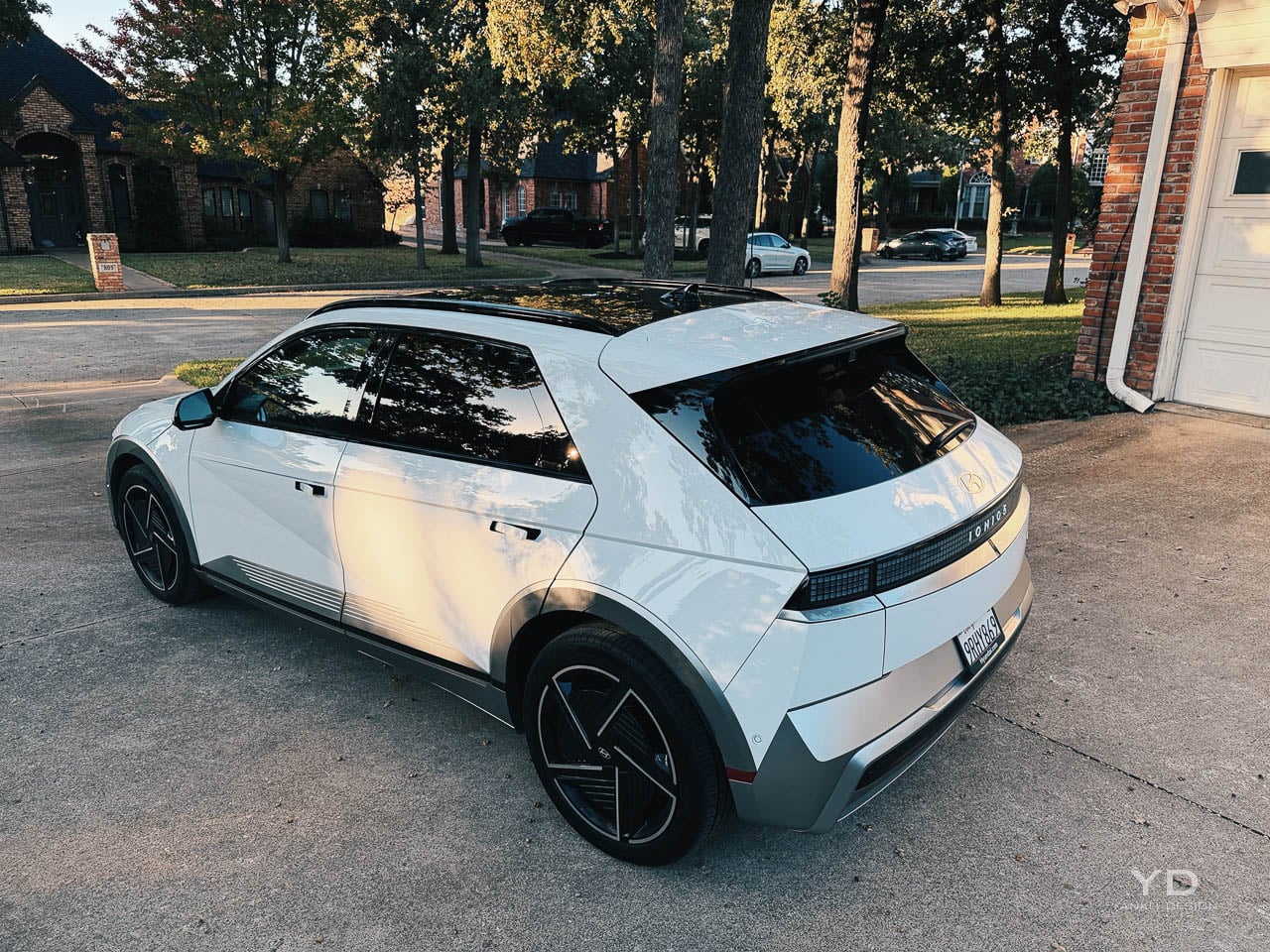 What sticks is the follow through: the pixel lighting and crisp surfacing are not decoration, they are the grammar that carries through the whole object, right down to how the cabin feels airy and deliberate. That consistency is why the car reads as designed, not merely modern.
The only open question’s aging. Sharp motifs can date faster than soft ones, and the EV market moves quickly. Even if the look becomes tied to this era, the coherence behind it is real, and that tends to outlive fashion.
SHARE