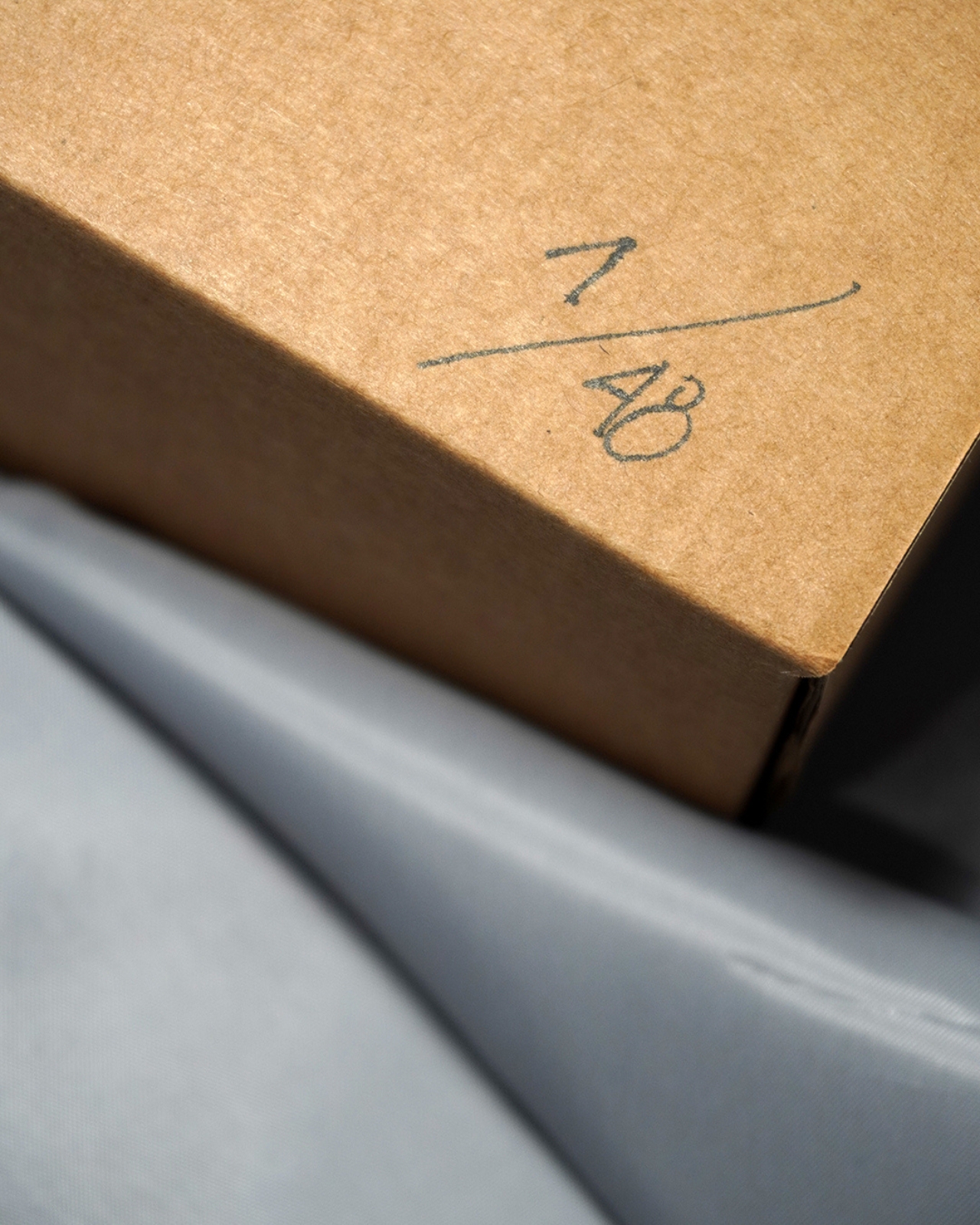

If you’re a person that celebrates Christmas and likes to plan ahead, you’re probably already sketching out what your tree will look like. Or maybe you’ve actually bought things already to decorate it. White zip ties aren’t usually the detail you want people noticing on your Christmas tree. On the SKOmas tree, they’re part of the appeal. Studio SKO’s clear acrylic holiday sculpture makes its assembly visible while tackling a less photogenic seasonal problem: finding room for decorations in December, then finding somewhere to put them for the rest of the year.
Designed by architect Sanya Kovacheva of Sofia, Bulgaria’s Studio SKO, short for Sanya Ko Operations, the tree is announced for the 2026 holiday season in an edition of 48 hand-numbered pieces. It’s 50 centimeters tall, or about 19.7 inches, which puts it firmly in tabletop territory. As someone that doesn’t have space for a full tree, this is an alternative for those of us who want a recognizable Christmas centerpiece without surrendering a corner of the living room.
Designer: Studio SKO (Sanya Ko Operations)
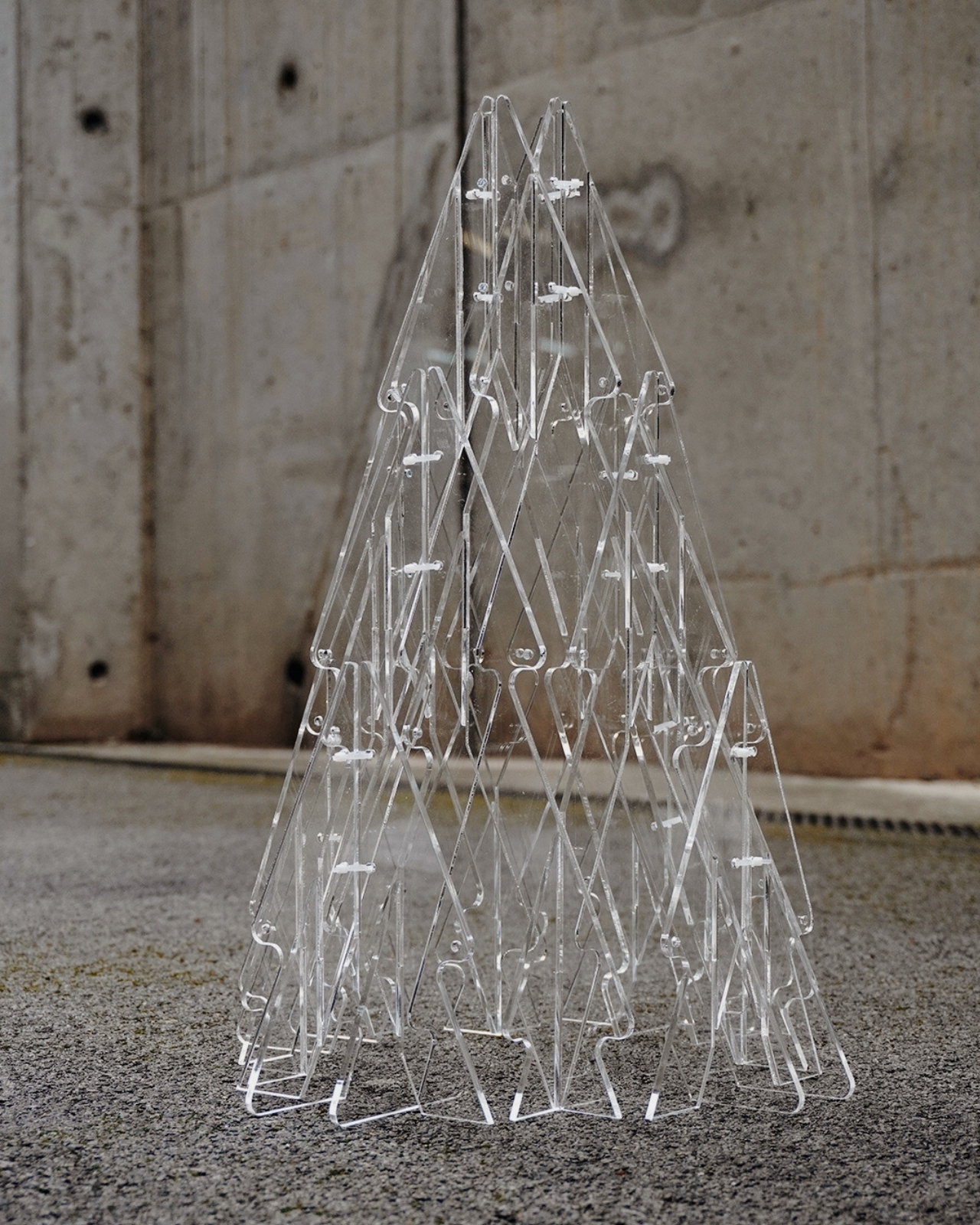

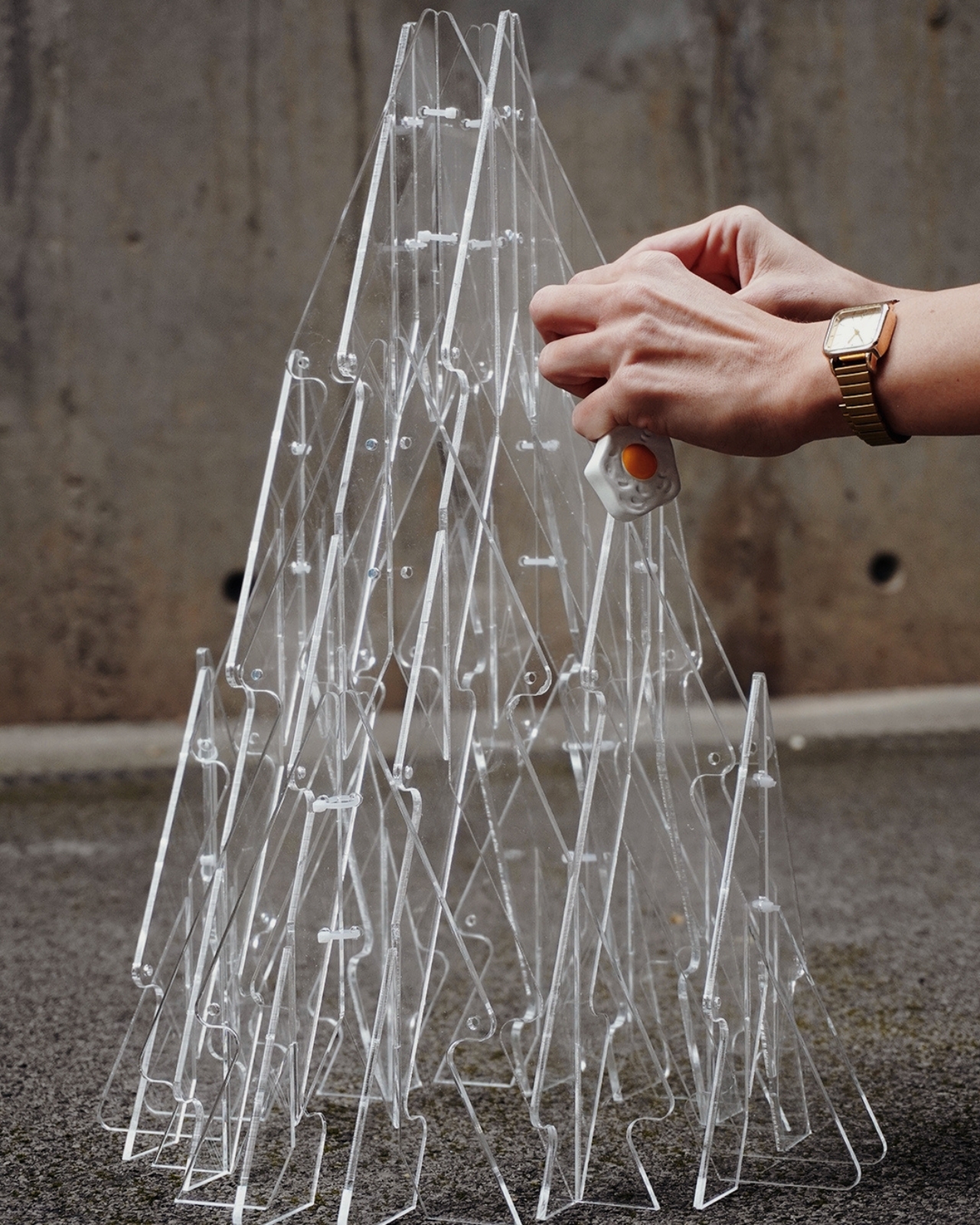
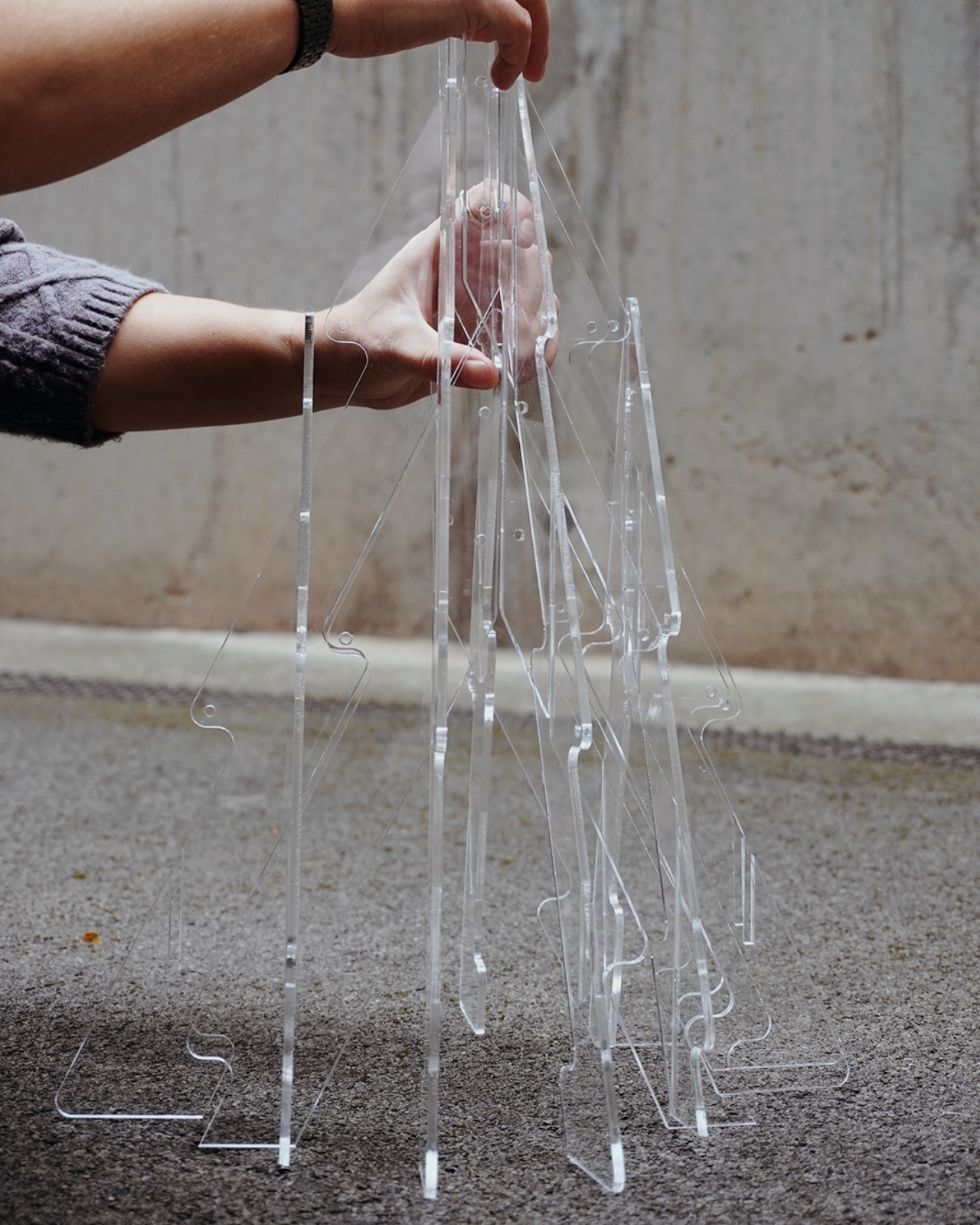
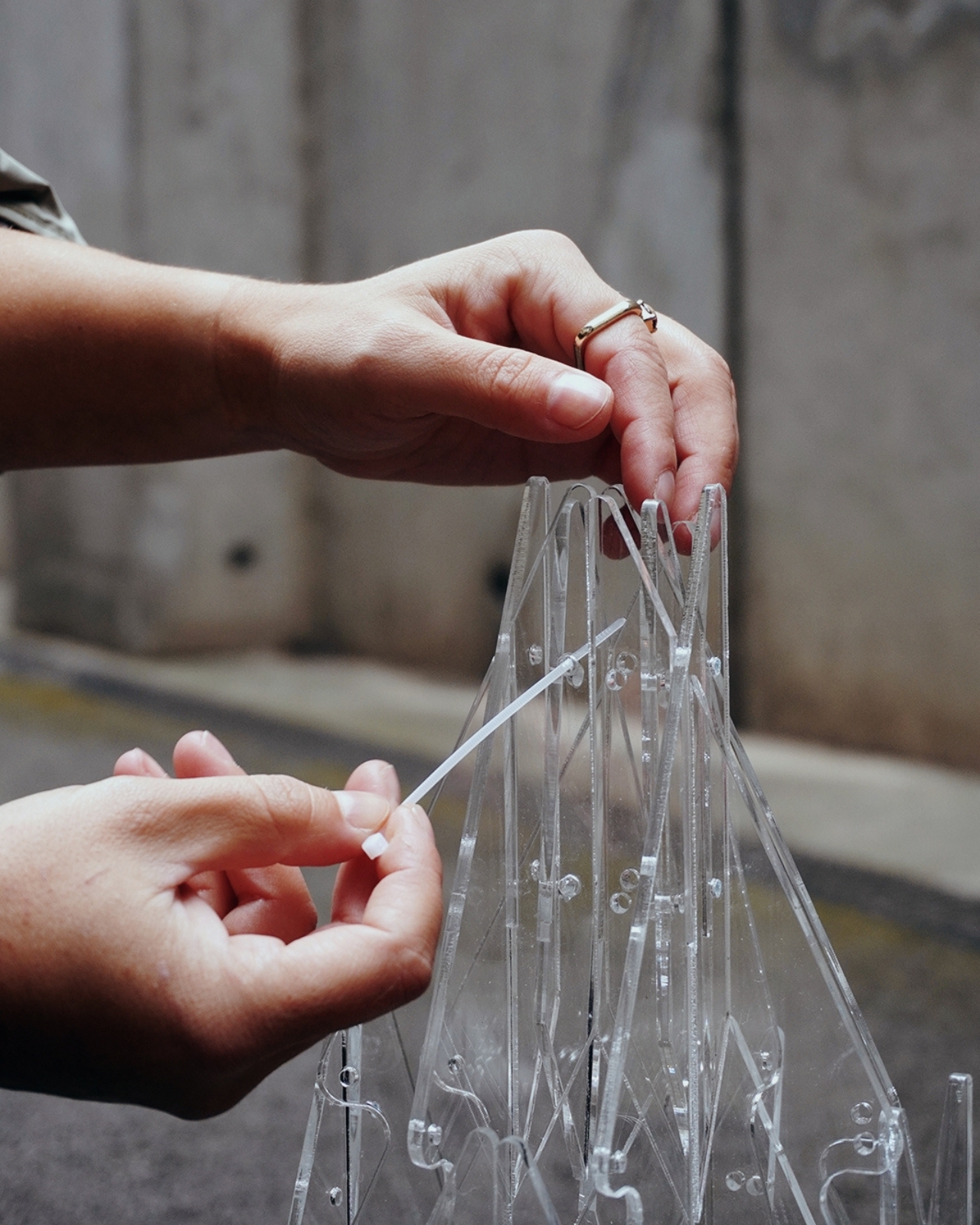
The structure uses interlocking panels of 3mm transparent acrylic, also called PMMA, secured with white polyamide zip ties threaded through prepared holes. In the supplied photographs, overlapping tree-shaped profiles create a surprisingly busy network of edges inside the familiar tapered silhouette. You can look straight through it, but it doesn’t disappear. The repetition gives the object a little architectural density, like a collection of thin building sections arranged around a center.
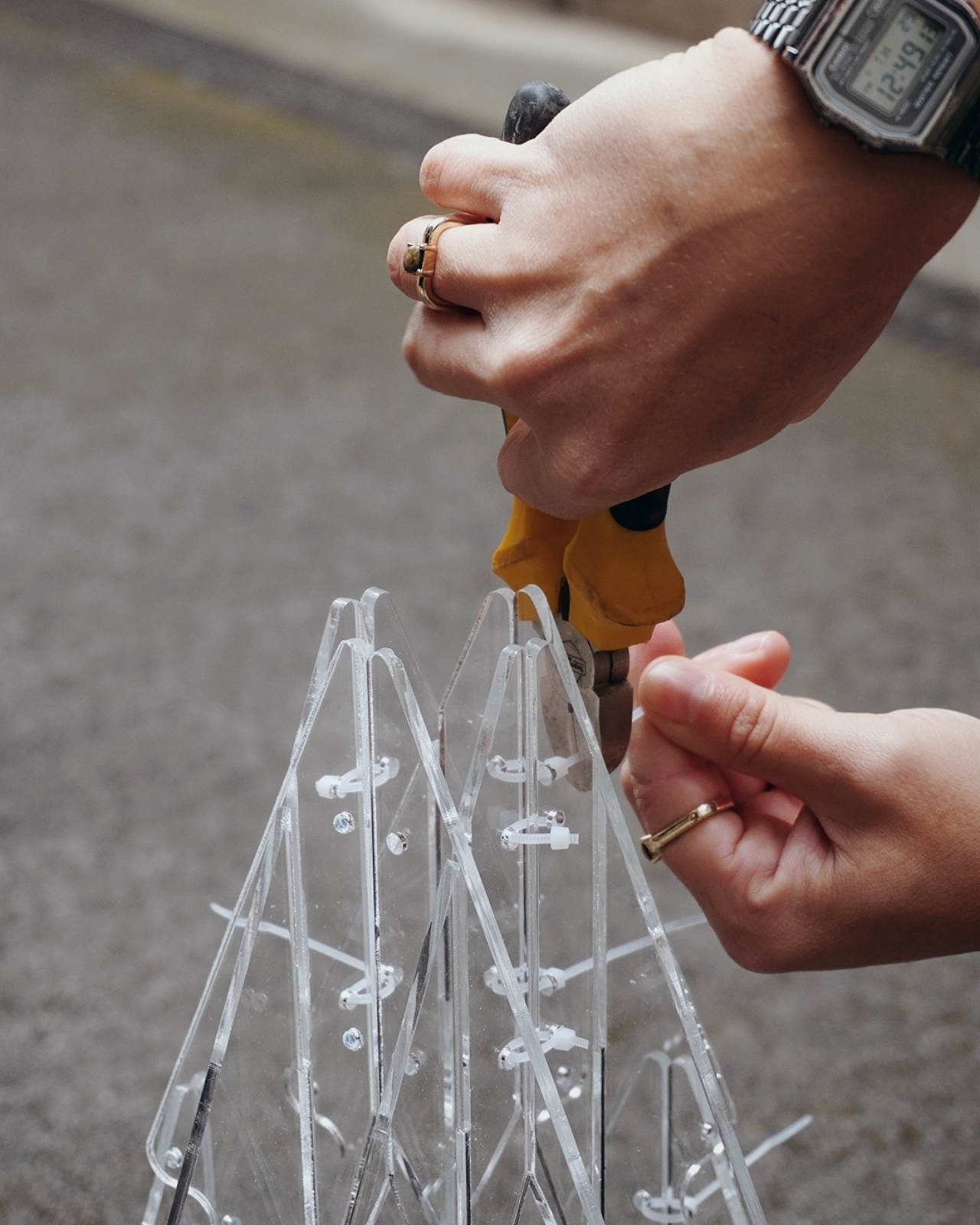
I like the design decision to leave the fasteners visible. A concealed connector might make the tree look more polished, but the zip ties give you an idea of how something like this stays together. They also stop all that transparency from becoming too precious and appeal to those that want to see the behind-the-scenes aesthetic. Close-up assembly photographs show hands threading and tightening the ties, then trimming the excess with cutters. The hardware is part of the visual composition.
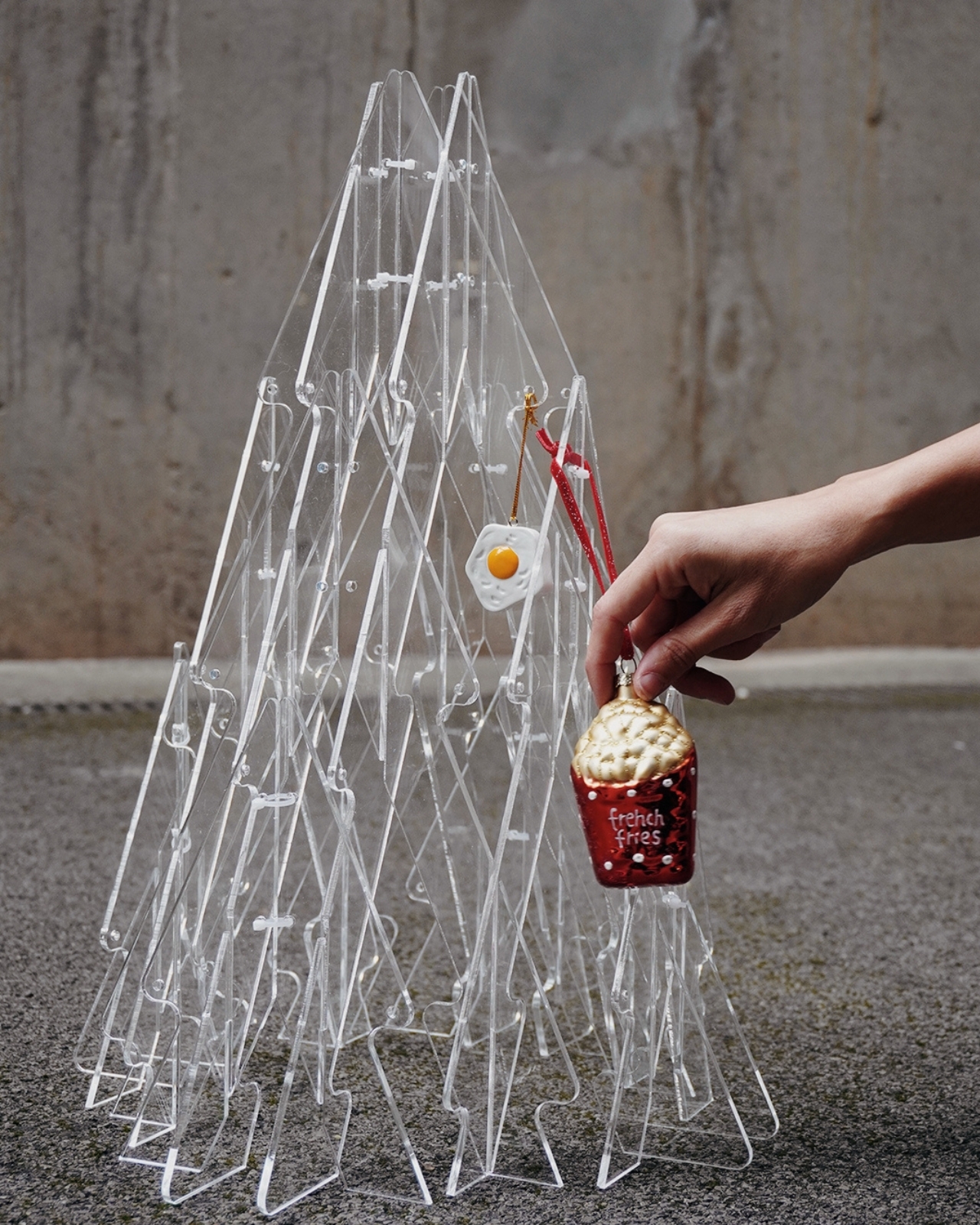
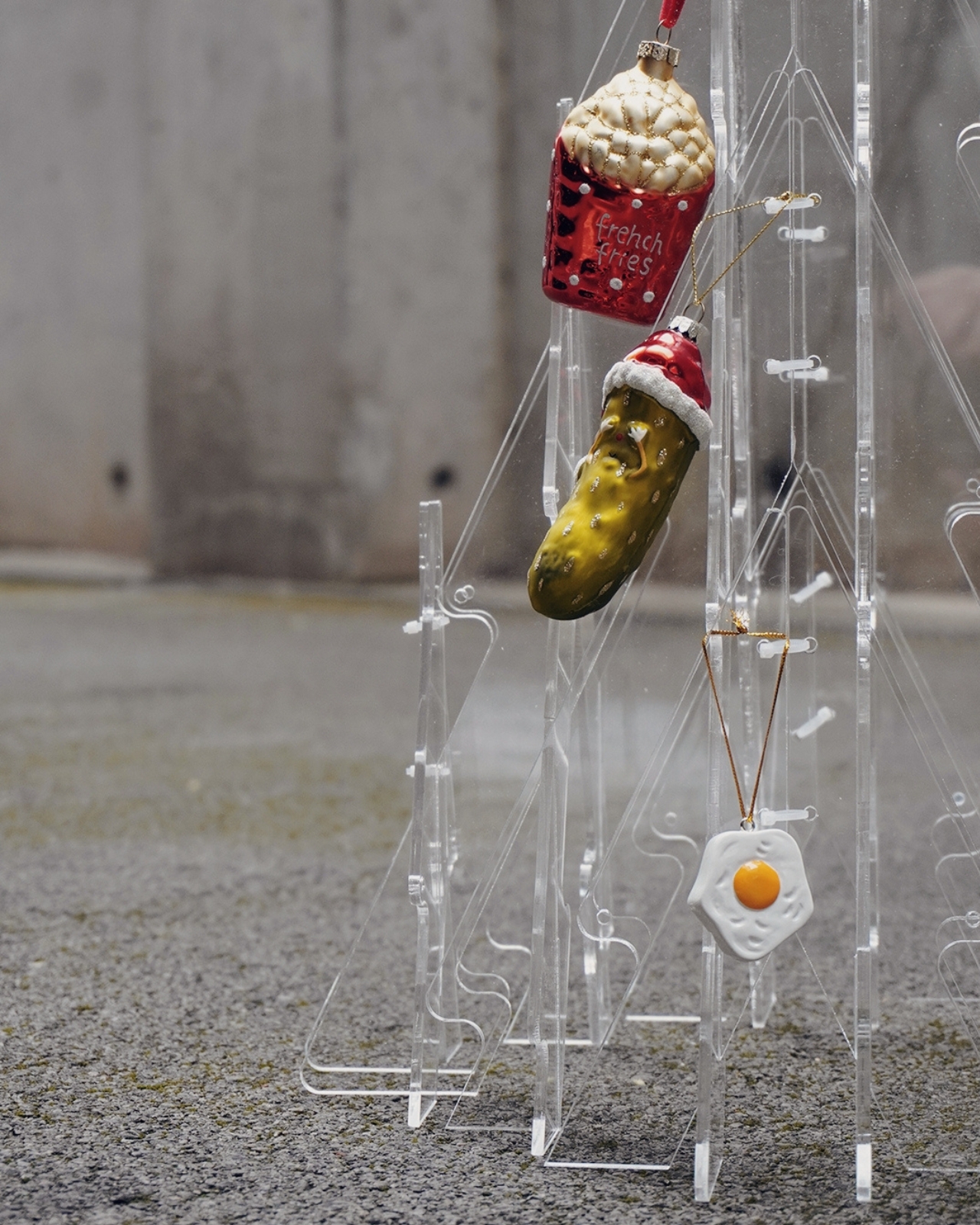
According to the studio, the project began five years ago as an experiment in laser-cut plywood. Moving to clear acrylic changes more than the color palette. The outline is still legible, while the space between the panels remains visible. For a small apartment or an already crowded sideboard, that visual openness seems useful, even though transparency doesn’t reduce the object’s actual footprint.
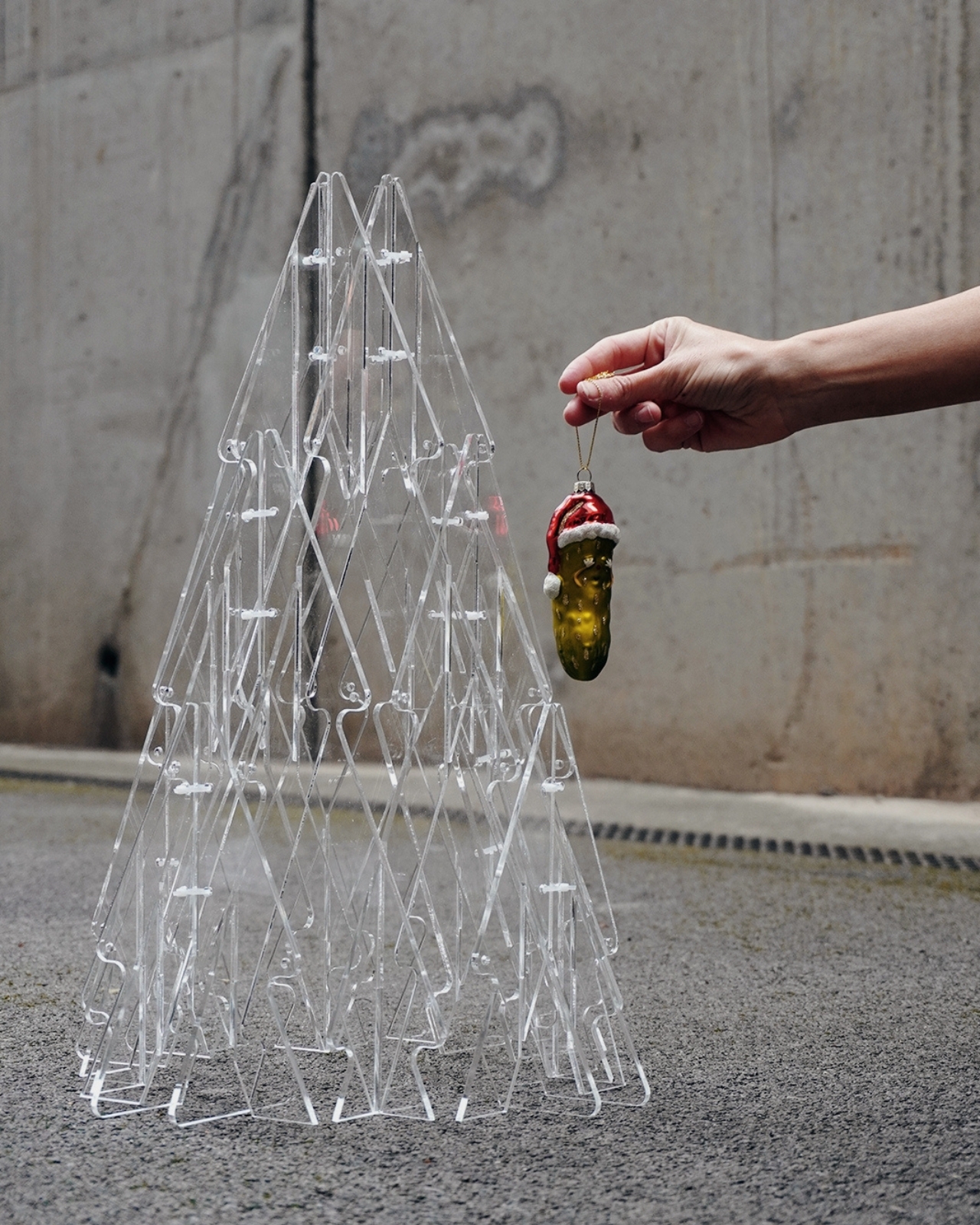
The ornament photographs make a good argument against treating minimalism as a rule against fun. A pickle wearing a Santa hat, a carton of fries, and a fried egg hang from the acrylic profiles. Their colors stand out against the clear structure, and the tree feels less like a solemn gallery object. I’d happily take that approach over an arrangement so coordinated you’re afraid to add a favorite oddball ornament.
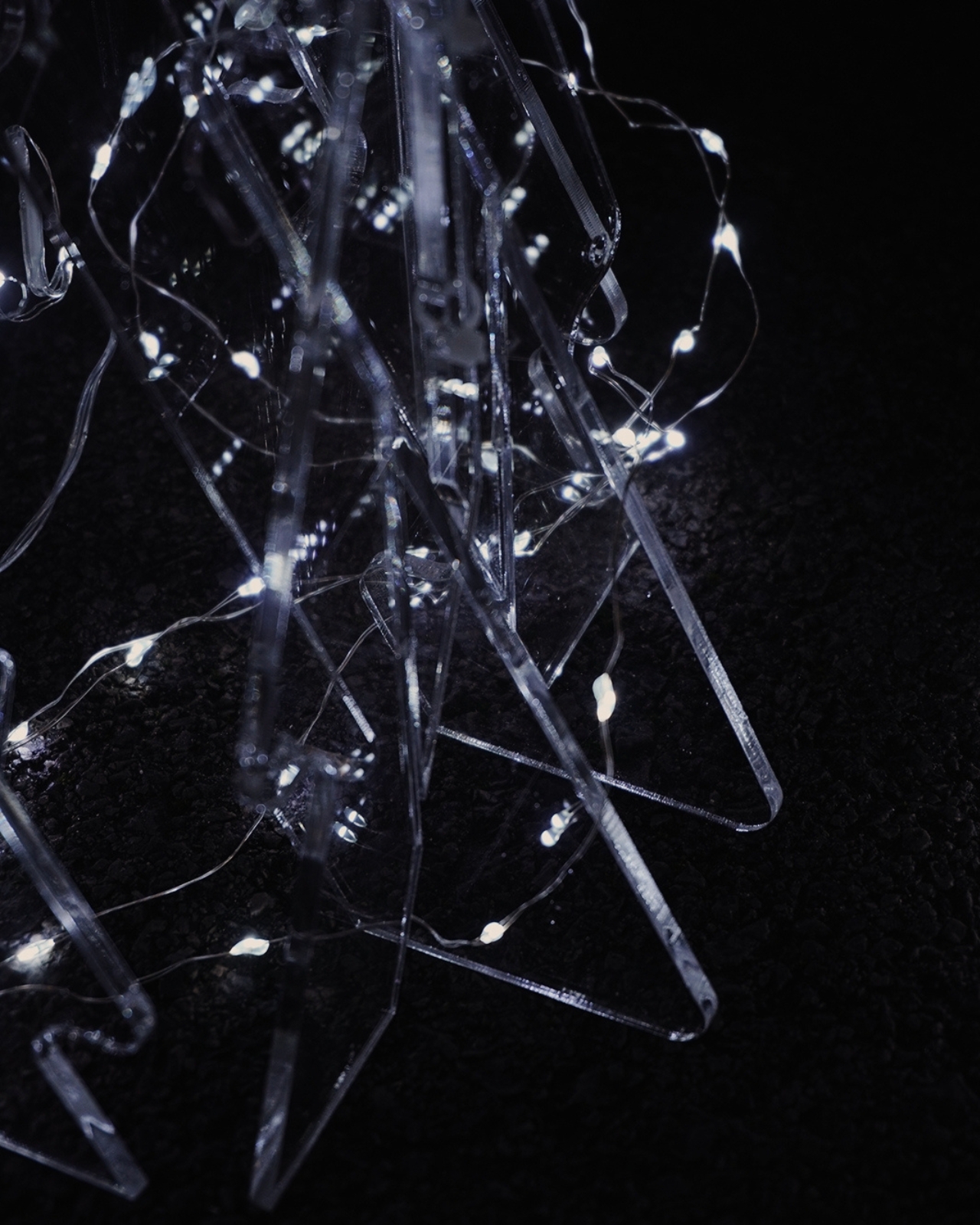
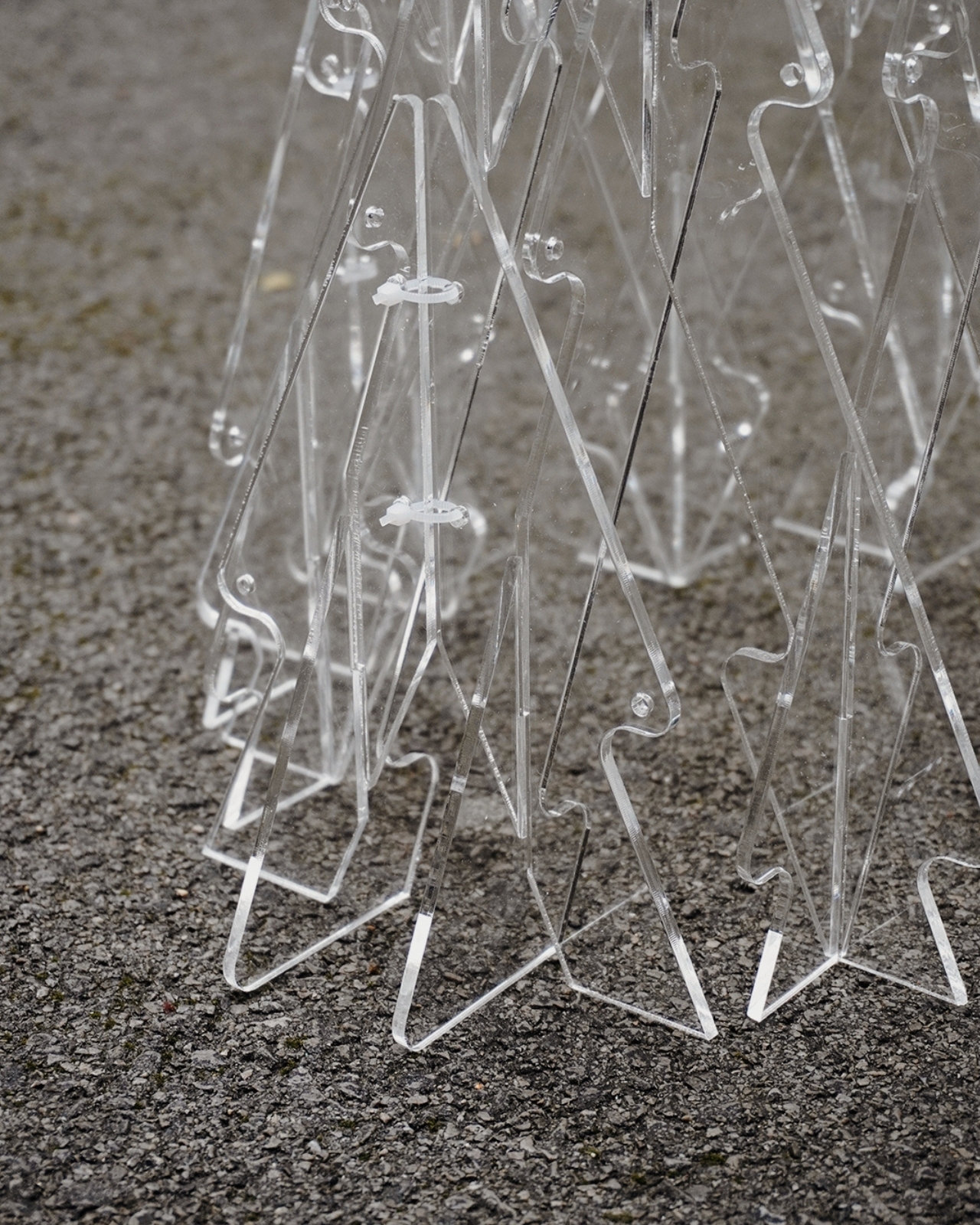
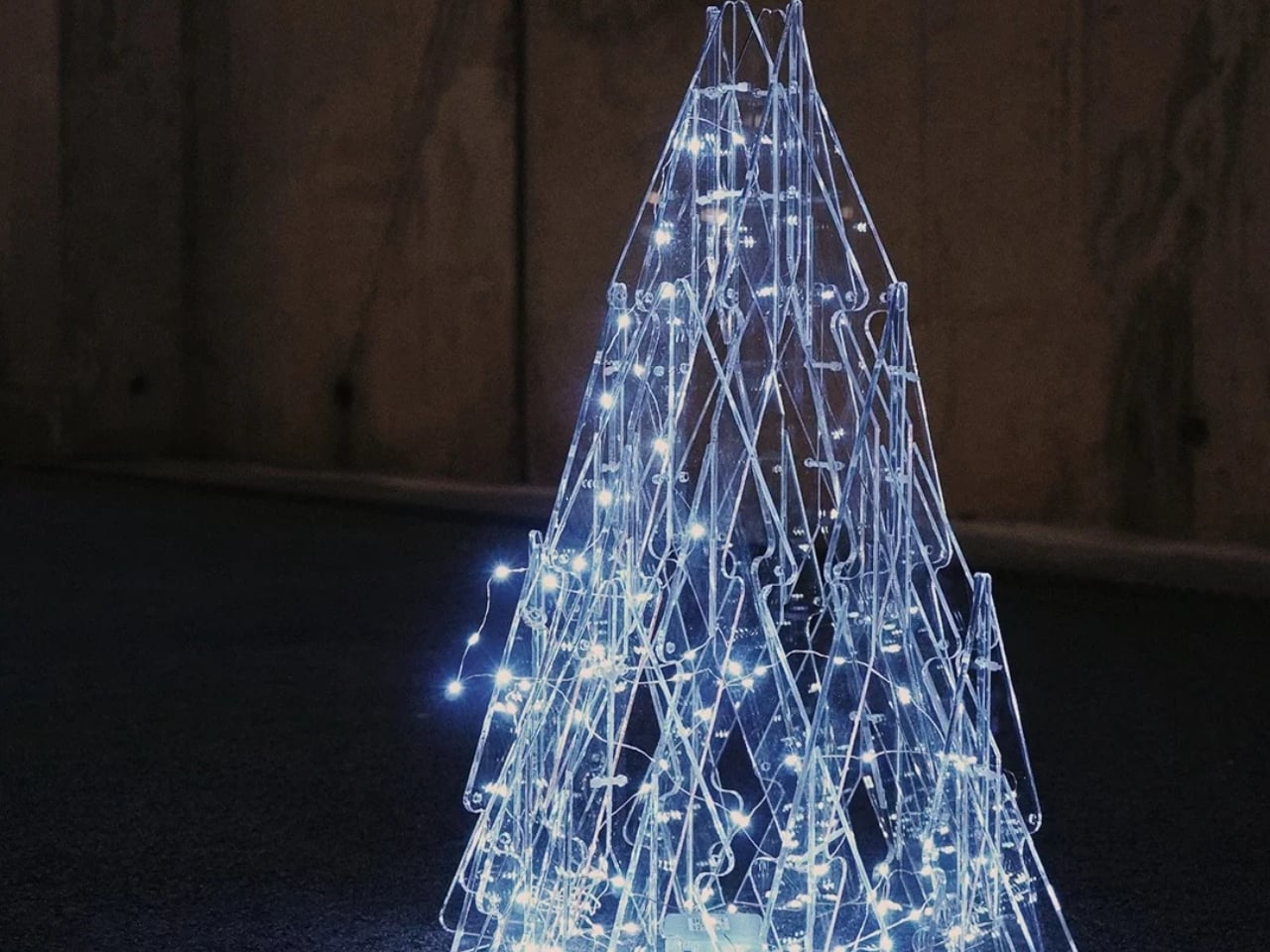
With lights added, the mood shifts again. The supplied nighttime images show small white LEDs threaded through the structure, with bright points picking out the layered edges. It’s a convincing way to give the clear panels more presence after dark. Lighting isn’t listed among the included accessories, though, so the illuminated setup shouldn’t be mistaken for a built-in feature or a complete lighting kit.
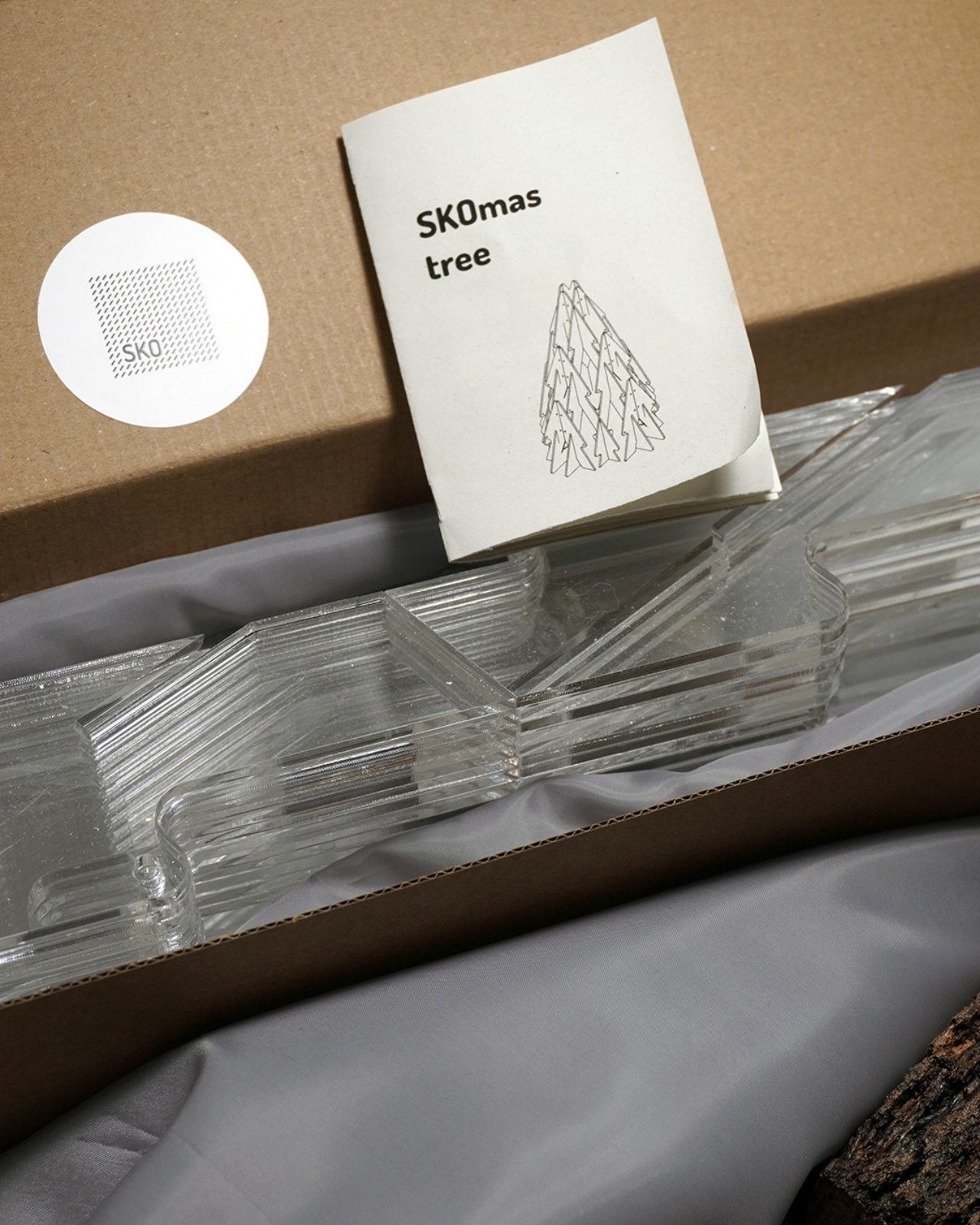
January is where the flat-pack idea earns its place. The studio says the panels disassemble and return to their custom packaging, with a protective fabric storage bag supplied alongside the cable ties and illustrated manual. Instead of storing the assembled volume, you’re keeping a stack of flat components. That feels like a sensible design priority for a seasonal object, especially one that spends most of its life out of sight.

I’d be more cautious with the sustainability pitch. Reusing the same decoration is a reasonable intention, but the release doesn’t establish an environmental advantage over other trees. It also doesn’t explain whether the zip ties reopen or need replacing when the panels come apart. Those details matter to the promise of annual reuse, even if they don’t diminish the appeal of the storage format.
The SKOmas tree won’t satisfy anyone looking for pine scent or branches dense enough to hide every ornament hook. Its appeal is more specific: a small holiday sculpture whose construction stays visible and whose storage has been considered from the beginning. The ridiculous pickle can supply the sentiment. The clear panels and white zip ties give it somewhere interesting to hang.