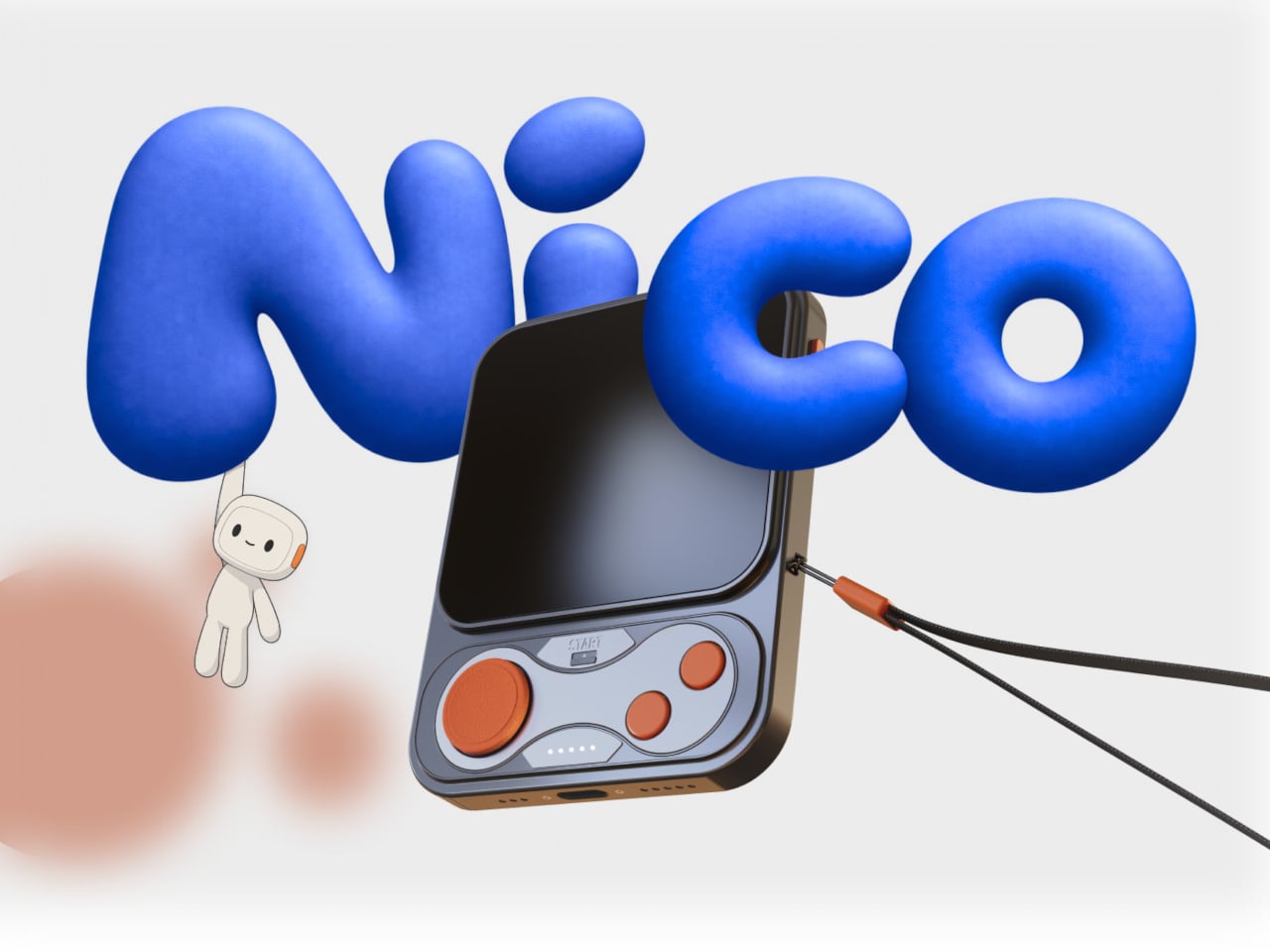

Getting stuck on homework doesn’t always call for someone to hand over the answer. Sometimes a small nudge is enough to get the pencil moving again. Nico is an AI learning companion concept built around that idea, putting a helpful character inside a handheld device with a joystick. Children would steer him toward a question and receive a hint rather than the solution.
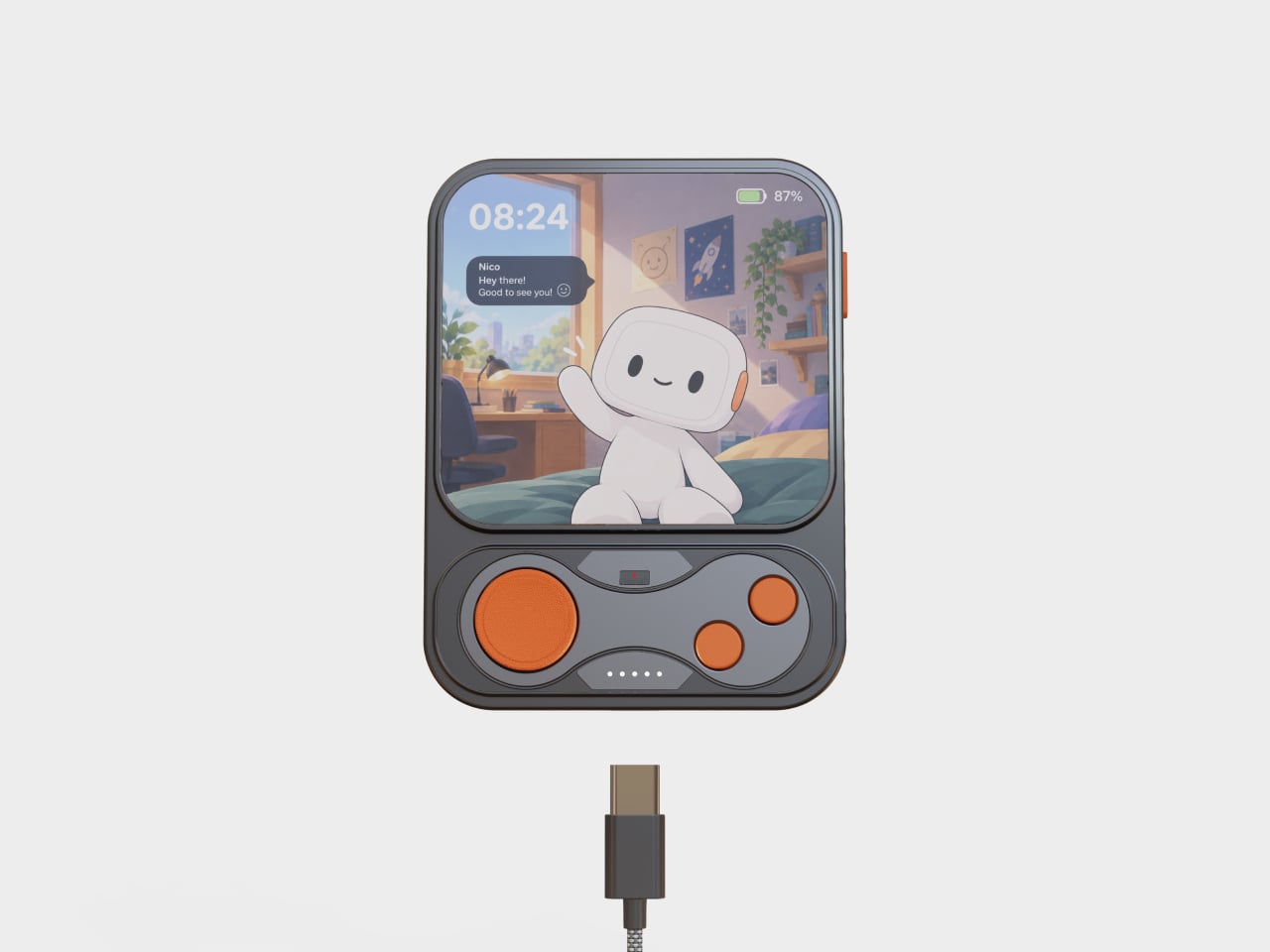
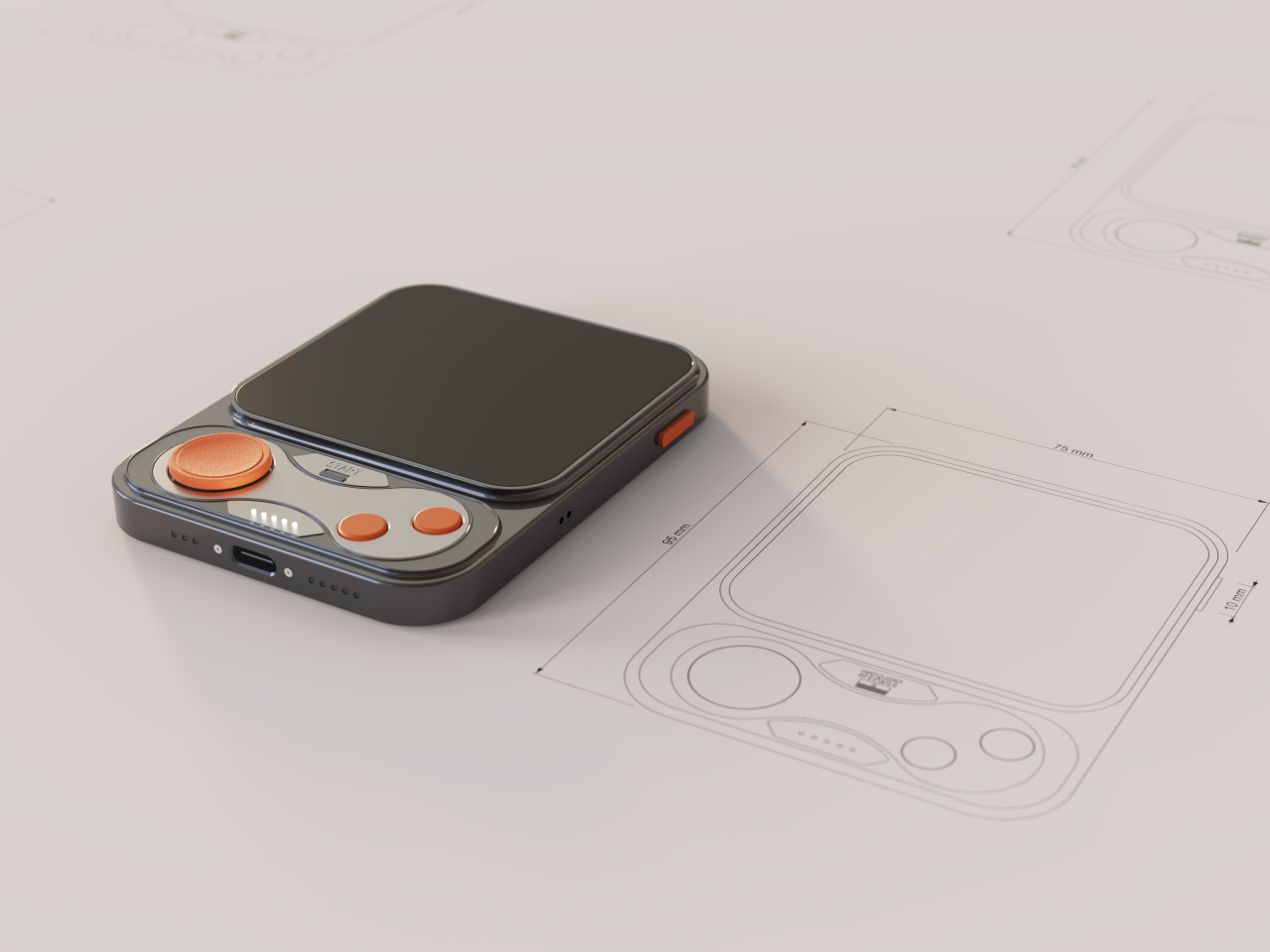
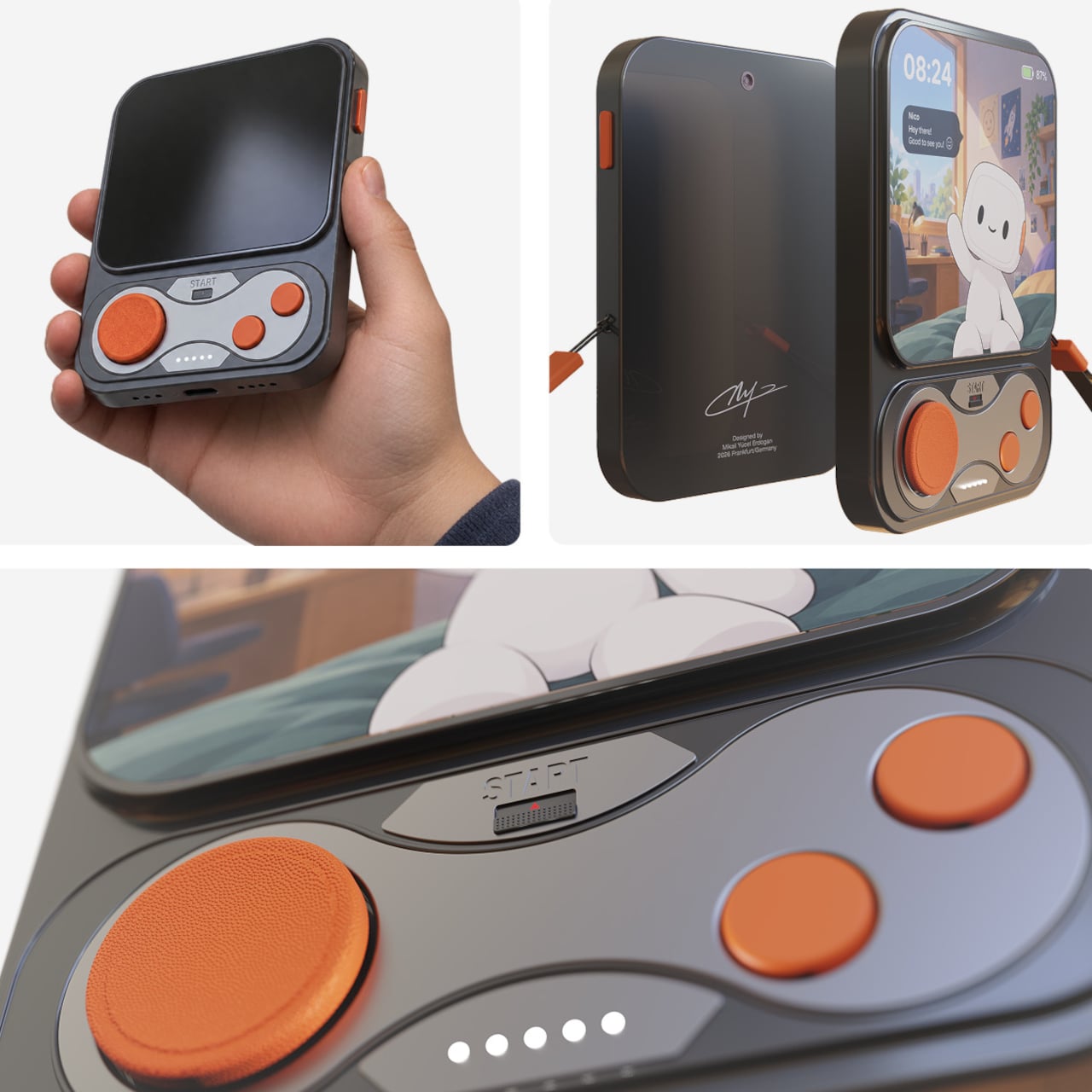
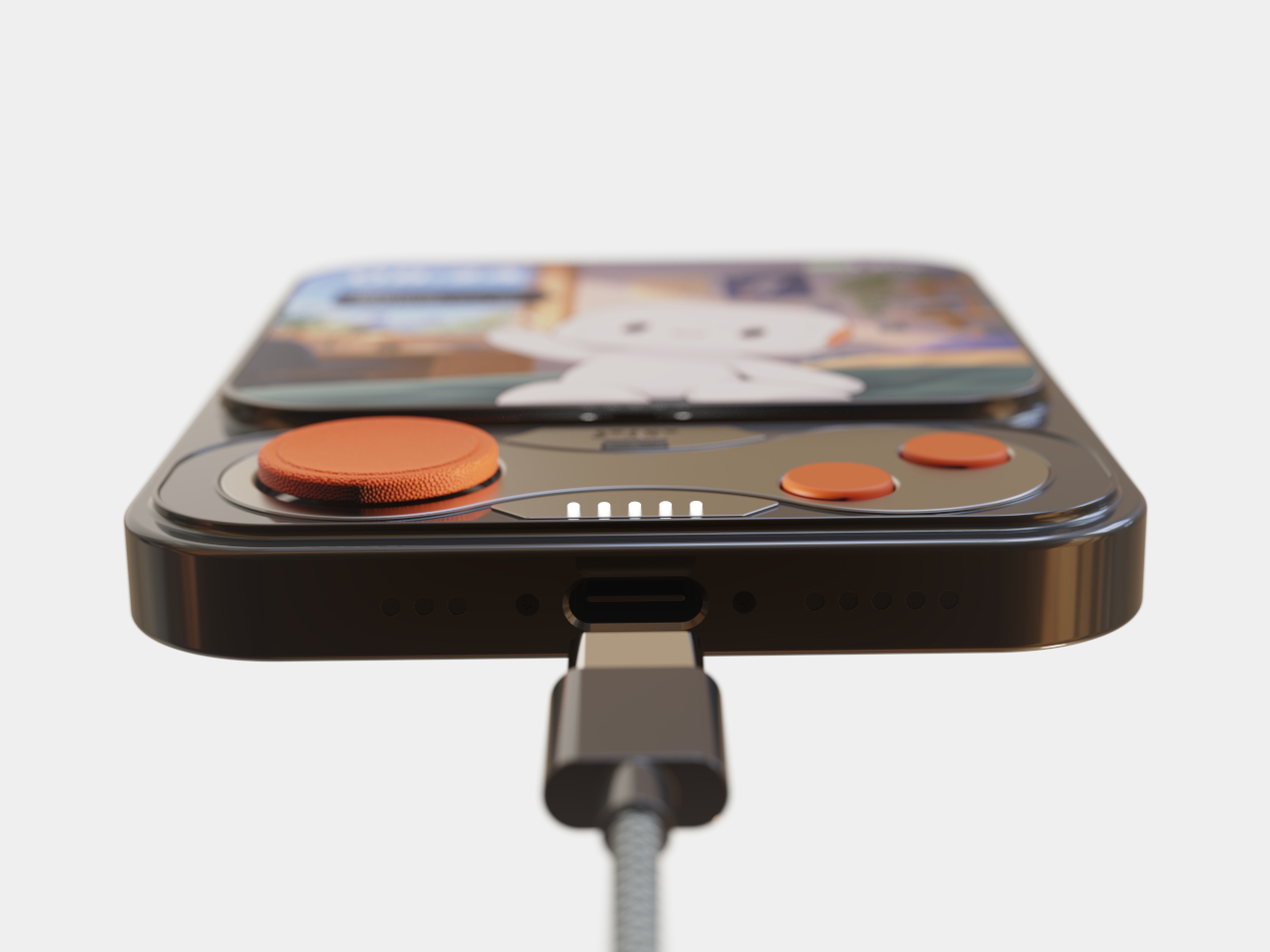
The hardware borrows the familiar arrangement of a handheld game console, with a large screen above an orange joystick and two matching action buttons. A dark gray body and rounded corners keep the silhouette simple, while the contrasting controls make the places to press immediately obvious. There’s something reassuringly straightforward about having a proper button instead of another tiny icon to tap.
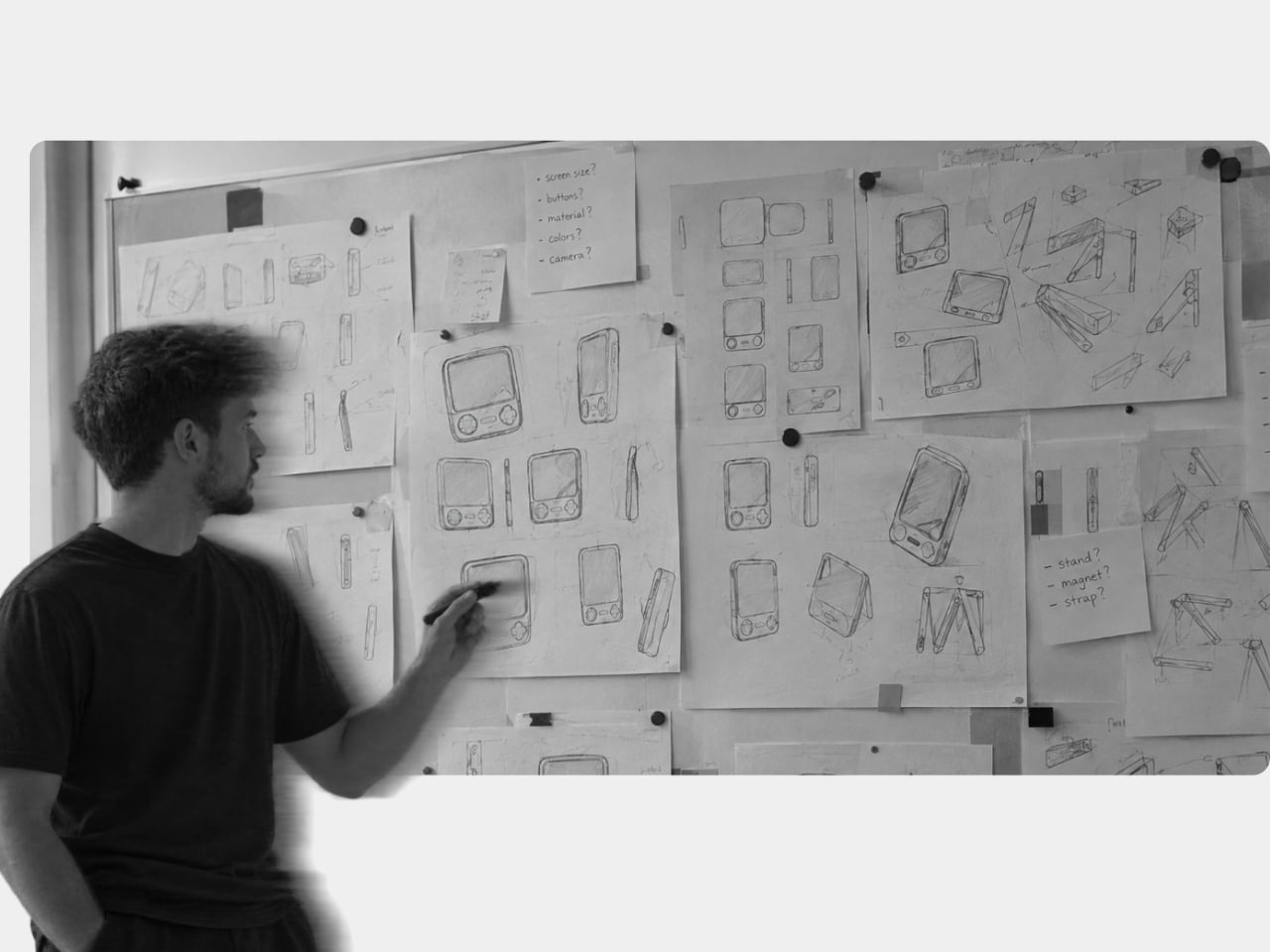
Designer: Mikail Yücel Erdogan
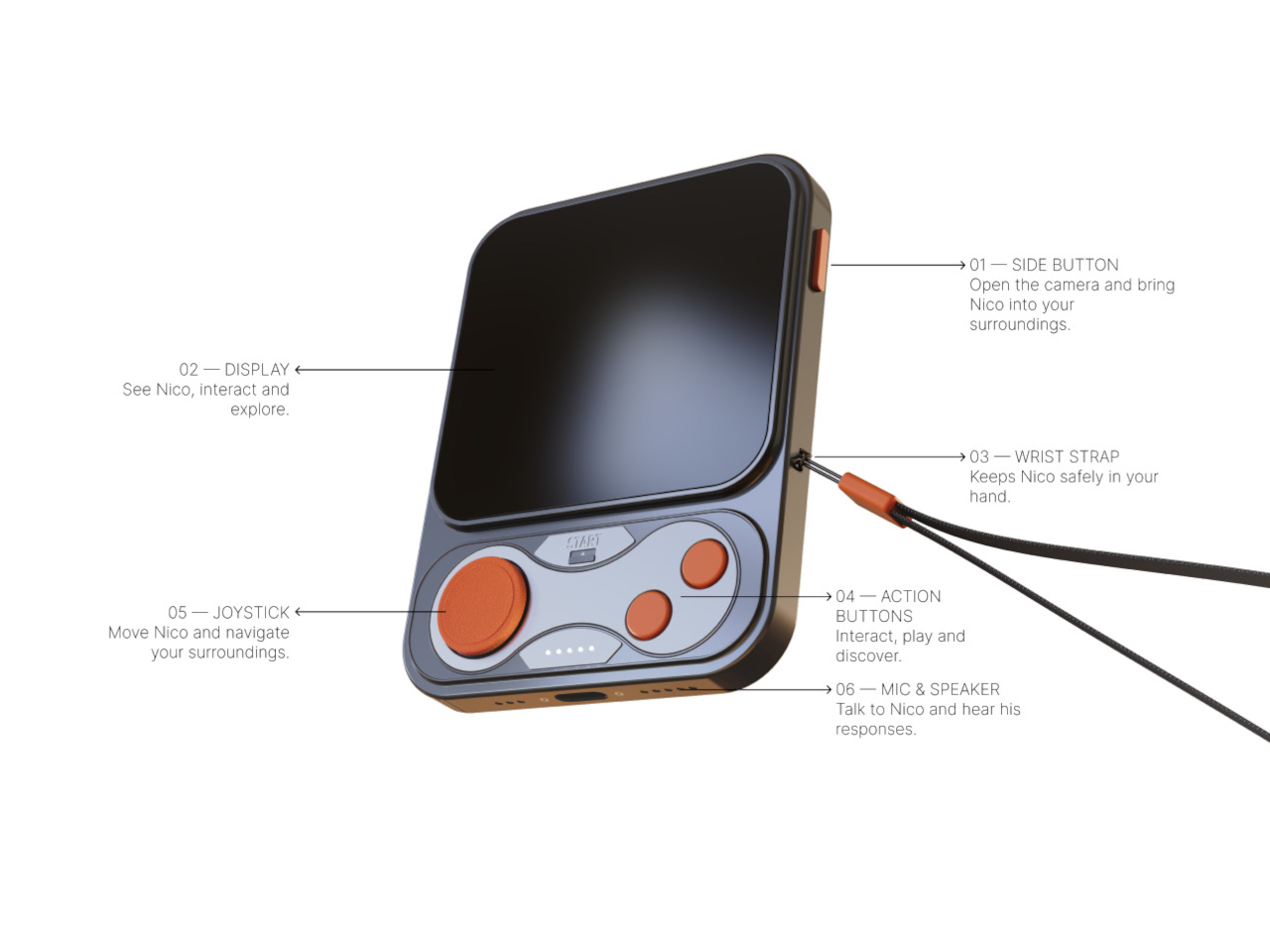
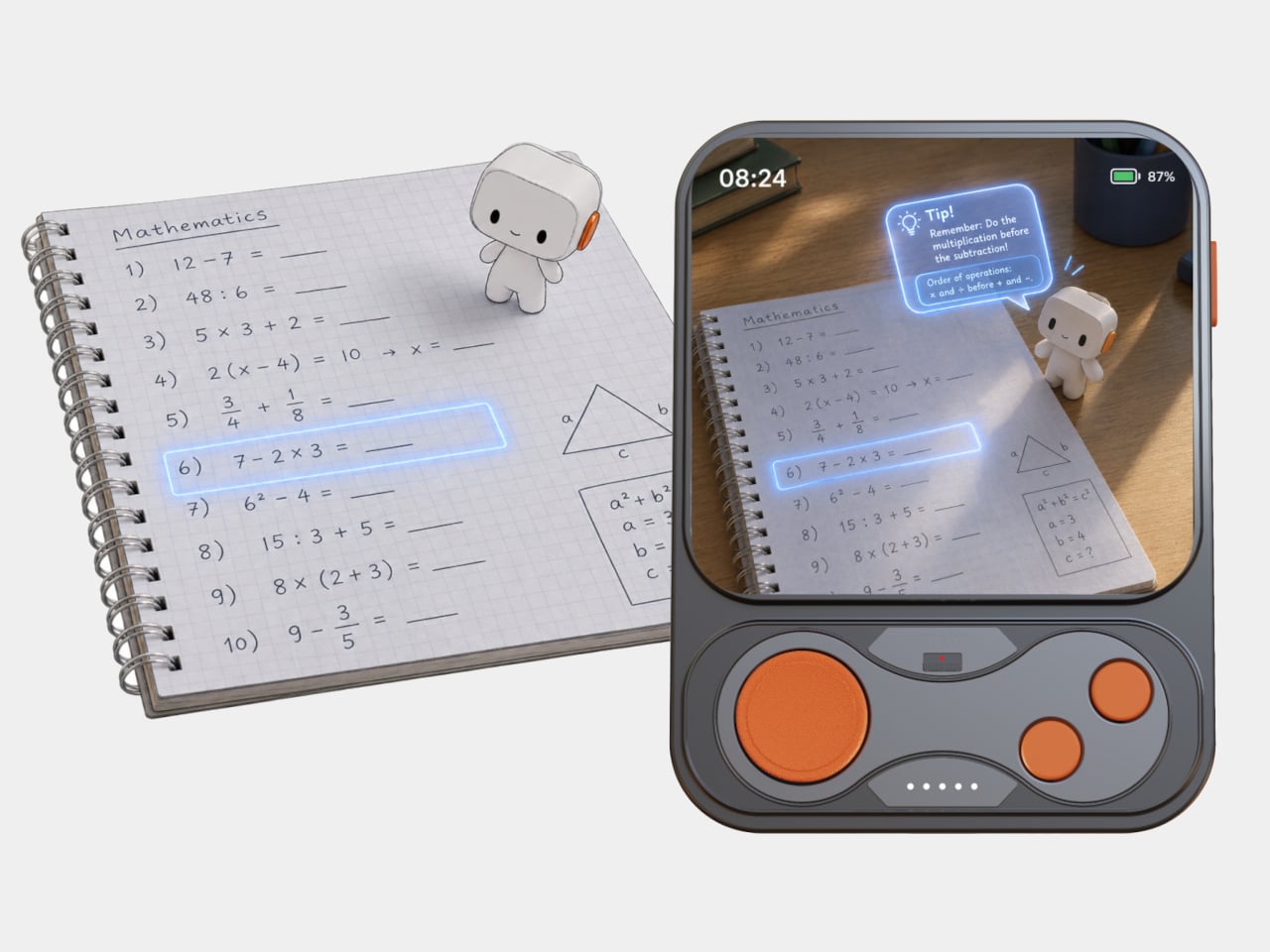
A side button would open the camera view, bringing Nico into the child’s surroundings through the display. The character could then move across that view under joystick control, stopping beside whichever exercise needs attention. A microphone and speaker are intended to let children ask questions aloud and hear responses, so getting help wouldn’t require typing a carefully worded request on a little screen.
With a math worksheet, for example, Nico could point out that multiplication comes before subtraction without filling in the blank. The child would still have to work through the calculation, ideally returning to the paper with a better idea of what to try next. That distinction matters, because finishing an assignment and understanding how to do it aren’t necessarily the same achievement.
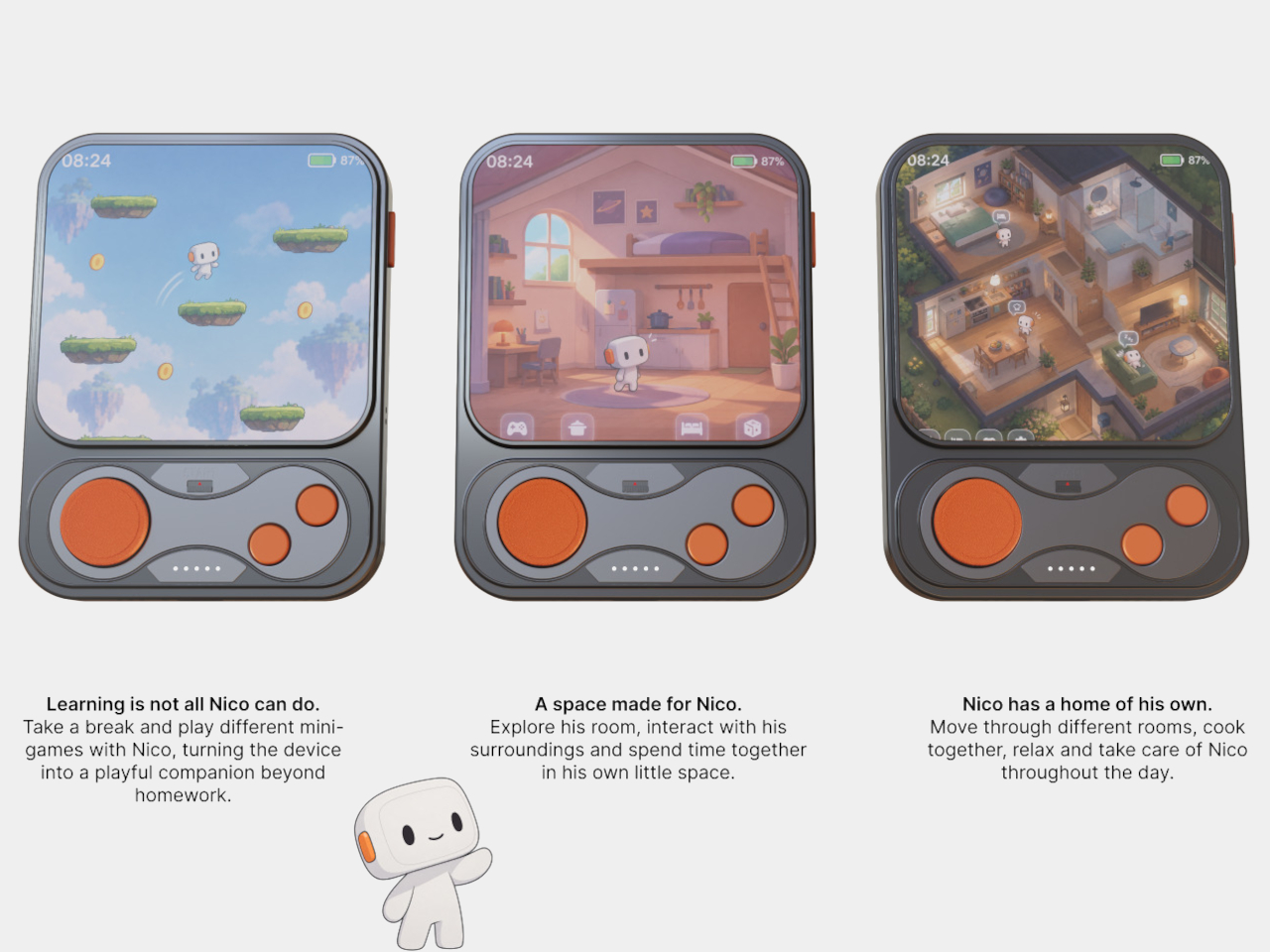
Nico himself is a small white character with a rounded rectangular head, dark eyes, and orange accents that echo the hardware. Keeping that personality on the display would let the same device become a homework helper or a virtual home. The wrist strap and USB-C port, meanwhile, ground the friendly face in the ordinary business of carrying and charging yet another electronic companion.
Of course, Nico wouldn’t disappear when the homework is done. The concept includes mini-games, a room to explore, and a virtual house where children could cook with the character or look after him. That gives the joystick more to do, but it also introduces a familiar complication: the device helping with fractions would be offering somewhere else to spend the afternoon.

The camera and microphone raise questions that the presentation doesn’t answer. There’s no stated approach to storing children’s images or conversations, no explanation of parental controls, and no identified AI model behind the advice. These are unresolved parts of the concept, not evidence of a privacy breach. But they would need attention before a friendly face earned a place beside a child’s schoolwork.
Nico remains a design proposal, with learning benefits that haven’t been established through published independent testing with children. Its joystick does make a specific suggestion about how children might ask for help, though: move toward the problem instead of waiting for an answer to appear. The important test would come afterward, when the device goes down and the pencil starts moving again.