
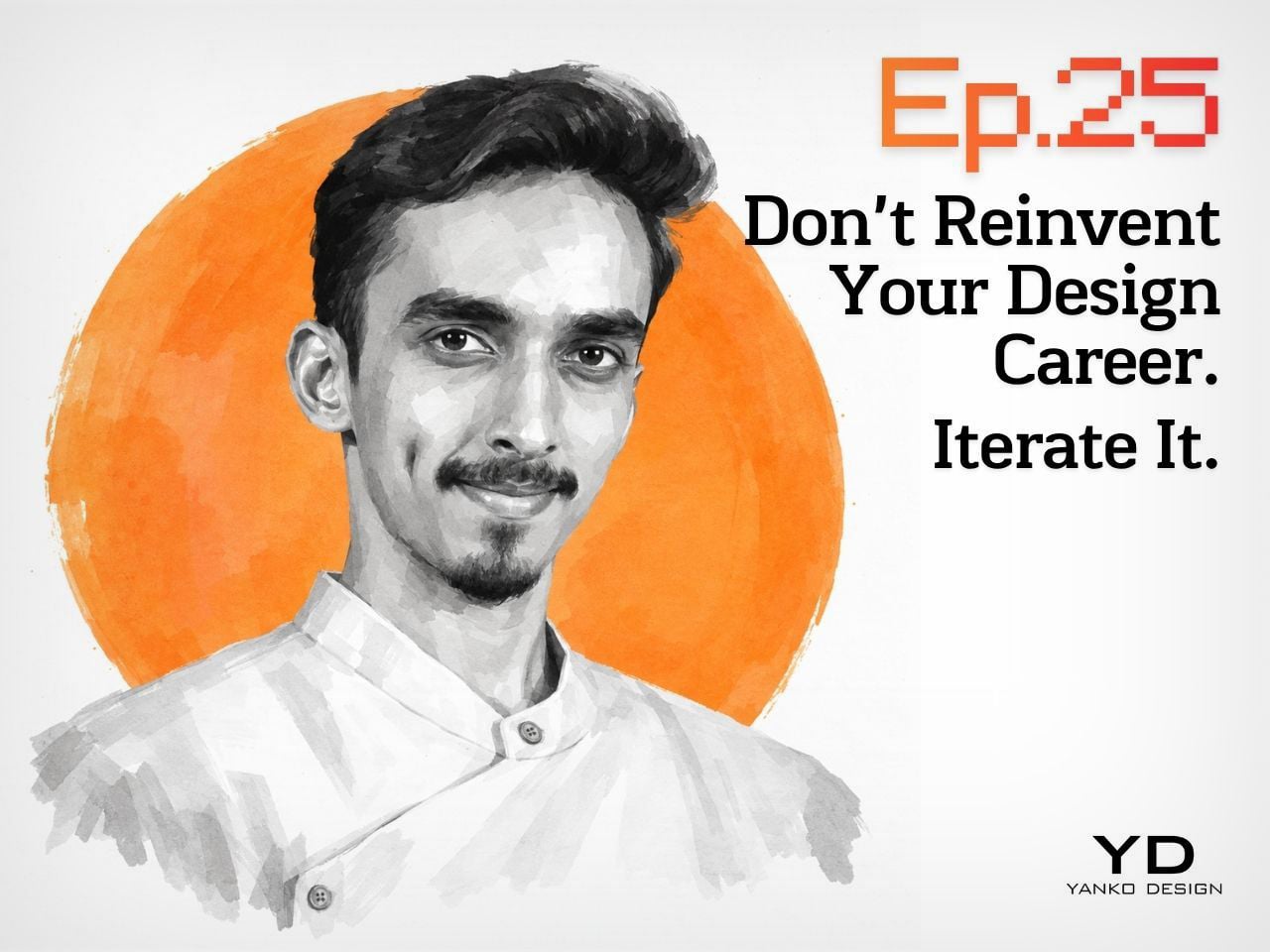
A lamp takes shape through its proportions, materials, and relationship with light. A voice interface has to make sense without giving someone a screen to navigate. A drone brings physical hardware, software, and operating conditions into the same design problem. Episode 25 of Design Mindset, Yanko Design’s podcast powered by KeyShot, connects these seemingly distant territories through a conversation with designer Anshuman Kumar. Hosted by Radhika Seth, the podcast premieres every week, exploring the thinking behind creative work and the decisions that shape a designer’s practice. This episode asks a particularly useful question: what carries over when a designer moves into a field they haven’t worked in before?
Kumar has plenty of experience with that transition. His career spans sports equipment at Decathlon, lifestyle products, six years at Samsung working across areas including voice intelligence, IoT, and generative AI, and a subsequent move into UAV design at ideaForge. Alongside that professional work, he teaches and develops personal explorations such as the nature-inspired Bloom Lamp. The range makes for an engaging interview, but the conversation goes deeper than a tour through different industries. Kumar explains how earlier experiences inform later decisions, why some ideas still need the slowness of drawing, and what changes when a design can no longer be revised through a software update. Together, those observations offer a grounded account of working across disciplines.
Download your Free Trial of KeyShot Here

A Career Built Through Iteration, Not Reinvention
“Every move I made was an iteration, not a reset. The domain changed, the question I was asking never did.” Kumar’s description of his career offers a useful way to understand its variety. Moving between physical products, intelligent services, and drones required new knowledge, but it didn’t make his existing experience irrelevant. Understanding a person’s needs, framing a problem, and working through uncertain possibilities remained useful across those transitions. The unfamiliar parts demanded learning rather than a wholesale replacement of his professional identity. Seen that way, a varied career becomes cumulative: each role adds another set of questions, constraints, and methods that can influence the next assignment, even when the eventual output looks entirely different.
That perspective also shapes his advice to students. Kumar recalls early encounters with electronics and science as opportunities for playful exploration, with his later education at NIFT providing a more systematic foundation. He worries about the pressure to adopt a narrowly defined professional label before those foundations have had time to develop. UX, textile design, motion design, and other specializations describe meaningful differences, but they can also become boundaries too early. His suggestion is to establish the roots before concentrating on the branches. For someone considering a change of direction, the implication is practical: examine which abilities already transfer to the new field before assuming that a different job title requires starting again from nothing.
The Bloom Lamp Translates Natural Observations Into Form
Kumar’s Bloom Lamp brings that way of connecting ideas into a physical object. Its starting points were a mushroom canopy and the spiraling movement of a small flower falling from a branch. One observation suggested a silhouette; the other introduced movement and a relationship with the surrounding air. Bringing them together required more than selecting an organic-looking outline. Kumar describes developing the lamp through multiple iterations and experiments with 3D printing, giving the concept a physical testing ground beyond visualization. “It was not just sitting as a good render,” he says. In the interview, Bloom emerges as a personal design exploration, with its interest lying in the translation from an observed natural behavior to a form that could be made.
The conversation also examines how consciously those natural references enter his work. Kumar describes room for both intuition and a deliberate framework, depending on the assignment. A commercial brief may require a closely defined direction, while a personal project can begin with an observation whose relevance becomes clearer through exploration. Intuition still needs examination, however. An appealing form has to be revisited to determine whether it communicates the intended idea and whether its proportions hold together. That qualification gives the discussion substance. Nature supplies a starting point and a vocabulary, but the designer still has to make decisions, test relationships, and recognize when an attractive reference hasn’t yet become a convincing object.
Knowing When to Move From Paper to Pixels
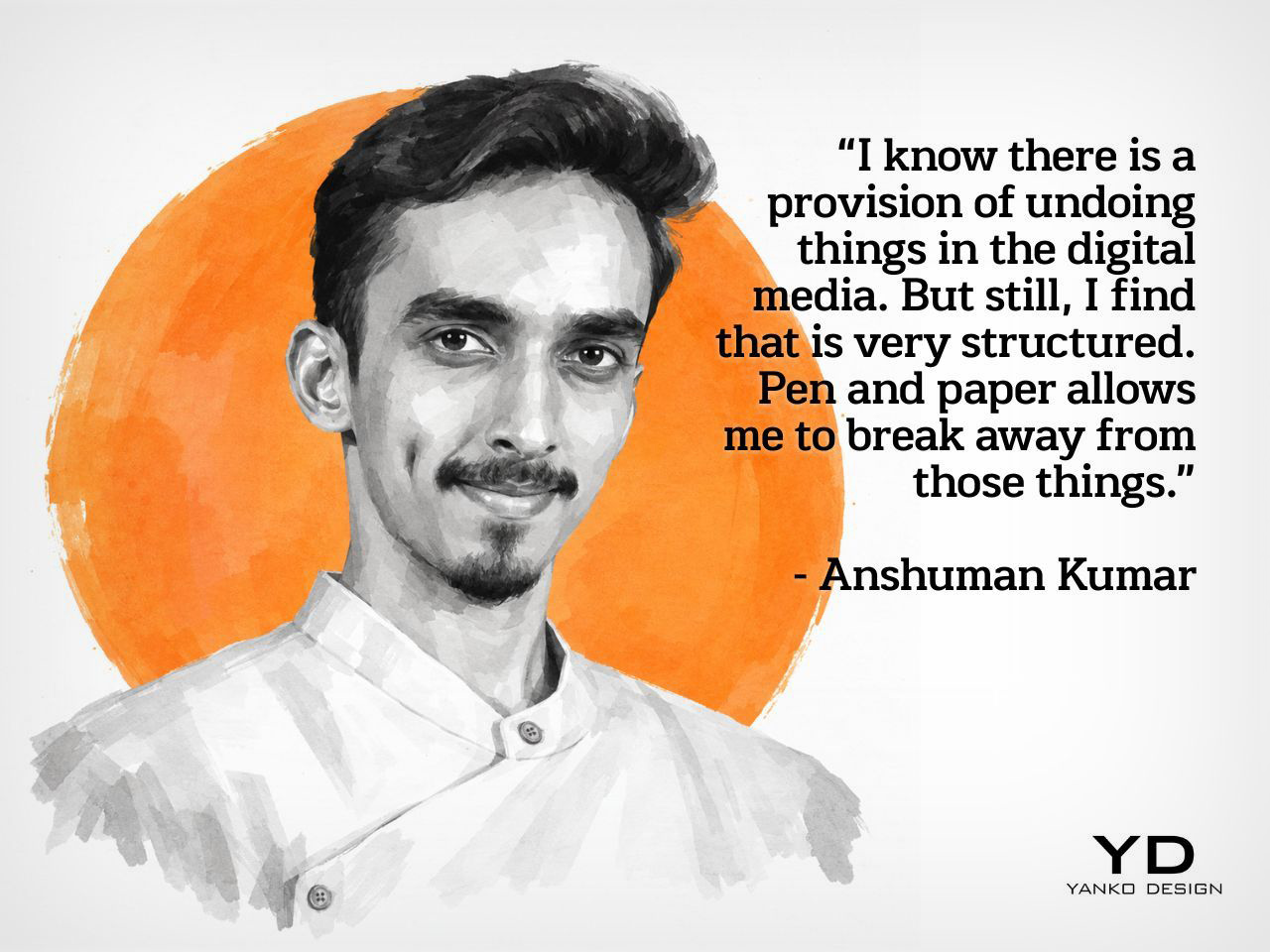
For Kumar, an idea that hasn’t acquired a clear direction often belongs on paper first. Drawing gives him room to discover what he is trying to make before a digital tool asks for more explicit decisions. “That slow process is very important for me to set a defined direction.” The value lies partly in the coordination between hand, eye, and thought, with each drawing helping him gain confidence in the emerging idea. Slowness has a purpose here, but it isn’t an invitation to sketch indefinitely. He also cautions against making hundreds of drawings without becoming more certain. The useful skill is recognizing when paper has answered its questions and another medium needs to take over.
Rendering enters that process as another way to investigate a design, rather than simply produce its final presentation. Discussing KeyShot, Kumar describes a working relationship between sketching, CAD, visualization, and physical prototypes that moves back and forth as questions arise. A CAD model can establish geometry while leaving the appearance of materials, textures, and surrounding surfaces unresolved. Rendering helps him examine those relationships and return to the model with a clearer intention. Physical iterations remain part of the exchange, answering questions an image cannot settle on its own. The process is less about completing a fixed sequence of stages than selecting the medium that makes the next uncertainty easier to examine and discuss.
Learning to Design Beyond the Screen
Kumar is candid about feeling scared when he joined Samsung and entered its voice intelligence group. The opportunity followed a national competition, but the assignment involved a field he hadn’t specifically trained to enter. Voice removed a familiar organizing surface: there was no screen on which to lay out every choice or explain the next step visually. Inputs could be ambiguous, and interactions had to work through a less explicit exchange. He credits mentors with helping him understand that layer and describes systems thinking as important to the transition. Eventually, a self-directed mobility project brought voice and vision intelligence together around driver assistance, progressing through Samsung’s C-Lab program, although he keeps the solution’s details confidential.
His later move to ideaForge brought those interests back into a distinctly physical setting. Kumar already enjoyed flying drones, and UAV systems offered an opportunity to connect that enthusiasm with his experience developing services around emerging technologies. Safety and security applications also contributed to the appeal. Leaving Samsung prompted disbelief from people around him, and he acknowledges the reach available within a large technology company. Still, the new role offered a combination of interests worth pursuing. The interview doesn’t unpack a particular drone or provide a technical case study of its development. Instead, it reveals the reasoning behind the move: Kumar recognized a field where several existing capabilities could become useful together, while leaving him plenty to learn.
Hardware Makes Commitment Harder to Reverse
One of the episode’s most practical exchanges begins with a hypothetical experienced fintech UX designer who wants to create physical objects for the home. Asked what that designer would need to unlearn, Kumar focuses on the expectation that a released experience can be corrected through a later update. Changing hardware may require another development cycle, a revised version, and substantial investment. Its physical form also establishes possibilities and constraints for the services that follow. This changes the timing and weight of design decisions. Experience in UX still matters, particularly in understanding people and interactions, but the new medium demands patience and a different relationship with commitment. Some choices become expensive to revisit much earlier than a software-focused designer might expect.
The same awareness of constraints shapes Kumar’s answer about creating delight. “At the same time, designers are not sitting in ivory tower, right?” An intended experience has to survive contact with technical capabilities, collaborators, and the dependencies between different parts of a system. A relatively simple personal object may be developed independently through digital manufacturing; a complex product requires many people to make compatible decisions. Kumar argues for keeping the overall experience in view while working through those realities, rather than treating either the original idea or an early limitation as untouchable. Across lamps, intelligent services, and drones, that becomes the recurring responsibility: learn what the medium allows, recognize what deserves another attempt, and understand which decisions the next stage will have to live with.
Download your Free Trial of KeyShot Here