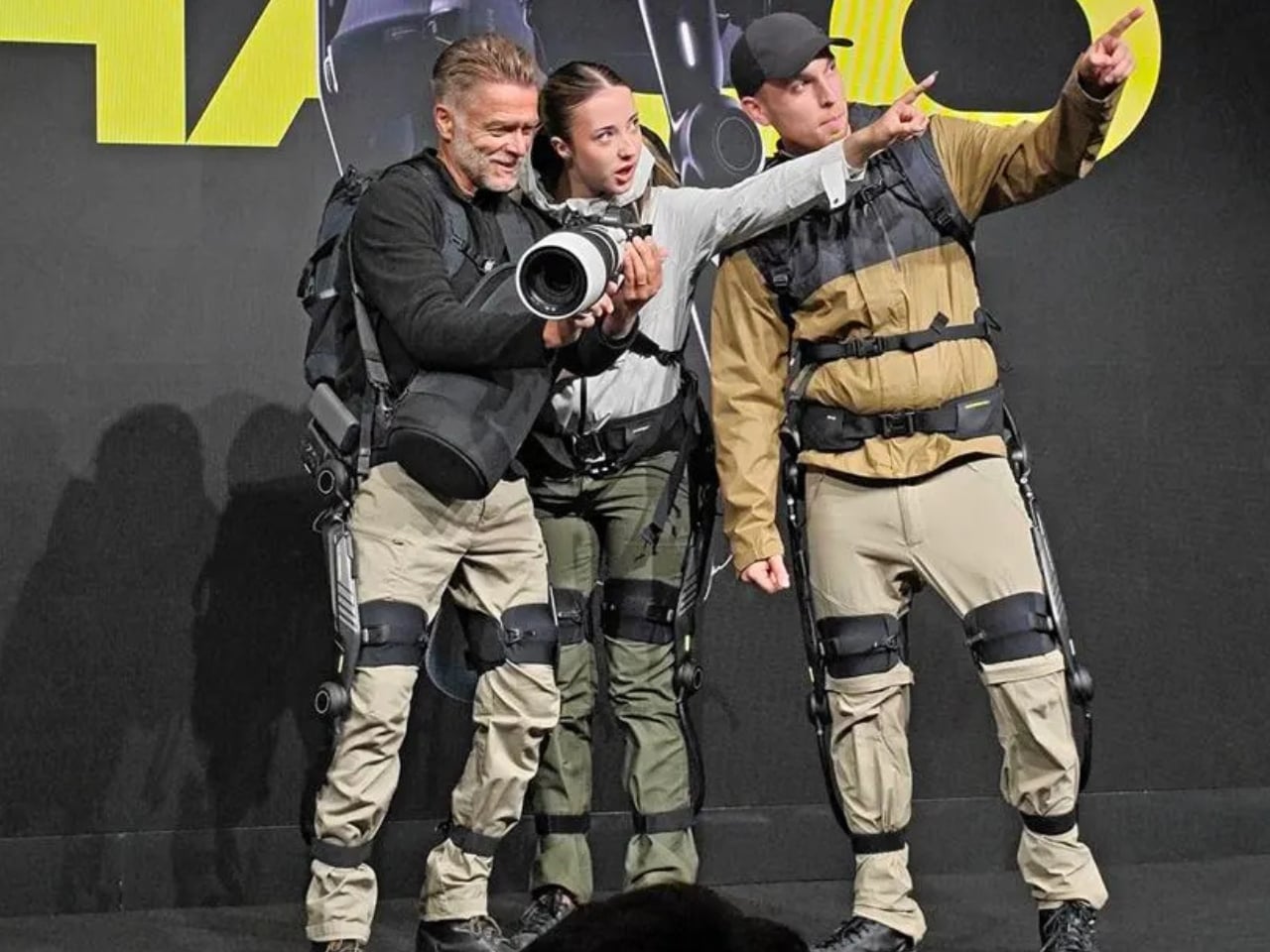

Ask anyone who hikes regularly where their body actually gives out, and it’s rarely the climb up. It’s the way down. Your quads and hips can push you up a mountain just fine, but it’s your knees that absorb the pounding on the descent, on stairs, on the last mile of a long trail when your legs stop cooperating. For years, the exoskeleton industry has quietly ignored this. Every consumer exoskeleton I’ve come across, including Hypershell’s own X series, has focused almost entirely on the hips. That’s helped people hike longer and climb steeper grades, but it never addressed the part of the leg that actually fails first.
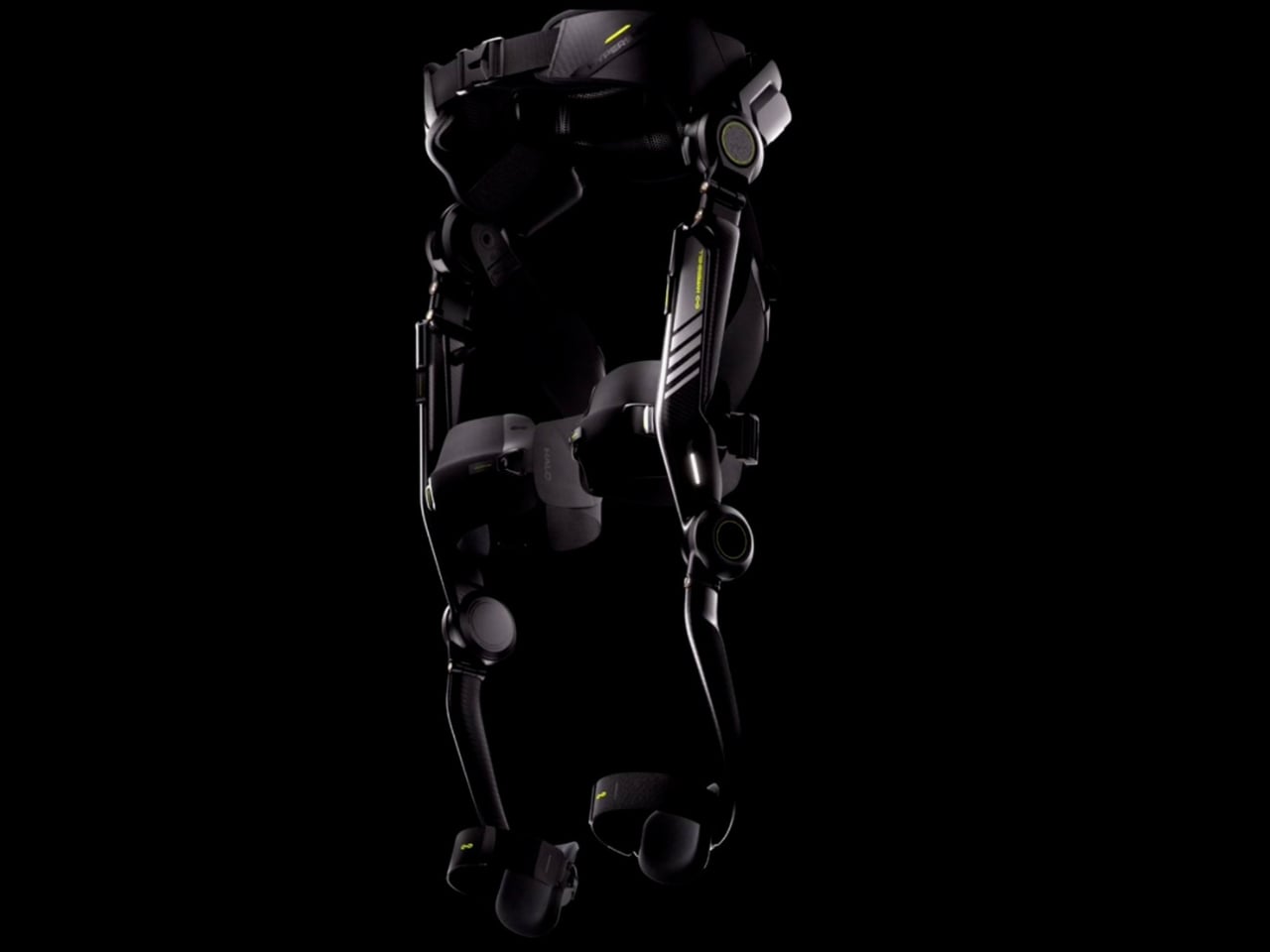
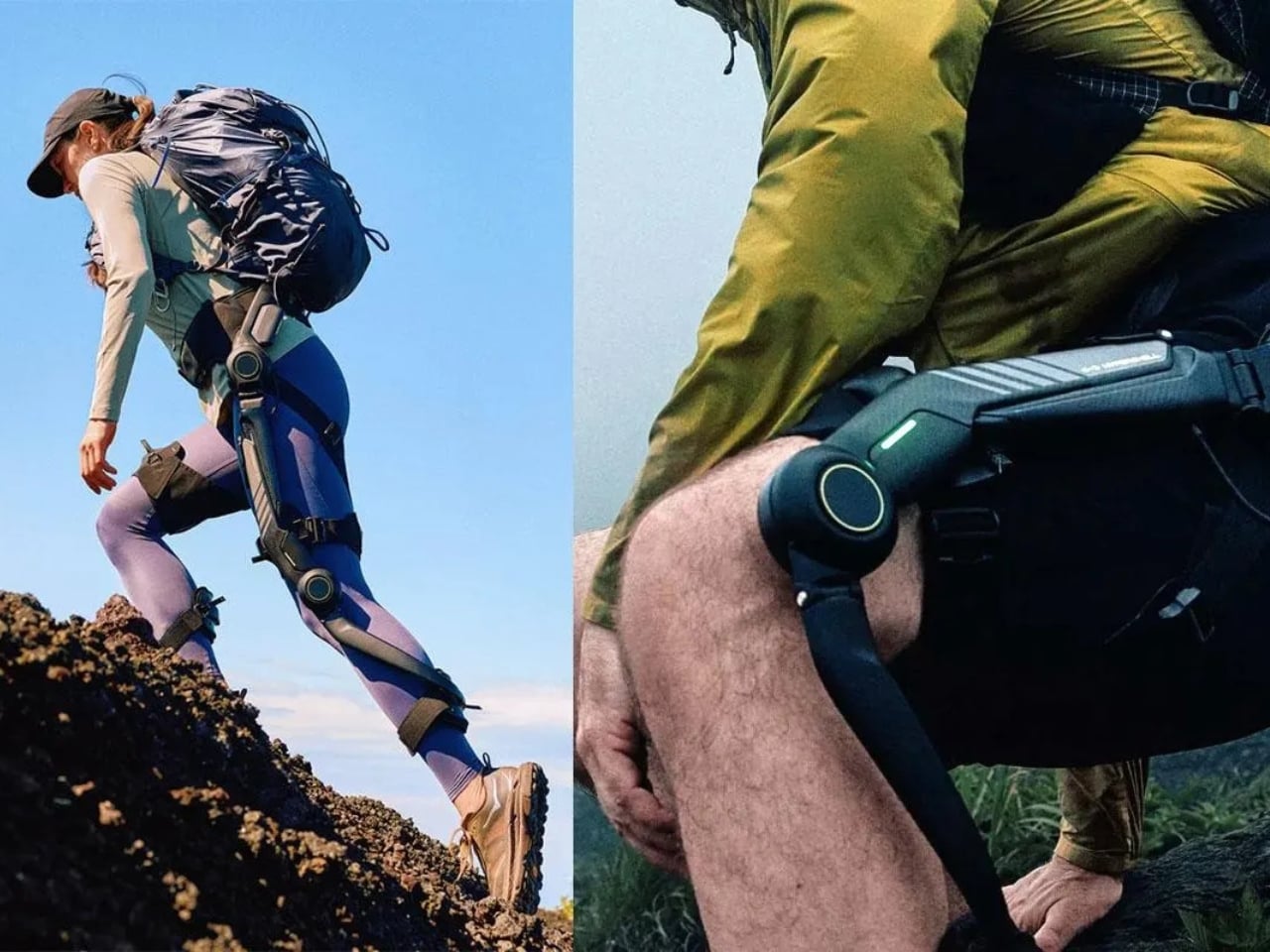
Hypershell Halo is the company’s attempt to fix that gap, and it’s the first exoskeleton I’ve seen that treats the hip and knee as one connected system rather than bolting a knee brace onto an existing hip rig. The Halo runs four motors total, two at the hips and two at the knees, and Hypershell says they’re coordinated through a single unified architecture instead of running as separate, half-communicating systems. That distinction matters more than it sounds. Earlier attempts at dual-joint support, including some of Hypershell’s own internal prototypes, were reportedly scrapped because the control systems couldn’t stay in sync with each other, which is a nice way of saying the hips and knees were fighting instead of working together.
Designer: Hypershell
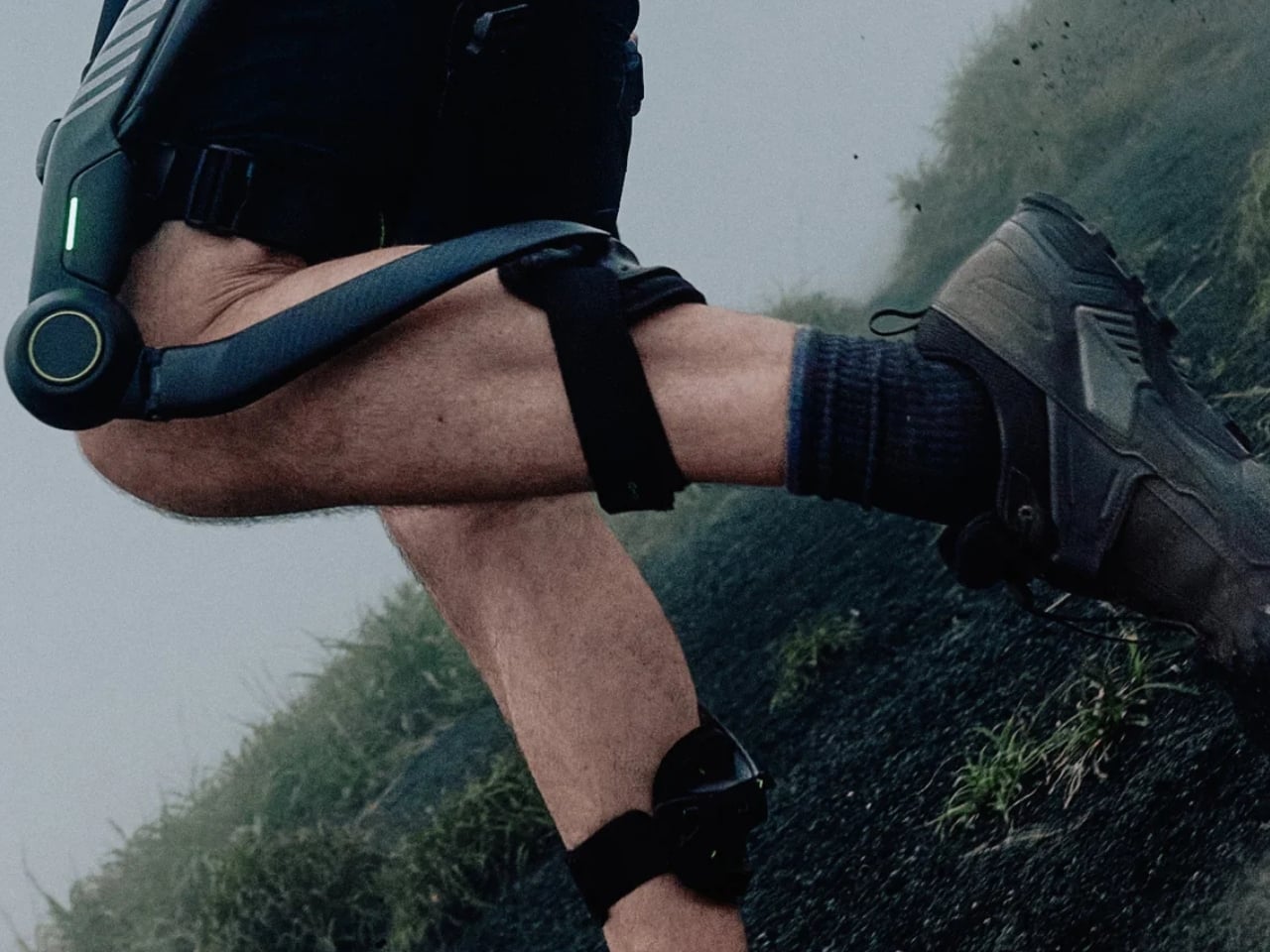

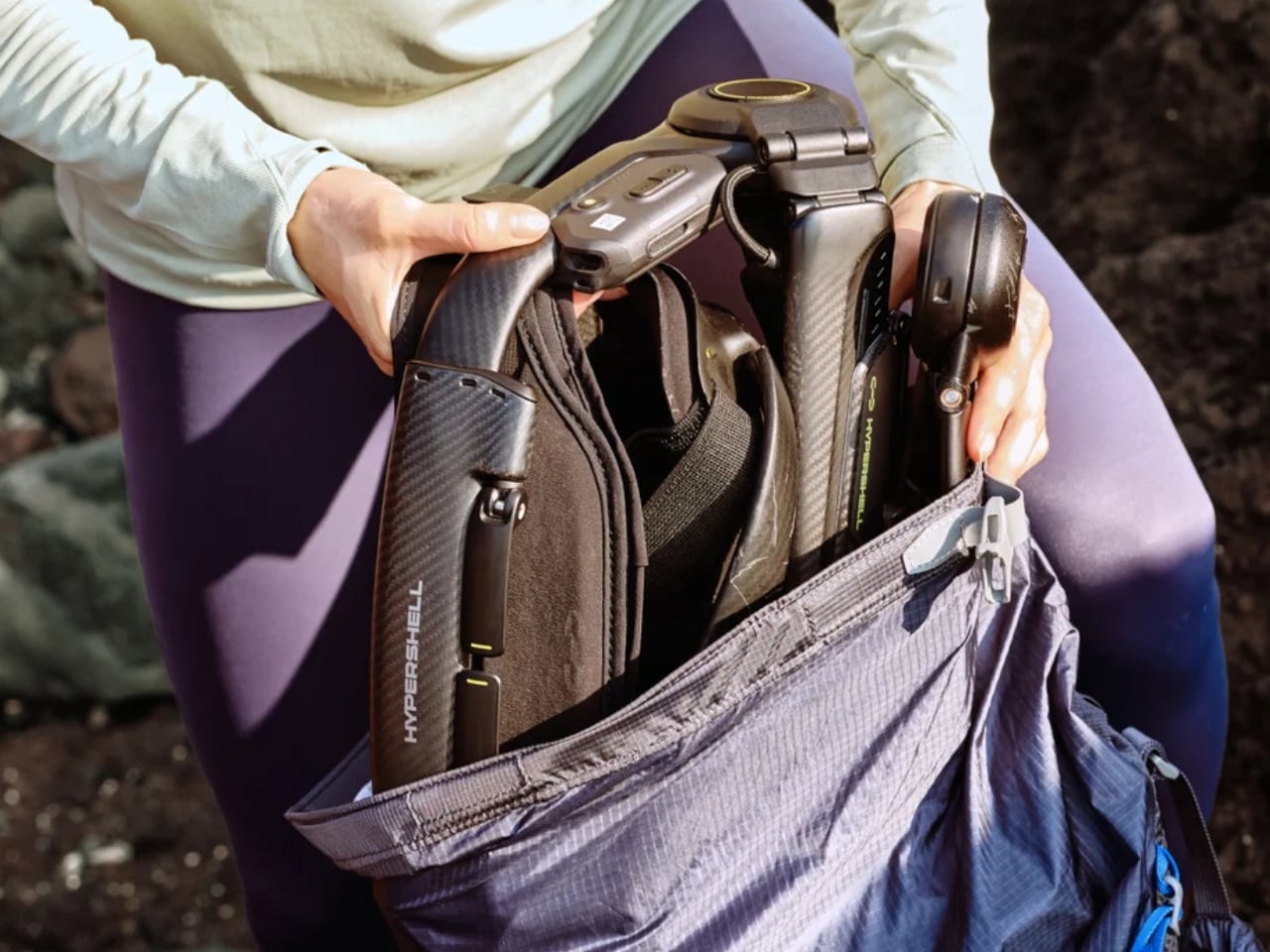
What actually convinces me the Halo is worth paying attention to is the hardware restraint. A carbon-fiber and titanium frame weighing about 2.6 kilograms, four motors producing up to 1,490 watts combined, and a swappable 370-gram battery good for roughly 20 kilometers of assisted walking. It folds down to under 8 liters, which is small enough to strap to the outside of a daypack, and Hypershell claims you can get it on in about 20 seconds, even with a full backpack already on your back. None of these numbers alone are revolutionary. Put together, they suggest a company that understands the actual friction point for anyone considering strapping a robot to their legs: if it’s heavy, slow to put on, or awkward with gear you’re already carrying, it stays in the closet.


The AI layer is where Hypershell is clearly trying to differentiate from the growing pack of exoskeleton makers chasing the same idea. HyperIntuition 2.0 is supposed to read terrain and movement in real time and adjust assistance without you fiddling with a mode dial mid-hike. There’s also Shelly, a chatbot-style assistant you control through a smartwatch, which sounds almost gimmicky until you consider that most people don’t want to stop on a trail to change settings on a phone. Whether Shelly ends up being genuinely useful or just a marketing flourish is something I won’t know until someone puts it through a real weekend hike, but the instinct behind it, reducing friction between the wearer and the machine, is the right one.

At $2,299 for the Origin Edition, the Halo isn’t cheap, and it’s priced well above the $999 to $1,999 range of Hypershell’s hip-only X models. That premium buys you the first product in this category actually built around full-leg coordination rather than partial support, and for anyone who has skipped a hike because their knees couldn’t handle the descent, that might be the entire pitch. I don’t think this device turns casual walkers into trail athletes overnight, and I’d be skeptical of any brand claiming it does. But for the growing number of people managing knee wear, recovering from injury, or just getting older and less willing to accept stairs as an enemy, a machine that finally treats the knee as seriously as the hip feels less like a novelty and more like an overdue correction.


Pre-orders are open now for the US, Canada, Europe, the UK, and China, with shipping expected in November. Whether the Halo lives up to its own architecture claims once it’s on real trails and real staircases is still an open question, but it’s the first exoskeleton pitch in a while that’s made me want to find out.