
When a desktop printer moves 6,000 units and clears $20 million in revenue on day one, something is clearly going on beyond the usual pre-launch hype cycle. The xTool O1 Omni Printer is a 4-in-1 desktop system merging UV, DTG, DTF, and UV DTF printing in one modular machine, a combination that previously required four separate devices and considerable floor space. For years, creators have been burdened by fragmented workflows, forced to buy separate, single-purpose machines for rigid substrates and textiles. Desktop UV printing has been one of the more notable maker-market stories of 2026, and the O1 is making a clear bid for category leadership. The central design proposition is capability consolidation, and day-one sales suggest it landed with the right people.
Units have already begun shipping, turning pre-order momentum into machines arriving at actual studios and workshops. On August 27, the first offline debut of the O1 Embroidery happened at the Next Level Conference x xTool SMB Summit, where live demos will give attendees their first hands-on encounter with the platform’s textile and dimensional output. That event was a deliberate venue choice: the Summit brings together the small business creative community the O1 is built for, and debuting the embroidery capability there sends a clear signal about where xTool sees the product’s core application. Three editions run from $1,899 for the Single UV configuration to $2,999 for the full UV + Fabric hybrid. The modular dual-printhead system is the engineering decision that holds the entire consolidation promise together.
Designer: XTOOL
Click Here to Buy Now: $1899 $2499 ($600 off). Hurry, deal ends in 48-hours!
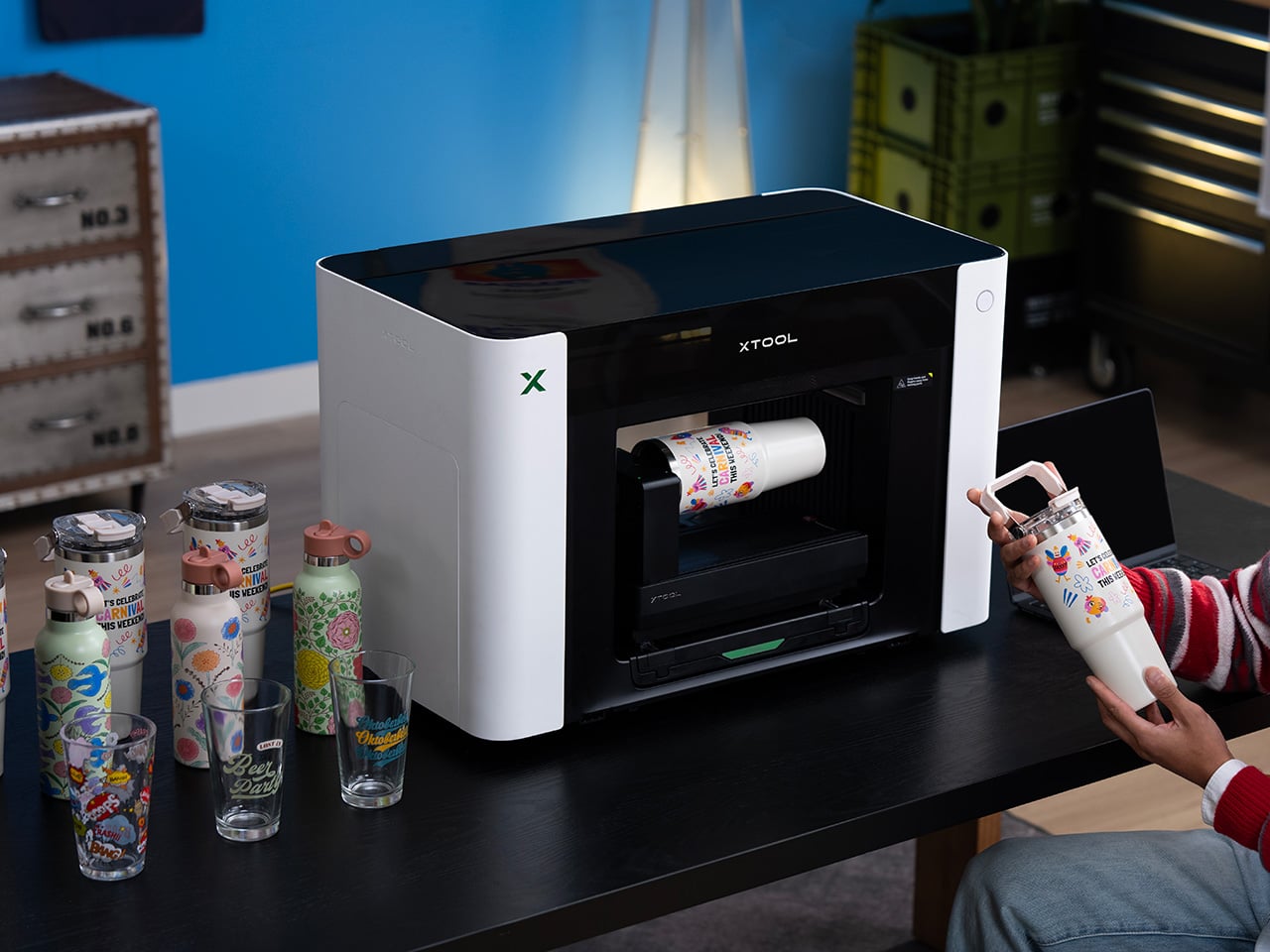

The dual-printhead architecture is what separates the O1 from every desktop printer in its class, operating more like a configurable platform than a fixed device. Users can run dual UV printheads for layered effects and accelerated throughput, or swap in a fabric printhead to shift between hard goods and garment workflows on the same machine. UV output covers wood, acrylic, glass, and metal with raised 3D texture effects up to 7mm deep, supported by a 2,000-plus texture library. The fabric side handles DTG and DTF workflows, including on curved and irregular surfaces, with an OEKO-TEX certified system that survives 50-plus washes without fading. A Rotary Attachment extends the platform to cylindrical objects like tumblers, with Automated 3D Modeling covering 90% of mainstream shapes for a 1:1 design preview before printing.
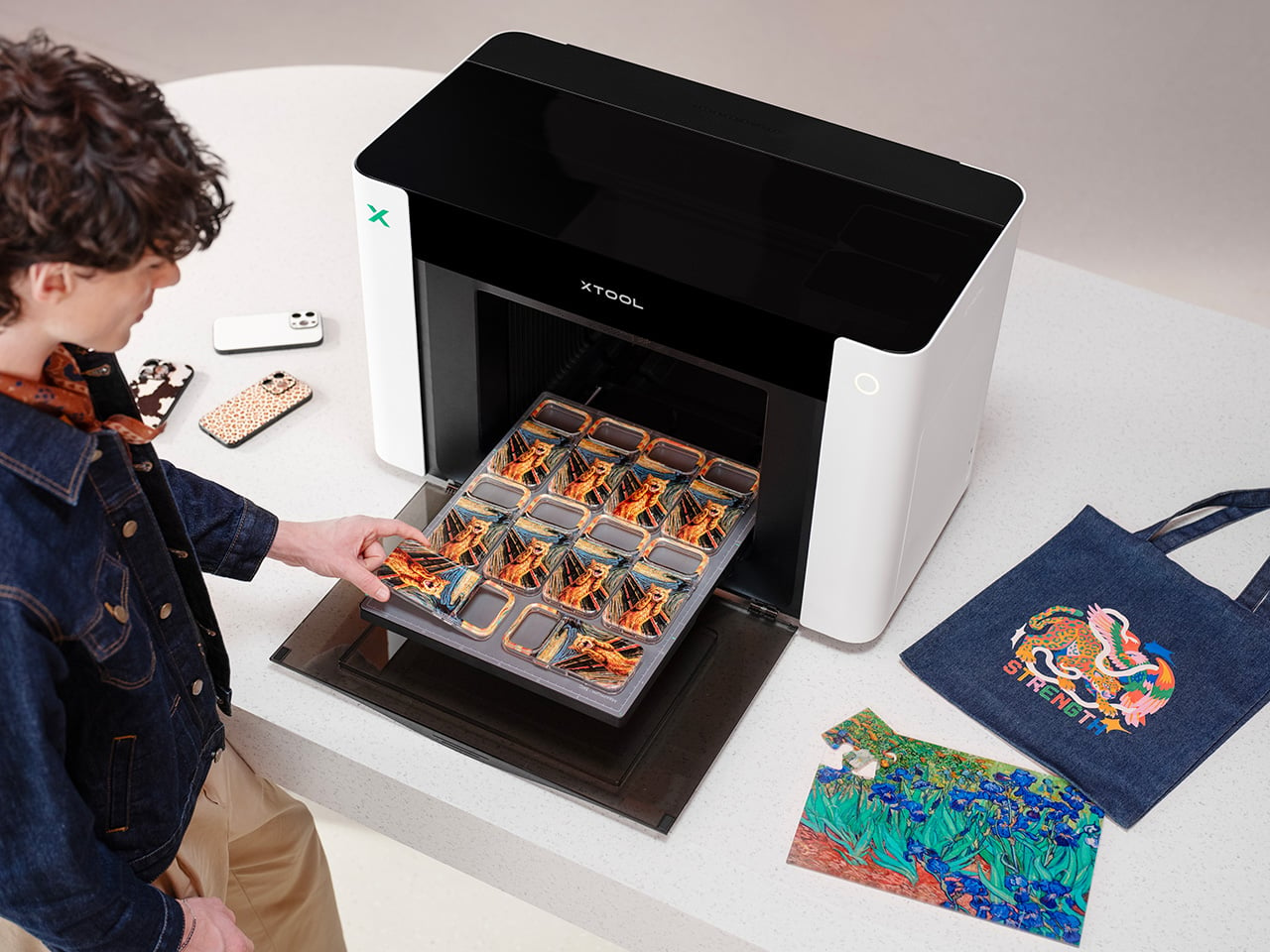
Positioning accuracy is delivered by xTool’s Pixel-Scan Vision System, combining Line Laser Altimetry and CIS Scanning. A Laser-Guided Auto-Focus detects each object’s highest point before printing, eliminating printhead collisions on uneven surfaces. Unlike traditional distorted fish-eye cameras, the 1:1 Distortion-Free CIS Scanning offers close-range, high-definition scans with zero dead zones, powering a jigless “Drop & Print” workflow that removes alignment jigs from the equation, which is a more meaningful time-saver than it sounds in an actual production environment. xTool Studio’s AI Contour Recognition instantly identifies irregular shapes to fill designs perfectly while automatically avoiding holes like camera cutouts. The Laser + UV Seamless Workflow lets users laser-cut a workpiece and move it to the O1, where the software automatically recognizes and aligns the print with zero manual recalibration.
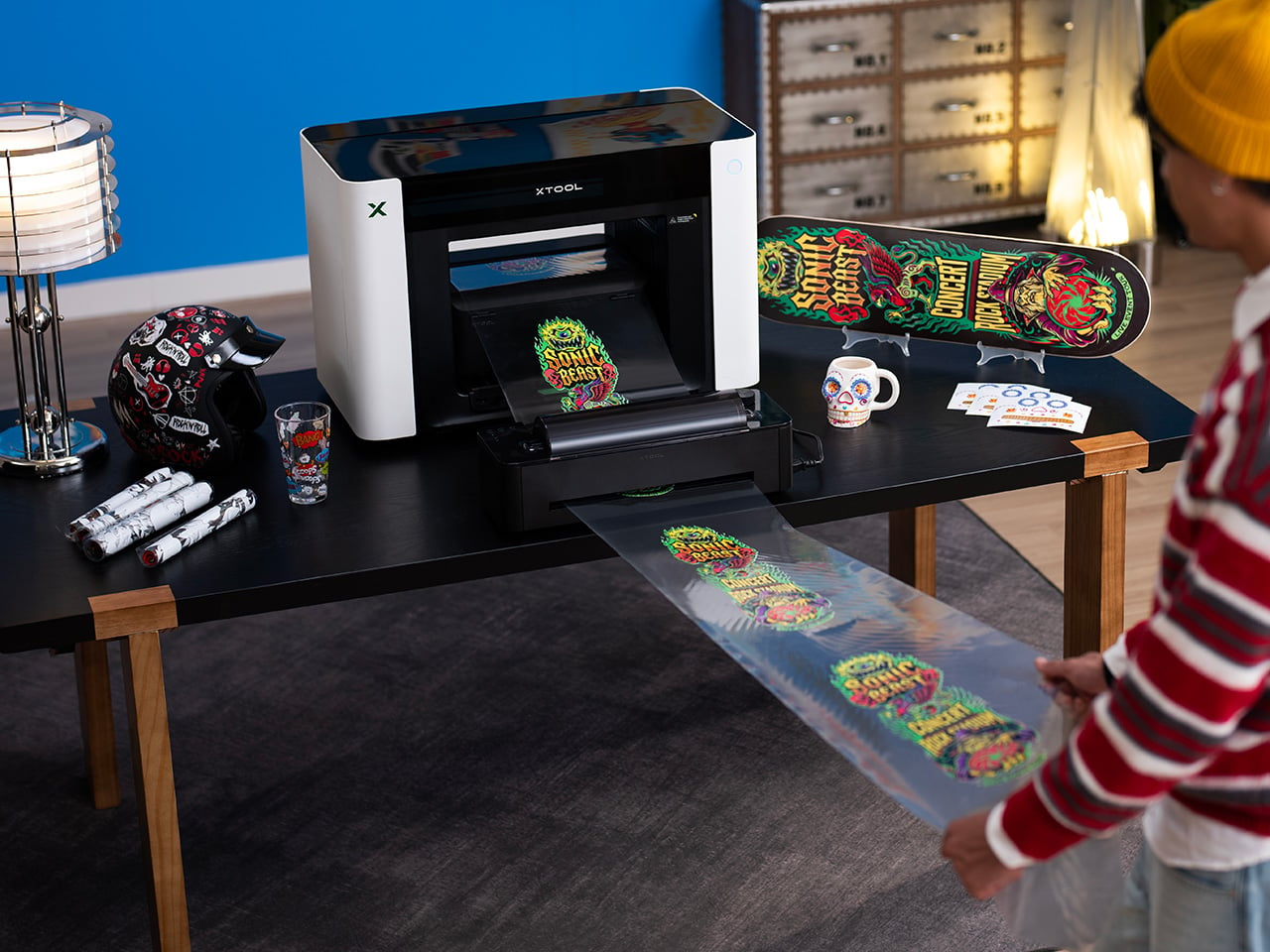
Three editions cover the full range from single-mode UV to full hybrid, priced between $1,899 and $2,999, with each tier differentiated by workflow rather than arbitrary specs. The entry-level UV Edition at $1,899 targets rigid material personalization across wood, acrylic, glass, and metal. The Dual-Head UV Edition at $2,899 adds fluorescent neon inks for blacklight effects and specialized soft and hard white inks for materials like leather. The UV + Fabric Edition at $2,999 is the full cross-category hybrid, covering both hard goods and garment workflows through the OEKO-TEX certified fabric system. All three share the Pixel-Scan Vision System and xTool Studio, keeping the intelligence layer consistent across the lineup.
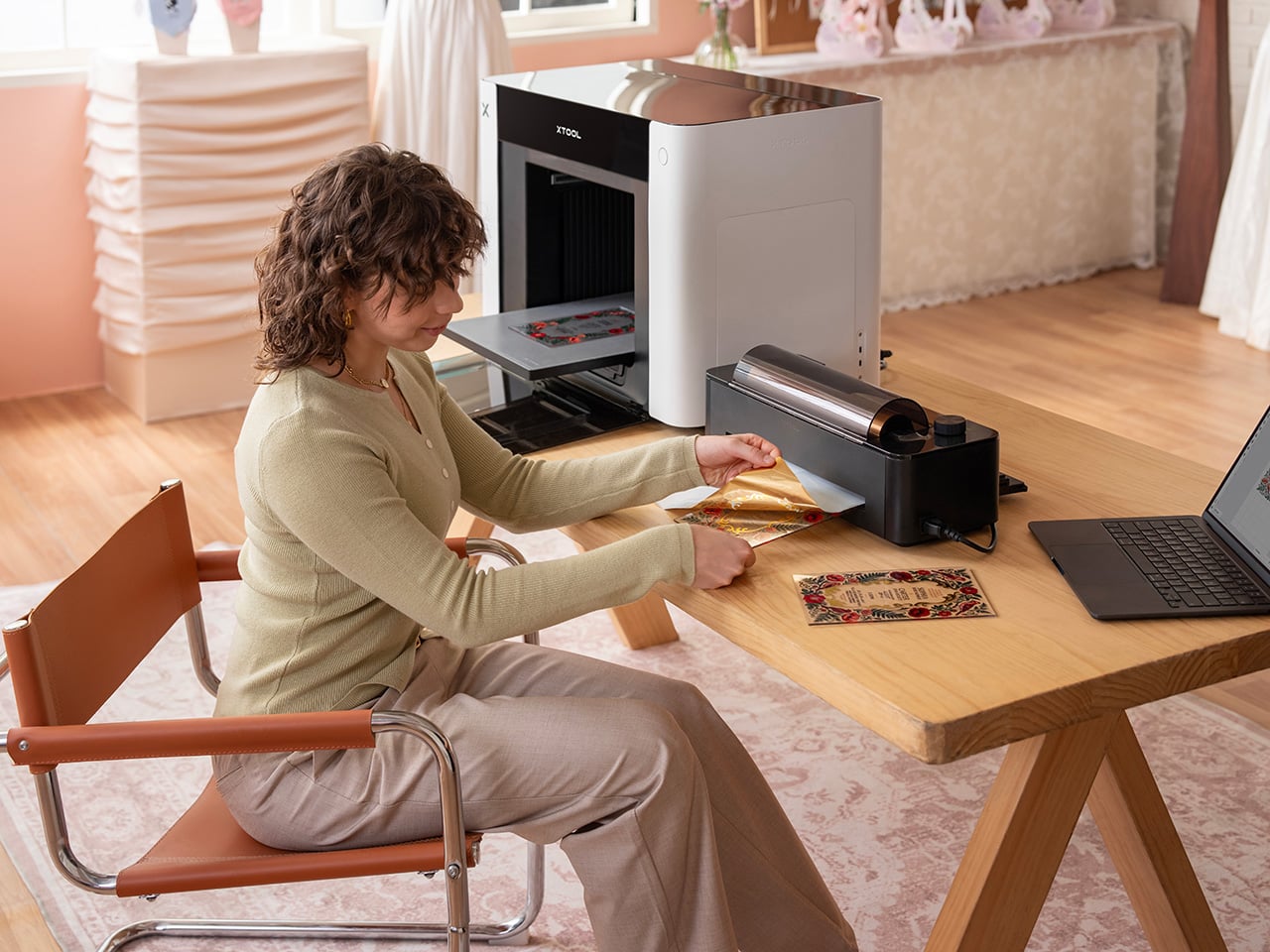
UV printing at the studio scale has historically required dedicated ventilation and careful ink handling, which kept the workflow inside commercial print shops. The O1 uses GREENGUARD-certified, non-reprotoxic inks and an advanced built-in air filtration system to eliminate odors in home studios. SmartCycle 2.0 automates routine care to prevent clogging, offering 14-day vacation-ready support that lets users step away with confidence and return to a machine that is ready to run. The Dual-Head UV Edition adds specialized flexible white inks, expanding the material list to leather goods and flexible substrates. Taken together, these decisions position the O1 as a machine built to live in a real creative workspace, not parked in the back corner of a commercial print shop.
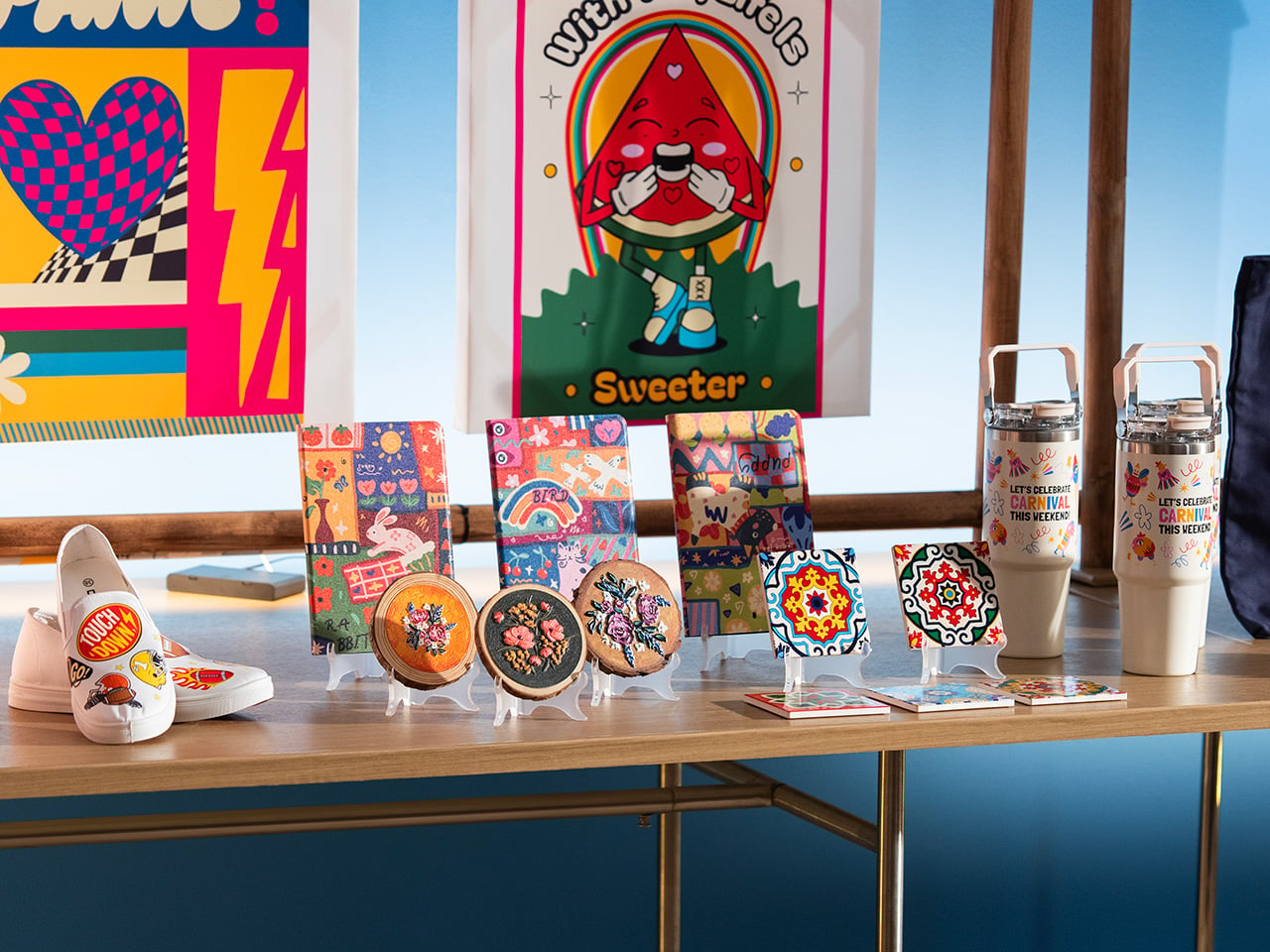
The O1 Embroidery made its first public hands-on appearance at the Next Level Conference x xTool SMB Summit on August 27, putting the platform’s most dimensional textile output in front of the small business creators it is built for. Desktop UV printing has heated up considerably in 2026, with machines like the eufyMake E1 generating real market attention, and the O1 is making a clear bid for the consolidation position in that category. The 6,000-unit, $20 million day-one performance signals the market was ready for this hardware category long before the product arrived. Explore the full xTool O1 Omni Printer lineup and configure your edition at xTool’s website.
Click Here to Buy Now: $1899 $2499 ($600 off). Hurry, deal ends in 48-hours!