Most of us have a complicated relationship with flat-pack furniture. The promise is always elegant: a flat box arrives at your door, you follow a few illustrated steps, and somehow a piece of furniture materializes in your living room. The reality involves a suspiciously leftover screw, a strained friendship, and a sofa that wobbles slightly to the left for the rest of its life.
Seoul-based industrial designer Jisu Yoon had a different idea. Not a better Allen key. Not a cleverer instruction manual. A sofa built from the same material used in medical stents and aerospace mechanisms, one that deploys itself with a single motion and collapses just as easily when you need to move it. No tools. No foam. No frame. The Re-flat pack sofa is genuinely unlike anything sitting in the average furniture catalogue right now.
Designer: Jisu Yoon
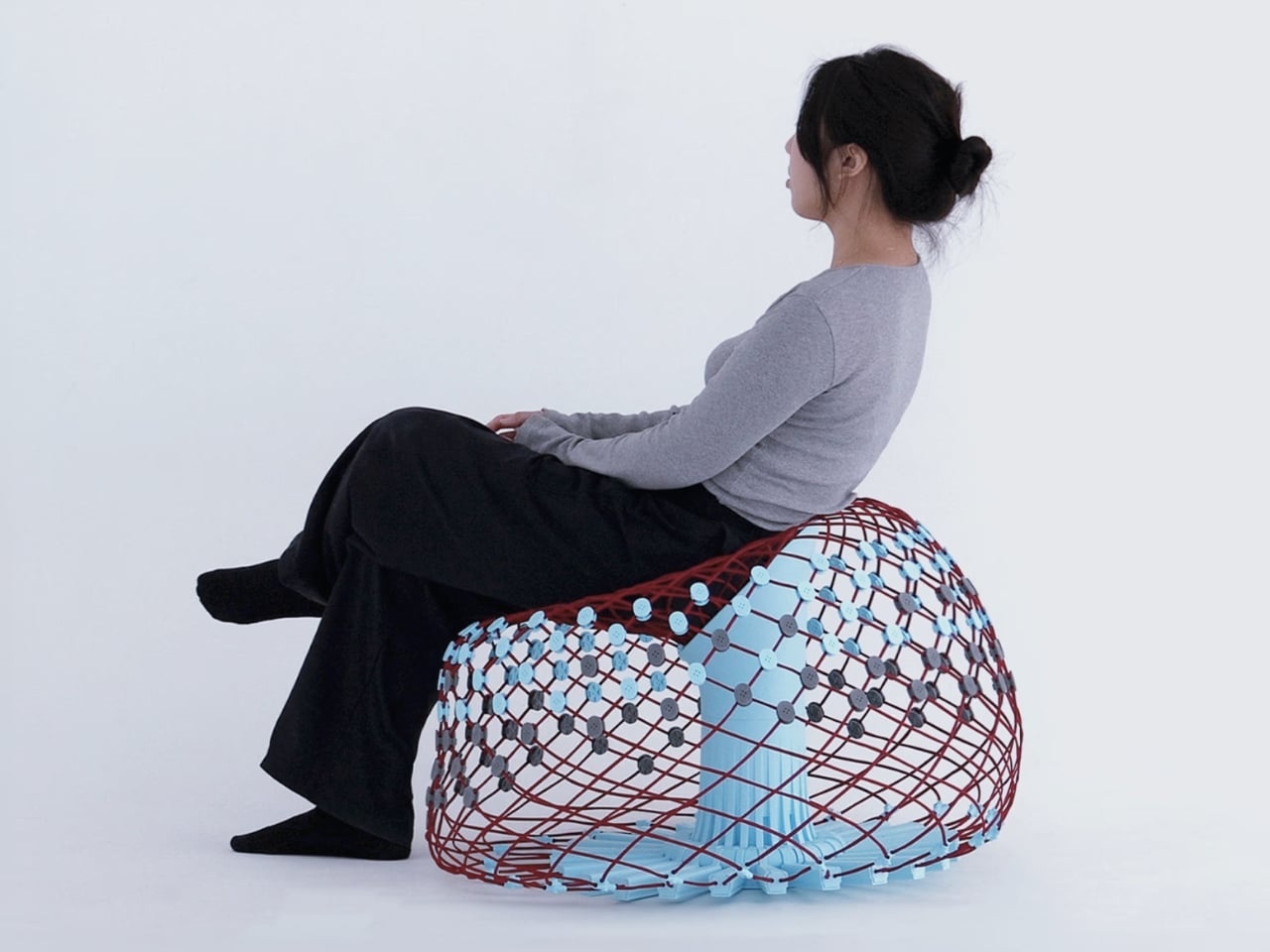

The material at the center of all this is nitinol, a nickel-titanium shape-memory alloy typically used in medical stents and aerospace mechanisms. It has the remarkable ability to return to a preset form after being deformed. You likely know it from the kind of glasses frames that bend wildly and spring back without snapping. Yoon’s insight was to ask whether that same superelastic behavior could replace both the structural frame and the cushioning of a conventional sofa simultaneously. The answer, after 1.7 years of prototyping and testing across materials including glass fibre, steel wire, nylon rope, polypropylene, and carbon rods, was yes.
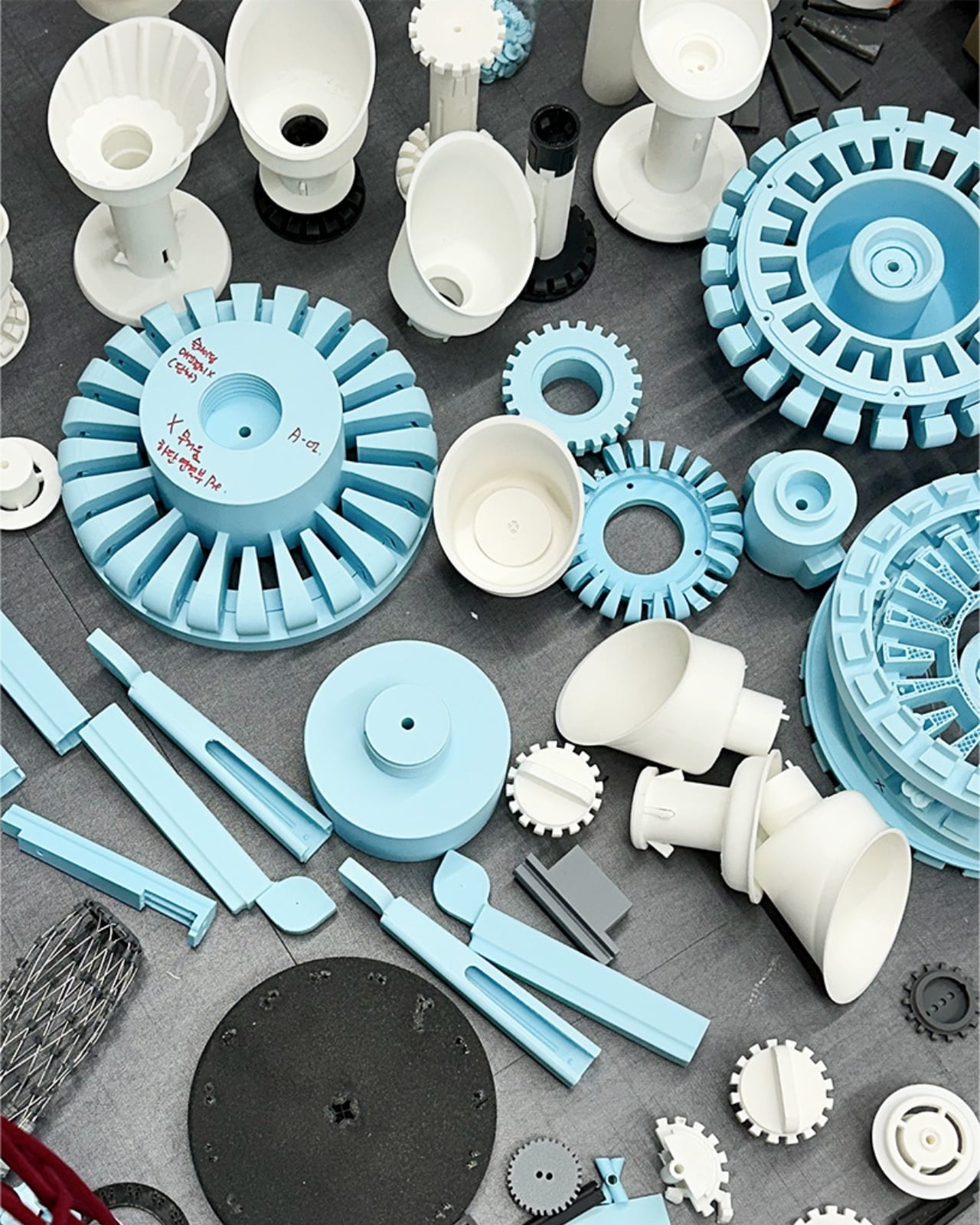

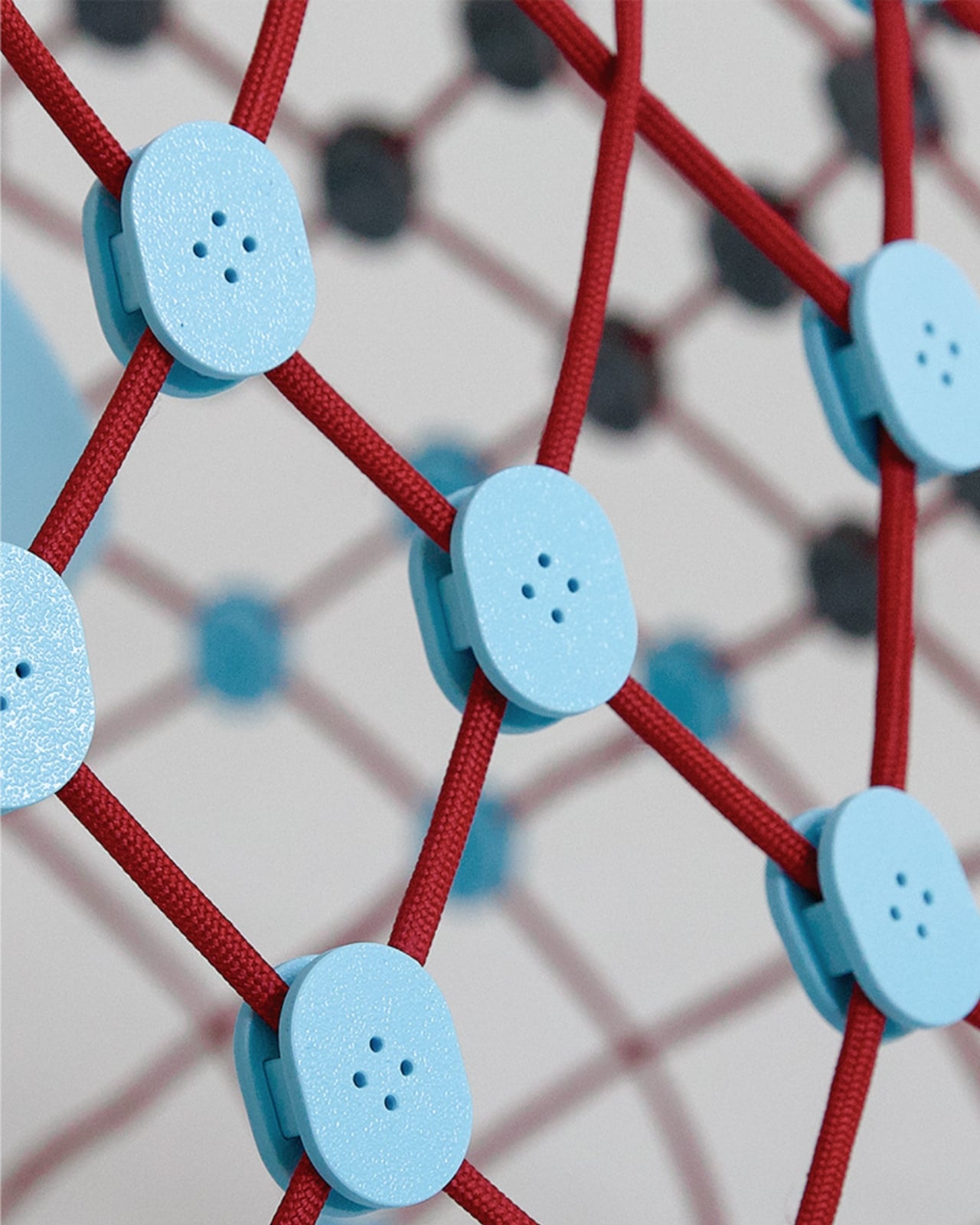
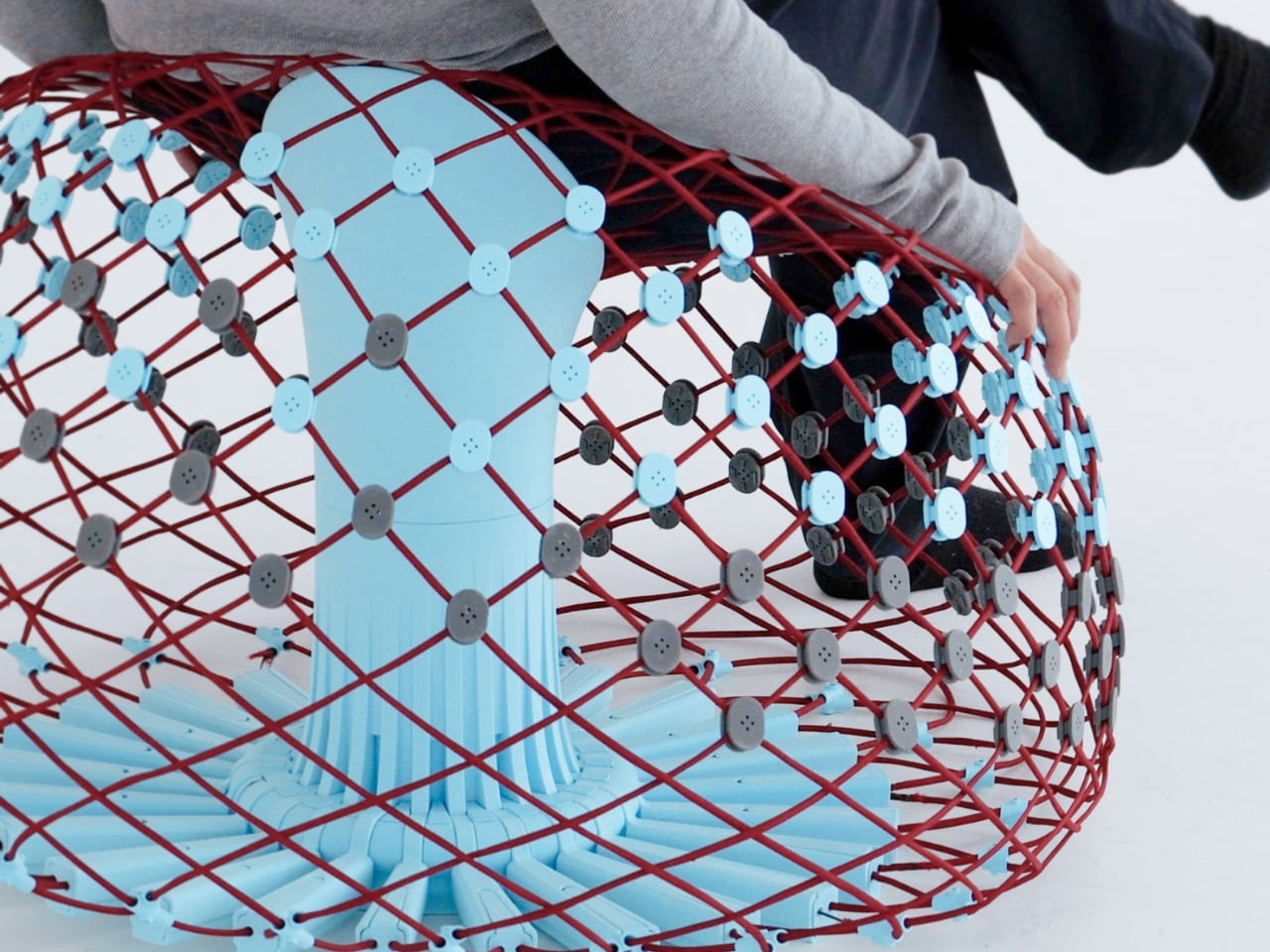
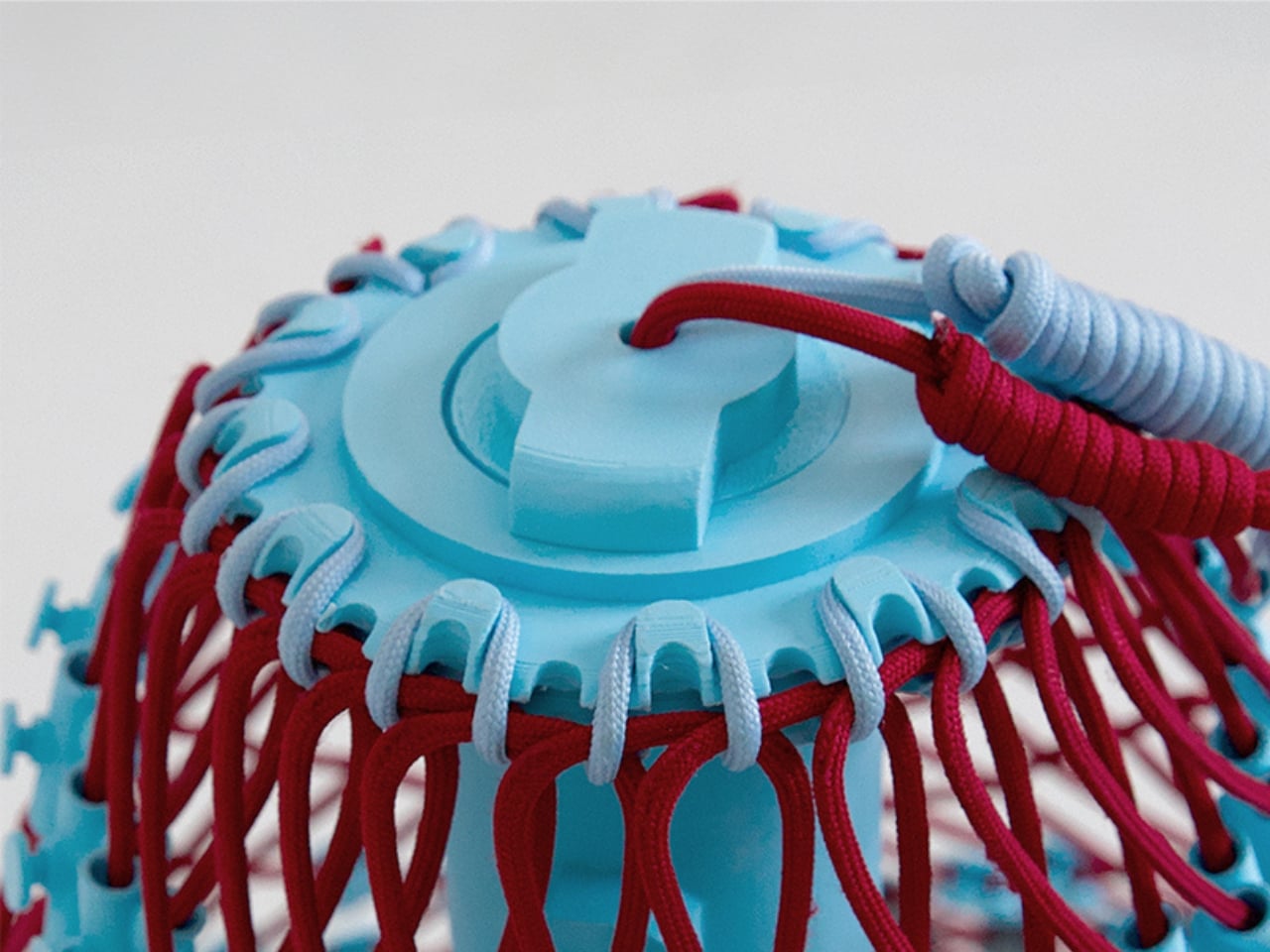
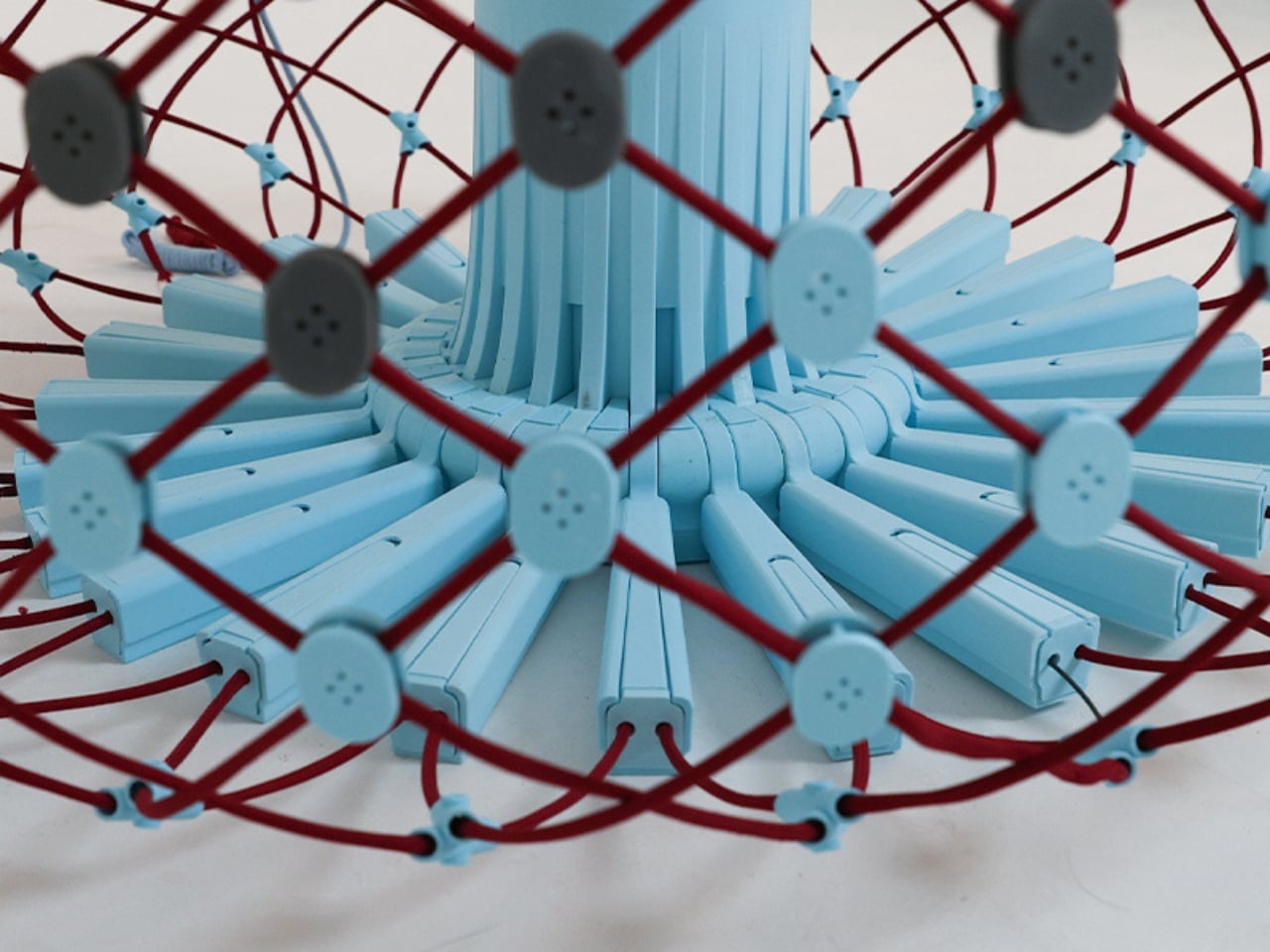
The construction is more handcraft than factory floor. Nitinol wires are threaded inside red fabric cords and then hand-woven and laced into 3D-printed PLA joints. A central 3D-printed hub manages the tension of those wires and locks the form in place once deployed. The result is what Yoon describes as a skeleton and skin unified into a single structure, where there is no separate frame to assemble and no cushion to stuff back into place. When it opens up to its full 700mm lounge seat, it does not look like a compromise. It looks like furniture that was always supposed to work this way.
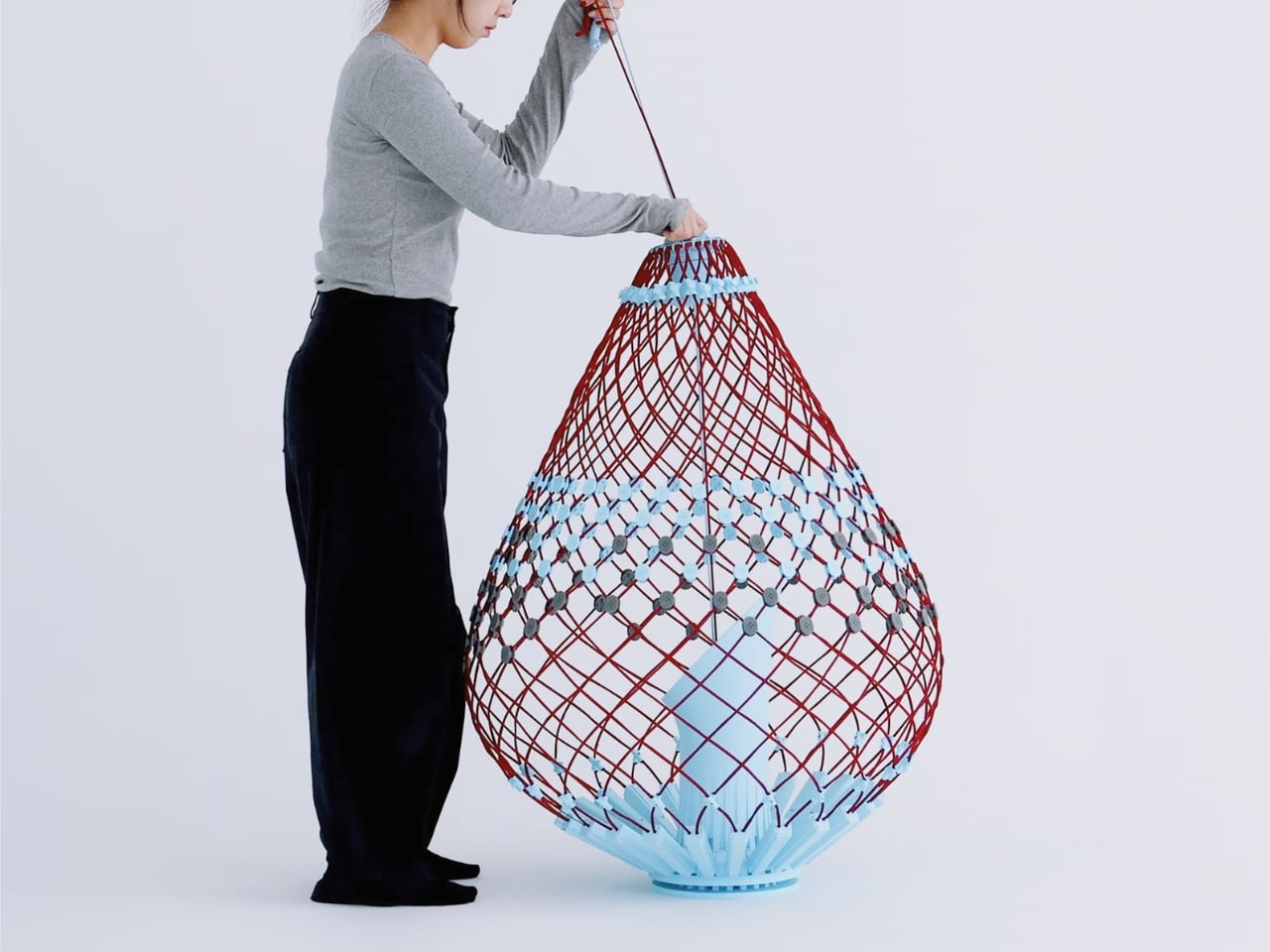
What stops this from being just a clever student project is the precision of the constraints Yoon set for herself. Flat-pack furniture has been a design conversation for decades, but most of it operates within the same logic: ship flat, assemble once, live with it. The Re-flat pack sofa challenges the “assemble once” part specifically. The goal was something that could collapse and redeploy repeatedly without degrading, which is precisely why foam was ruled out early. Foam compresses and gives, but it does not remember its shape the way nitinol does. Choosing a medical-grade material for living room furniture is not a gimmick. It is a direct engineering response to a real material limitation.
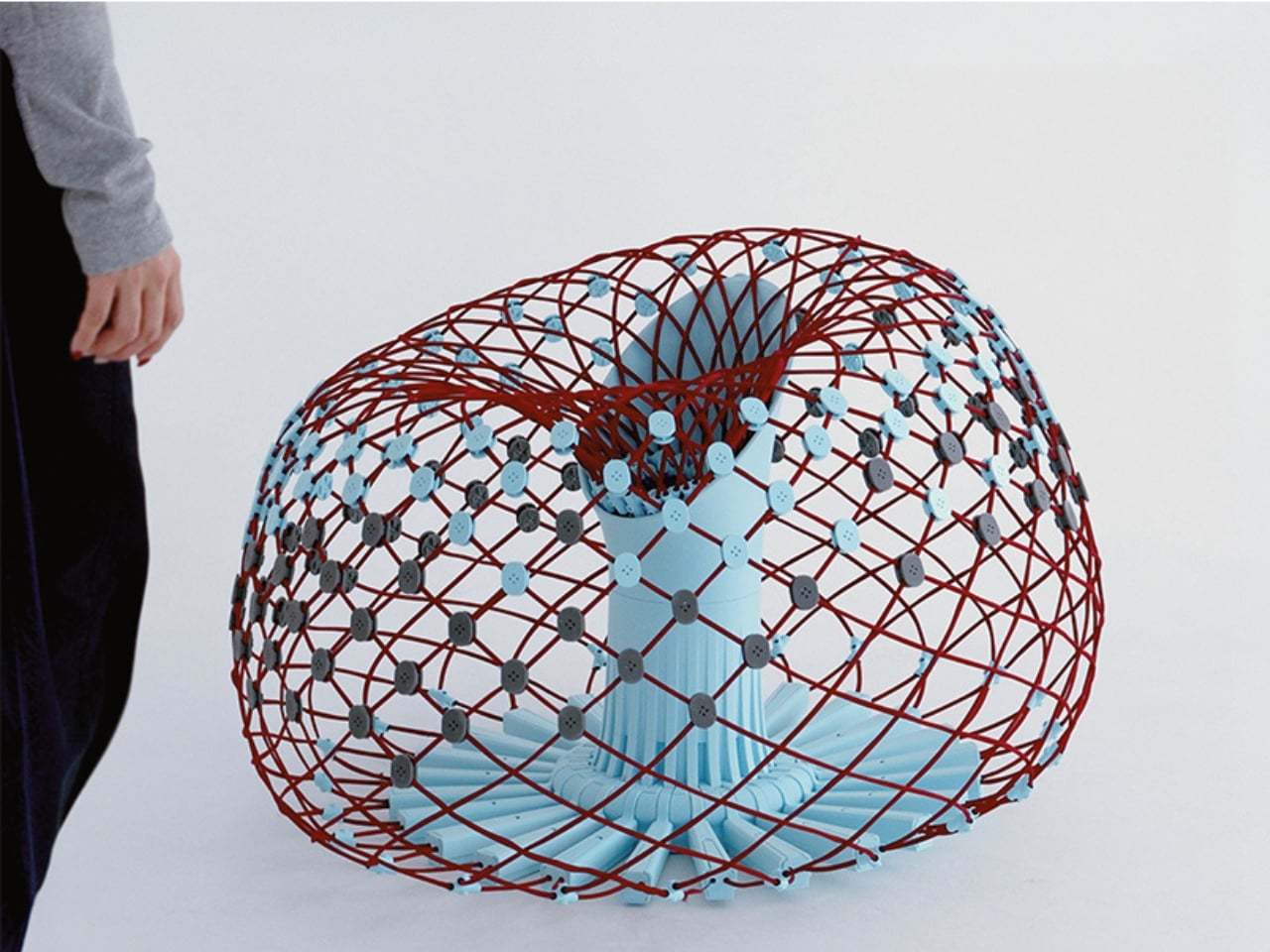
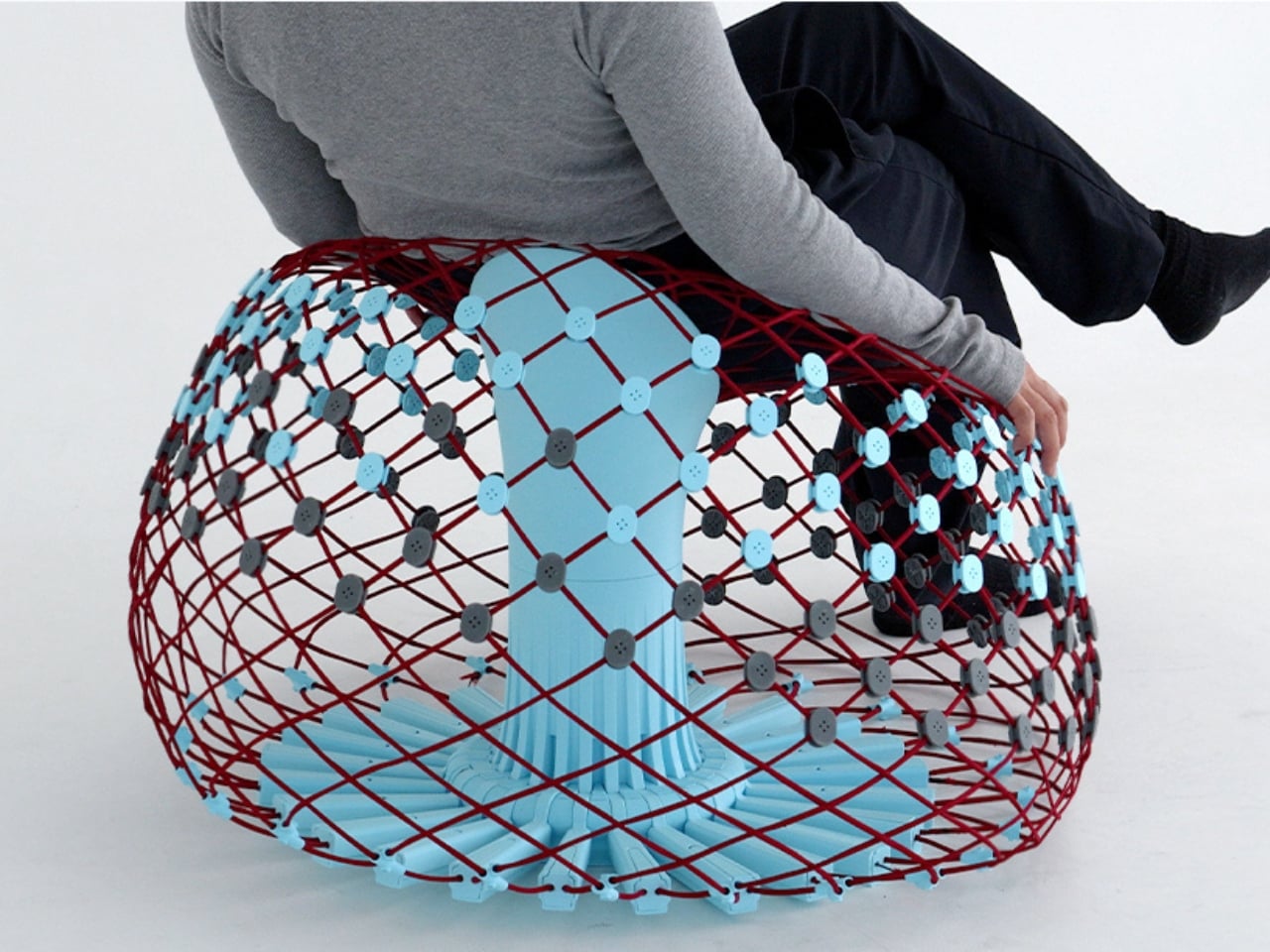
The dimensions tell a quiet story on their own. Fully expanded, the sofa sits at 700 x 700 x 600 mm. Collapsed for storage or shipping, it compresses down to 250 x 250 x 1430 mm, essentially a tall, narrow column. That contrast between those two states, one open and inhabitable, the other almost impossibly compact, is where the design earns its name. It is not just a flat-pack object. It is a re-flat-pack object, one designed to return to that state over and over again.
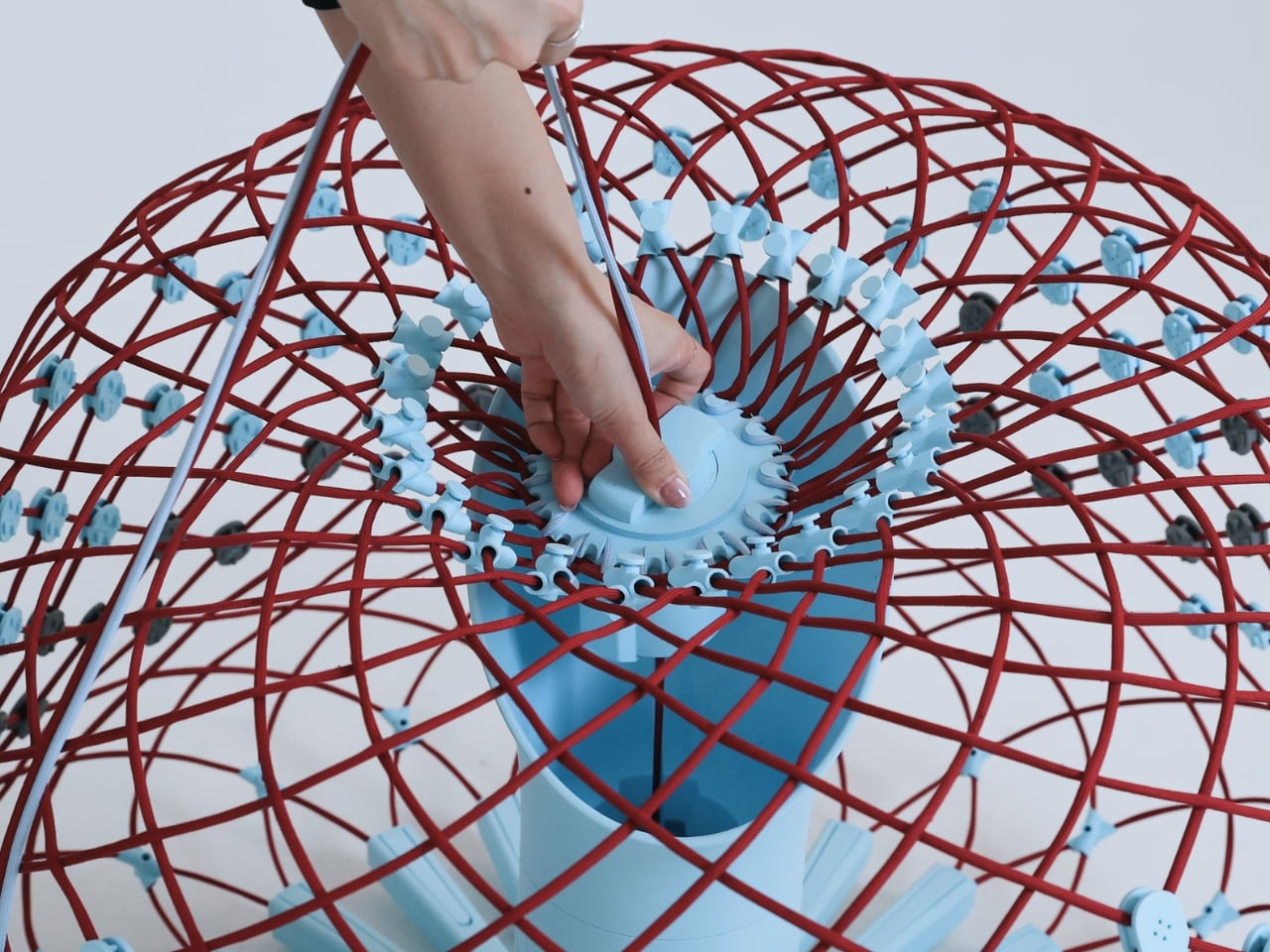
Yoon’s project won the SIT Furniture Design Award 2026, which feels like the right kind of recognition for a piece that started as a graduation project and kept evolving. A lot of concept furniture wins attention at the graduation show and then quietly disappears. The Re-flat pack sofa reads more like a prototype with a trajectory, a question being asked seriously about where furniture materials are headed next.
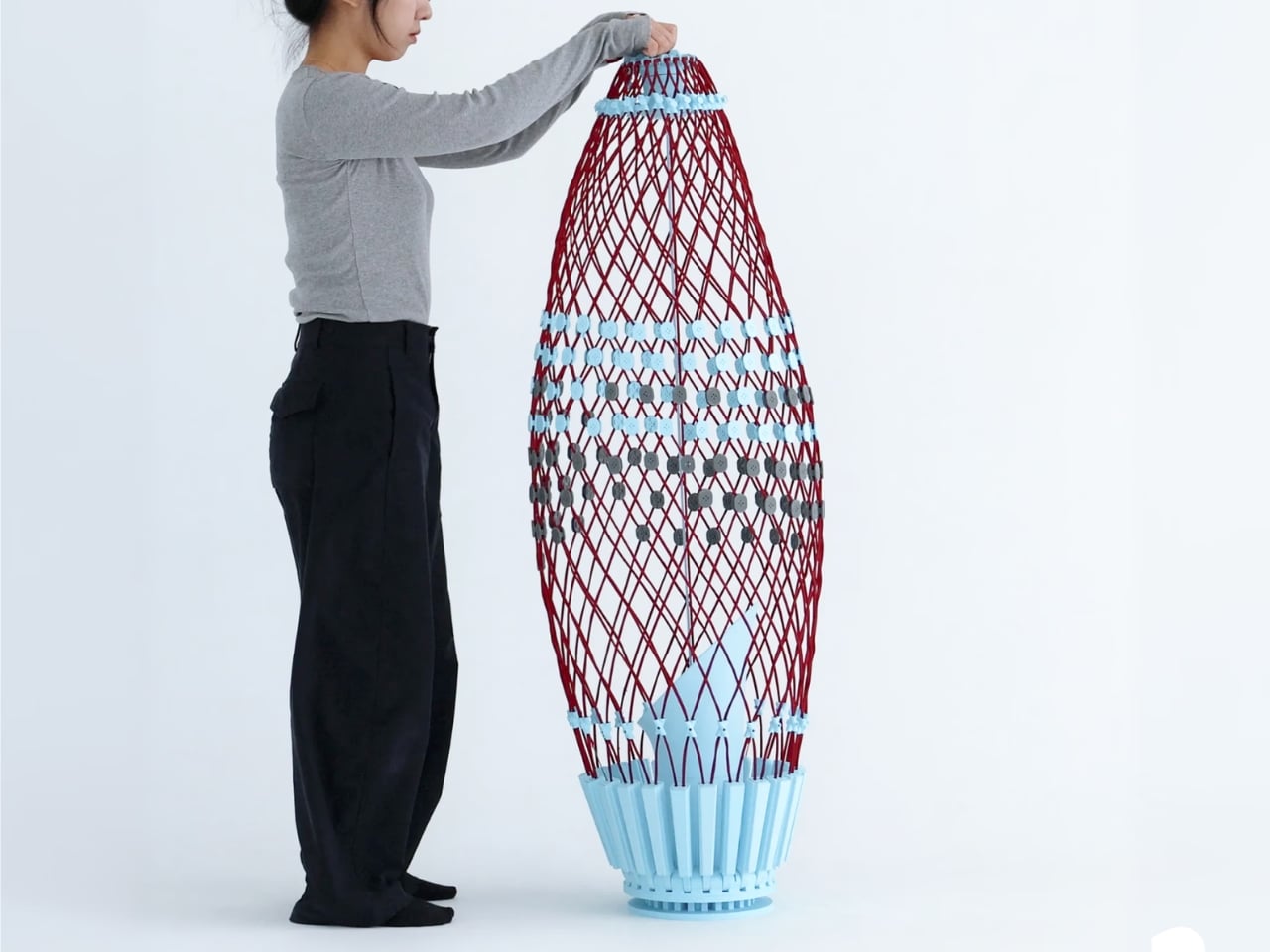
The flat-pack has long been a symbol of modern, practical living. Yoon’s version suggests it can also be smarter. Not just easier to ship, but genuinely rethought at the material level, where the wires carry the weight and the weave holds the shape, and the whole thing folds away until you need it again.