

“Glasshole” entered Urban Dictionary as word of the day in March 2013, which tells you roughly how long it took society to make up its mind about face-mounted cameras. Google Glass had barely reached early users when bars, restaurants, and theaters started banning it. The device died from a social verdict so decisive it became a punchline. A decade later, Google is back. At Samsung’s Galaxy Unpacked in London today, the company helped reveal a new generation of AI-powered smart glasses, co-engineered with Samsung, dressed up in Warby Parker frames, and powered by Gemini. Same idea. Different fonts.
The climate into which these glasses arrive is not quiet. Meta spent the better part of 2026 trying to convince the public that AI glasses are aspirational, recruiting Kylie Jenner for the Meta Starfire Kylie Edition at $399 and positioning it as a style statement. What followed was a wave of coverage about covert recordings, a social media tutorial on disabling the LED light meant to prevent covert recording, and a protest campaign near Meta’s headquarters branding the glasses “fascist.” Some owners are reportedly now reluctant to wear them in public, having learned that the street name for their $399 fashion statement is “pervert glasses.” Google could not have picked a stranger moment to try again.
Designers: Samsung, Google, Warby Parker, and Gentle Monster


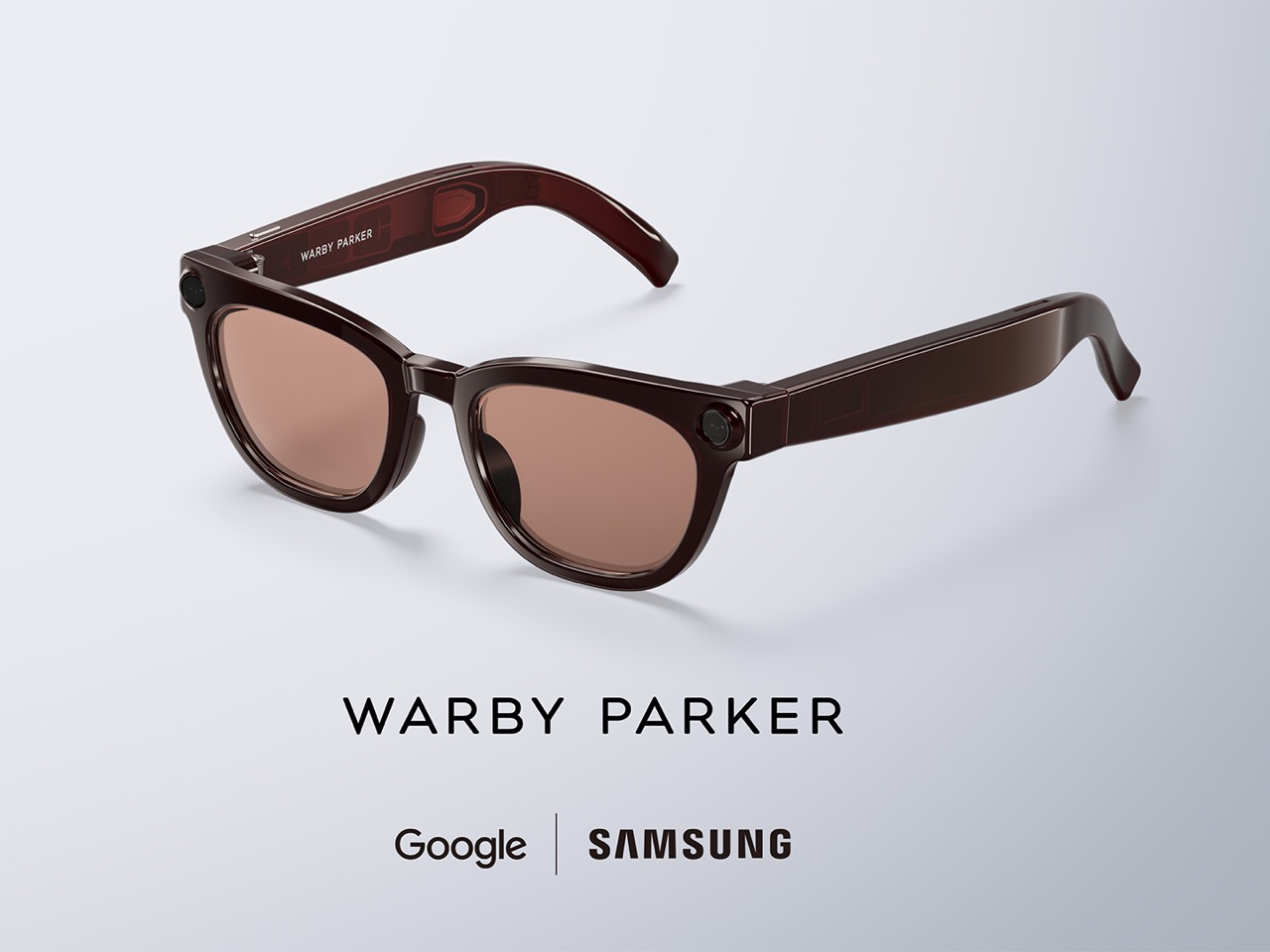
So what exactly did Samsung and Google show up with today? The glasses, branded Intelligent Eyewear, come in two designs: a slim black frame from Gentle Monster with a refined, fashion-forward silhouette, and a rich brown Warby Parker edition with a subtly upswept brow line meant for everyday wear. Under the hood, the Snapdragon AR1 Gen 1 chip handles the processing, the same silicon inside Ray-Ban Meta’s glasses, which is either reassuring or ironic depending on your mood. Gemini runs as the AI assistant on Android XR, the platform Samsung and Google co-developed, delivering information spoken into your ear rather than displayed on a screen. Battery life sits at nine hours, with a charging case that carries up to seven additional full charges. There is a built-in camera. There is always a built-in camera.
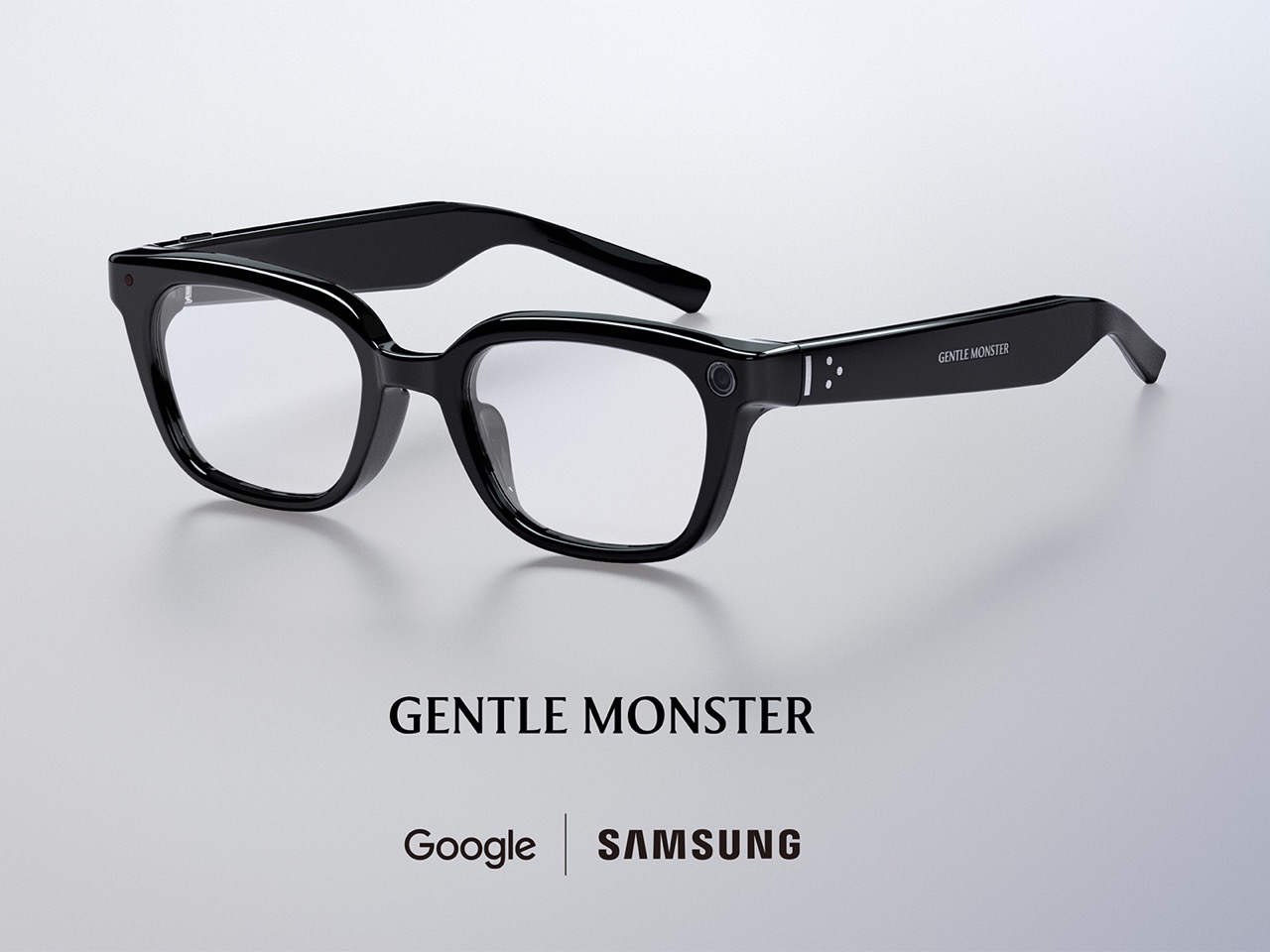
The positioning is reasonably clever and deliberate. By going audio-first with no display, Samsung sidesteps the cyborg-visor aesthetic that made Google Glass so alienating, and by partnering with Gentle Monster and Warby Parker, two brands with genuine fashion credibility, they are betting that good frames can do what celebrity endorsements and $400 price tags couldn’t for Meta. The glasses also pair with both Android and iOS, which removes the ecosystem friction that would otherwise halve the addressable market before a single unit ships. On paper, this is the most considered entry into smart glasses anyone has made.
The paper, unfortunately, has to reconcile with the sh*tstorm that is Meta and Kylie’s brand collab. Kylie Jenner’s job in the Meta Starfire campaign was to make AI glasses feel safe and aspirational, particularly for women. She wore them, posed with them, starred in content shot from the glasses’ own point of view. What nobody at Meta apparently modeled was the possibility that Jenner’s involvement would become the story, and the story would be unflattering. Lorde publicly called the glasses “not sexy.” Women across Brussels and beyond reported being filmed without consent by men wearing the exact product Jenner was paid to glamorize. Meta had to patch their own hardware to stop people from disabling the recording indicator light. The fact that a patch was required is its own headline.
Samsung and Google have built in visible recording indicators and user-controlled privacy settings, which they are smart to advertise loudly. But the problem Meta created for the entire category goes deeper than indicator lights. The public now has a fixed mental model of what a camera on someone’s face means, and it was not built by reading spec sheets. It was built by watching someone get filmed on the bus, by the NameTag story, by “pervert glasses” becoming the phrase that stuck when “Intelligent Eyewear” didn’t.
Google killed Glass in 2015 because society rejected the behaviour the device enabled before the technology even had a chance to mature. Everything Samsung unveiled today is genuinely more refined, more considered, and more fashionable than anything Glass ever was. The question is whether any of that is the actual problem. Going by recent evidence, the frames were never really the issue.

