
The consumer smartwatch market has become a fairly predictable place. Most wristwear from major brands covers health monitoring, notifications, and a tightly controlled app ecosystem, with little room for deviation. Tinkerers and developers who want something outside that formula have traditionally had to cobble together components from different sources, which is more a test of patience than a creative process and rarely results in something worth wearing.
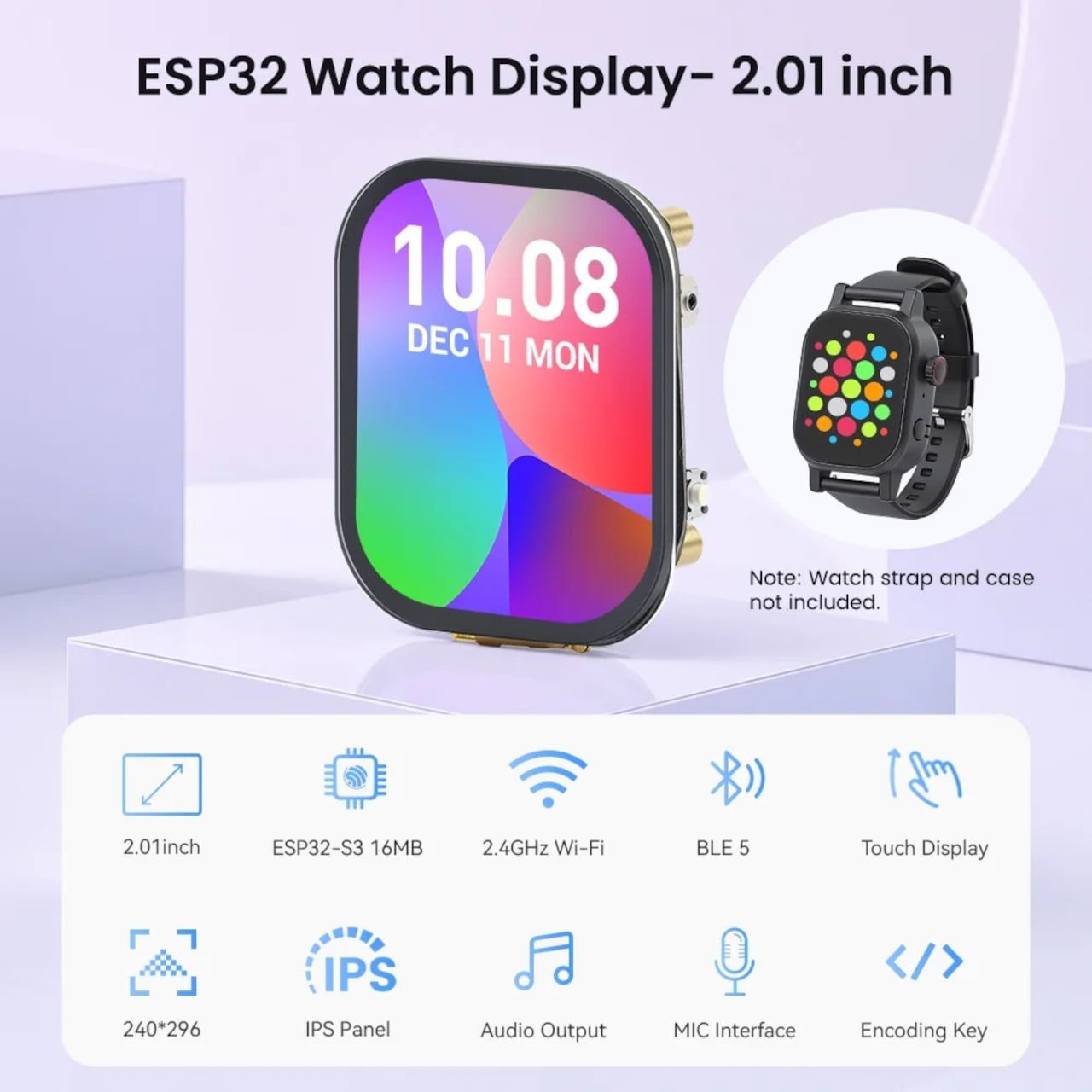
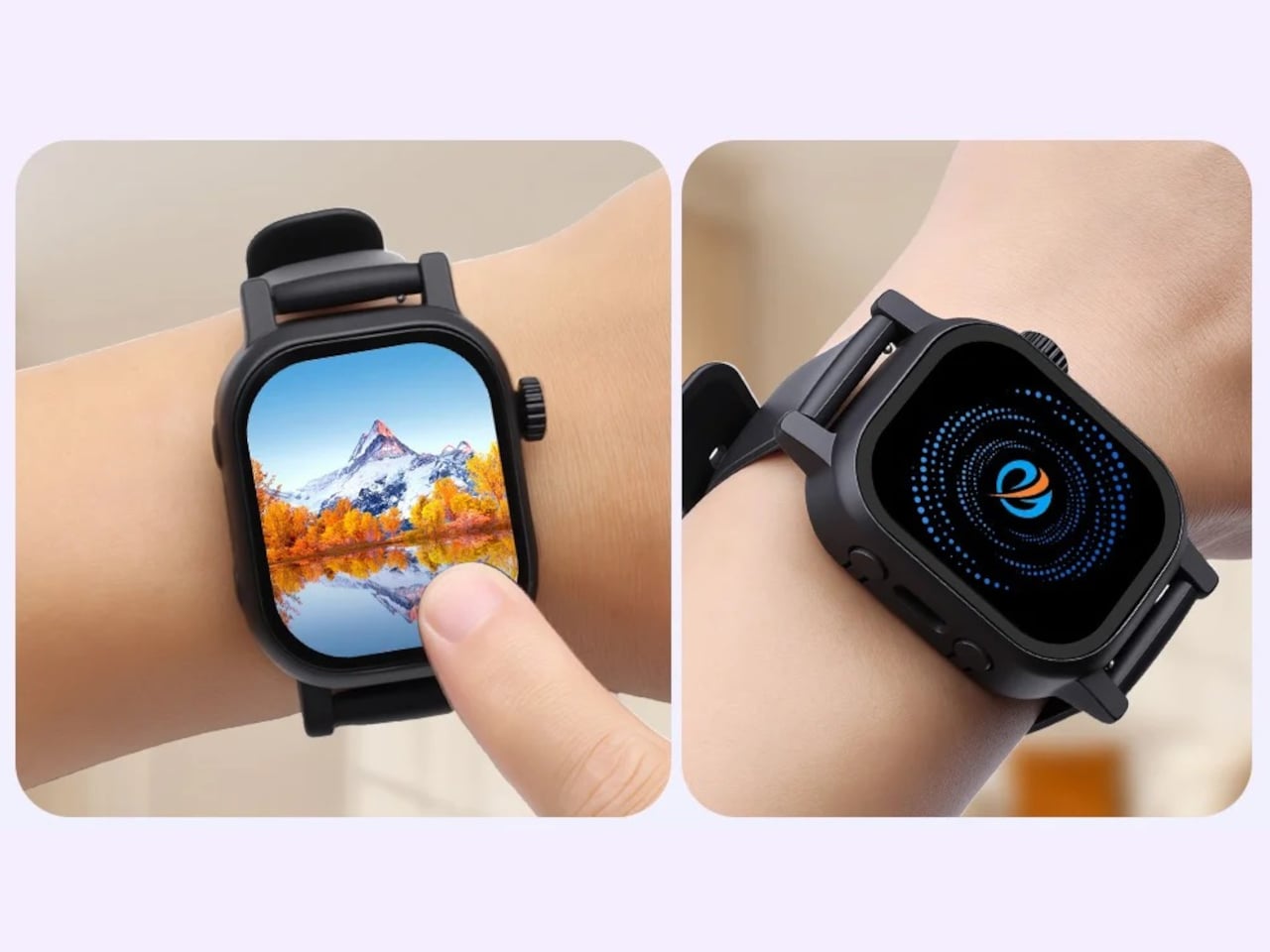
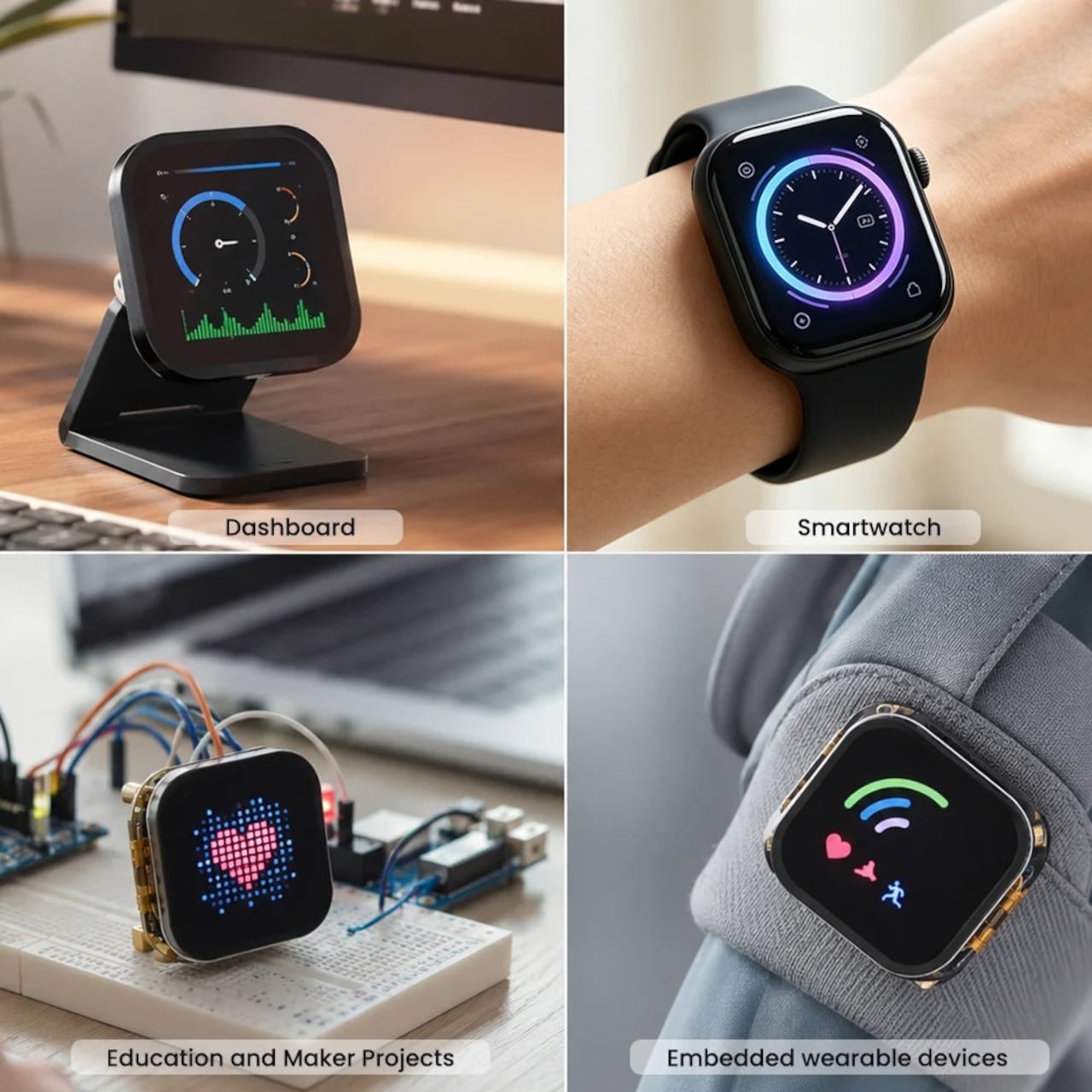
Elecrow’s CrowPanel Watch Display is a ready-made starting point for building something more personal. It’s an all-in-one development module built around the ESP32-S3 microcontroller, packaged as a wrist-sized board complete with a 2.01-inch touchscreen, a microphone, a rotary encoder, and expansion contacts. The idea is that most of the hardware problem is already solved, leaving you with the more interesting part: deciding what the device should actually do.
Designer: Elecrow
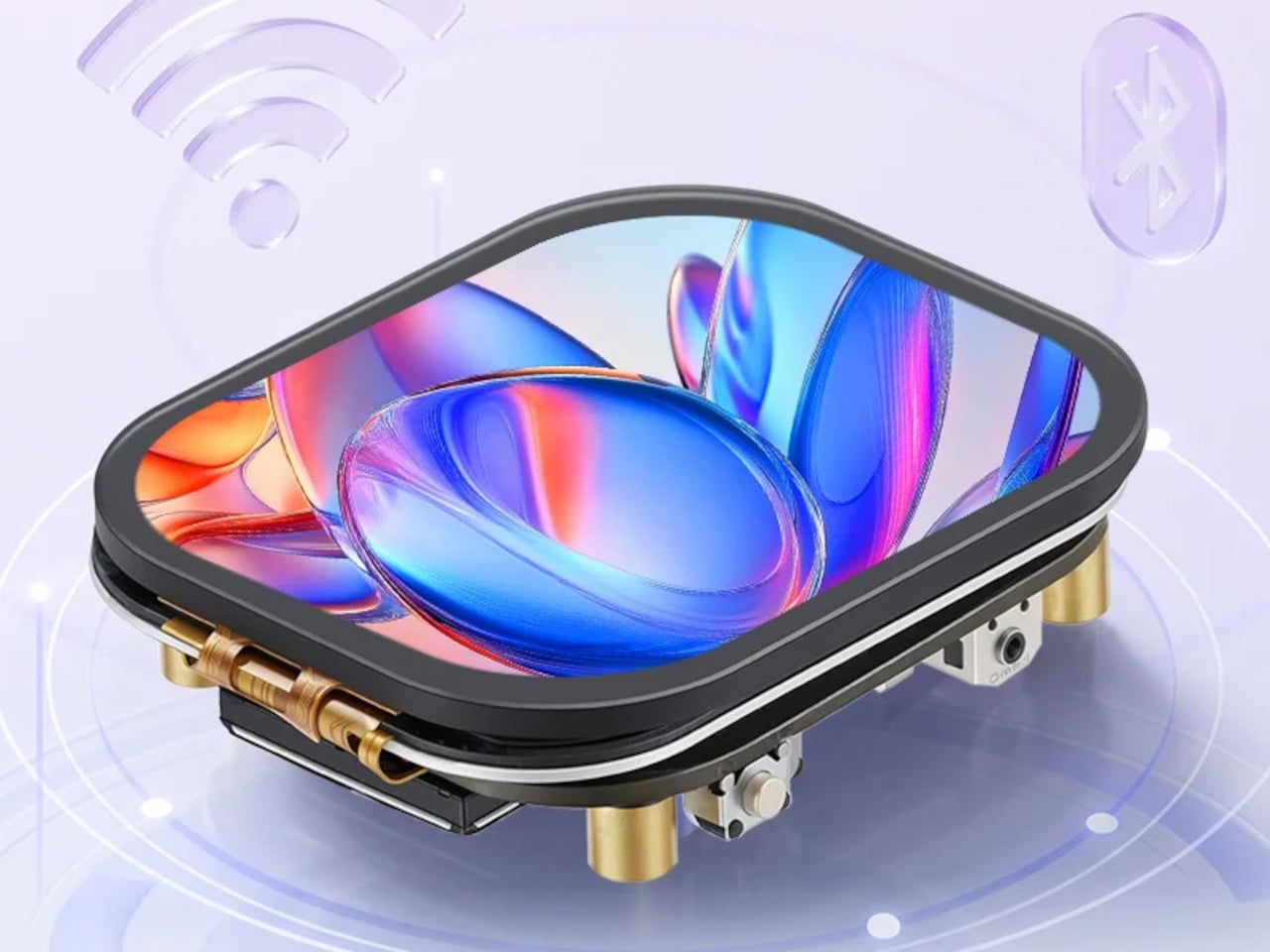
The IPS panel has a resolution of 240×296 pixels, capacitive touch, and a 178-degree viewing angle. Navigation doesn’t depend on touch alone. A rotary encoder functions like a traditional watch crown for scrolling and selection, and a dedicated side button rounds out the physical inputs. Both keep the interactions familiar to anyone who’s worn a watch before.
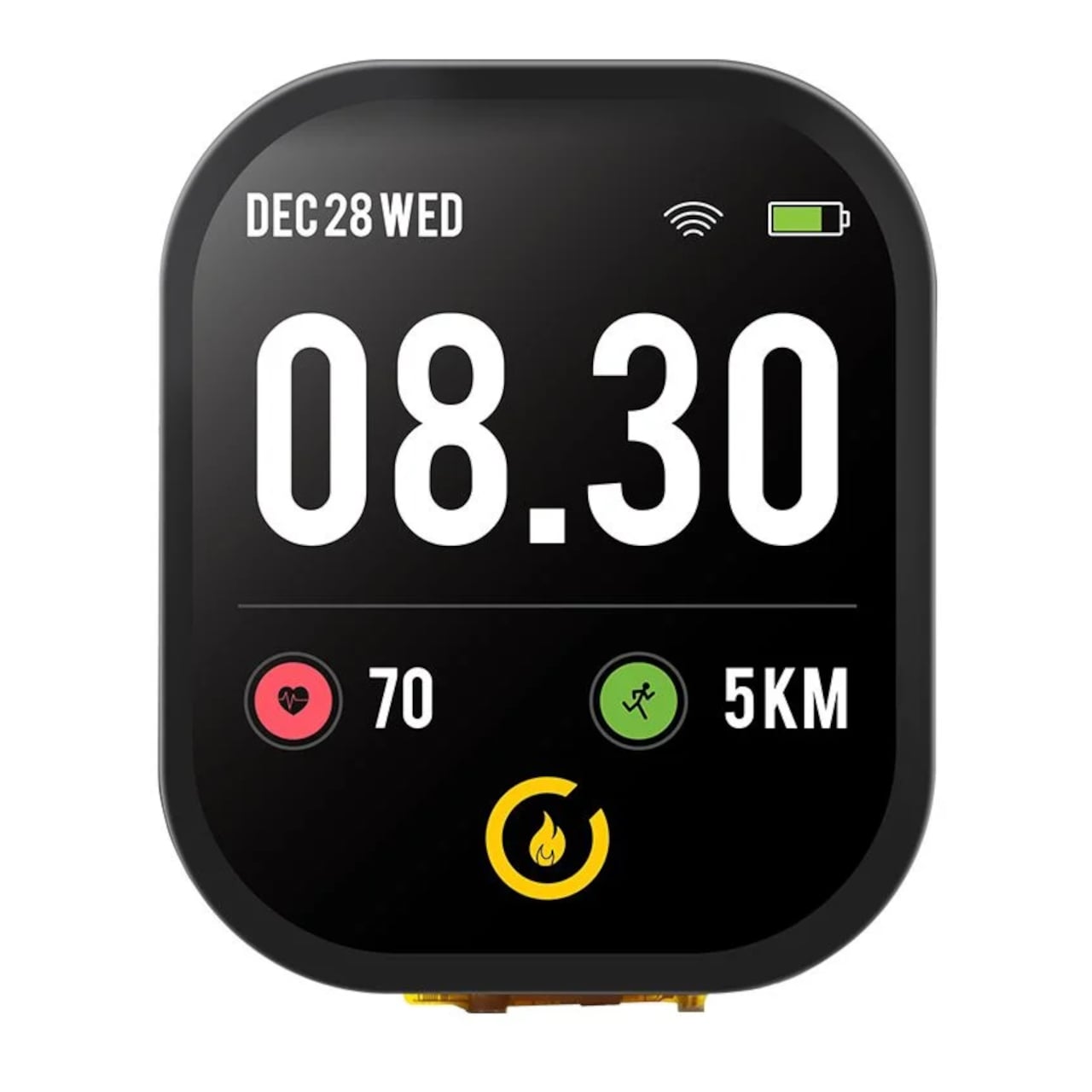

Under the hood, the ESP32-S3 runs a dual-core Xtensa LX7 processor clocked at up to 240MHz, with built-in Wi-Fi and Bluetooth 5. That means the watch can pull weather data, push notifications from a paired phone, or interact with a smart home network from the wrist. The Wi-Fi capability also makes it a viable control panel for home automation, a secondary identity the hardware handles just as comfortably.
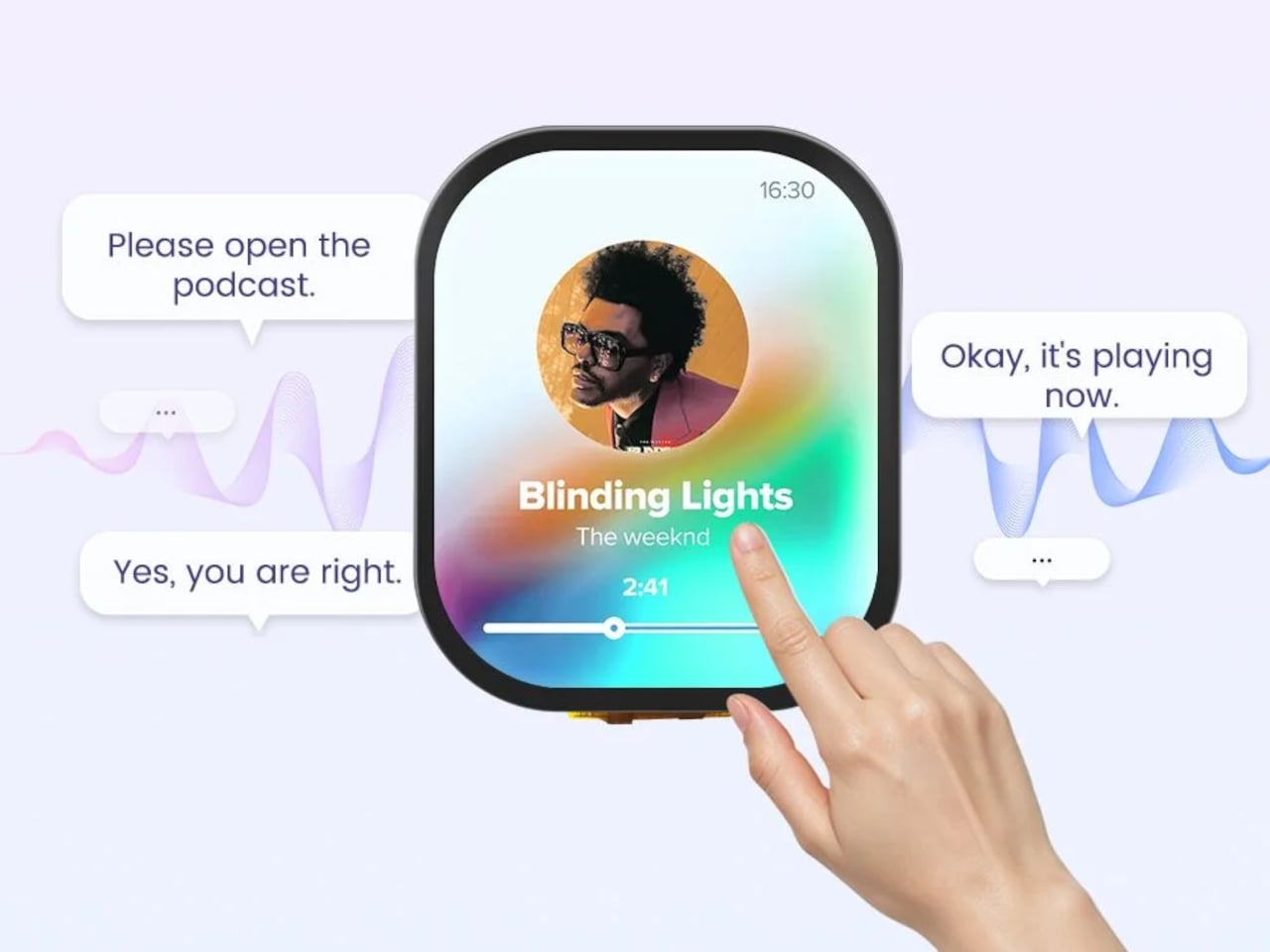
The built-in microphone and speaker add voice control to the mix, allowing spoken commands to trigger actions on the device or interact with connected services. That’s a feature most entry-level wearable modules skip entirely, and it opens up a range of hands-free interactions well beyond setting a timer. For anyone building a smart home companion for the wrist, that’s a significant difference in day-to-day usability.
A gyroscope handles motion sensing, and a vibration motor is on board for haptic feedback. The package doesn’t include a heart rate sensor or GPS, which rules out the health-tracking and location features that define most commercial smartwatches. A battery isn’t included, but the board provides the necessary contacts to connect one, giving builders control over form factor and battery capacity from the outset. For a DIY module at this price, that tradeoff is expected.
The module sells for $18.99 as a bare PCB, without an enclosure or strap. That part of the build is left entirely to the maker, which is the point. For engineers, hobbyists, or students who’ve wanted a genuinely custom wearable without sourcing a dozen individual components, it’s a reasonably priced foundation that does far more of the groundwork than most development boards at this size and cost.