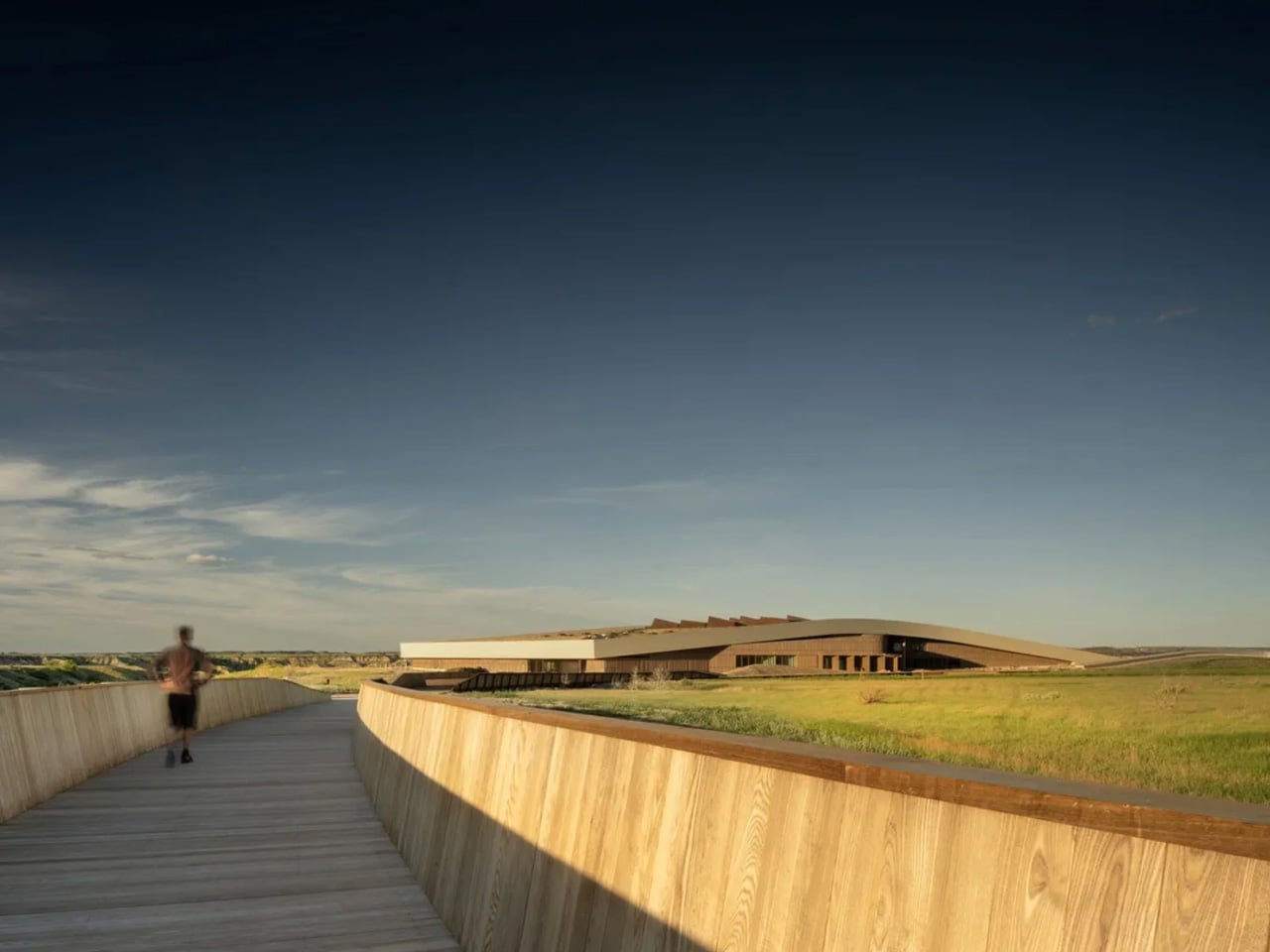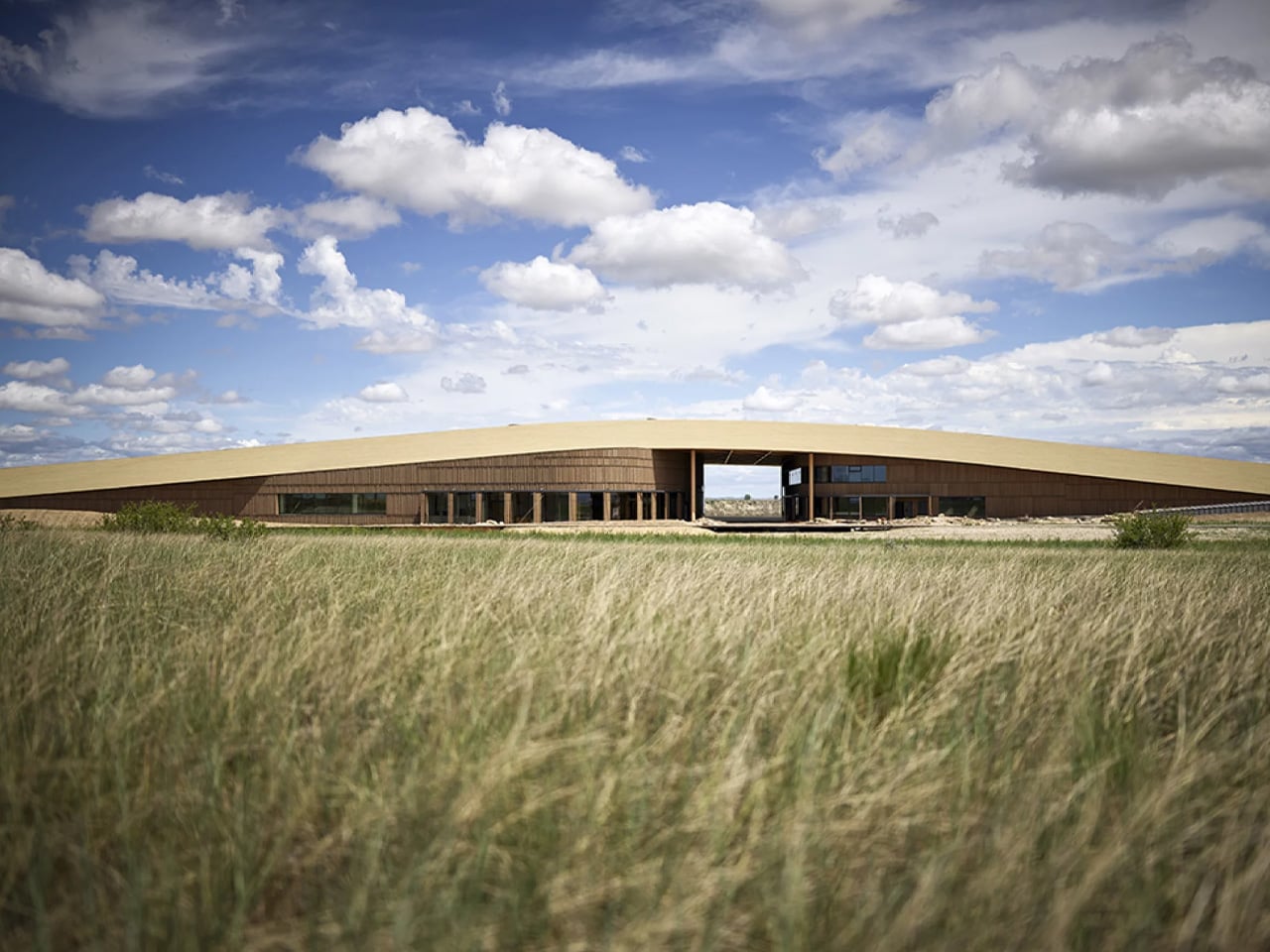
Some buildings sit on a landscape, and then there are buildings that seem to belong to it. The Theodore Roosevelt Presidential Library, designed by Oslo and New York-based studio Snøhetta, is firmly the latter. Rising from the dramatic terrain of Medora, North Dakota — just outside the boundaries of Theodore Roosevelt National Park — the structure feels less like architecture imposed on the land and more like something the Badlands quietly exhaled.
Snøhetta won the international design competition for the project in 2020, and it is easy to understand why. The firm has long demonstrated a rare ability to make monumental buildings feel humble, from the Oslo Opera House, where the roof doubles as a public plaza, to the National September 11 Memorial Museum in New York. With TRPL, the challenge was different: how do you honor a president whose greatest legacy was the preservation of wild land, without contradicting that legacy with your building?
Designer: Snøhetta
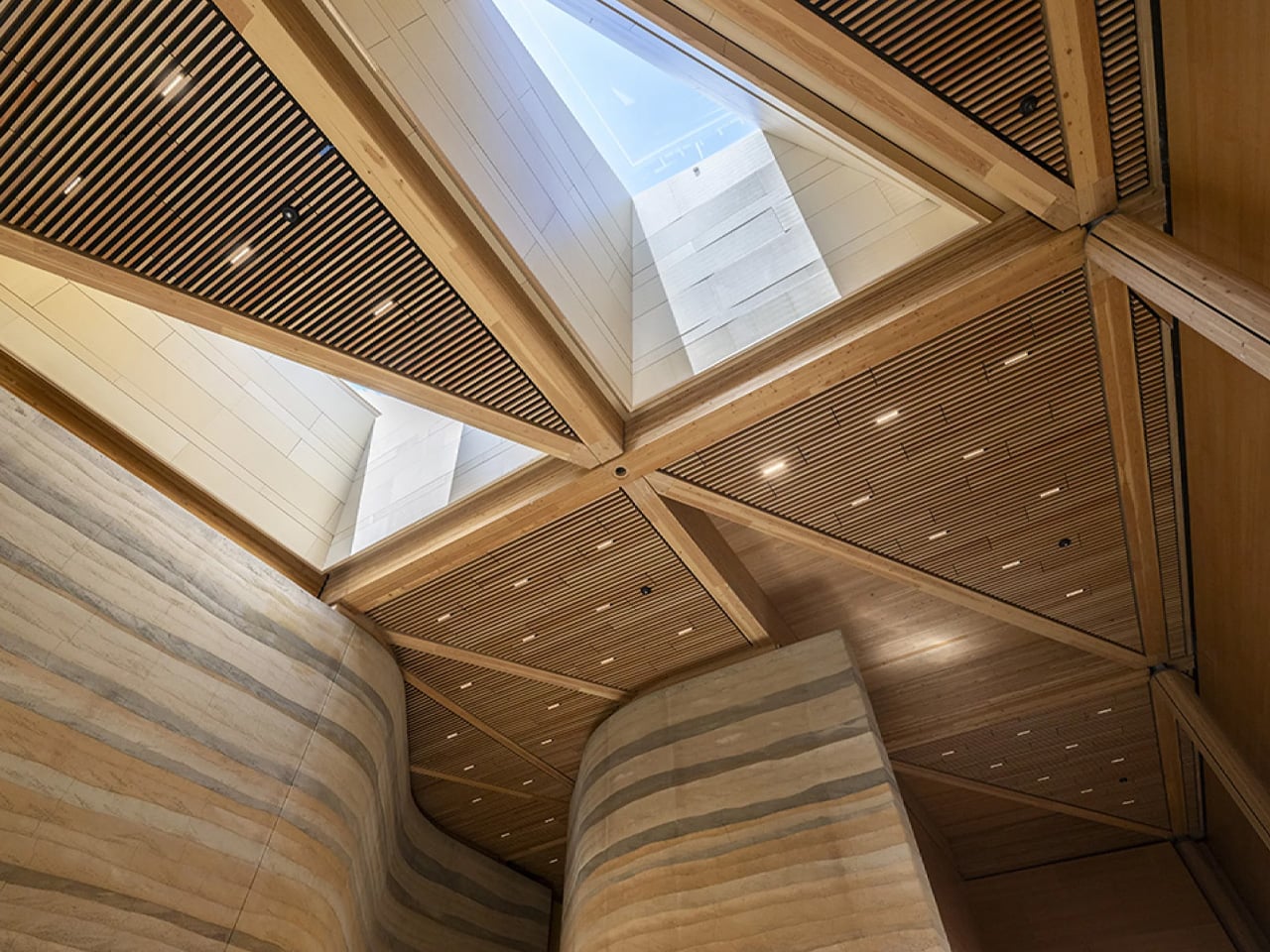
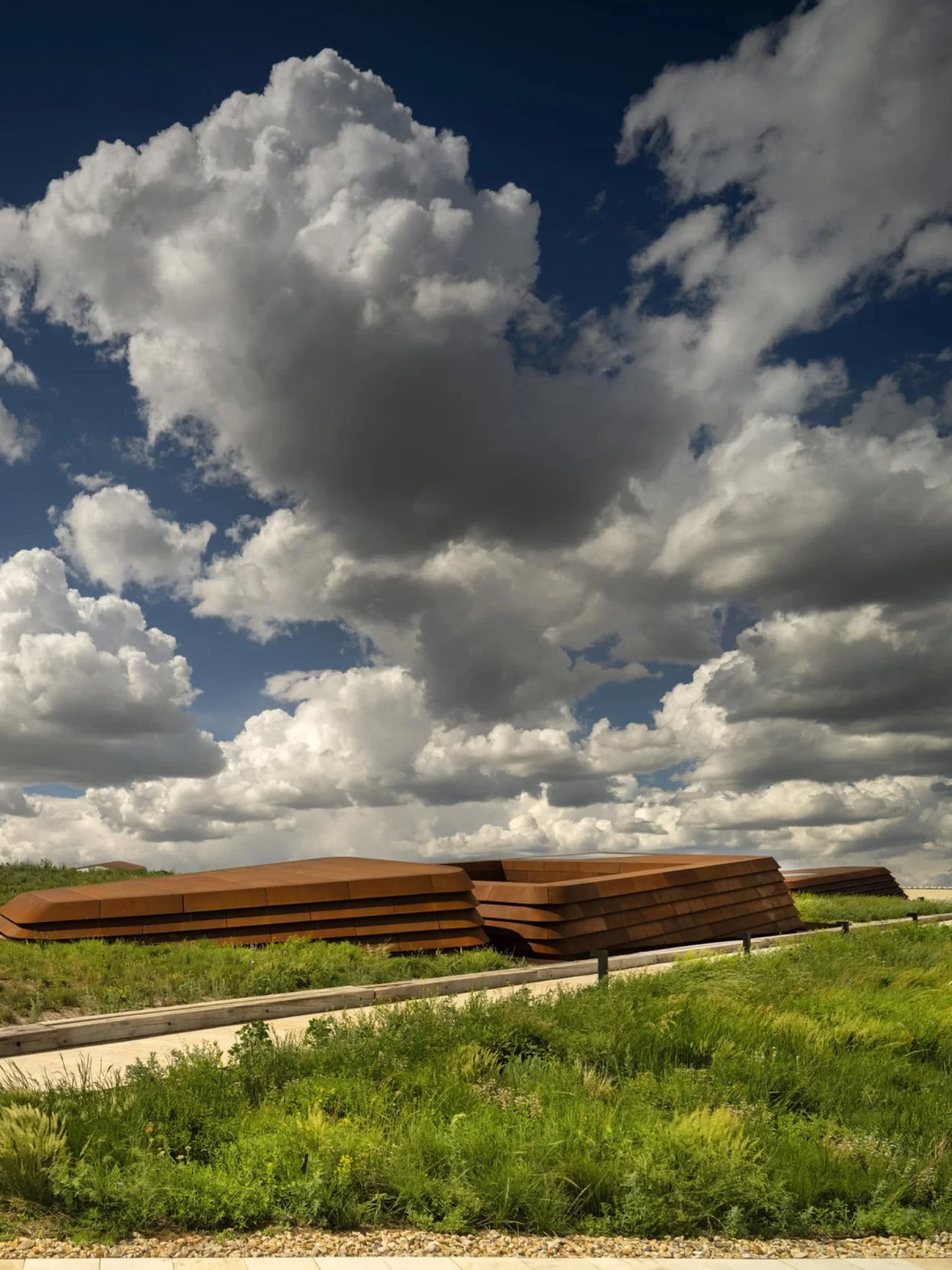
Their answer was to look at the geology beneath their feet. The Badlands are a study in layered time — striated buttes, eroded canyons, and sedimentary formations that read like pages of a very old book. The library’s form echoes this language directly. The building’s curving silhouette mirrors the surrounding ridgelines, and its material palette draws from the warm ochres and earth tones of the regional rock. From certain angles, the structure practically dissolves into the horizon.
The interior logic follows the same idea. Visitors move through the building in a sequence meant to mirror Roosevelt’s own relationship with the West — arriving from the cultivated, ordered world and gradually moving deeper into something wilder and more elemental. The spatial progression is deliberate, cinematic, and designed to make the surrounding landscape the dominant feature at every turn. Windows are positioned not just for light but for framing: a specific butte, a stretch of prairie, a sky that goes on longer than feels reasonable.
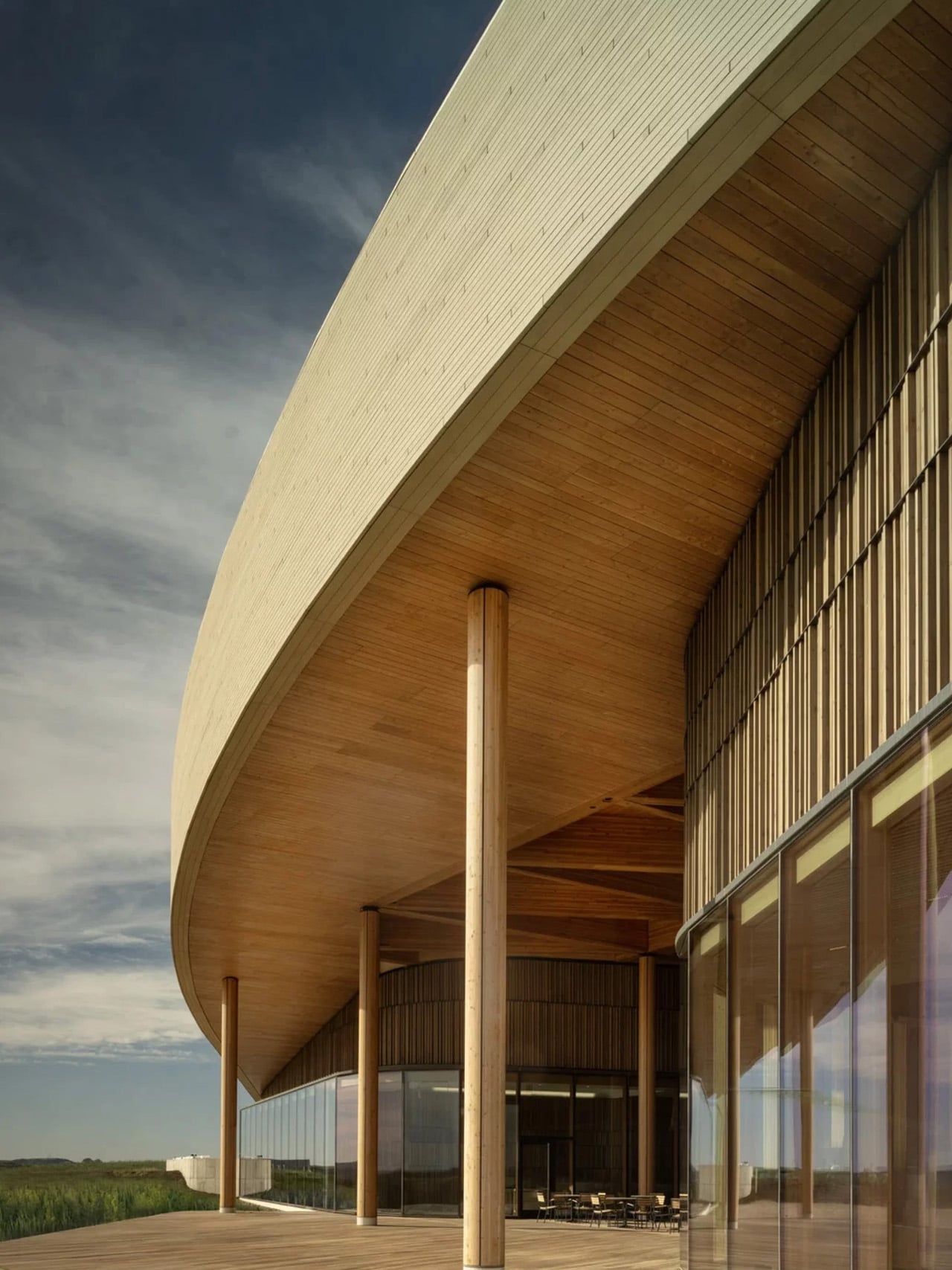
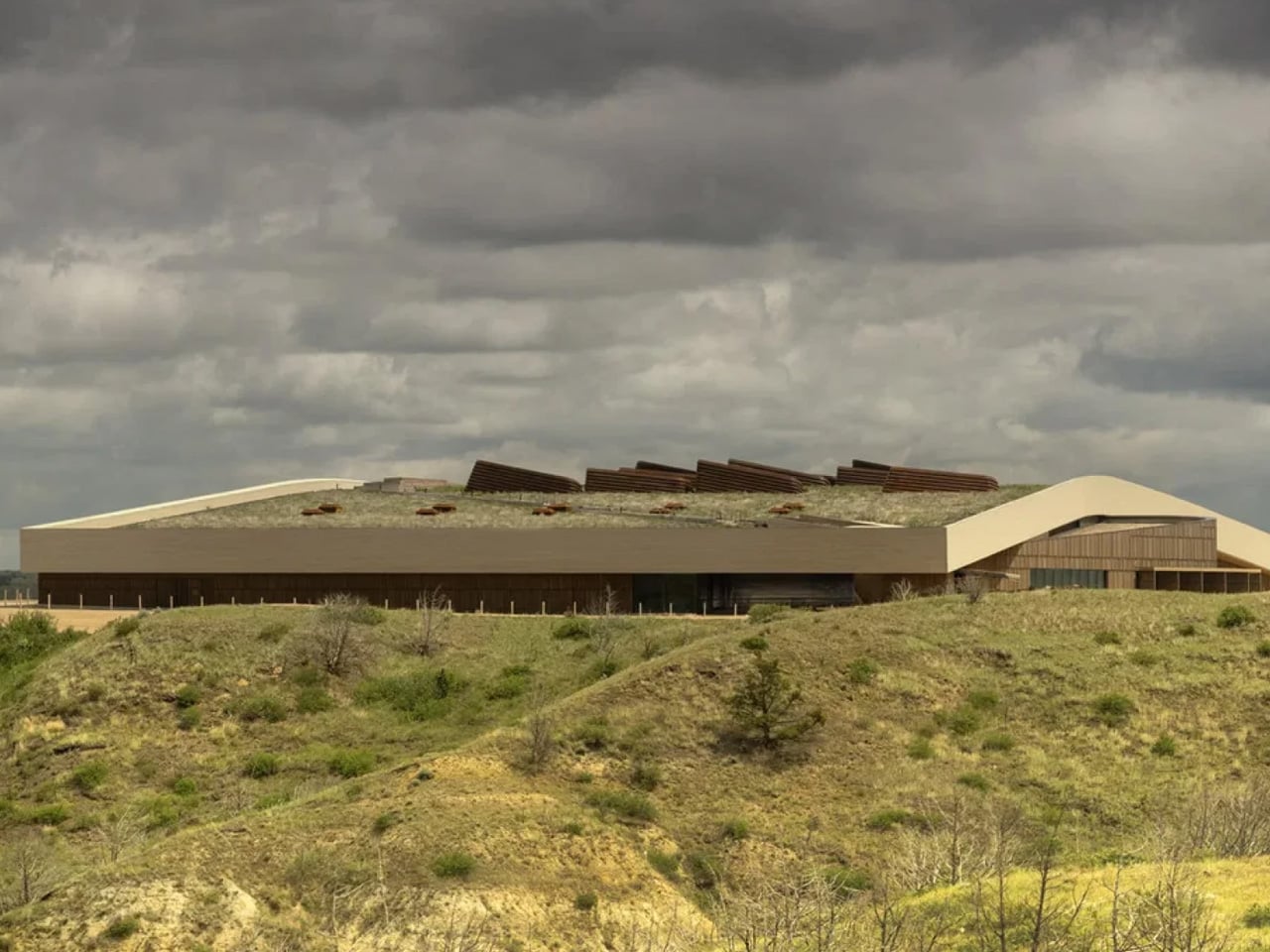
Beyond the architecture, TRPL is positioned to become the first net-zero presidential library in the United States. Solar energy, geothermal systems, and a building envelope optimized for the extreme temperature swings of North Dakota all contribute to that goal. The commitment feels right for a library honoring a man who signed into protection of over 230 million acres of public land.
What Snøhetta has designed here is not a monument to power. It is something quieter and, ultimately, more resonant: a building that asks you to look past it, toward the land Roosevelt spent his life trying to protect. In a genre prone to grandeur for its own sake, that restraint is the most radical design choice of all.