When you hear the word “observatory,” your brain probably conjures a cold, concrete dome perched on a remote mountaintop, somewhere that only astrophysicists with access badges get to enjoy. That image is about to get a serious redesign.
Heatherwick Studio just unveiled AlUla Manara, a stone-clad astrotourism center and observatory set to rise from the desert of northwestern Saudi Arabia, near the ancient city of AlUla. The design won an international competition and has been approved by the Royal Commission for AlUla. The name itself sets the tone: “Manara” means “lighthouse” in Arabic, and the building is exactly that, a beacon in the desert pointing not across the sea, but straight up into the cosmos.
Designer: Heatherwick Studio
The site sits approximately 70 kilometers north of AlUla, between the Harrat Uwayrid Reserve and Gharameel, a location selected specifically for its extraordinary dark-sky conditions. Minimal light pollution, vast open terrain, and one of the clearest night skies on the planet. It’s not an arbitrary choice. AlUla already carries centuries of history tied to astronomy, and the region’s newly designated Dark Sky Park status makes it one of the most compelling places on Earth to simply look up.
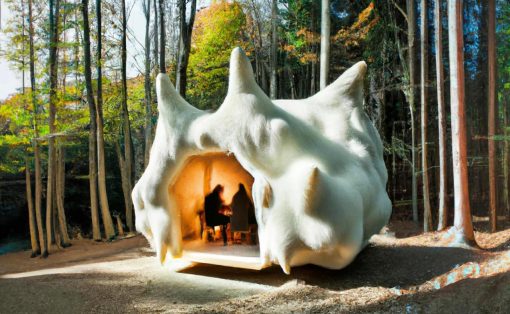
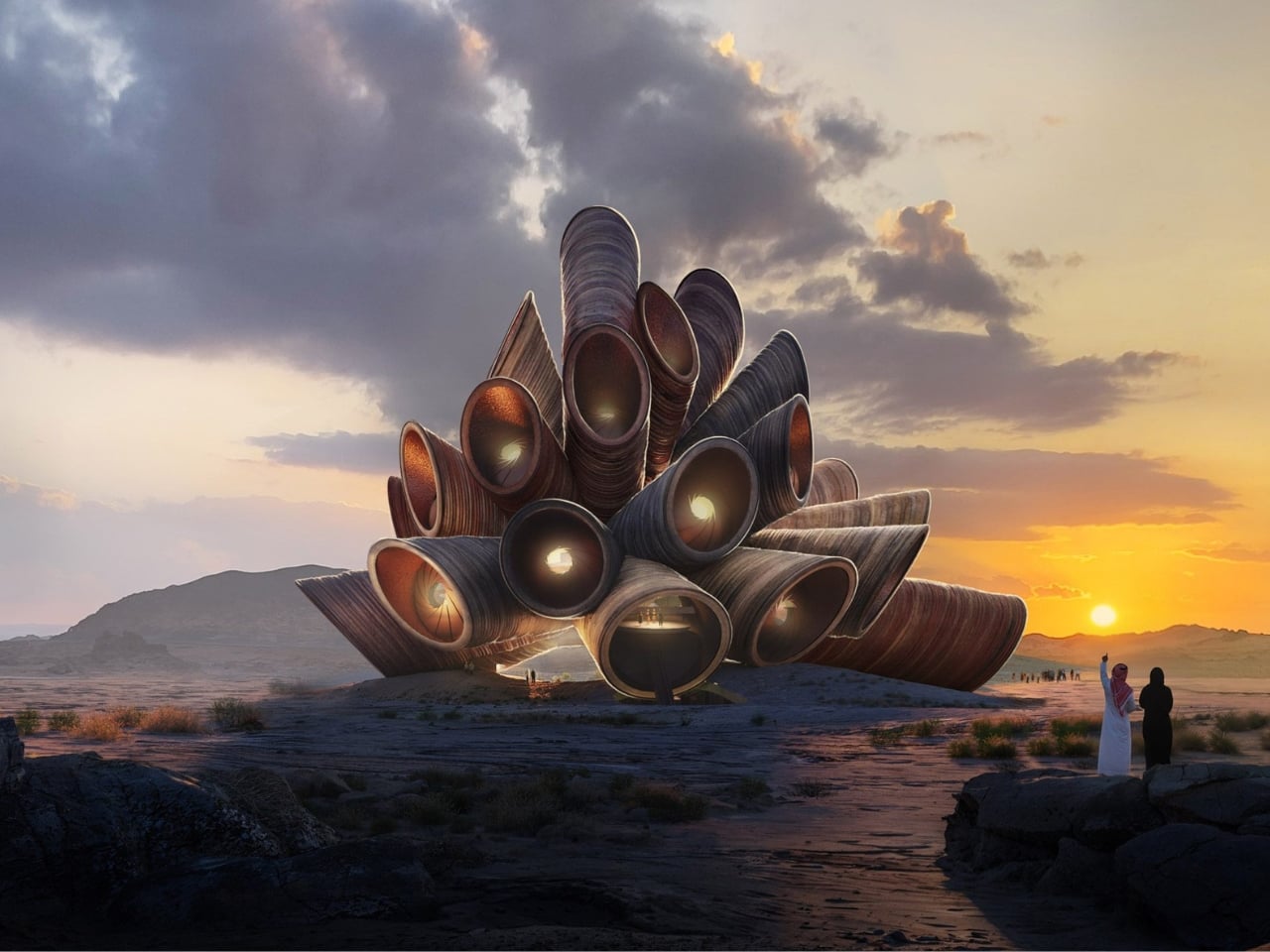
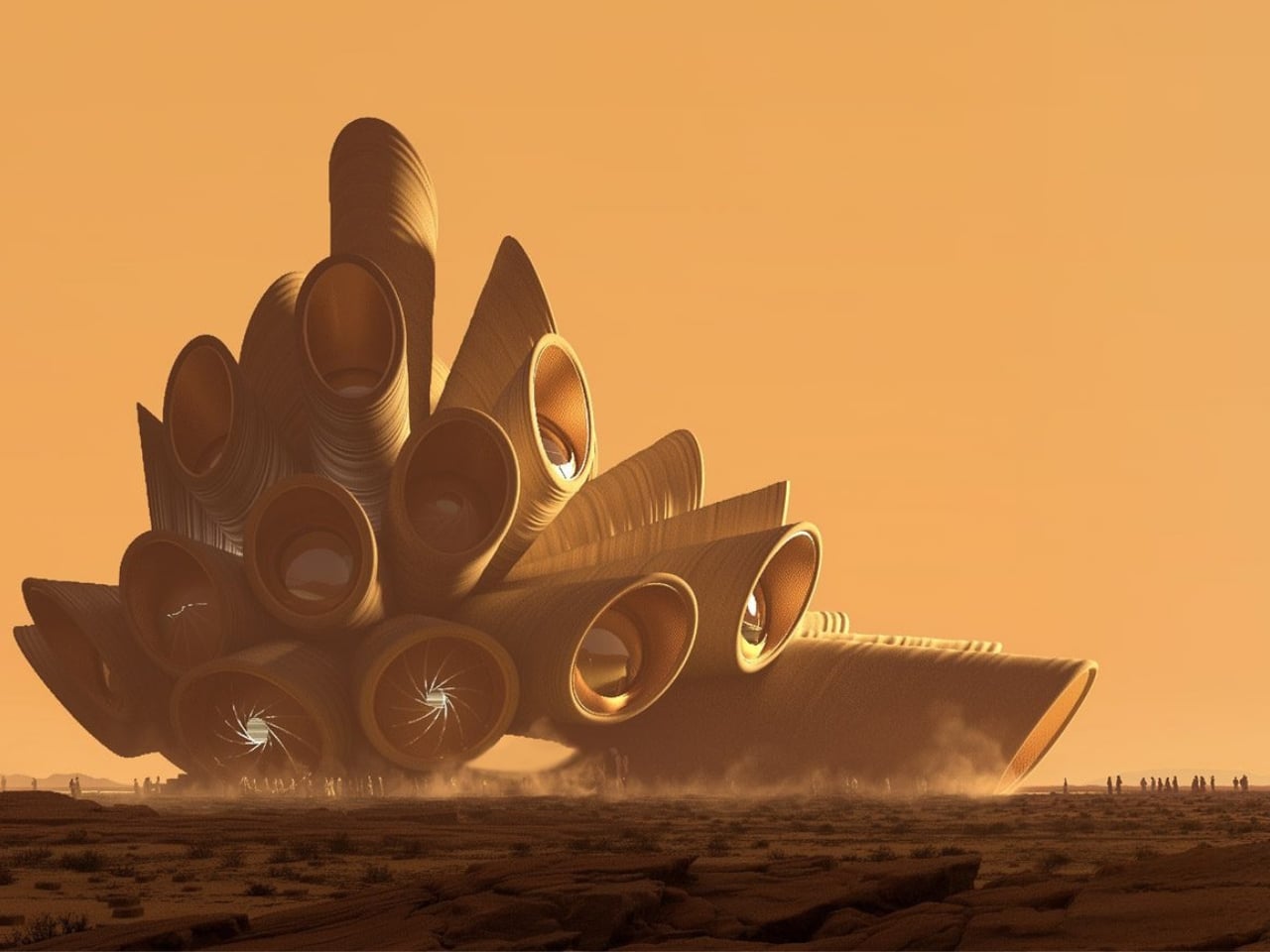
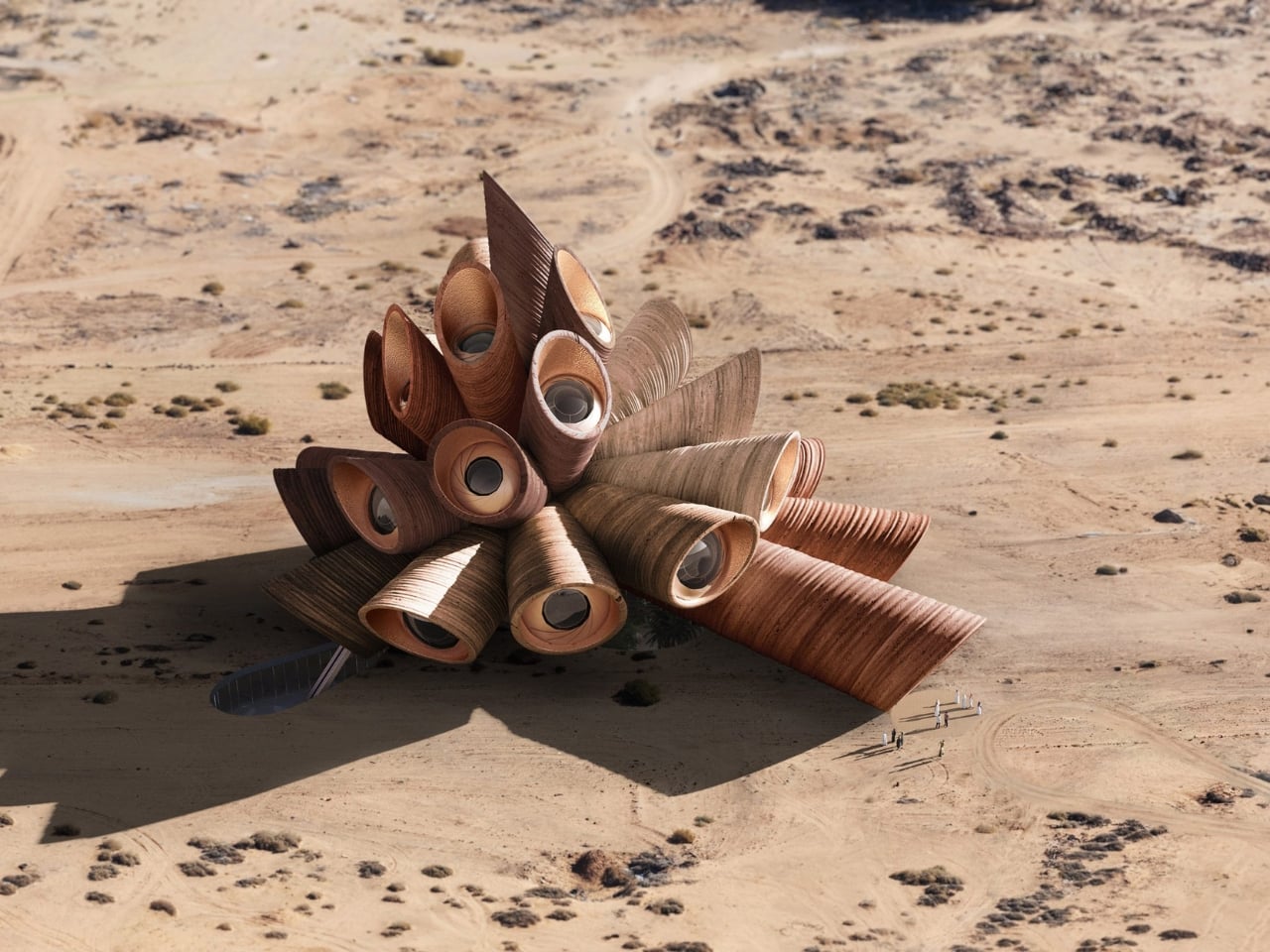
The design itself is striking, and I mean genuinely striking, not just in that polished press-release way. Heatherwick has created a cluster of tubular forms, each clad in textured stone, each turned toward the sky like enormous stone nostrils (or telescopes, depending on your imagination). The geometries were drawn from spiraling patterns found both in the cosmos and in the natural world: galaxies, planetary rings, shells, fossils. The building isn’t referencing space in an abstract, vague-inspiration kind of way. It’s actually embedding those forms into the architecture.
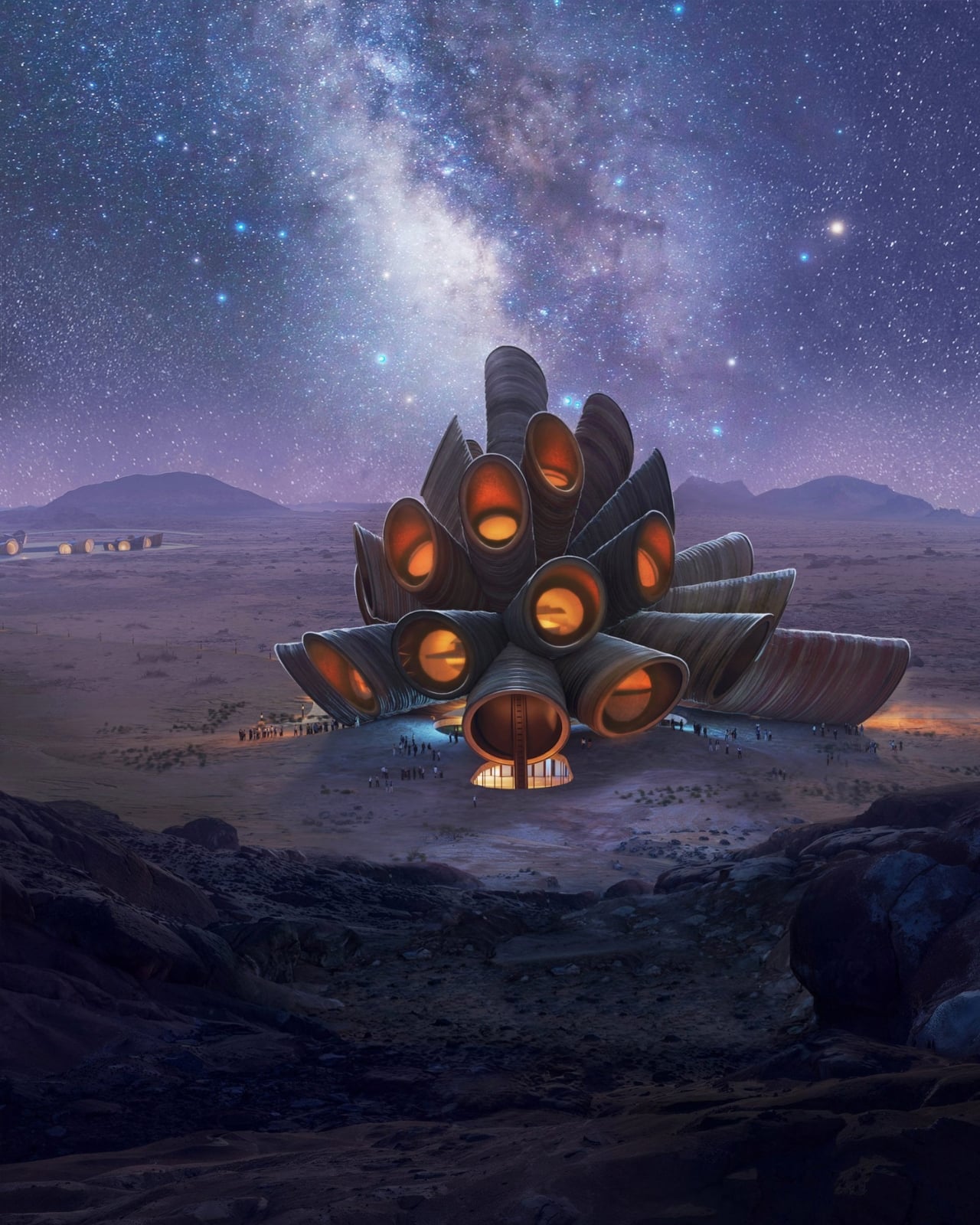
The materiality also tells a deliberate story. Rather than landing a glass-and-steel building in the middle of ancient sandstone terrain, Heatherwick chose locally sourced stone cladding that picks up the tones of AlUla’s dramatic landscape without mimicking it outright. It’s grounded in its context, but it doesn’t disappear into it. That balance, rare and worth noting, is harder to pull off than it looks.
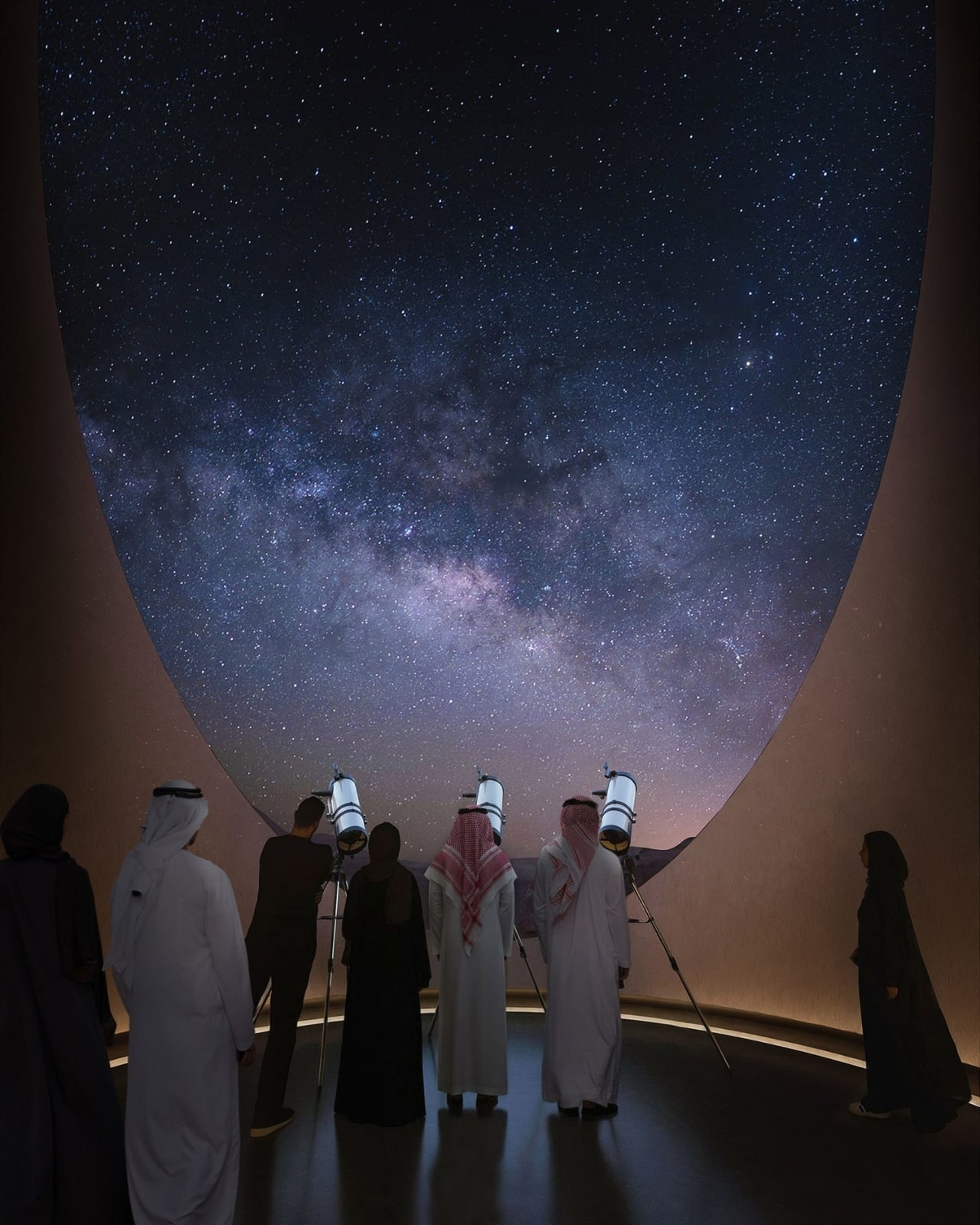
Inside, the center will house galleries, a planetarium, and a rooftop observation deck. Heatherwick Studio’s executive partner Stuart Wood described the intent plainly: “Space observatories are often remote, sterile places, technical outposts that feel distant from the public. We saw an opportunity to dissolve those barriers and create a place where visitors can step inside the wonder of the cosmos.” That’s exactly the kind of brief that results in interesting architecture rather than merely functional ones.
Most observatories are built for scientists. AlUla Manara is built for everyone, which is either an exciting democratization of science or a tourism play dressed up in aesthetic clothing. Probably both, and I’m okay with that. If the result is more people standing under a legitimately breathtaking sky and feeling genuinely moved by the scale of the universe, the funding source matters a little less. Saudi Arabia has been investing heavily in cultural infrastructure under Vision 2030, and AlUla has emerged as one of its most ambitious bets. The cynical read is that it’s all soft power and spectacle. The more generous read, the one I lean toward, is that spectacle can be meaningful when the underlying design actually earns it.
Heatherwick has always worked at the intersection of the sculptural and the functional, from the Olympic Cauldron in London to the Vessel in New York, with mixed results. AlUla Manara feels like the studio at its most purposeful. The building doesn’t need to scream for attention because the desert will do that. Its job is to make people look up. That’s not a small thing. A well-designed building can shift how you experience a place. If AlUla Manara pulls that off, and I think it might, it joins a short but significant list of structures that don’t just house an experience. They become one.
SHARE