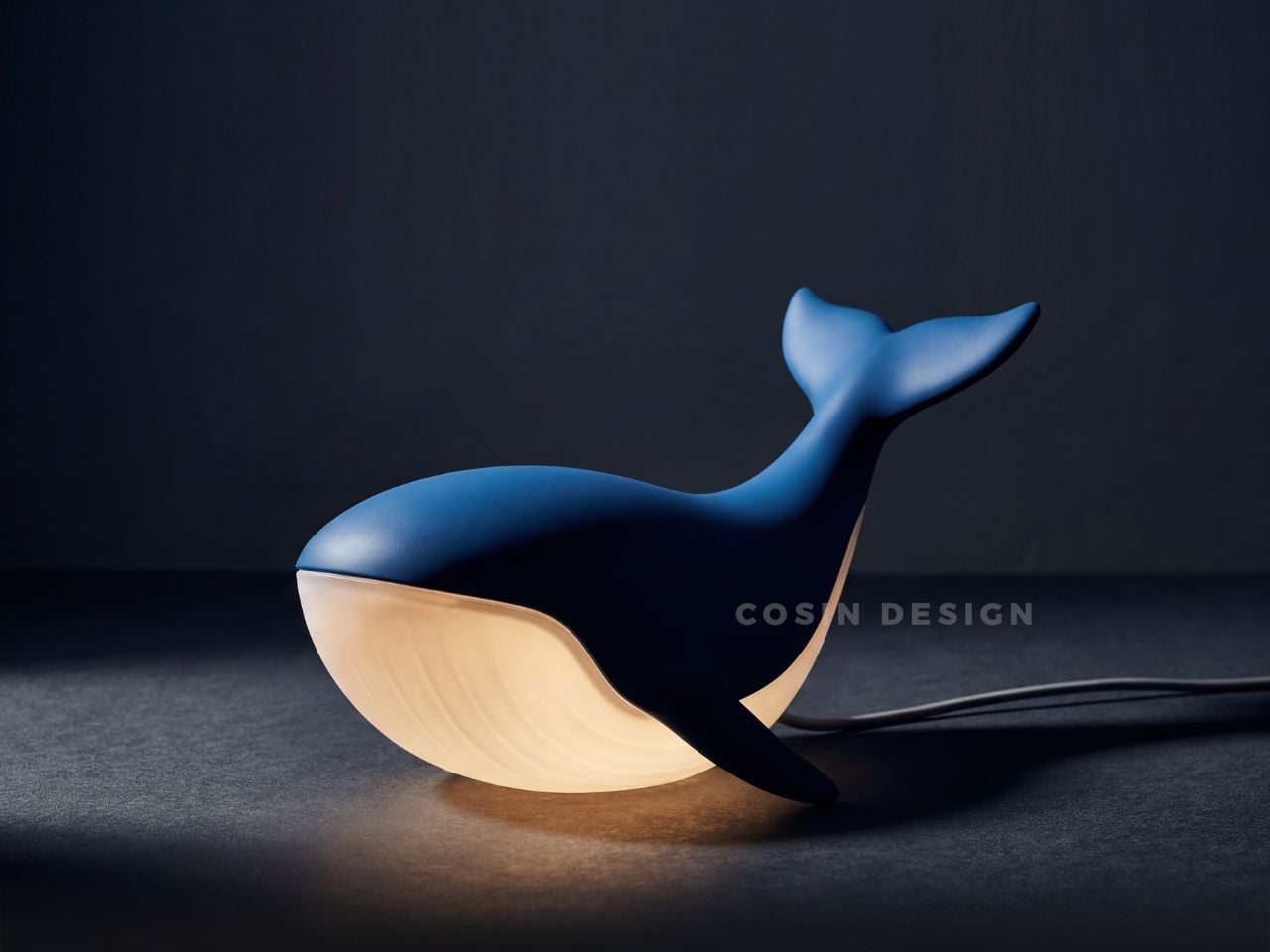
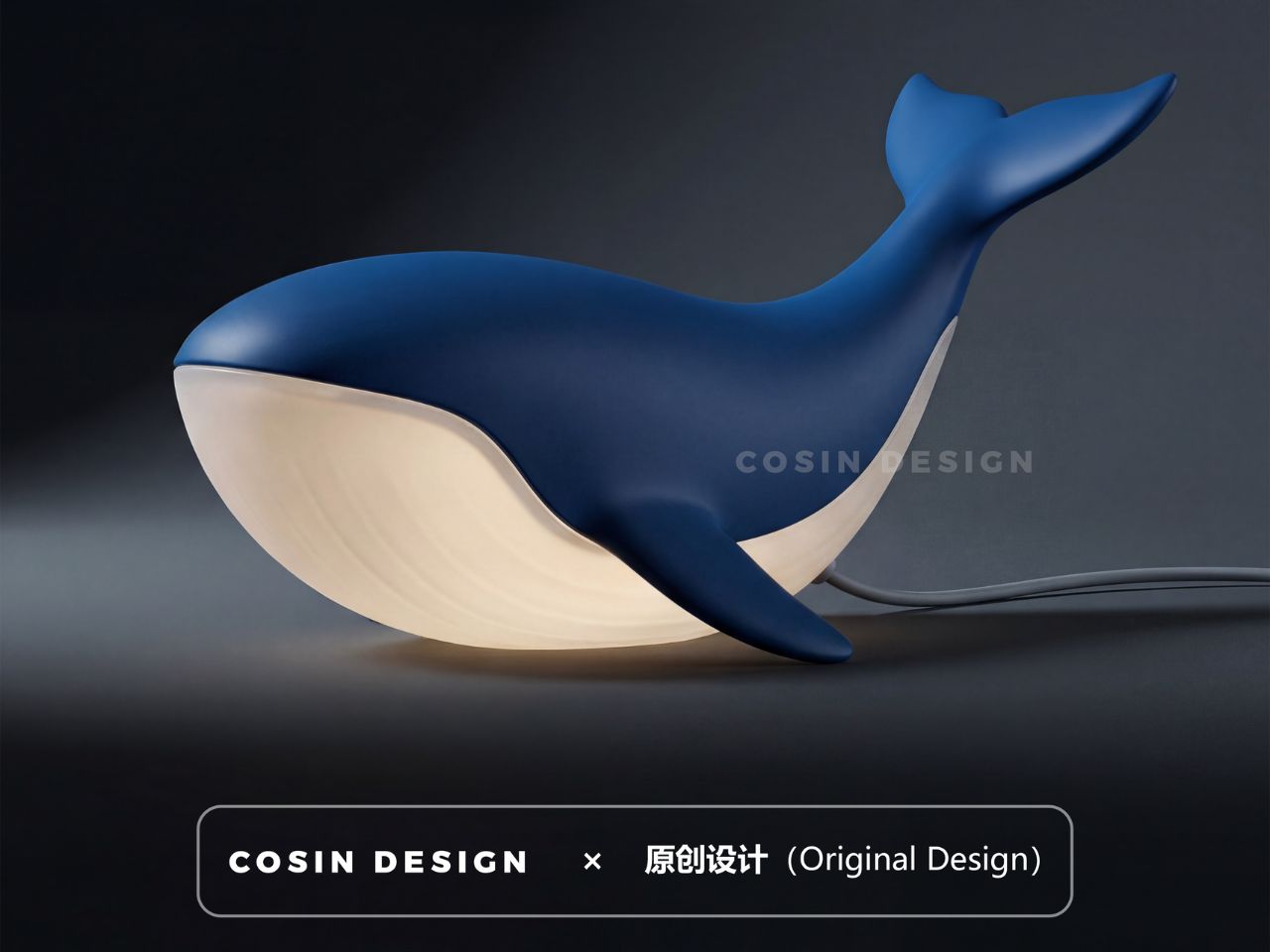
There is something quietly radical about a whale that does not belong to the ocean. Not because it has been displaced, but because it has been reimagined. COSIN DESIGN’s whale lamp is not an imitation of nature. It is a reinterpretation of how we feel about it. We are used to whales as symbols of magnitude. Vast, powerful, unknowable. They belong to depths we cannot reach. Yet here, that same creature is reduced in scale, softened in form, and placed gently on a bedside table. It no longer overwhelms. It comforts, and that shift in perception feels intentional.
The lamp captures a whale mid-leap, its body curved in a suspended gesture that feels both dynamic and still. The lines are fluid and uninterrupted, almost meditative. There are no sharp edges, no visual noise, just a continuous surface that invites the eye to move along with it. It feels like a sculpture before it feels like a product, and that is what gives it presence even when it is not turned on.
Designer: COSIN DESIGN
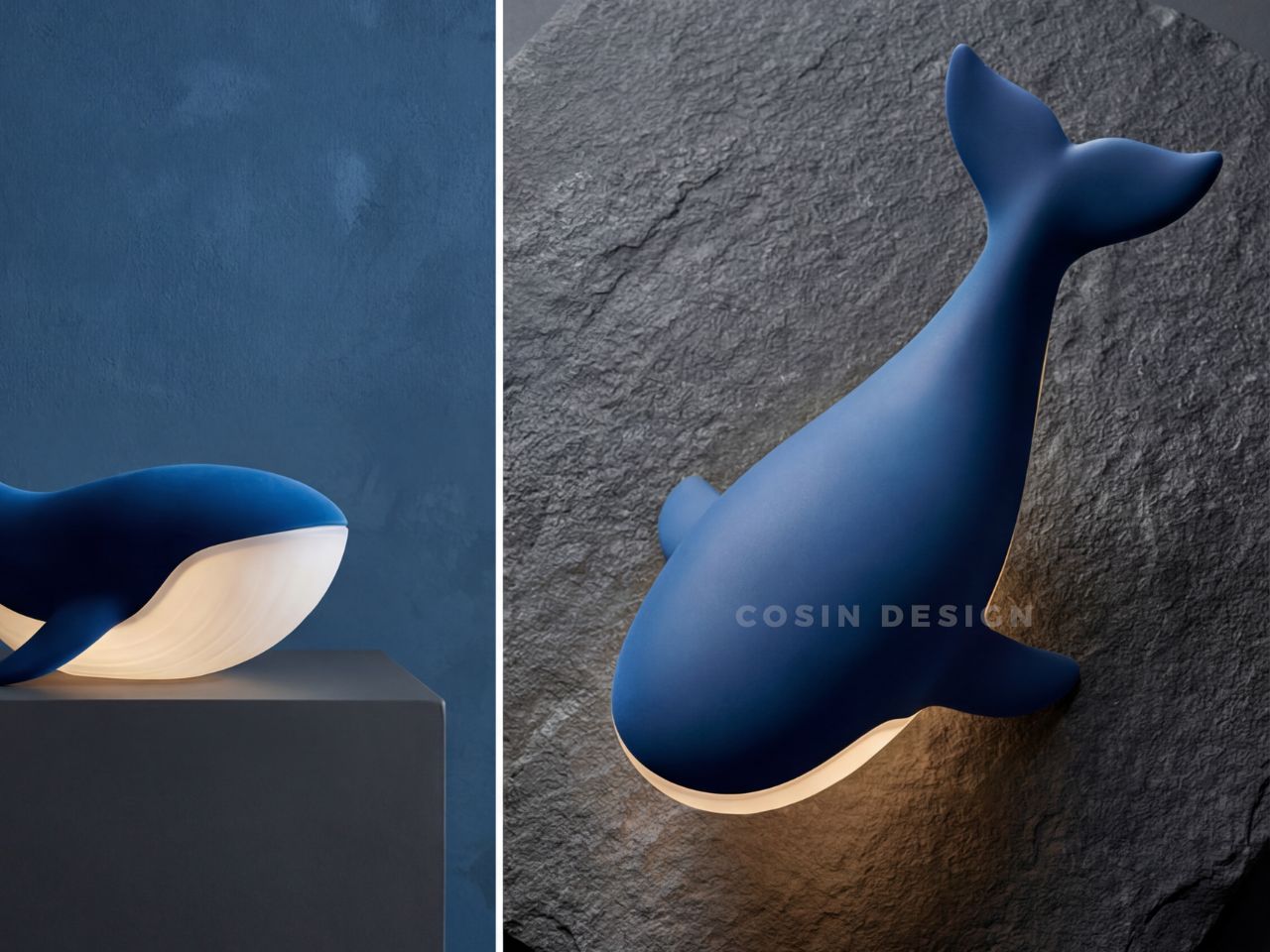
The real transformation happens with light. It seeps through the semi-transparent abdomen, not as a beam but as a soft diffusion that spreads slowly and evenly. It does not try to dominate the room or claim attention. Instead, it settles into the space, creating a calm and ambient glow. There is something almost alive about it, as if the whale carries light within itself, like a quiet presence from the deep sea. In that moment, the object shifts from something you look at to something you feel, and that emotional transition is where the design becomes meaningful.
For a long time, lamps have been about control. Adjustable brightness, direction, and precision. But there has been a noticeable shift toward lighting that feels more atmospheric and emotionally aware. The whale lamp sits comfortably within this shift. It does not attempt to do everything. It focuses on creating a specific feeling, and it does so with clarity and restraint. The design does not rely on complexity or excess detail. Instead, it leans into softness, both in form and in function.
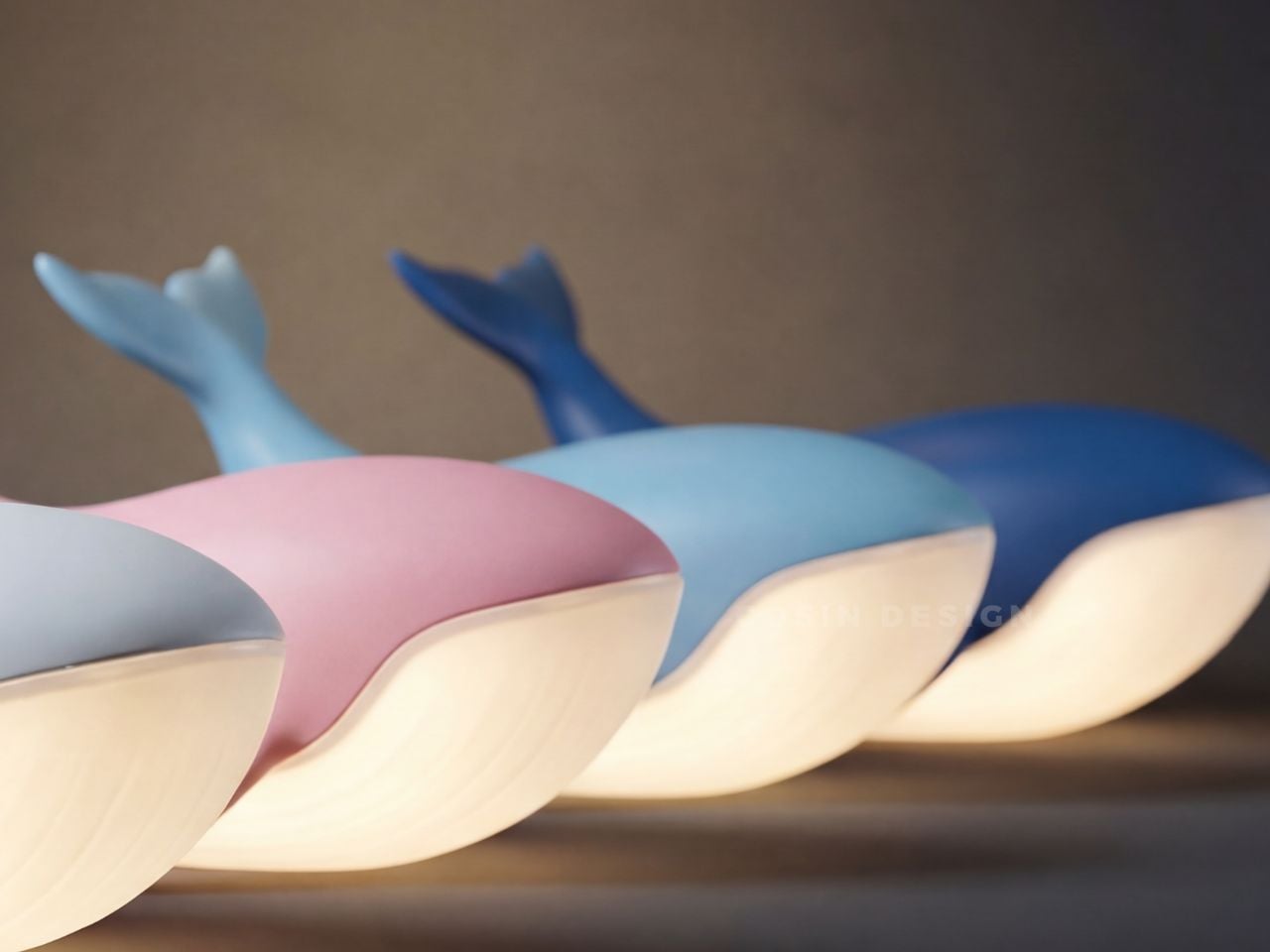
Nature plays an important role here, but not in a literal sense. The whale is recognizable, yet simplified just enough to feel universal. It is less about replicating an animal and more about capturing a sense of calm, depth, and quiet strength. That balance allows the lamp to exist across different environments without feeling out of place. It feels just as appropriate in a child’s room, where its gentle glow can provide comfort at night, as it does in a more mature, minimal interior where it reads as a sculptural object.
The availability of four color options adds to this flexibility. Each variation subtly changes the mood of the piece, allowing it to align with different interior styles and personal preferences. Whether placed in a playful setting or a more subdued one, the lamp adapts without losing its identity.
What lingers most, however, is the way the design translates something vast into something intimate. A whale, typically associated with scale and distance, becomes a small, glowing presence that quietly occupies a personal space. It turns awe into reassurance and transforms something distant into something familiar. In doing so, it reflects a broader shift in how we approach design today, where emotional resonance matters just as much as function.
Not everything needs to be louder or brighter to be effective. Sometimes, the most powerful design choice is to soften, to create objects that do not demand attention but instead become part of the atmosphere. The whale lamp does exactly that. It does not insist on being noticed, yet over time, it becomes something you grow attached to.
SHARE