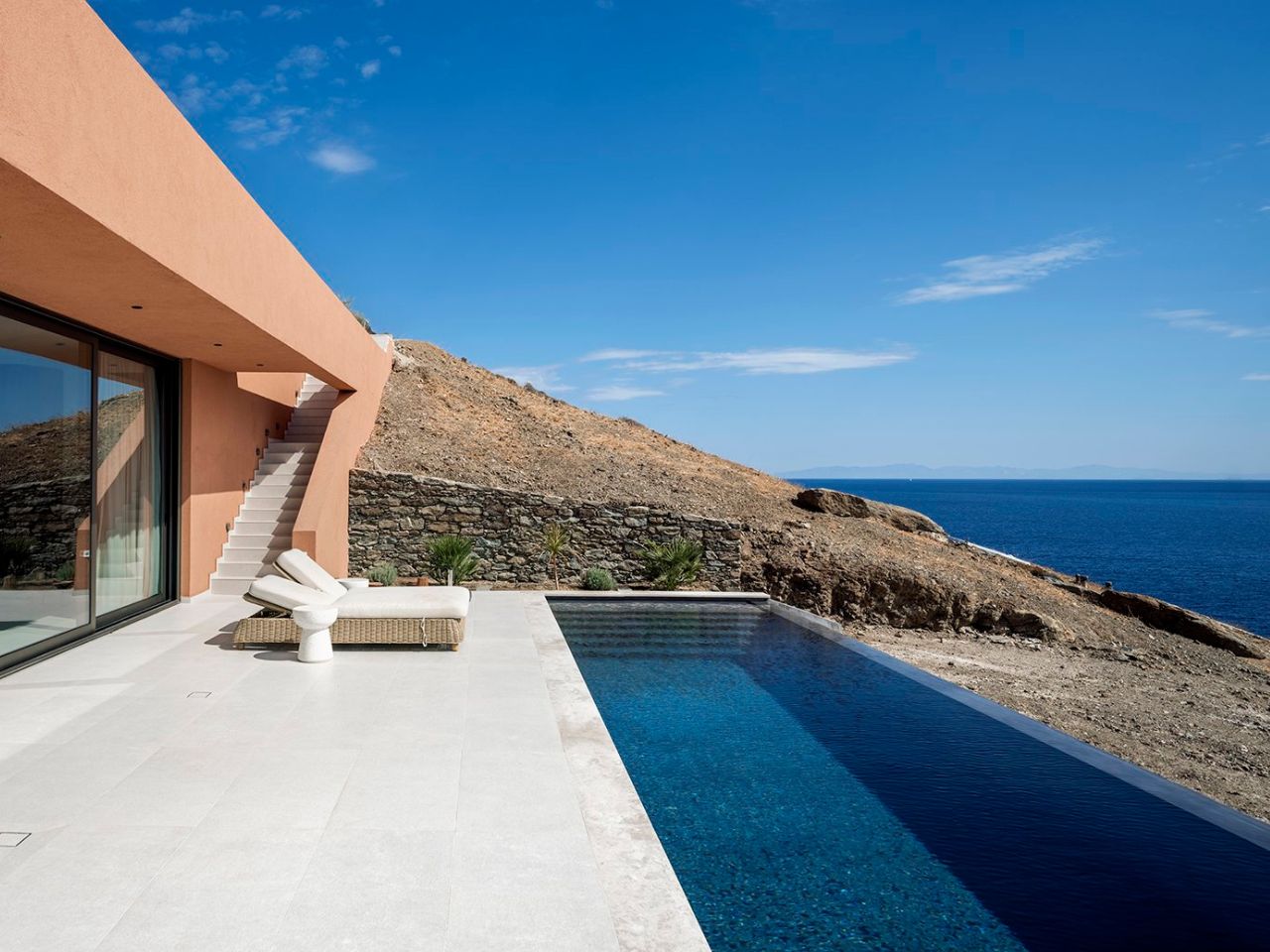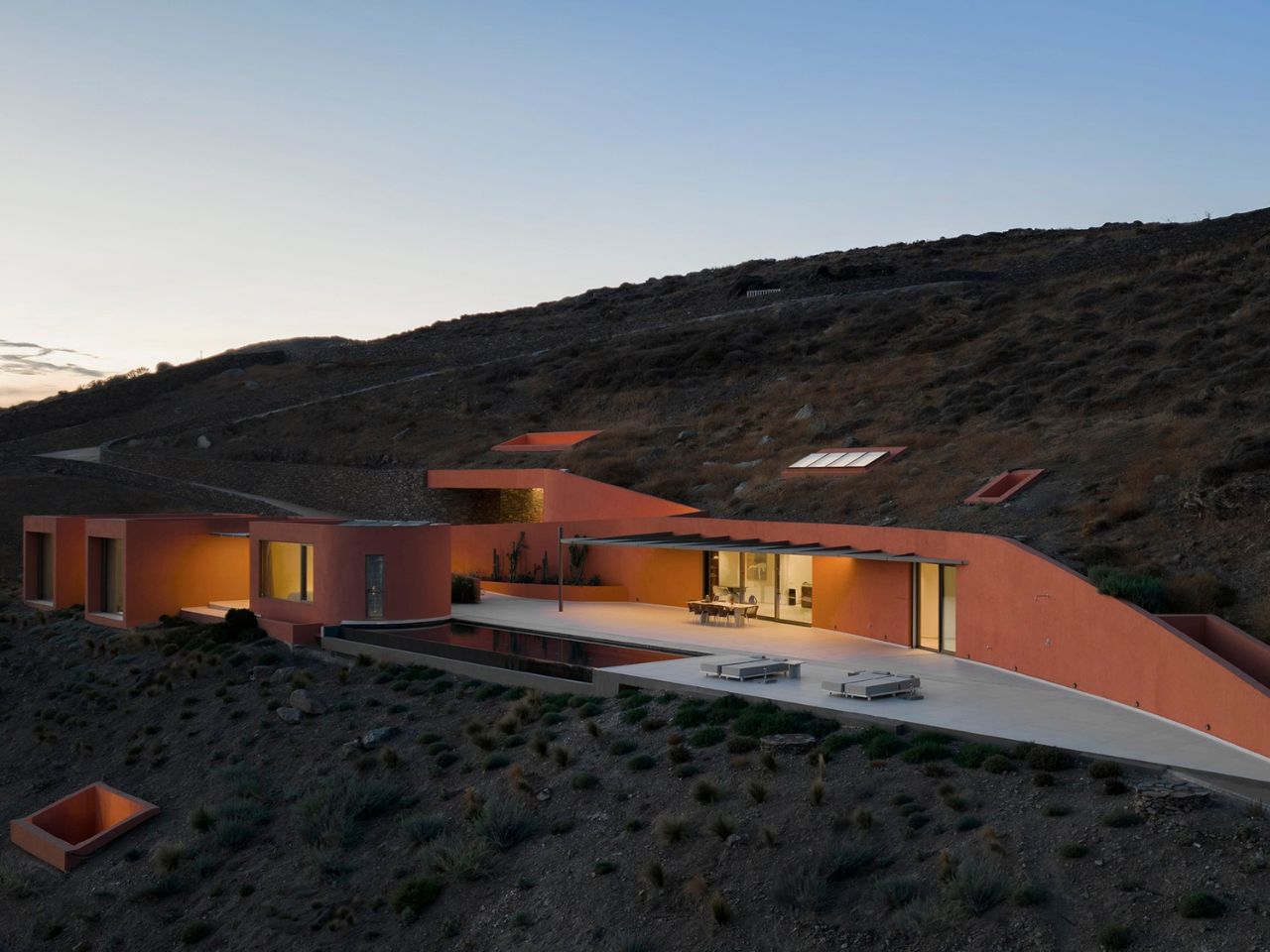
On a quiet stretch of coastline on the Greek island of Syros, a new resort seems to almost disappear into the landscape. Designed by the Athens-based firm Ateno Architecture Studio, Olen is a small seven-suite hotel that has been carefully carved into the rocky cliffs overlooking the Aegean Sea. Instead of standing out as a bold architectural object, the project quietly blends into its surroundings, allowing the landscape to remain the star of the show.
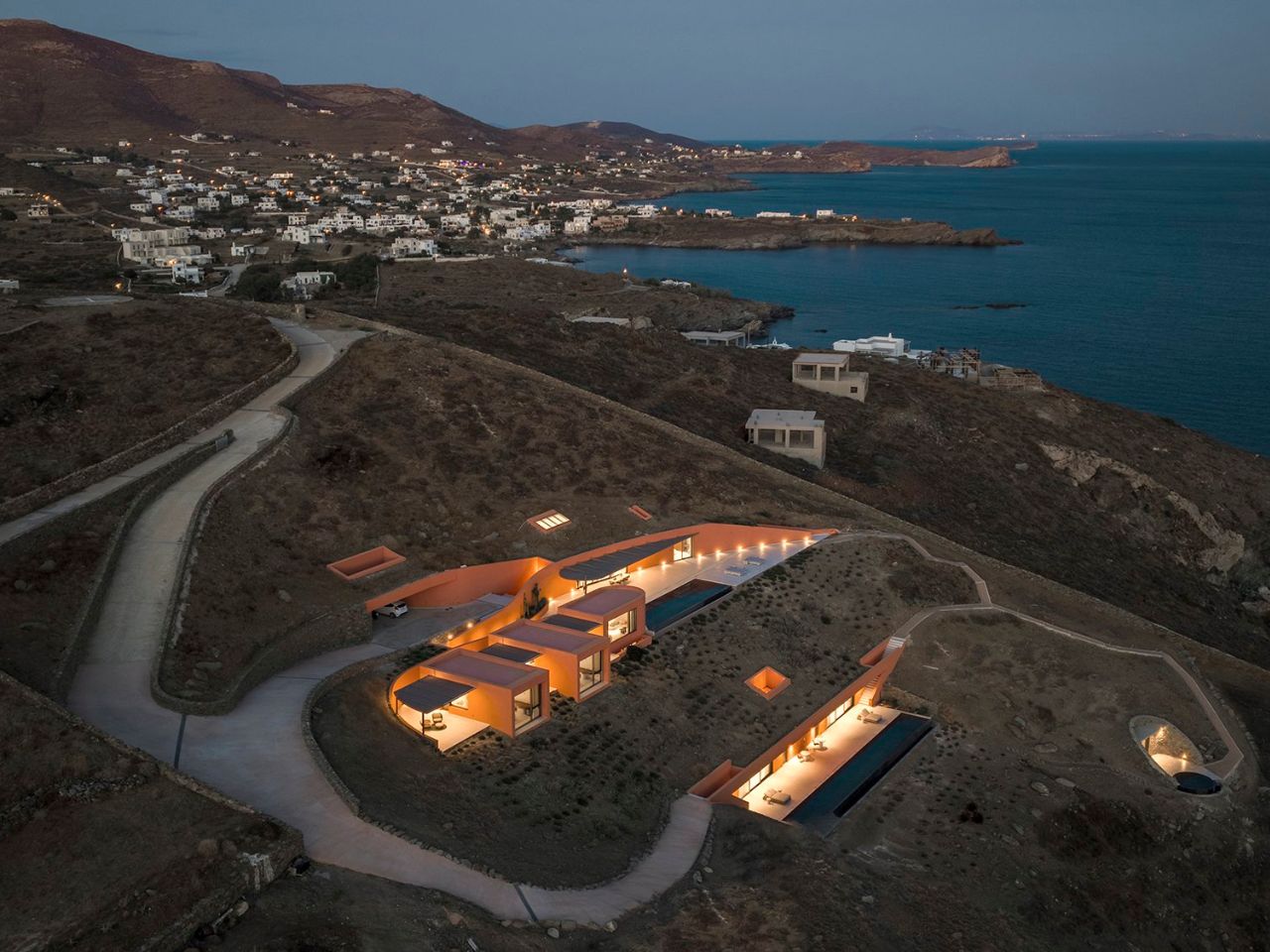
The site itself is relatively untouched, with rugged terrain and uninterrupted views across the sea. For the architects, this meant approaching the project with sensitivity. The aim was not simply to build a luxury retreat, but to do so in a way that respected the existing character of the place. Rather than placing a large structure on top of the land, the design tucks much of the building into the hillside so that the architecture feels like part of the terrain.
Designer: Ateno Architecture Studio
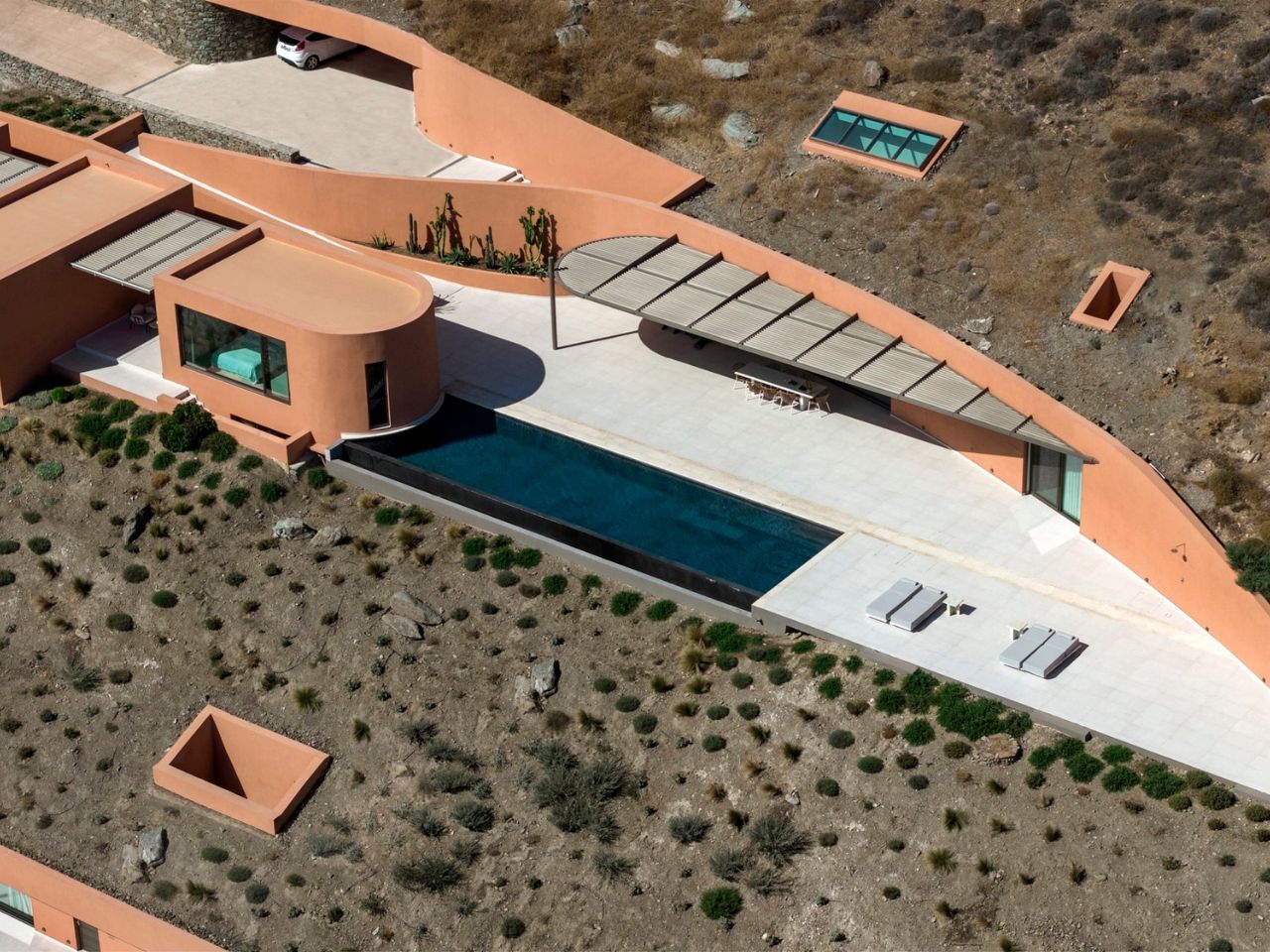
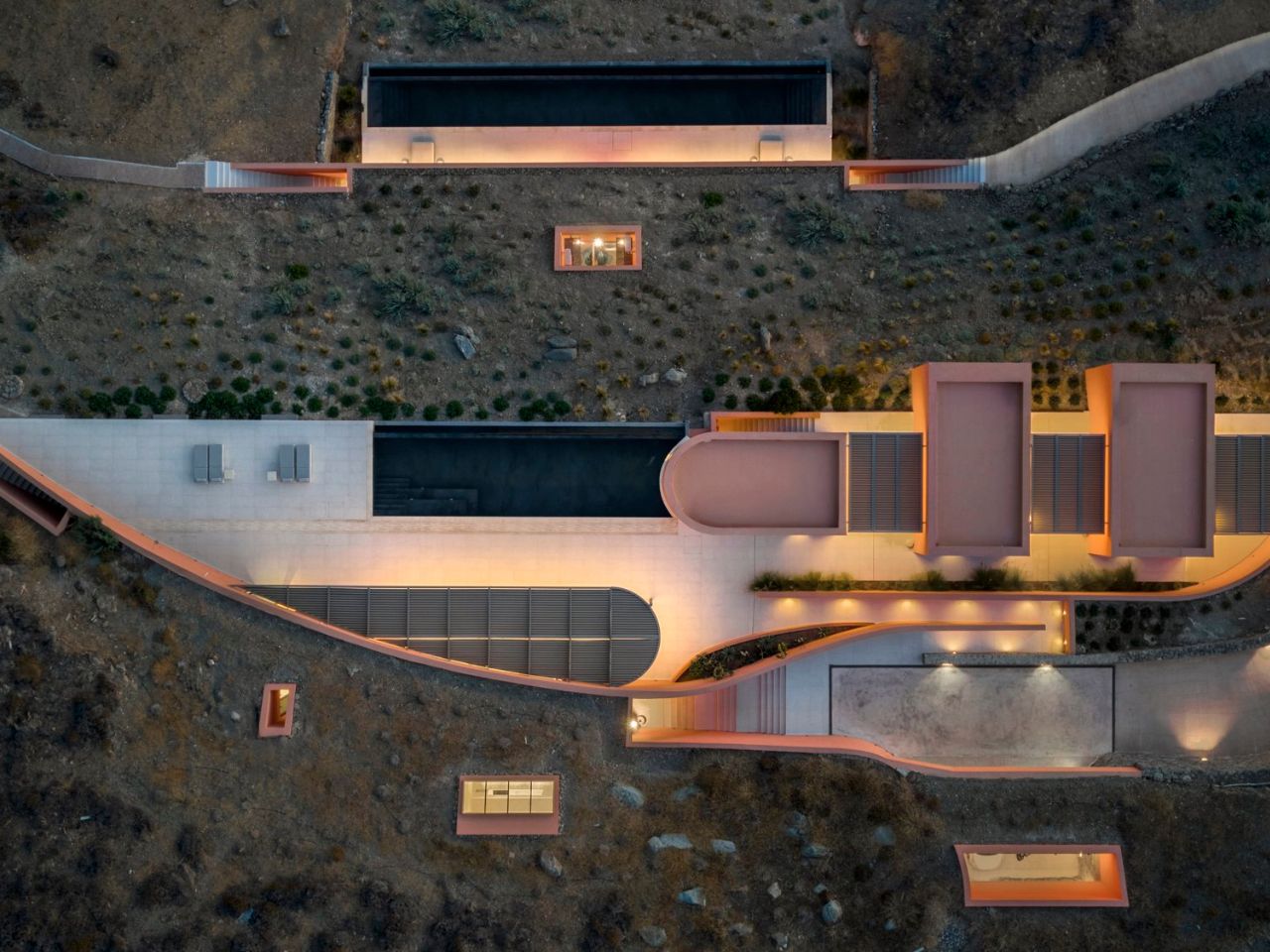
What makes Olen particularly interesting is the way the architecture is composed. Instead of focusing on striking building forms, the design is shaped through terraces, retaining walls, and subtle cuts into the earth. These elements create a series of spaces that unfold gradually across the cliff. The result is a composition that feels embedded in the landscape rather than imposed on it.
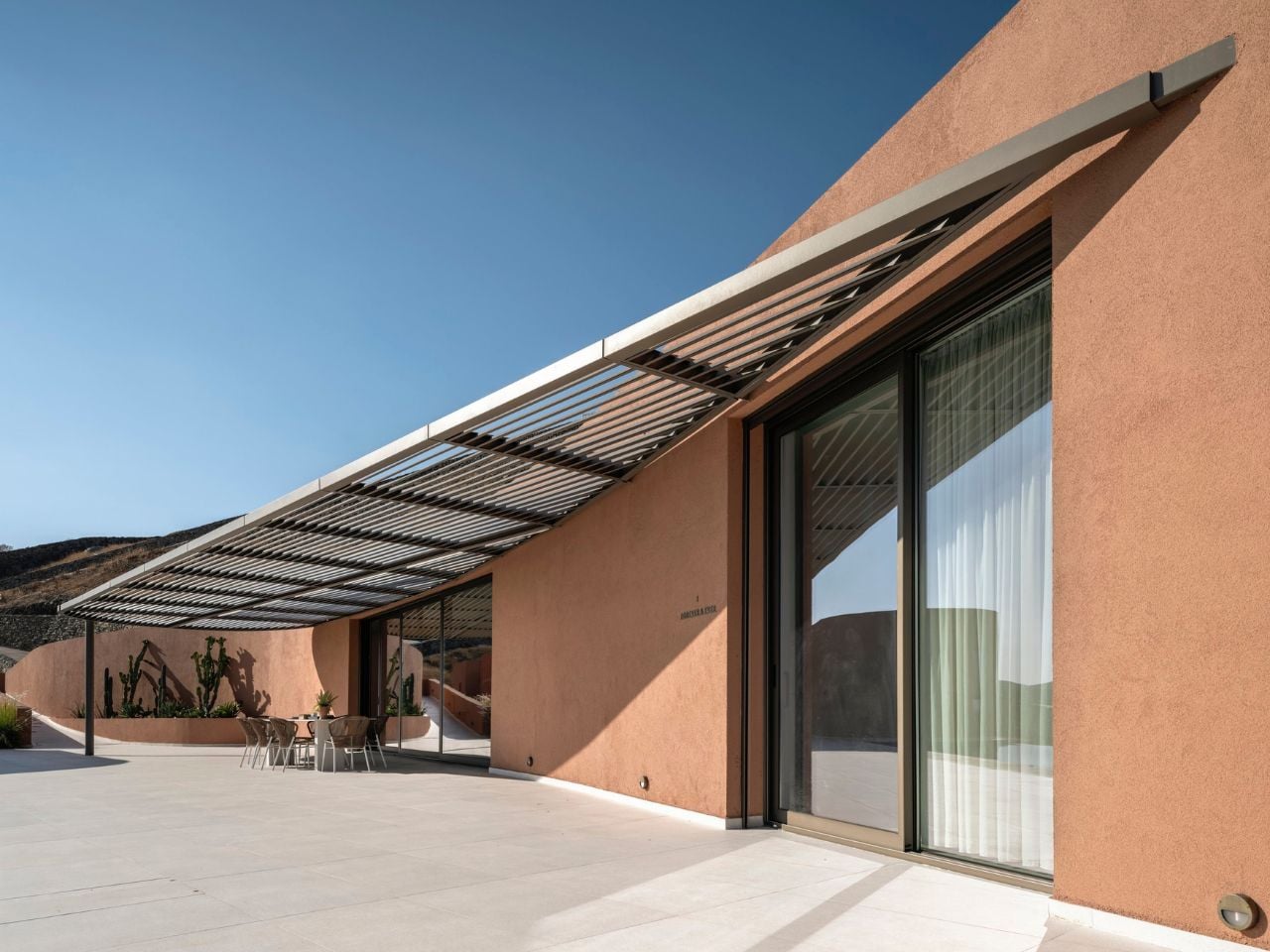
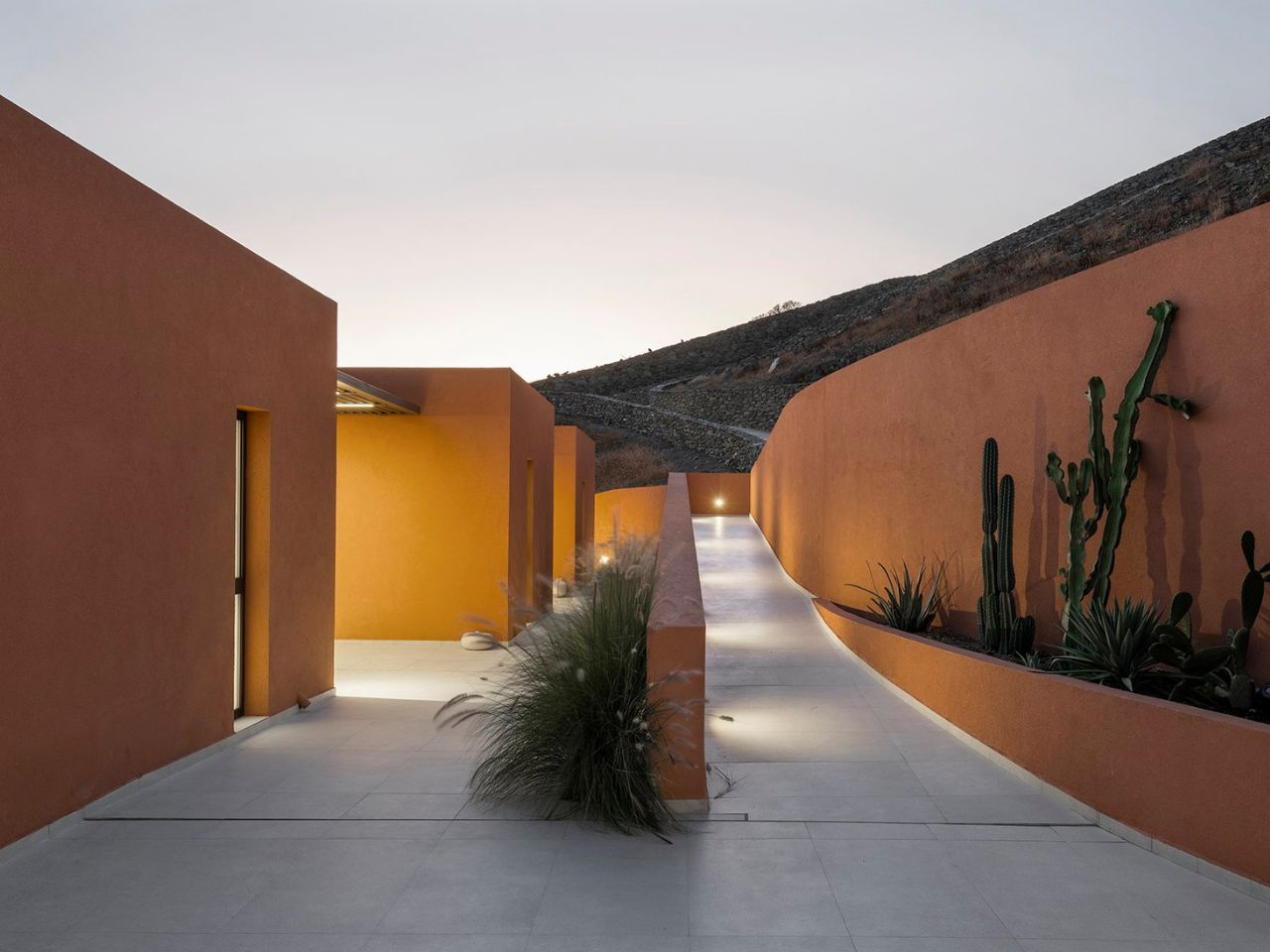
The resort steps down the slope in what the architects describe as an amphitheatre-like arrangement. As you move through the site, open terraces reveal sweeping views of the Aegean while more private rooms are tucked deeper into the hillside. The walls throughout the project are finished with textured render in warm, earthy tones, which helps the architecture blend naturally with the surrounding rock.
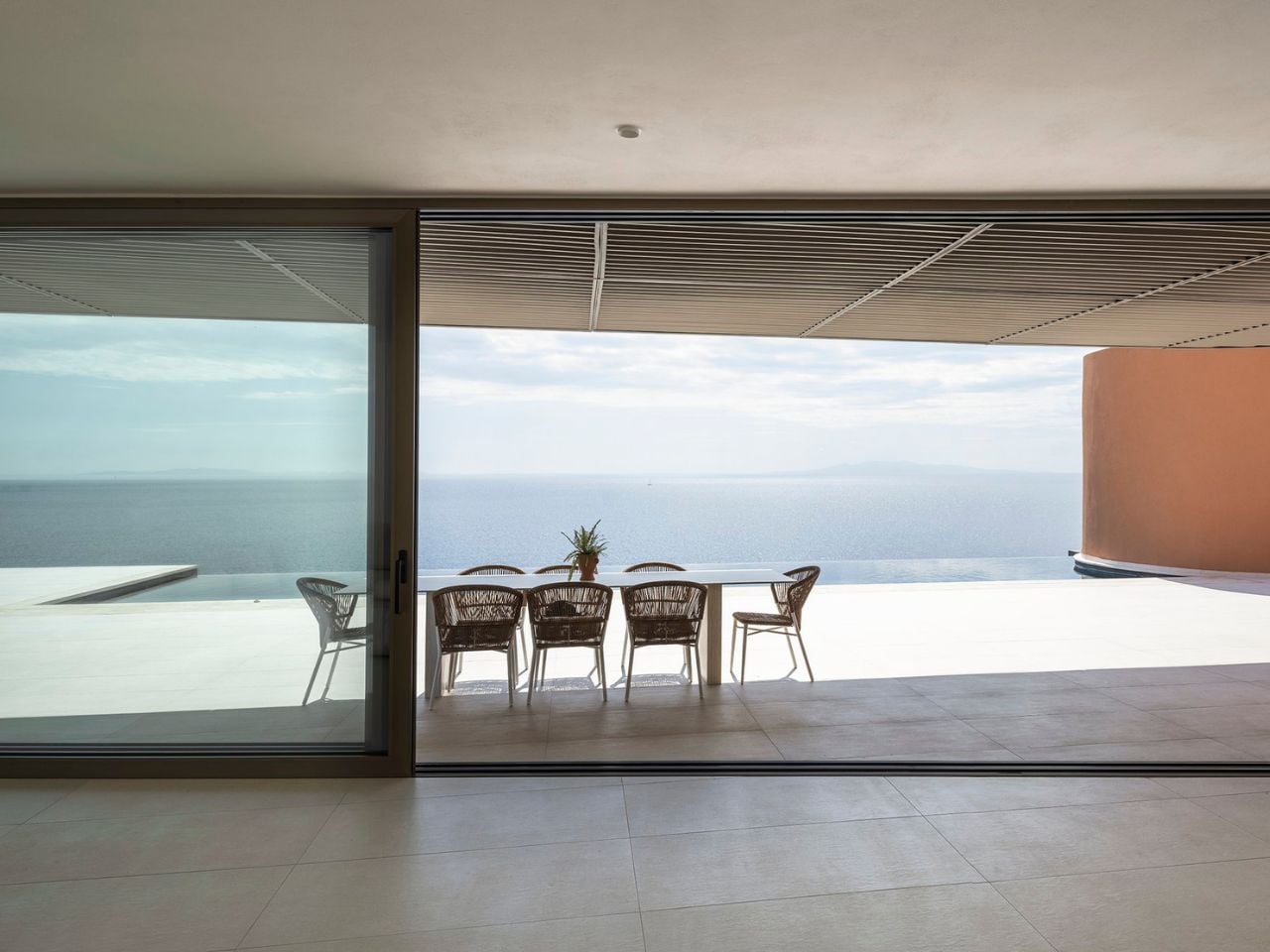
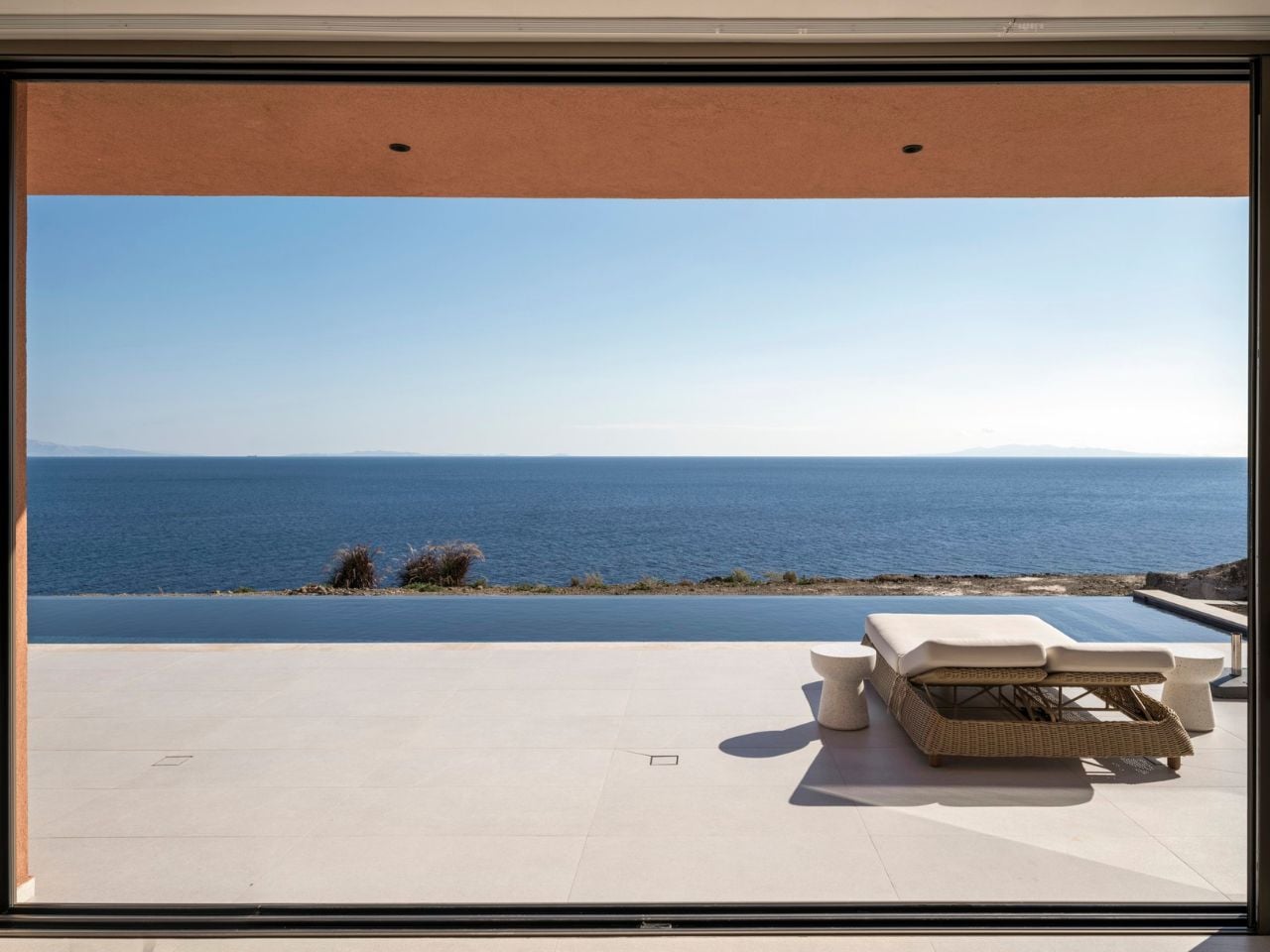
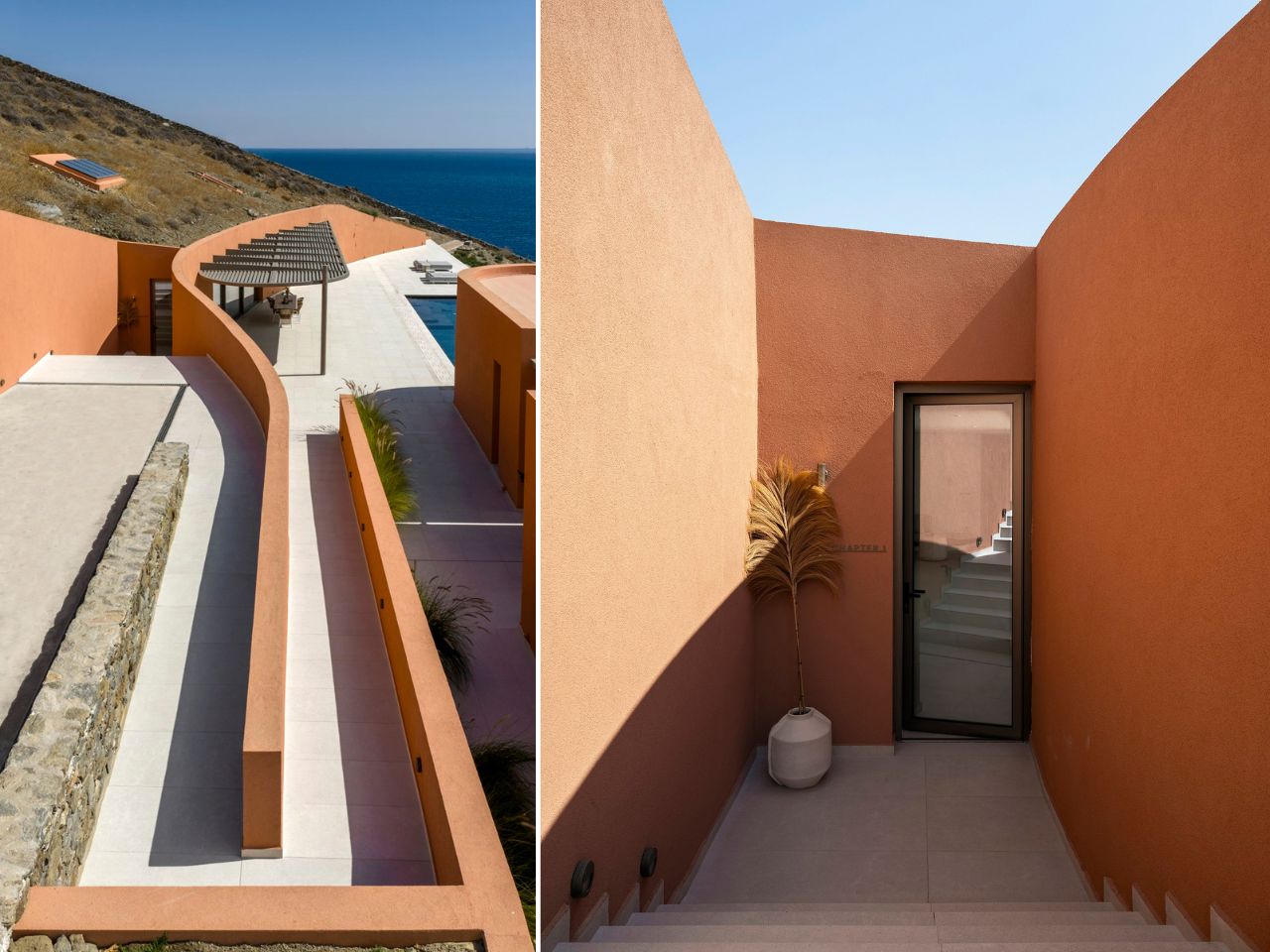
The layout of the resort is organised into three distinct parts called The Plane, The Line, and The Point. These areas are connected by a winding path that gently guides guests down the hillside. As you move lower on the site, the spaces become increasingly private.
At the very top sits The Plane, which acts as the social heart of the resort. A curved retaining wall wraps around a generous terrace that opens out toward the sea. Here, a sculptural pergola shaped like a leaf provides shade while a pool reflects the blue horizon beyond. Beneath this terrace, shared living areas and one bedroom are tucked into the hillside. Nearby, three additional bedrooms extend outward in simple cubic forms that frame the sea views.
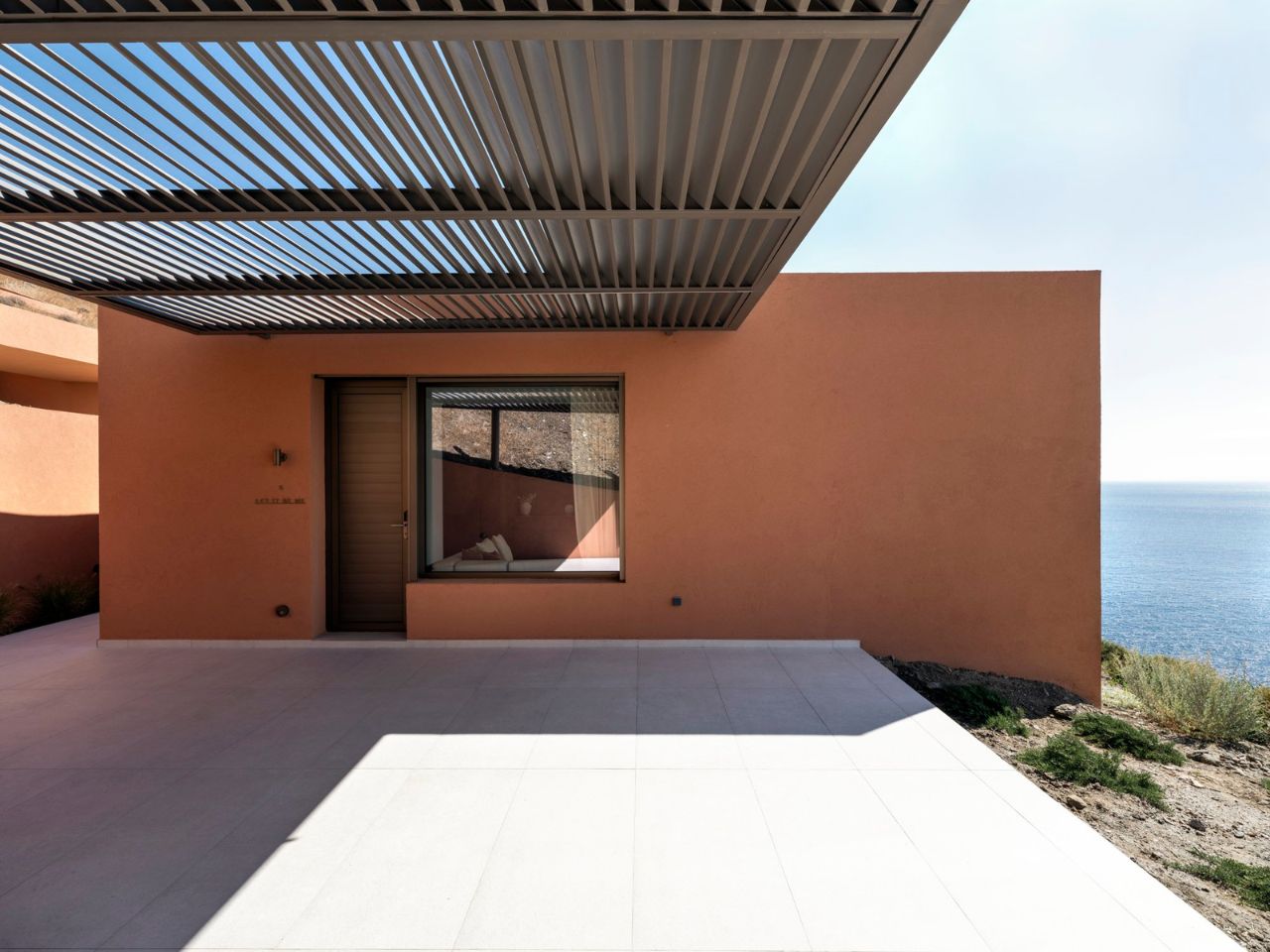
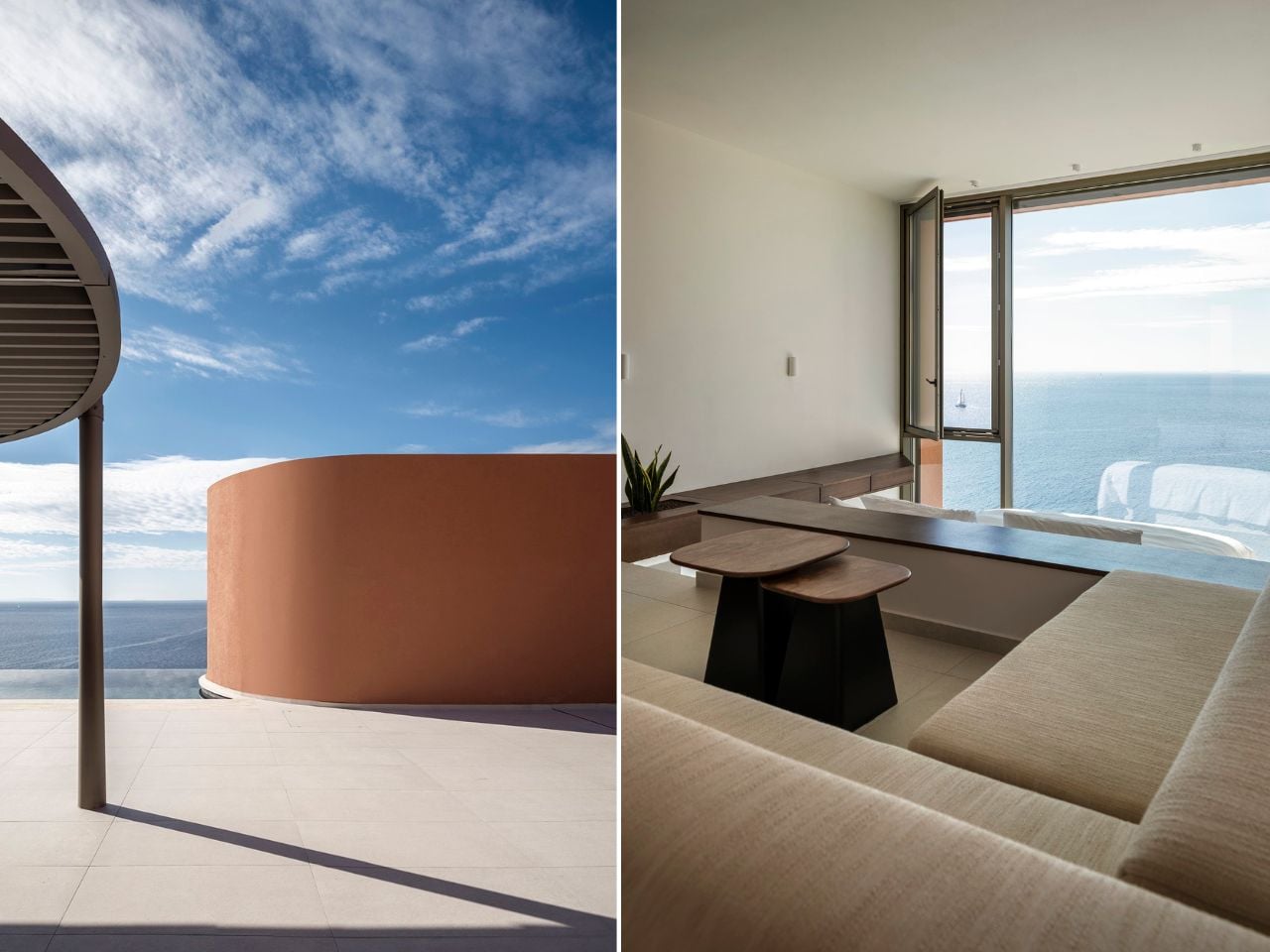
The sweeping curve of the retaining wall is one of the most memorable features of the project. It creates a sense of enclosure and protection while still allowing the terrace to remain completely open to the landscape and the vast sea beyond.
Further down the hill is The Line, which contains two larger underground suites. These can operate as separate accommodations or be combined to form a larger living unit. Both open onto a shared terrace with a long, narrow infinity pool that stretches toward the horizon.
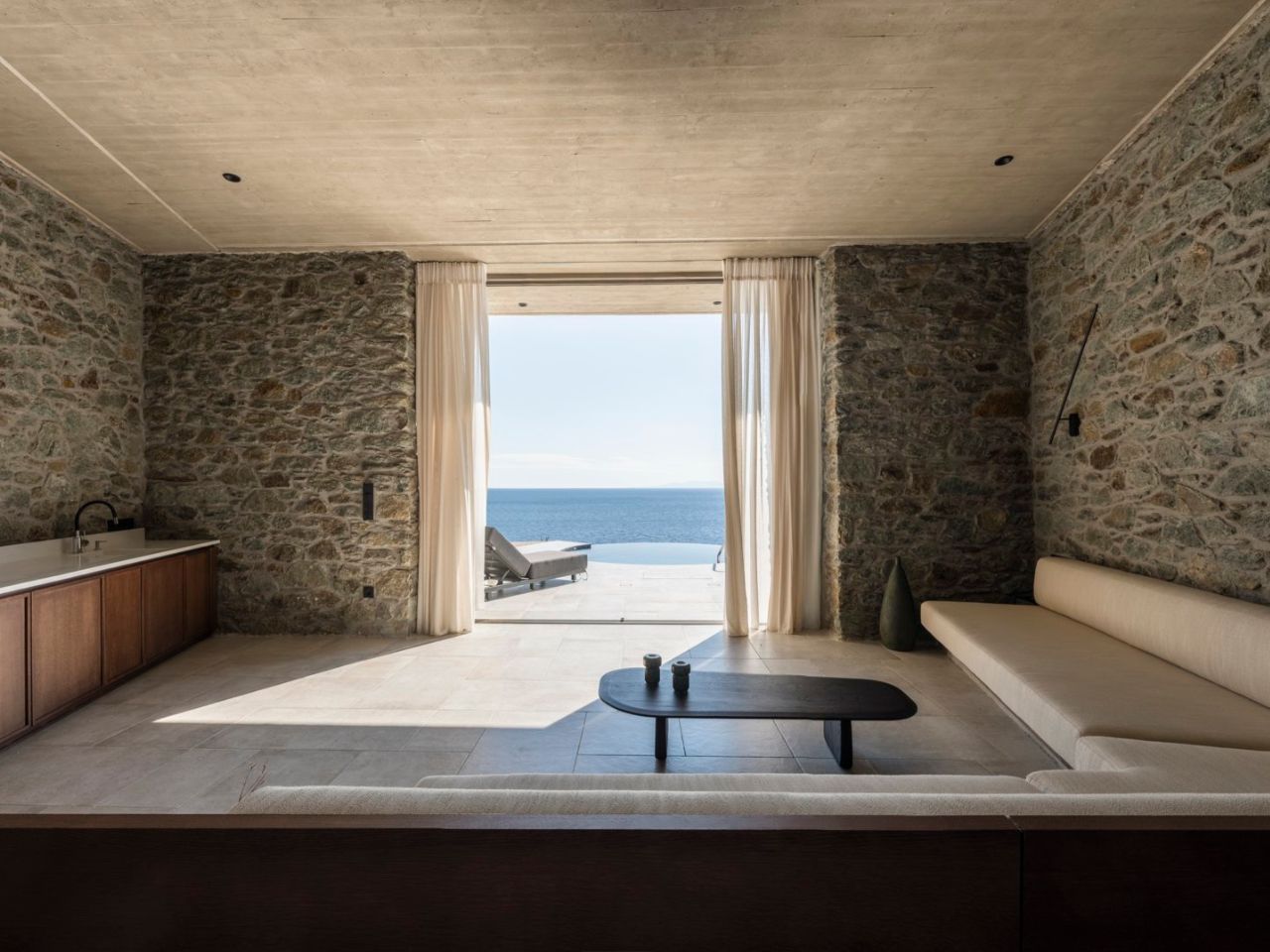
At the very bottom of the site lies The Point, the most secluded part of the resort. This independent guesthouse is framed by a curved stone wall and features a small circular pool. The exposed stone here provides a subtle contrast to the rendered walls used elsewhere across the project.
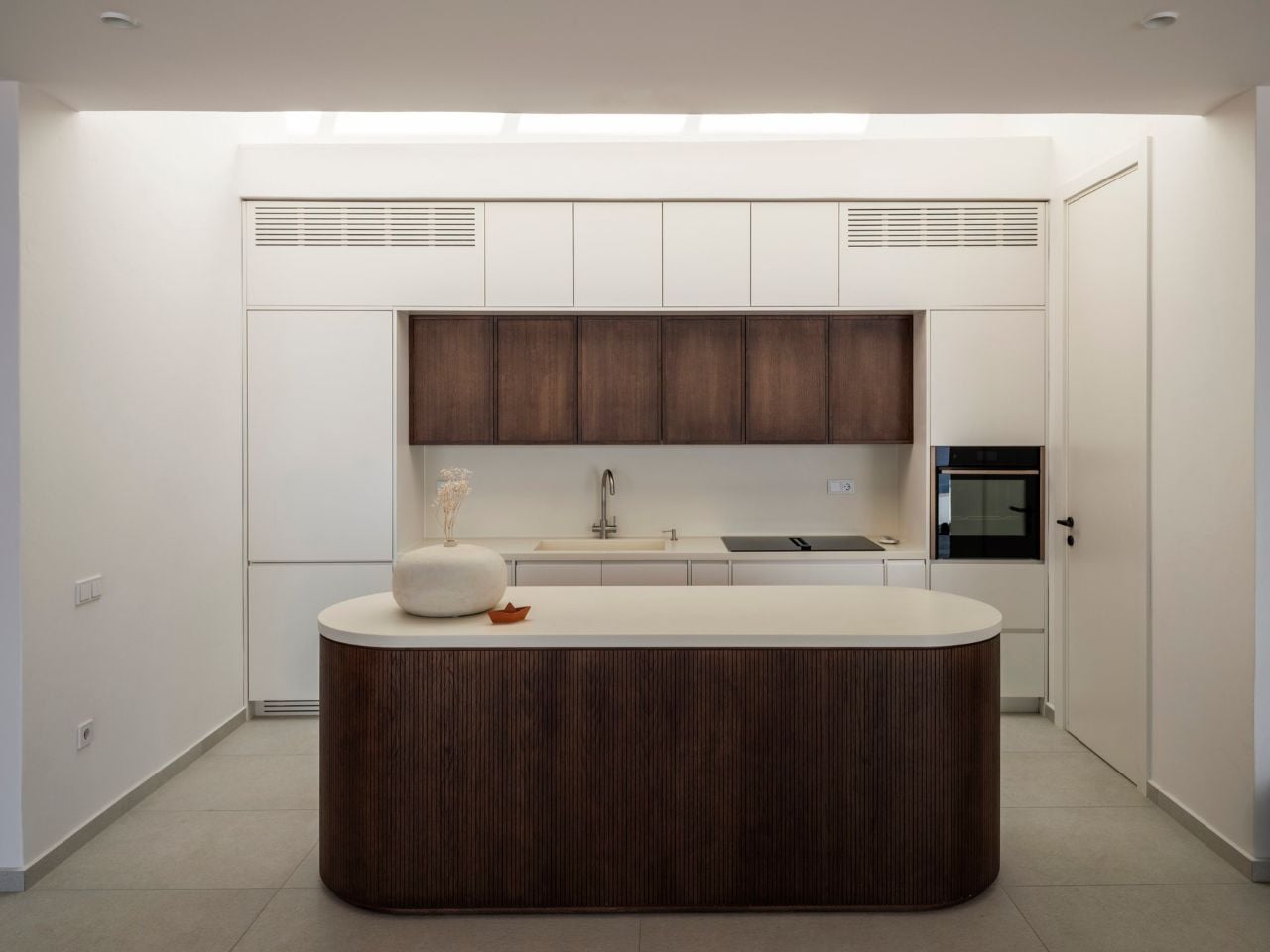
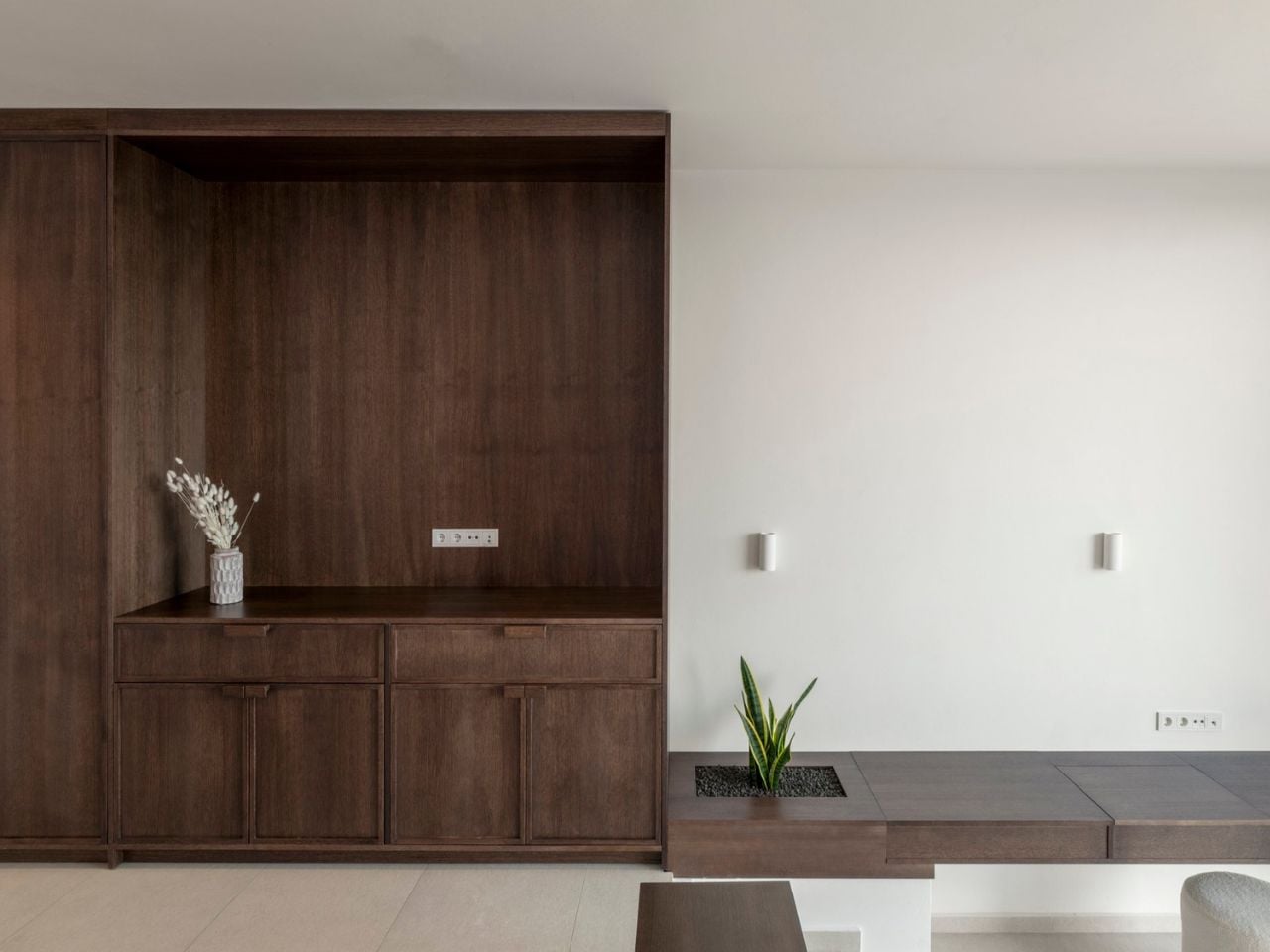
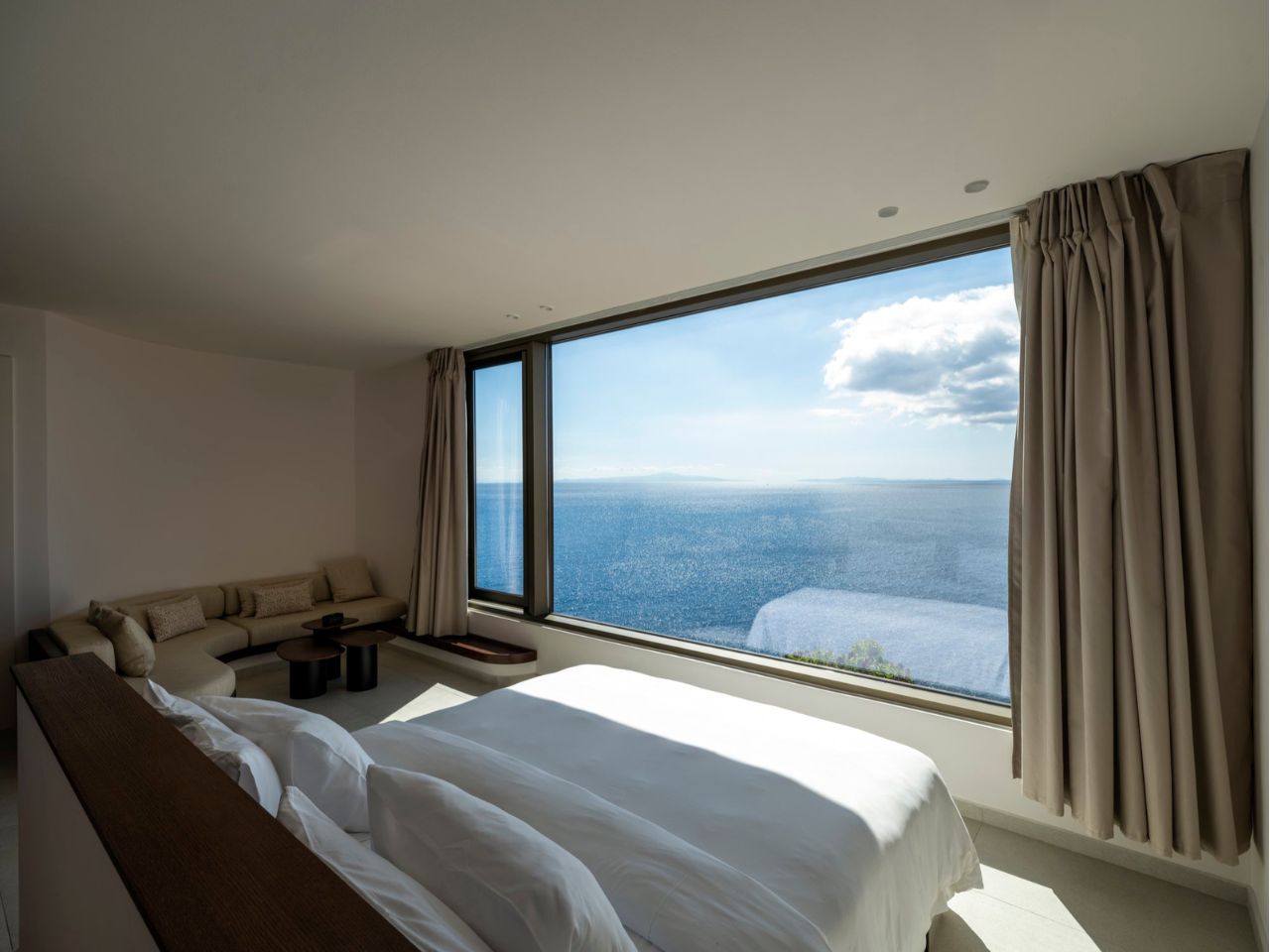
Inside the resort, the interiors are designed to feel calm and light despite the fact that many of the spaces sit within the hillside. Soft off-white tones reflect natural light throughout the rooms, while pale stone flooring connects indoor spaces with the terraces outside. This continuity helps blur the boundary between interior and exterior and keeps the atmosphere relaxed and airy.
In many ways, Olen feels less like a building placed on the landscape and more like an extension of it. The architecture follows the natural slope, opening itself gradually to the sea while remaining quietly anchored to the cliff. Guests move through terraces, shaded paths, and hidden rooms carved into the hillside, constantly aware of the surrounding horizon. The experience becomes less about staying in a hotel and more about inhabiting the landscape itself.