Most conversations about AI and children go one of two ways: either we’re told to be terrified, or we’re told to embrace it fully and immediately. Morrama’s Create concept lands somewhere far more interesting than either of those extremes, and it’s the most thoughtful thing I’ve seen in the AI space in a while.
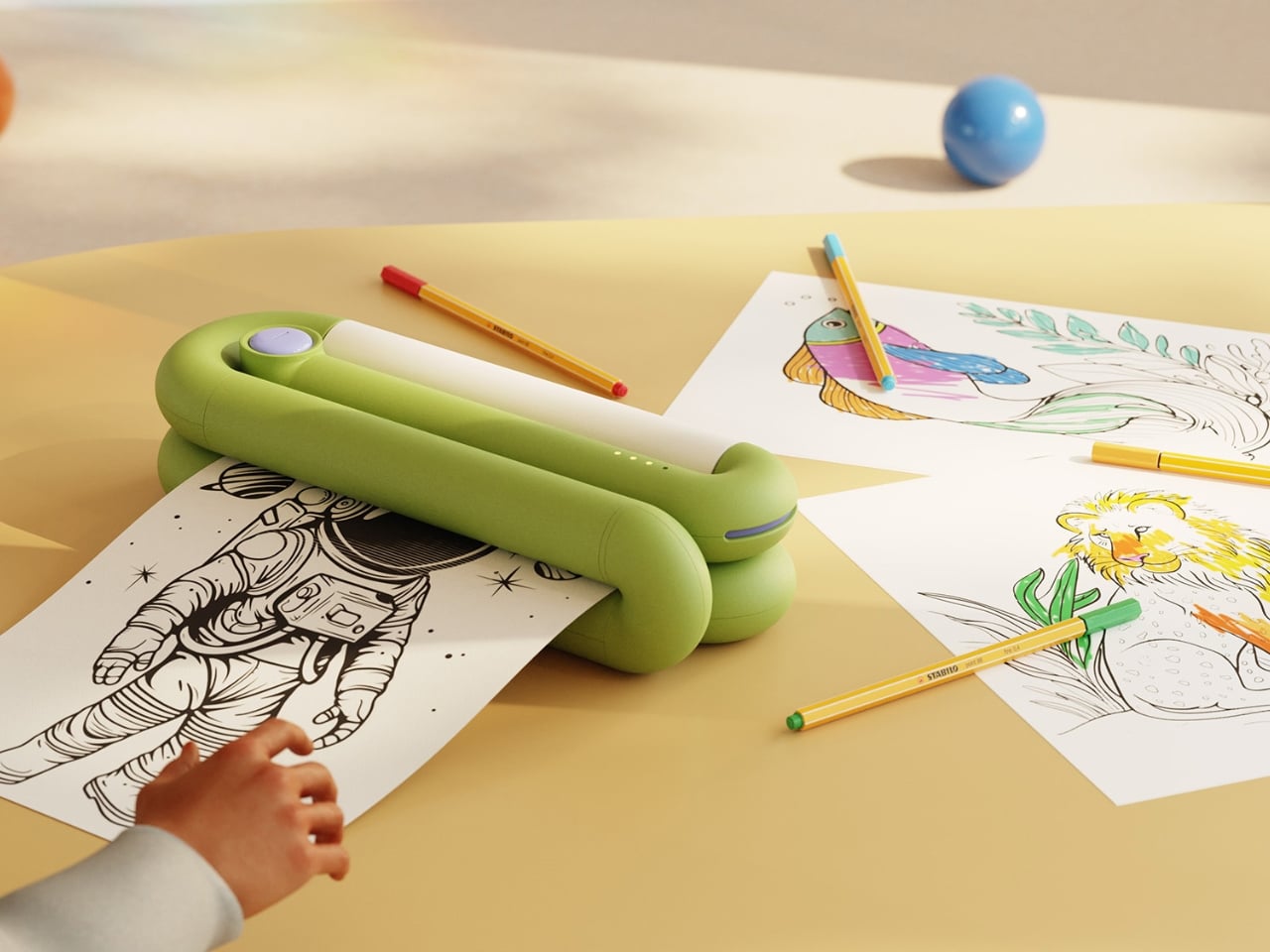
Create is a physical device, soft and rounded and painted in a cheerful lime green, that sits on a table and listens to a child speak. The kid says something like “a lion playing football,” Create generates a line drawing based on that prompt, and then prints it out on paper. Real paper. The kind you color in with markers and hang on the fridge.
Designer: Morrama
The design studio behind it, London-based Morrama, built Create as part of a broader series of concept AI tools aimed at children aged six and up. They’re calling them “mindful AI tools,” which could easily sound like marketing fluff, but the more I sit with this one, the more I think they’ve actually earned that description.
Here’s what I keep coming back to: the output is analog. The AI does its part, generates the image, hands it over, and then steps back completely. What happens next is entirely up to the child, their color choices, their interpretation, the way they decide to finish what the machine started. That handoff feels significant. It’s not AI completing the task. It’s AI beginning a conversation.
We’re at a point where most of the discussion around kids and AI centers on schools, on cheating, on homework, on what should or shouldn’t be allowed in classrooms. It’s a valid conversation, but it’s also a narrow one. Create isn’t interested in the classroom at all. It’s thinking about the bedroom floor, the kitchen table, the slow weekend afternoon when a child has nothing to do and everything to imagine.
Morrama’s research acknowledges that most young children are already aware of AI. That’s not alarming so much as it’s simply true. These kids are growing up inside the technology, not encountering it for the first time as adults. So the question of how they’re introduced to it, what framework they’re given for understanding what it is and what it’s for, actually matters quite a lot.
What Create does is frame AI as a creative tool from the very beginning. Not a search engine. Not an entertainment machine. A collaborator that responds to what you bring to it. Teaching a six-year-old that AI works best when you give it something of yourself, a thought, an idea, a weird little prompt about a lion with a football, is quietly radical. That’s a healthier mental model for AI than most adults currently have.
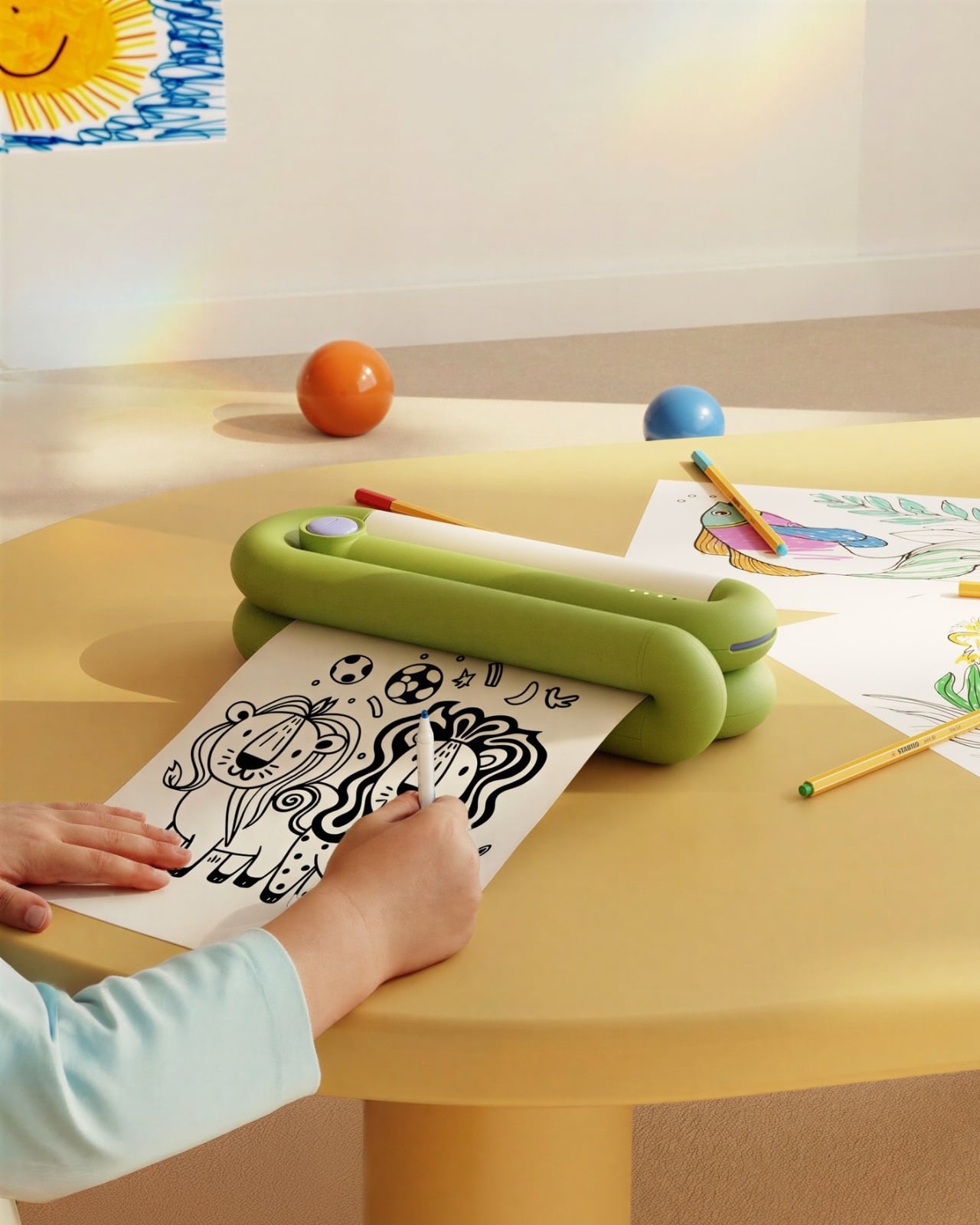
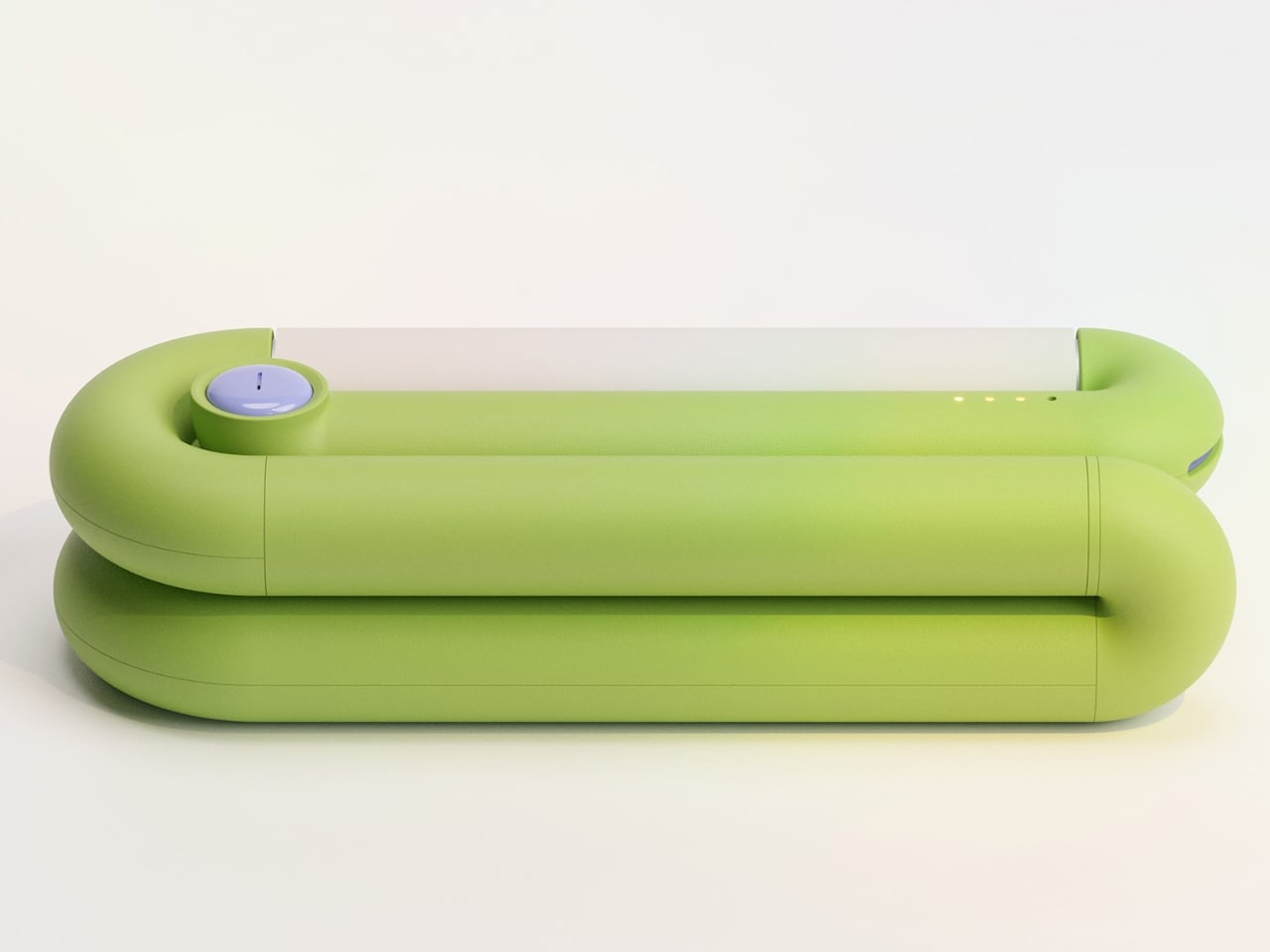
The device itself deserves credit, too. Morrama has been deliberate about making Create feel nothing like a screen. The tubular green form, the single lavender button, the paper rolling out like something from an old-school receipt printer, it all communicates “toy” more than “gadget.” That matters because how a thing looks shapes how we use it, and children especially take cues from aesthetics. Create looks like it belongs on a playroom shelf, not a tech desk.
I’ll be straightforward about the fact that Create is still a concept. You can’t buy it, and there’s no confirmed production timeline. But sometimes a concept does its most important work just by existing, by showing that a different approach is possible. The default assumption is that AI for kids means apps, screens, subscriptions, and data. Create pushes back on all of that with something wonderfully low-stakes: a piece of paper and a box of colored pencils.
Whether it ever gets made or not, the thinking behind it is worth paying attention to. Because the children growing up right now will be the ones designing, regulating, and living with AI for the rest of their lives. Starting them off with creativity rather than consumption isn’t just a nice idea. It’s probably the smartest one going.