Bluetooth speakers have a curious problem. The ones worth owning tend to cost real money, and the ones that don’t cost much tend to sound exactly like they cost nothing. IKEA’s KALLSUP sits somewhere outside that tired formula entirely, not because it defies audio physics at $9.99, but because it was never really designed around audio physics in the first place.
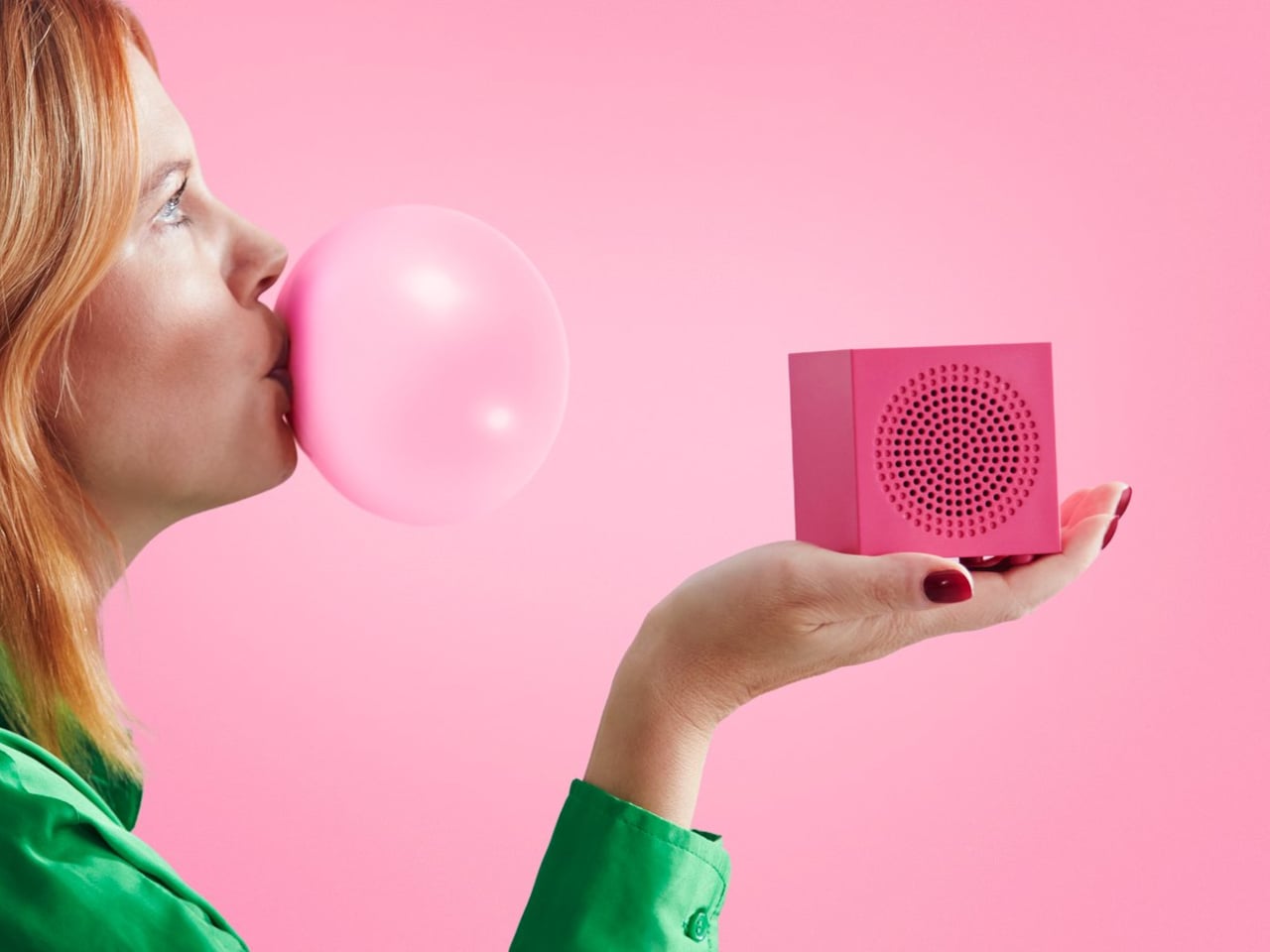
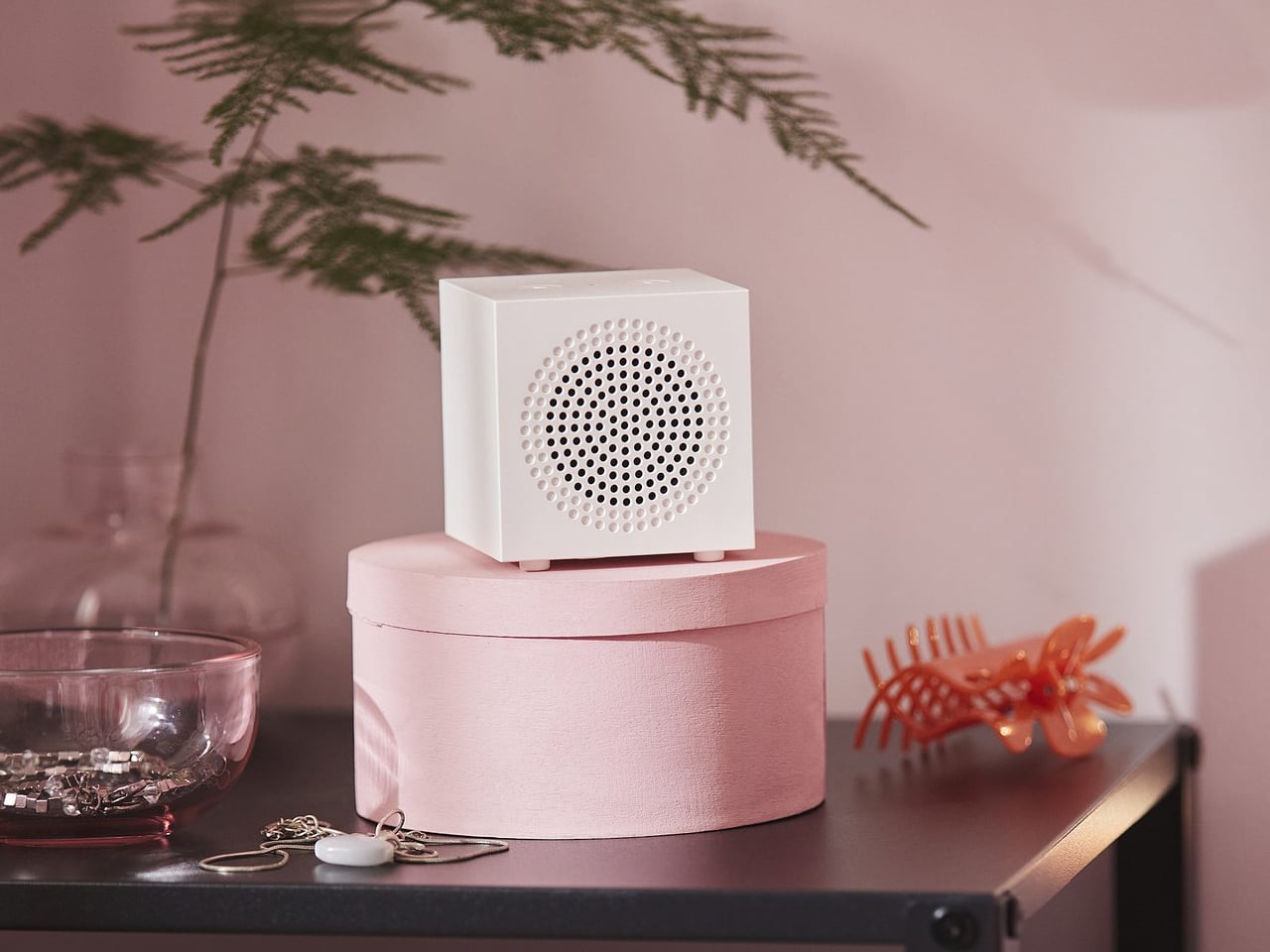
The KALLSUP is a cube, more or less. At 2.75 x 2.75 x 2.88 inches and built from ABS plastic, it has the proportions of a large sugar cube and a silhouette that wouldn’t look out of place on a shelf next to a small succulent. Designer Ola Wihlborg, who wanted the speaker to be “as small and simple as possible,” made something that reads less like audio equipment and more like an object that happens to produce sound when you connect your phone to it.
Designer: Ola Wihlborg (IKEA)
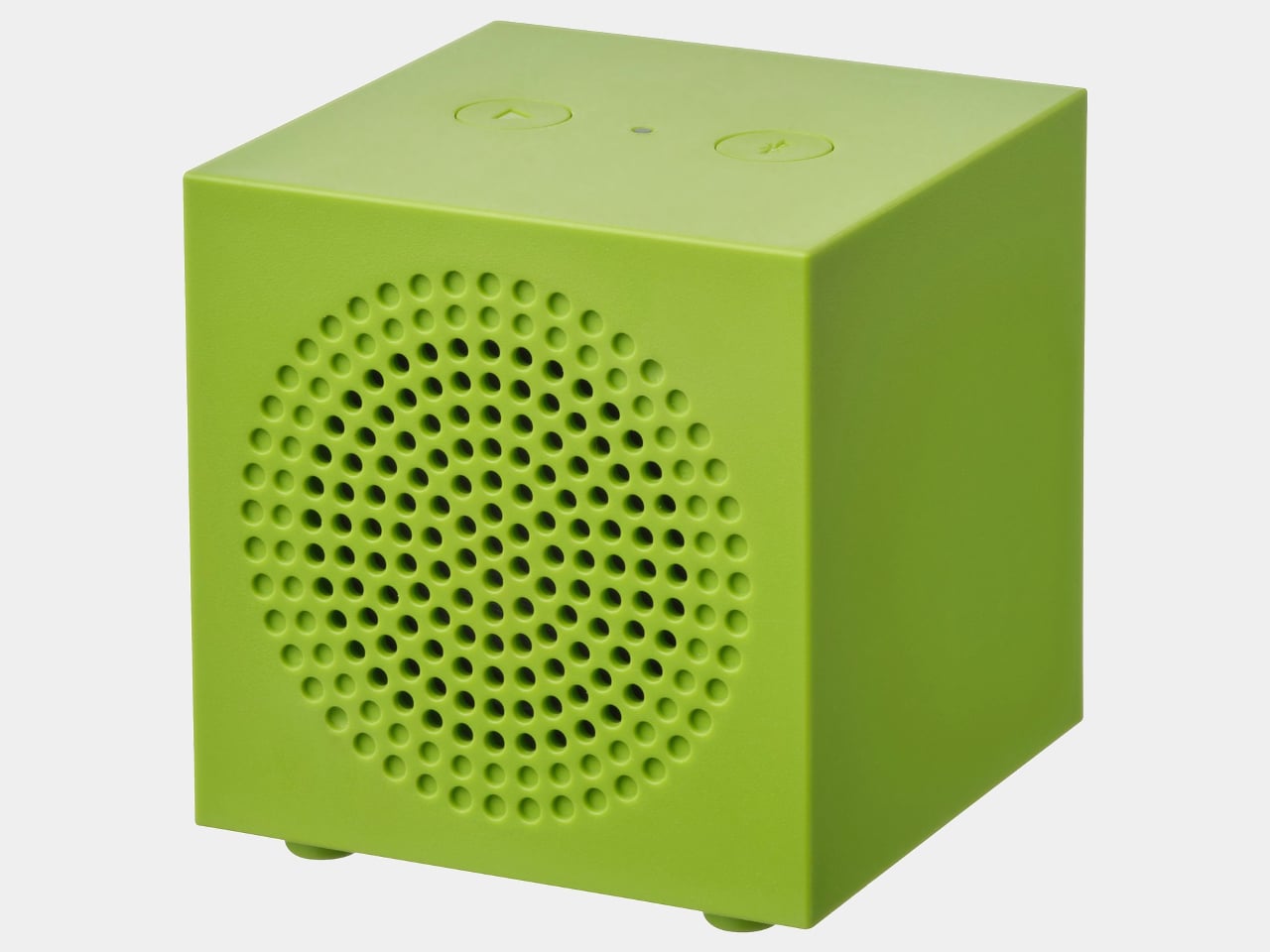
That framing matters. Most portable speakers broadcast what they are through a certain vocabulary: rubberized grilles, cylindrical barrels, carabiner clips, the unspoken suggestion that they’ve survived a kayaking trip. The KALLSUP makes none of those promises. Its face carries a circular grid of perforations, two buttons sit on top flanking a small LED, and the back has a USB-C port for charging. Nothing announces itself as a feature. It just exists, neatly, without fuss.
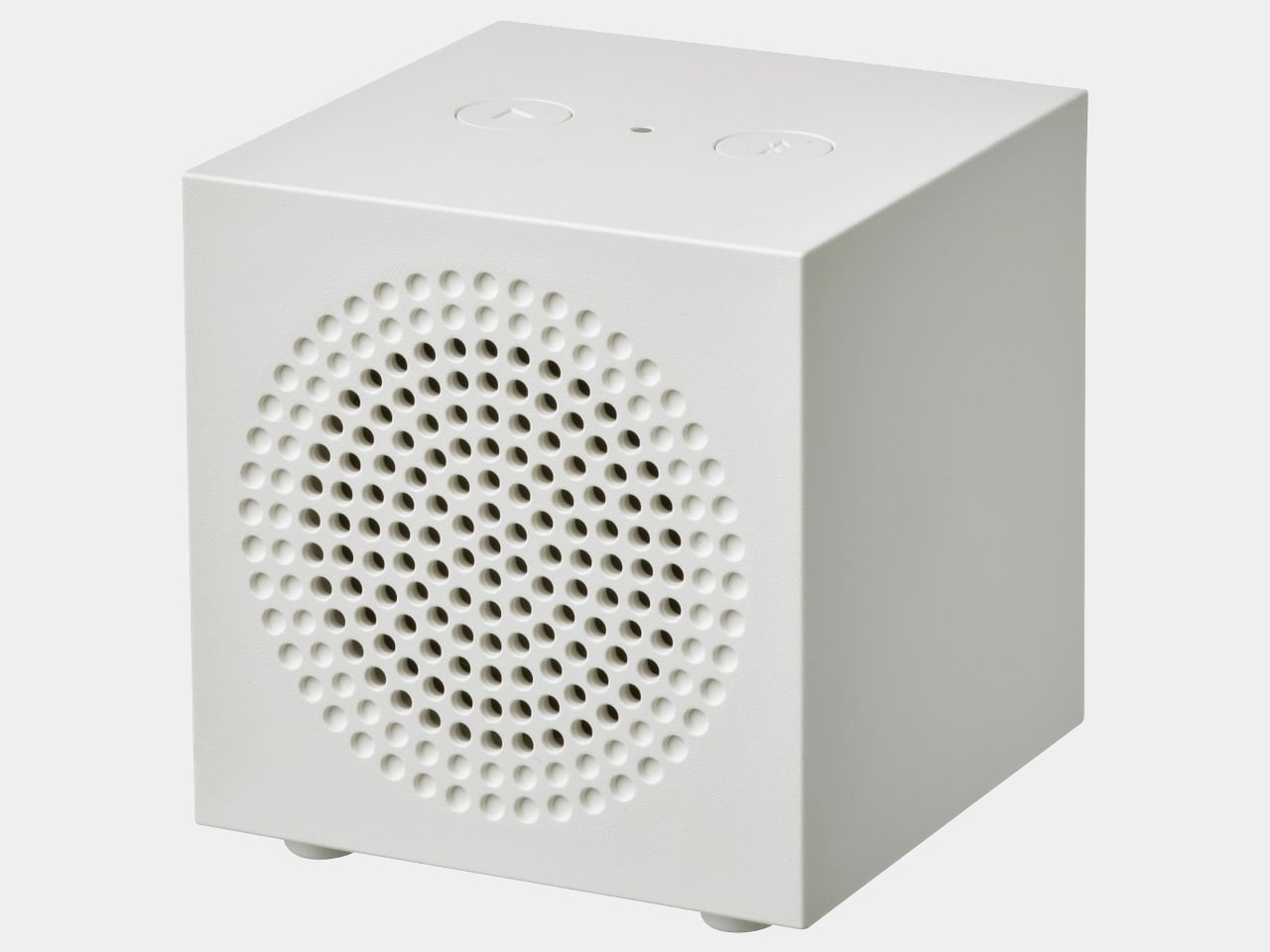
The minimalism extends to the controls, though that’s where things get slightly puzzling. There are only two buttons: one for Bluetooth and one for playback. No volume control sits on the unit itself, so the connected device handles all level adjustments. Pairing multiple units requires a long press of the play button, not the Bluetooth button, and there’s no manual power-off. These omissions read as deliberate simplicity, but they also feel like the kind of tradeoffs that made a $9.99 price tag achievable.
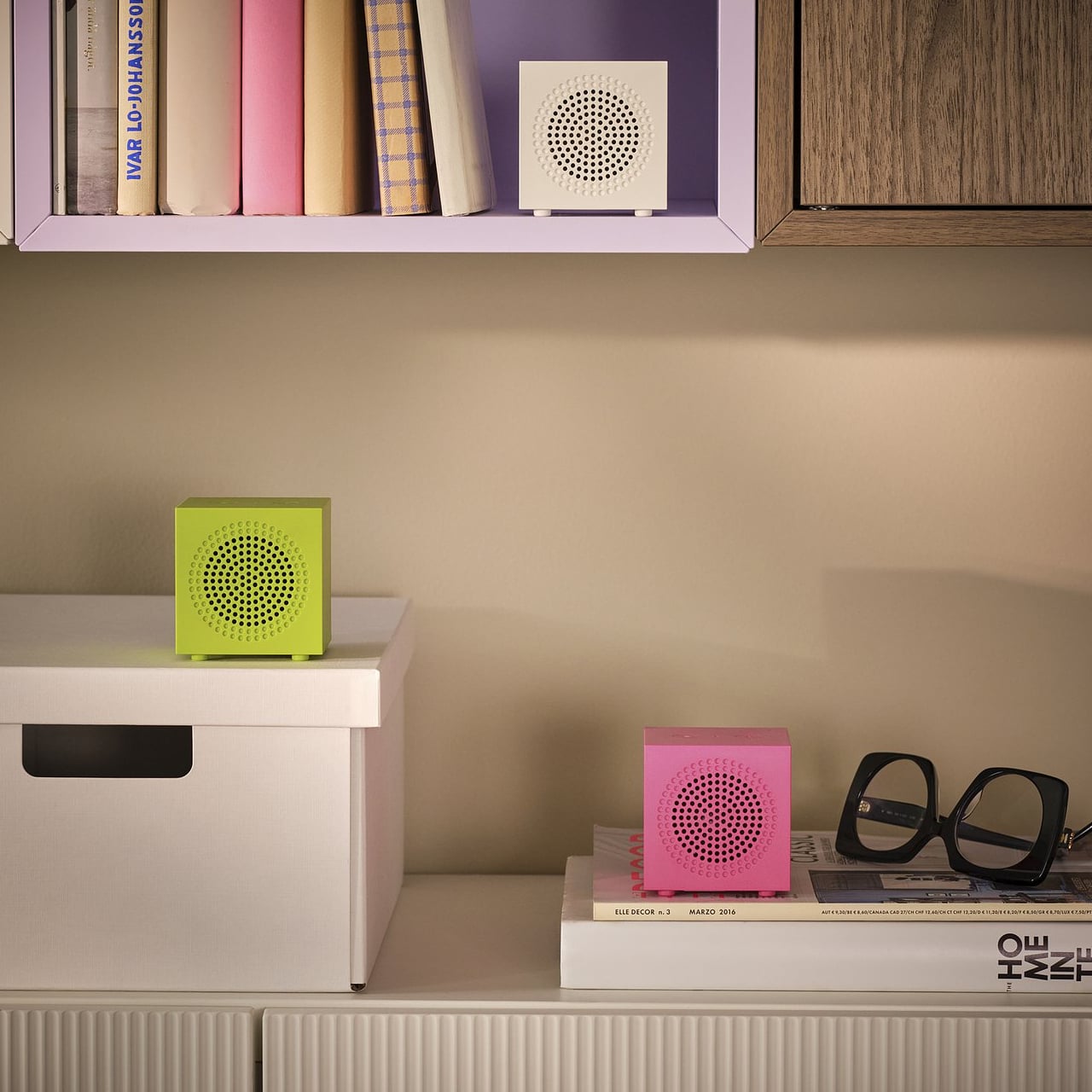
What the KALLSUP can do is genuinely surprise at this price. The rechargeable battery is advertised to run 9 hours at 50% volume, covering a full workday of background music. Bluetooth 5.3 holds up to 10 meters without interference. The real trick, the one that reframes the product’s logic entirely, is pairing up to 100 units together. One KALLSUP is a desk companion. Four of them, scattered across a room, start to approximate distributed audio.
The yellow-green colorway, one of three available alongside white and pink, sits in that particular register of color that’s neither subtle nor aggressive. It’s the kind of green that shows up in membrane keyboards and silicone phone cases aimed at people who want their objects to feel a little more alive.