Five years after Jony Ive left Apple, and two years after Apple killed Project Titan, we finally know what the Apple Car’s interior *could* have looked like. It just happens to have a prancing horse on the steering wheel instead of a bitten apple.
The Ferrari Luce, revealed last week in San Francisco, is a transplant of Apple’s design language into automotive form. Everything about this interior, from the E-ink key fob to the OLED dials to the obsessive material purity, carries the unmistakable signature of Apple’s design peak from 2015 to 2019, when Ive still occupied his Cupertino office and the car project remained alive.
The Apple DNA is Everywhere
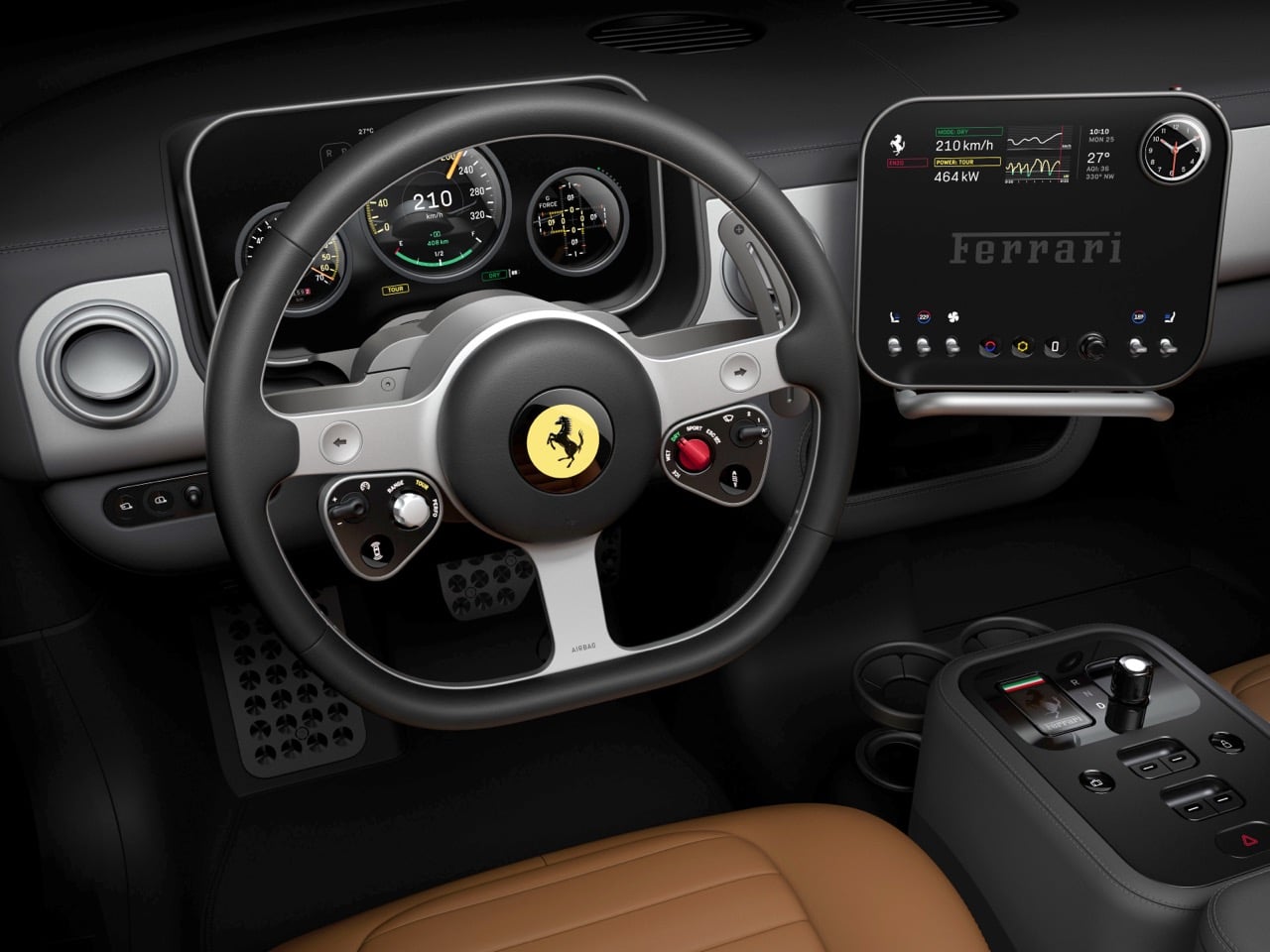
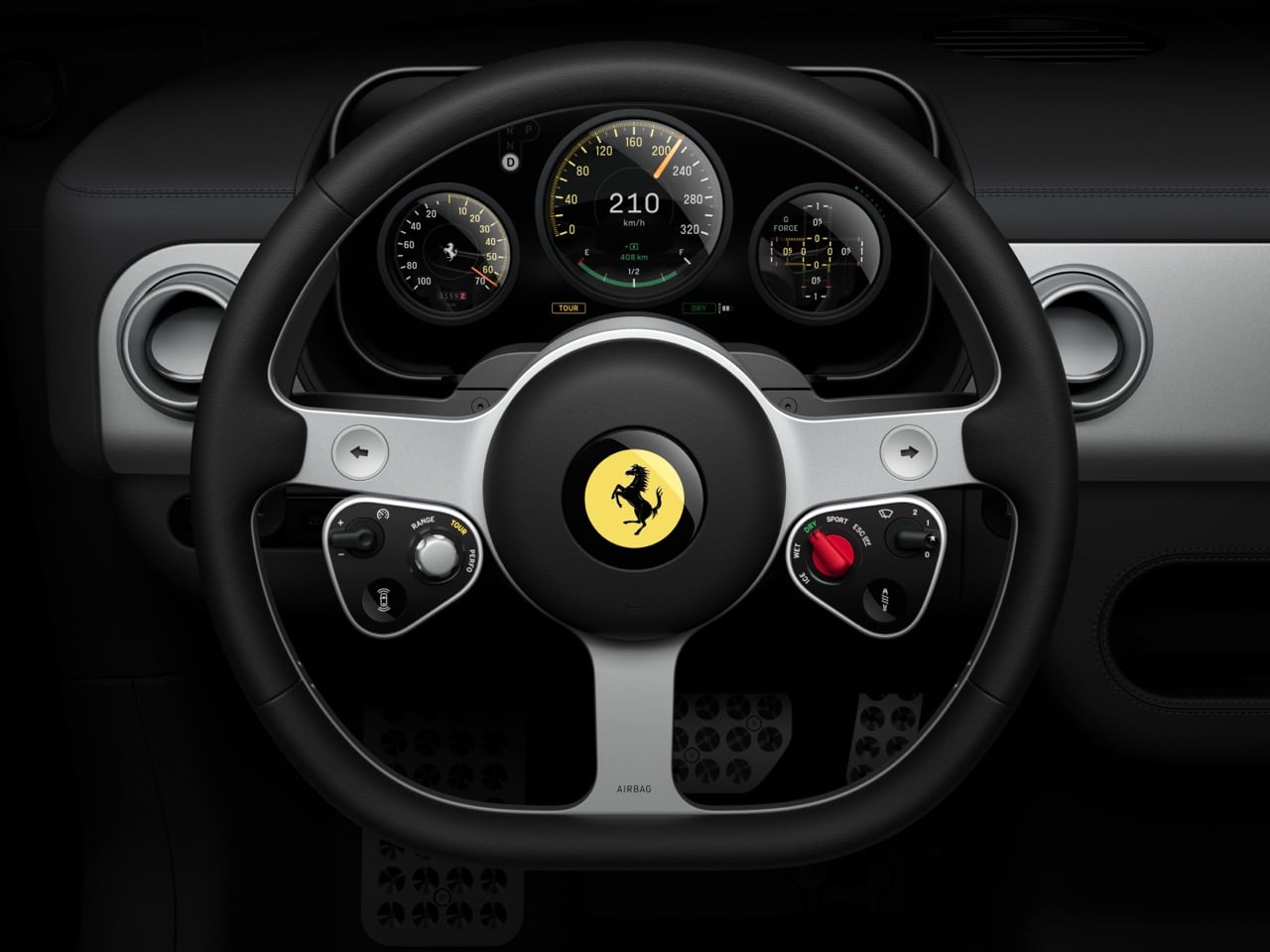
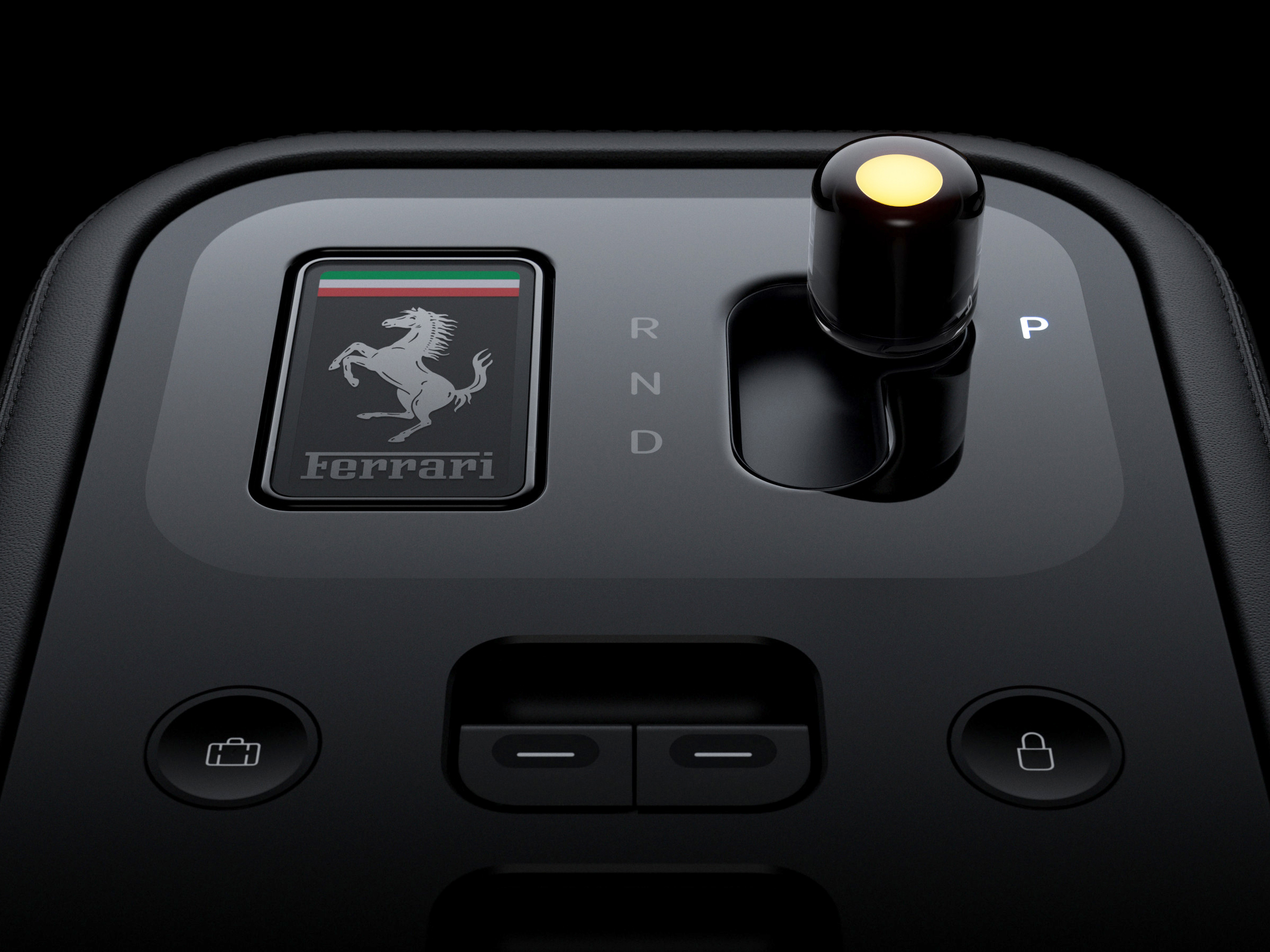
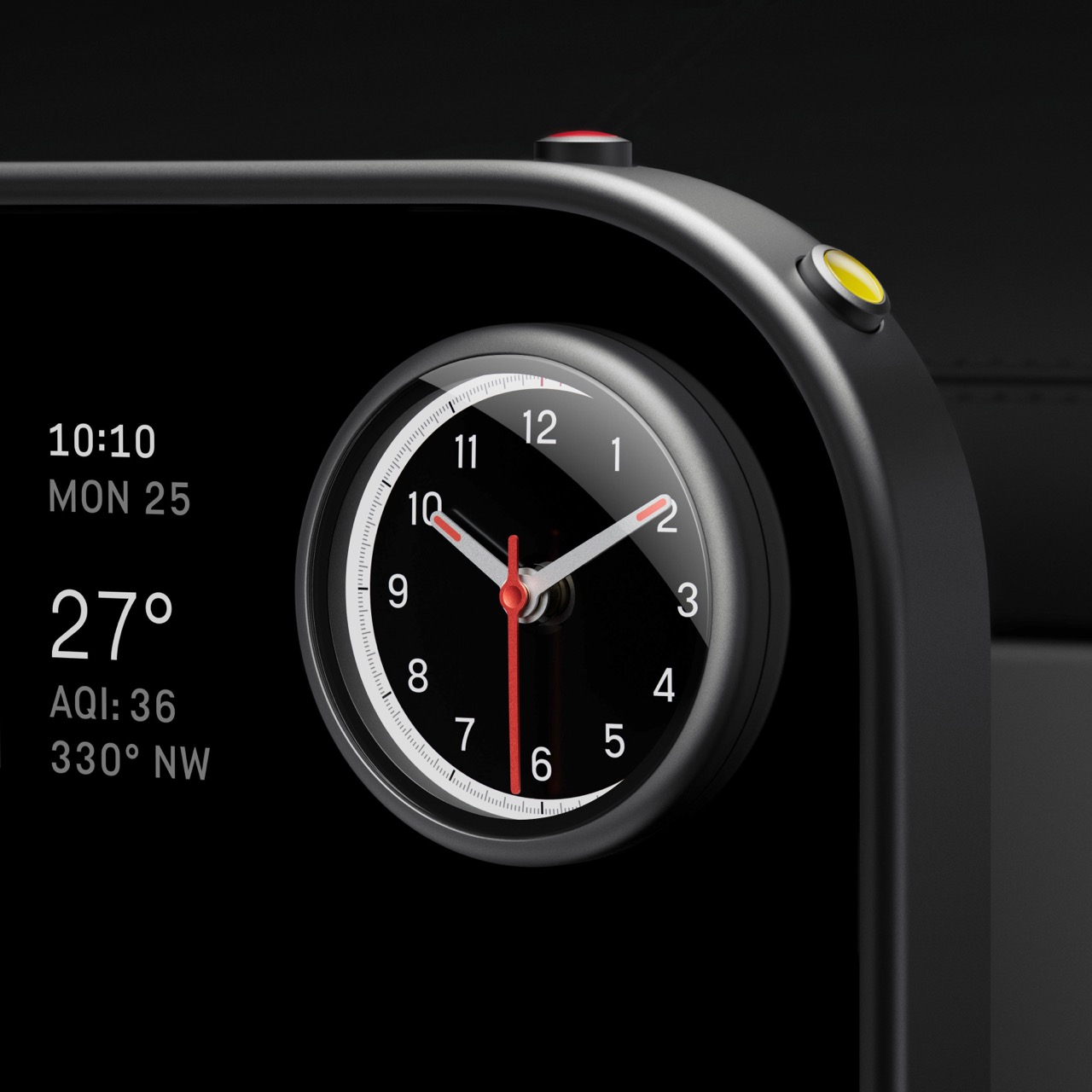
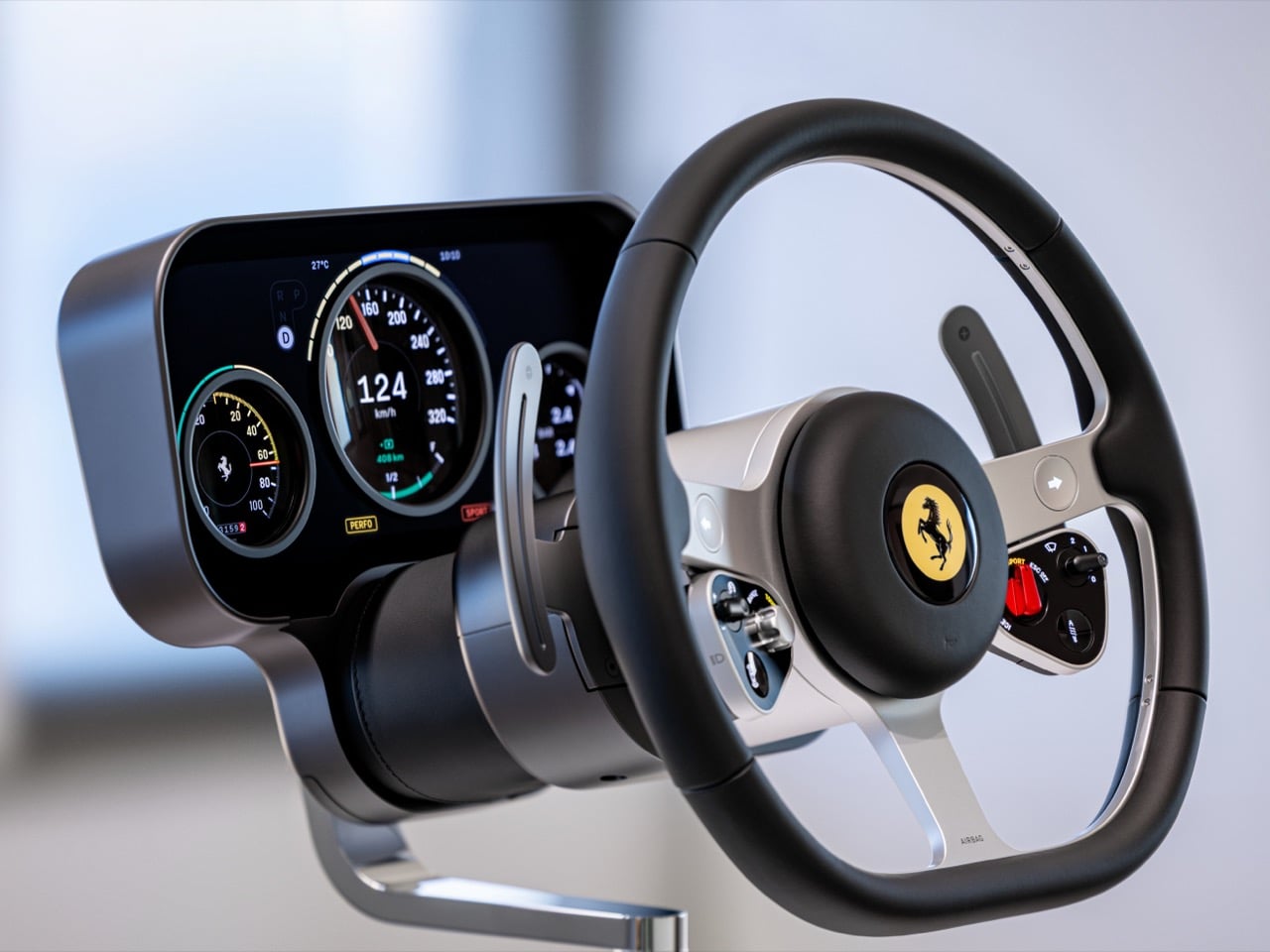
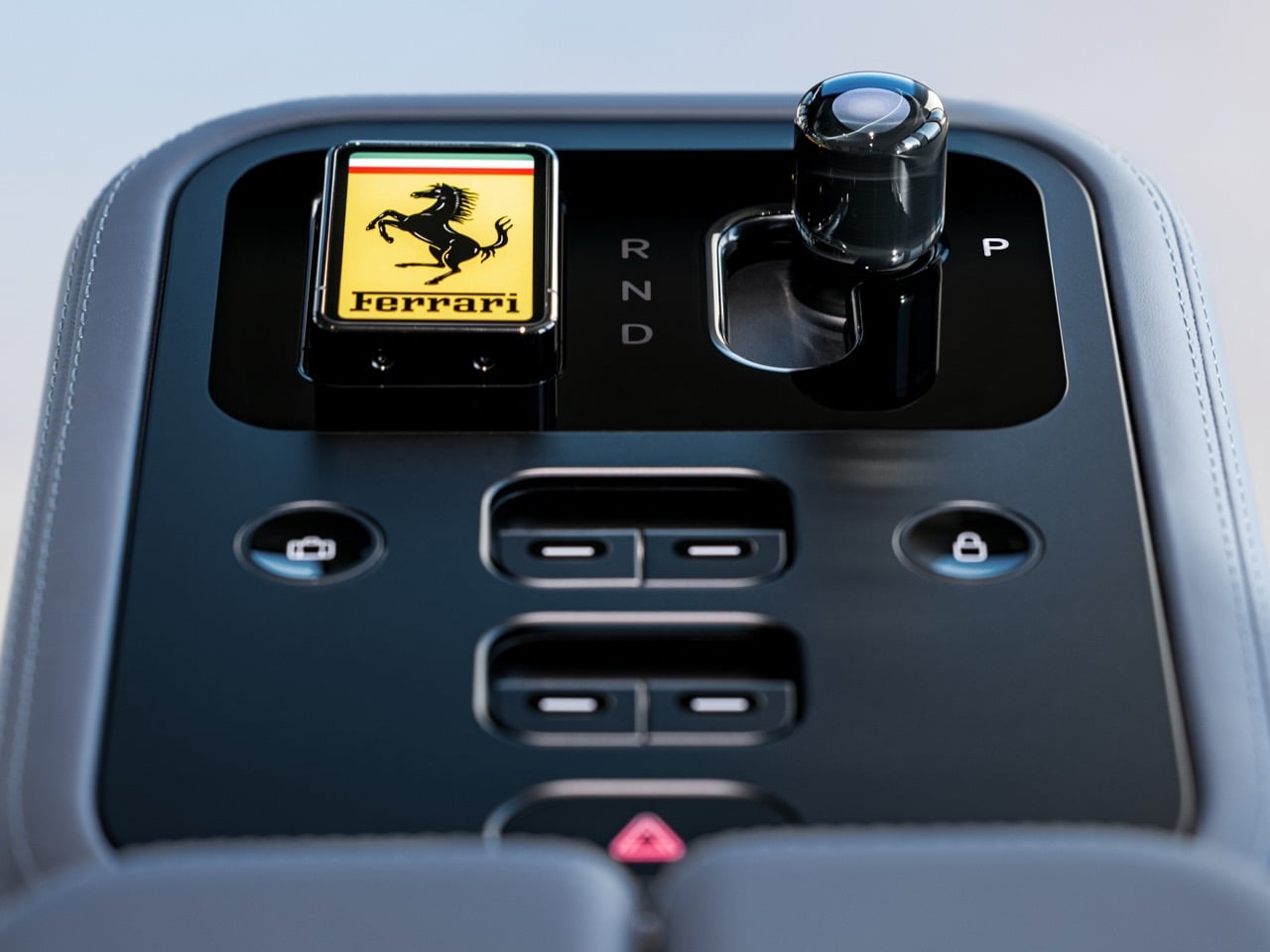
Walk through the components and the Apple DNA becomes impossible to ignore. The key fob magnetically docks into the center console and changes color via E-ink display. This is MagSafe technology meets Apple Watch complications, translated into a car key. The center screen features an analog clock that transforms into a chronograph and compass with the press of two buttons. Pull up any image of Apple Watch faces and the interaction model is identical.
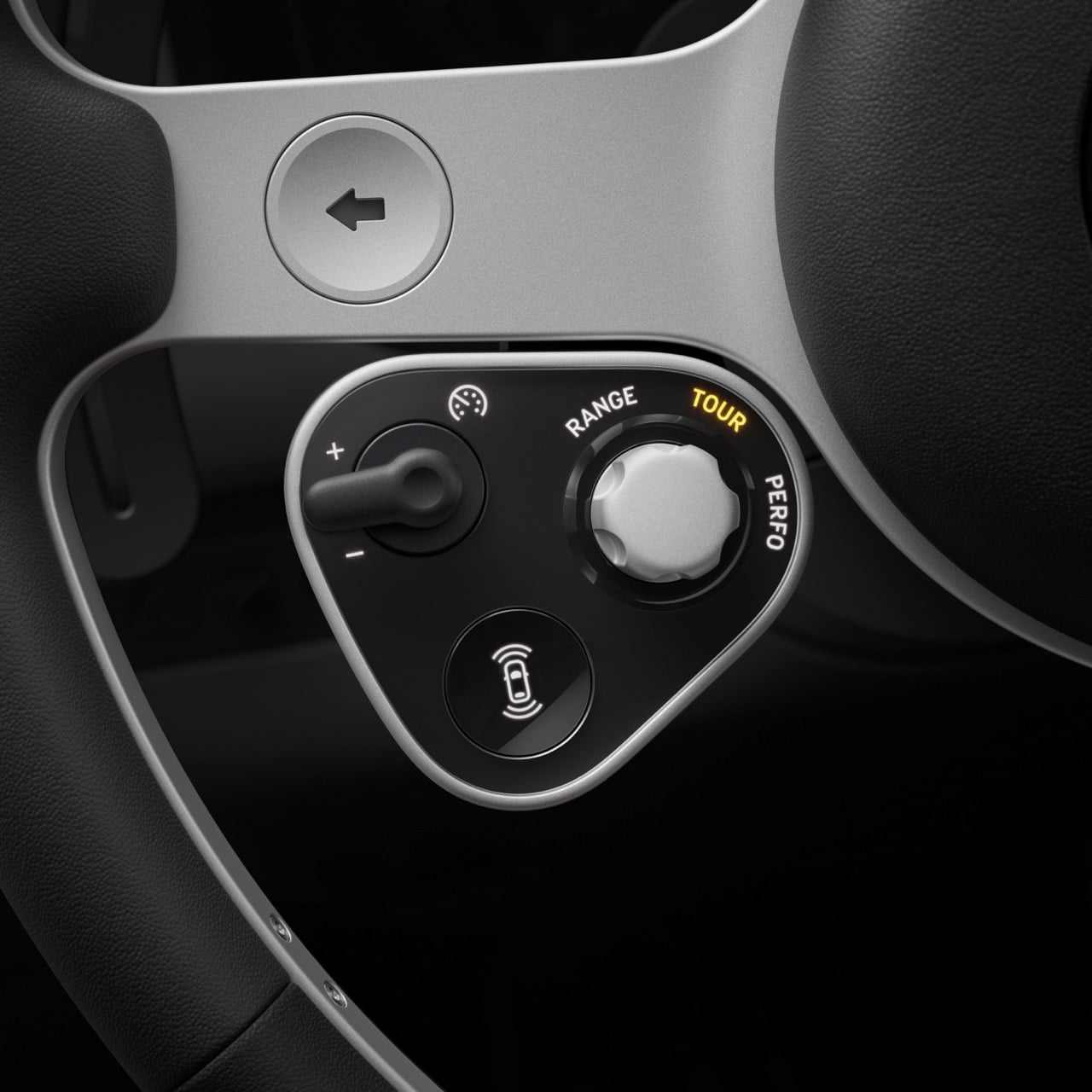
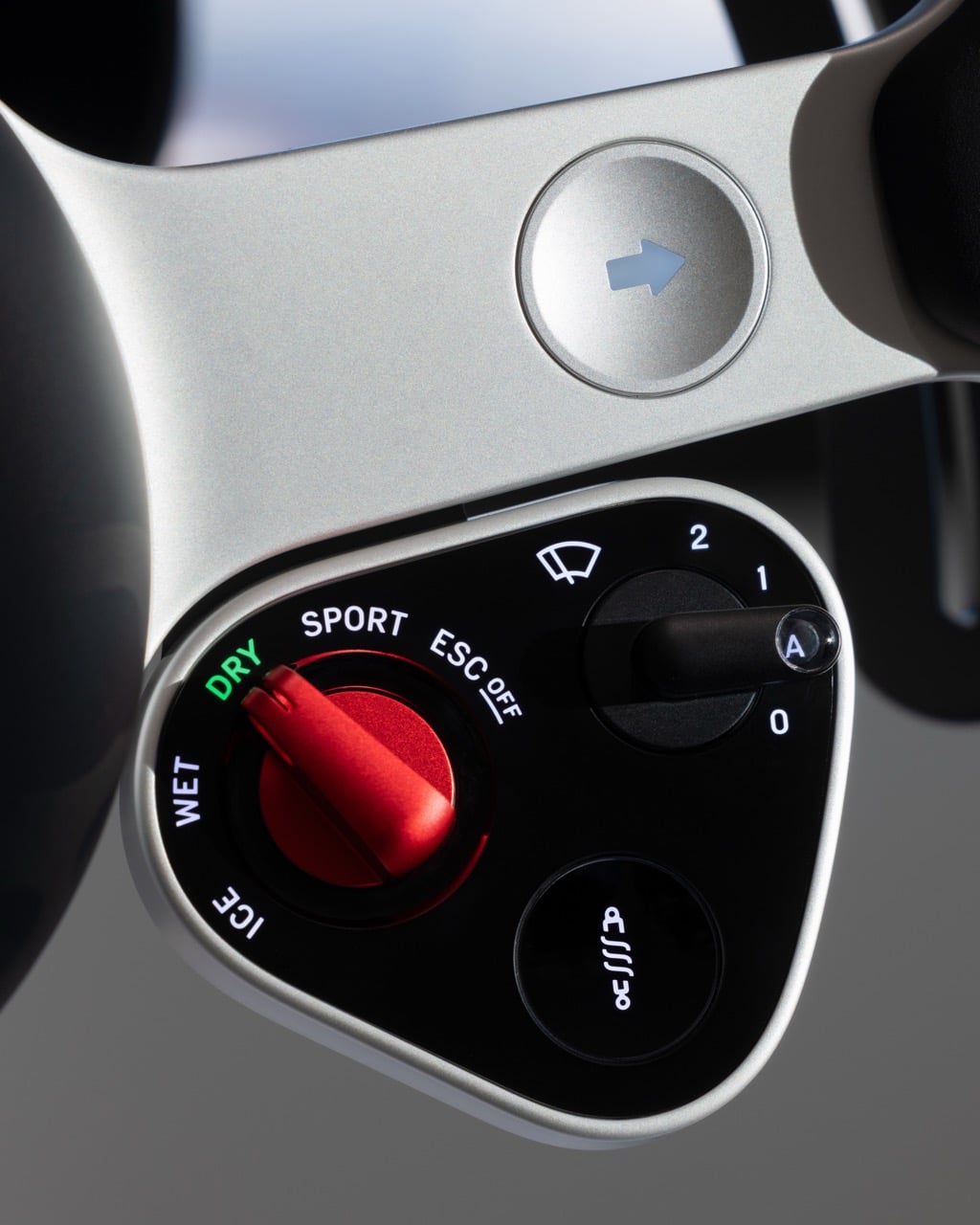
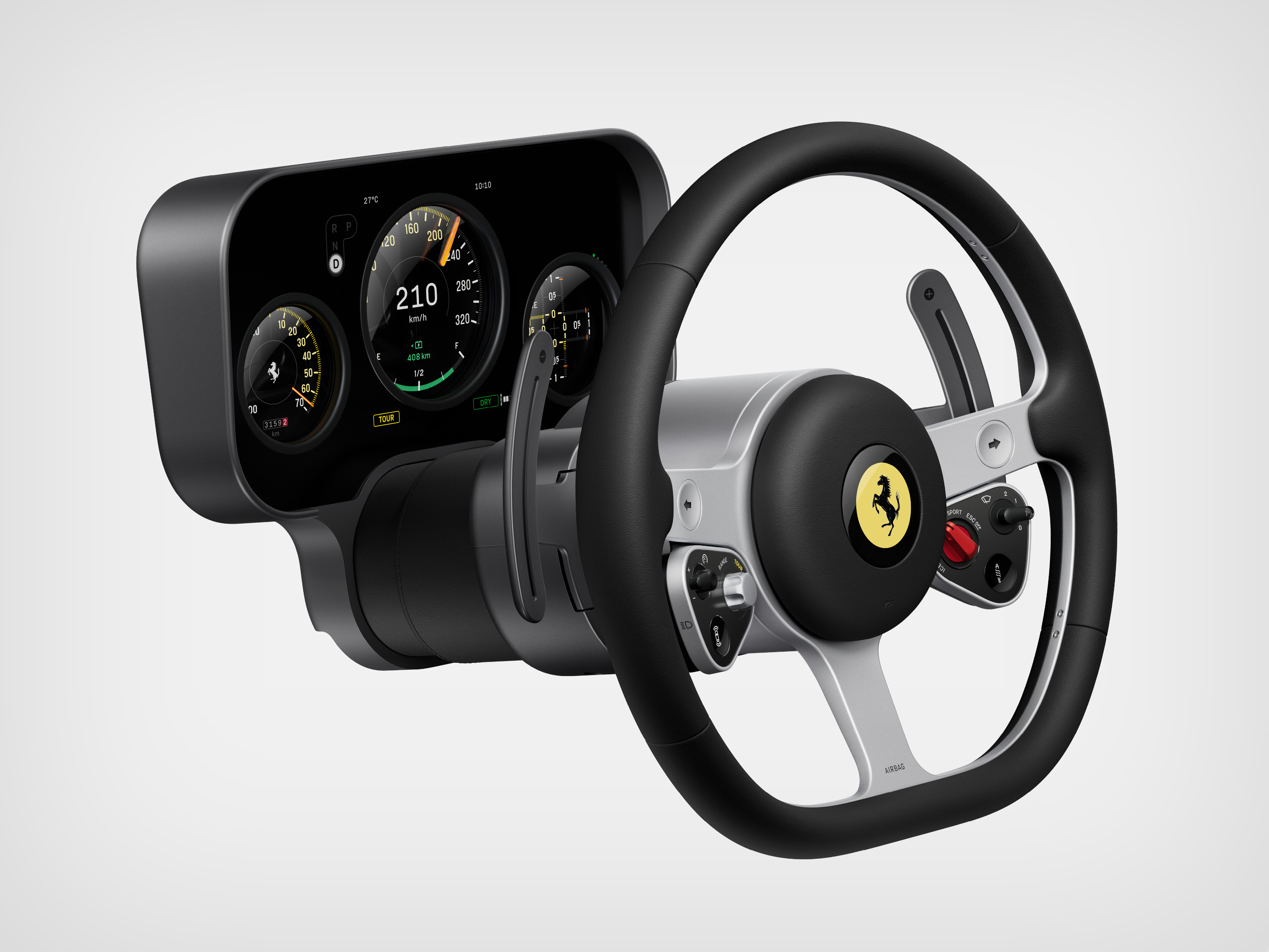
The toggle switches and knobs scattered throughout the cabin represent the physical interface philosophy Ive has been refining since the original iMac. The Digital Crown on the Apple Watch, the mute switch on the iPhone, the volume controls on the HomePod. These are the same careful considerations about how humans interact with objects through touch and rotation. The OLED binnacle behind the steering wheel uses a parallax effect to create depth perception, the same technology that made the iPhone X’s face recognition possible, now applied to gauge clusters.
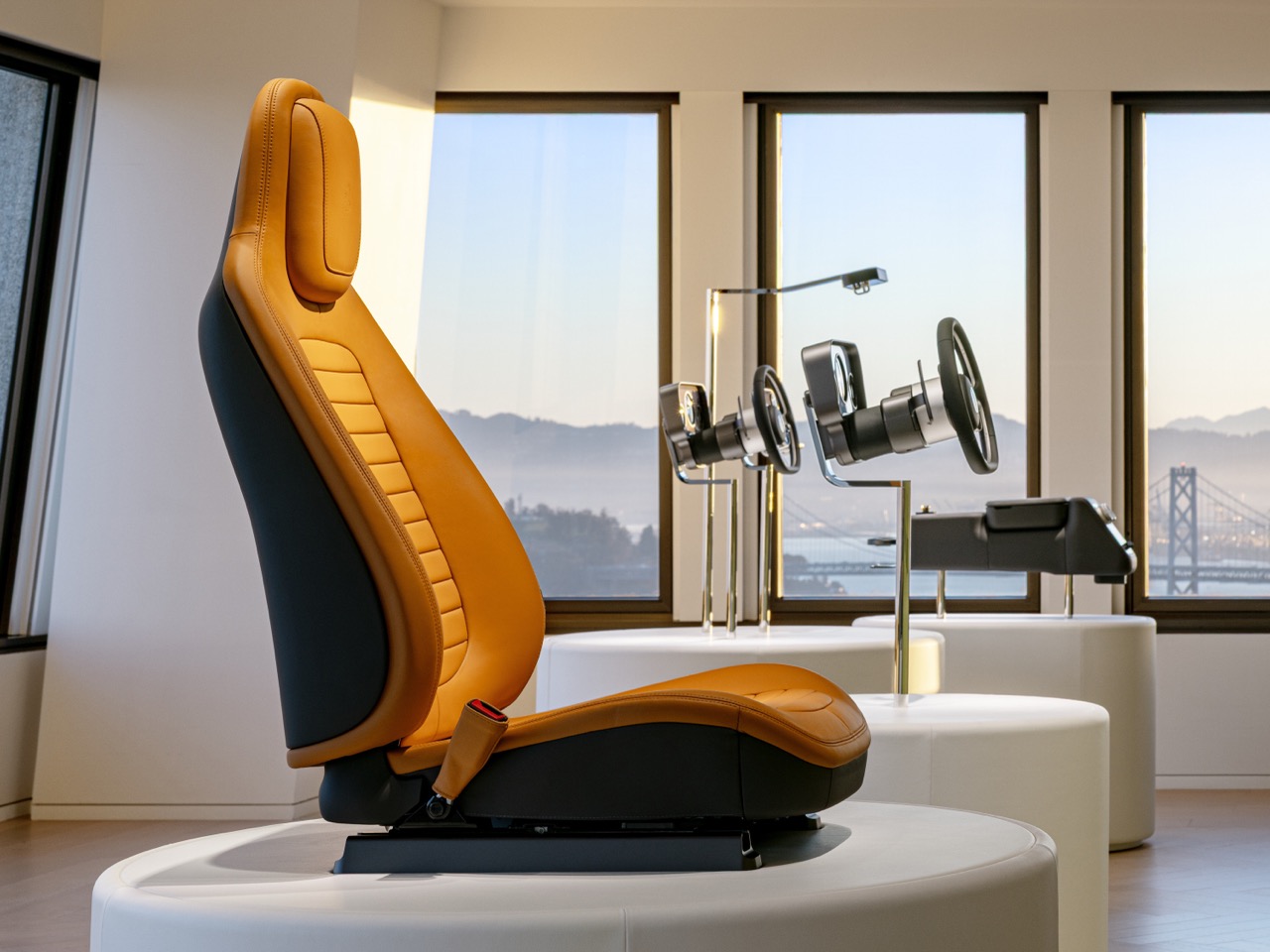
Then there’s the material palette: recycled aluminum with a microscopic anodized texture, Corning glass surfaces, leather in muted tan. This is the 2017 iPhone X material story. This is the unibody MacBook recipe. This is every premium Apple product from the past decade, reassembled into automotive architecture.
Wait, Is This the Same Jony Ive?
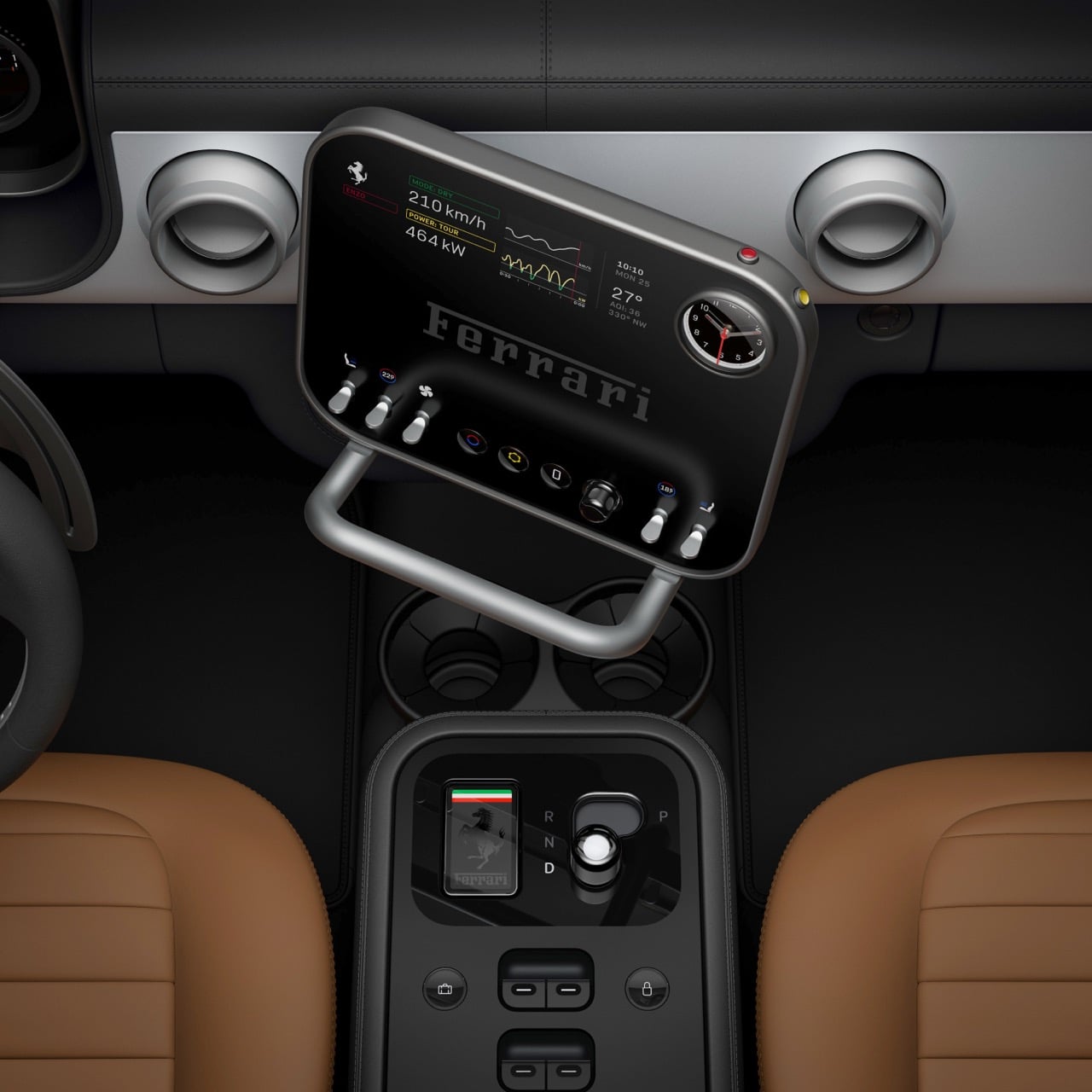
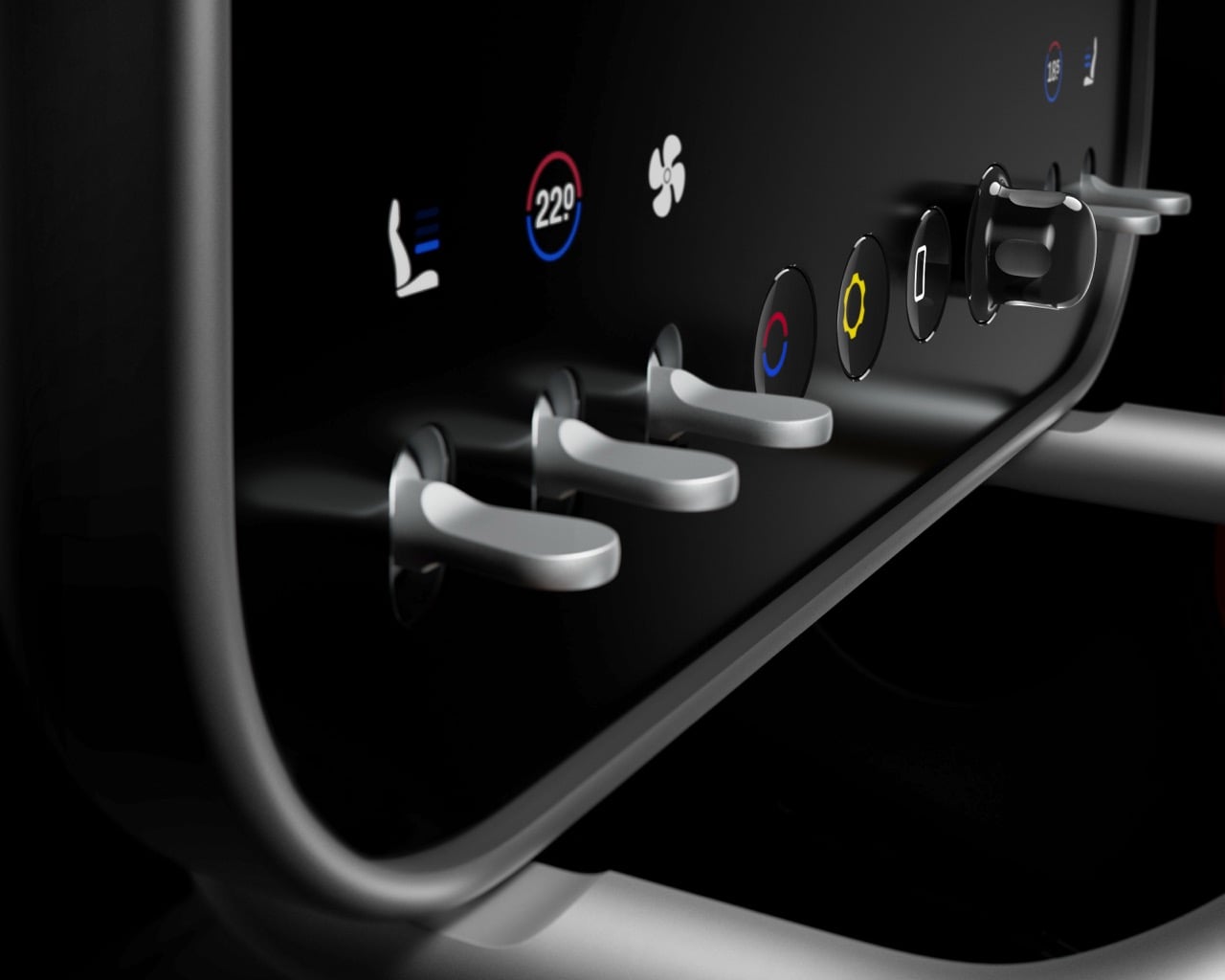
Consider what Ive said at the reveal: “It’s bizarre and lazy to assume the interface should be digital if the power source is electric.”
This is the man who killed the headphone jack. Who removed every port from the MacBook. Who spent twenty years eliminating physical buttons, physical connections, physical everything. And now he’s arguing that physical controls matter? That tactility is essential? That you can’t just solve everything with a touchscreen?
Maybe the context really does change everything. A phone lives in your pocket. You can look at it. A car moves at 200 kilometers per hour. Looking away kills people. Or maybe Ive has simply evolved. Perhaps LoveFrom represents a different philosophy than Apple did, one less concerned with relentless minimalism and more interested in appropriate solutions. Or perhaps this is who Ive always was, and Apple’s commercial pressures pushed him toward deletion when his instincts wanted refinement.
The Luce interior suggests that physical interfaces weren’t the enemy. Bad physical interfaces were. Give Ive the freedom to perfect a toggle switch, to make a dial that clicks with precision, to create a button that feels inevitable, and he’ll choose physical every time. The question is whether we’re seeing growth or contradiction.
The Timeline is ‘Interesting’
Apple started Project Titan in 2014. By 2016, Ive had become increasingly involved as the project shifted from full autonomy toward driver-focused experiences. He left Apple in 2019 but reportedly continued consulting on the car. In 2024, Apple abandoned the project entirely. During those years, Bloomberg reported that the Apple Car was supposed to feature premium materials, minimalist interiors, physical controls prioritized over touchscreens, and a “living room on wheels” concept.
Here’s what actually happened: Ive leaves Apple in 2019 and forms LoveFrom. Two years later, in 2021, Ferrari announces the partnership. That means conversations started immediately after his departure, possibly before. Ive spent a decade developing car interior concepts at a company with unlimited resources. Then he got to actually build one at a different company with unlimited resources and, crucially, manufacturing capability that Apple never developed.
My guess is Ferrari didn’t hire LoveFrom for an overhaul. They hired them for battle-tested thinking that never shipped.
Why Ferrari Said Yes
From Ferrari’s perspective, the logic is clear. They’ve never built an electric vehicle. Their customer base is deeply skeptical of electrification. They need to signal that the Luce represents something genuinely different, something beyond an electrified 296 GTB. So they hire the two most famous industrial designers on Earth, who happen to have spent years thinking about this exact problem at a different technology giant.
It’s outsourcing credibility as much as design. When people inevitably say “that doesn’t look like a Ferrari,” Ferrari can point to LoveFrom and say “well, exactly.” They’ve purchased permission to break from tradition by hiring people with no Ferrari tradition to break from. The prancing horse gives LoveFrom legitimacy in automotive circles. LoveFrom gives Ferrari legitimacy in technology circles. It’s a perfect exchange.
But the question remains: did Ferrari want Ive’s vision, or did they want Ive’s brand? Because what they received feels unmistakably like Apple-thinking while wearing a Ferrari cap.
The May Reveal Will Answer Everything
The real test arrives in May when Ferrari reveals the exterior. Right now we’ve only seen the interior, which is LoveFrom’s natural domain: screens, materials, ergonomics, spatial relationships. The exterior is different. It has to work in a Maranello showroom next to a 12Cilindri and an SF90. It has to look fast while standing still. It has to carry seventy-nine years of design language forward into an electric future.
Can Ive do that? Has he ever designed anything with that kind of visual aggression? His career has been defined by approachability, by objects that invite touch, by forms that recede rather than announce themselves. Ferraris don’t recede. They dominate spaces. They demand attention. If the exterior looks like an Apple product in May, then this really could be what the Apple Car might have become. If it looks genuinely Ferrari, then maybe LoveFrom understands they serve the brand rather than the reverse.
What This Tells Us About the Car That Never Was
The Luce interior reveals something bittersweet about the Apple Car that never was. This is the closest we’ll get to seeing what that vision might have looked like. But it also proves why Apple was probably right to kill the project. It took Ferrari, a company with seventy-nine years of automotive manufacturing experience, five years and presumably nine figures to turn Ive’s concepts into reality. And they still don’t know if customers will accept it. Imagine Apple attempting this from scratch, competing with Tesla on price, managing recalls and service networks and dealer relationships.
The Luce interior is stunning. It’s also a monument to why the Apple Car would have most likely been an operational nightmare, given that Apple isn’t an automotive company.
The irony is perfect: Jony Ive finally got to build his car. He just needed Ferrari to do the hard part.