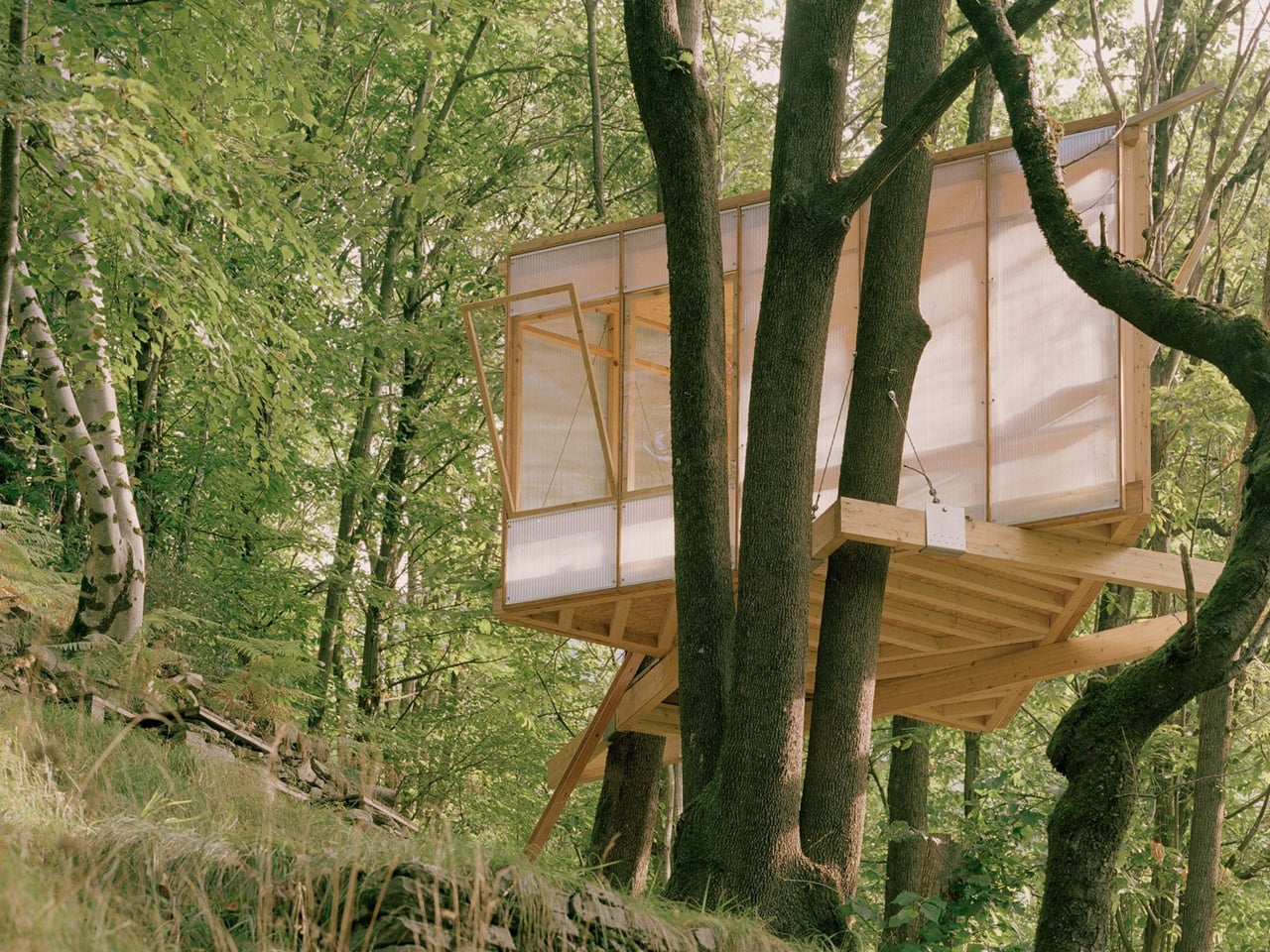
Perched among the towering oaks of Switzerland’s Onsernone Valley, the Casetta Tessino emerges as an unconventional solution to a common problem. When a Swiss artist and climate activist sought additional living space on their property, local building regulations stood firmly in the way. Traditional extensions were off the table. Foundation work was forbidden. What remained was the possibility of building upward, anchored not to earth but to the forest itself.
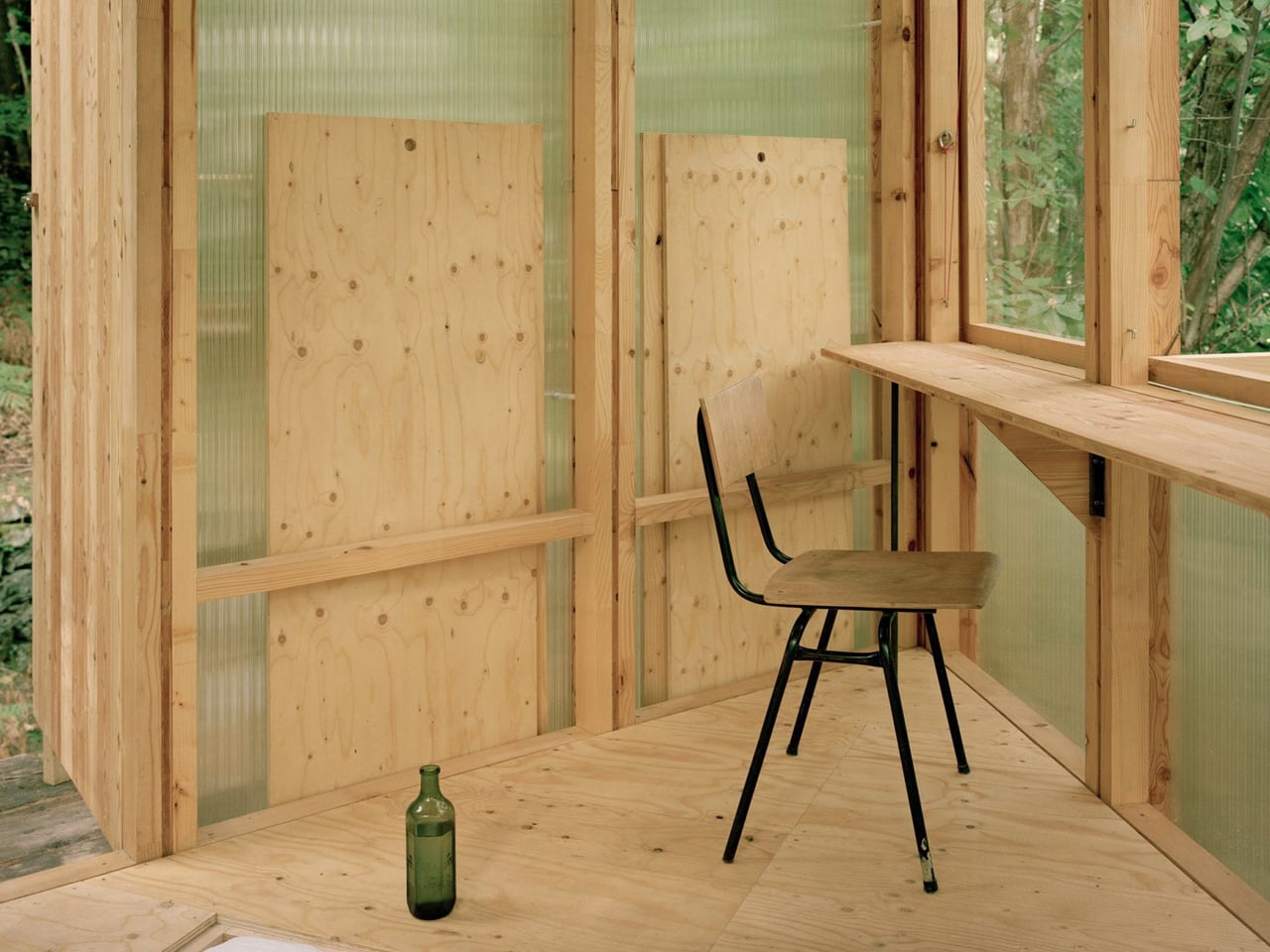
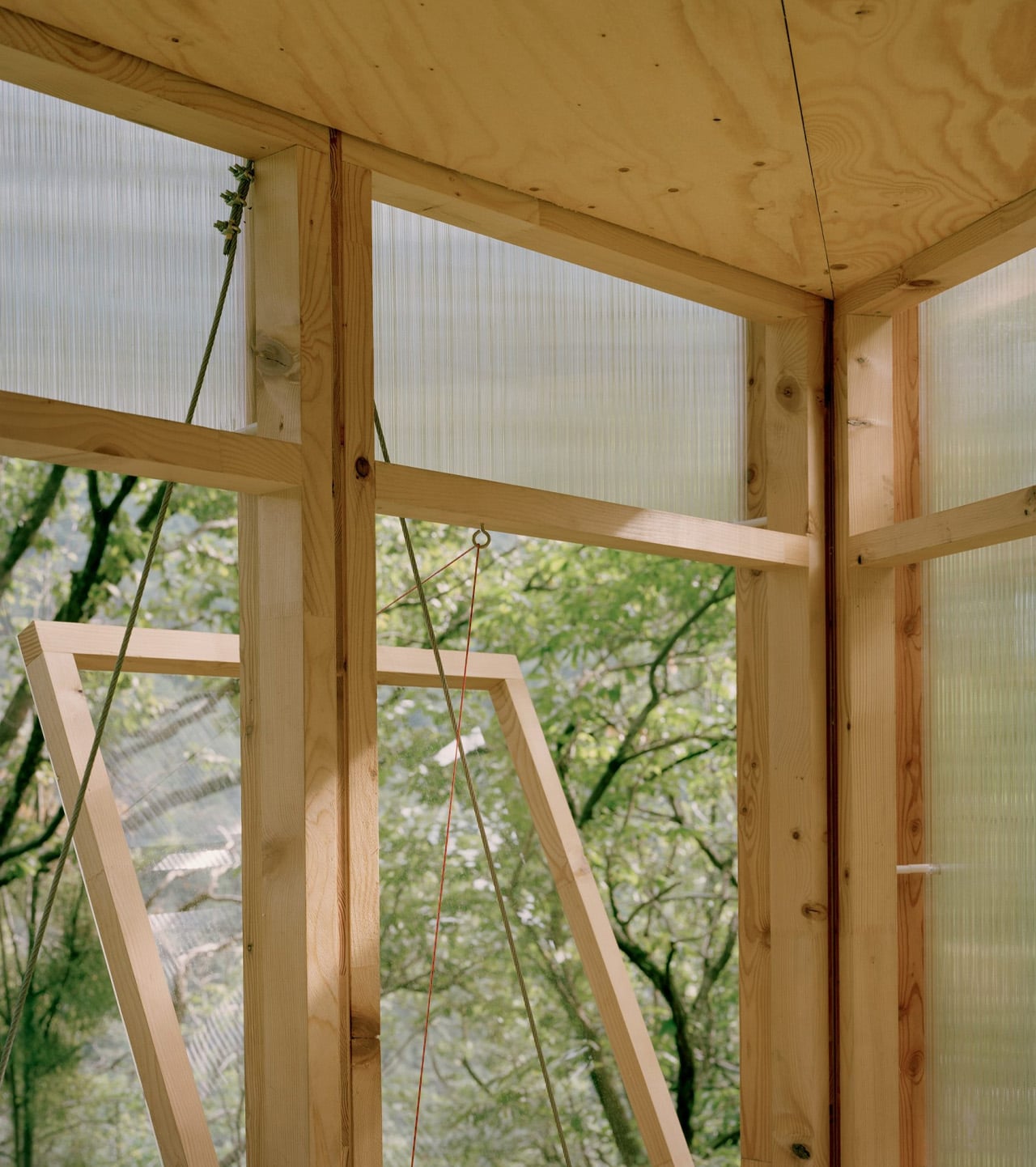
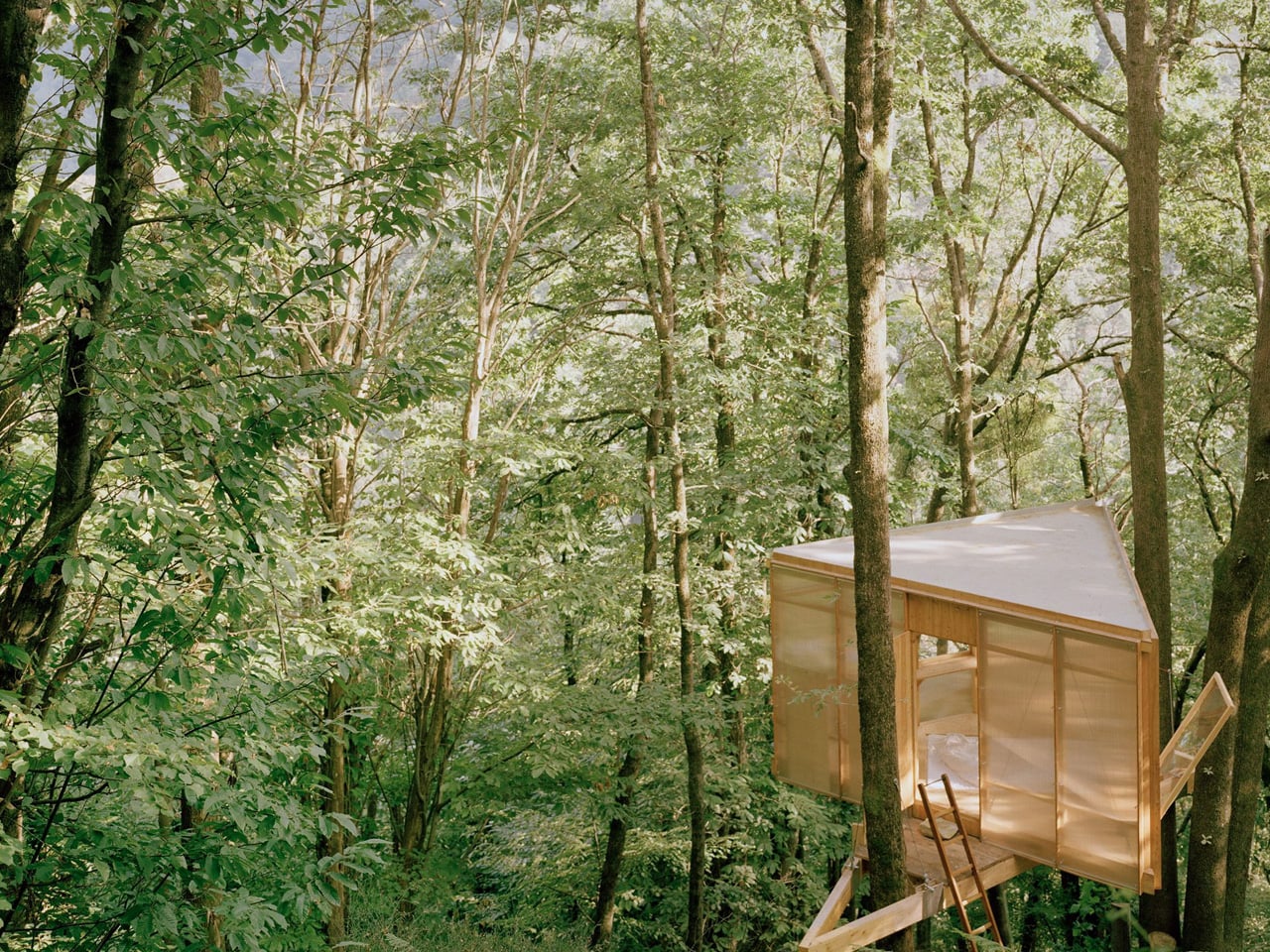
Architect Olin Petzold embraced the constraints. The resulting structure balances on three trees, its triangular form rising from the woodland floor like a geometric bird’s nest. Wood and translucent polycarbonate panels wrap the exterior, filtering dappled light into the compact interior. Located roughly 150 meters from the main house, the treehouse functions as a writing studio, guest room, and personal retreat.
Designer: Olin Petzold
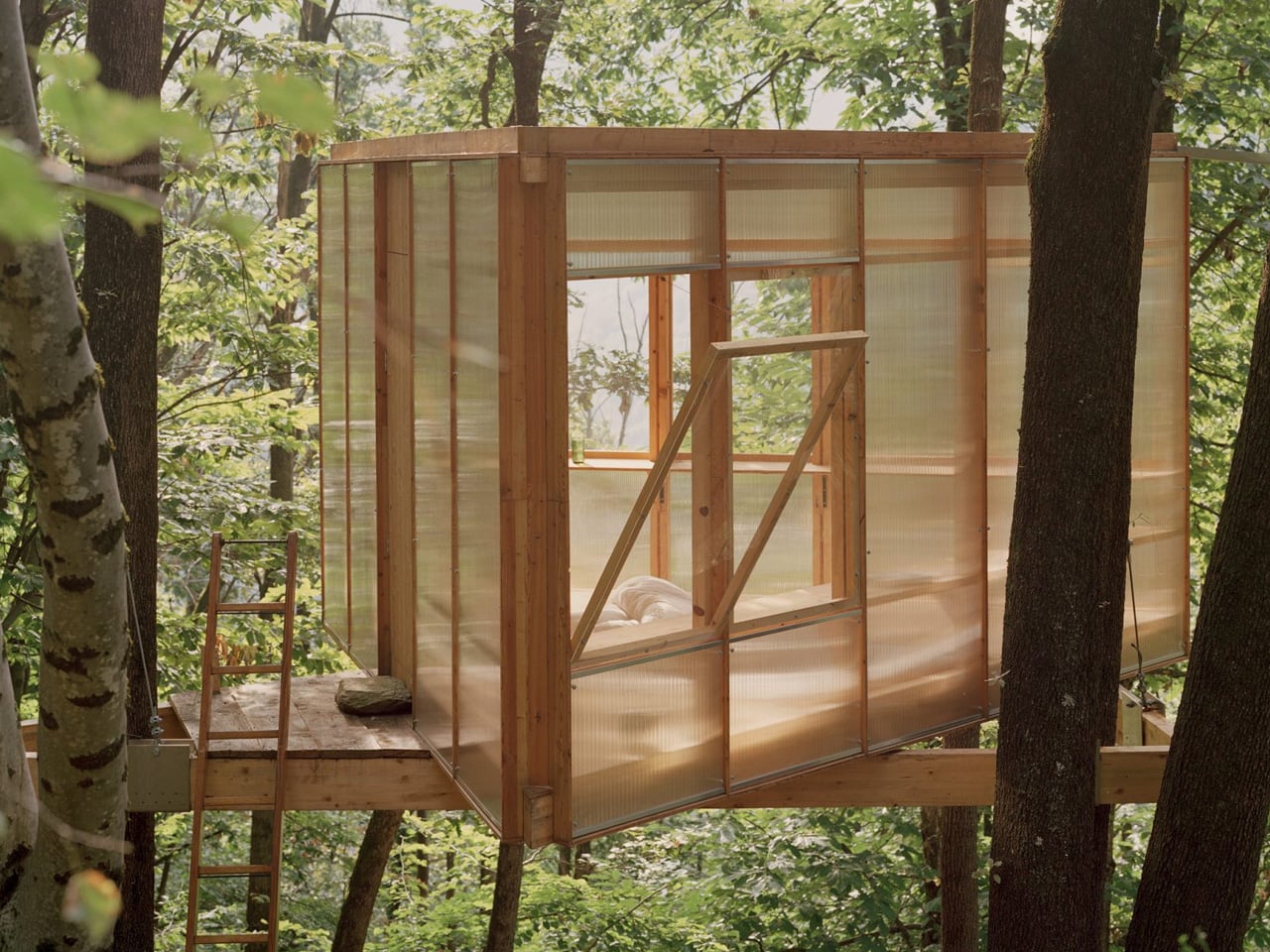
The design deliberately references Henry David Thoreau’s Walden, channeling the same spirit of simple living and immersion in nature that defined the American naturalist’s woodland experiment. This philosophical foundation informed every decision, from material selection to spatial organization, creating a structure that prioritizes contemplation and creative work over conventional comfort.
The self-build aspect shaped every design decision. Petzold knew machinery couldn’t navigate the remote site, so each component needed to be light enough for human hands to lift and maneuver. Details were simplified to accommodate untrained builders. The client took on the entire construction themselves, transforming architectural drawings into physical reality through careful, patient work. This wasn’t just about budget or preference. The treehouse’s isolation demanded it.
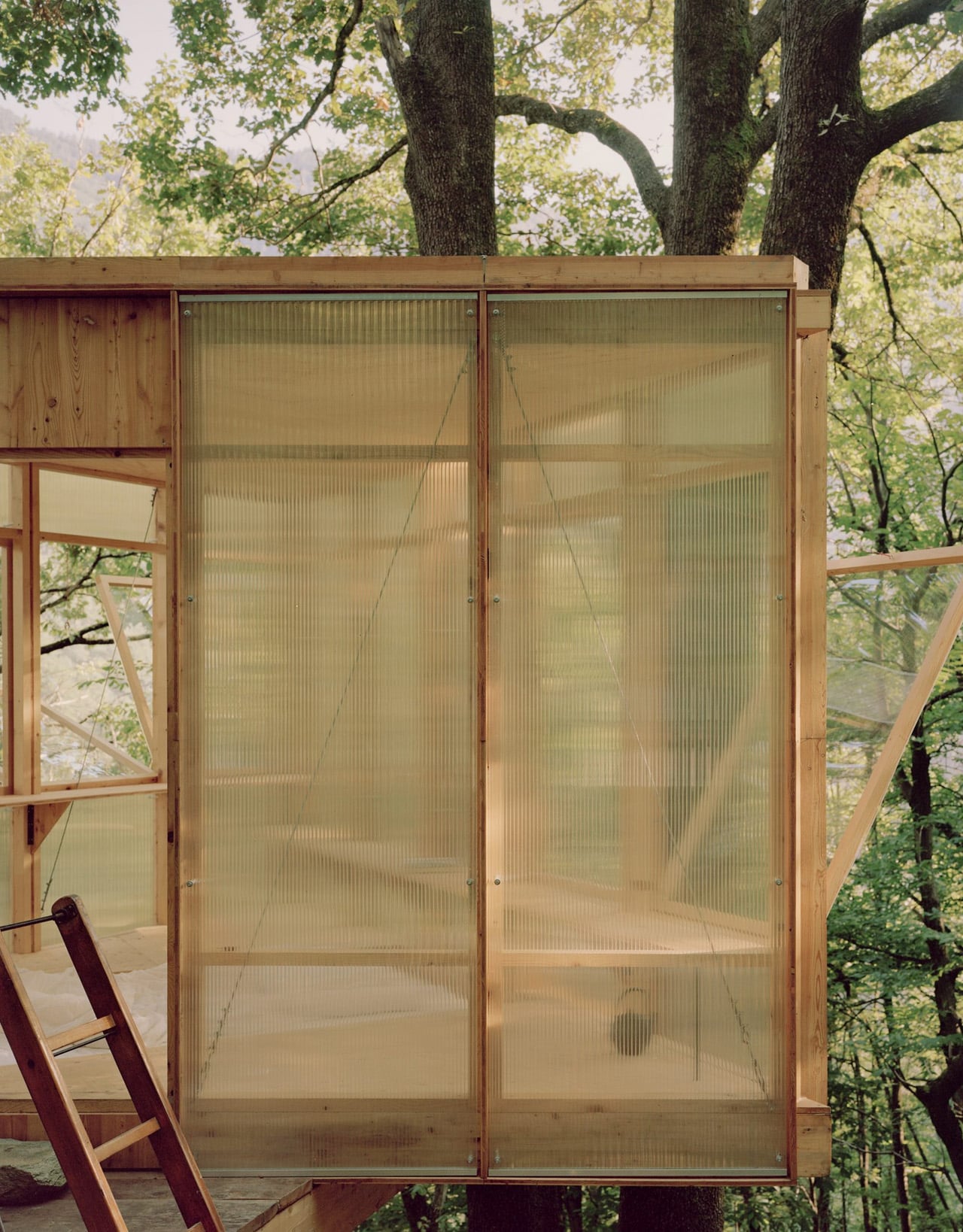
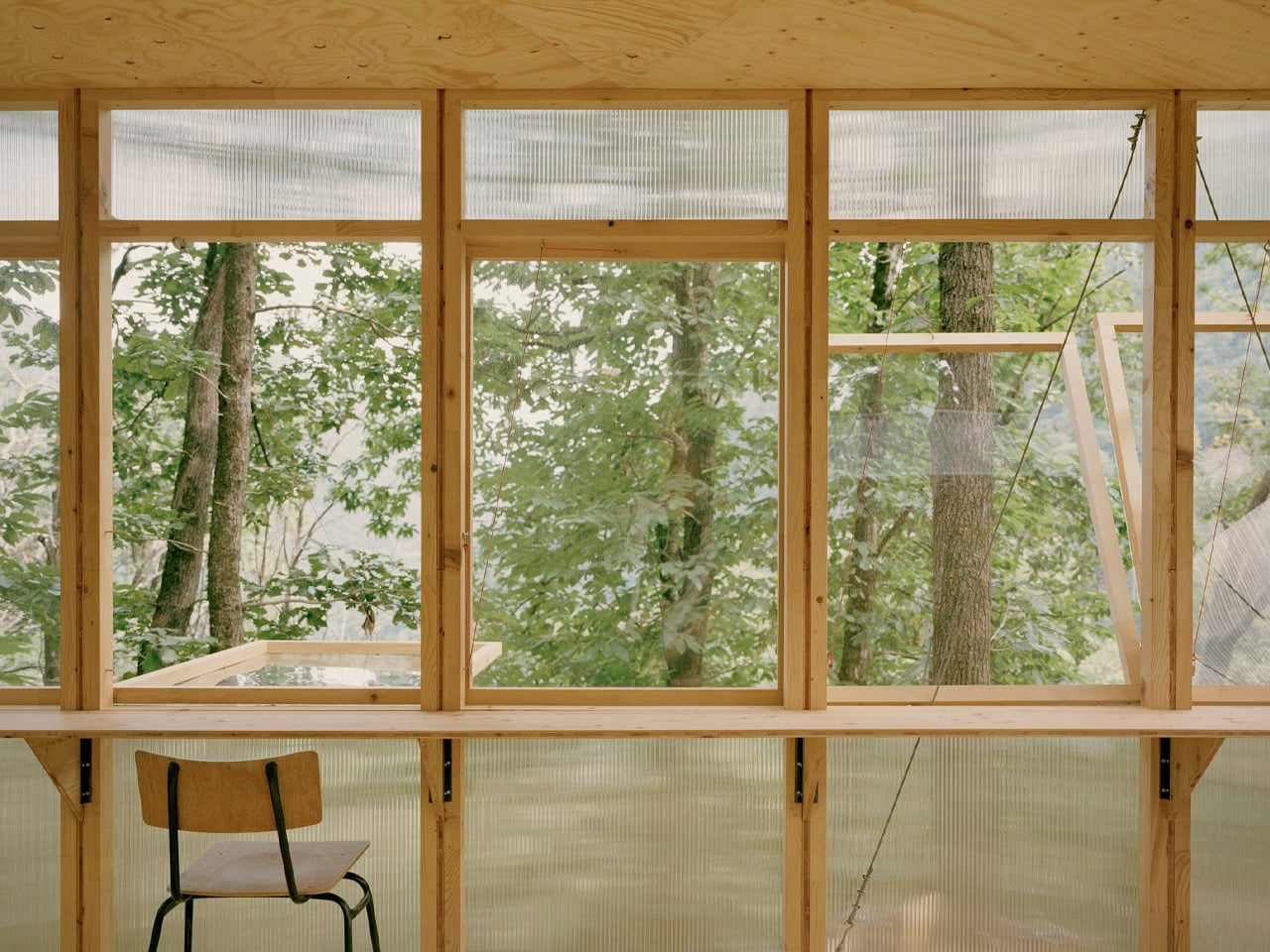
Inside, the triangular footprint maximizes limited square footage. The client’s main house already combines living area, kitchen, and bedroom into one large room, making the need for a separate, quiet space essential. The treehouse delivers that solitude. Its triangular base rests on the three anchor trees, then rotates upward into an inverted equilateral triangle, with corners threading between trunks. The geometry creates distinct zones for sleeping, sitting, and writing within a minimal envelope.
The cabin remains available to other creatives, turning occupation of the space into an ongoing experiment. Each visitor tests how design shapes daily rhythms and creative practice. The structure challenges both architectural norms and lifestyle expectations, proving that meaningful space doesn’t require sprawling square footage or conventional construction methods. Casetta Tessino represents architecture stripped to its essence. Three trees provide the foundation. Simple materials form the shelter. Human hands assemble the pieces. What emerges is more than a building. It’s a meditation on living lightly, working deliberately, and finding refuge in the company of trees. Thoreau would recognize the impulse. The forest certainly does.