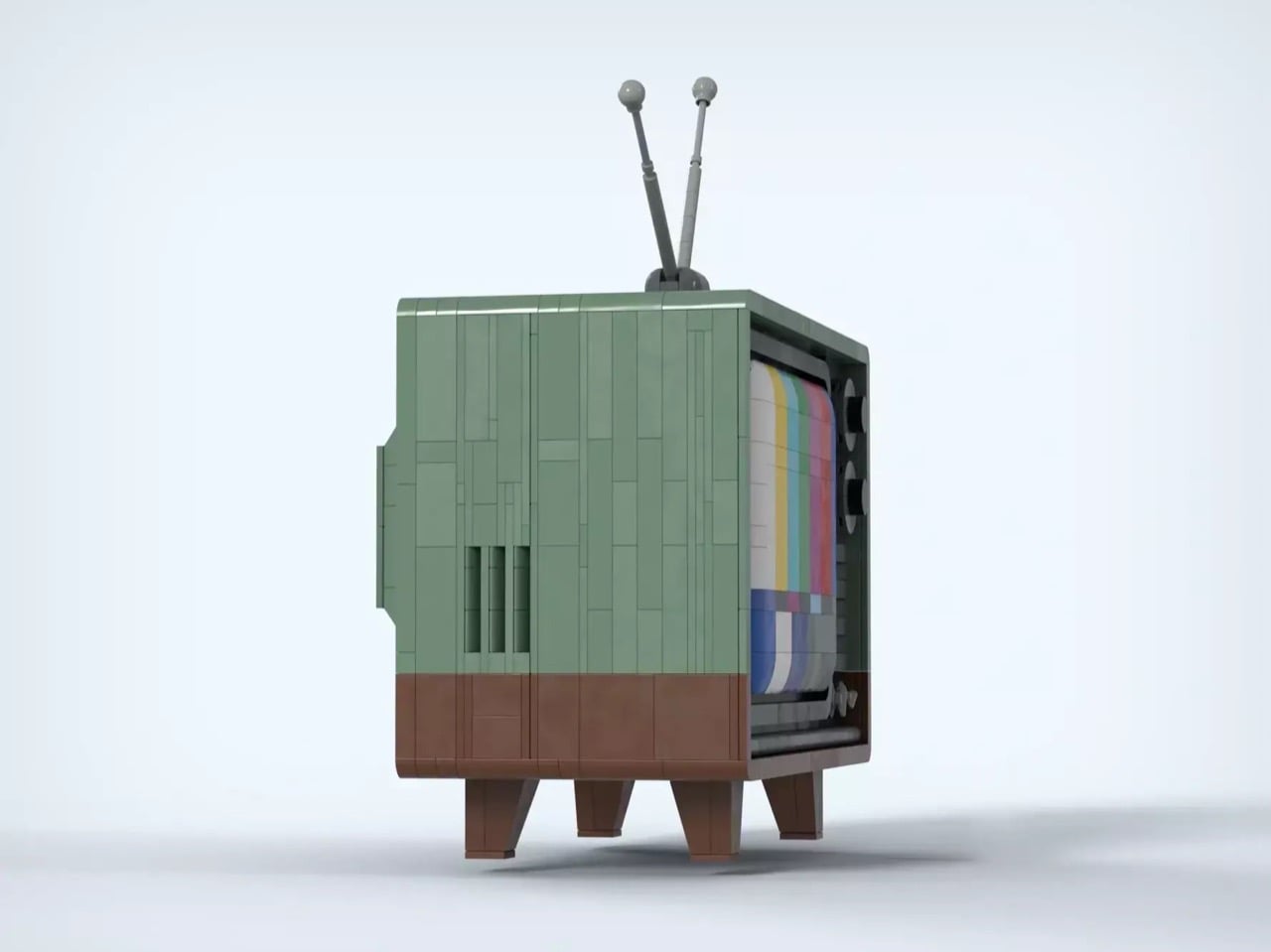
Before flat screens and streaming services, television sets were hulking pieces of furniture that commanded respect and curiosity in equal measure. FMDavid’s LEGO Ideas submission celebrates these beloved artifacts with a build that goes far beyond surface level nostalgia, diving deep into the mechanical heart of what made these cathode ray tube televisions actually work.
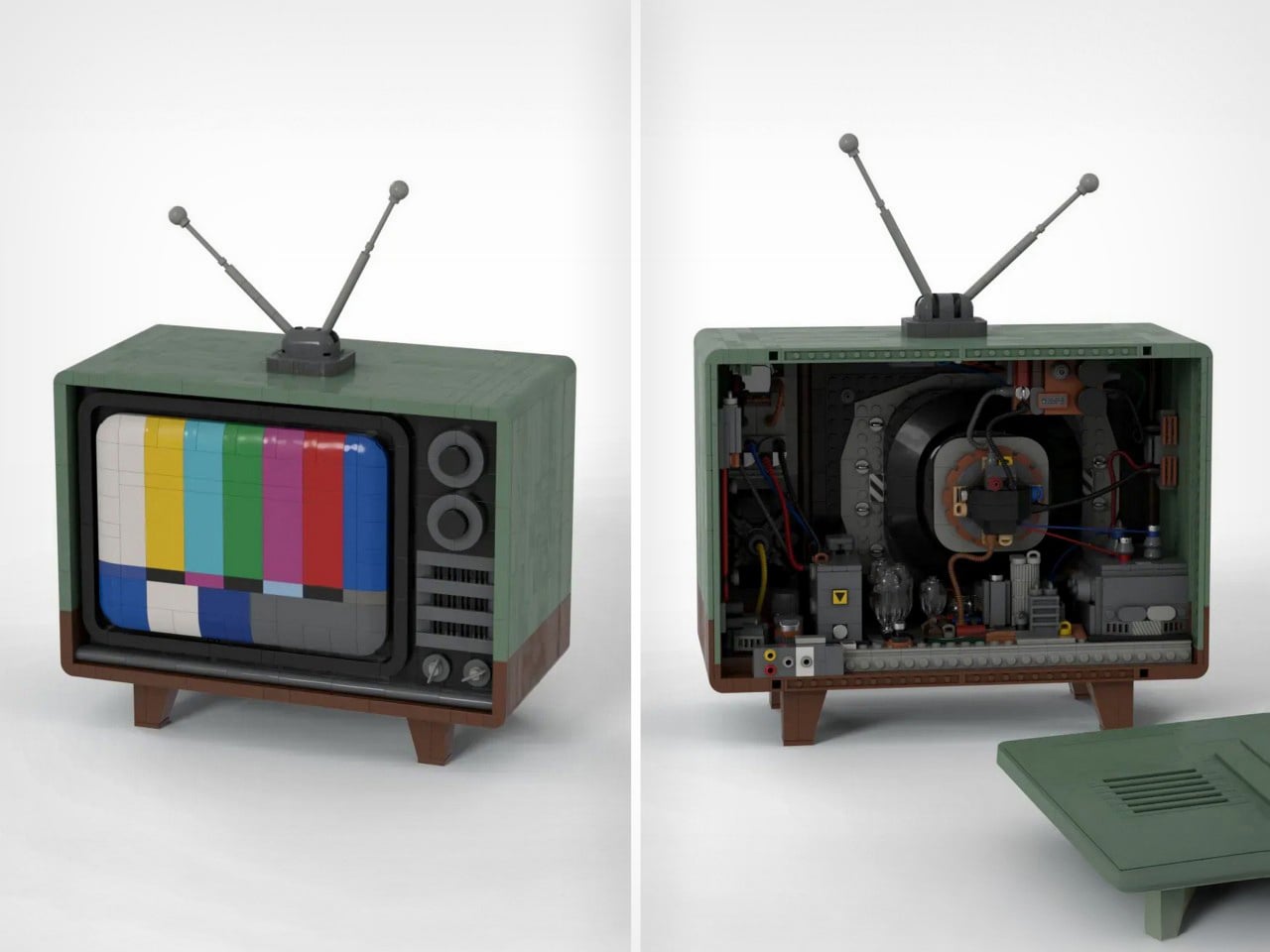
The exterior immediately transports viewers back several decades with its mint green housing, classic rabbit ear antenna, and the unmistakable SMPTE color bars displayed on its gently curved screen. Remove the back panel, however, and the true engineering achievement reveals itself. Every major component of a vintage television has been faithfully recreated in brick form, from the deflection coils wrapped around the CRT neck to the colorful wiring snaking between vacuum tubes and capacitors along the chassis floor.
Designer: FMDavid

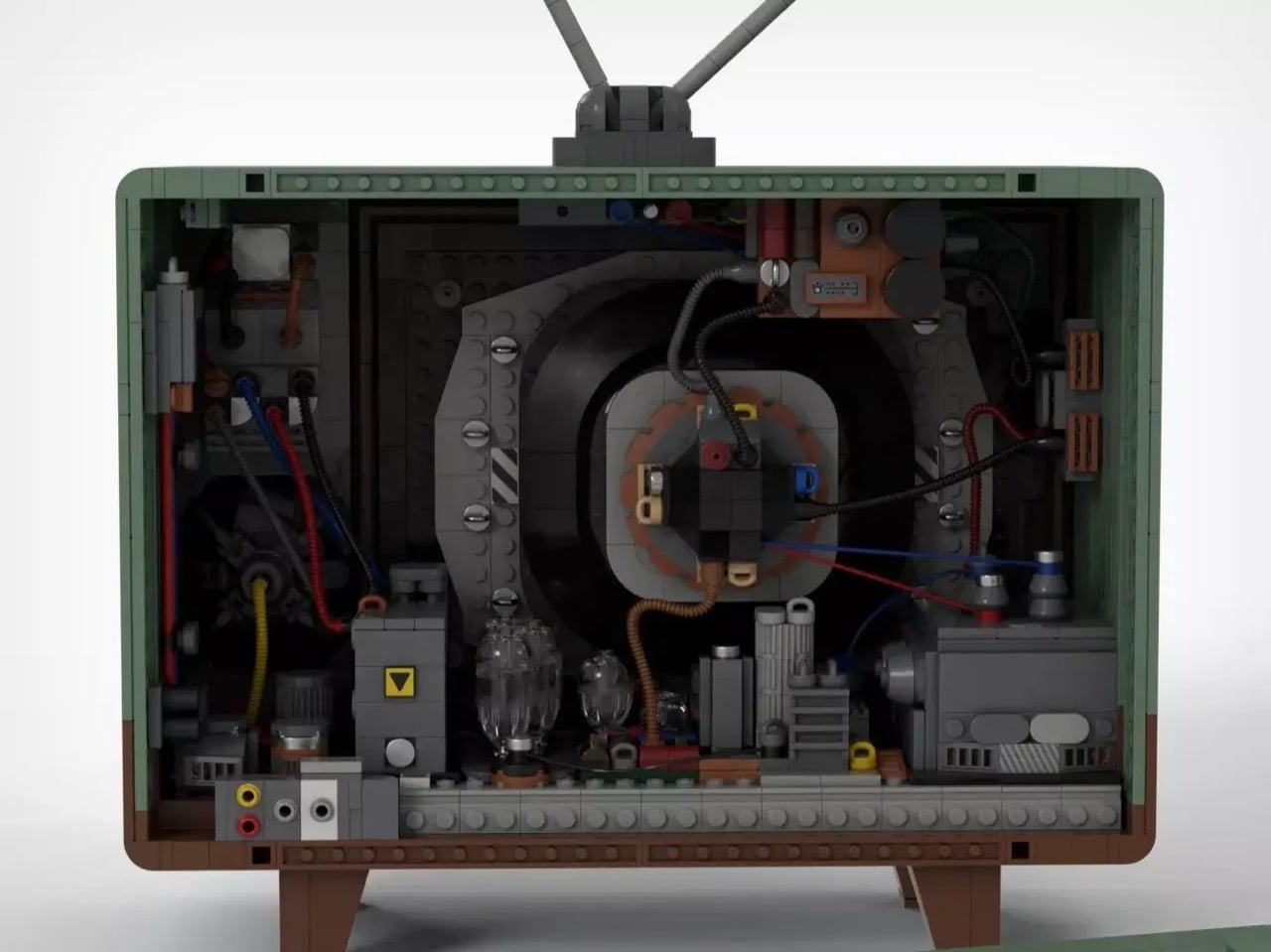
And that’s what’s so fascinating about this build – the inner guts. Most retro TV builds in LEGO form stop at the cabinet and screen. Slap on some rabbit ears, throw in a color bar pattern, call it a day. FMDavid apparently decided that approach was for amateurs. The real story here happens when you pop off that back panel and discover what amounts to a miniature engineering degree compressed into approximately 200 square studs of space. The cathode ray tube dominates the interior volume exactly as it would in an actual 1960s Zenith or RCA, which tells me this builder actually studied reference material instead of just vibing on childhood memories. Those deflection coils wrapping around the tube neck aren’t decorative. They’re positioned where they’d actually sit in a functioning set, using what appears to be copper-colored flexible elements or possibly custom printed tiles to simulate the electromagnetic coils that would bend electron beams across phosphor screens at 15,734 times per second.
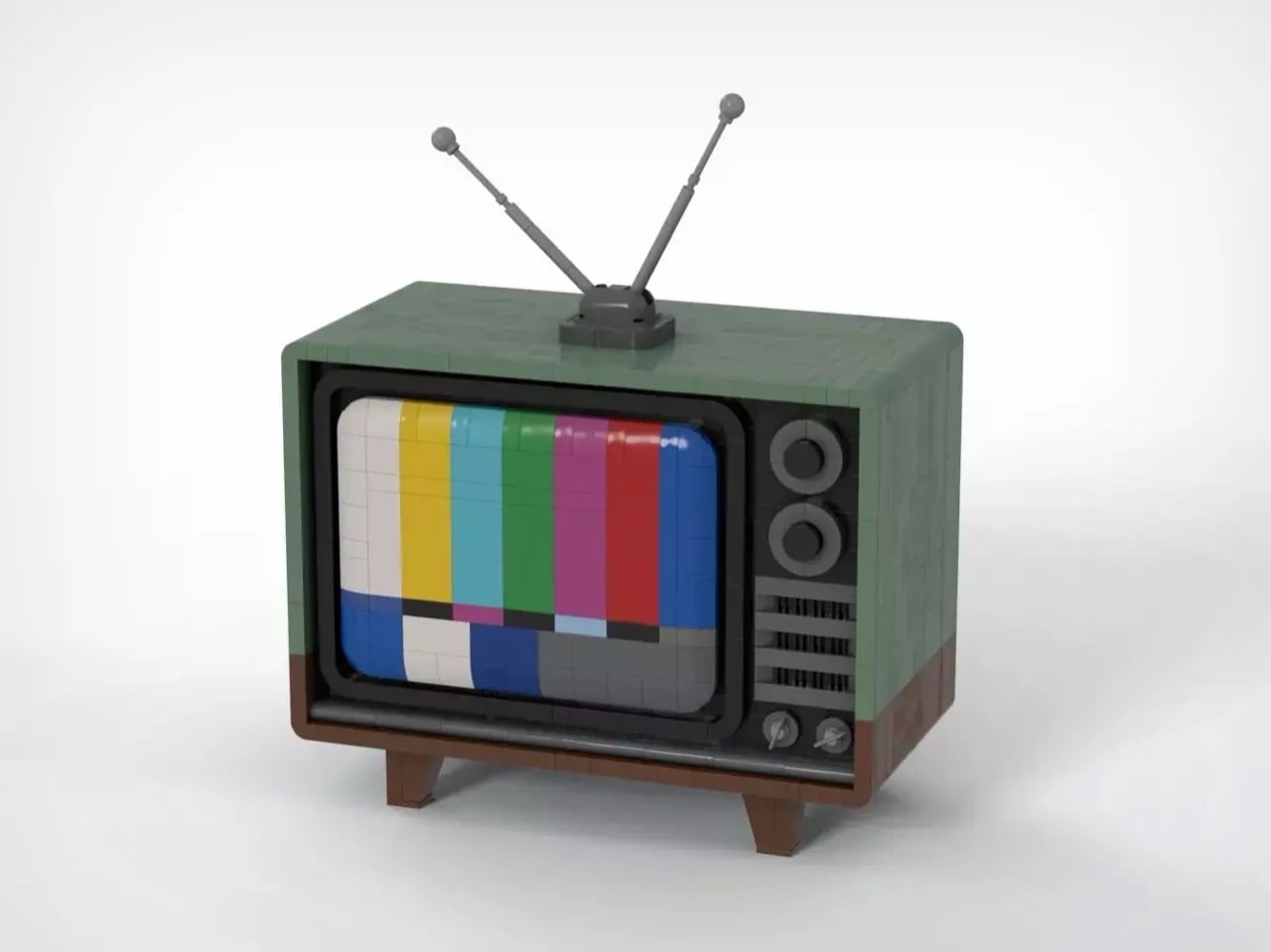
This build works as both display piece and educational tool. The SMPTE color bars on screen are a nice touch that any broadcast engineer would immediately recognize. Those bars weren’t just pretty patterns. They were precision test signals containing specific luminance and chrominance values that let technicians calibrate everything from color temperature to sync pulse timing. The curved screen profile captures that subtle convex bulge of real CRT glass, which existed because a flat surface would implode under atmospheric pressure once you evacuated the tube interior to near-vacuum conditions. Physics demanded that curve, and FMDavid respected it.
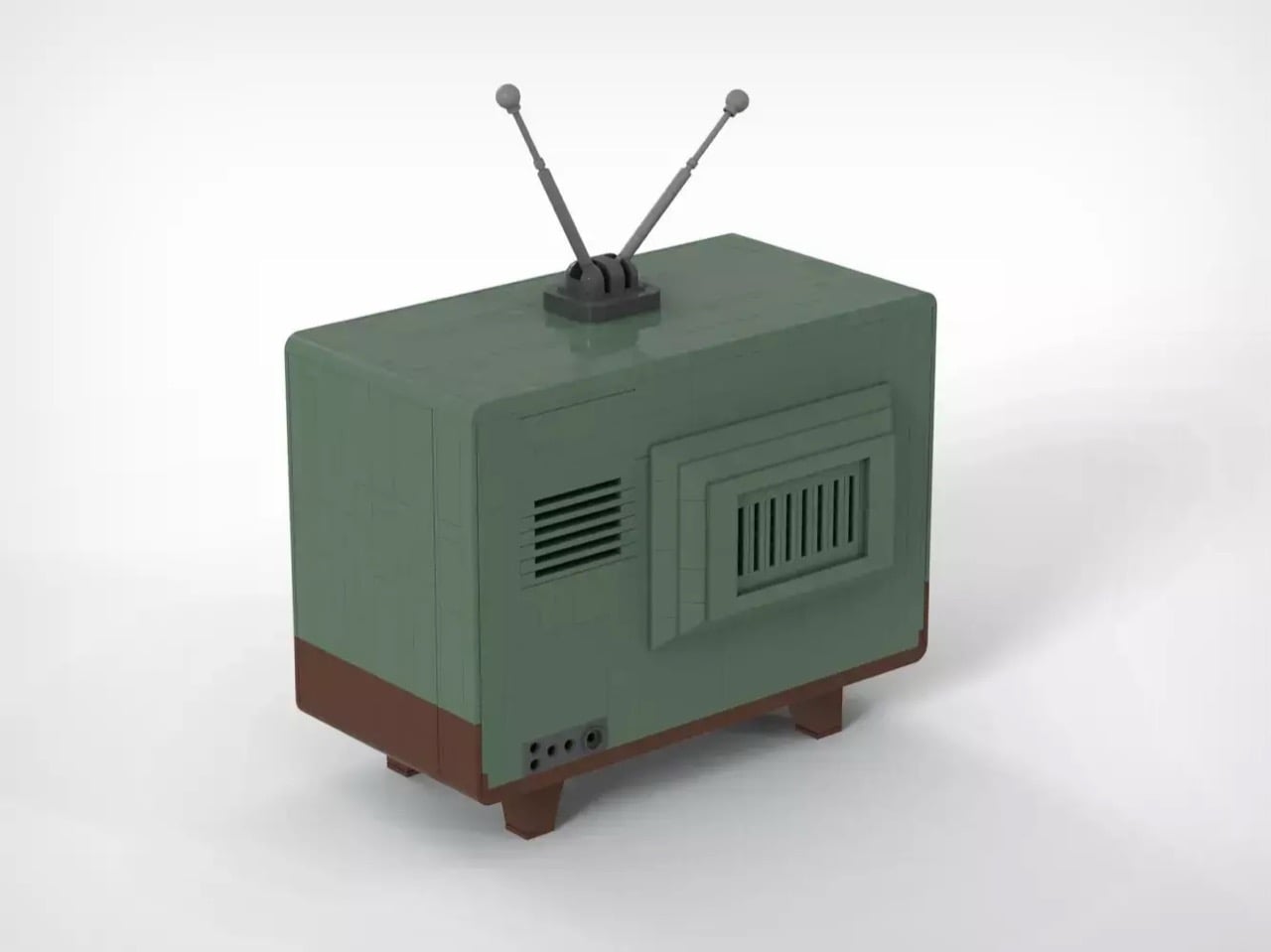
The exterior styling nails the mid-century aesthetic with that sage green cabinet color and brown wooden legs angled outward in classic Danish modern furniture tradition. Those aren’t just legs, they’re cultural signifiers of an era when televisions were statement furniture pieces that families planned their living rooms around. The two control knobs on the right panel would’ve been your channel selector and volume control, back when changing channels meant physically walking across the room and turning a mechanical detent switch through twelve discrete positions. No endless scrolling through 500 cable channels, just ABC, NBC, CBS, and maybe PBS if you were lucky.
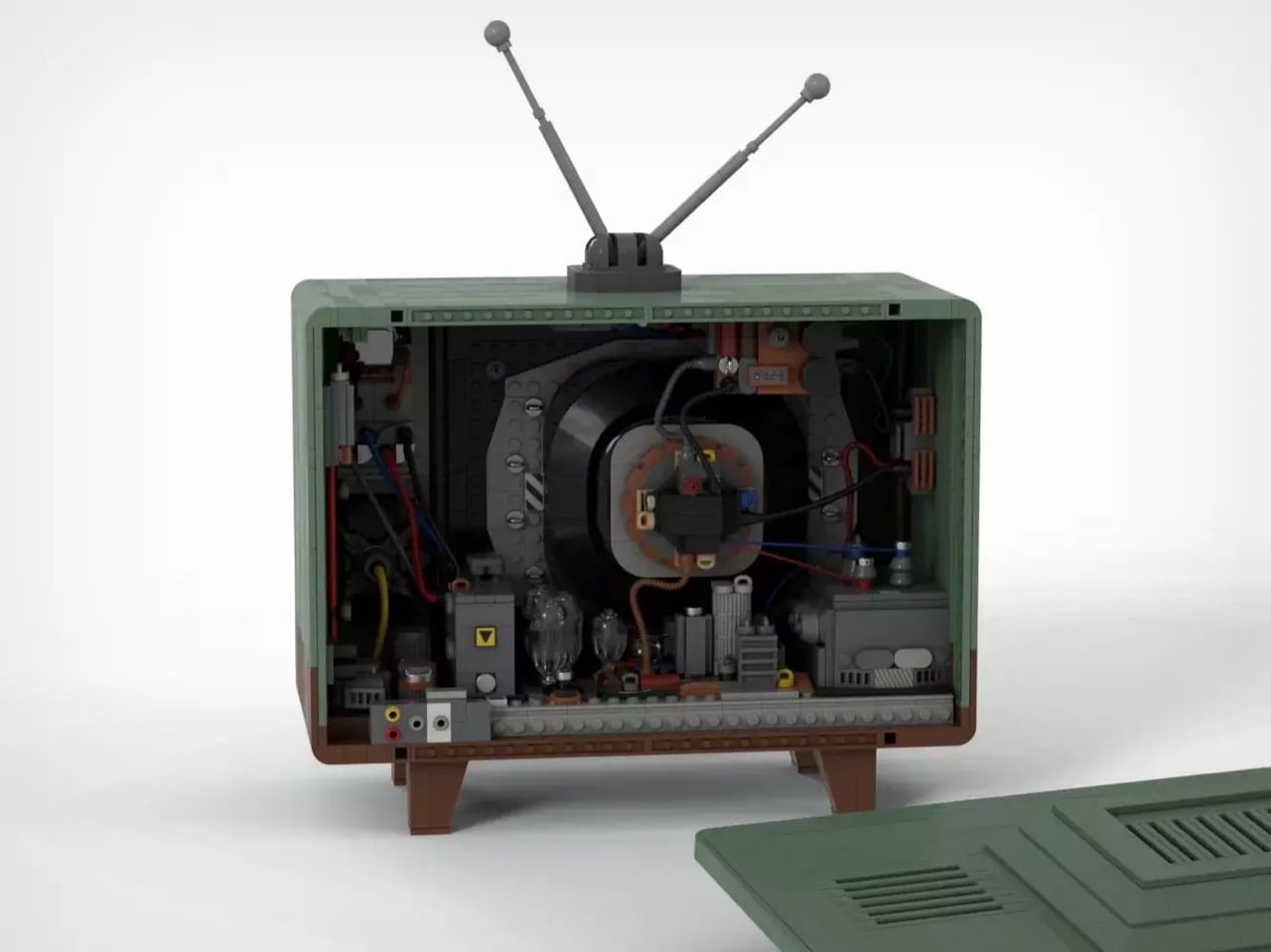
The component density here feels right for a television set from the tube era without overwhelming the interior space. Real TV sets from the 1960s packed dozens of components into their cabinets, handling everything from IF amplification to horizontal output to audio processing. FMDavid’s arranged the internal elements so you can actually see the relationship between the major systems. The vacuum tubes reminiscent of the old-timey technology, the transformers with their ribbed heat sinks sit where you’d expect them, probably using modified tile or plate stacks to create those distinctive cooling fins that prevented components from cooking themselves to death during long viewing sessions. Those cylinders at the bottom represent capacitors, which in real sets would filter high voltage DC and store energy for the horizontal deflection circuit. Get a capacitor failure in a vintage TV and you’d lose either your picture width or your vertical hold, sending the image rolling endlessly up the screen. Heck, there’s even the RCA output on the back, with the yellow and red for left and right audio channels, and a white for presumably the video.
The build currently sits at 1,136 supporters on LEGO Ideas, which means it needs another 8,864 votes to hit the 10,000 threshold for official review. That’s how the Ideas platform works. You need 10,000 people to vote for your concept within a limited timeframe, then LEGO’s internal review board evaluates it for commercial viability, piece count economics, licensing considerations, and market fit. FMDavid’s got 418 days remaining to gather those supporters. If you want to see this hit production shelves, head over to the LEGO Ideas website, create a free account if you haven’t already, and cast your vote. No money required, just a few clicks to tell LEGO this deserves manufacturing consideration alongside other fan-designed sets.