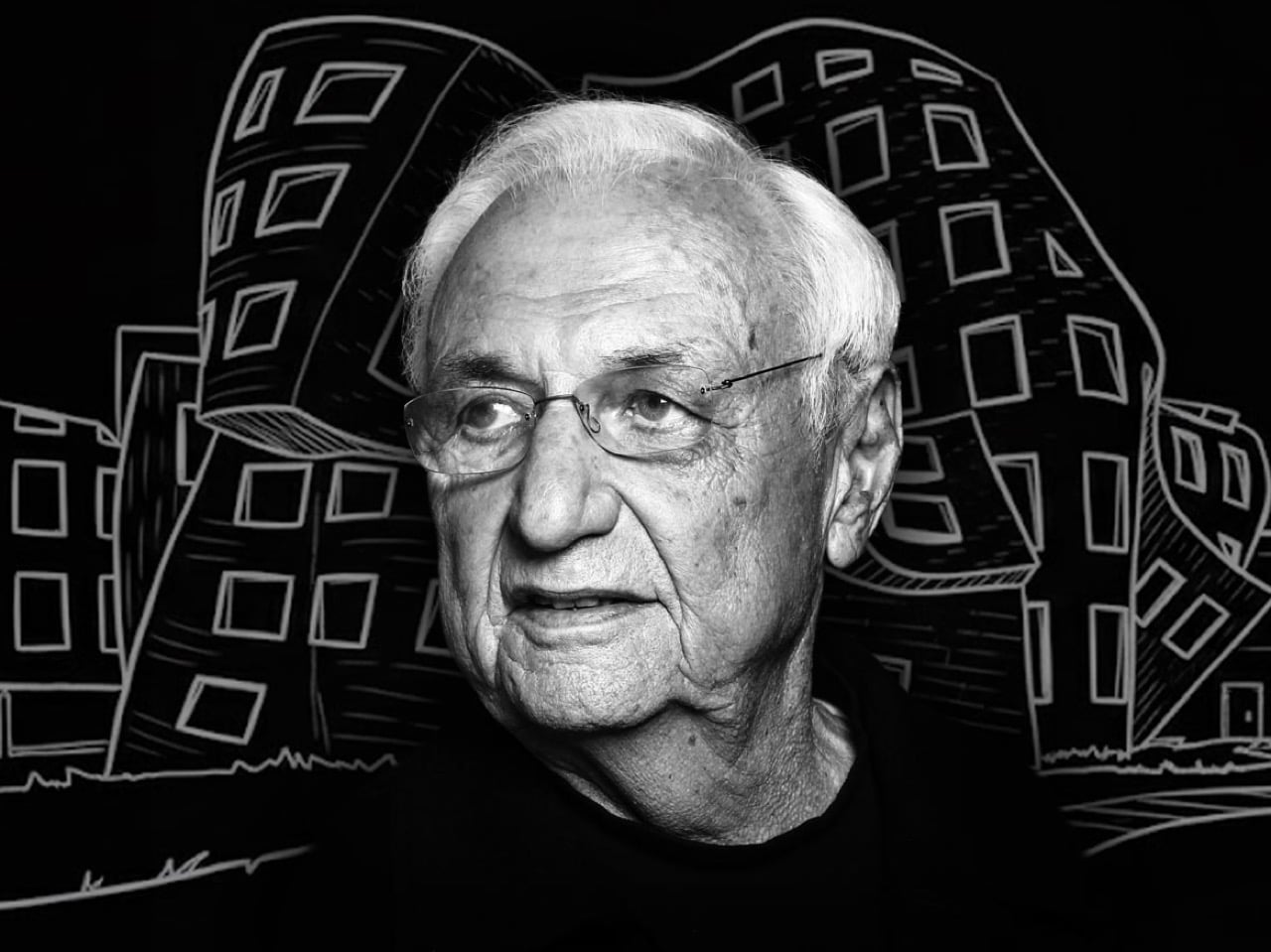
Frank Gehry’s death will feel like a seismic event, even to people who never learned his name but knew “that crazy silver building” in their city. Born in Toronto in 1929 and raised in Los Angeles, he moved through the twentieth century like a restless experiment in motion, turning cardboard models into titanium-clad landmarks and treating cities as full-scale sketchbooks. His passing closes a chapter in which architecture stopped pretending to be purely rational infrastructure and allowed itself to be emotional, unstable, and sometimes gloriously impractical.
What lingers most is not only the spectacle of his work but the shift in attitude it made possible. Gehry treated architecture as a narrative medium, not a neutral backdrop; every warped surface and improbable curve suggested a story about risk, uncertainty, and delight. He pushed software, fabrication, and engineering to their limits long before “parametric design” became a buzzword, yet he remained suspicious of fashion and theory, insisting that buildings should be humane, tactile, and a bit mischievous. The structures he leaves behind do more than house art, music, or offices; they continue to provoke arguments, civic pride, and sometimes outrage, which may be the clearest sign that they are very much alive.
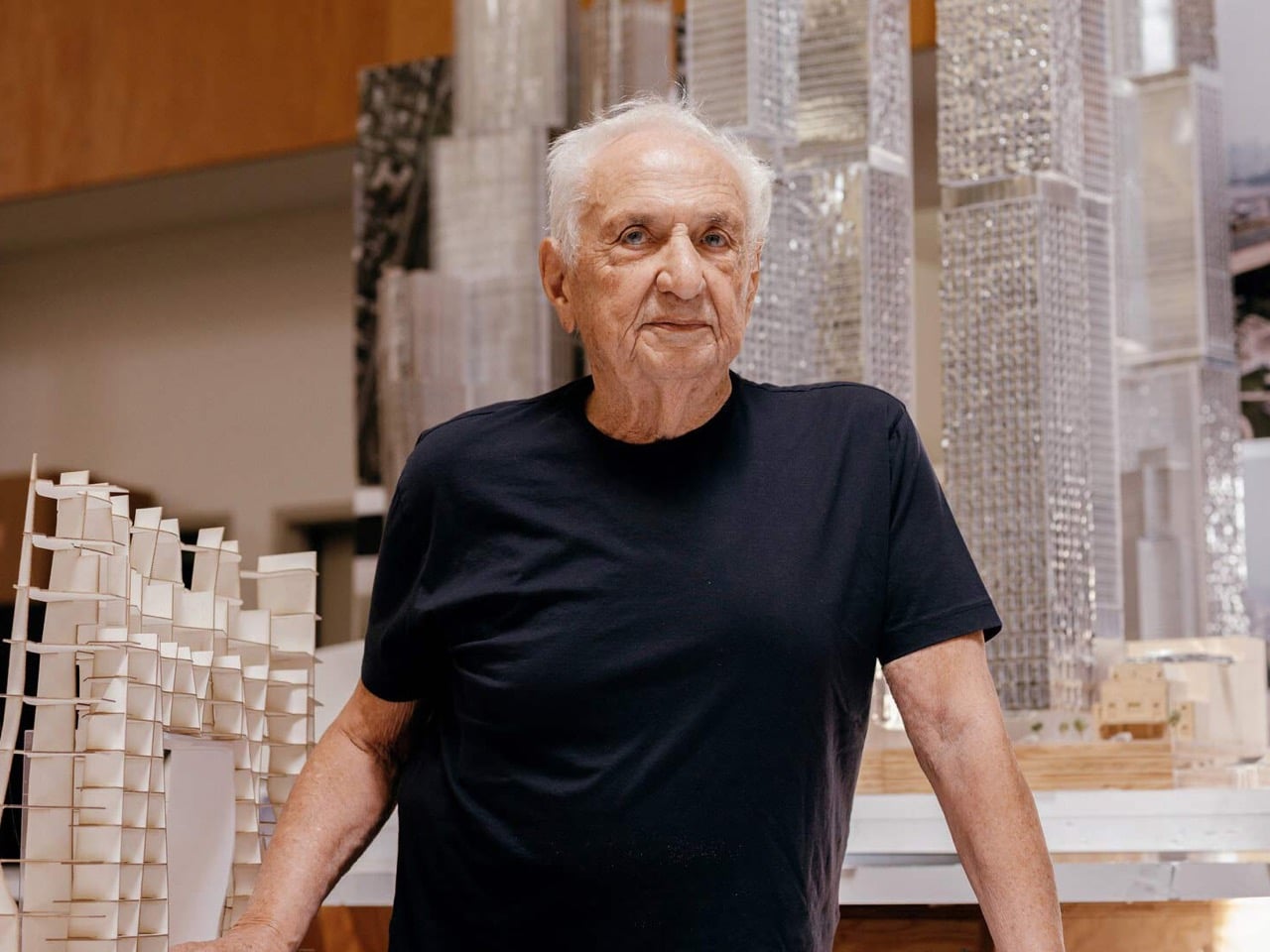
Gehry’s legacy is also institutional and generational. He helped reframe what a “starchitect” could be: not just a brand attached to luxury clients, but a public figure whose work could catalyze urban reinvention, as Bilbao discovered, or reshape how a city thinks about its cultural core, as Los Angeles learned. Dozens of younger architects cite him less for his specific forms than for his license to be disobedient, to treat the brief as a starting point rather than a boundary. In that sense, his death does not simply mark an ending; it underlines how thoroughly his once-radical sensibility has seeped into the mainstream of contemporary design.
As we return to his most iconic works, what becomes clear is how consistent his obsessions were across wildly different contexts. Light, movement, and the choreography of how a body moves through space preoccupied him as much as façades ever did. In his absence, the buildings remain as articulate as any obituary, each one a frozen fragment of his ongoing argument with gravity, convention, and taste. They stand not as monuments in the solemn sense, but as restless objects that still seem to be in the process of becoming something else.
Guggenheim Museum, Bilbao, Spain
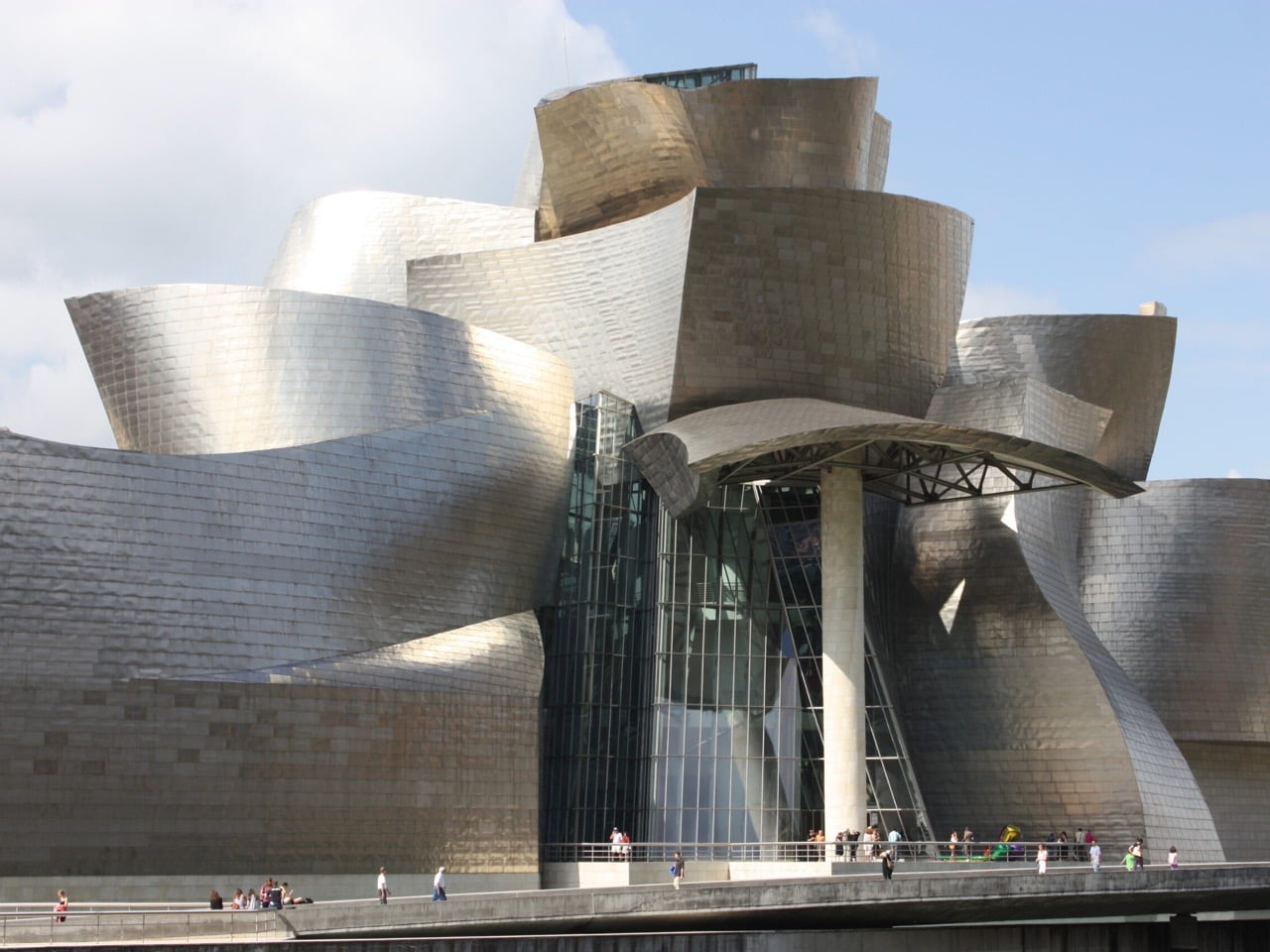
A veritable masterpiece, the Guggenheim Museum in Bilbao redefined the very essence of museum architecture. Clad in shimmering titanium, limestone, and glass, its fluid form and undulating surfaces transformed the post-industrial city of Bilbao into a global cultural hub. Beyond its exterior, the museum offers a labyrinth of interconnected spaces, providing a dynamic environment for art display and contemplation, where visitors are constantly reoriented by shifting scales, vistas, and shafts of light.
The so-called “Bilbao Effect” grew out of this building, turning a risky cultural investment into a template for urban reinvention that countless cities tried to emulate, with varying success. The Guggenheim’s success lies not just in its photogenic skin, but in the way it engages the river, the bridges, and the city’s once-neglected waterfront, stitching art into the daily life of Bilbao. Inside, Gehry’s vast gallery volumes proved unexpectedly flexible, accommodating everything from monumental sculpture to delicate installations, and showing that radical form could coexist with curatorial practicality.
Walt Disney Concert Hall, Los Angeles, USA
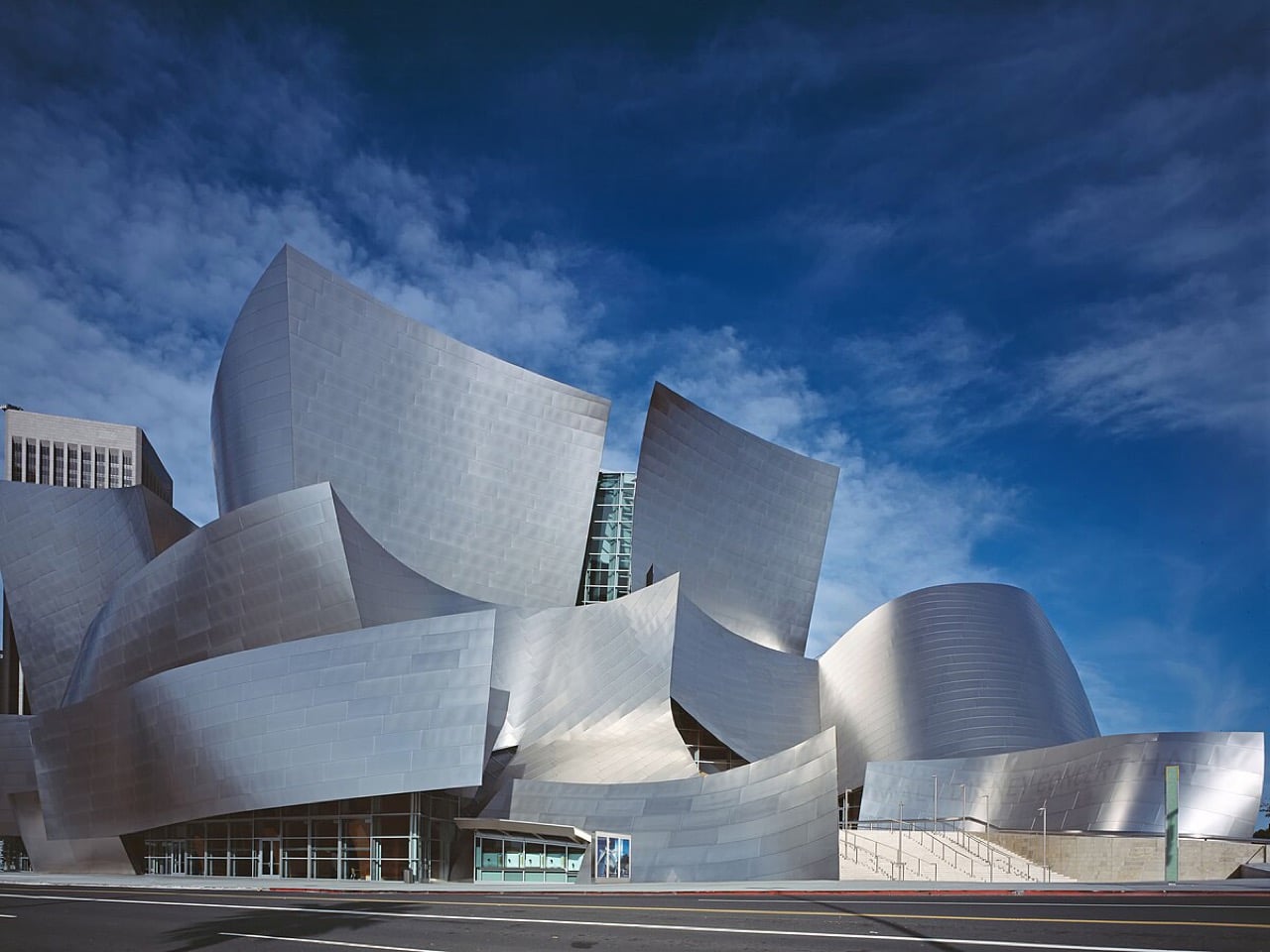
Situated in Los Angeles’ cultural corridor, the Walt Disney Concert Hall is an architectural symphony in stainless steel. Its sculptural, sail-like exterior rises from the street as if peeled up from the city grid, catching the famously sharp Southern California light and scattering it in soft, shifting reflections. The building’s complex geometry masks a remarkably clear organization, guiding audiences from the plaza and terraces into the heart of the hall through a sequence of compressed entries and soaring atriums.
Inside, the vineyard-style auditorium, wrapped in warm Douglas fir and oak, embodies Gehry’s close collaboration with acoustician Yasuhisa Toyota and the Los Angeles Philharmonic. The space is both intimate and monumental; the orchestra feels almost surrounded by the audience, and the sound is prized for its clarity and warmth. The organ, with its forest of asymmetrical wooden pipes, doubles as sculpture, echoing the exterior’s exuberance. Disney Hall did more than give Los Angeles a world-class concert venue; it anchored the city’s identity as a serious cultural capital and remains one of the rare buildings where musicians, critics, and everyday concertgoers are equally enthusiastic.
Dancing House, Prague, Czech Republic
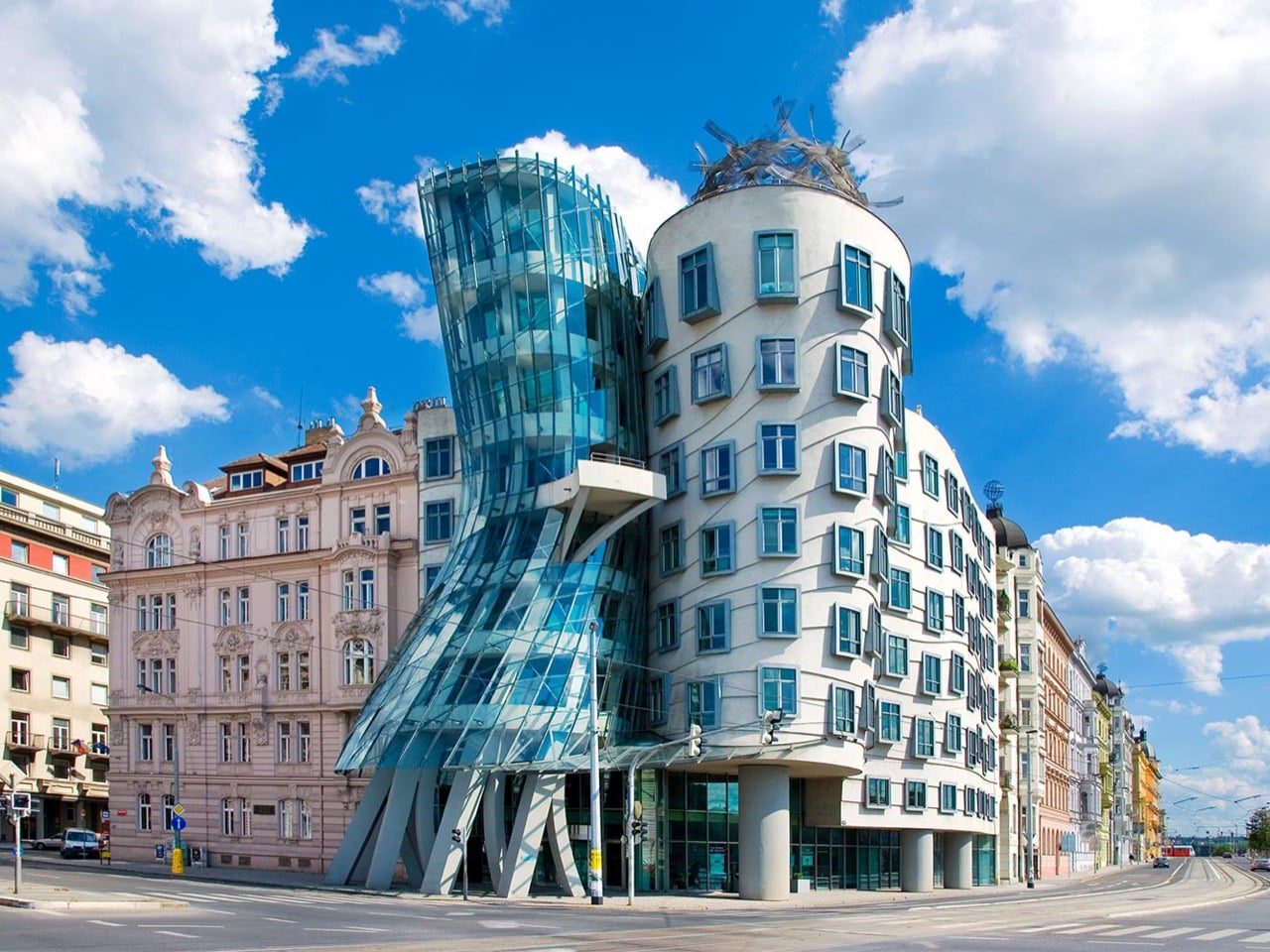
In the heart of Prague, a city steeped in historic architectural grandeur, the Dancing House emerges as a contemporary icon. Its deconstructed silhouette, often likened to a dancing couple, stands in deliberate contrast to the neighboring Baroque and Gothic facades, signaling Prague’s evolving architectural narrative. The building’s glass “Fred” leans into the stone “Ginger,” creating a sense of motion that feels almost cinematic against the calm rhythm of the riverfront.
Beyond the playful metaphor, the Dancing House operates as a careful negotiation between old and new. Gehry and co-architect Vlado Milunić threaded the building into its tight urban site, respecting existing cornice lines while fracturing the expected symmetry and order. Offices occupy much of the interior, but the rooftop restaurant and terrace open the building to the public, offering panoramic views that reframe the city’s historic skyline. In a place where modern interventions are often contentious, the Dancing House has gradually shifted from scandal to beloved oddity, proving that contemporary architecture can coexist with, and even refresh, a deeply layered urban fabric.
Fondation Louis Vuitton, Paris, France
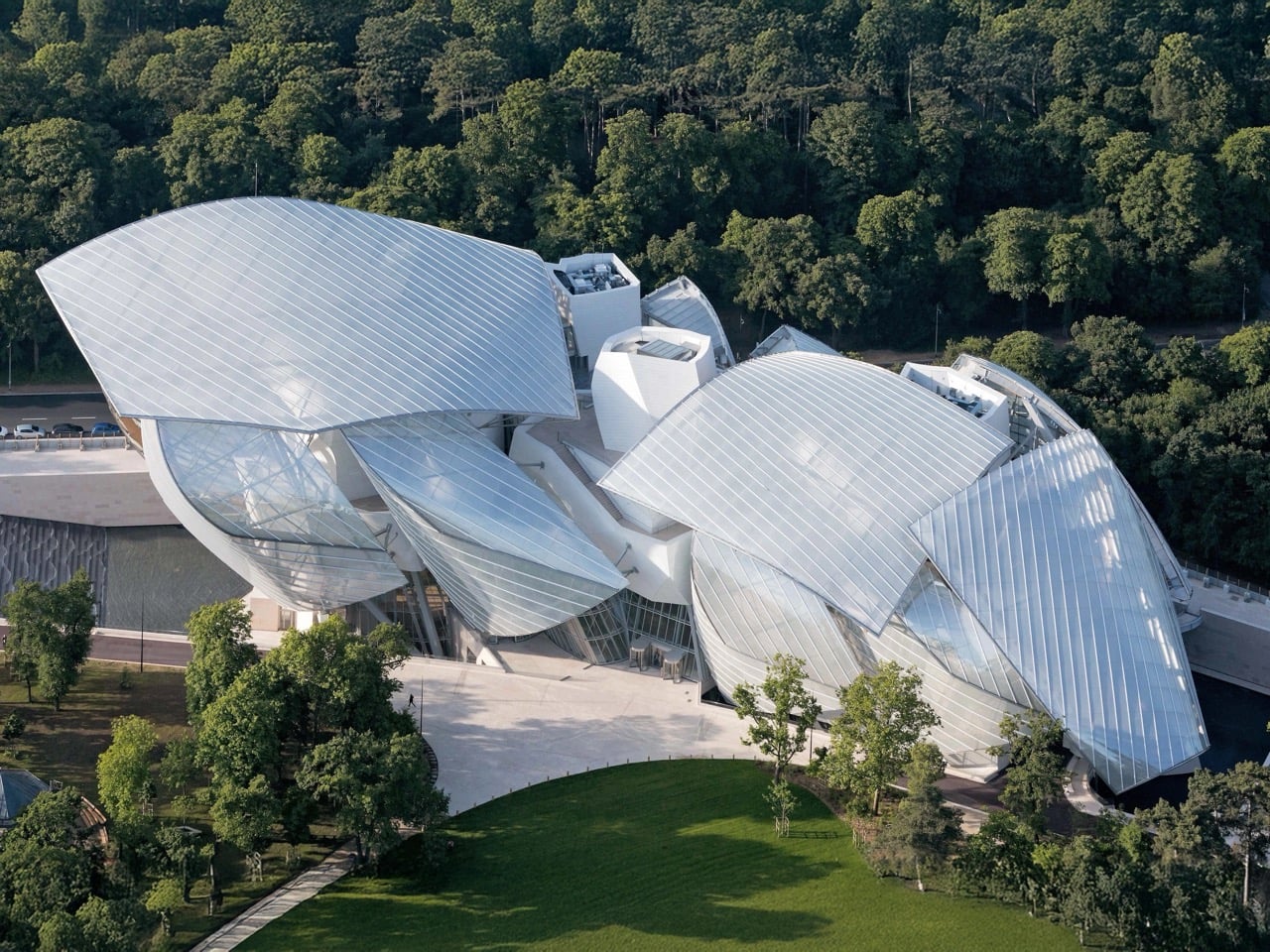
Gehry’s Fondation Louis Vuitton is a testament to the confluence of art, architecture, and landscape. Resembling a futuristic ship moored in the Bois de Boulogne, its glass “sails” seem to billow in the wind, catching reflections of trees, sky, and water. Set within the historic Jardin d’Acclimatation, the building plays a game of concealment and revelation; from some angles it appears almost transparent, from others it asserts itself as a crystalline object hovering above the park.
Inside, a series of white, box-like galleries are wrapped by the glass sails and linked through terraces, stairways, and bridges, creating a rich sequence of indoor-outdoor experiences. The museum’s program of contemporary art and performance takes advantage of these varied spaces, from intimate rooms to large, flexible volumes. At night, the Fondation becomes a lantern in the forest, a glowing presence that underscores Gehry’s fascination with light as a building material. It also represents a late-career synthesis for him: digital design and fabrication techniques are pushed to the extreme, yet the result feels surprisingly light, almost improvised, rather than technologically overdetermined.
Binoculars Building, Venice, Los Angeles, USA
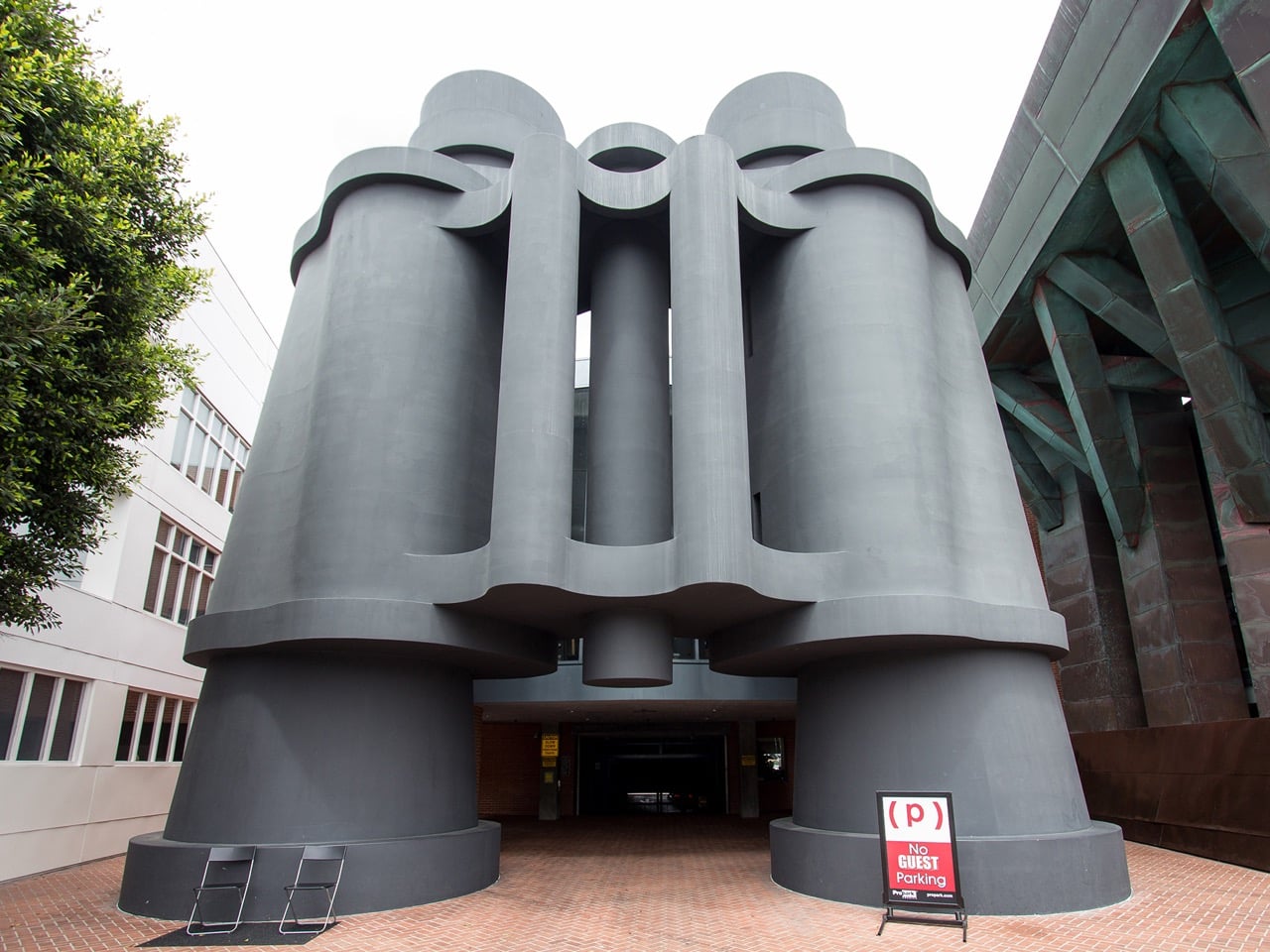
Characterized by its monumental binocular facade, this office building exemplifies Gehry’s mischievous side. The structure is a hybrid of architecture and sculpture, with the colossal binoculars, originally a work by Claes Oldenburg and Coosje van Bruggen, serving as the principal entrance. Cars and pedestrians pass through the lenses, turning a familiar object into an inhabitable threshold and gently mocking the solemnity usually associated with corporate architecture.
The rest of the building, composed of irregular volumes clad in rough stucco and brick, plays foil to the central object, creating a streetscape that feels more like an assemblage of found pieces than a single, unified block. Over the years, the building has housed creative offices, including tech tenants, and has become a kind of mascot for the neighborhood’s informal, experimental energy. It demonstrates Gehry’s comfort with pop culture and humor, and his willingness to let another artist’s work literally occupy center stage, reinforcing his belief that architecture can be a generous collaborator rather than a jealous frame.
Lou Ruvo Center for Brain Health, Las Vegas, USA
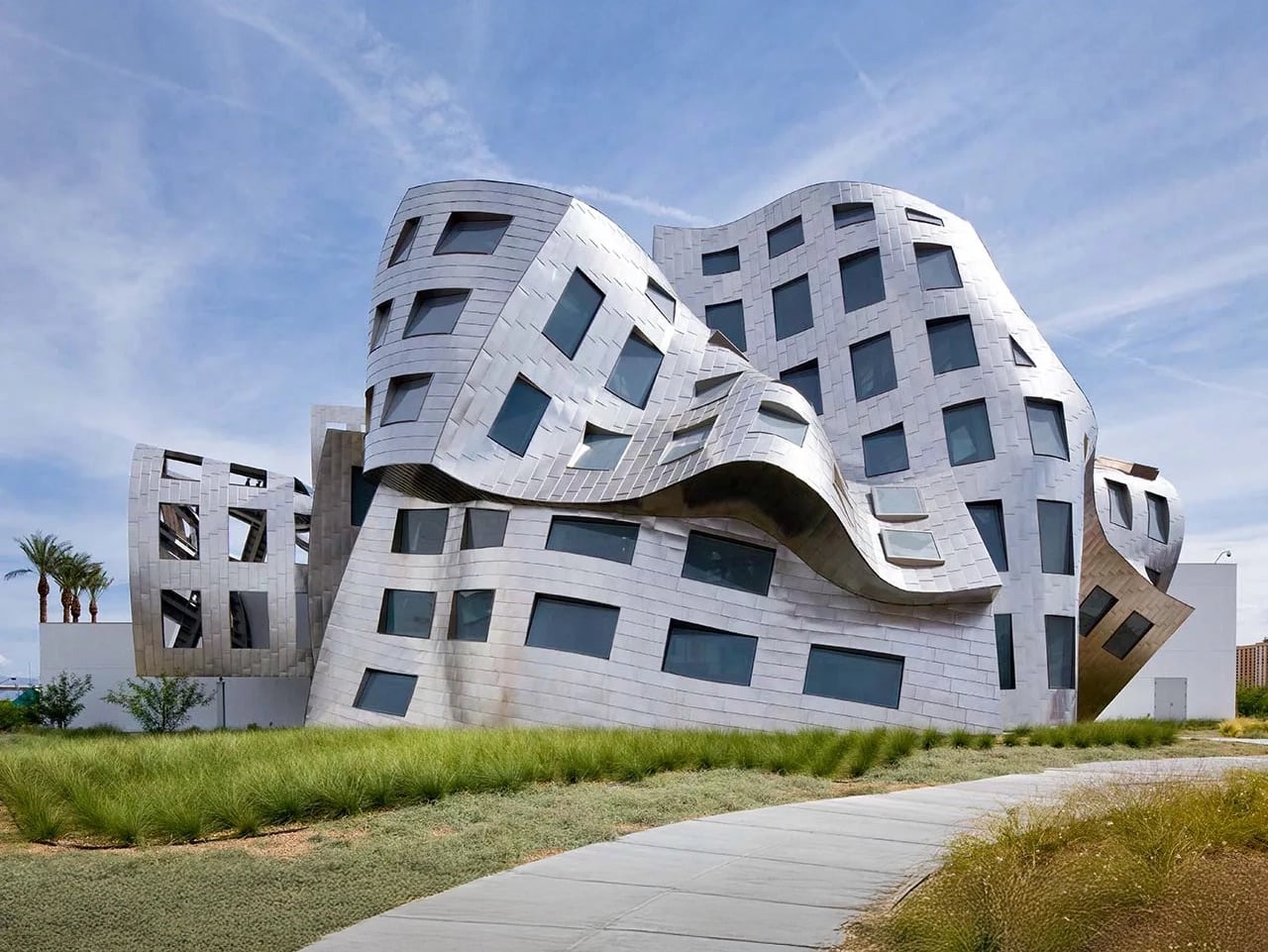
In a city known for its flamboyant spectacles, the Lou Ruvo Center for Brain Health stands out with its cascading stainless steel forms that seem to melt and twist in the desert sun. The building is split into two distinct parts: a relatively rectilinear clinical wing that houses examination and treatment rooms, and a wildly contorted event hall whose warped grid and skewed windows evoke the tangled pathways of the brain. This juxtaposition turns the complex into a physical metaphor for cognitive disorder and the search for clarity within it.
Beyond its sculptural bravado, the center represents an attempt to bring architectural attention and philanthropic energy to the often invisible struggles of neurological disease and dementia. The event space helps fund the medical and research programs, hosting gatherings that place patients’ stories at the center of civic life. For Gehry, who has spoken publicly about friends and family affected by these conditions, the project had a personal resonance, and it shows in the building’s emotional charge. It is one of the clearest examples of his belief that dramatic form can serve not just commerce or culture, but also care and advocacy.
Neuer Zollhof, Düsseldorf, Germany
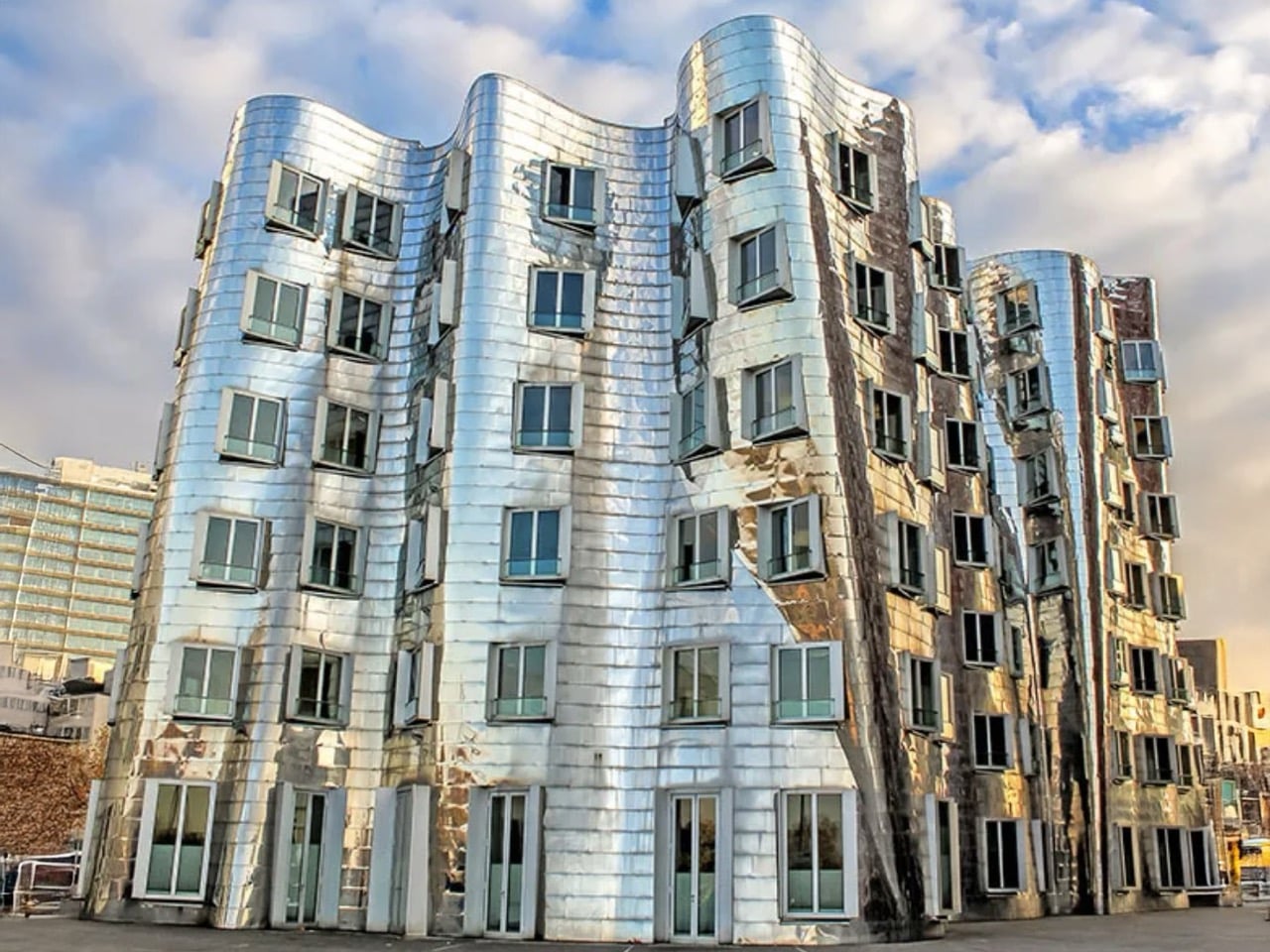
Overlooking Düsseldorf’s MedienHafen, the Neuer Zollhof complex showcases Gehry’s skill at composing buildings as a kind of urban sculpture. The trio of towers, each with its own material identity in white plaster, red brick, and shimmering stainless steel, appears to lean and sway, as if the harbor winds had pushed them out of alignment. Their undulating facades break up reflections of sky and water, adding a kinetic quality to what might otherwise be a static office district.
At the ground level, the buildings carve out irregular courtyards and passages that encourage wandering rather than straight-line commuting. This porousness allows the waterfront to feel more public, less like a sealed-off corporate enclave. Over time, Neuer Zollhof has become a visual shorthand for Düsseldorf’s transformation from industrial port to media and design hub, appearing in tourism imagery and local branding. The ensemble illustrates how Gehry could work at the scale of a neighborhood, not just a single object, using repetition and variation to give a district a distinct identity without lapsing into monotony.
Weisman Art Museum, Minneapolis, USA
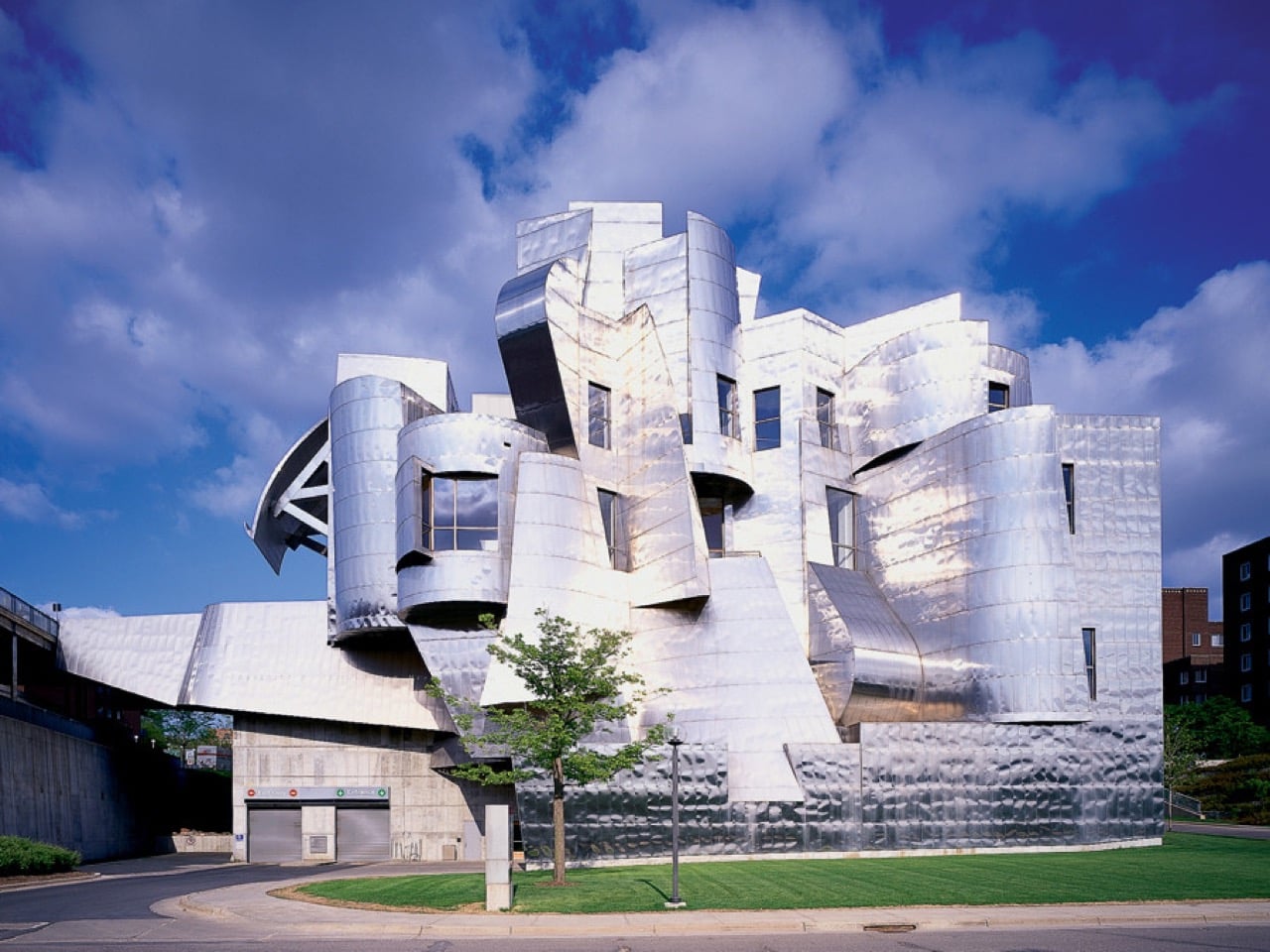
The Weisman Art Museum at the University of Minnesota is a compact manifesto of Gehry’s interest in reflective surfaces and fractured forms. From the campus side, the building presents a relatively calm brick facade that aligns with neighboring structures, but facing the Mississippi River it explodes into a cascade of stainless steel planes. These facets catch the Midwestern light in constantly changing patterns, so the museum’s appearance shifts dramatically between bright winter mornings and long summer evenings.
Inside, the galleries are more restrained than the exterior might suggest, with white walls and straightforward geometries that accommodate a diverse collection, including American modernism and Native American art. The contrast between the calm interior and the exuberant shell underscores Gehry’s understanding that museums must serve art first, even when they are iconic objects in their own right. For the university and the city, the Weisman has become a landmark visible from bridges and river paths, a reminder that serious academic institutions can also embrace a bit of visual risk.
Vitra Design Museum, Weil am Rhein, Germany

Situated on the Vitra Campus, the Vitra Design Museum is one of Gehry’s earliest European works and a key piece in his evolution toward the more fluid forms of later years. The small building is composed of intersecting white plastered volumes, pitched roofs, and cylindrical elements, all twisted and stacked in a way that feels both familiar and disorienting. It reads like a collage of fragments from traditional architecture, reassembled into a dynamic, almost cubist object.
The museum’s interiors are intimate and idiosyncratic, with sloping ceilings and unexpected vistas that suit exhibitions on furniture, industrial design, and everyday objects. As part of a campus that later attracted buildings by Zaha Hadid, Tadao Ando, and others, Gehry’s museum helped establish Vitra’s reputation as a patron of experimental architecture. The project also marked one of the first major uses of his now-signature white sculptural volumes in Europe, setting the stage for the more complex geometries of Bilbao and beyond while reminding us that his work has always been as much about composition and light as about metallic skins.
8 Spruce Street (Beekman Tower), New York, USA

Rising above Lower Manhattan’s skyline, 8 Spruce Street, often branded as New York by Gehry, demonstrates his ability to bring a sense of movement to the rigid logic of the skyscraper. Its rippling stainless steel facade wraps a conventional concrete frame, creating the illusion of draped fabric caught in a vertical breeze. As daylight moves across the tower, the folds deepen and flatten, giving the building a constantly shifting presence against the more static grid of neighboring high-rises.
Inside, the residential tower combines rental apartments with amenities that were, at the time of its completion, notably generous for downtown living, including schools and community facilities at the base. The project signaled a shift in Lower Manhattan from a primarily financial district to a more mixed, residential neighborhood, and it showed that expressive architecture did not have to be reserved for cultural institutions or luxury condos. By applying his vocabulary to everyday housing, Gehry suggested that the pleasures of complex form and careful detailing could, at least occasionally, reach beyond elite enclaves and into the fabric of ordinary urban life.