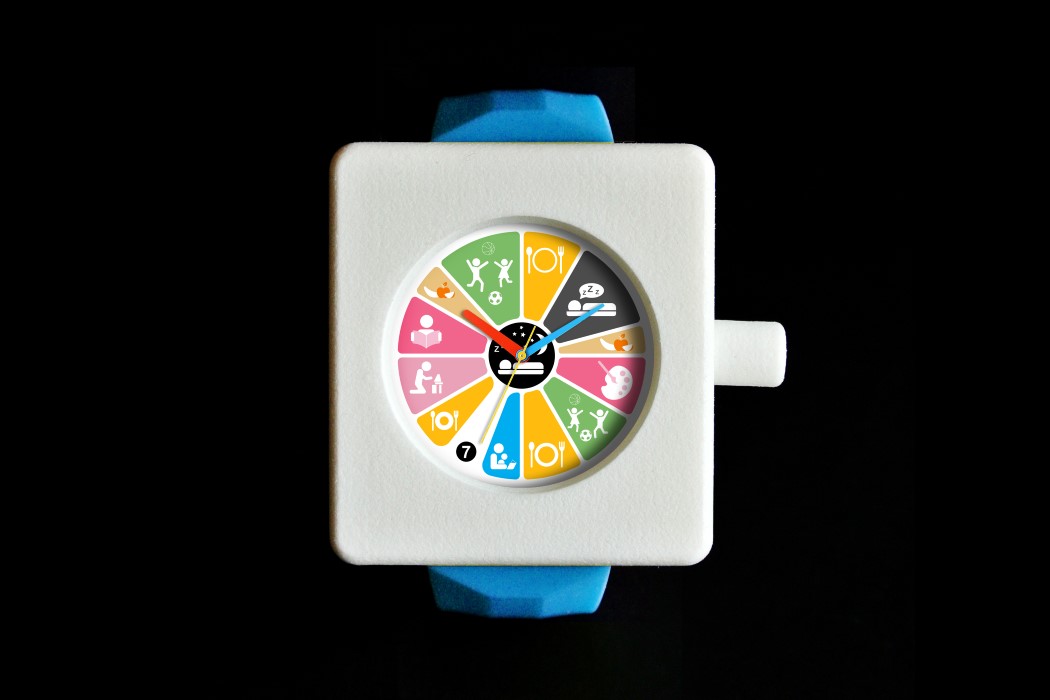

The easiest way to break down the concept of time to a young-one is by explaining the activities associated with it. Morning is when you brush your teeth and get to school, afternoon is when you eat lunch and take a nap, evenings are for recreation and dinner, and the night is to sleep without creating too much of a fuss.
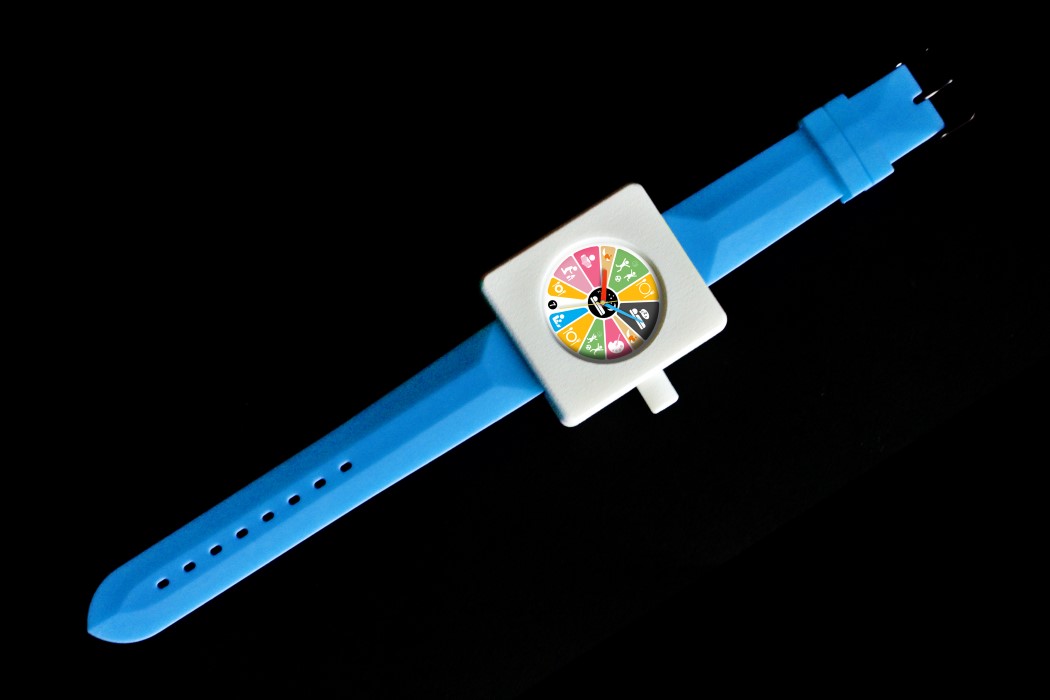
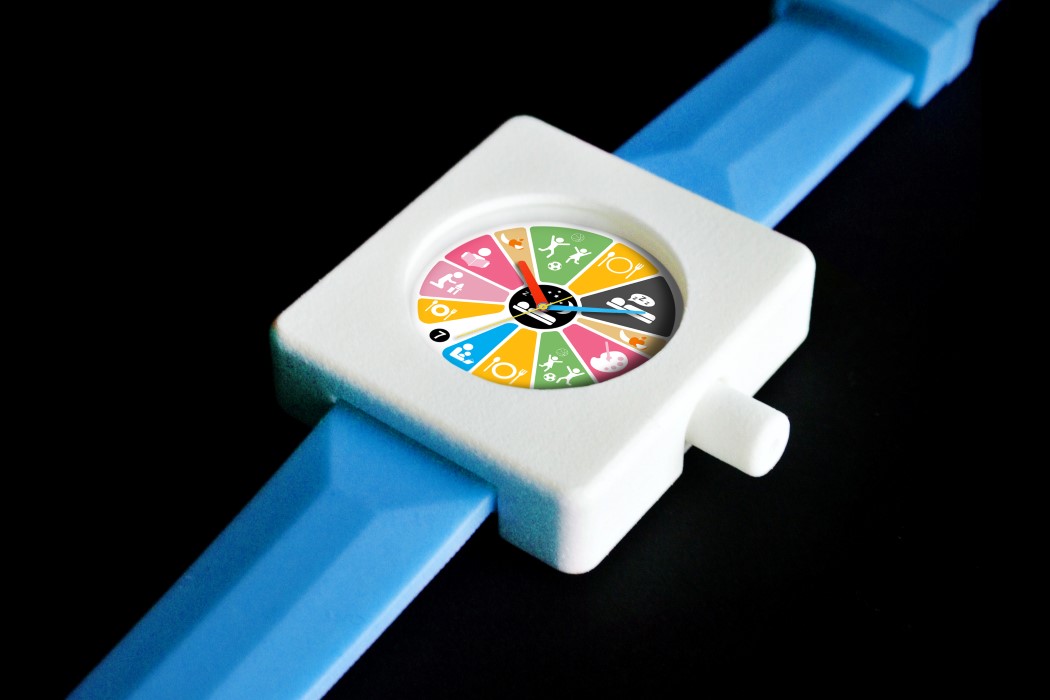
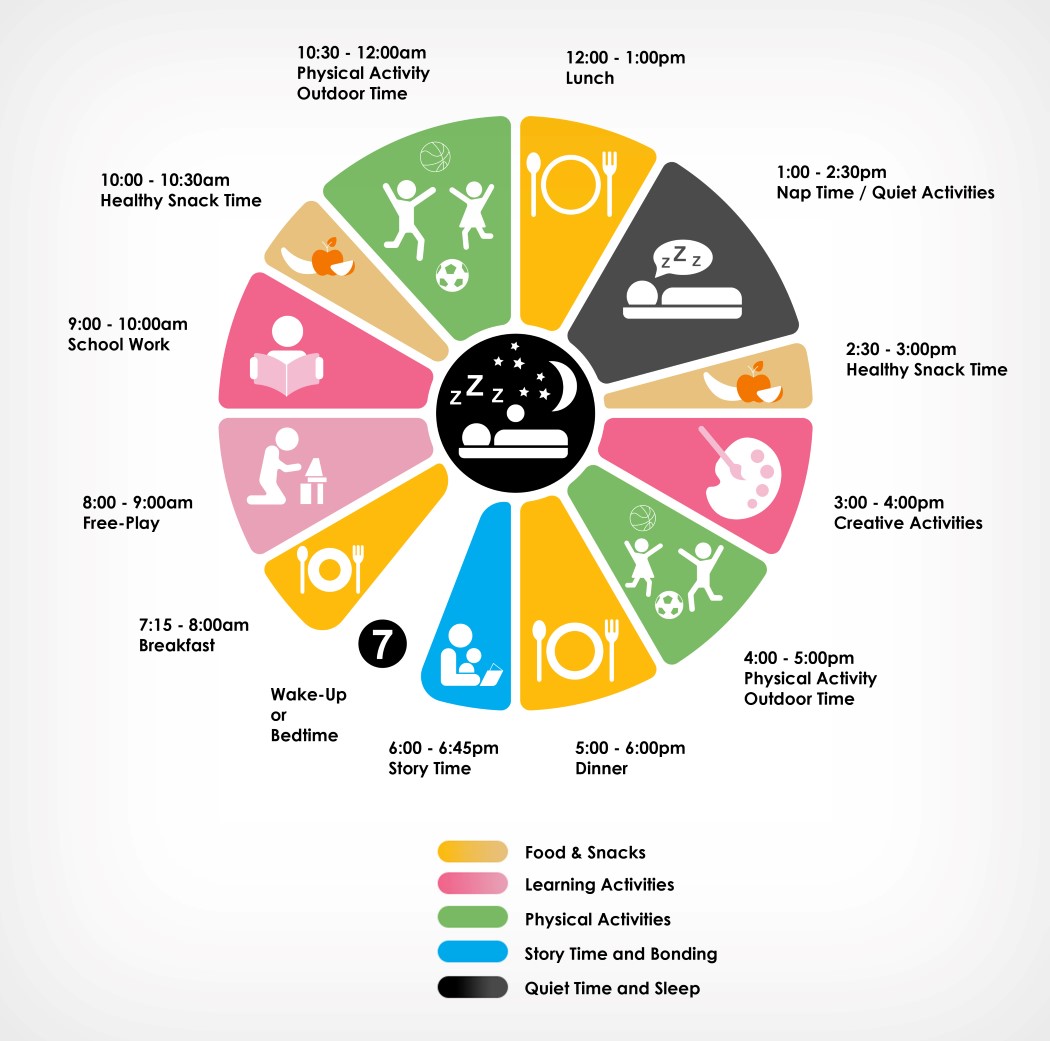
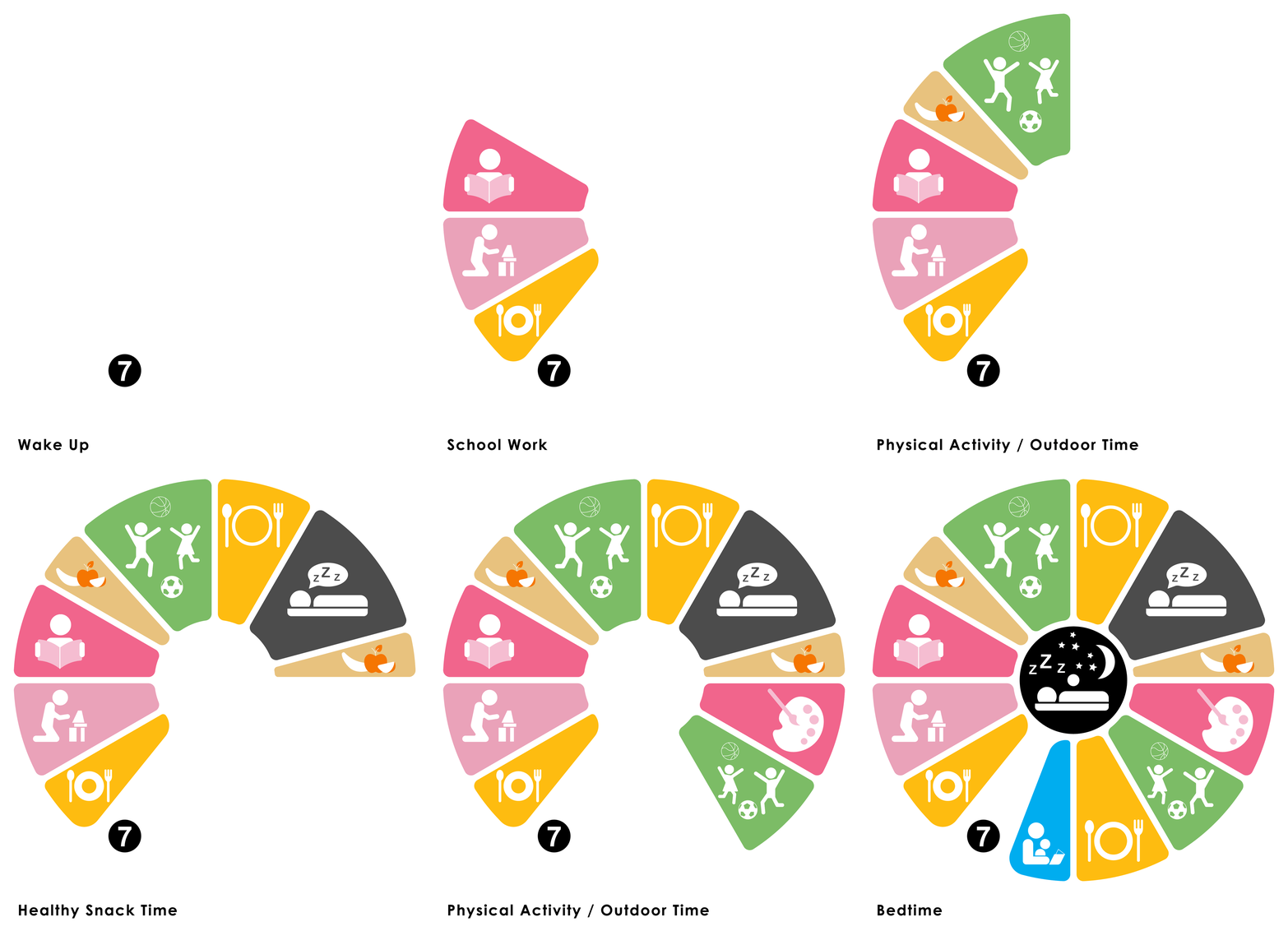
Rather than teaching kids the concept of time by straight-away throwing them into numbers, hours, minutes, and seconds, the Daycare-At-Home watch gives kids a primer by taking the traditional 12-hour clock and using it as a clever infographic to guide the child through the day. The watch’s face comes in a 12-hour format, breaking the day into two parts, 12 hours of wakefulness and activities, and 12-hours of rest and relaxation. The watch sports an hour, minute, and second hand, but in the preliminary stages, the red hour-hand is all that matters. It points to zones of the watch’s face, which instead of being broken up into numbers, are split into zones and color-coded with simple pictographs. These simple icons allow kids to differentiate between study-time, play-time, nap-time, etc, while the size of the zone helps them understand the duration of the activity. The pictographs even cleverly help differentiate between breakfast, lunch, and dinner by creating plates of different sizes, emphasizing the value of the meal! The icons stop around the 7PM mark, indicating bed-time to kids, and resume after a full 12-hours at 7AM to begin another day!
With its unique approach to time-telling, the Daycare-At-Home watch doesn’t just teach children the concept of time, it teaches them the value of time too!
Designer: Studio PAULBAUT (Paul Kweton)