
Late August has a particular texture. The mornings cool by a degree, the light shifts without announcing itself, and the desk that went mostly untouched all summer starts to look like a place worth returning to. Japanese stationery has always understood this moment. The objects it produces are not exciting in the way a gadget is. They are exciting in the way a good chair is — once you find the right one, everything before it starts to feel like a placeholder.
The three picks here share a quality that is easy to recognize once you know to look for it. Each attends to the part of the tool that most manufacturers have already decided is resolved. A pair of scissors built with the precision of a professional instrument. A stapler that removes the staple from the concept of stapling. A notebook that asks nothing of you beyond showing up. Together, they change what returning to a desk in late summer actually feels like.
1. Stellar Edge Scissors
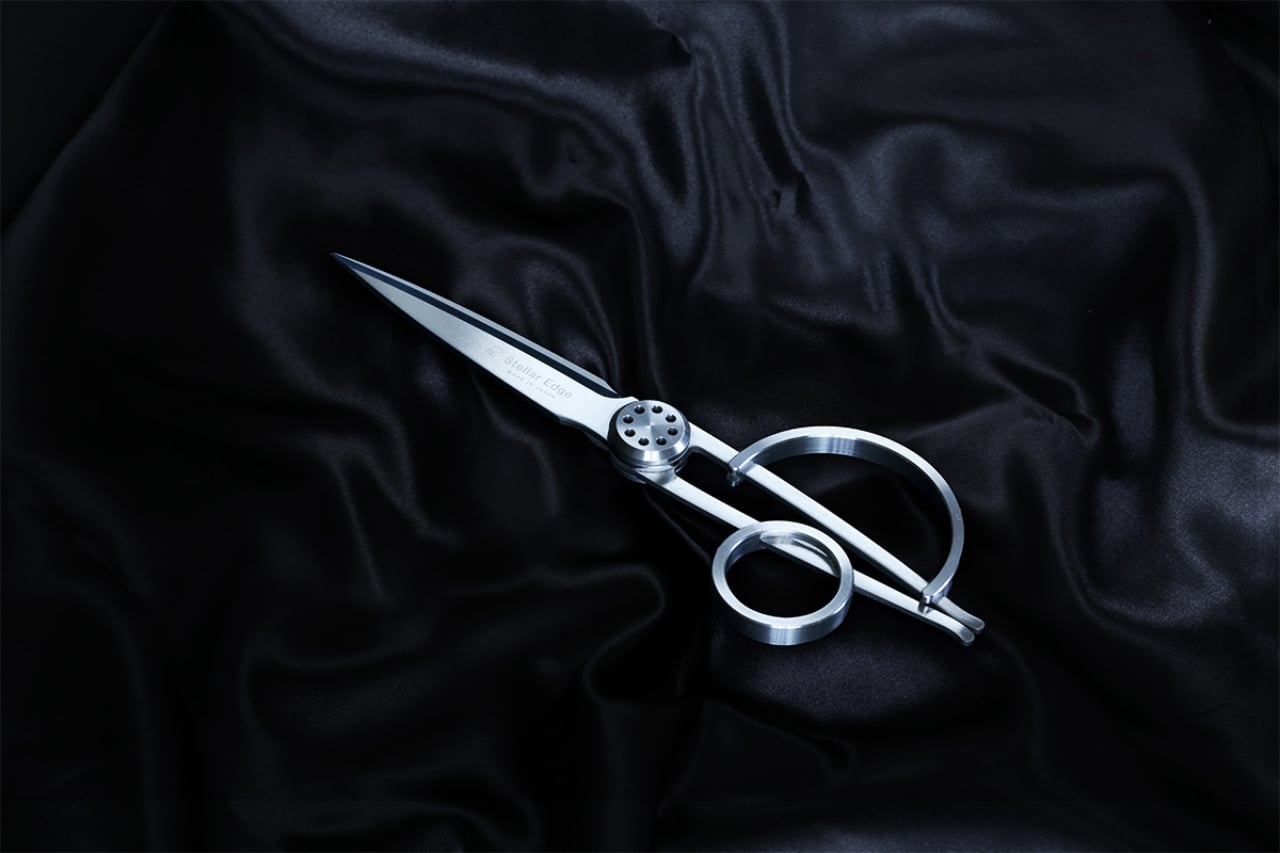

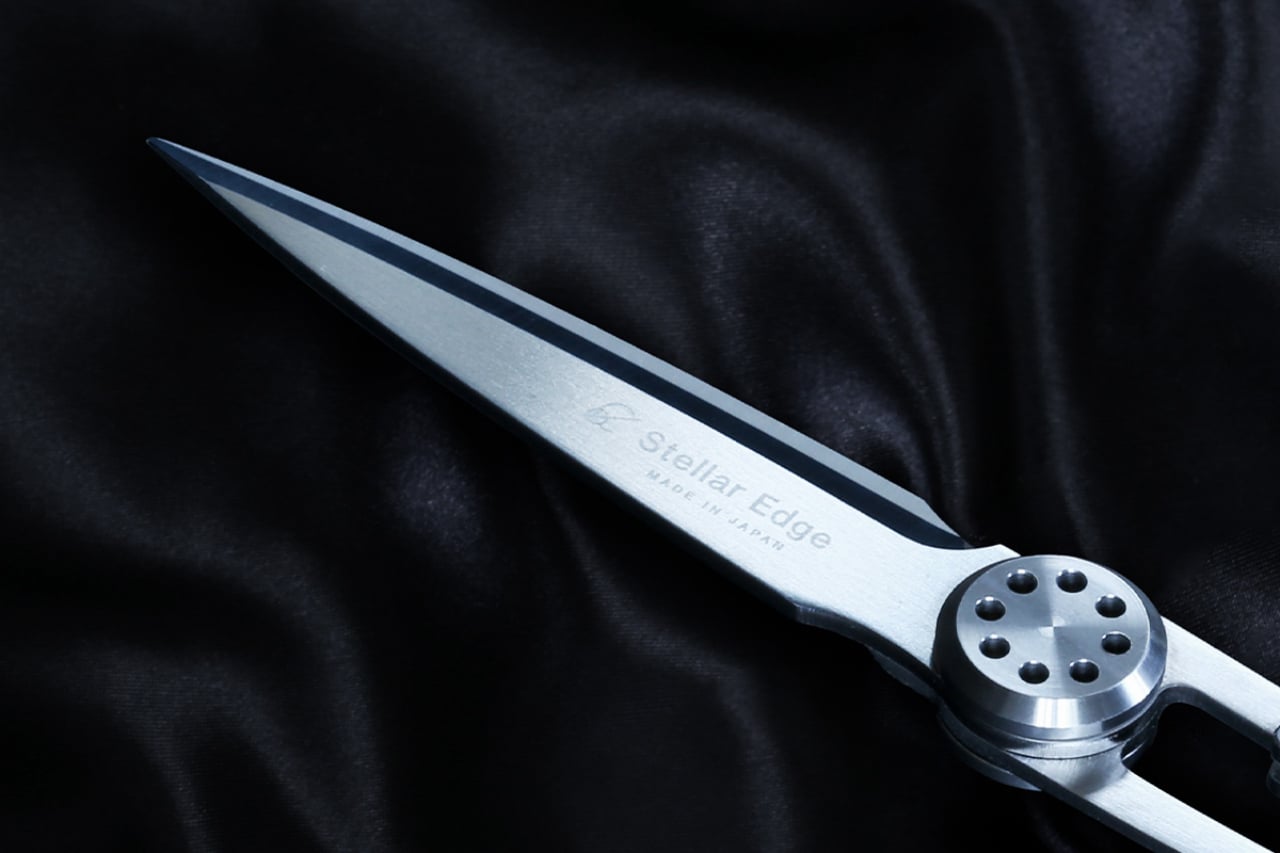
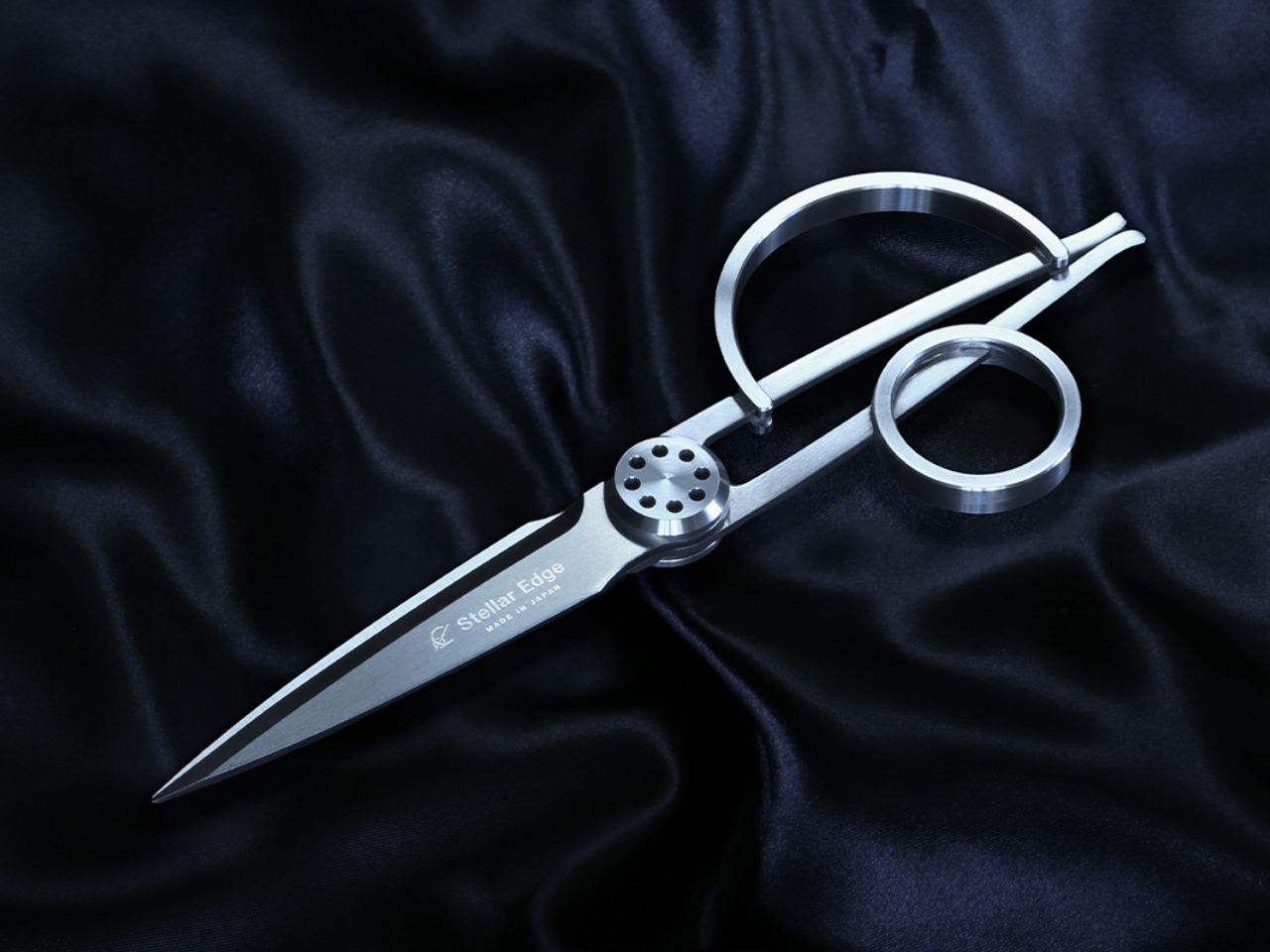
Most scissors are bought once and forgotten. The Stellar Edge Scissors, crafted from Japanese stainless steel, propose a different relationship with the category. Seamless, polished handles and a weight distribution that shifts the blade toward the hand make cutting feel less like holding something and more like extending your reach across the page. Every angle in the design is considered. The result is a pair of scissors that earns a permanent place on the desk rather than disappearing into a drawer the week they arrive.
Each snip registers with the kind of clean resistance that confirms the blade is doing exactly what it was built for. The polished finish elevates the tactile experience without making the scissors feel fragile or precious. Extended cutting sessions don’t build the fatigue that cheaper alternatives accumulate across an afternoon, and the grip sits naturally regardless of hand size with no adjustment required. For anyone who works with paper regularly, these are the scissors that make the pair you owned before feel like it was never really doing the job.
What we like
- Japanese stainless steel construction holds its edge through sustained use rather than dulling after a few weeks of regular cutting
- The seamless, polished handles and considered weight distribution make these genuinely display-worthy objects on a desk surface
What we dislike
- The precision manufacturing and material quality place these at a higher price point than most people are used to spending on scissors
- No rubber grip inserts means those who prefer a softer handle feel on longer cutting sessions will notice the absence
2. PaperLock Stapler
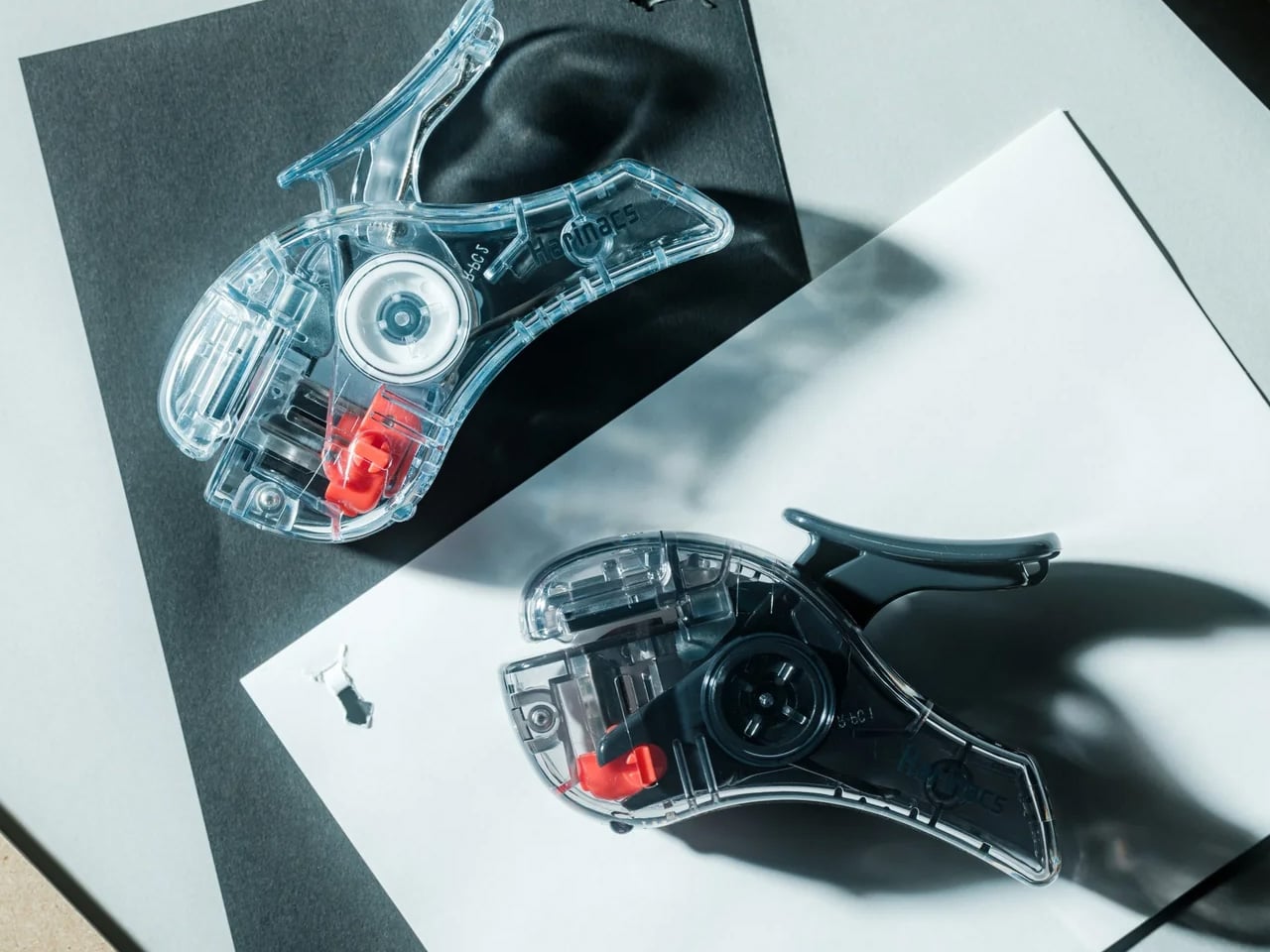
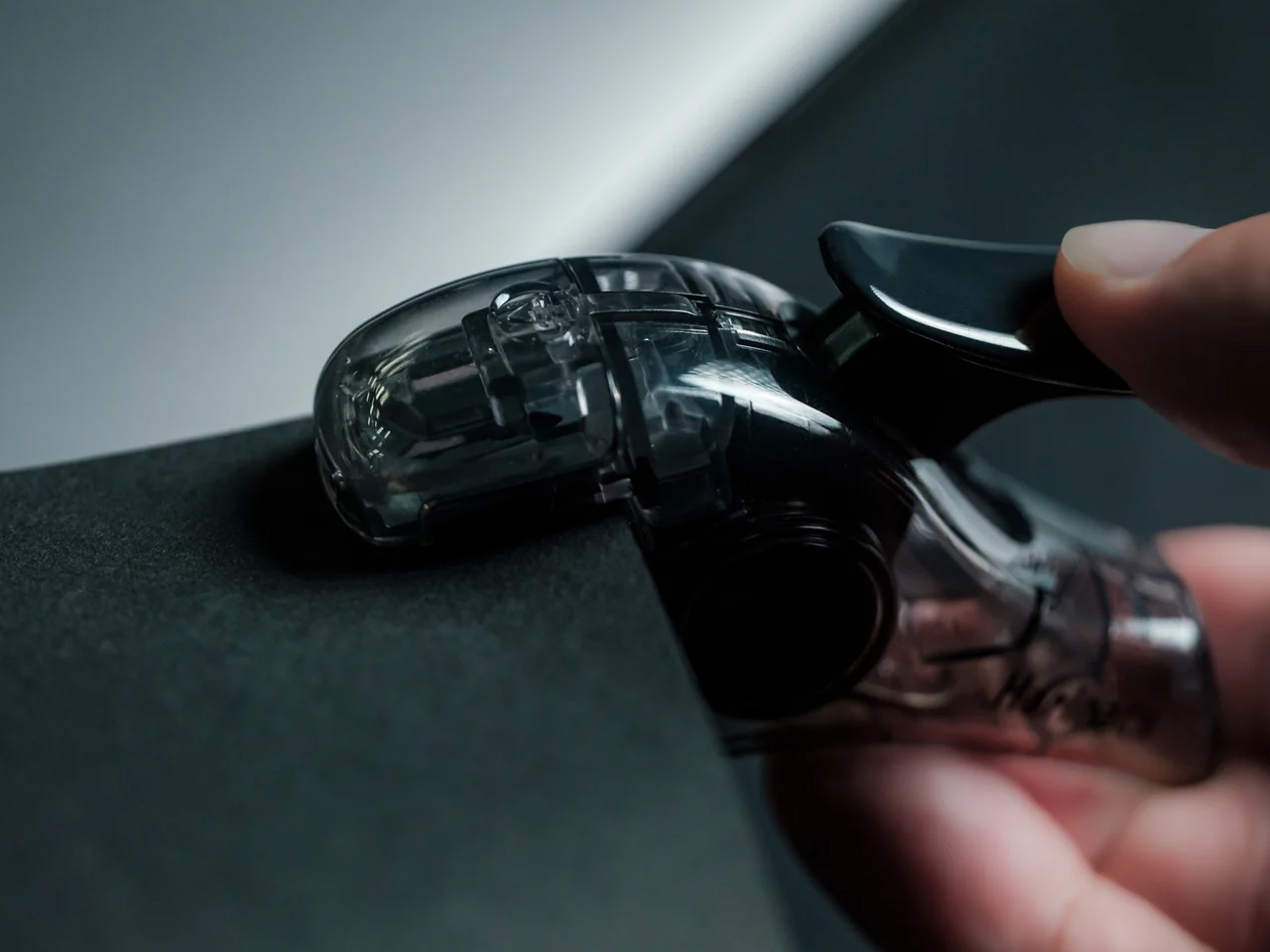
The mechanism behind PaperLock is simple in the way good design is simple. Press the lever and a small cutting element punches through the stack, folding the paper back through itself to create an interlocked join. No metal passes through the page. No staple is added. The paper becomes its own fastener, which means nothing catches against other sheets in a stack, nothing needs removing before a document reaches the recycling bin, and nothing can run out at the moment you most need it to work.
Most desk tools keep their mechanisms out of sight, usually because there is nothing worth showing. PaperLock does the opposite. The transparent body puts the internal parts on full display, and pressing the lever becomes something closer to watching a small machine operate than completing a piece of office admin. A viewing window shows exactly where the join will land before you commit, a corner guide keeps placement consistent across an entire stack, and the lever works pressed against a surface or squeezed in the palm with no adjustment required between the two.
What we like
- The staple-free mechanism cuts and interlocks the paper itself, leaving nothing to load, manage, or run out of at an inconvenient moment
- The transparent body puts the internal mechanism in full view with every press, turning a routine desk task into something worth watching
What we dislike
- Five-sheet capacity handles everyday stacks cleanly, but anything thicker requires a different tool, which limits its range for larger document sets
- Separating paper-locked sheets without tearing requires more care than pulling a metal staple free, which matters when a binding error needs to be corrected quickly
3. Stalogy Editor’s Series 365 Days Notebook A6
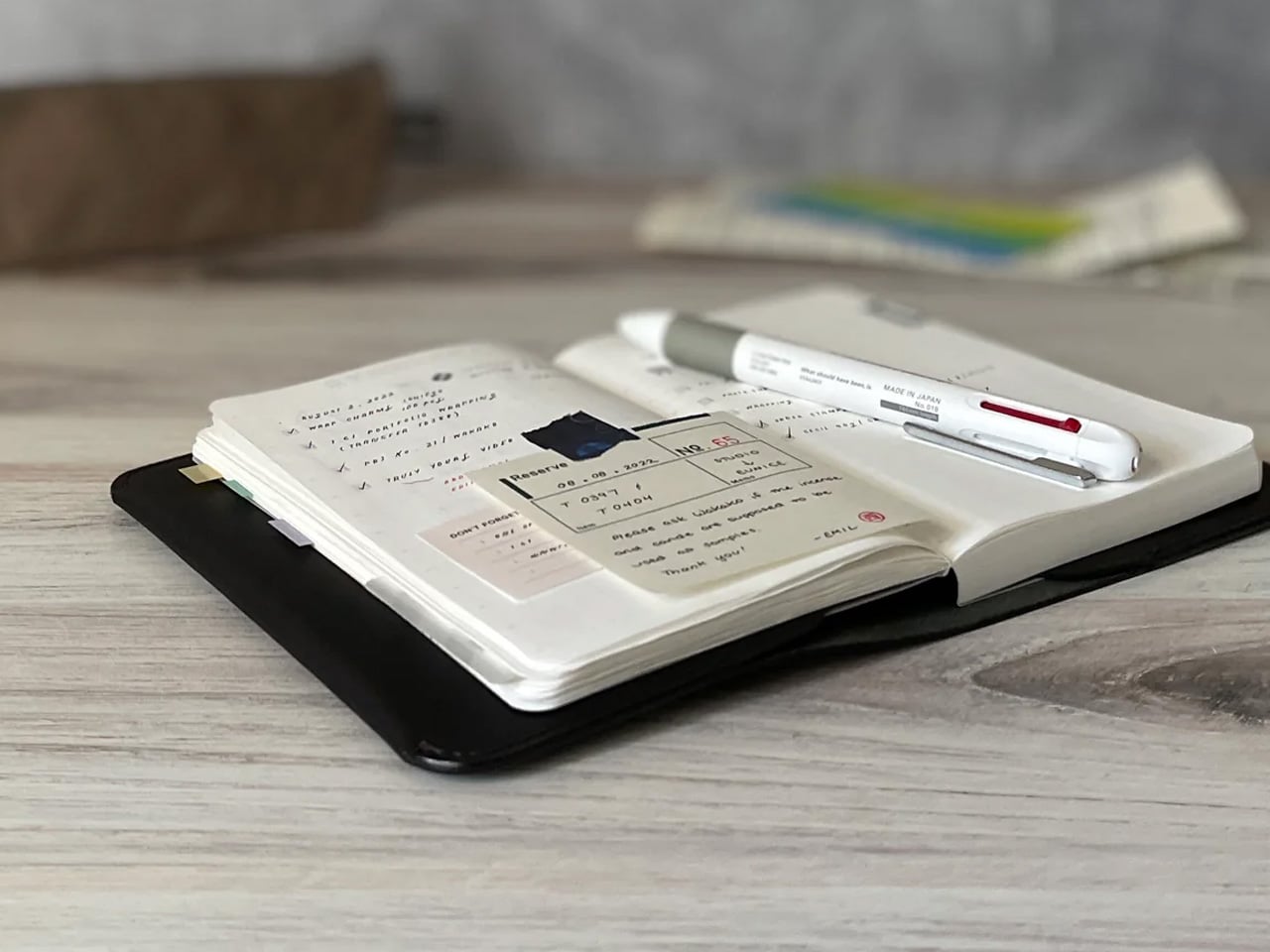
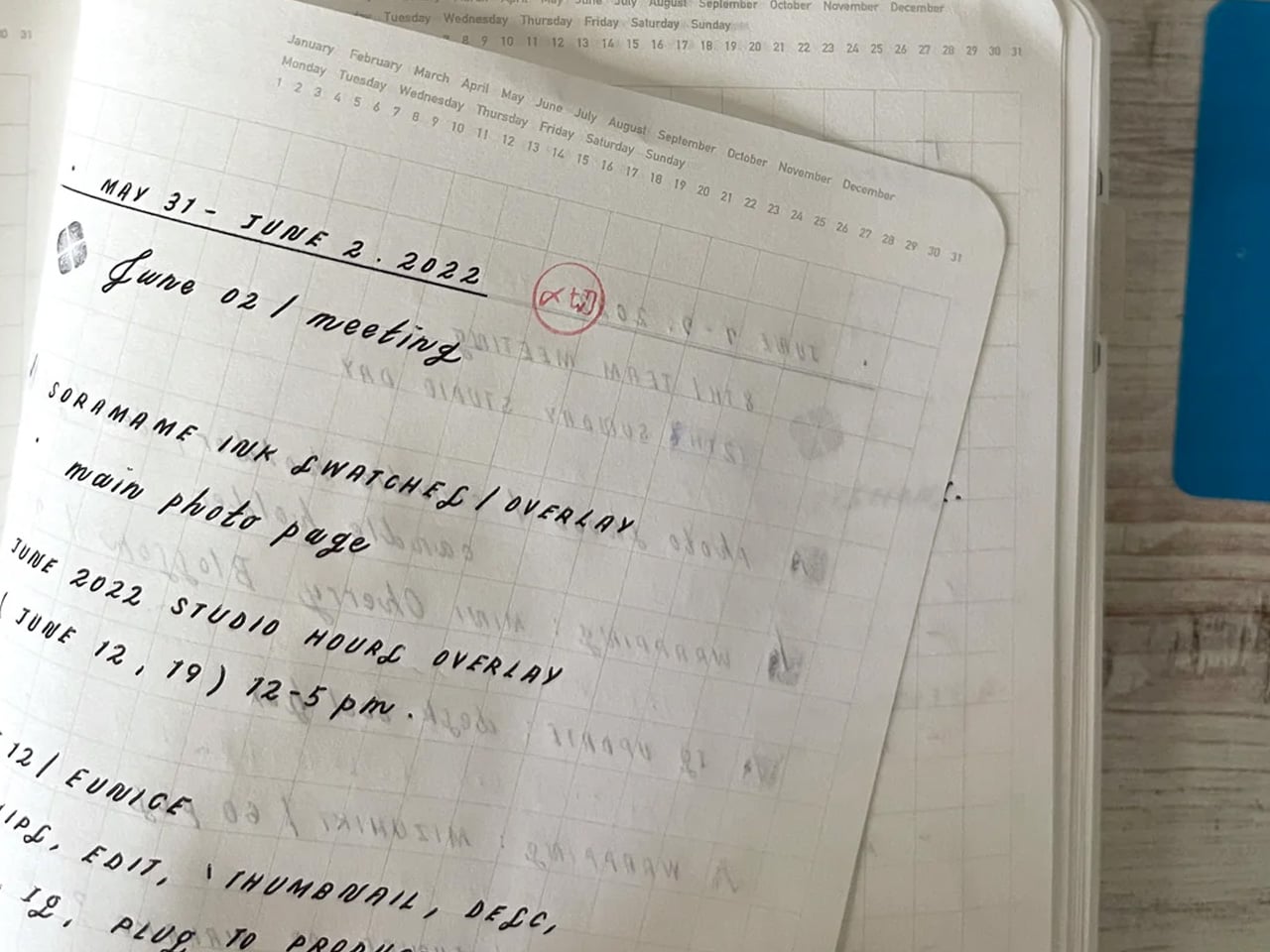
The Stalogy Editor’s Series 365 Days Notebook carries no branding on its exterior. That is a design decision, not an economy. Inside, 368 pages of cream-toned dot grid paper sit light enough that the notebook never feels precious, yet substantial enough to hold a full year of daily writing without any sense of running out. At A6, it fits a coat pocket without folding. The dot grid recedes under handwriting without disappearing, present enough to keep lines honest across a full page of notes.
Nothing about the Stalogy insists on a particular way of working. There are no monthly spreads pre-printed inside, no prompts in the margins, no year assigned to the cover before you open it. Bullet journaling, daily planning, freeform writing, and quick sketches all sit comfortably within its pages without any of those uses feeling like a compromise. Most stationery at this level quietly pushes a method. The Stalogy provides the space and steps aside, which turns out to be the more useful and respectful approach any notebook can take toward the person using it.
What we like
- The bare cover carries no visual identity, making it entirely the user’s object from the moment it is opened rather than the manufacturer’s
- 368 pages at A6 gives a full year of writing without adding meaningful bulk to a coat pocket or daily carry
What we dislike
- Date and time markings are printed at a small scale, making them difficult to read in low light or at a glance during a busy session
- Heavier fountain pen inks will ghost through the thin paper, which limits compatibility for dedicated nib users
The Right Objects Make Coming Back Feel Like a Choice
There is a version of returning to a desk in late August that feels like a small defeat. The difference between that version and the other one is almost always the objects on the desk. When the scissors cut cleanly and feel right in the hand, when the stapler is always ready without refills to think about, when the notebook asks nothing beyond showing up, the desk becomes a different kind of place. The tools stop being obstacles and start being part of the reason to sit down.
These three earn their place not because they are impressive to look at but because they are right to use. The Stellar Edge Scissors bring precision to a category most people never think to question. The PaperLock removes a material from a process that never needed it. The Stalogy removes every obstacle between writing and the page. None of them asks for your attention. That absence of noise is the design principle Japan has been working toward for the better part of a century, and it is why coming back to the desk in September can feel entirely different from the September before.