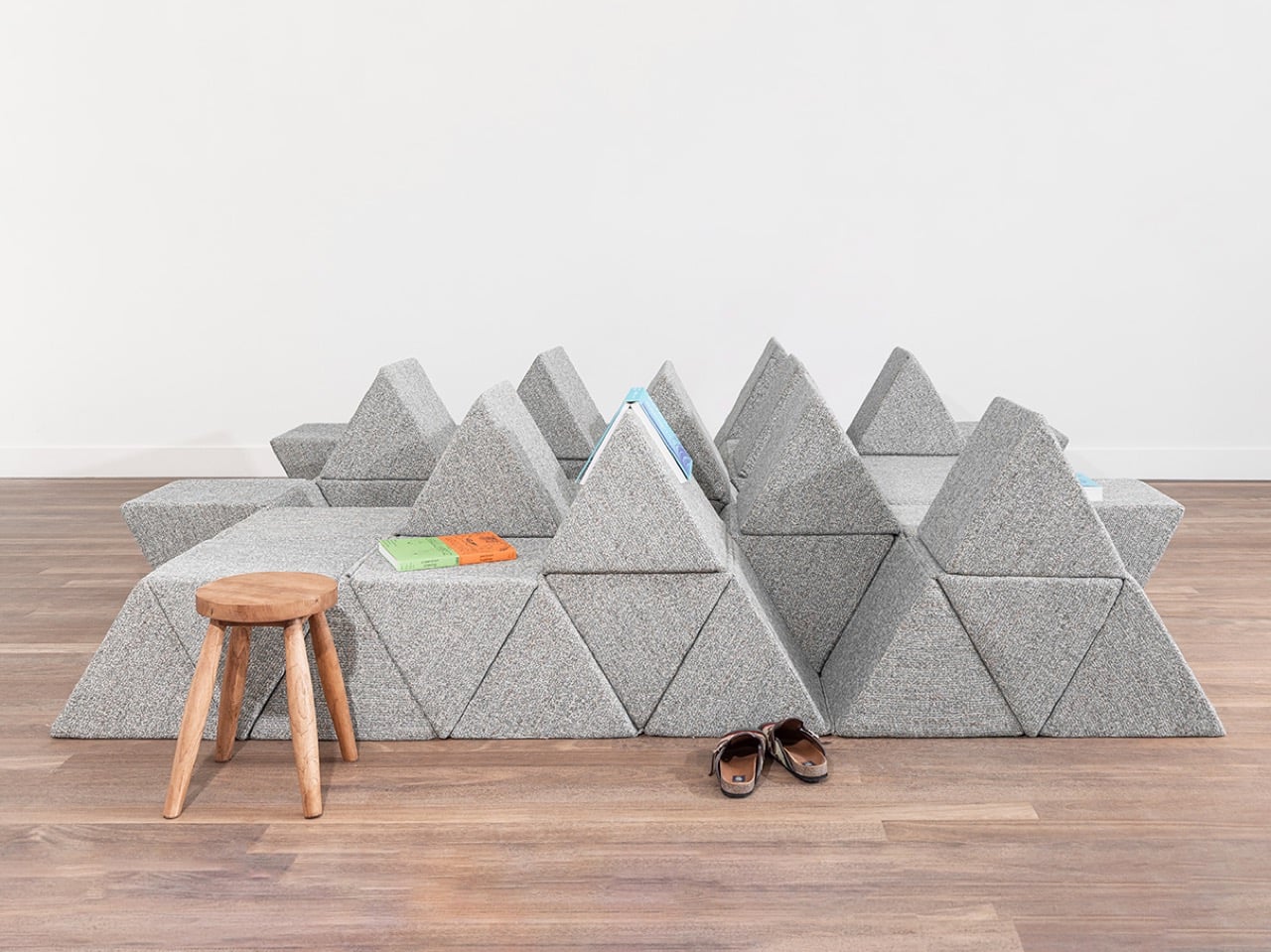

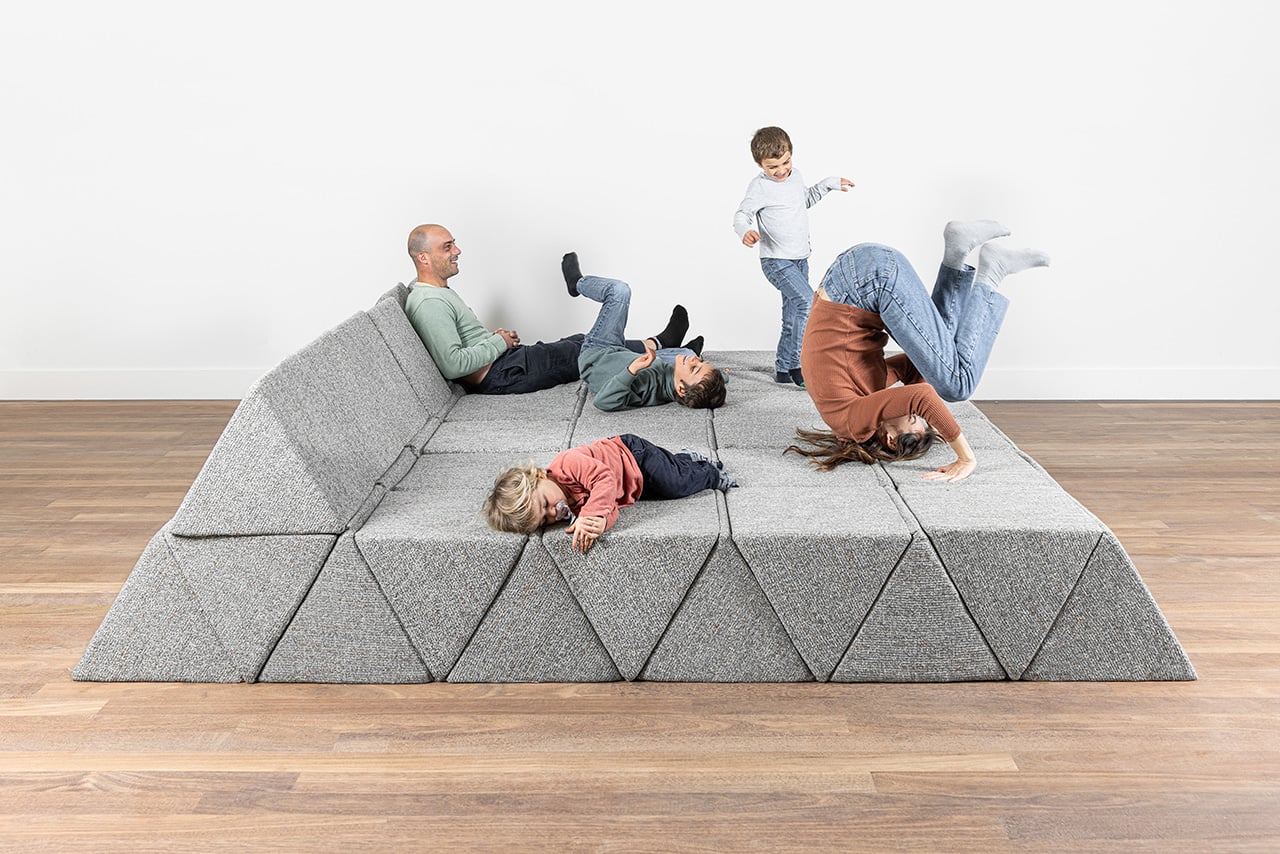
Every designer had a pandemic project. Most people learned sourdough. Yves Béhar built a sofa made of foam triangles so his family would stop scattering to separate corners of the house. The result is Peaks, a sofa for Moooi that looks less like furniture and more like a soft mountain range someone dragged into your living room. Nine or so triangular wedges flip up, fold down, rotate, and reshuffle into whatever your day needs. Movie night, it becomes stadium seating. Board game with the kids, it turns into a pit you can disappear into.
Béhar grew up near the Swiss Alps, so when he needed a name for his shapeshifting foam sofa, Peaks was sitting right there waiting. Marcel Wanders at Moooi reportedly wanted to call it Toblerone instead, which honestly would have worked too, but trademark lawyers have never met a good bit they didn’t ruin. Béhar made six of these for friends before Moooi’s Marcel Wanders looked at it and said, “Let’s ship it.”
Designer: Yves Behar for Moooi
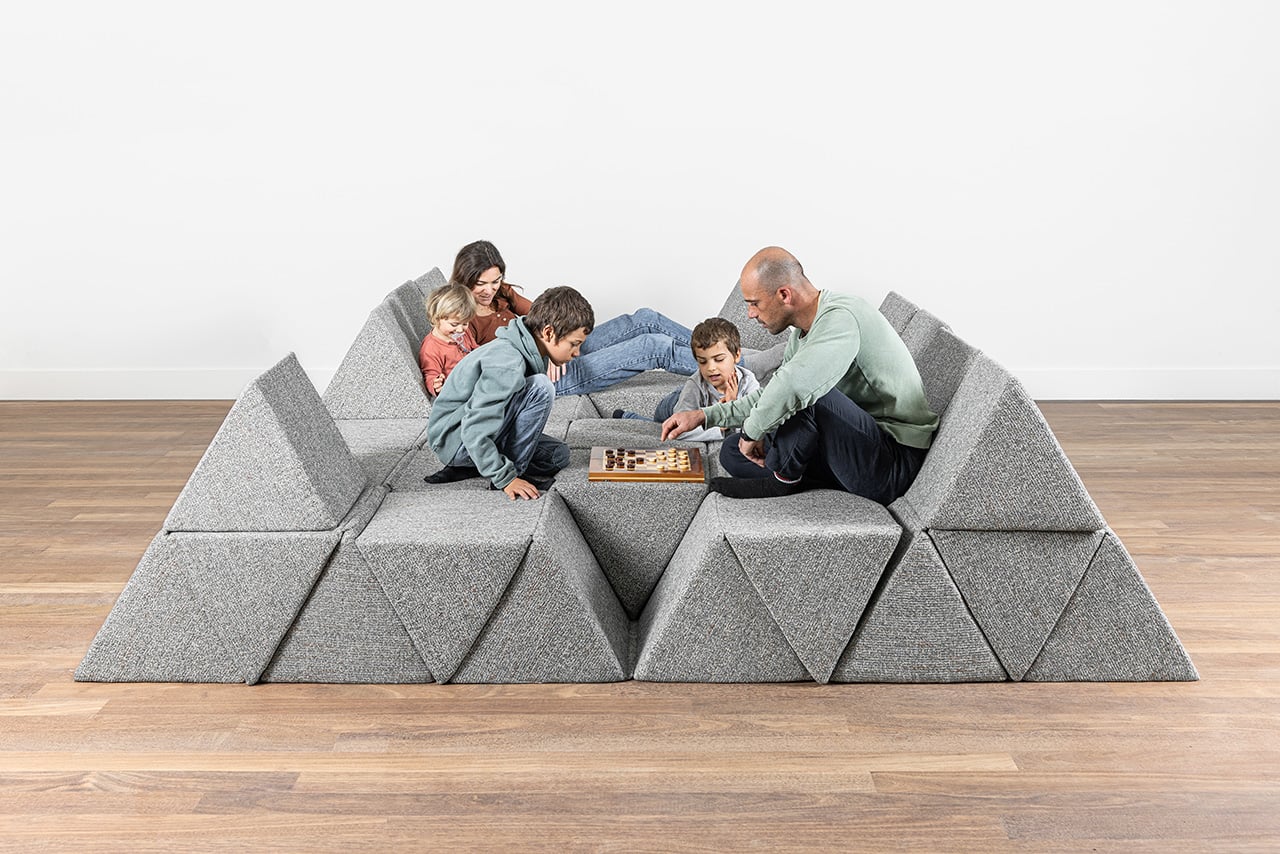

Each wedge is dual-density, which keeps the structure firm enough to hold its shape while still giving comfort where your body actually lands. Concealed zippers and fabric hinges hold the whole system together, and the modules rotate freely into backrests, armrests, or flat platforms without needing a single tool or a single loose part rattling around. That last bit matters more than it sounds. Most modular furniture eventually loses a screw or a connector piece under the couch, never to be seen again. Peaks just doesn’t have those parts to lose.
Moooi debuted a Peaks prototype at Milan back in 2024, then let it sit for two years before Peaks made its official launch at IDS Toronto in January 2026. The commercial version arrived a few months later as part of Moooi’s 25th anniversary programming at Milan Design Week, officially reinterpreting the sofa as a sculptural, reconfigurable landscape rather than a fixed object. The standard indoor Lounge Sofa runs 82 by 120 by 196 centimeters with a 41 centimeter seat height, priced at $7,208, available in charcoal, grey, sand, or white. There’s an outdoor version too, built for the same reconfiguring in weatherproof fabric, because apparently your patio deserves a mountain range as well.
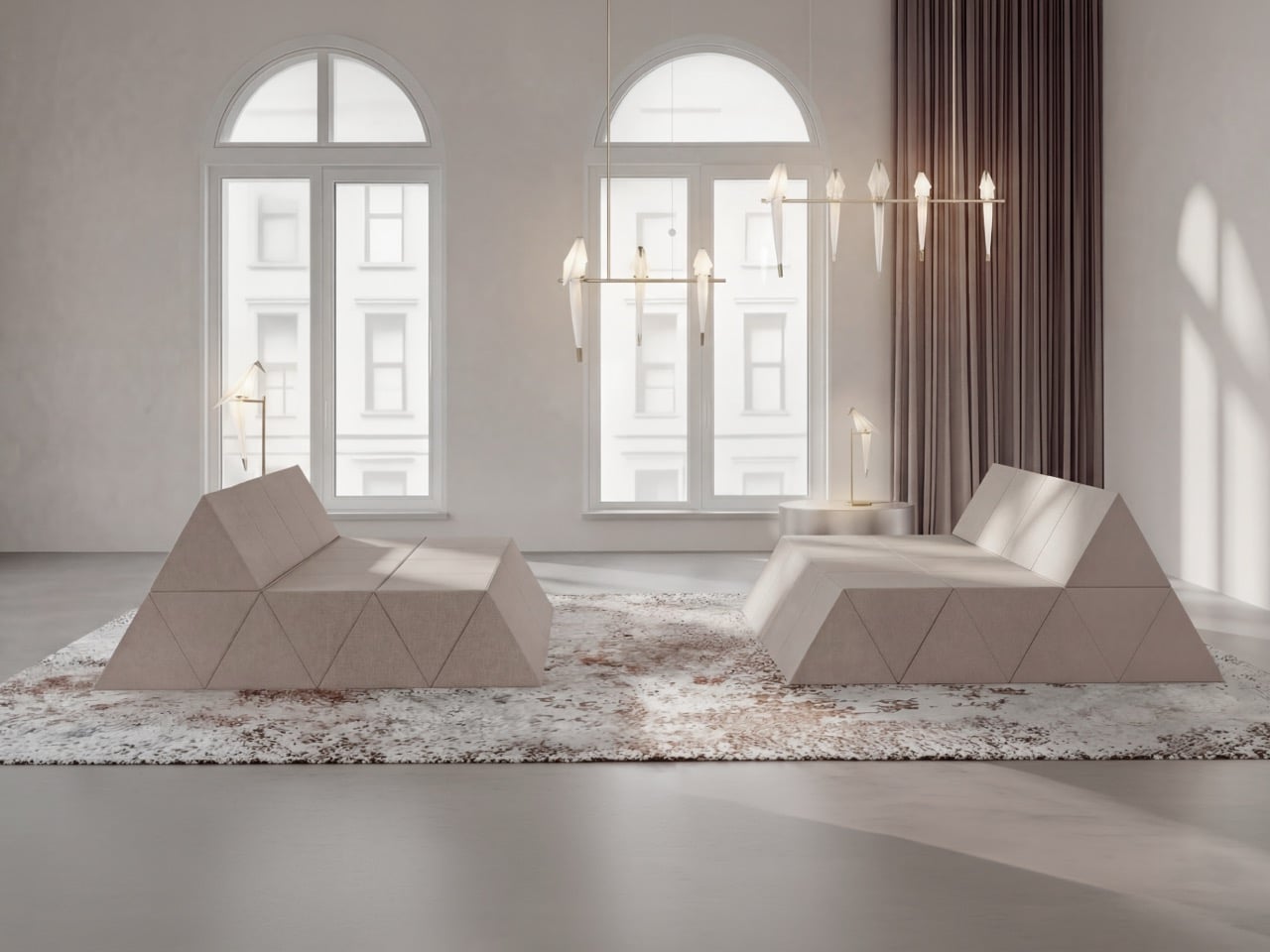

None of this is happening in a vacuum. Béhar has owned a De Sede Ubald Klug Terrazza and a Luigi Colani Pool sofa for two decades, both conversation-pit classics from an era when furniture was allowed to be a little unhinged. Peaks is Béhar reimagining that same territory, the “living landscape” experiments Verner Panton and Pierre Paulin were running in the late 20th century, except built to actually survive a modern living room. It’s a good lineage to claim. Conversation pits died out because they were expensive, permanent, and impossible to reconfigure once your life changed. Peaks solves exactly that problem by being the opposite of permanent.
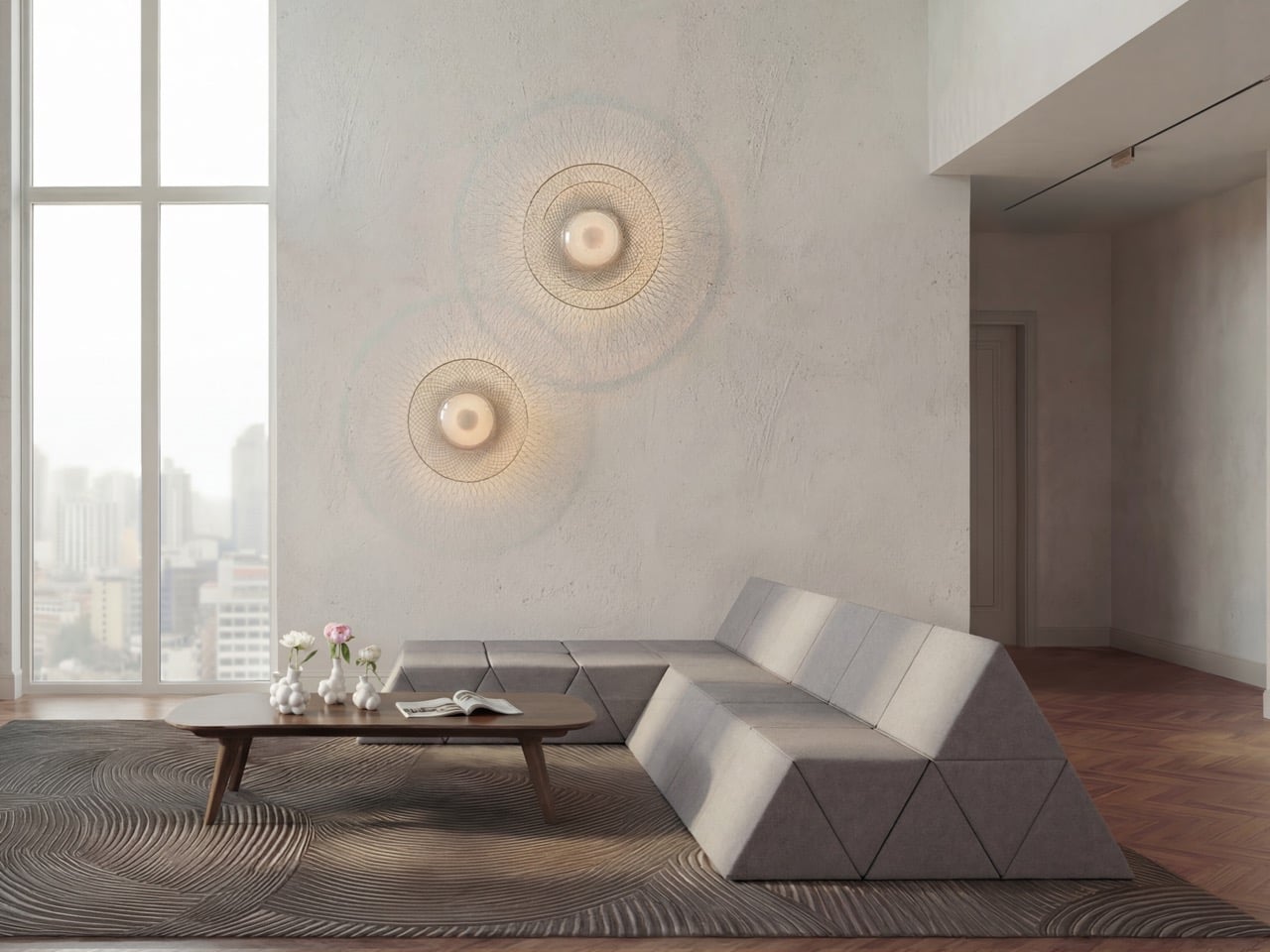
Béhar has also started pitching Peaks as office furniture, which sounds like a stretch until you hear his logic. He compares it to placing candy within arm’s reach on a desk versus a foot away, arguing that casual social furniture only works if it’s genuinely convenient, not something people have to book like a conference room. He’s already specifying Peaks into three of his own Canopy coworking projects, including spaces at the Presidio, the Embarcadero, and Stanford. Whether Peaks actually replaces the awkward hallway meeting remains to be seen, but it’s a more honest attempt than most “collaborative office furniture” gets.
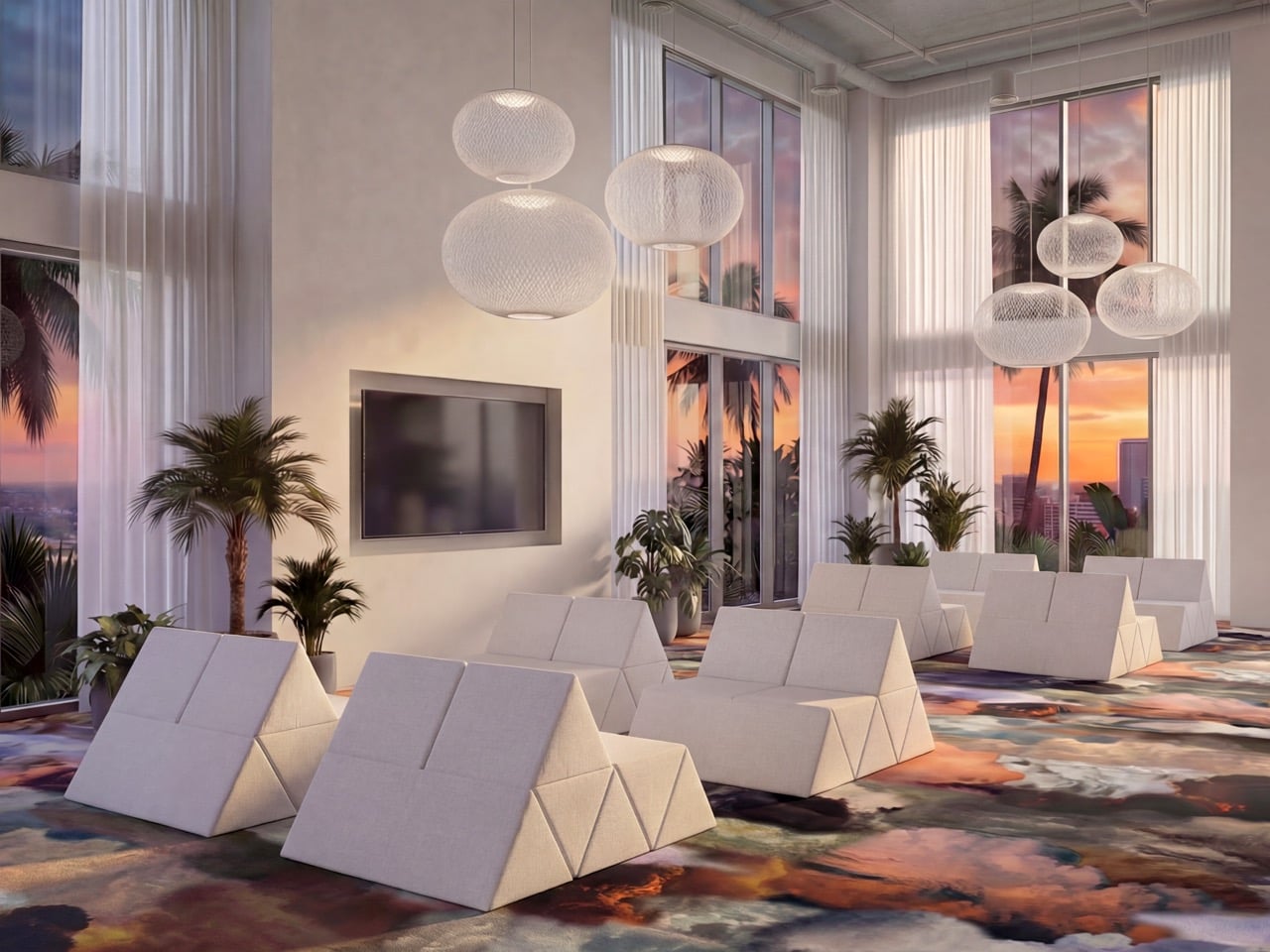
Peaks is also angling for a bigger spaces than the living room and office. Moooi and Coalesse are already talking about it in universities, hospitals, and public spaces, on top of the coworking pitch Béhar’s been making. That’s a wide range for something that started as one guy trying to keep his kids off their phones during lockdown, but it tracks. A sofa that refuses to stay one shape is exactly the kind of object that finds new jobs nobody planned for it. Béhar built Peaks to solve a problem in his own house. Whether it ends up in a hospital waiting room or your neighbor’s living room, the pitch stays the same: stop building furniture that locks people into one position, and watch what they do with the freedom.