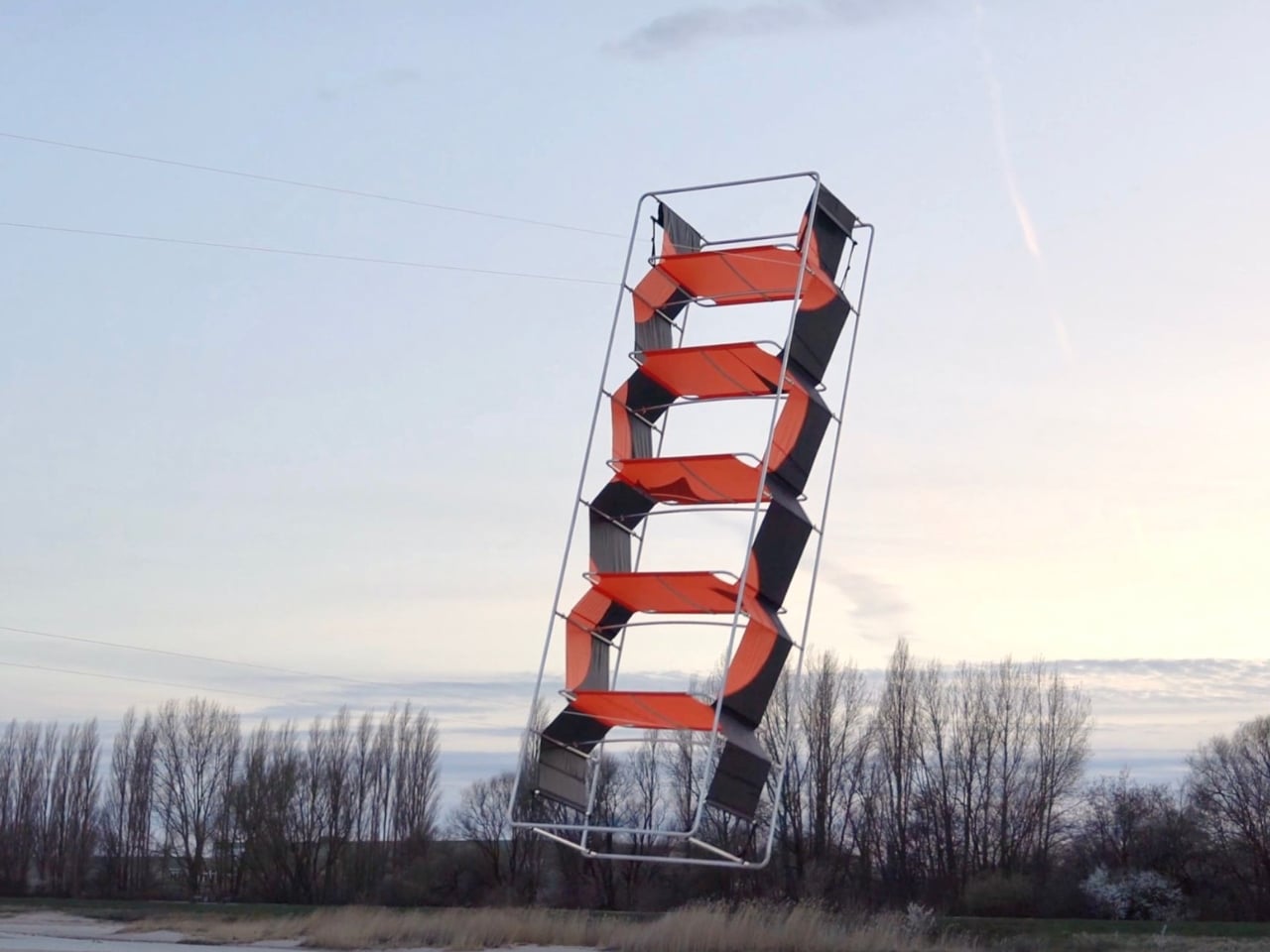

The first image that stops you is the outdoor shot: a tall shelving unit suspended in open sky, hovering above a treeline, trailing a thin string back to the ground like the most unexpected kite you’ve ever seen. The frame catches the light. The fabric panels billow slightly. It looks completely ridiculous and completely beautiful at the same time. That’s Aerodomestics, a furniture collection by Valerio Sampognaro, a student at HFBK Hamburg, and a finalist in the 2026 Rimowa Design Prize. The concept is straightforward and quietly radical: what if furniture was built the way kites are built?
Look at the pieces closely and the logic becomes visible. The frame is thin aluminum tubing, bent into clean rectangular forms and rounded at the corners, the kind of minimal structural skeleton that prioritizes weight savings above everything else. It’s not trying to disappear, but it’s not trying to dominate either. The tubing holds its shape without bulk, which is exactly what a good kite spine does.
Designer: Valerio Sampognaro
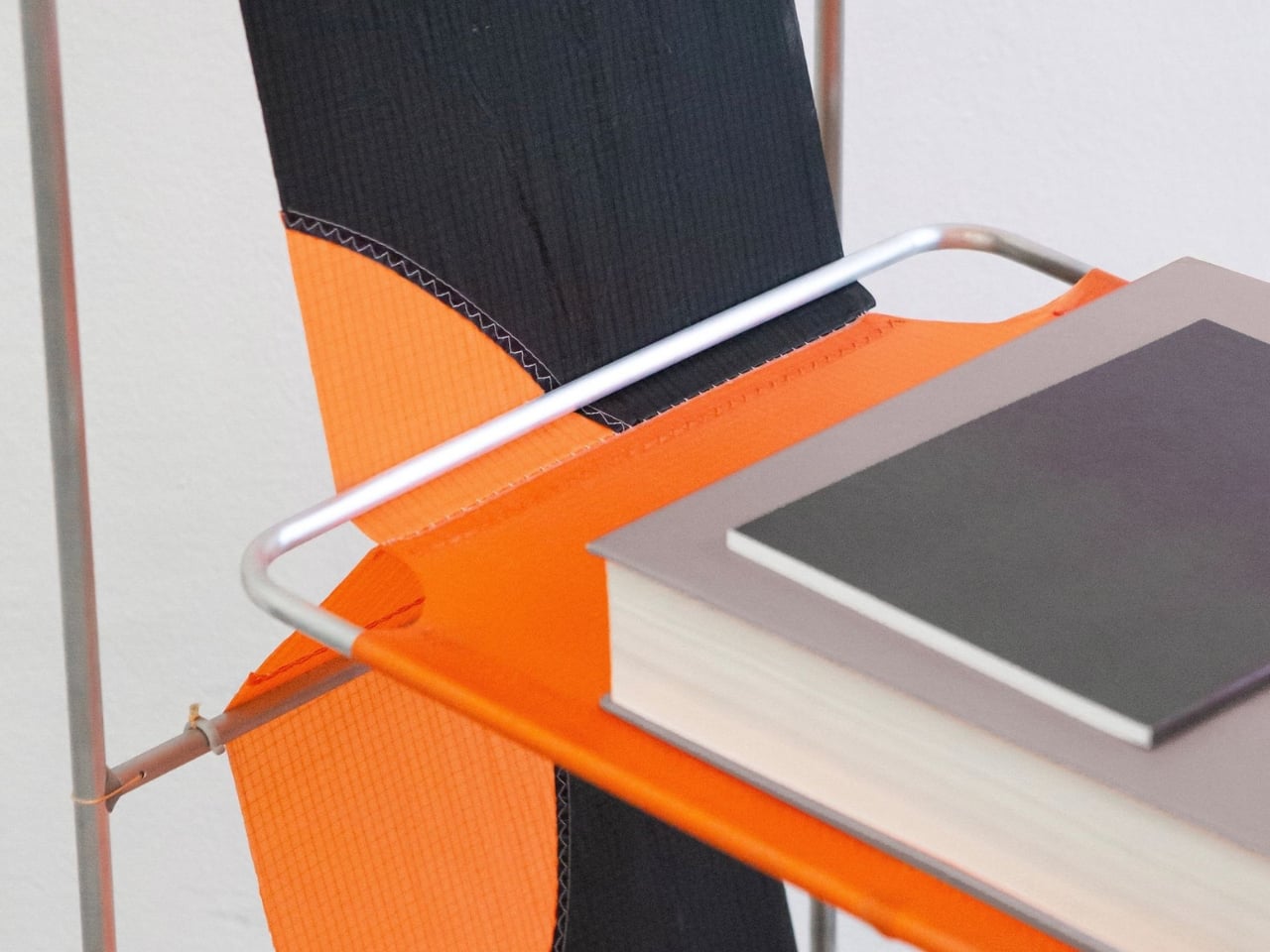
The shelves themselves are where it gets interesting. Rather than wood, glass, or metal panels, Sampognaro used ripstop fabric in bold, flat colors: sky blue, vivid orange, deep charcoal. The fabric is tensioned diagonally between shelf levels, crossing in a zigzag pattern that mirrors how kite sail panels are cut and stitched to distribute load across the frame. Up close, you can see the actual stitching along the fabric edges, neat and deliberate, the same hand of craft you’d find in a proper kite workshop. The shelves are functional. There’s a photograph of a hardcover book sitting cleanly on one of the orange panels, held in place by tension and the slight curve of the material.
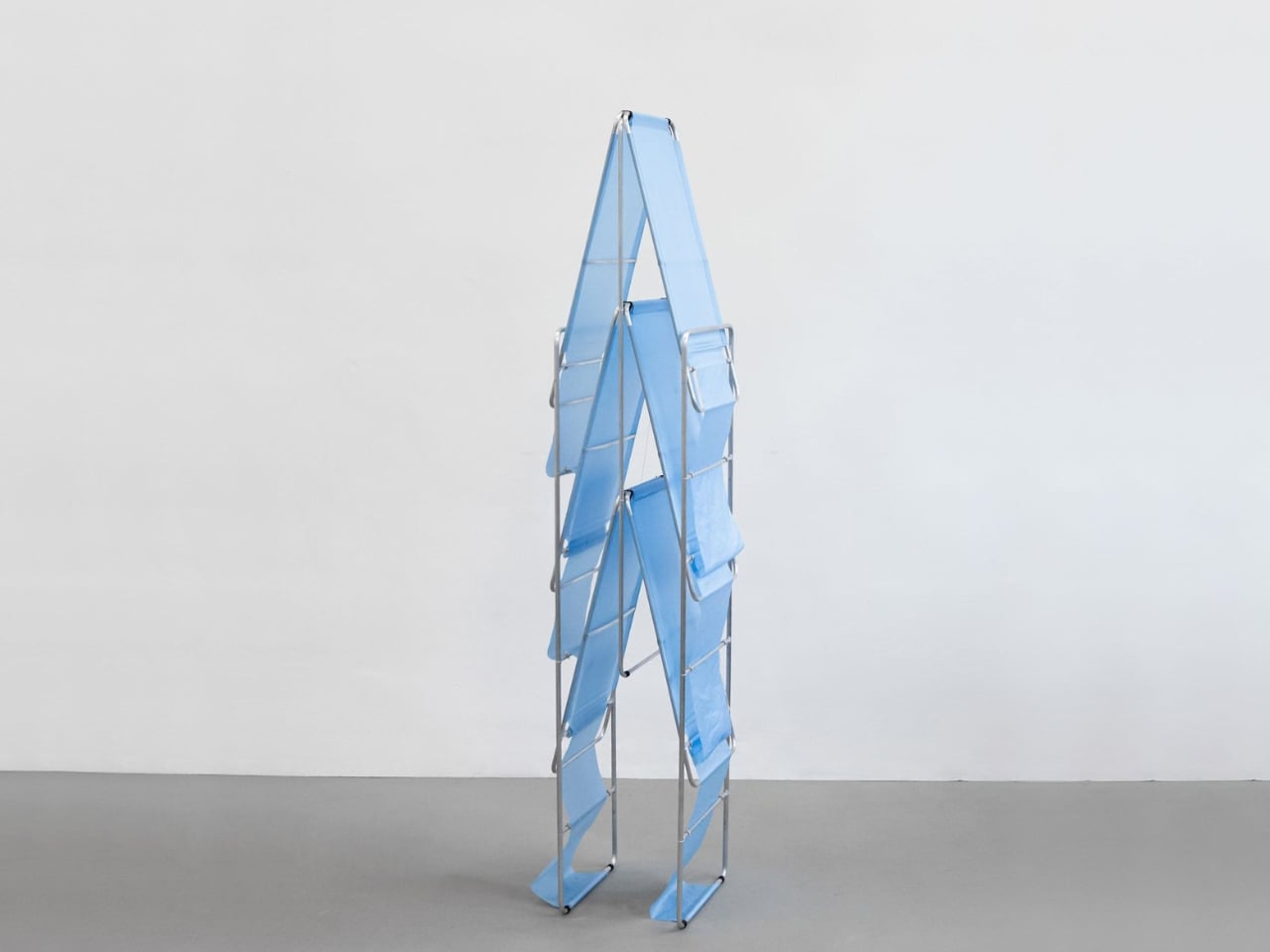
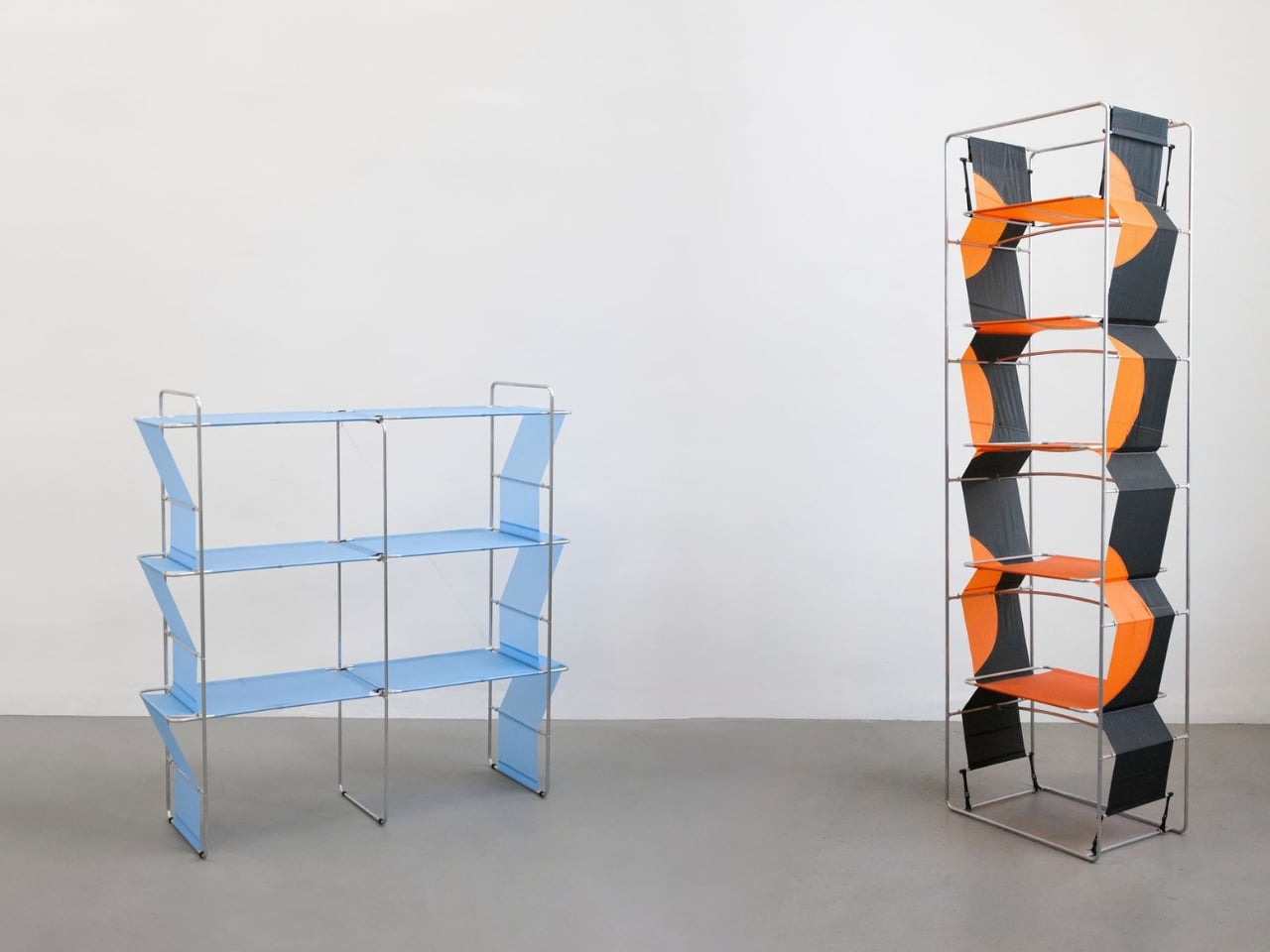
The result, visually, is furniture that looks like it’s already in motion. The diagonal fabric panels create a sense of dynamic energy even when the piece is standing still in a white studio. The tall orange-and-black unit has an almost aggressive graphic quality, the two colors alternating in a chevron rhythm up the full height of the structure. The blue units are softer, more architectural, especially the tall single piece with its A-frame top that tapers to a point like a sail catching wind upward. Indoors, against a neutral wall, these pieces read as sculpture. Outside, with actual wind in the fabric, they become something else entirely.
Portability is part of the design in a way that feels genuinely considered rather than incidental. One photograph shows a person carrying a full-sized unit flat under one arm, the whole thing folded down to roughly the size of a stretched canvas. The aluminum frame collapses, the fabric folds with it, and the entire piece becomes something you could reasonably carry on public transit. That’s not a small thing. Most shelving requires two people, a car, and a level of commitment to a specific wall in a specific apartment. Aerodomestics asks for none of that.
Sampognaro has said that the project is about having a lighter relationship with objects, about not being so dependent on them. You can feel that philosophy in every material decision. Nothing is heavier than it needs to be. The color choices are bold enough to make a statement without requiring permanence. The fabric can presumably be replaced or recolored. The frame is the kind of thing that could last indefinitely or be disassembled in ten minutes.
What makes Aerodomestics stick with you isn’t just the image of a bookshelf in flight, as memorable as that is. It’s the realization that the whole collection follows through on its own premise completely. Every joint, every fabric panel, every color choice points back to the same idea: that a shelf can hold your things without weighing you down. That’s a harder design problem than it looks, and Sampognaro solved it by looking somewhere no one thought to look.

