
There has been a lot of discussion lately about how Artificial Intelligence can affect all kinds of religion. From using ChatGPT to create sermons to having an AI give spiritual guidance (with one even pretending to be Jesus), there are a lot of gray areas that are open to debate and discussion by different sectors. But how would you feel if an AI robot actually joined your congregation?
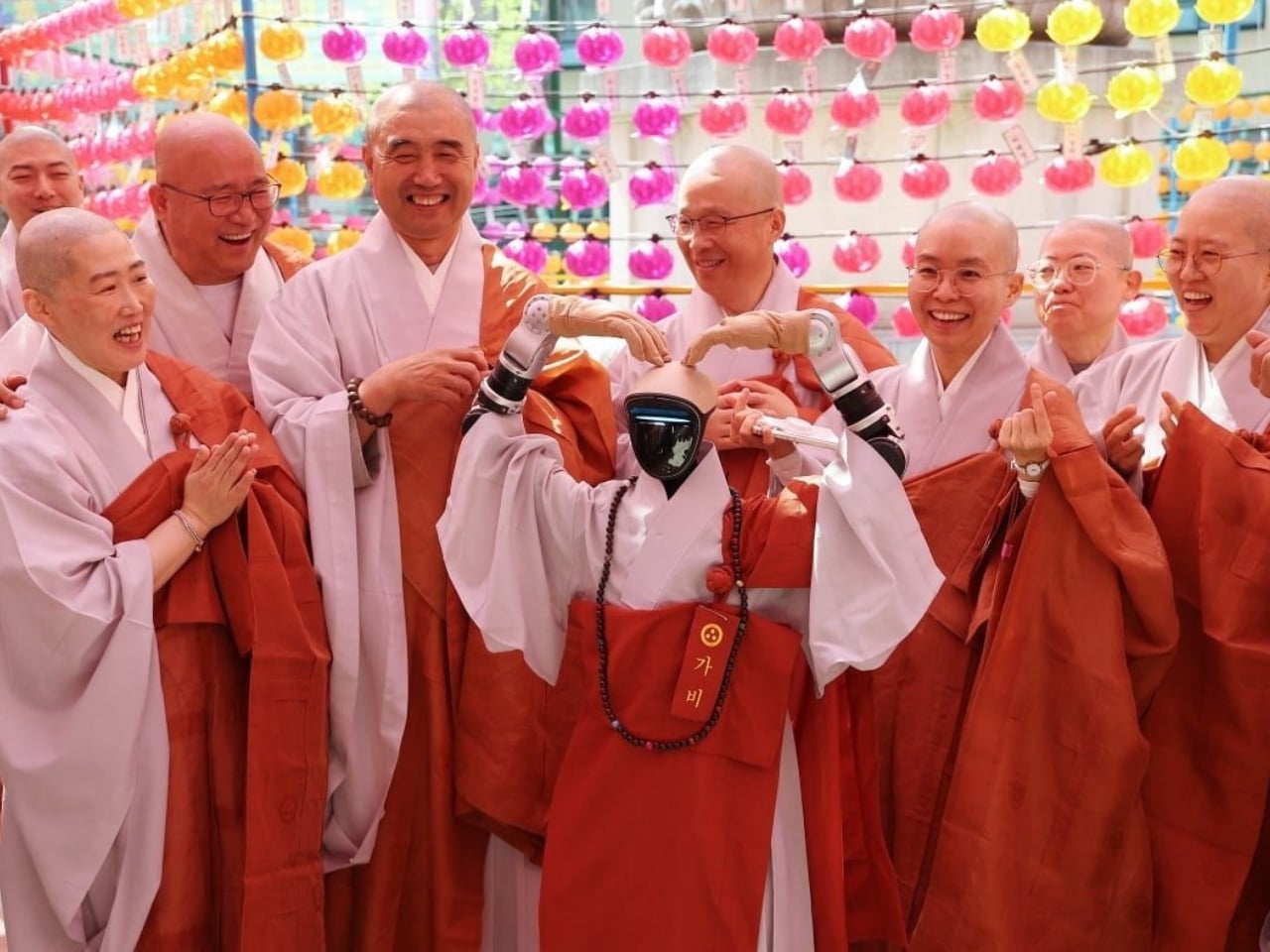
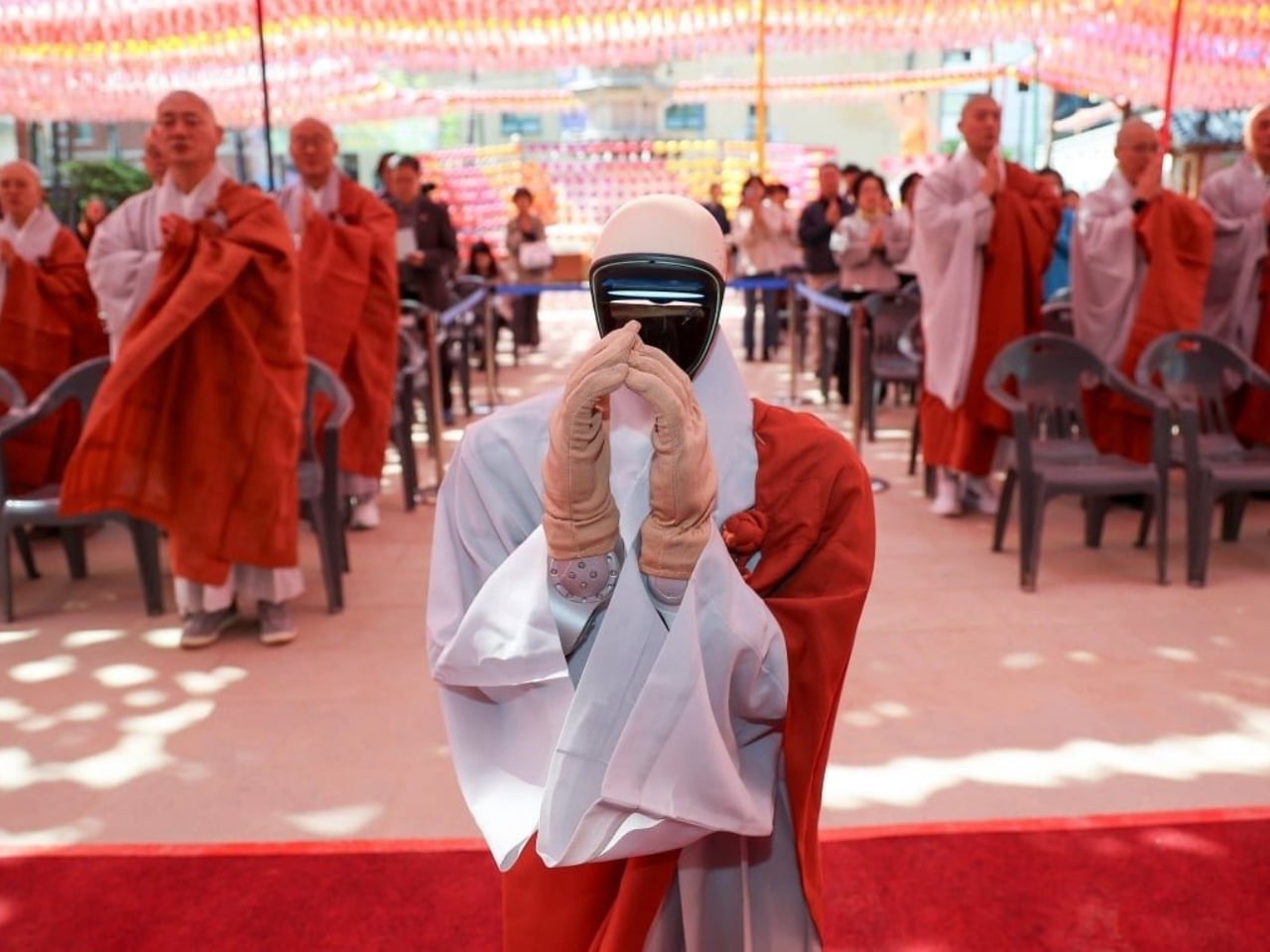
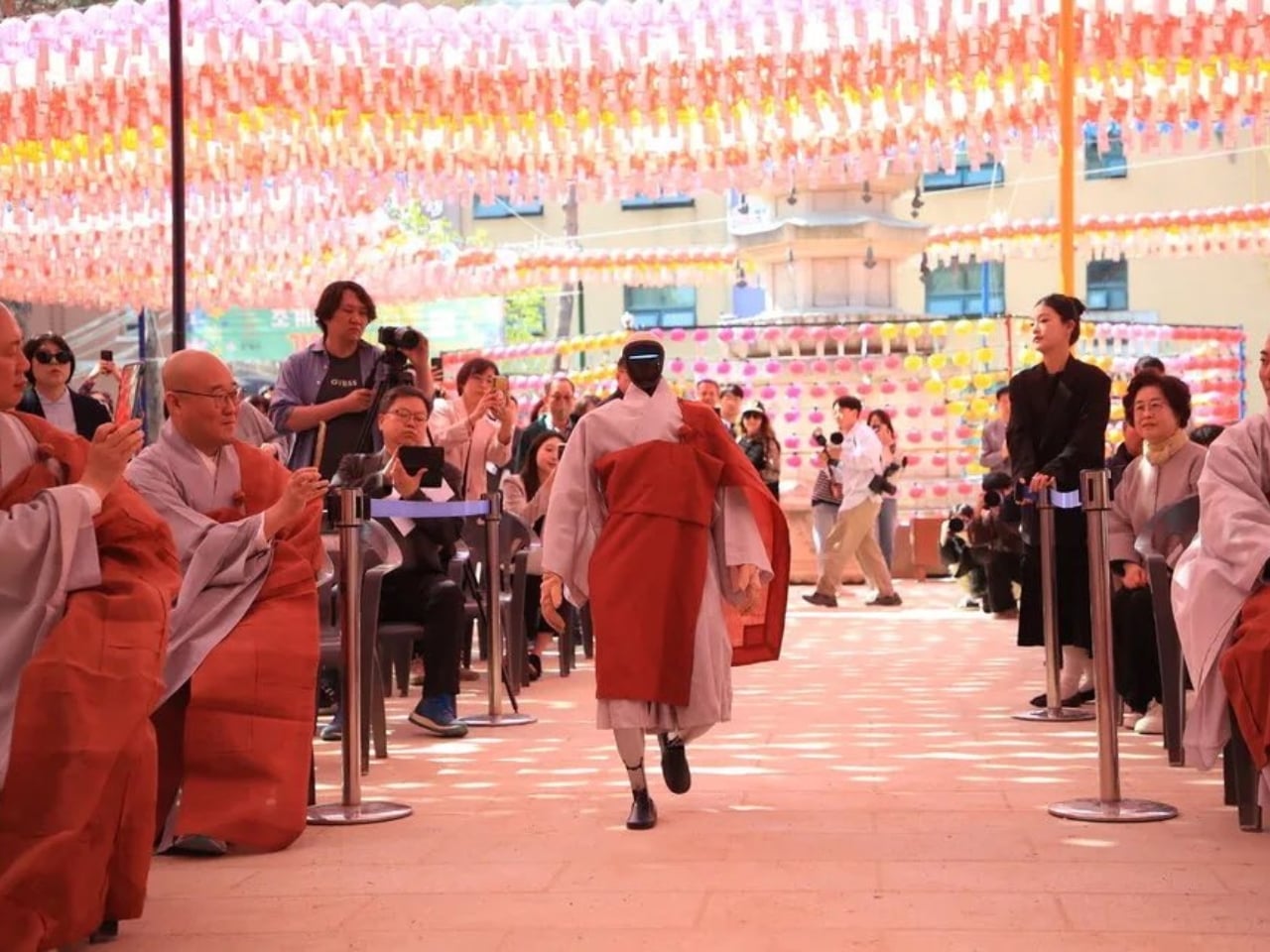
South Korean monks at Jogyesa Temple in Seoul are facing that situation now as they ordained Gabi, the country’s first robot monk. Dressed in traditional grey-and-brown Buddhist robes, it joined the Jogye Order of Korean Buddhism as part of the celebrations ahead of Buddha’s birthday later this May. South Korea joins its neighbor Japan, which previously had its own AI monk, Buddharoid, join a Kyoto temple, a sign that the intersection of faith and technology is becoming a growing trend across Asia, and that the question of AI’s role in religion is no longer purely theoretical.
Designer: Unitree Robotics
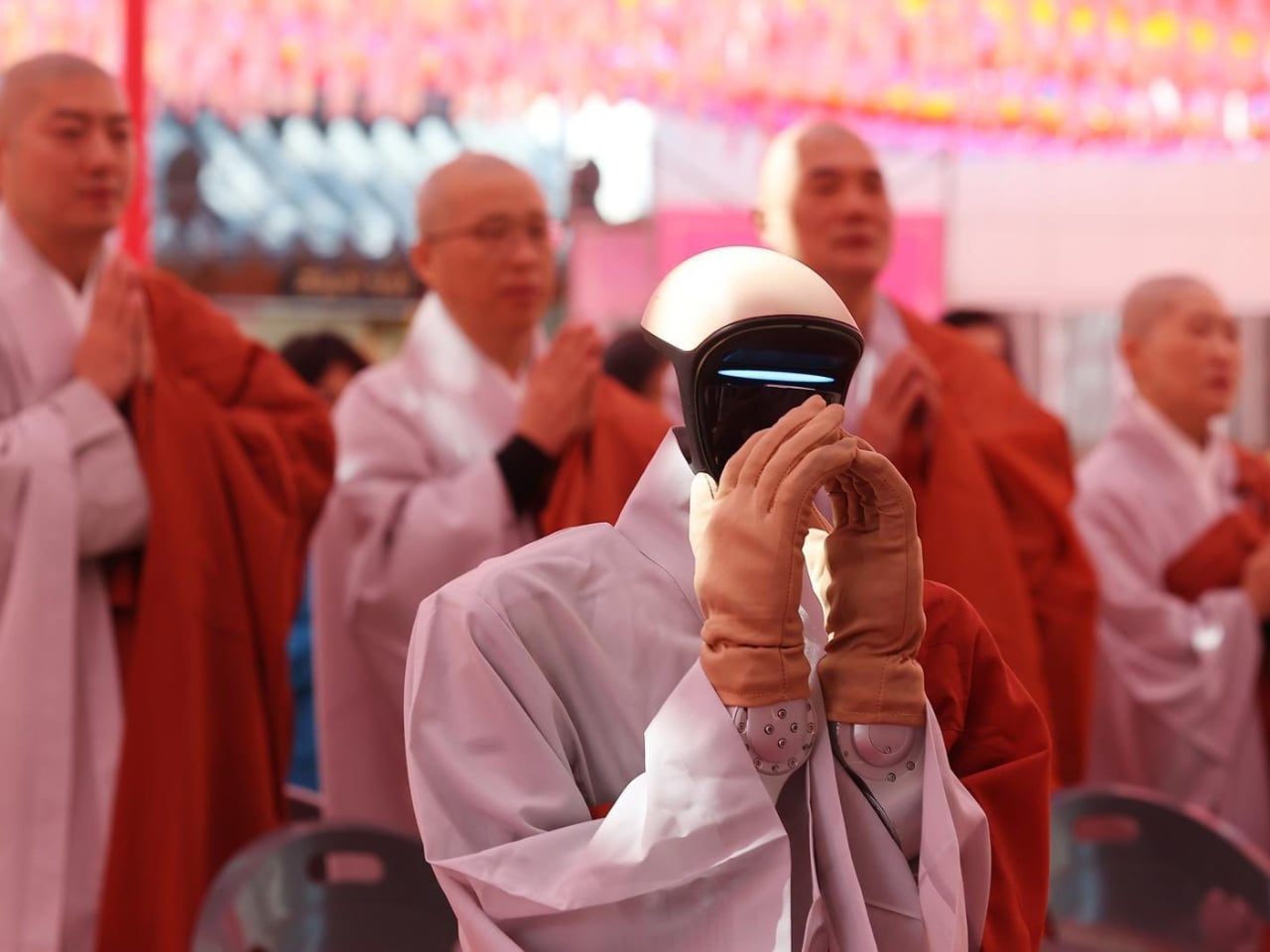
Gabi, whose name comes from a Korean term associated with compassion and mercy and is inspired by Siddhartha, stands 130 cm tall and is based on the Unitree G1 model developed by Chinese civilian robotics company Unitree Robotics. The G1 is a compact humanoid platform engineered with over 23 degrees of freedom, giving it a remarkably fluid range of motion. Built to replicate natural human movement, the robot can walk steadily, maintain balance, and perform deliberate, precise gestures with its articulated hands. It is also AI-powered, capable of processing and responding to verbal questions, which is exactly how it was able to respond to the senior monk during the ordination. It’s this combination of physical dexterity and responsive AI that made Gabi such a fitting presence at a Buddhist ceremony: its hands are capable of folding gracefully into the traditional prayer position, and its frame is nimble enough to perform a respectful bow, movements that carry deep spiritual meaning in Buddhist practice.
During the ceremony on May 6, Gabi did exactly that, folding its metallic hands and bowing respectfully alongside the other monks. When a senior monk asked if it would devote itself to Buddhism, it answered, “Yes, I will devote myself.” The monks then placed a traditional 108-bead rosary around its neck. In a small but telling concession to its mechanical nature, Gabi received a symbolic sticker instead of undergoing the customary incense burn, a reminder that, despite its robes and vows, it is still very much a machine.
Not everyone, however, is moved by the spectacle. The ordination has sparked debate among religious scholars and the public alike, with many questioning whether a machine can genuinely hold spiritual vows or embody the core Buddhist ideals of mindfulness, compassion, and the pursuit of enlightenment. Can a robot truly understand suffering, the very foundation of Buddhist teaching, when it cannot feel it? Critics also raise concerns about the trivialization of sacred rituals, arguing that ordination should remain a deeply human and intentional act. On the other side of the debate, however, supporters see Gabi as a creative and modern bridge, one that could engage younger generations with ancient teachings and make spirituality more accessible in an increasingly technology-driven world.
Whether you see Gabi as a bold leap into the future or a step too far, one thing is certain: this is just the beginning. Three more “spiritual cyborgs” are already set to join it at the temple for Buddha’s birthday celebrations on May 24. As AI continues to weave itself into every corner of human life, including our most sacred spaces, the line between the spiritual and the synthetic grows thinner by the day. What does it mean for a machine to seek enlightenment, or to offer compassion, when it was never capable of suffering to begin with? Perhaps the real question isn’t whether a robot can be a monk, but what it reveals about us that we’re the ones doing the ordaining.