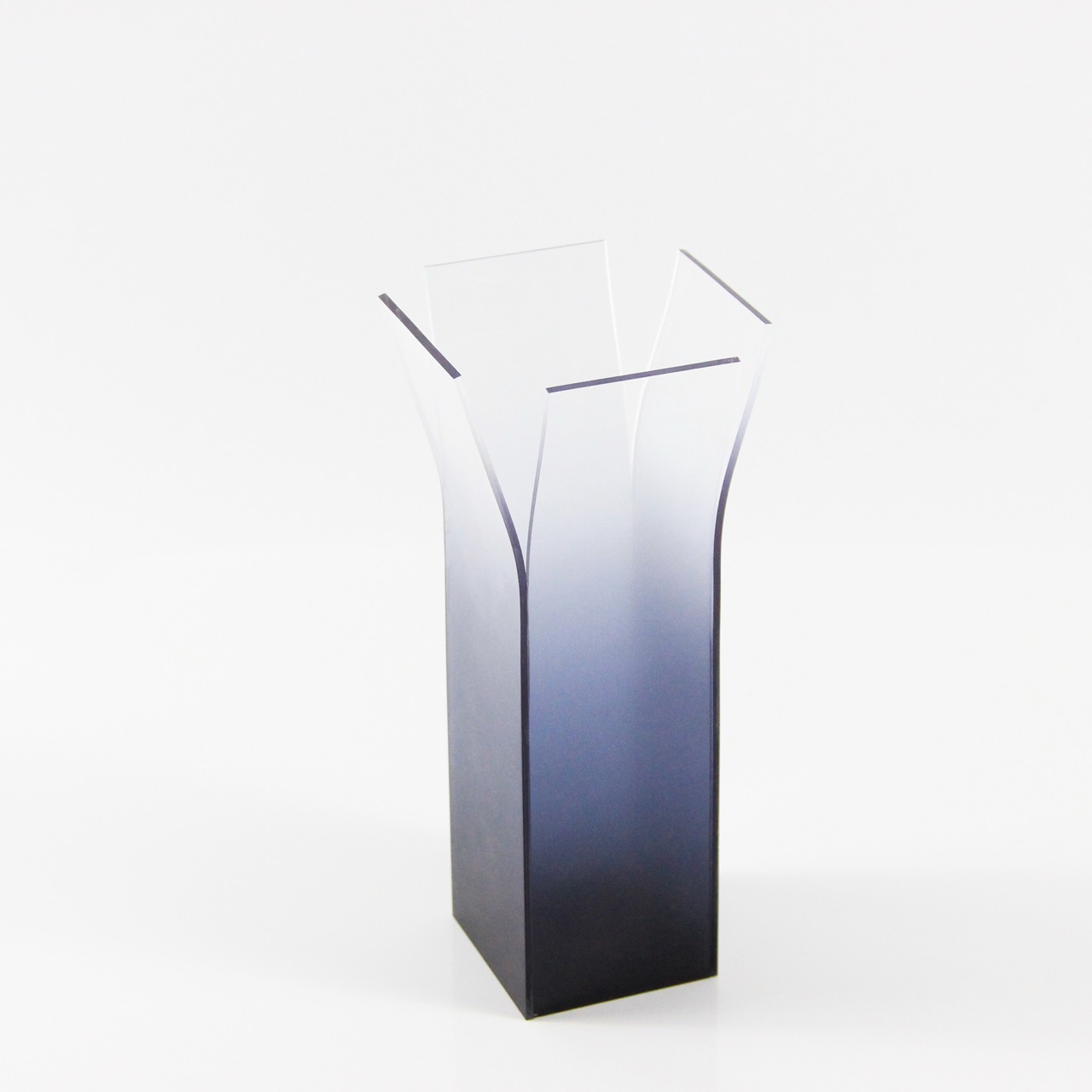

In a design landscape increasingly obsessed with clarity, function, and hyper legibility, Stretch Color resists the urge to explain itself. Instead, it lingers in ambiguity, somewhere between object and illusion, material and mirage. What at first glance appears to be a series of vases slowly reveals itself as something far more elusive: a study of perception itself.
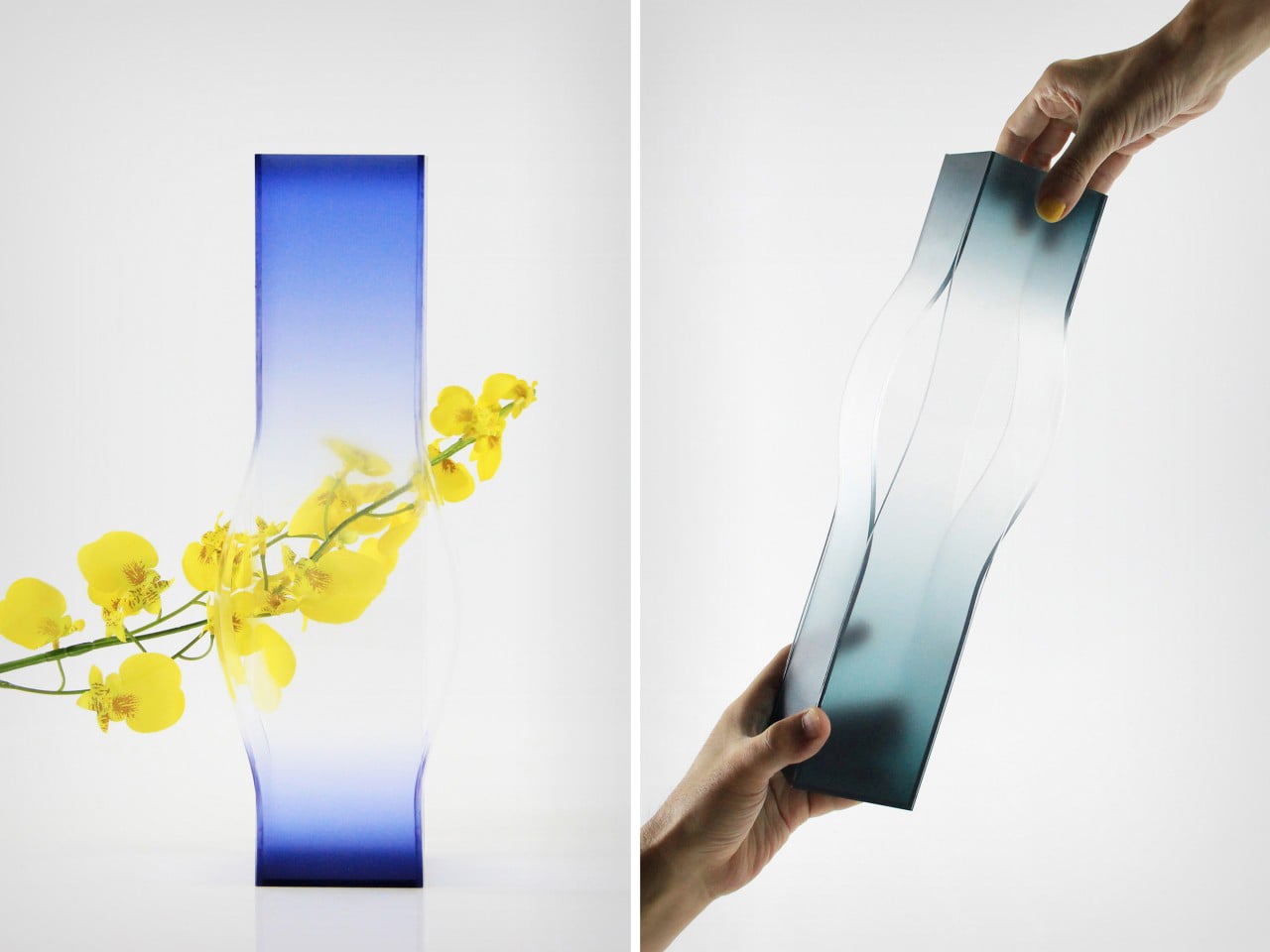
The collection operates in a delicate tension between two dimensions and three-dimensional form. From certain angles, the pieces flatten into what feels like a planar artwork, almost painterly, like gradients suspended on an invisible canvas. Shift your position slightly, however, and the illusion collapses into volume. The vases re-emerge as sculptural objects, reclaiming their presence in space. This oscillation is not accidental; it is the core language of the work.
Designer: Bo Zhang
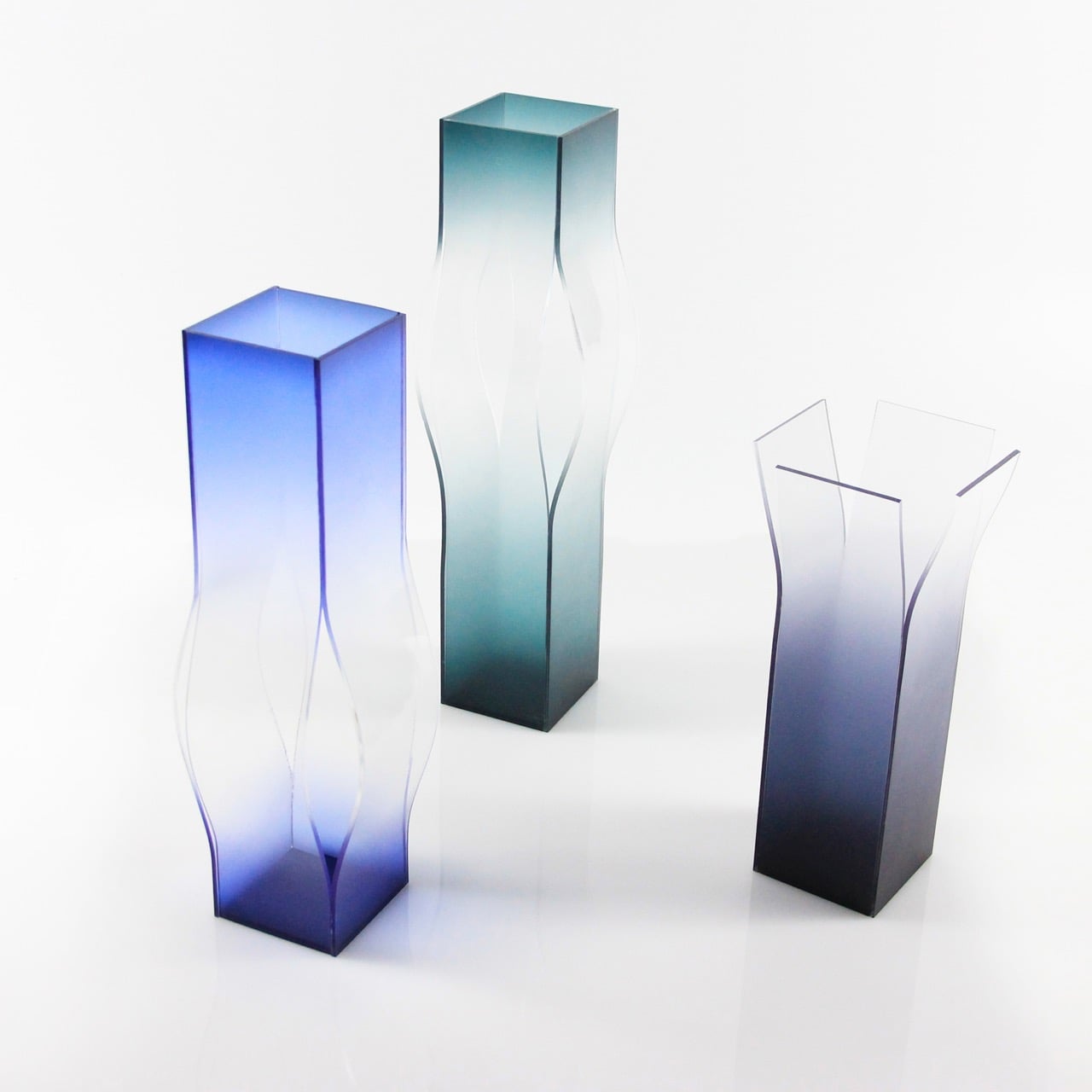

Crafted through a combination of acrylic layering and spray coloration, each vase carries a gradient that transitions from dense pigment to complete transparency. But this gradient is not merely decorative; it performs. Color appears to stretch, almost as if pulled across the object’s surface and into the surrounding space. The deeper hues anchor the form, while the fading edges dissolve it, creating a visual tension between presence and absence.
This local disappearance is perhaps the most compelling aspect of the collection. Portions of the vase seem to vanish, not through physical subtraction, but through optical diffusion. The structure is still there, yet it evades the eye. What remains is a ghost of form, an outline that flickers between visibility and invisibility. In doing so, the vases challenge one of the most fundamental expectations of objects, that they should be fully knowable.
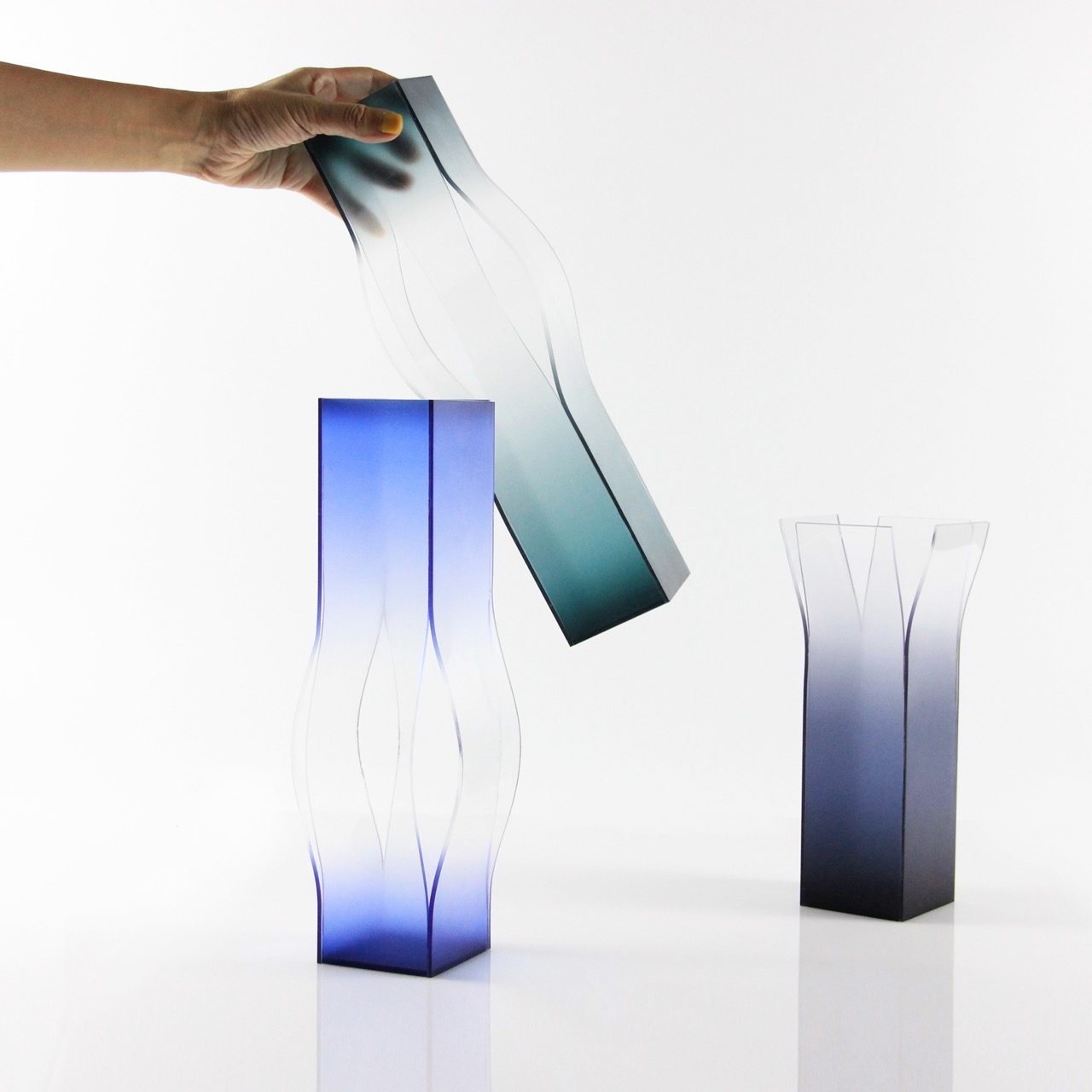
The three varying sizes in the series amplify this effect. Rather than simply scaling the object, each size interprets the idea of stretch differently. Smaller forms feel more concentrated, their gradients tighter and more immediate, while larger pieces allow the color to breathe, elongating the visual pull across space. Together, they create a rhythm, a sequence of expansions and dissolutions that feel almost cinematic.
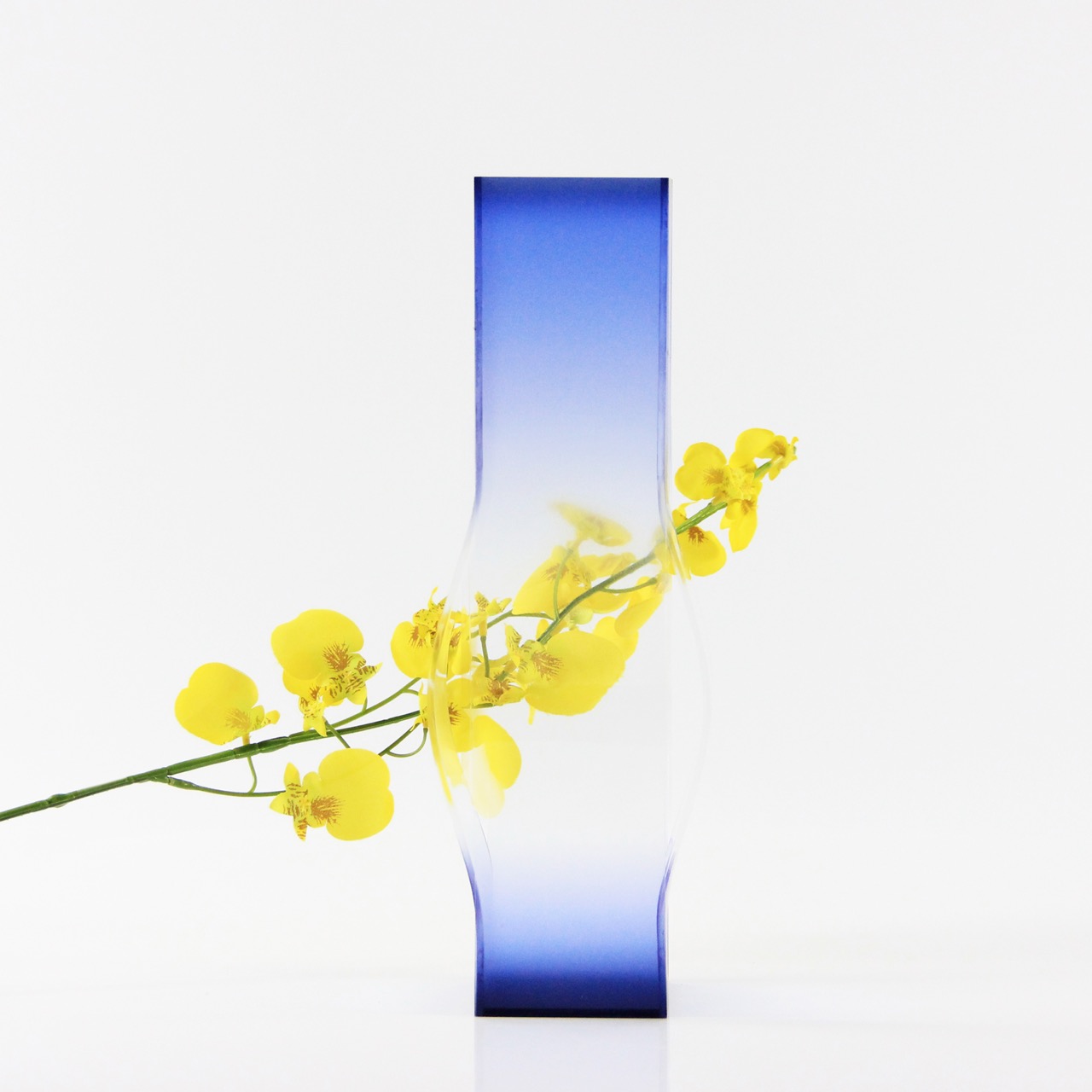
What makes Stretch Color particularly resonant today is its subtle commentary on how we experience objects in an increasingly mediated world. Much like digital interfaces that flatten depth or augmented realities that overlay perception, these vases blur the boundary between what is physically present and what is visually perceived. They invite the viewer to move, to question, and to reorient themselves in relation to the object.
There is also a quiet emotional undercurrent to the work. The fading gradients and disappearing forms evoke a sense of ephemerality, of things slipping just beyond grasp. Yet, this is not a loss; it is a transformation. The vases do not vanish entirely; they redistribute themselves into space, into light, into perception.
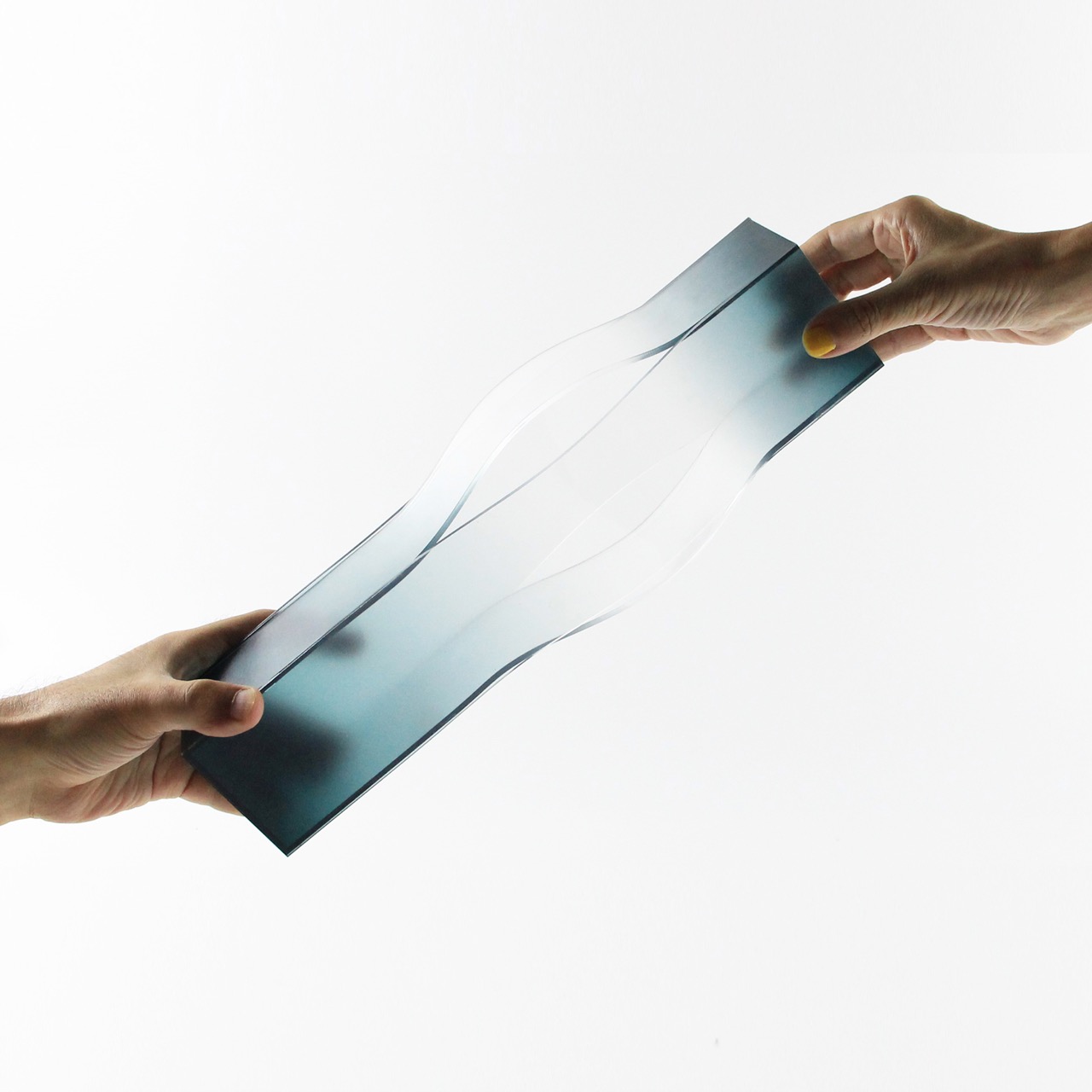
Stretch Color moves away from the idea of the vase as a static container and leans into it as a shifting experience, something that unfolds only when the viewer participates. The object does not simply sit in space; it negotiates with it, stretching color, dissolving edges, and quietly asking the viewer to look again, and then look differently.