
Somewhere between the algorithmic playlists and the infinite scroll of recommended tracks, music stopped being something you held in your hands. Cassette tapes were declared dead more than two decades ago, buried under the weight of MP3s and then streaming services that promised every song ever recorded for a monthly fee. Search trends tell a different story now, though. Queries for “retro cassette player” have surged over 125% year-over-year, while “retro walkman cassette player” has exploded by more than 1,281% in the same period.
These numbers point to something more than a passing fad or a collector’s whim. Millennials and Gen Z listeners are actively seeking hardware that forces them to slow down, to choose an album rather than shuffle through ten thousand options. The cassette, with its fixed tracklist and physical limitations, turns listening into something deliberate again. Five modern cassette players have emerged to meet that demand, each one approaching the format from a wildly different design philosophy.
FiiO CP13
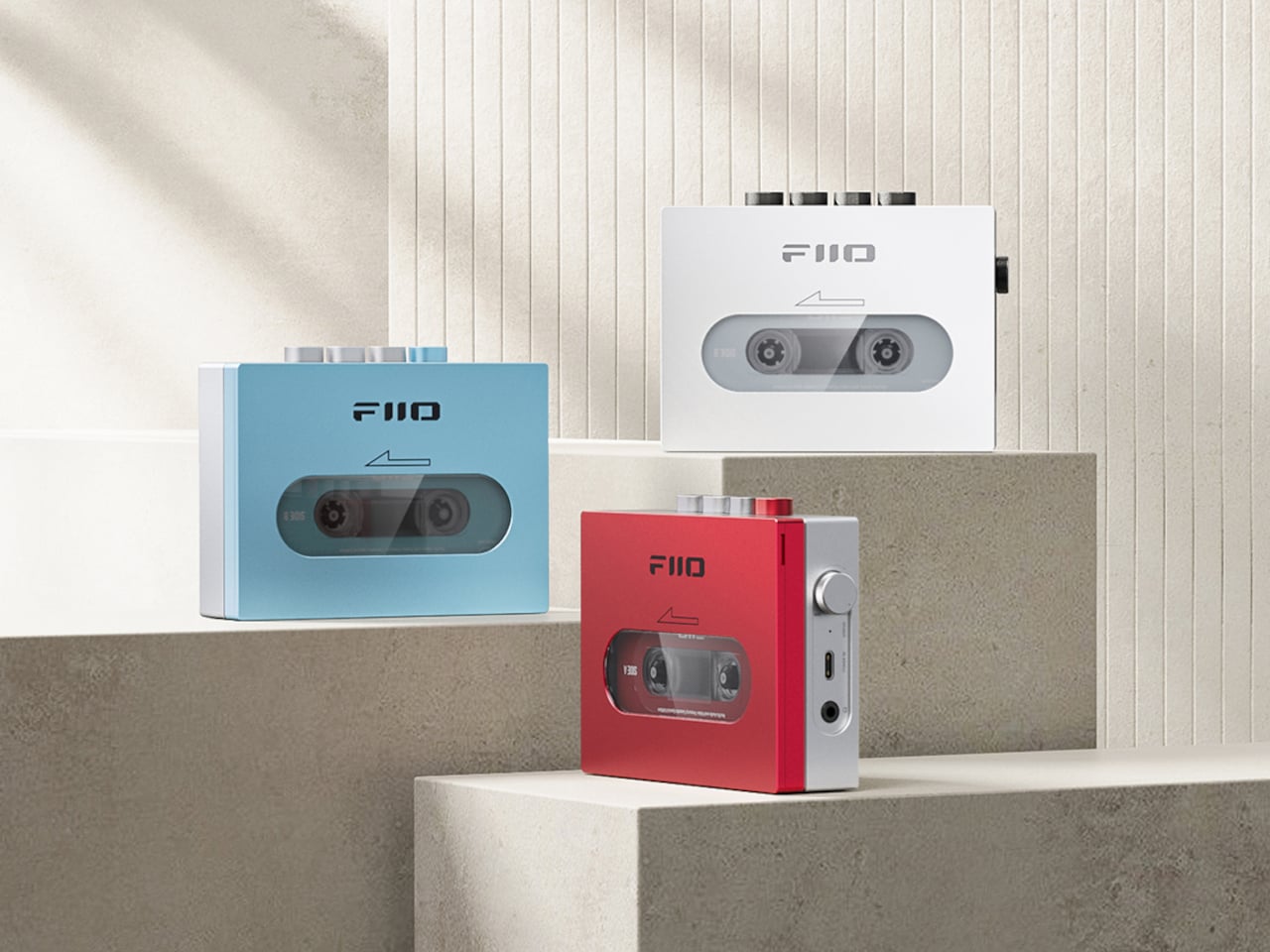
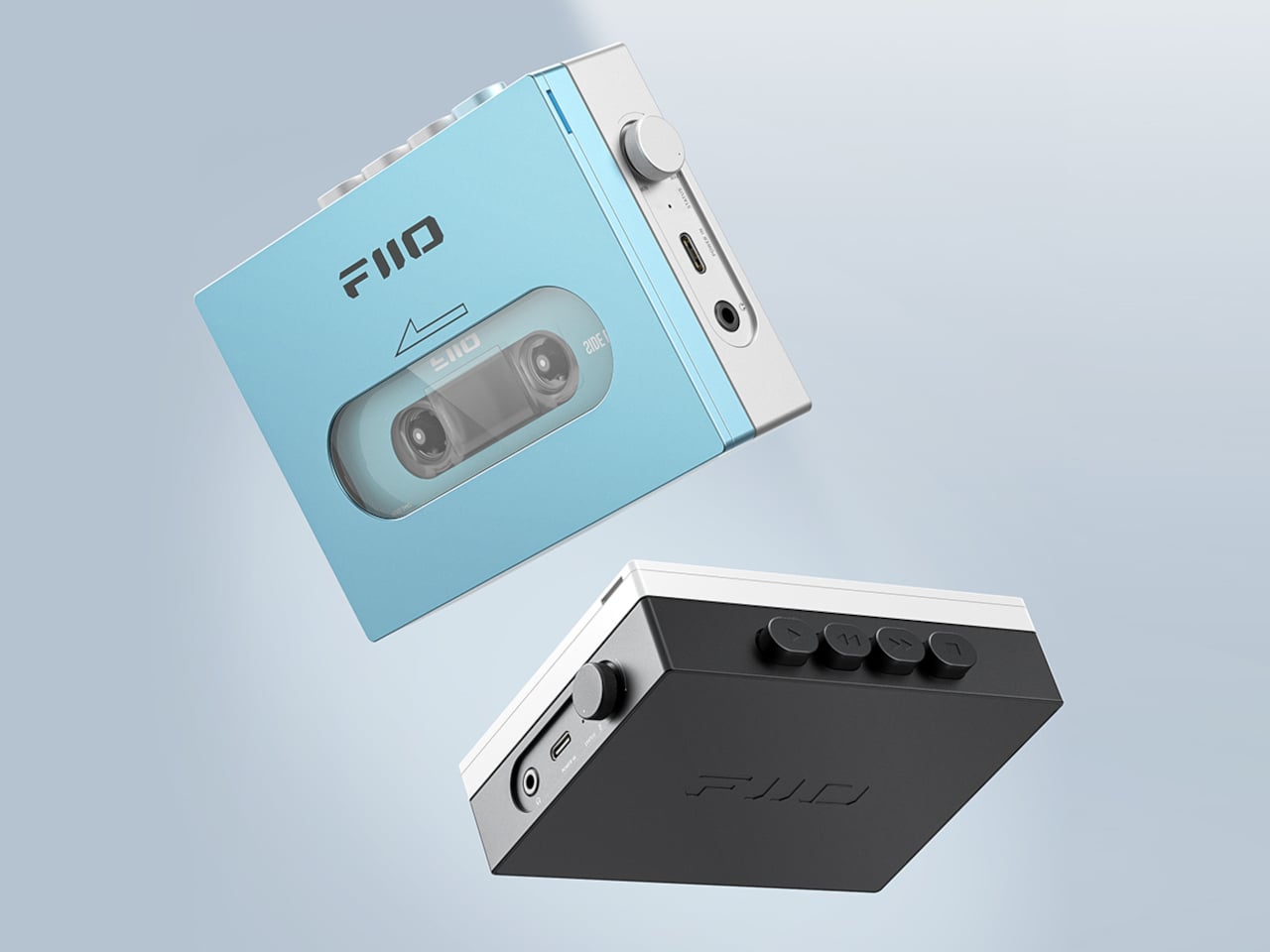
FiiO built its reputation on portable DACs and audiophile-grade headphone amplifiers, products where signal purity is the entire point. The CP13 carries that obsession into the cassette format with an all-analog signal path, from the magnetic tape head through a JRC5532 op-amp to the 3.5mm output. There is no digital conversion anywhere in the chain, no Bluetooth radio, no built-in speaker. The CP13 uses a motor with a high-voltage 4.2V power supply, paired with an oversized pure copper flywheel measuring 30.4mm in diameter.
Designer: FiiO
That flywheel is the quiet star of the CP13’s engineering. Thicker and heavier than standard components, it reduces wow and flutter to levels most modern cassette players cannot approach, keeping tape speed consistent enough for the analog signal to actually matter. The dual-color aluminum alloy chassis, available in sky blue, white and black, or red and silver, measures just 31.8mm thick. An 1800mAh lithium cobalt oxide battery delivers 13 hours of playback and charges through USB-C, though FiiO’s decision to support all tape types from Type I through Type IV suggests the company expects its buyers to own tapes worth caring about.
What we like
- Oversized copper flywheel for low wow and flutter
- Fully analog signal path with no digital conversion
- Supports all cassette types (I through IV)
What we dislike
- No Bluetooth output means wired headphones are the only option
- No recording and auto-reverse functions,
We Are Rewind Edith
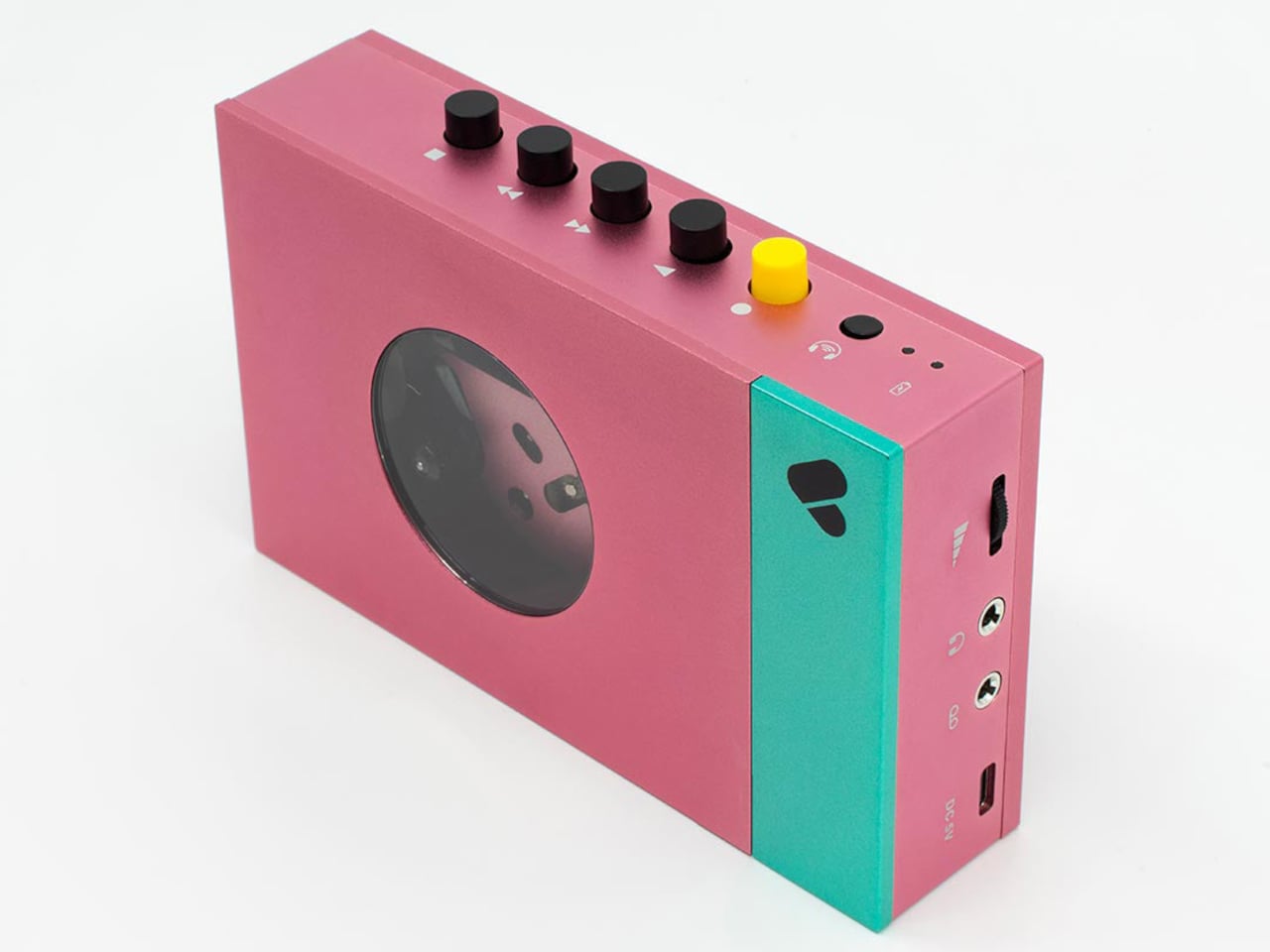
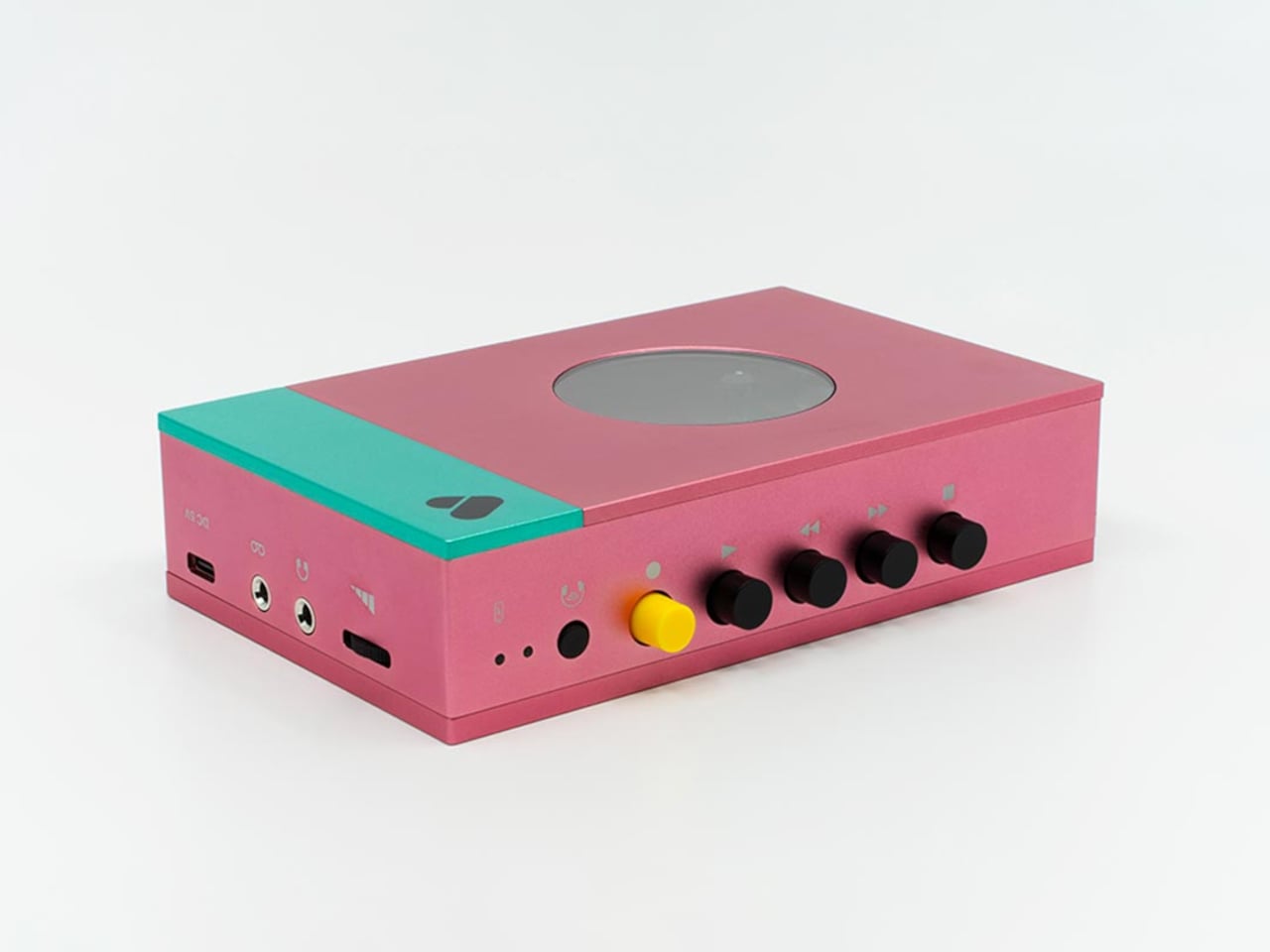
Where FiiO chases audio fidelity, the French brand We Are Rewind treats the cassette player as a cultural object first. The Edith, named after Edith Piaf, joins a lineup that already includes models named Kurt, Keith, and Serge, each one a color-coded tribute to a musician. The Edith arrives in a pink and green combination that reads less like consumer electronics and more like a fashion accessory, wrapped in an aluminum case that weighs 404 grams. That heft is deliberate. The brand explicitly references Sony’s original TPS-L2 Walkman as its design benchmark, choosing aluminum over plastic for what it describes as a “cool touch” quality.
Designer: We Are Rewind
Bluetooth 5.1 is the most visible concession to modernity, allowing wireless pairing with headphones and speakers. A built-in lithium-ion battery charges via USB-C and delivers roughly 10 to 12 hours of playback, replacing the disposable AA batteries that defined portable tape listening for decades. The Edith also records in stereo to Type I cassettes through its 3.5mm jack, and ships with a manual tape rewind pencil, a small wink to the analog rituals that streaming services have no equivalent for.
What we like
- Aluminum case construction gives the player a premium tactile quality, making it feel like an object worth displaying
- Bluetooth 5.1 and USB-C charging
- Stereo recording capability through the 3.5mm jack preserves the mixtape tradition
What we dislike
- The DC motor transport produces more wow and flutter than belt-driven alternatives
- At 404 grams, the Edith is too heavy and too large for most pockets
NINM Lab IT’S OK TOO
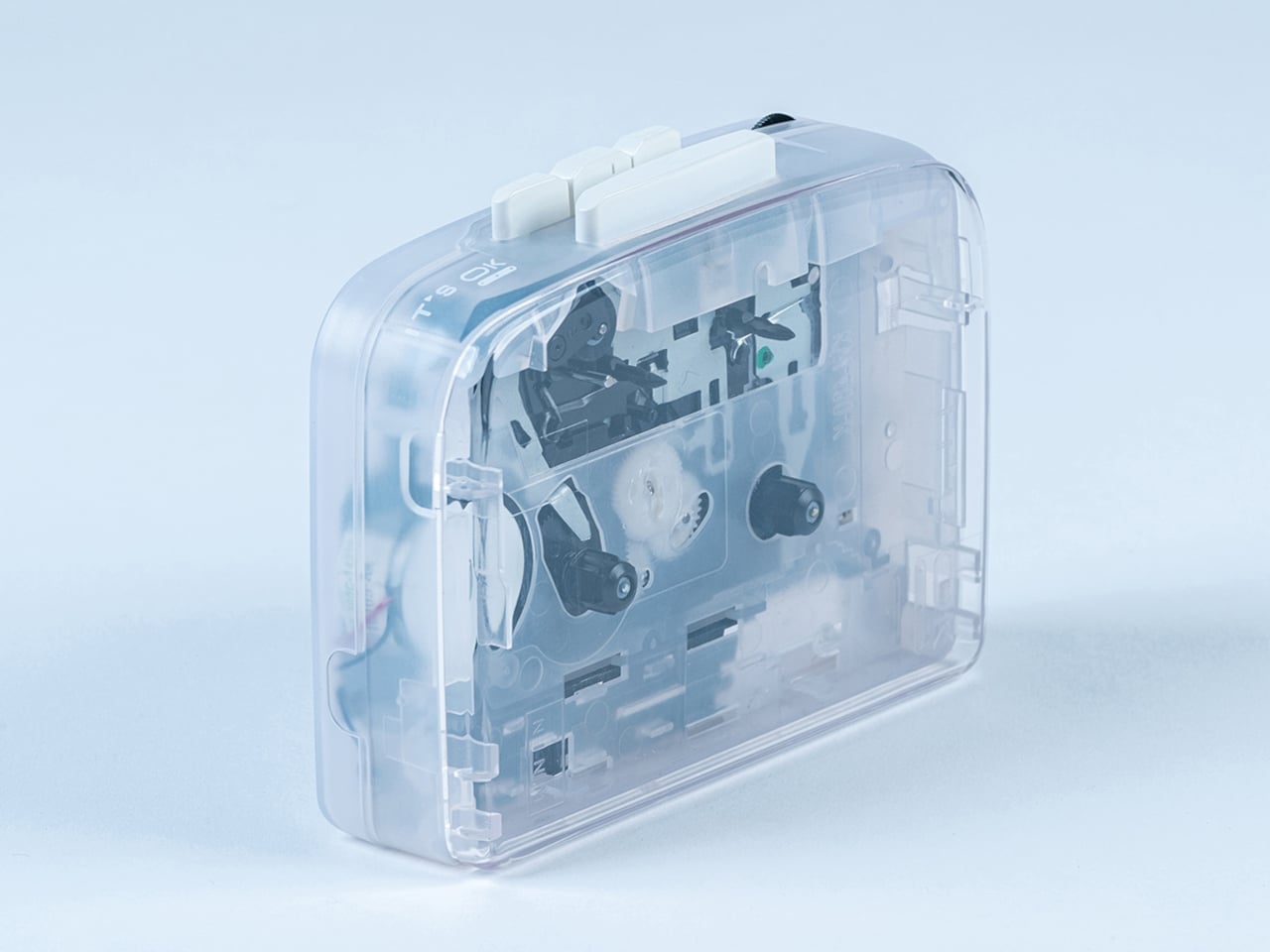
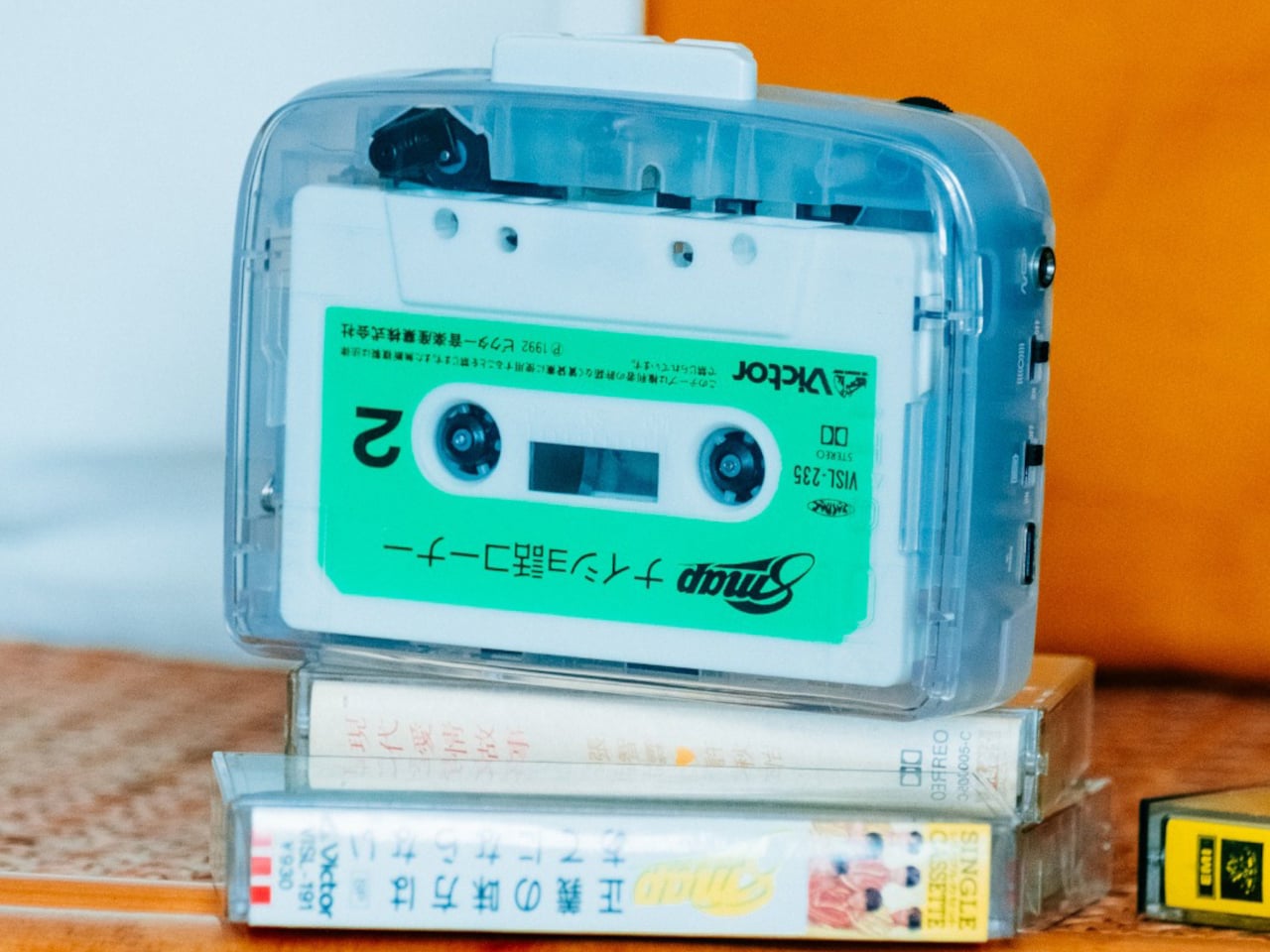
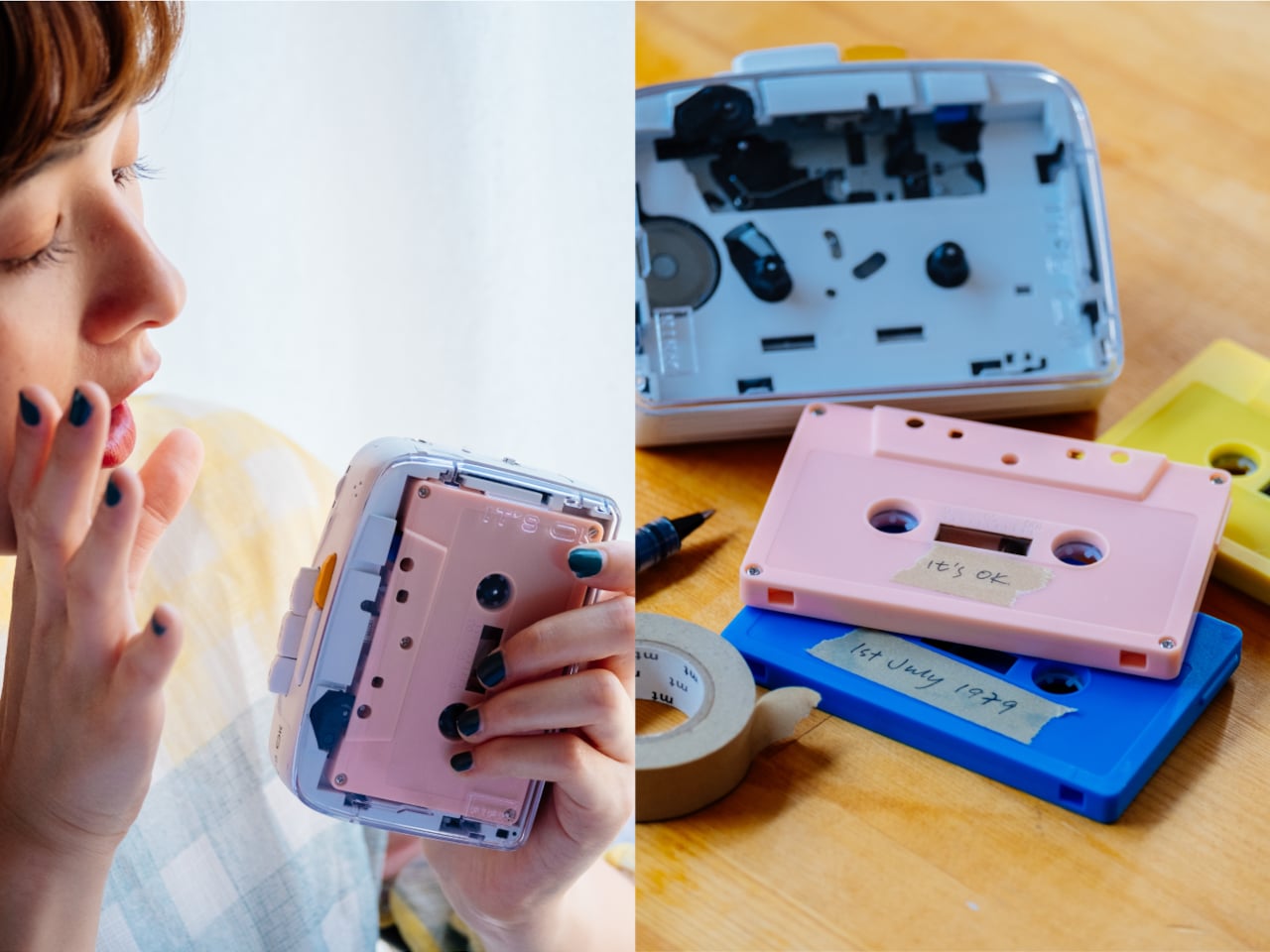
Taiwanese design studio NINM Lab launched the original IT’S OK through Kickstarter in 2019, billing it as the first cassette player with Bluetooth capability. The second generation, IT’S OK TOO, upgrades that foundation with stereo output and a semi-transparent matte body that splits the difference between full transparency and solid color. The casing is ABS plastic and polyethylene, lightweight at approximately 152g. Push-button controls for play, stop, forward, and backward line the front edge, with a classic belt clip on the back.
Designer: NINM Lab
Power comes from two AA batteries or a USB-C supply (not charging the device itself, but powering it directly), with optional USB-C charging if you install rechargeable Ni-MH batteries. The transparent design is the real design statement here, exposing the tape mechanism so the spools become a visible, moving part of the experience. The IT’S OK TOO firmly positions itself as a lifestyle product for a younger demographic that may never have owned a cassette player before.
What we like
- Transparent body turns the tape mechanism into a visual feature
- Bluetooth 5.0 stereo output with 3.5mm jack
What we dislike
- Only supports Type I cassettes
- AA battery requirement with no built-in rechargeable cell
Victrola Mini Bluetooth Boombox
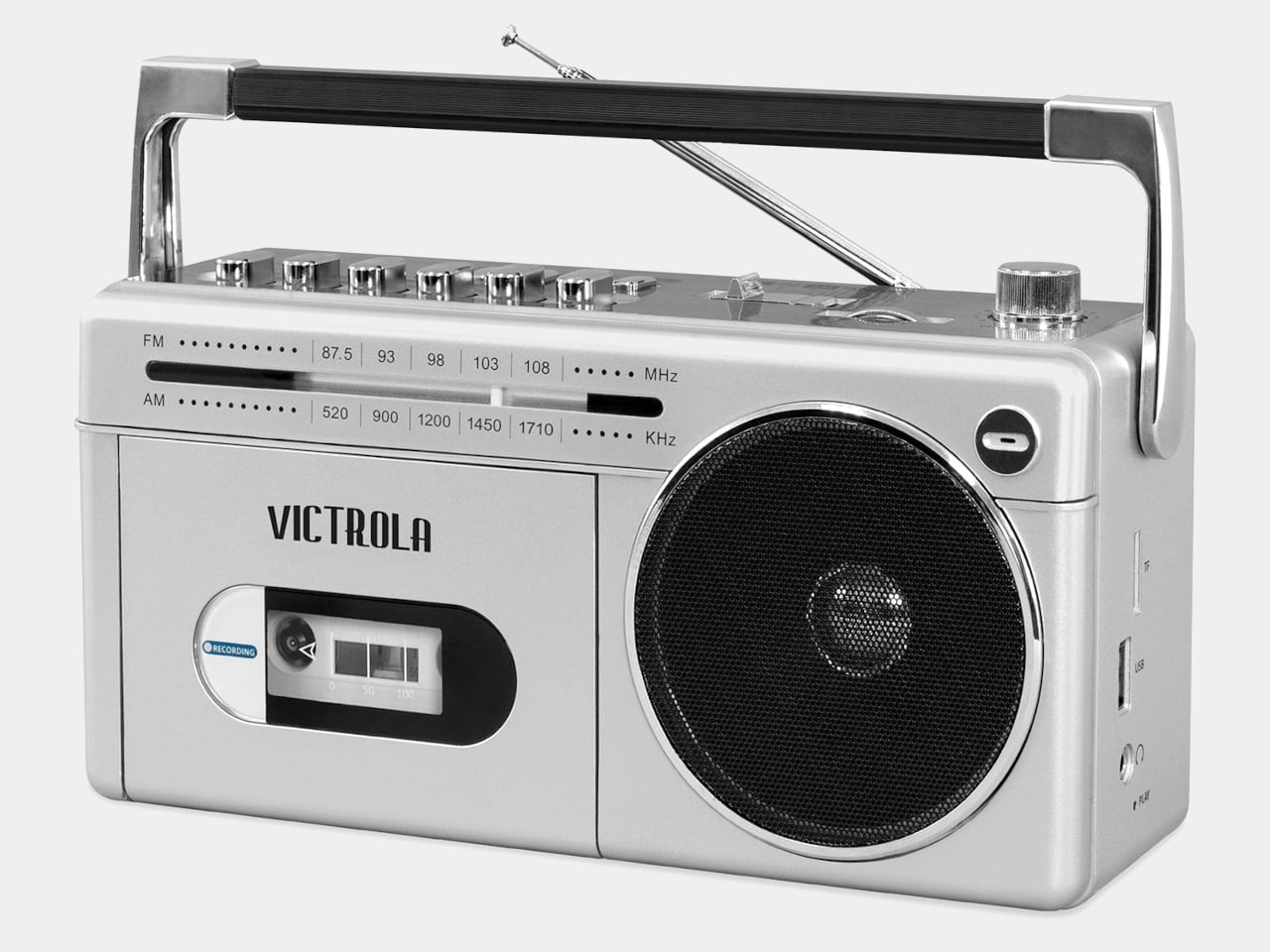
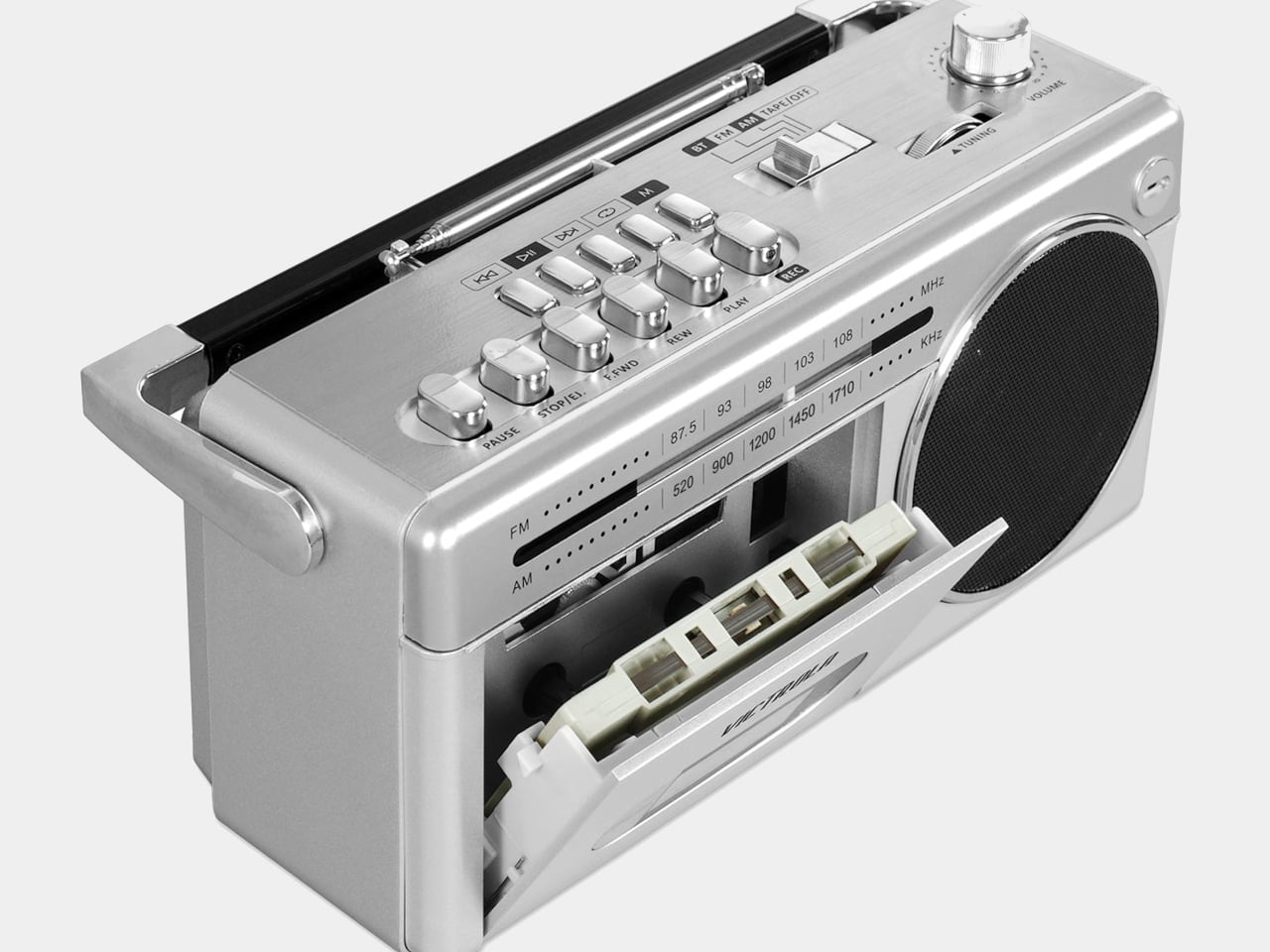
Victrola has made its name selling affordable turntables to people who want the ritual of vinyl without the investment of a serious hi-fi setup. The Mini Bluetooth Boombox applies that same philosophy to cassettes, packaging a tape player, tape recorder, AM/FM radio tuner, USB port for MP3 playback, and Bluetooth streaming into a hefty yet still portable box. It runs on AC power or batteries, comes in grey and silver colorways, and retails for under $40 at most outlets.
Designer: Victrola
The design is a scaled-down boombox archetype, complete with dual built-in speakers, an analog radio tuning dial, and a cassette door on the front. At this price point, audio fidelity is not the conversation. The Victrola is competing with cheap Bluetooth speakers, not with premium cassette players. Its recording function lets you capture audio directly to cassette through a built-in microphone, and the Bluetooth connectivity means it can serve as a wireless speaker for your phone. What the Victrola lacks in audio refinement, it compensates for in sheer versatility. No other player on this list gives you FM radio, Bluetooth reception, USB playback, and tape recording in one device.
What we like
- The most versatile player on this list by a wide margin, combining cassette playback and recording, AM/FM radio, Bluetooth, and USB MP3 playback in a single compact unit
- Sub-$40 pricing makes it the easiest entry point for anyone curious about cassettes but unwilling to commit to a premium device
What we dislike
- Speaker quality and cassette playback fidelity are both budget-tier
- Plastic construction and lightweight build feel disposable
Retrospekt Sony Walkman WM-F2015
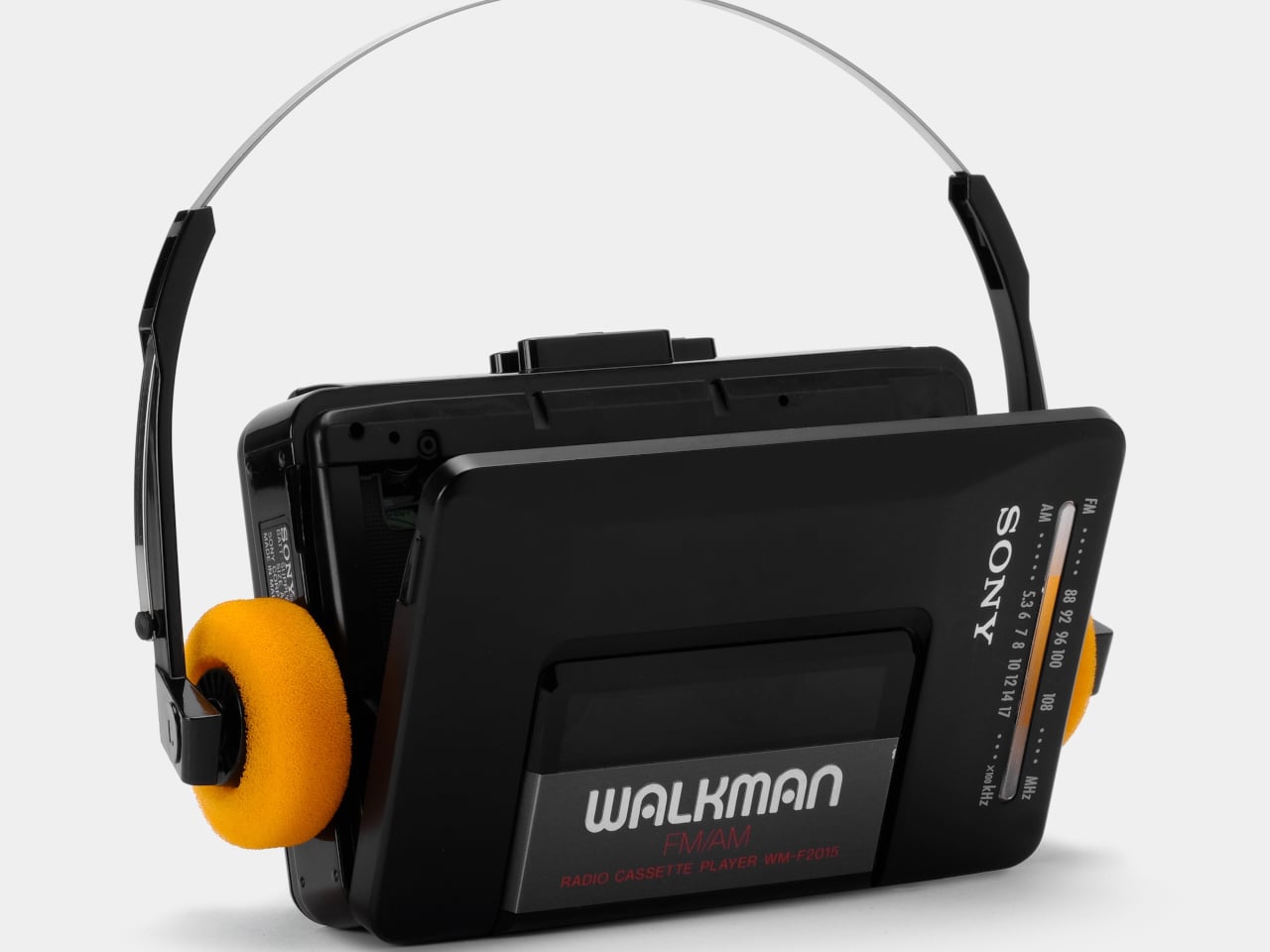
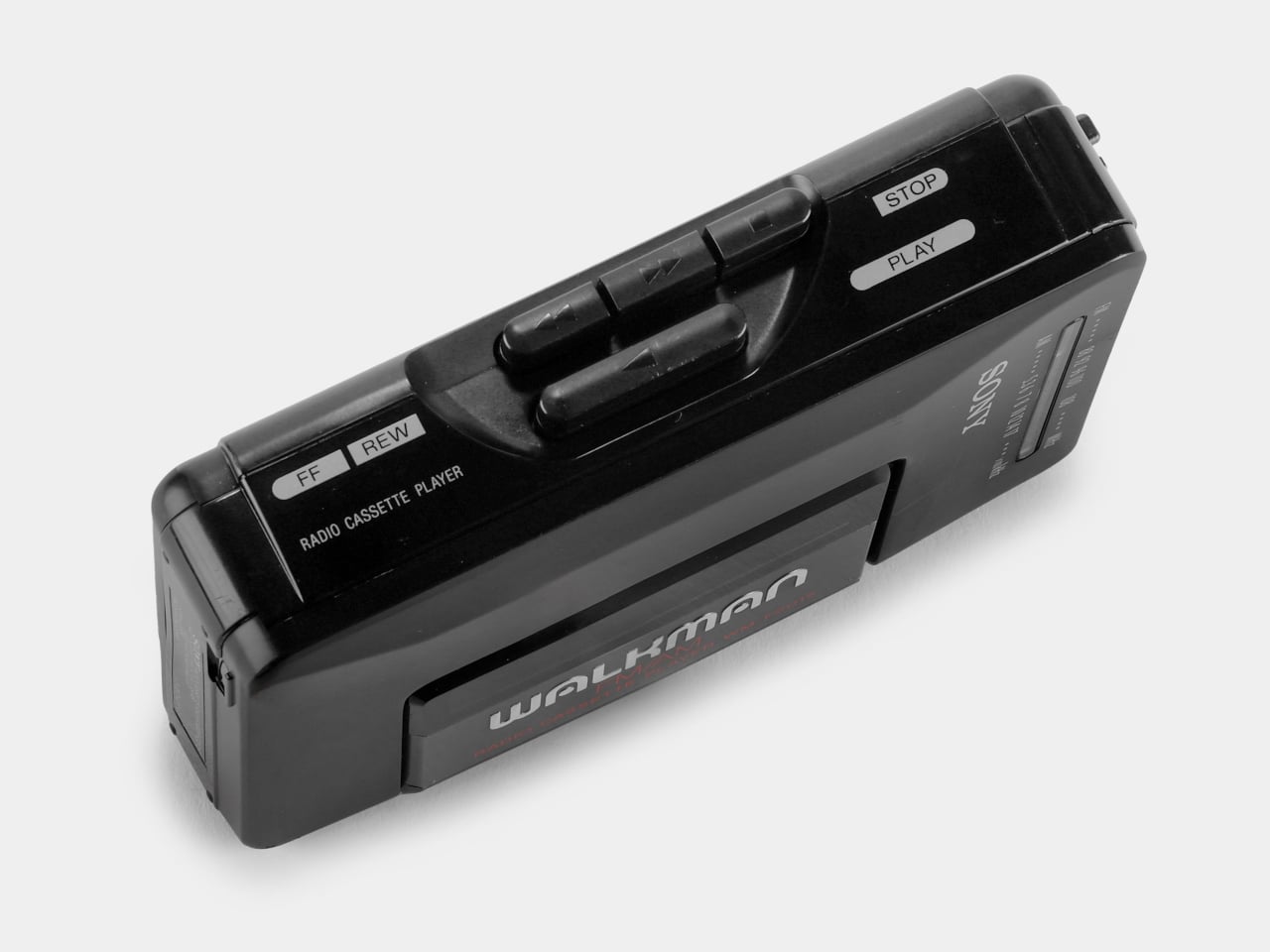
Every other player on this list is a modern product designed to evoke nostalgia. The Retrospekt Sony Walkman WM-F2015 is the actual artifact, a unit originally manufactured in 1990, disassembled by technicians in Milwaukee, and rebuilt with replaced drive belts, idler tires, and pinch wheels. The playback speed has been recalibrated, the volume potentiometer deoxidized, and the tape head cleaned and demagnetized. Retrospekt sells the WM-F2015 as a “vintage refurbished” product starting at $299.
Designer: Retrospekt
The WM-F2015 is a matte black candybar design with an AM/FM radio tuner, powered by two AA batteries. It ships with orange retro-inspired headphones that look the part, even if they cannot compete with modern over-ears. The appeal here is not specification superiority or modern convenience. There is no Bluetooth, no USB-C, no rechargeable battery, and no recording function. What the Retrospekt Walkman offers is something no reproduction can manufacture: the physical reality of a 35-year-old Sony mechanism, with all its original plastics and original weight, restored to functional condition.
What we like
- An authentic 1990 Sony Walkman mechanism
- Retro Sony matte black industrial design and compact form factor
What we dislike
- A bit pricey at $299
- Zero modern conveniences: no Bluetooth, no USB-C, no rechargeable battery