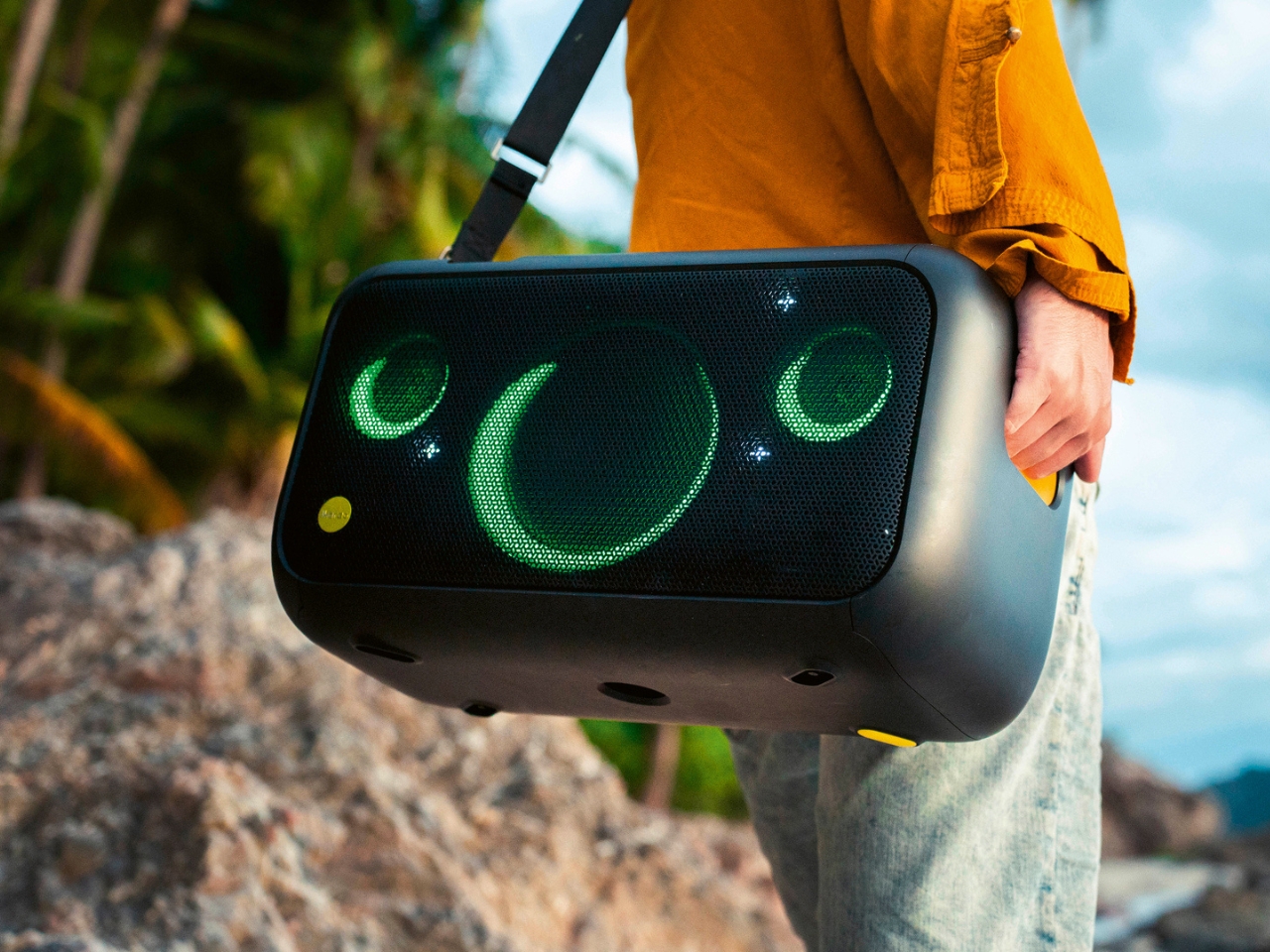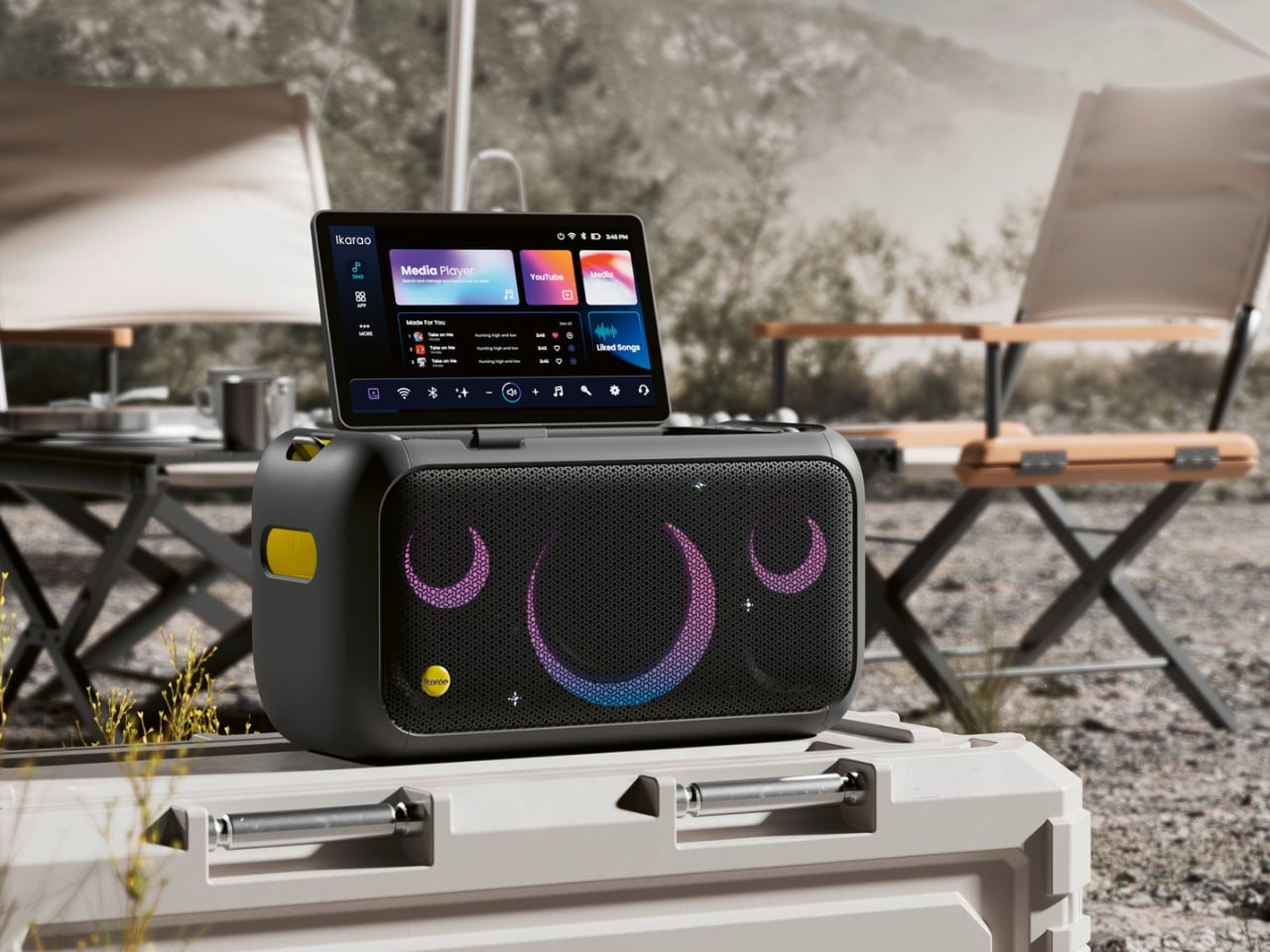

Remember when karaoke machines were those clunky black boxes that looked like rejected stereo equipment from the 90s? Yeah, those days are officially over. The BreakX1 Smart Karaoke by designer Liu Wei just snagged a Silver A’ Design Award for 2025, and it’s proof that home entertainment tech can be both functional and seriously good-looking.
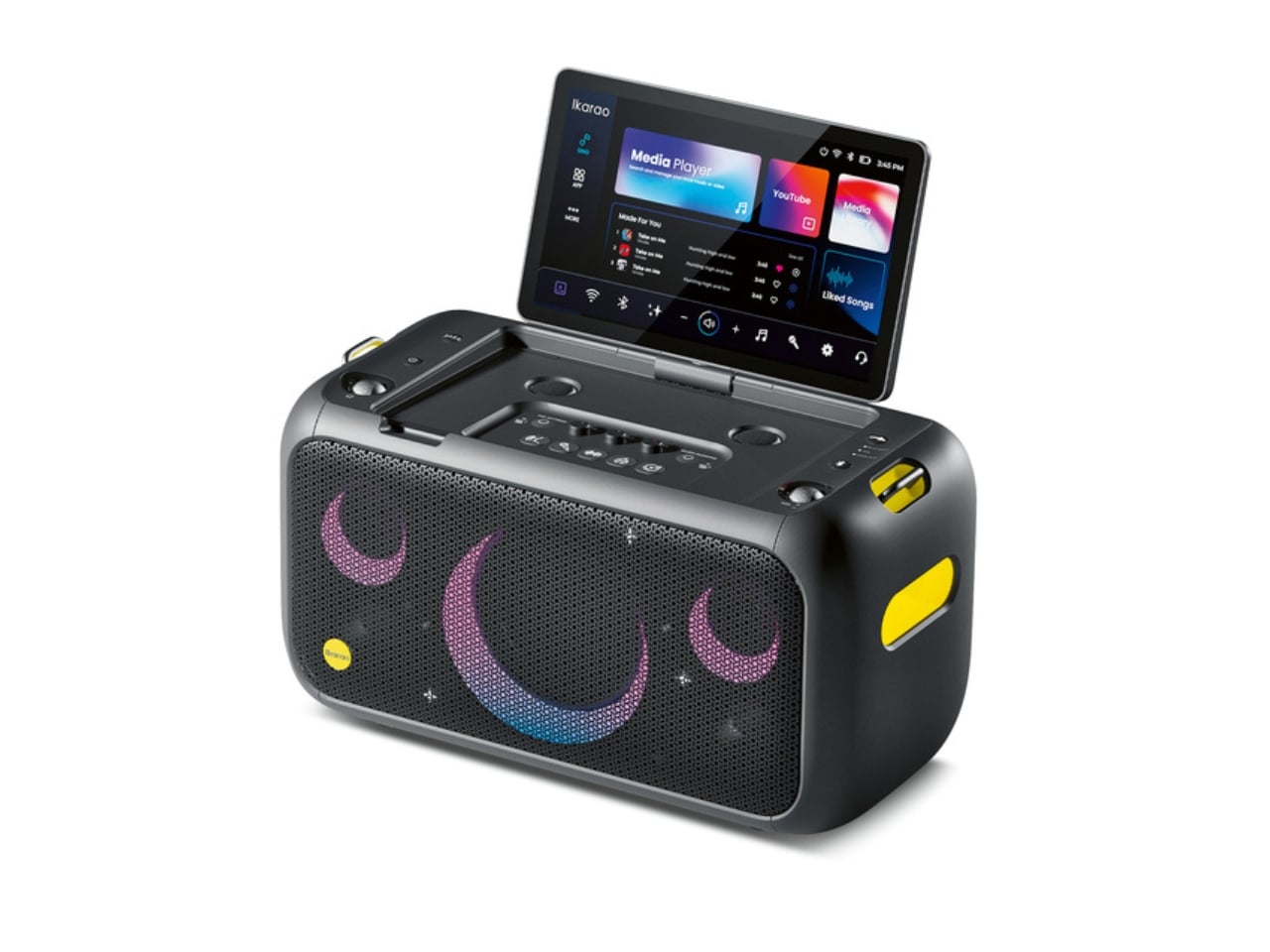
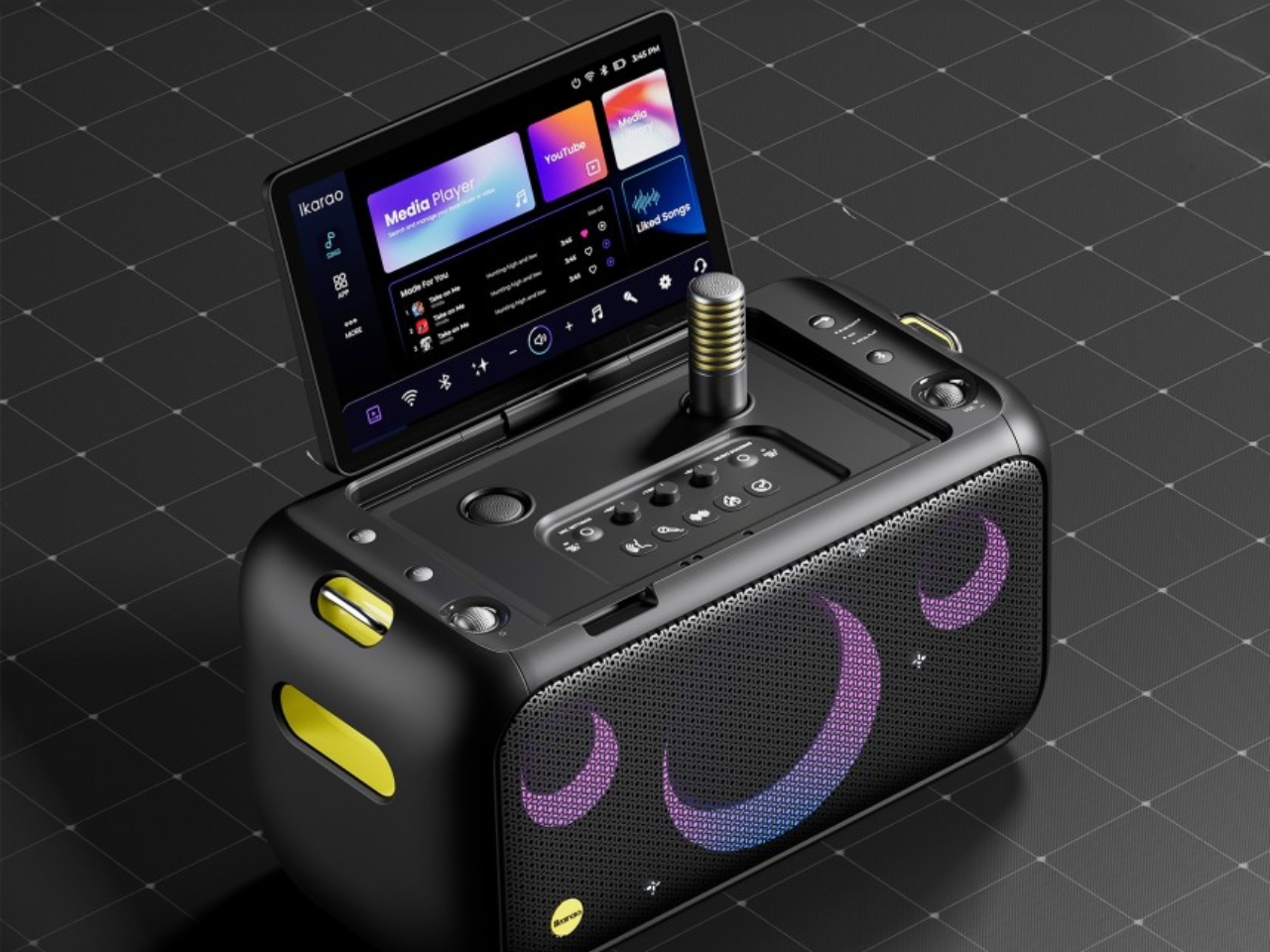
What really sets this thing apart is how it moves. The BreakX1 features an innovative hinge design that connects the screen to the speakers, letting you rotate the screen 180 degrees front to back and 120 degrees left to right. It’s the kind of flexibility you didn’t know you needed until you think about it. Whether you’re belting out power ballads from the couch or standing up for your best Beyoncé impression, you can adjust the angle to actually see the lyrics without doing neck gymnastics.
Designer: Liu Wei
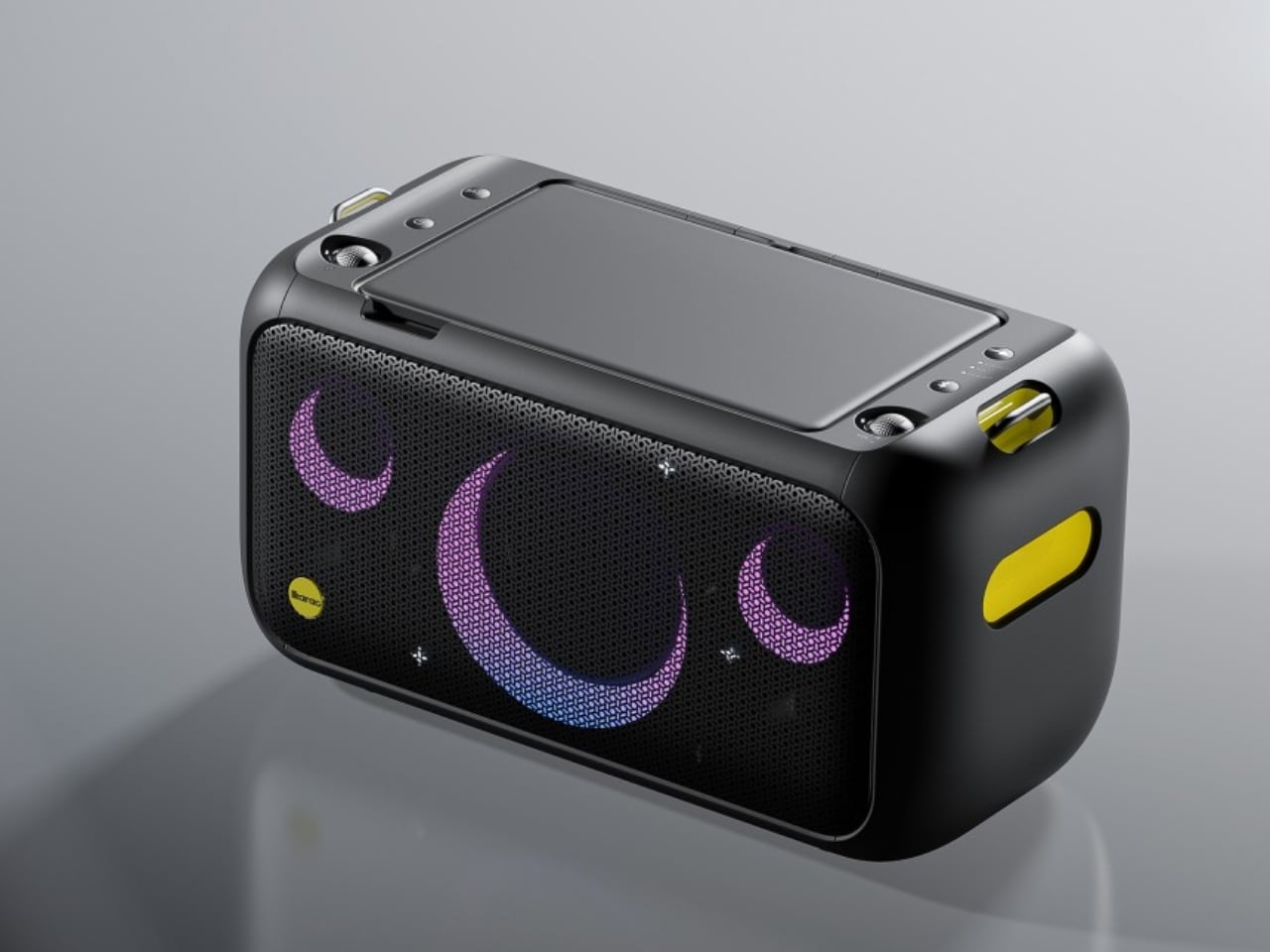
The design inspiration comes from an unexpected place: minimalist automotive design, specifically the clean lines of Tesla and Porsche. That aesthetic shows up in the machine’s sleek, soft curves and compact form. It doesn’t scream “karaoke machine” the way older models do. Instead, it looks like something you’d actually want sitting in your living room, not hidden away in a closet between uses.
Liu Wei, who works with Dongguan Aika Electronic Technology Co., developed the BreakX1 between October 2023 and January 2024 in Shenzhen, China. The device is built for the wireless entertainment era, designed to work seamlessly whether you’re hosting an indoor party or taking the show outside for backyard gatherings. That portability is key because modern life doesn’t always happen in one room anymore.
The tech specs back up the design ambitions. The BreakX1 comes equipped with a 2K HD screen that delivers crystal-clear visuals for lyrics, music videos, or whatever else you want to throw at it. The Red Dot Design Award jury noted that the machine “impresses with its exceptional ease of use and attractive appearance,” which is basically the holy grail for consumer electronics. Too often, devices choose one or the other, but this manages both.
What makes the BreakX1 feel current is its versatility beyond just karaoke. Sure, you can use it for singing your heart out, but it’s also designed for listening to music or engaging in what the specs call “audio visual creativity.” That vague-but-intriguing phrase suggests this is really a multi-purpose entertainment hub that adapts to how you want to use it, not the other way around. The design also addresses a real problem with portable entertainment systems: they usually look temporary or makeshift. The BreakX1’s integrated approach, where the screen and speakers form one cohesive unit connected by that flexible hinge, creates a device that feels intentional. It’s the difference between furniture and something you assembled from random parts.
This isn’t just about making karaoke look better (though it definitely does that). It’s about recognizing that home entertainment equipment has become part of our living spaces in ways it wasn’t before. We’re not hiding our tech in cabinets anymore. It’s out, it’s visible, and we want it to look like it belongs. The BreakX1 gets that shift. Liu Wei’s work represents a broader trend in tech design where aesthetics and function aren’t competing priorities but complementary ones. The rotatable screen isn’t just pretty engineering; it solves the real challenge of making one device work for different body positions and room configurations. The minimalist styling isn’t just trendy; it helps the device fit into more home decor situations.
The Silver A’ Design Award recognition confirms what’s already becoming clear: smart entertainment devices need to be smart about more than just their features. They need to understand that users want equipment that enhances their space, not clutters it. The BreakX1 delivers on that promise while still packing in the technology that makes modern karaoke actually fun. Whether this sparks a wave of better-looking karaoke machines remains to be seen, but it’s a solid start. At the very least, it proves that party tech doesn’t have to look like party tech. Sometimes it can just look good.