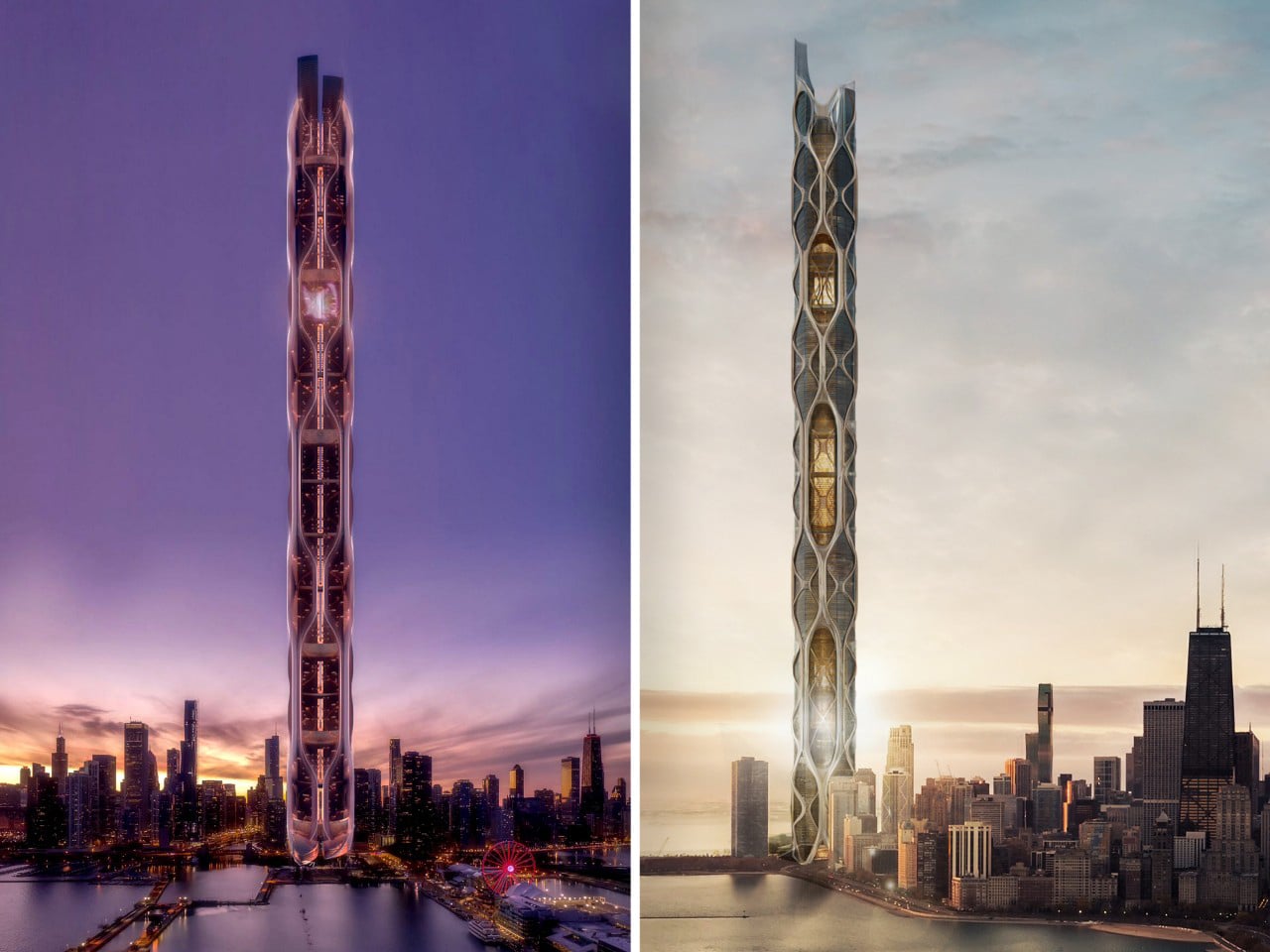

Imagine standing in Chicago, looking up at a skyline that does not just symbolize power and progress, but nourishment. A skyline where fresh lettuce grows a few floors above your head, rainwater is harvested from the clouds, and the architecture itself works quietly to heal long standing urban inequities. This project dares to ask a radical question. What if skyscrapers did not just house people, but fed them?
At the heart of this proposal lies a deeply human problem. Food deserts. Across Chicago, many low income neighborhoods struggle to access affordable, nutritious food. Grocery stores are scarce, fresh produce is often out of reach, and fast food becomes the default not by choice, but by circumstance. These conditions have fueled health disparities and reinforced socio economic divides for decades. Rather than treating this as a policy issue alone, the project reframes it as an architectural opportunity.
Designers: Yuhan Zhang and Dreama Simeng Lin
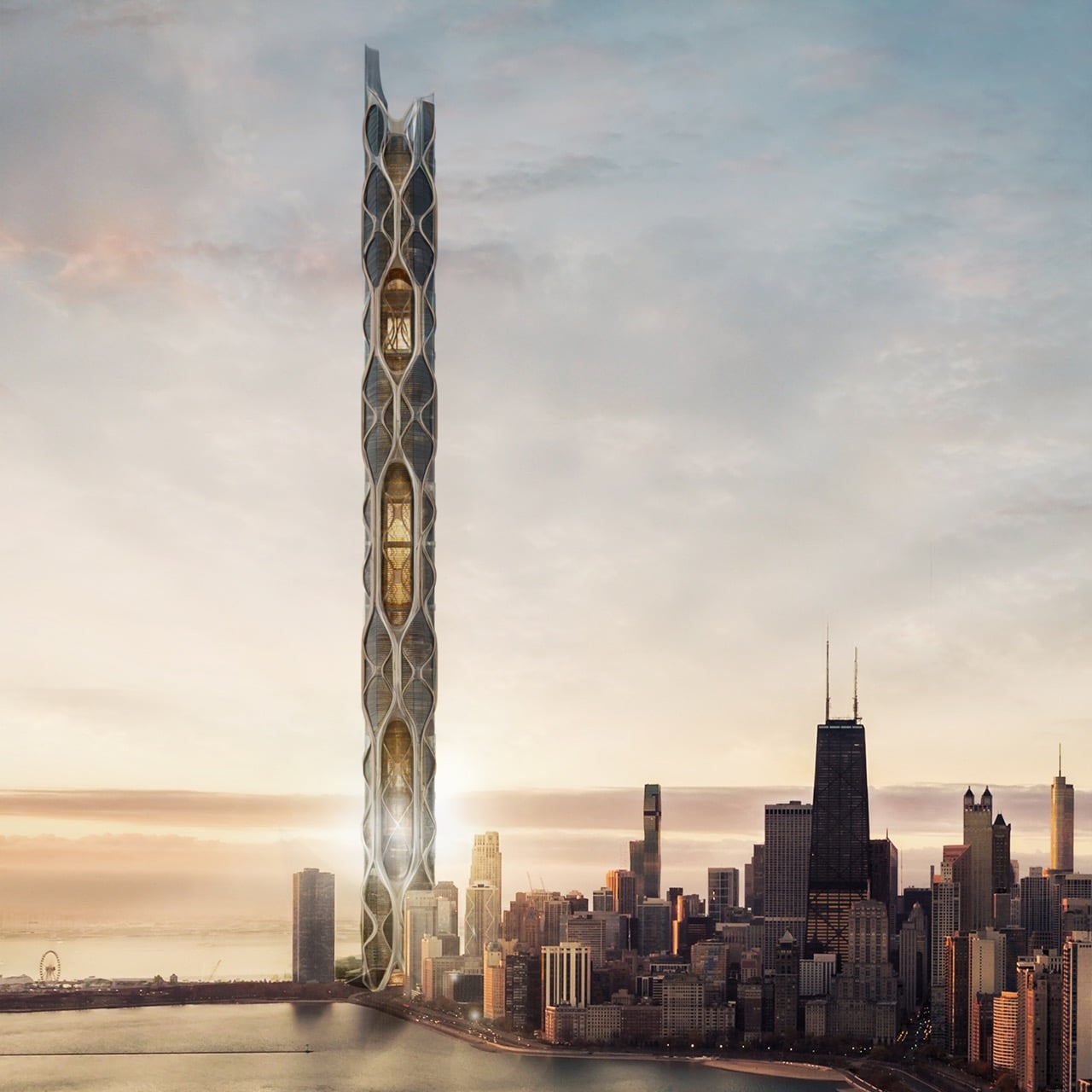

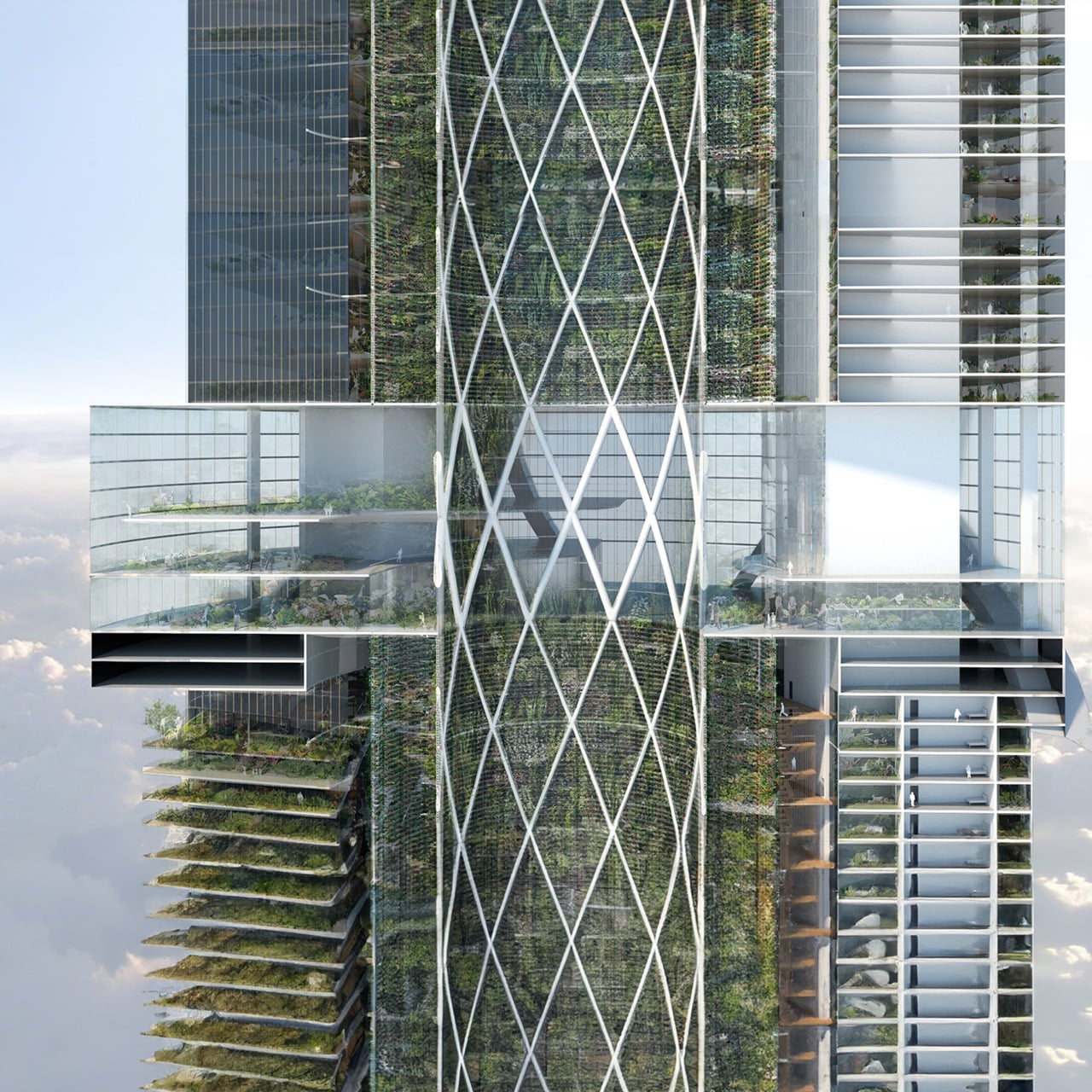
Programmatically, the tower integrates vertical farming directly into its core, transforming food production into an essential urban utility. Instead of transporting produce from distant rural farms, food is grown locally within the city, within the building, and within reach. The skyscraper becomes a self sustaining ecosystem, drastically reducing carbon footprints while restoring food access to the communities that need it most.
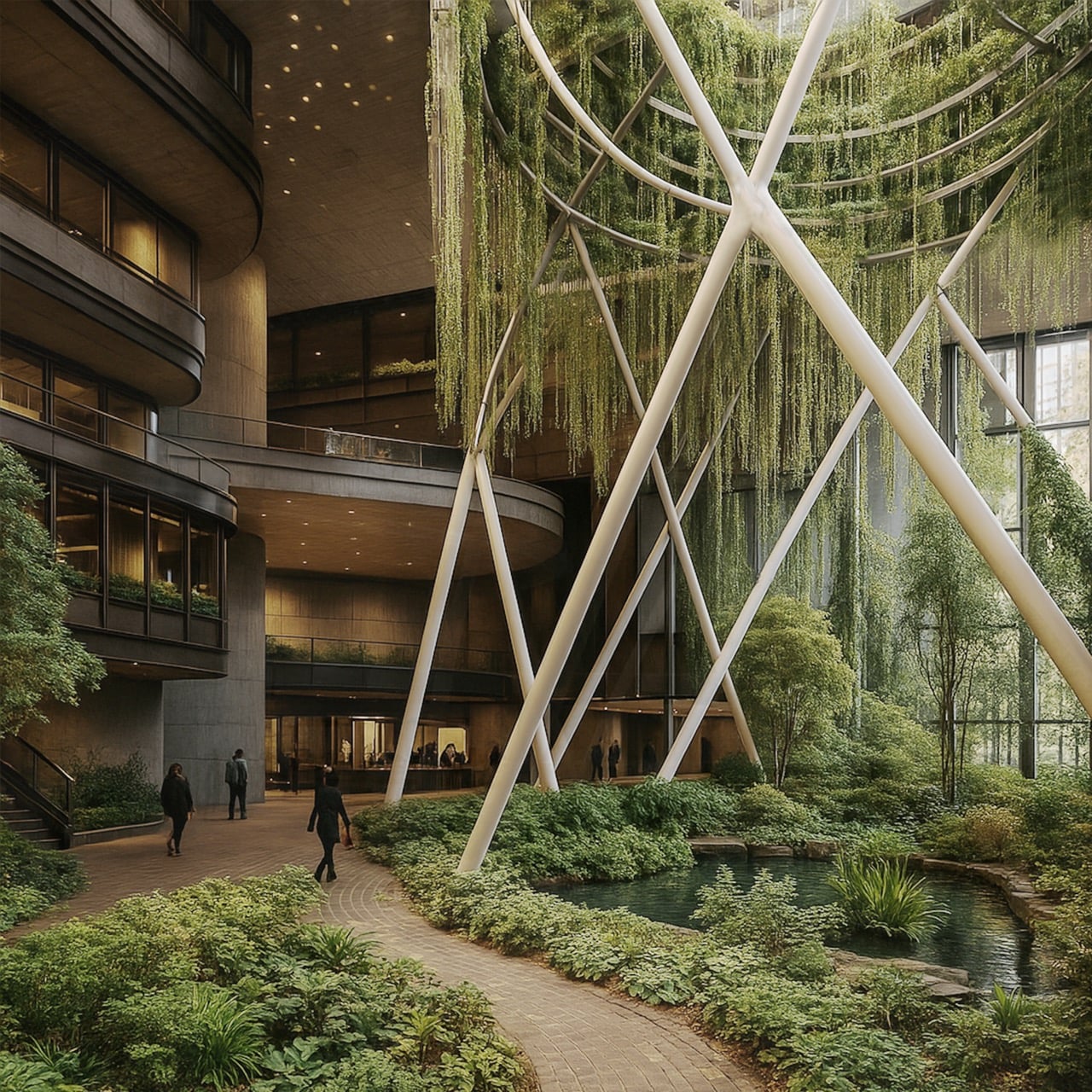
Formally, the building draws inspiration from one of Chicago’s most defining natural elements. Water. The tower’s fluid, organic silhouette mirrors the geometry of a water droplet, symbolizing renewal, continuity, and resilience. This form is not just poetic. It extends Chicago’s green belt upward, turning the skyline into a vertical landscape. Nature is no longer pushed to the city’s edges. It rises with it.
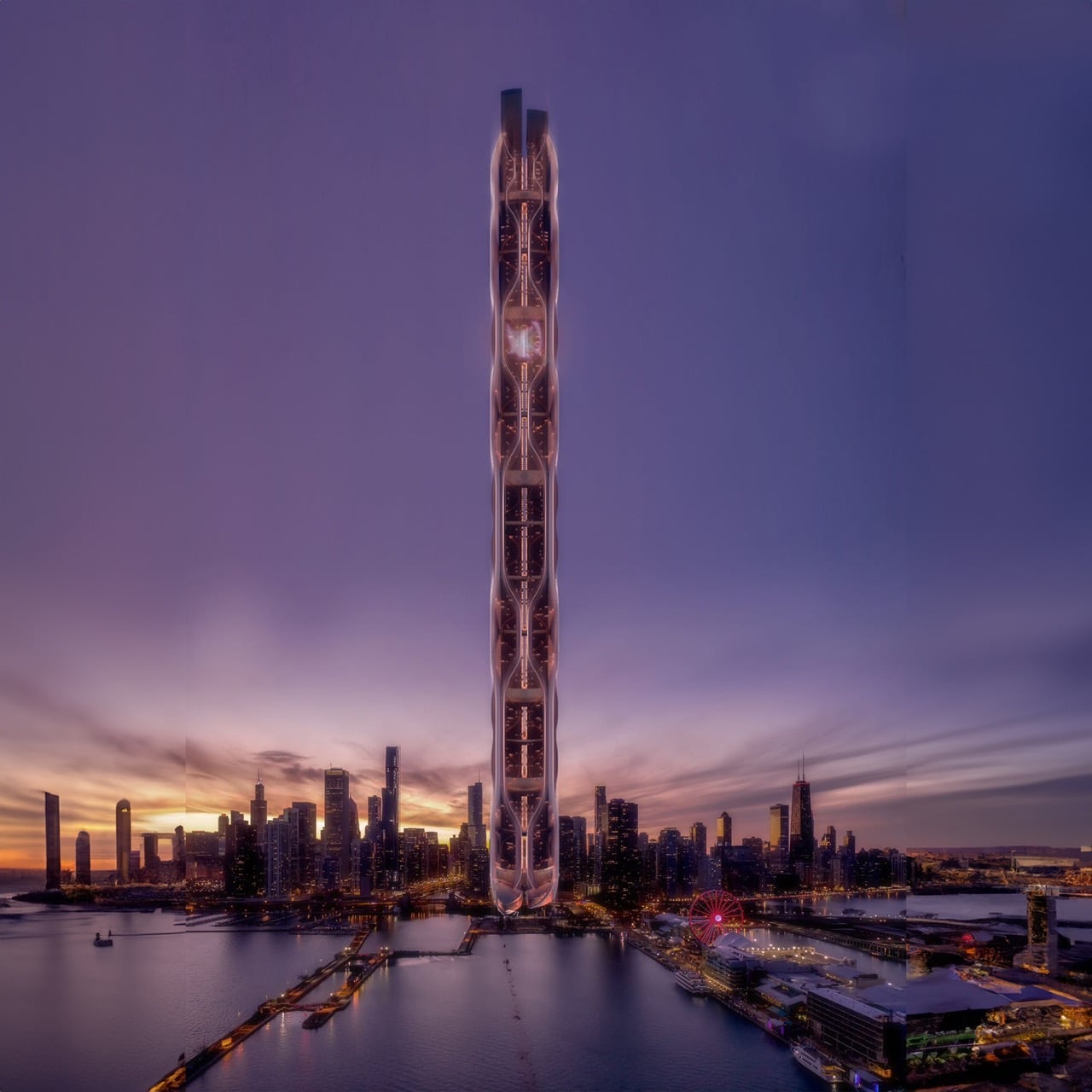
Life inside the tower unfolds as a fully integrated vertical community. Residential units sit alongside commercial spaces, allowing people to live, work, and socialize without leaving the structure. Hotels offer short term stays and panoramic views, contributing to both cultural exchange and economic vitality. Schools are embedded throughout the tower, weaving education into daily life rather than isolating it at ground level. Sky terraces appear at multiple heights, acting as social lungs. Green, open spaces where residents gather, relax, and reconnect with nature. These terraces sustain every function of the tower, fostering interaction, wellness, and a sense of shared ownership.
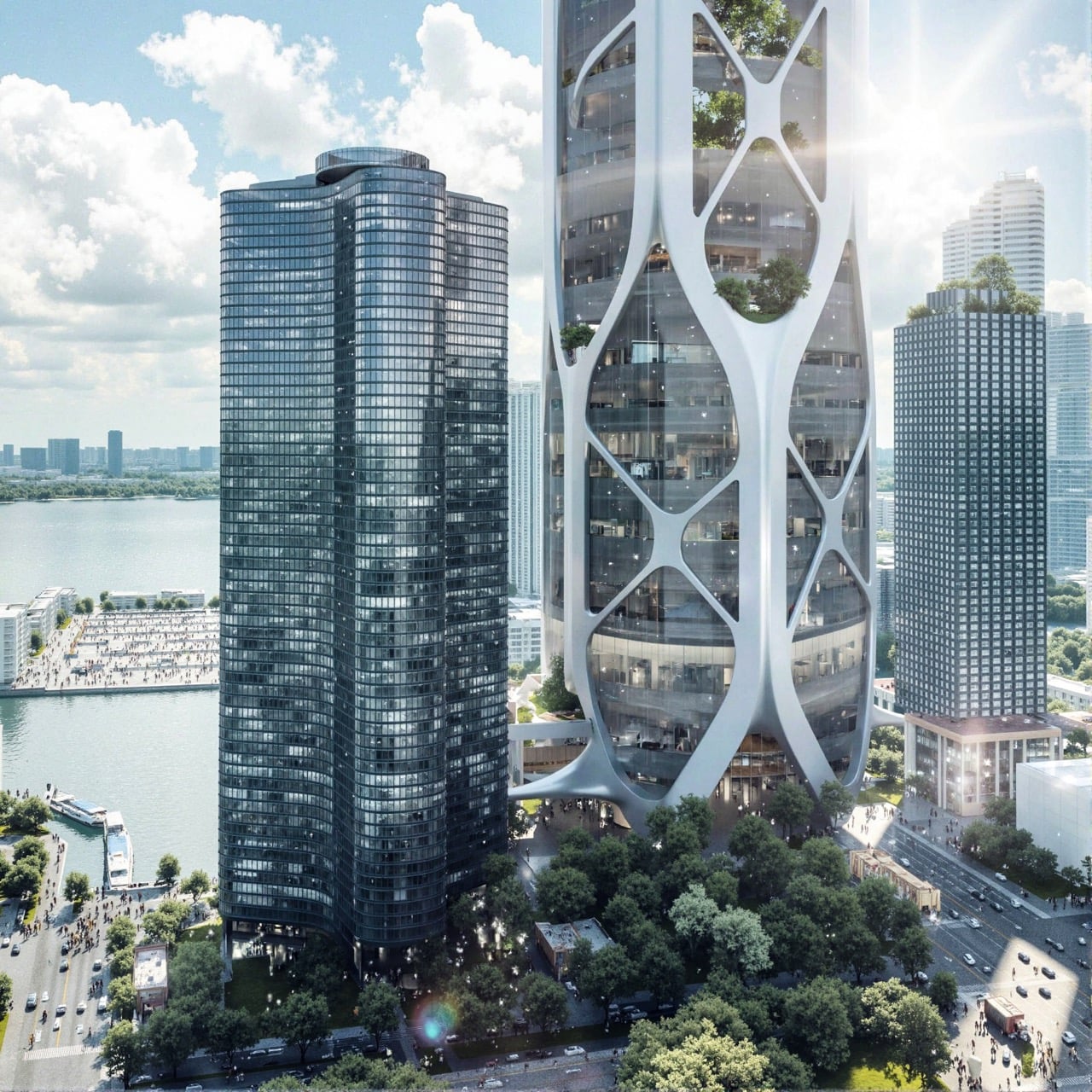
Sustainability is not an add on here. It is the backbone. Vertical farms housed within the core supply fresh produce. Cloud harvesting and rainwater collection systems are seamlessly integrated into the façade, ensuring efficient water reuse. Wind turbines embedded along the exoskeleton generate renewable energy, while a breathable atrium and natural ventilation system enhanced by a diagrid structural framework maximize airflow and daylight. The result is a building that does not merely coexist with nature, but actively collaborates with it.
Structurally, the tower is composed of four conjoined vertical volumes, laterally supported by two layers of bracing that increase depth and resilience. A diagrid exoskeleton spans 25 story modules, weaving fluid structural lines that integrate mega bracing with lateral stability. This strategy allows for a generous inner void, flooding the tower with light and air while reinforcing its architectural clarity.
The project also represents an ambitious research endeavor. Integrating agriculture into a mile high skyscraper demanded innovative thinking around energy efficiency, water cycles, and food systems. Balancing extreme structural demands with green technologies like cloud harvesting and passive ventilation pushed engineering boundaries. Most importantly, research into food deserts grounded the project in real social needs, ensuring that sustainability here is not symbolic, but equitable.
Positioned as a future icon for the next fifty years, this tower reimagines what urban architecture can be. It suggests a future where buildings do not just shelter cities. They sustain them. Where the skyline does not just inspire awe. It feeds the body, the community, and the planet.