
Books tend to get stacked, shelved, and forgotten in most homes. They migrate from nightstand to floor to the corner of a couch, and the one you’re currently reading usually ends up spine-down on whatever surface is closest when you need both hands. Furniture design has solved almost every other interaction you have with objects in a room, but the relationship between people and the books they’re reading hasn’t received much considered attention.
The Totem collection from Eran approaches that problem seriously. It’s a series of stainless steel furniture pieces that hold books as a primary function, not a secondary feature. Each piece has a precisely cut slot integrated into the steel that keeps a book in place, whether closed or open, at a specific height and angle. The slot isn’t decorative. It’s the whole point.
Designer: Fernanda Díaz Tijerina
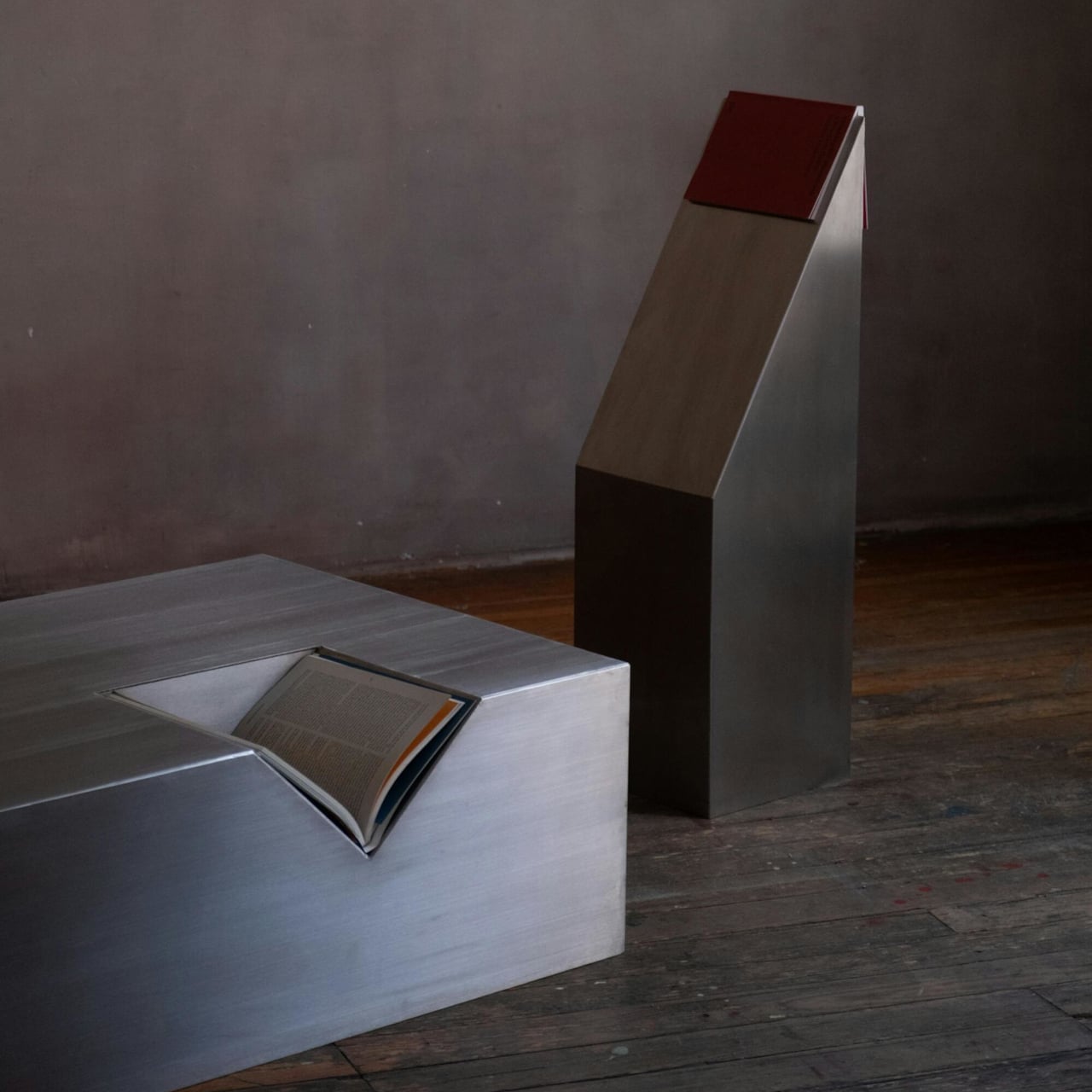

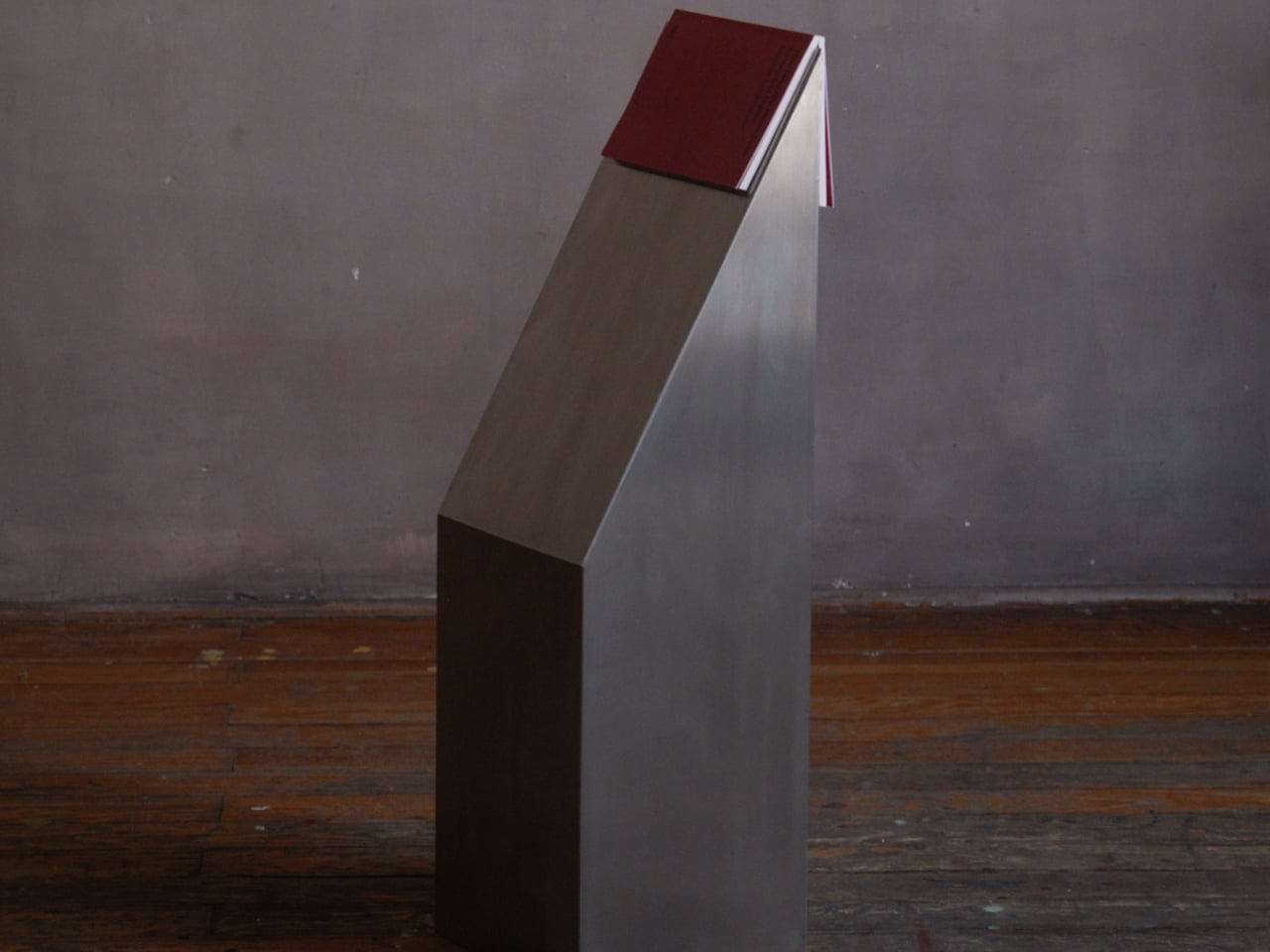
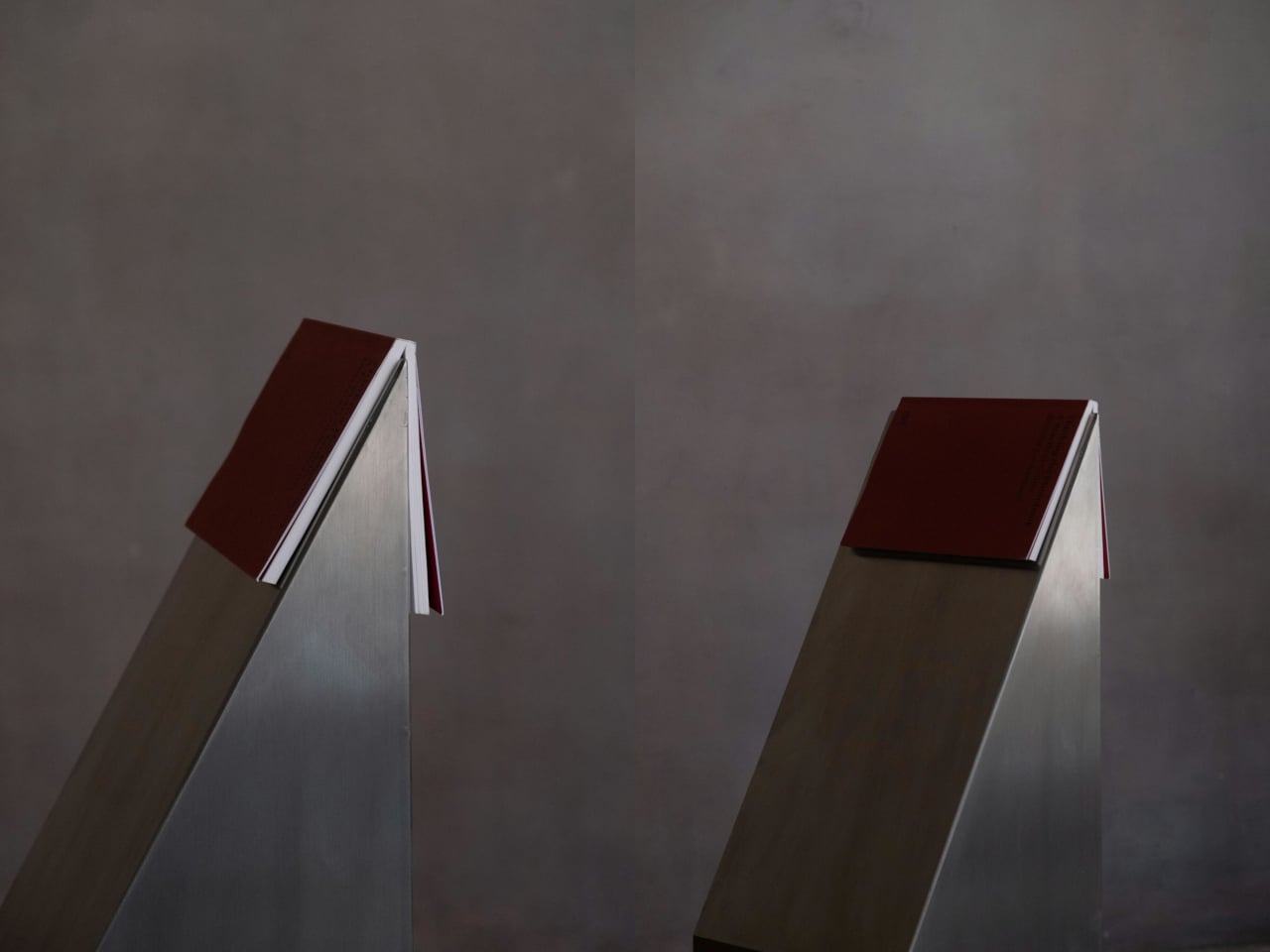
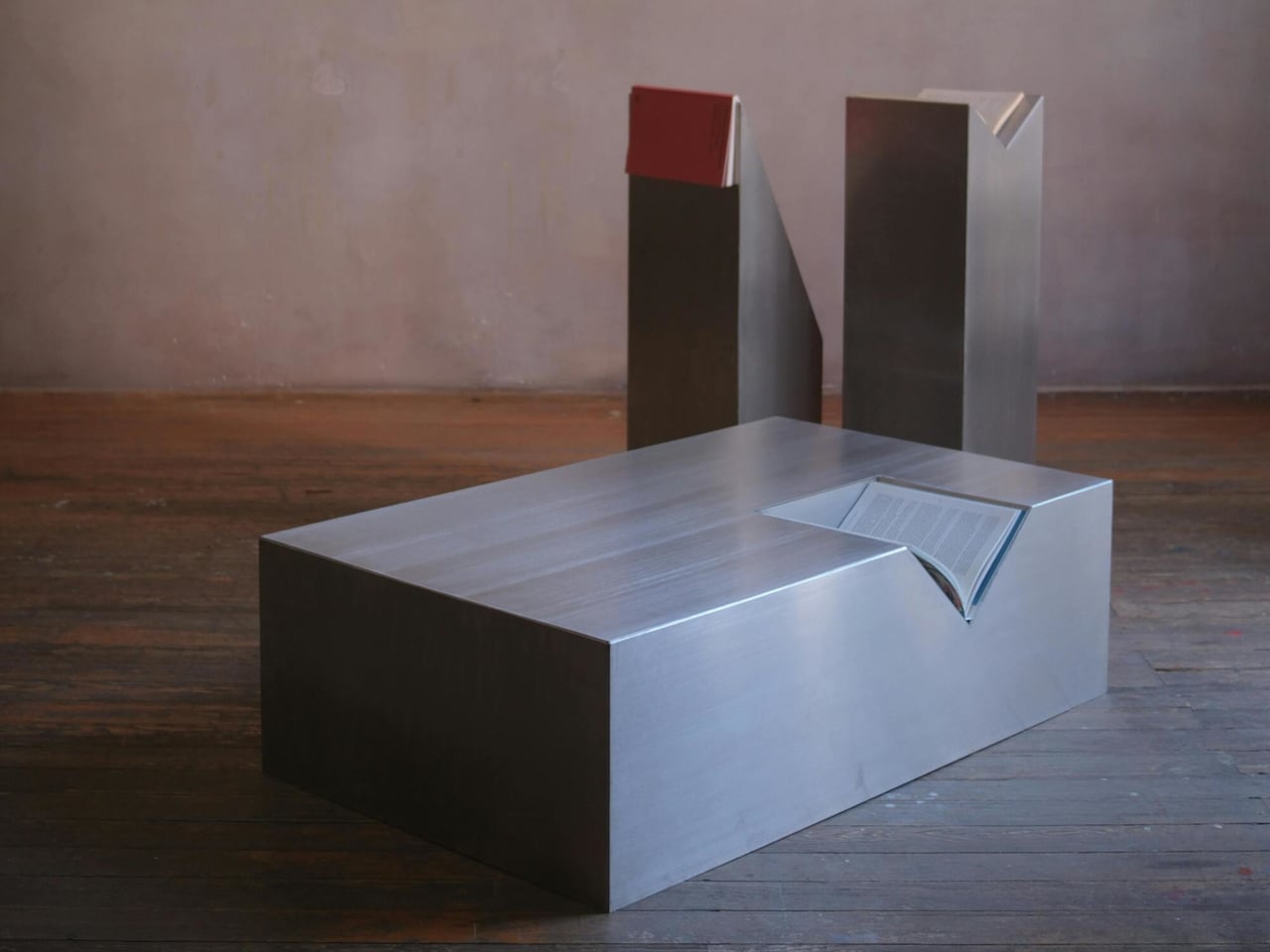
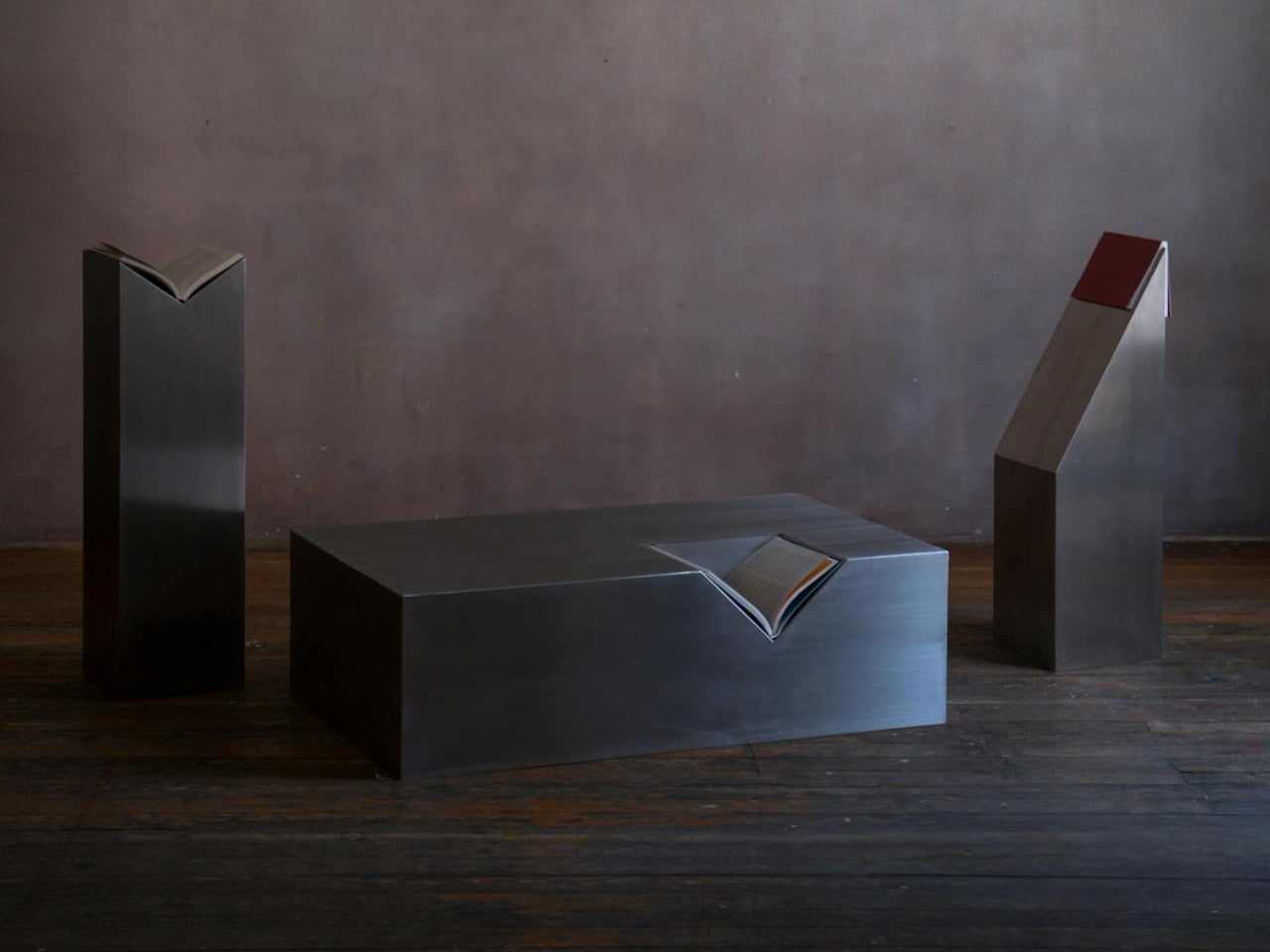
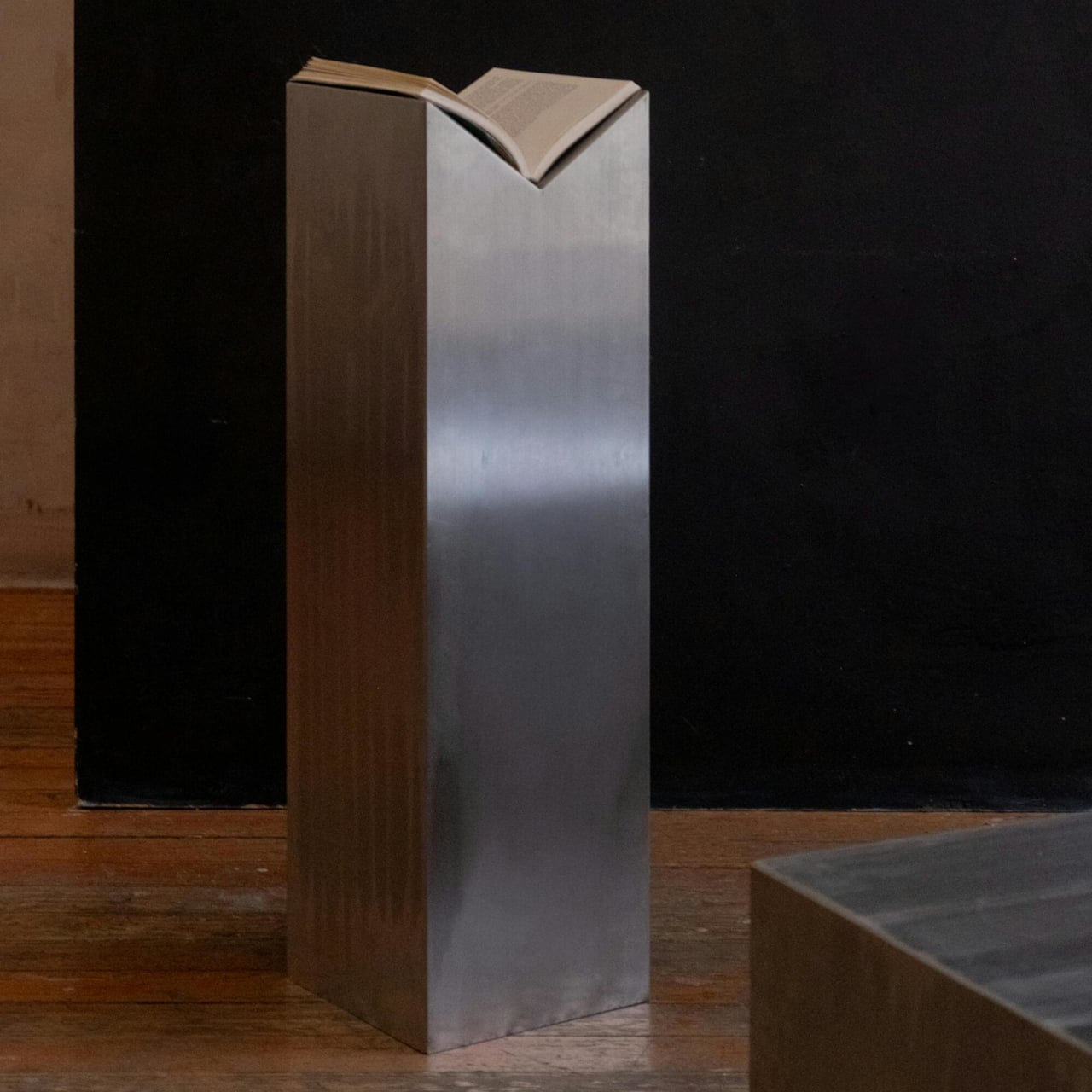
The collection includes two standing totems and a coffee table, all in brushed stainless steel with a matte finish. One totem is a tall rectangular column with a V-shaped notch cut into the flat top, wide enough to hold an open book by its spine with pages splayed upward like wings above the steel. The other has an angled face cut diagonally from the top, with a slot along that edge that tilts the book upward at a display angle.
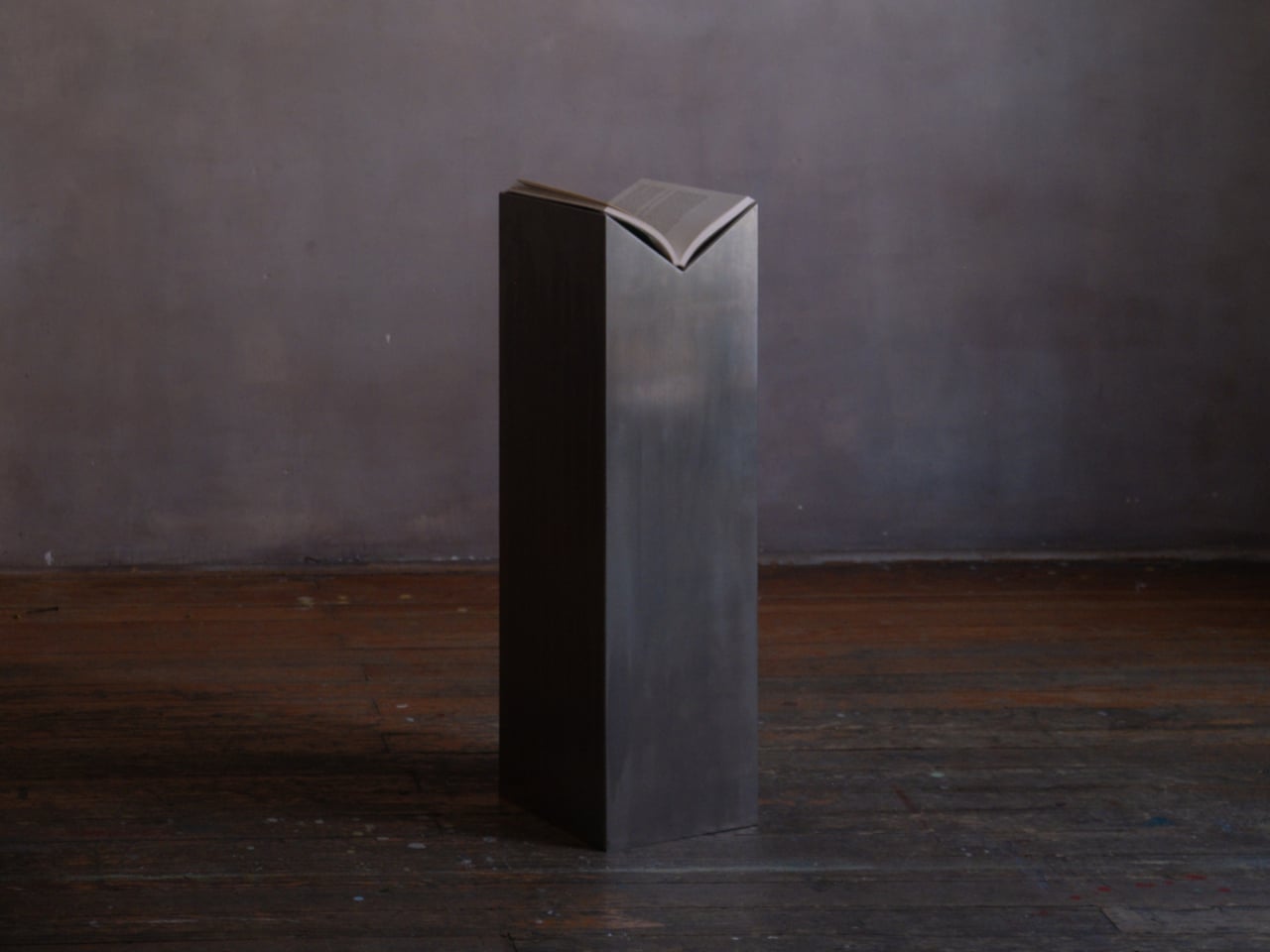
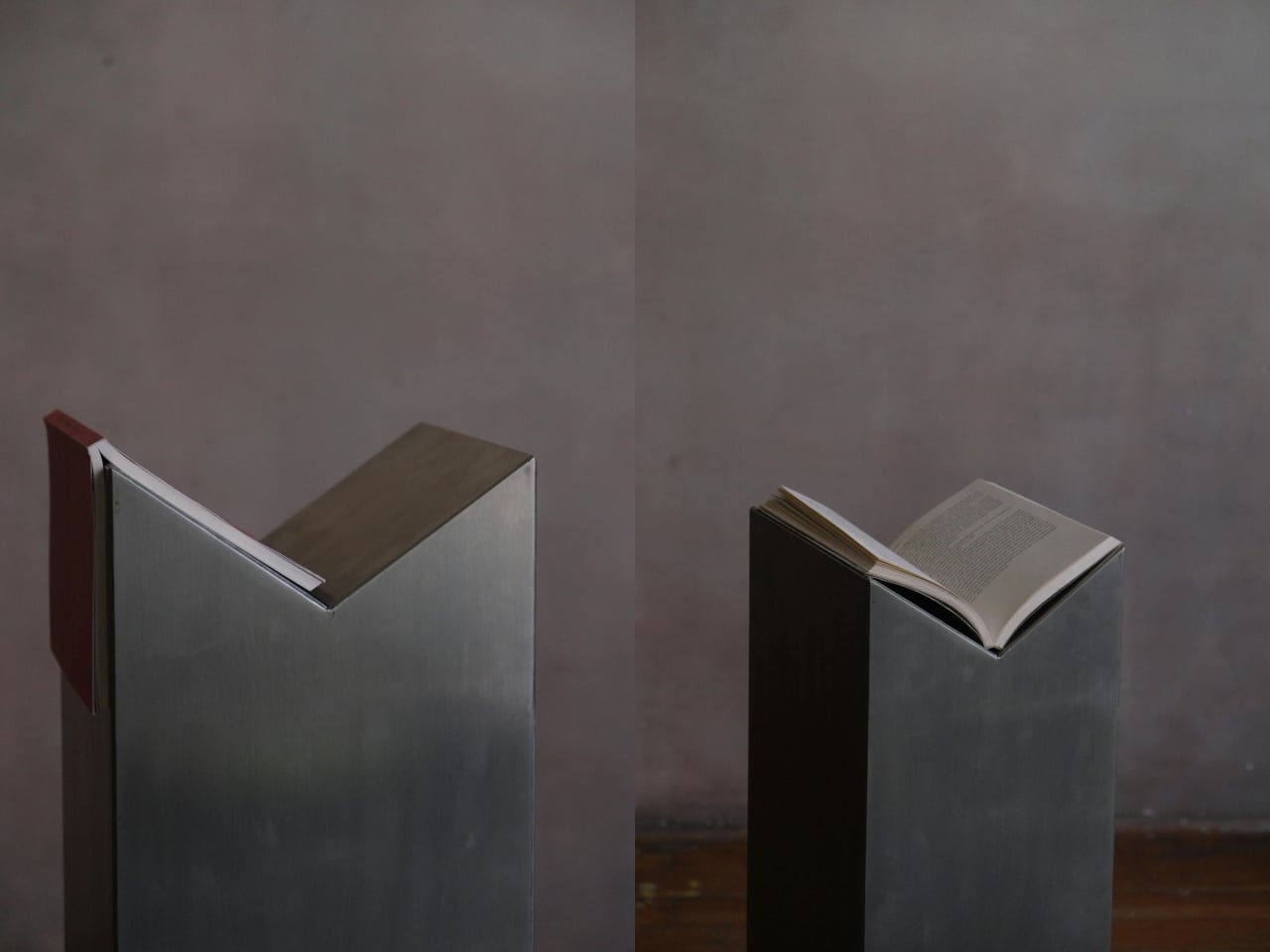
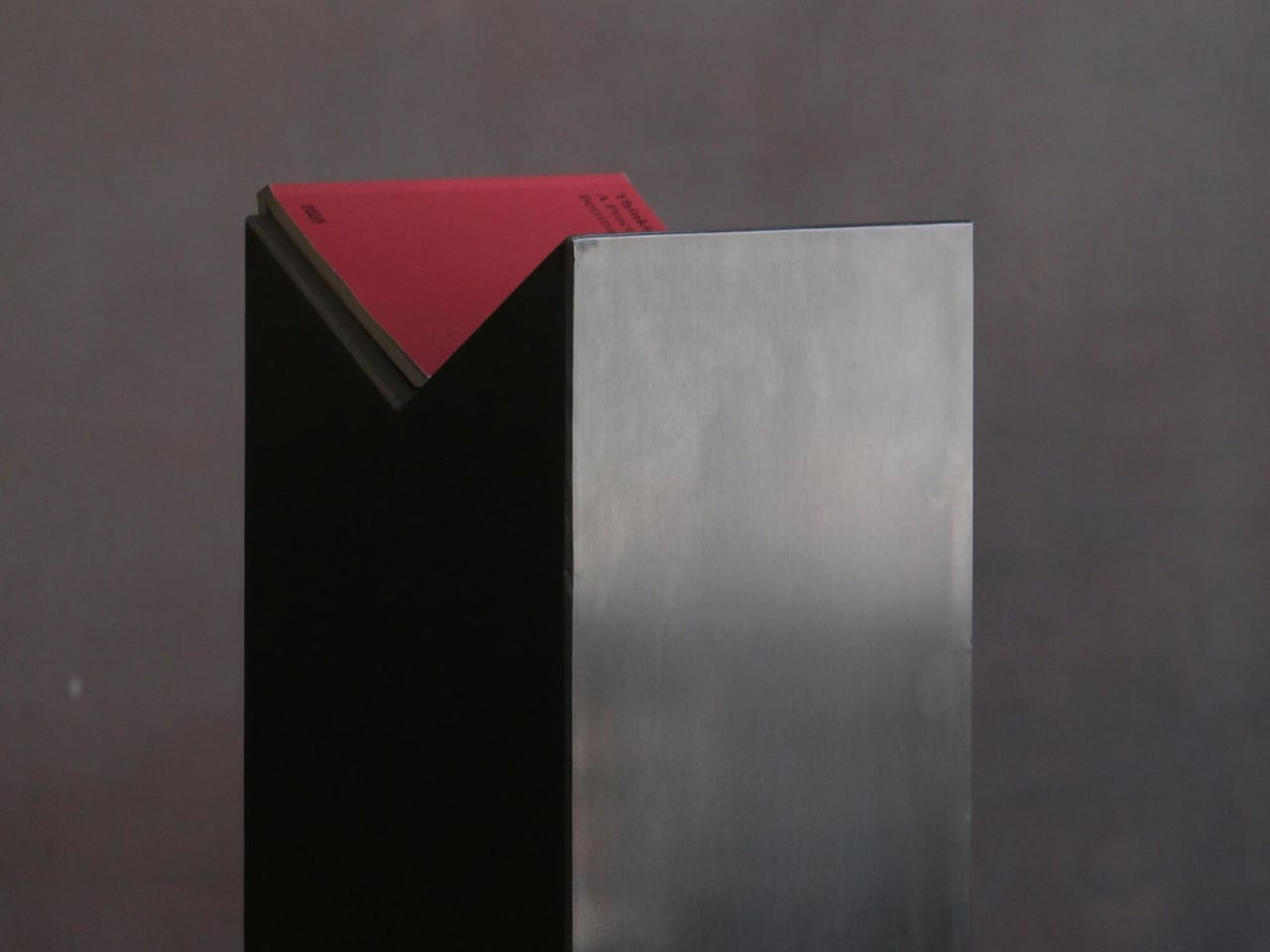
That’s a meaningful distinction from a bookend or a reading stand. The totems are floor-standing, placing a held book at roughly chest height, which makes picking it up feel more like choosing something from a collection than retrieving it from a pile. The sculptural quality holds whether a book is in the slot or not, but the slot gives each totem a reason to exist beyond decoration, and beyond what most furniture does with books at all.
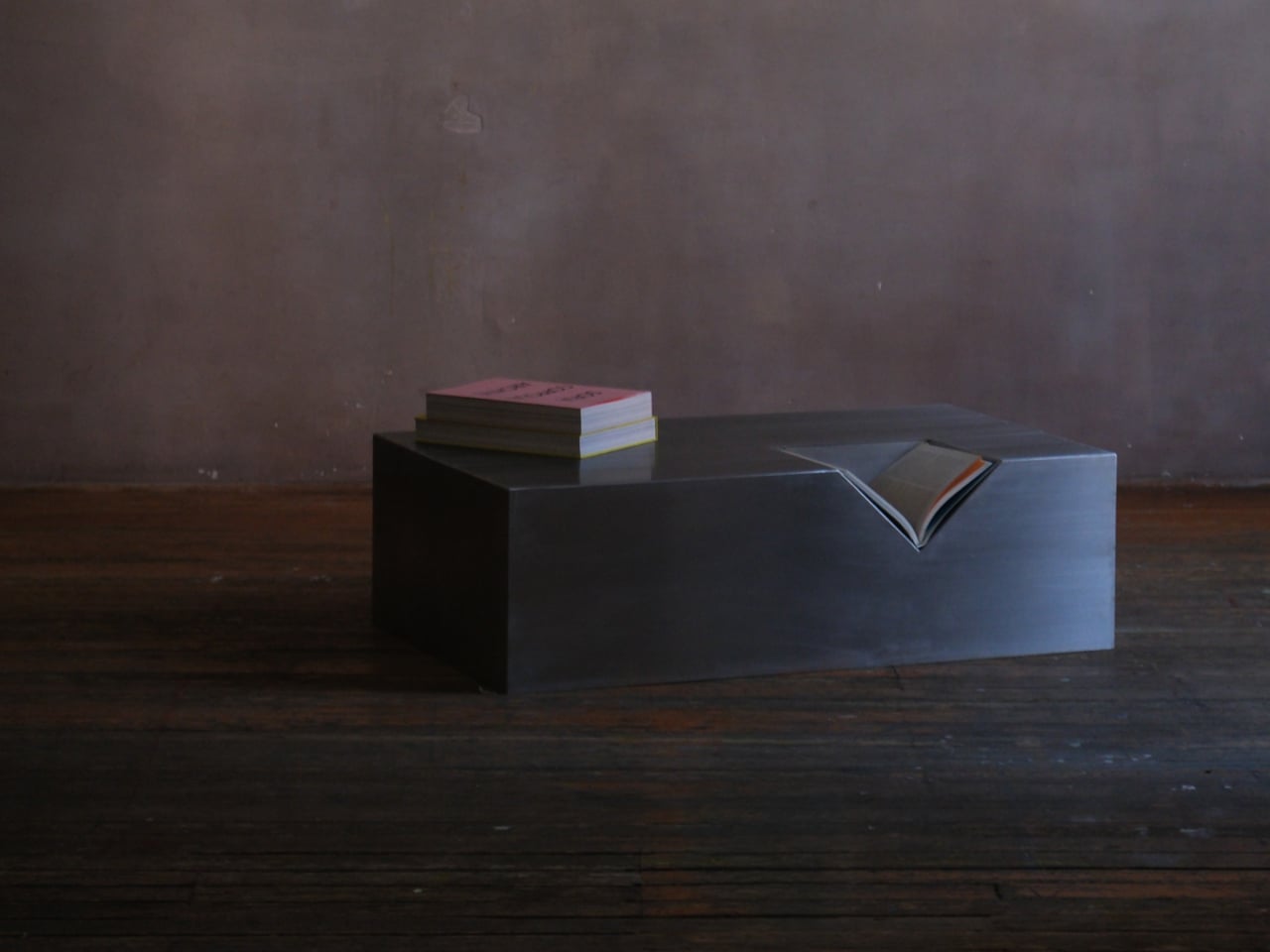
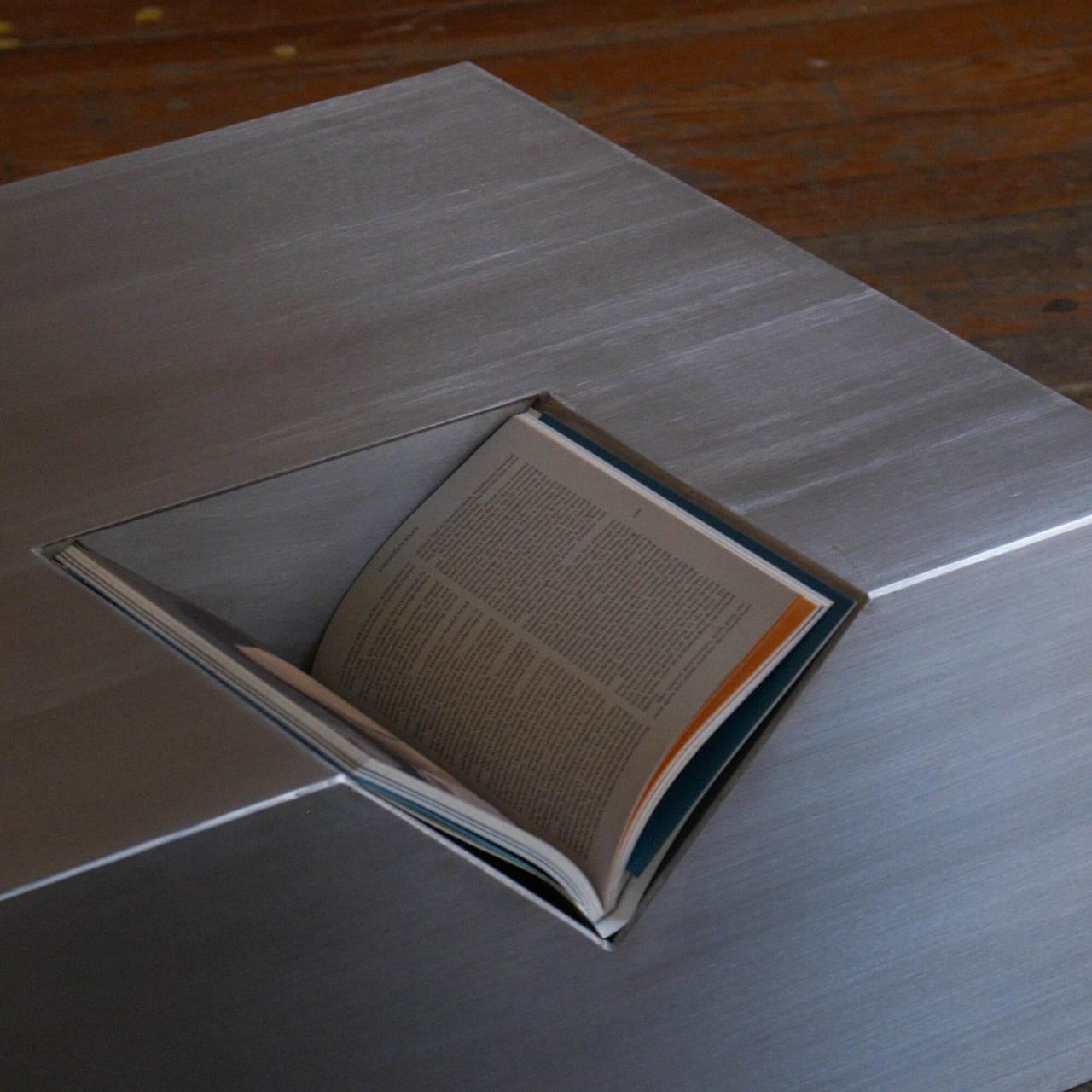
The coffee table operates on the same logic at a different scale. A diagonal slot runs across part of the steel surface, holding an open book at a shallow, readable angle while the flat area remains free for other objects. It’s a small structural decision that changes how you interact with the table. A book placed in the slot reads as intentionally parked rather than absentmindedly abandoned, which turns out to be a more significant distinction than it sounds.
Eran’s studio philosophy fuses artisanal work with a vision that connects the past and present, and the Totem name draws on archaeological totemic sculptures found across Mexico. That framing does real work here. A totem holds something up, marks it as significant. Dedicating a piece of furniture specifically to keeping a book accessible and presented changes what the book means in a space, and the collection is made in Mexico, entirely in stainless steel, sitting at the intersection of furniture and sculpture with enough conviction that neither category alone quite covers it.