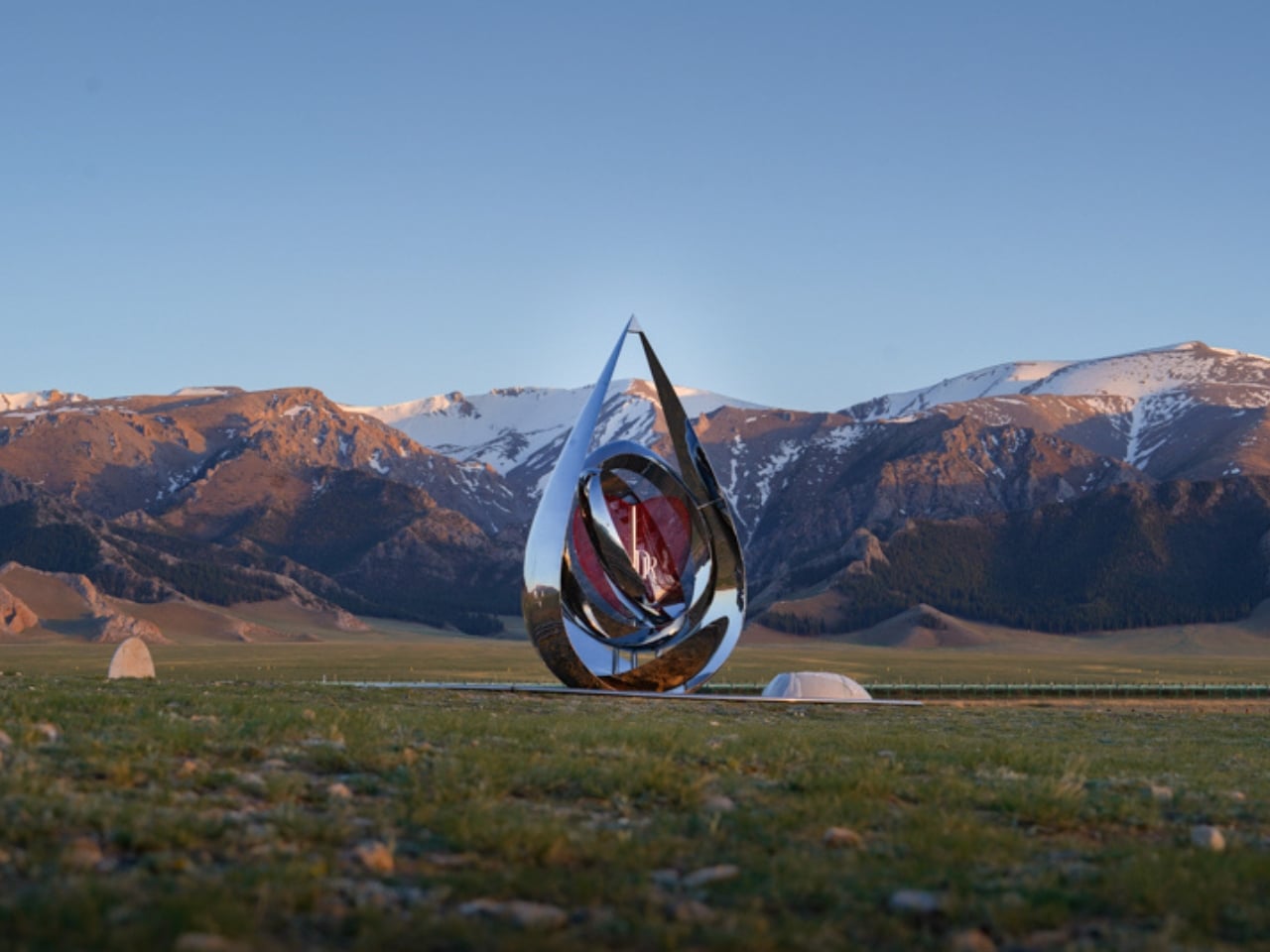

Sayram Lake sits in a remote corner of Xinjiang, China, at an altitude that makes the air feel thinner and the colors feel brighter. It’s the kind of place that deserves a nickname, and it has a good one: “the last tear of the Atlantic.” The story goes that moisture from the Atlantic Ocean travels thousands of miles across the Eurasian continent, losing itself to evaporation along the way, and what finally arrives at Sayram is what’s left. A last, quiet exhale. A tear. It’s a beautiful piece of geography wrapped in a beautiful piece of poetry, and that combination has now inspired a beautiful piece of design.
Beijing-based Zhide Architectural Design Consulting recently unveiled Heart of Sayram Lake, a mirrored installation built along the lake’s edge for Chinese jewelry brand DR (Darry Ring), a label known for its philosophy of “One Life, One Only, One True Love.” The partnership makes sense. DR built its entire identity on the idea of a single, lifelong commitment. Sayram Lake built its mythology on the same idea, just in water. Marrying the two was either an obvious move or a brilliant one, and I’d argue it’s a little of both.
Designer: Zhide Architectural Design Consulting (Beijing) Co., Ltd.
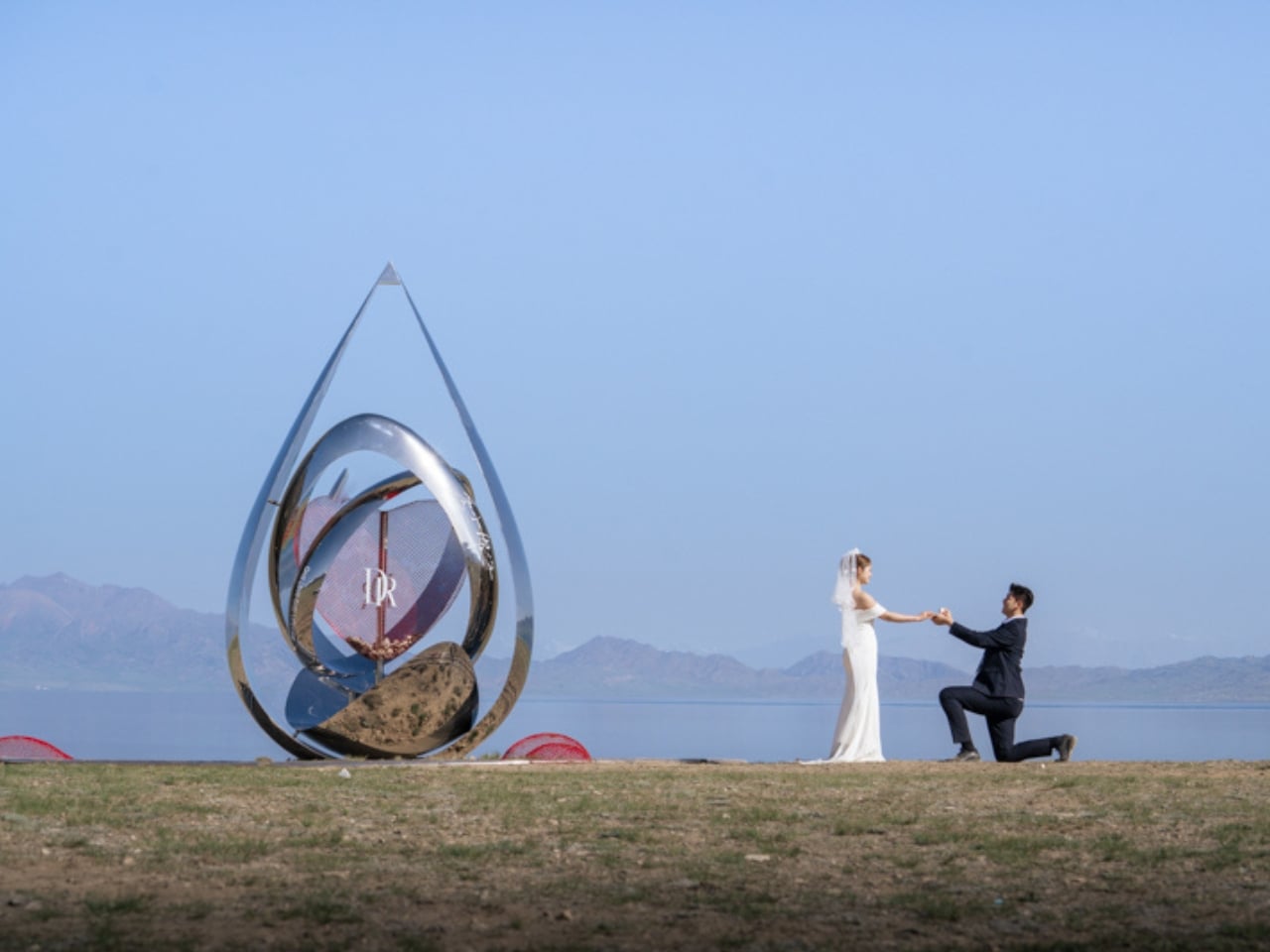
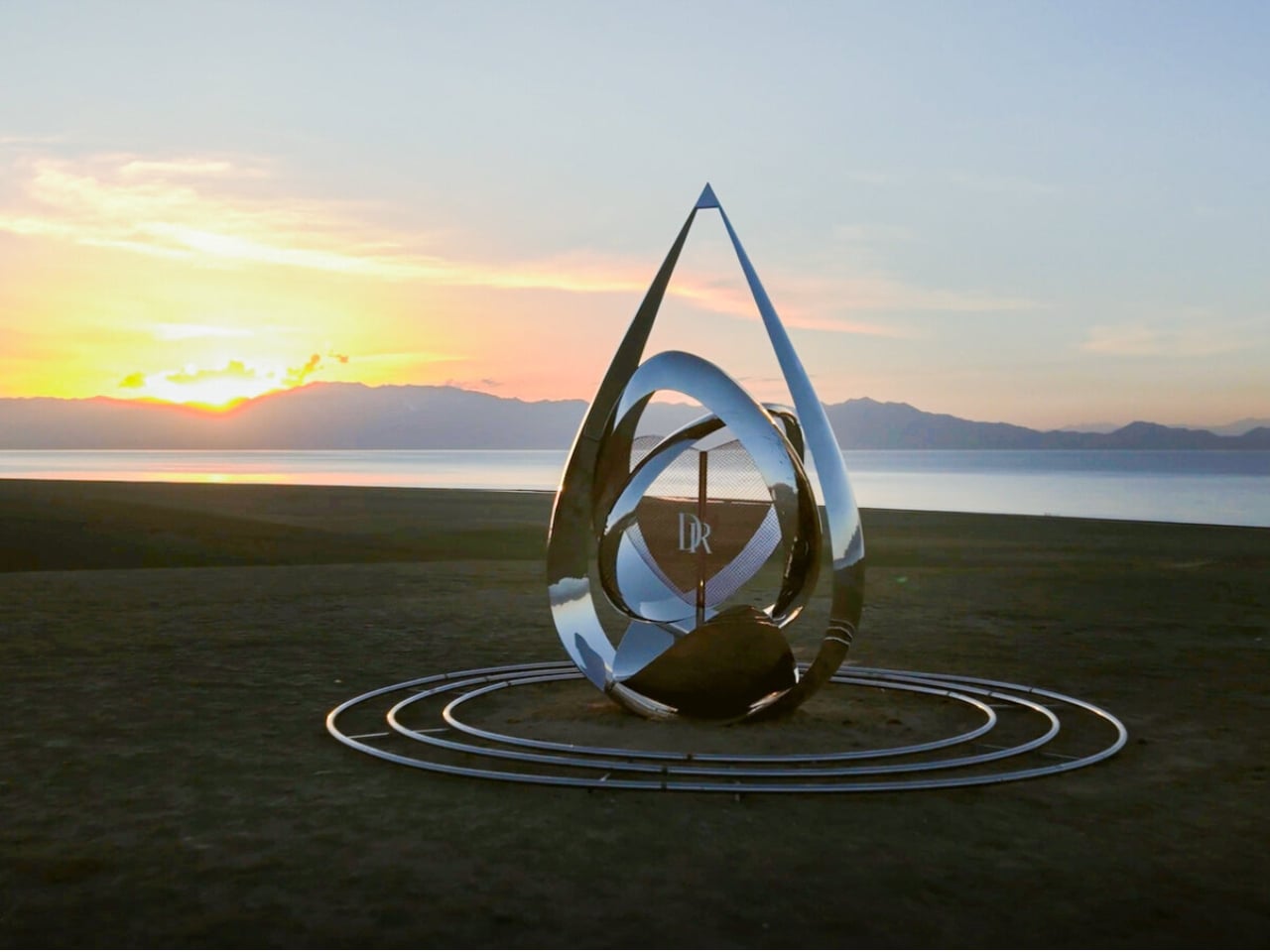
The installation is shaped like a water drop, which reads as a literal nod to the lake’s tearful lore and a visual echo of DR’s engagement-ring sensibility. It’s ground-mounted with circular ripples spreading outward from the base, mimicking the moment a drop hits still water. At its center, two interlocking rings suggest matching diamond bands. It’s sentimental, yes, but the execution keeps it from tipping into kitsch. The full structure is built from mirrored metal, and the effect is genuinely stunning. It doesn’t sit in the landscape so much as absorb it. Snow peaks, meadow grass, the sky, and the lake all fold into its surface, making it look less like an installation and more like a fragment of the world folded back on itself.
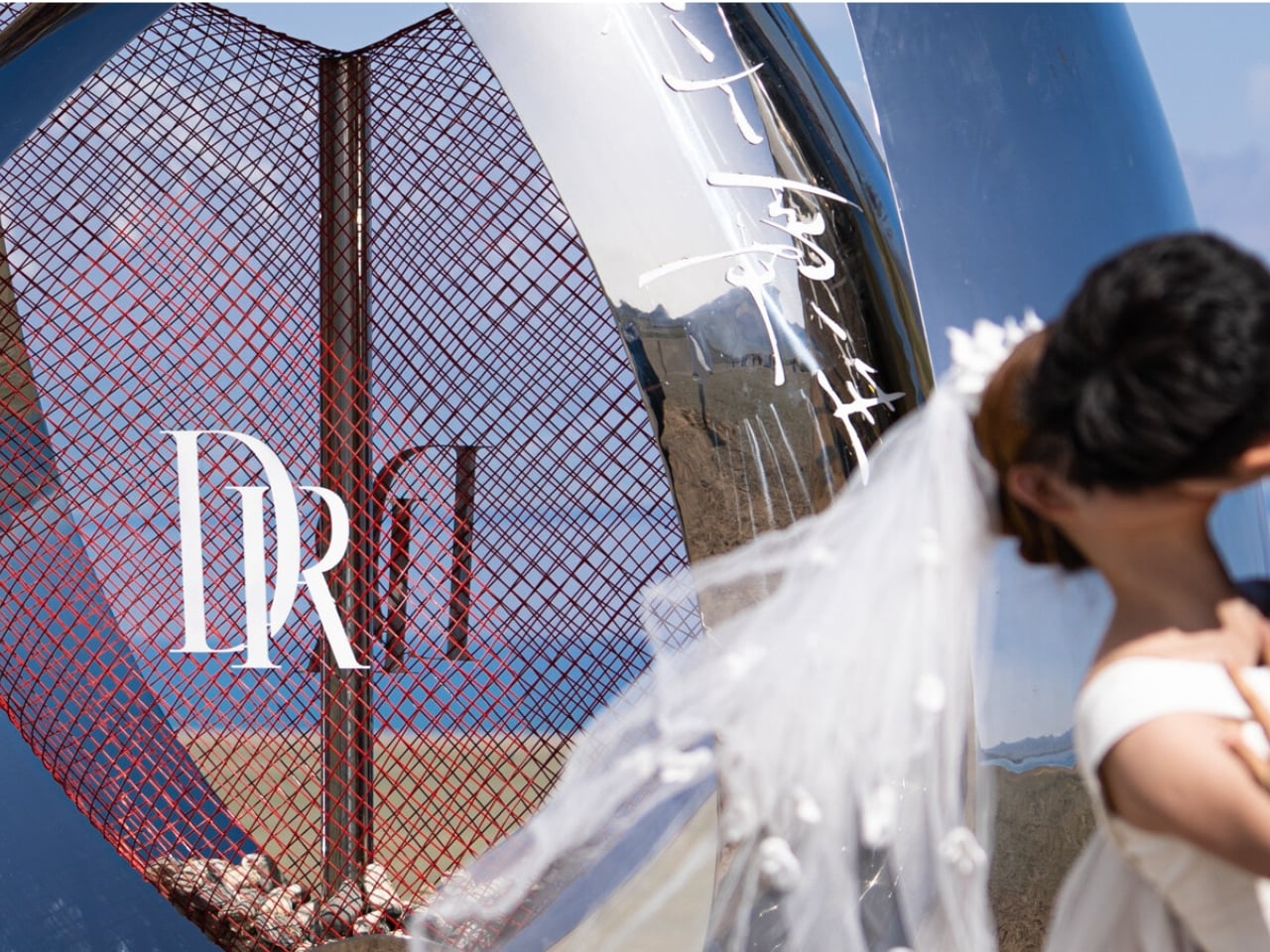
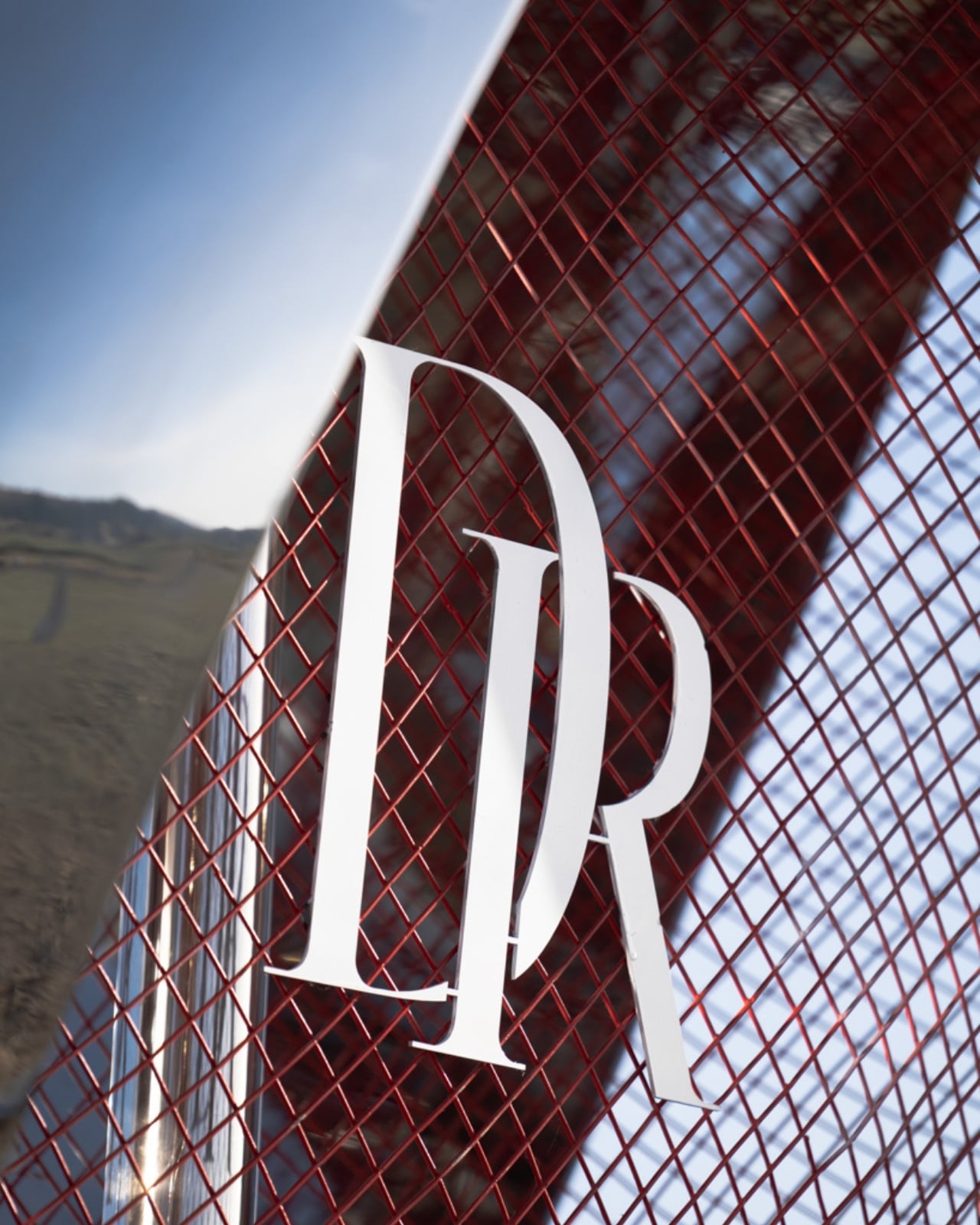

Hollow red wire mesh elements run through the design as a secondary layer, contrasting the hard polish of the mirrored metal with something warmer and more open. That contrast works. The red feels intentional against the pale highland palette of the surrounding area: ice blue, snow white, meadow green. The designers clearly understood that the installation would compete with one of the most visually dramatic natural environments in China, and rather than trying to stand apart from it, they let the lake win. The mirror borrows the landscape’s beauty. The result feels collaborative rather than intrusive.
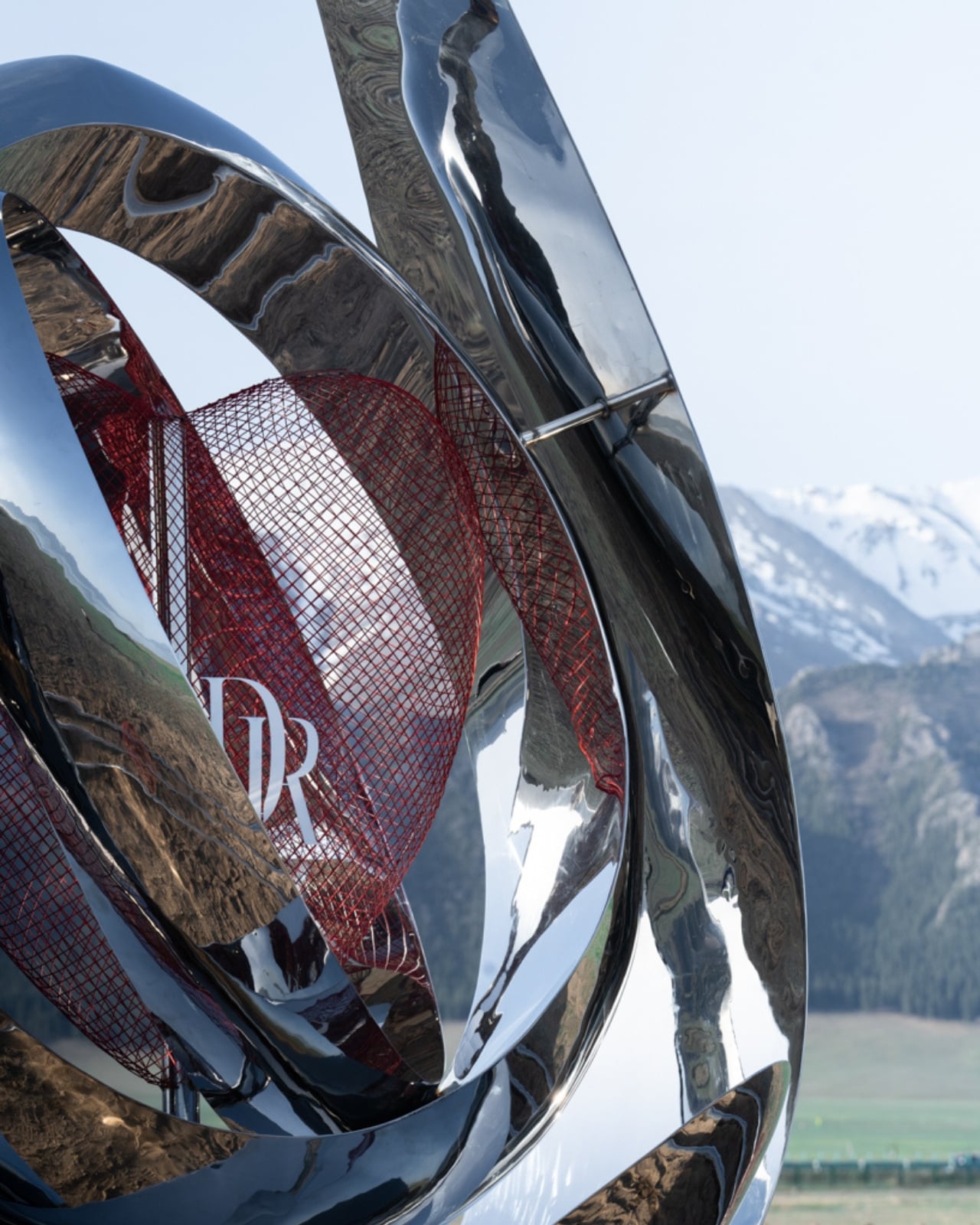
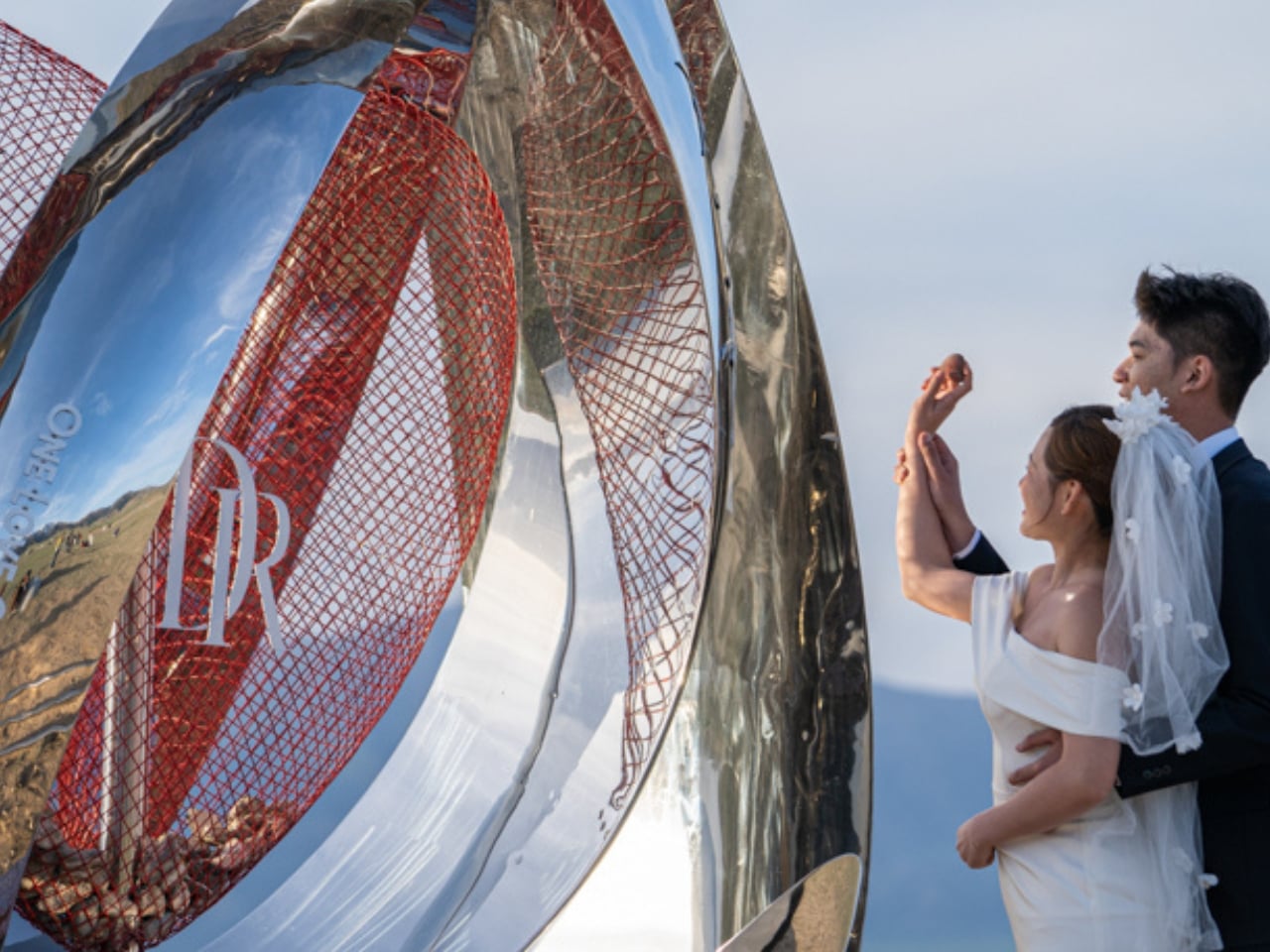
The design also carries a participatory layer that extends its purpose beyond spectacle. Couples visiting the site can place natural Sayram Lake stones and DR custom heart locks inside dedicated compartments built into the installation. As these accumulate, engraved love mottos inscribed on the interior walls gradually become visible. Filled units can eventually be arranged into a larger matrix of interconnected structures, turning the whole thing into something that grows with each visit, each person, each relationship. A landmark that updates itself through the people who come to see it is a more interesting proposition than one that simply stands there being beautiful.
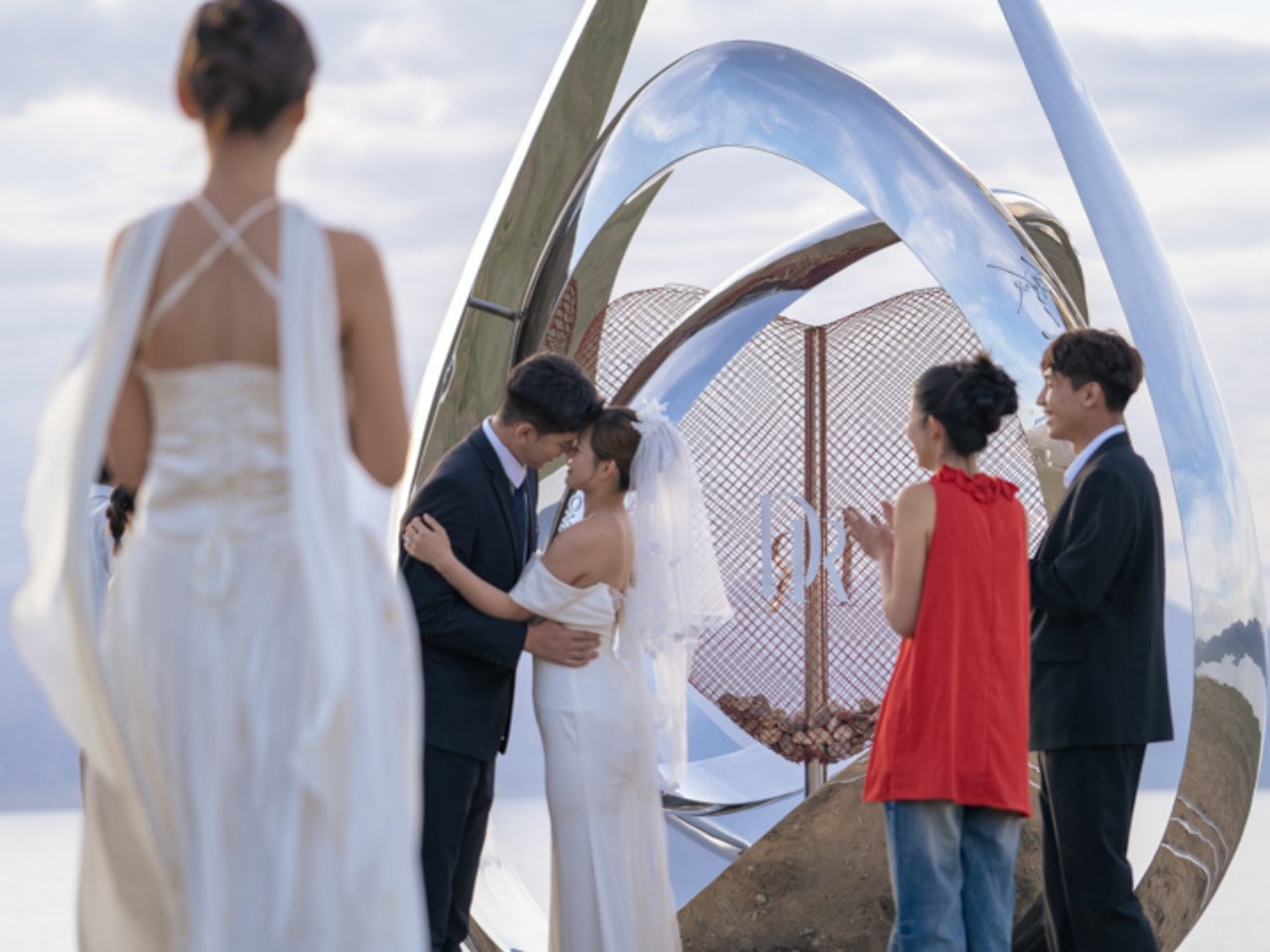
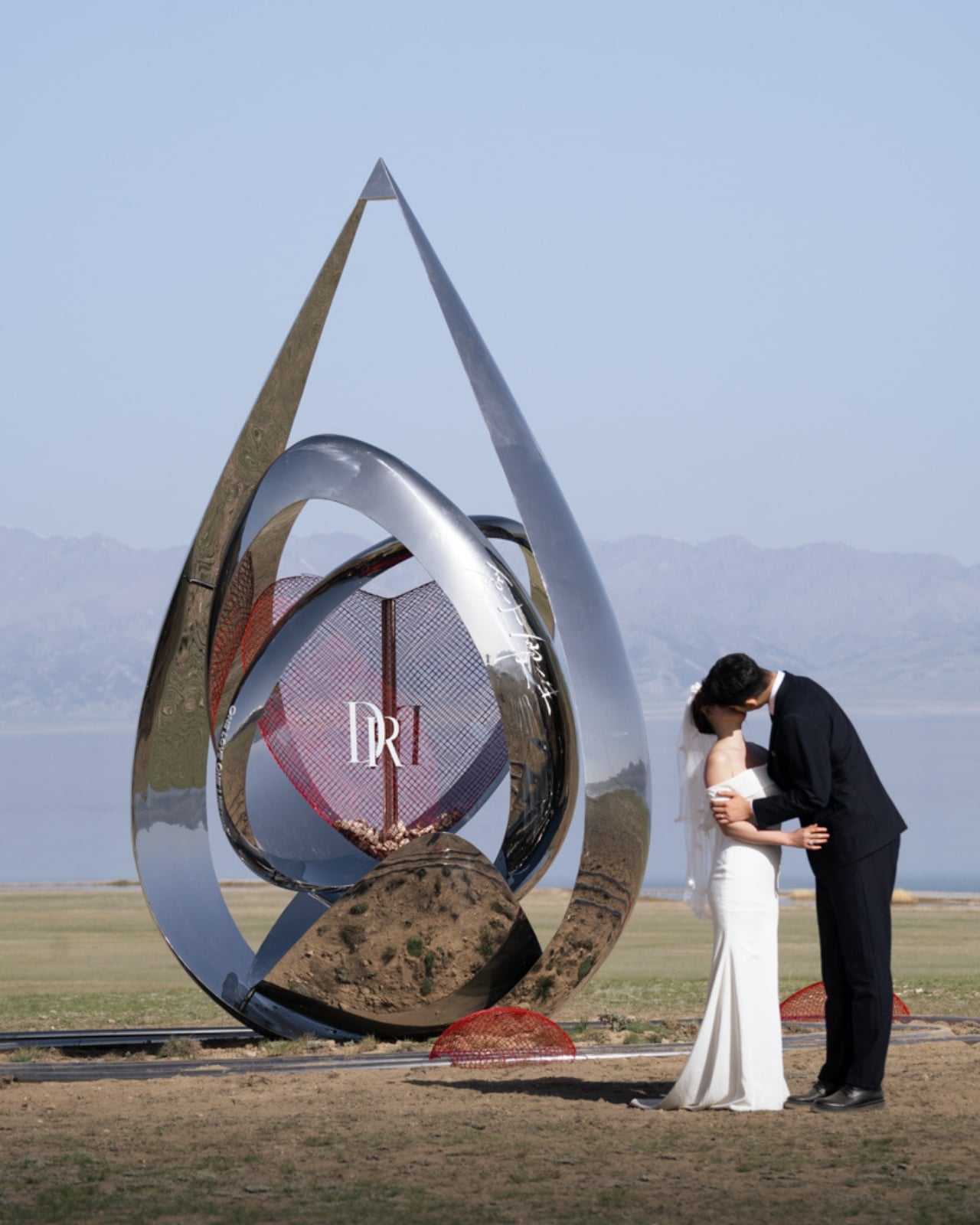
Public art commissioned by brands tends to make critics nervous, and I get it. The line between meaningful cultural contribution and elaborate marketing is often thin. But looking at Heart of Sayram Lake, it feels like the design team at Zhide prioritized the landscape and the experience above the brand’s visibility. Nothing about it screams advertisement. It sits quietly in one of the most dramatic settings in the country, doing its job, which is to give people a way to feel connected to a place and to each other.
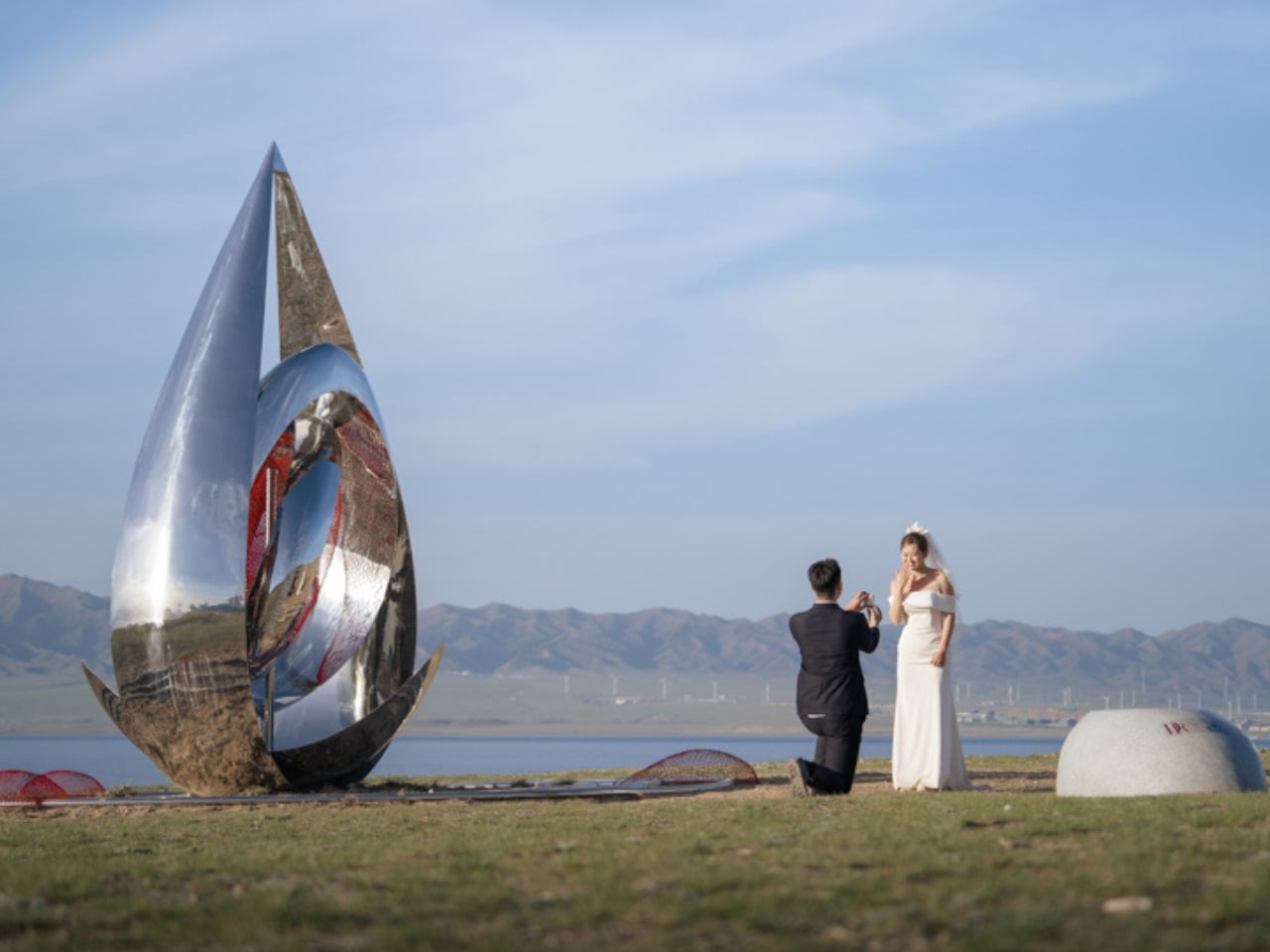
Sayram Lake has been turning people poetic for centuries. That a jewelry brand and a Beijing architecture firm found a way to add to that tradition without overwhelming it is worth pausing on. The best design doesn’t shout. It reflects.