Kinetic energy is a fascinating thing, a fact I first realized after becoming obsessed with pull-back toy cars as a child. The simple act of rolling the car backward to store energy before watching it shoot forward at surprising speed felt almost magical. I didn’t understand the physics back then, but I knew there was something immensely satisfying about turning stored energy into motion.
Tell that to James Bruton, and you’ve got an engineering challenge rather than a toy. The inventive YouTuber is back with another delightfully unconventional experiment, this time asking whether a vehicle can be powered entirely by elastic bands. Not the thin rubber bands you’d find in a desk drawer, but heavy-duty resistance bands designed for fitness training, capable of storing far more energy than their humble appearance suggests.
Designer: James Bruton

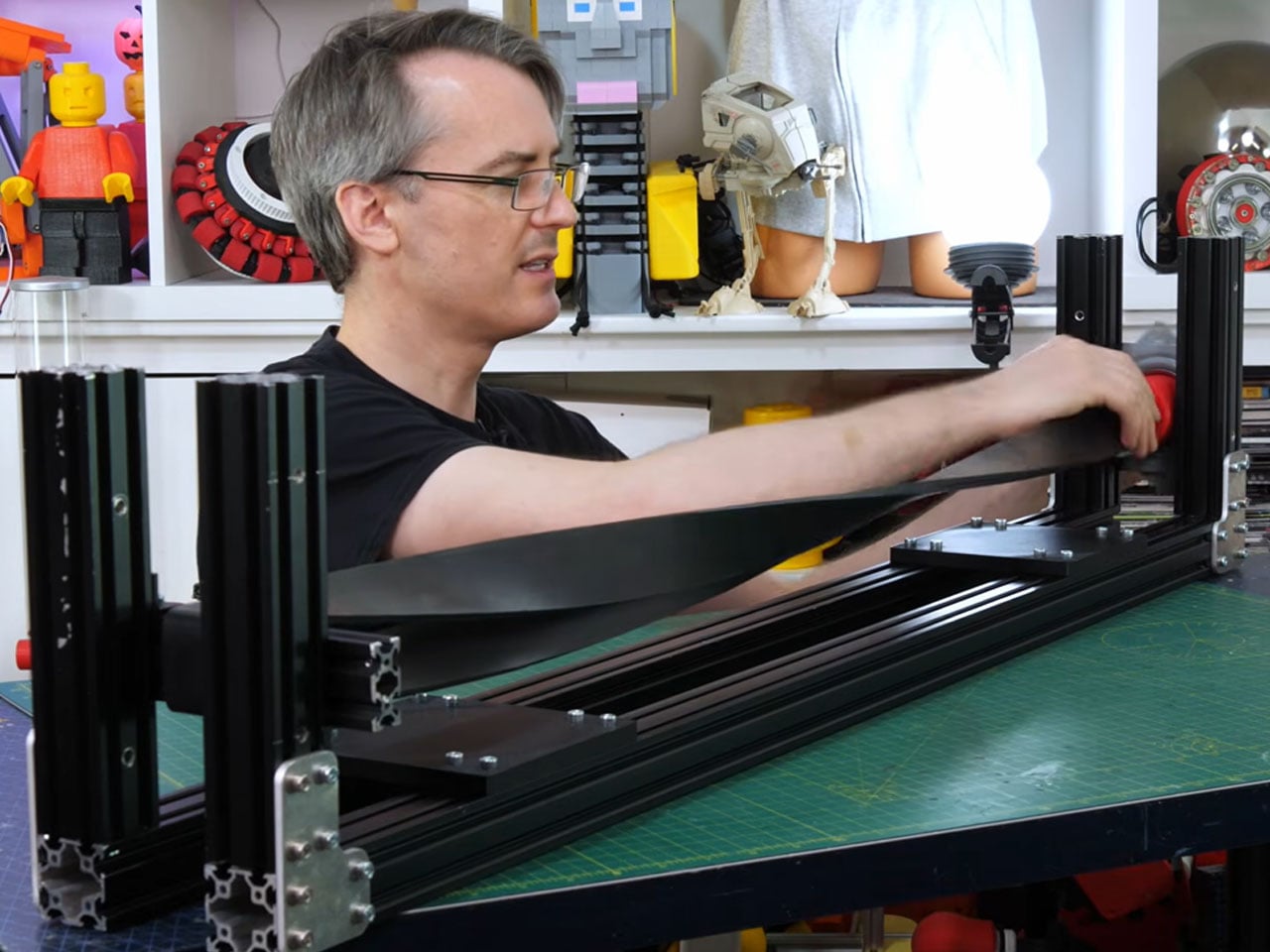
Bruton begins by building a test rig from industrial 4040 aluminum extrusions to understand how much energy these bands can store when twisted rather than stretched. The setup uses inexpensive Lazy Susan thrust bearings to let the mechanism rotate with minimal friction while a single resistance band is wound tighter and tighter. The initial tests prove surprisingly encouraging, with the band accepting dozens of twists before reaching its limit, hinting that there may be enough stored energy to propel a person.
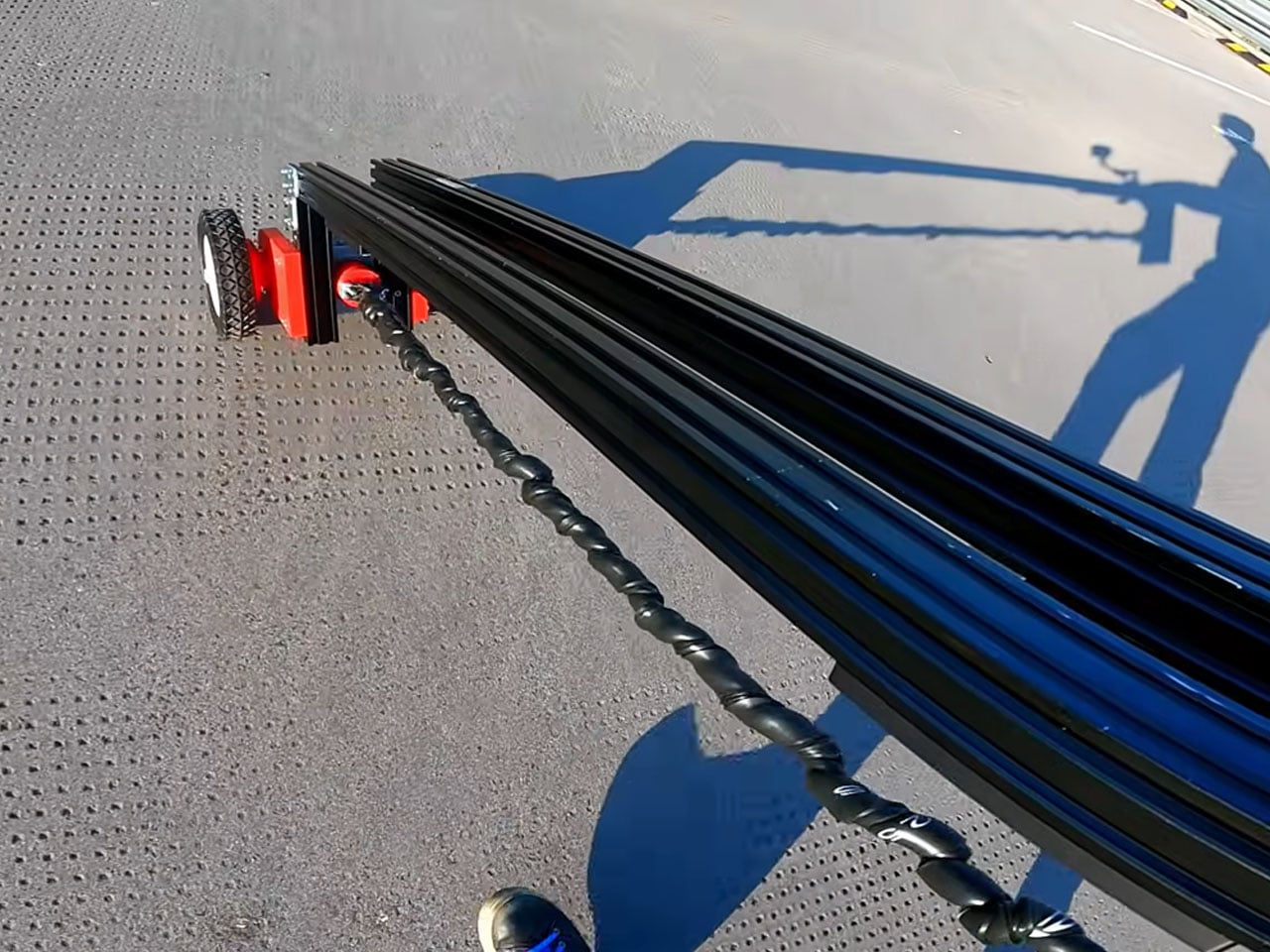
Turning that potential into useful motion, however, proves far more complicated. A pair of 3D-printed bevel gears delivers a 2:1 reduction to increase torque before driving a set of lightweight wheels. The prototype manages to move Bruton, but only for a couple of meters before the band eventually snaps under excessive winding. Rather than dismissing the concept, he treats the failure as valuable data, redesigning the drivetrain with an additional reduction stage that increases the overall ratio to 6:1. The improvement isn’t dramatic in terms of distance. Still, it delivers smoother power without permanently deforming the elastic band, confirming that gearing plays a bigger role than simply storing more energy.
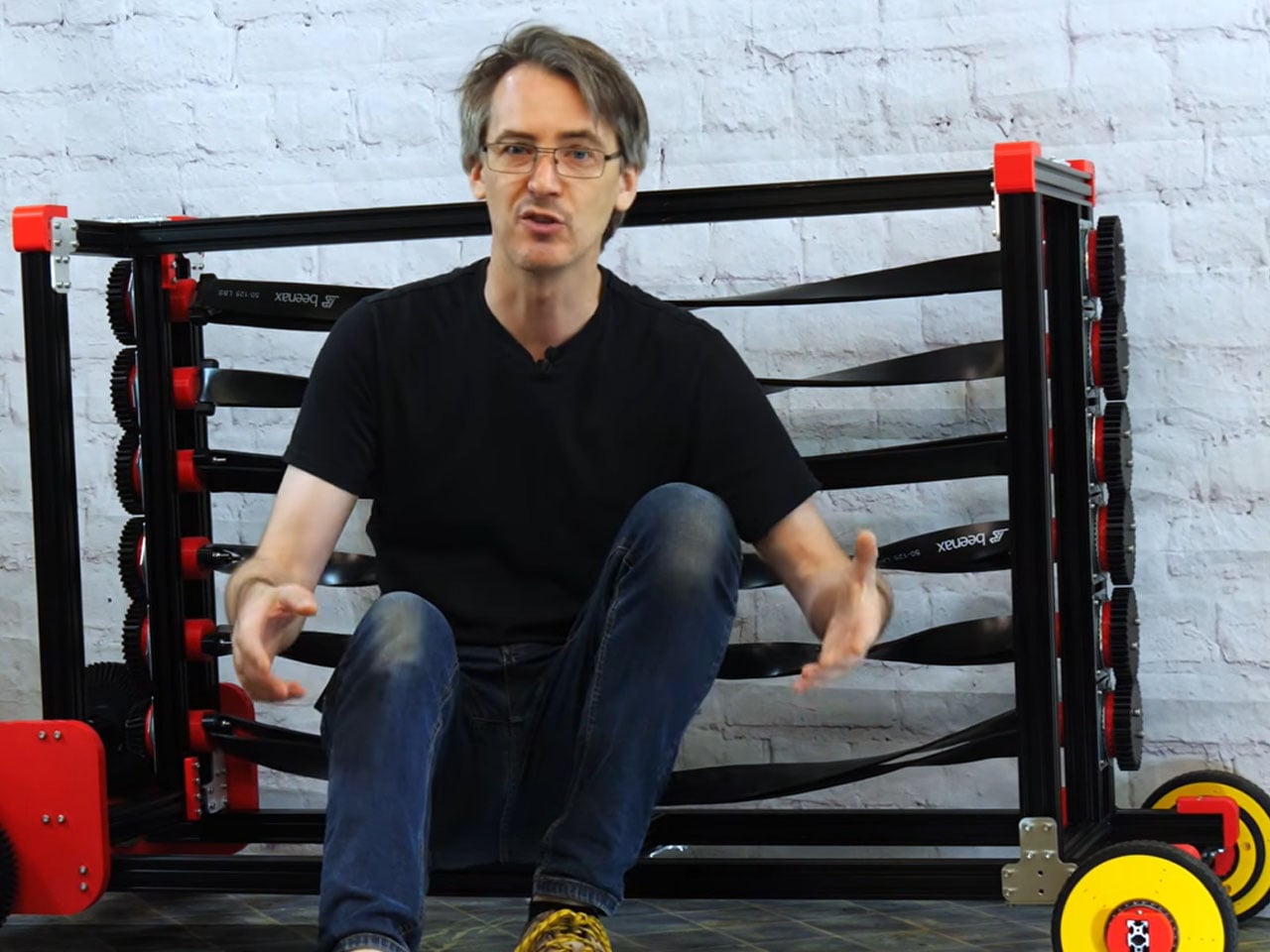
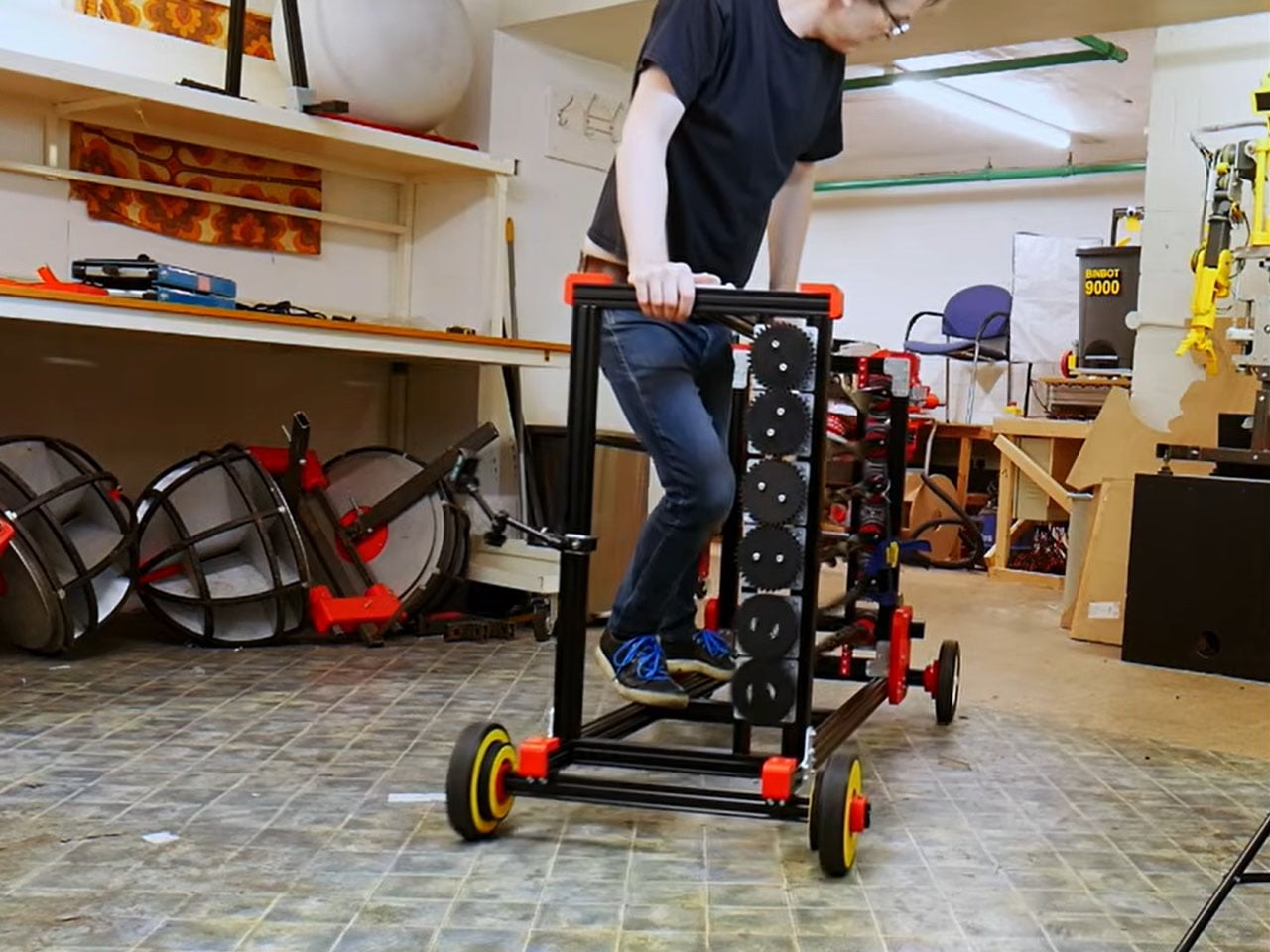
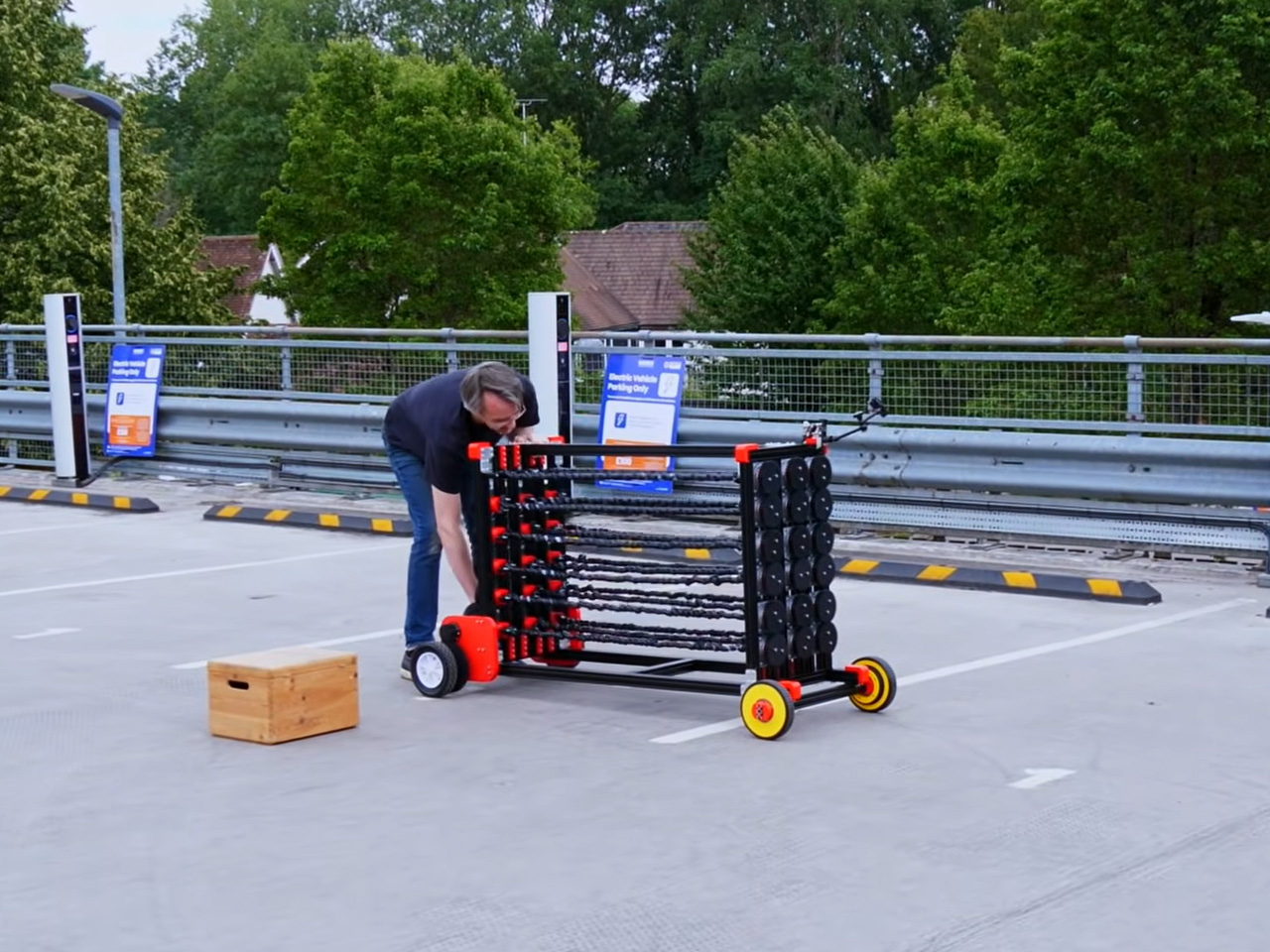
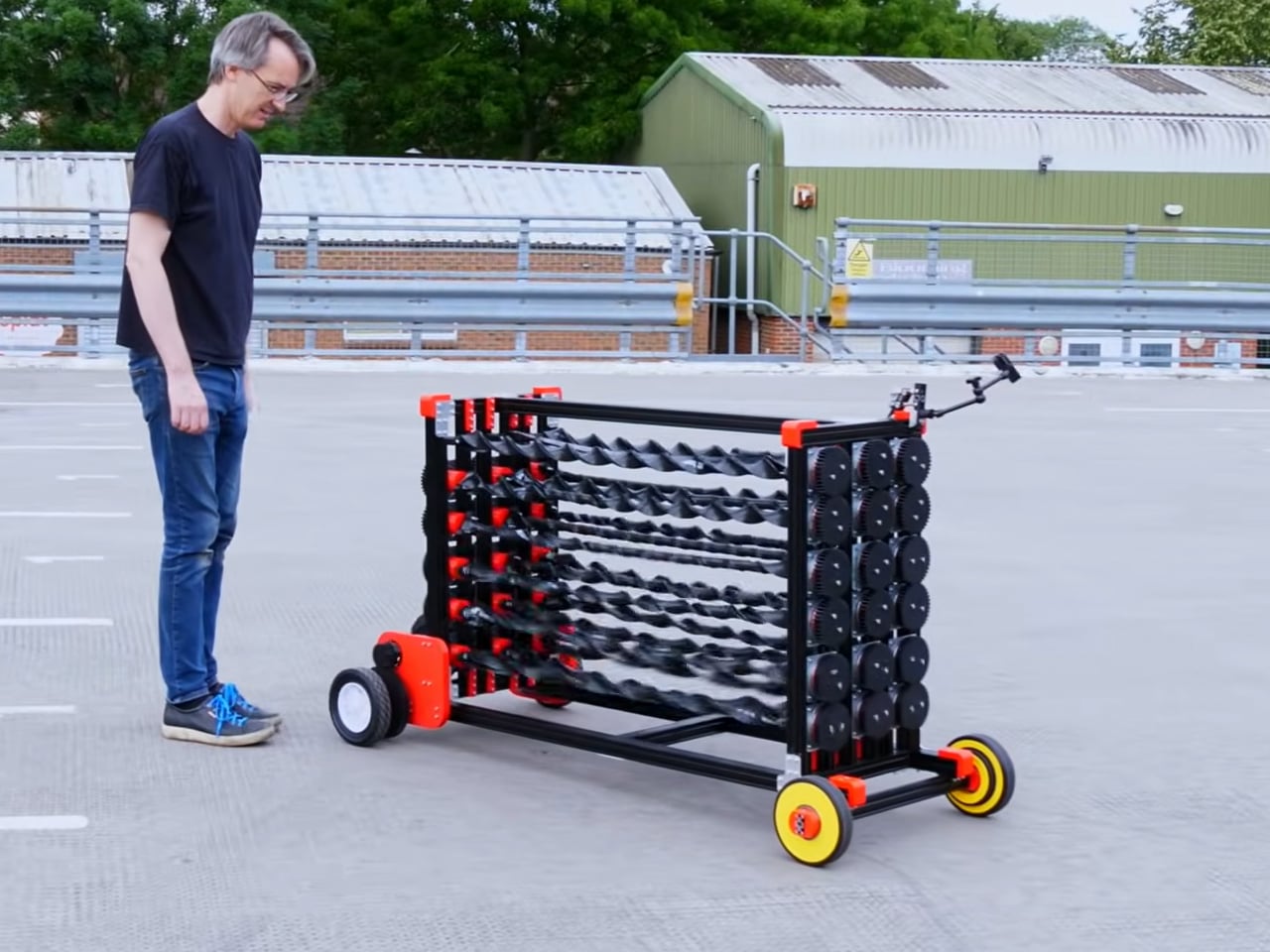
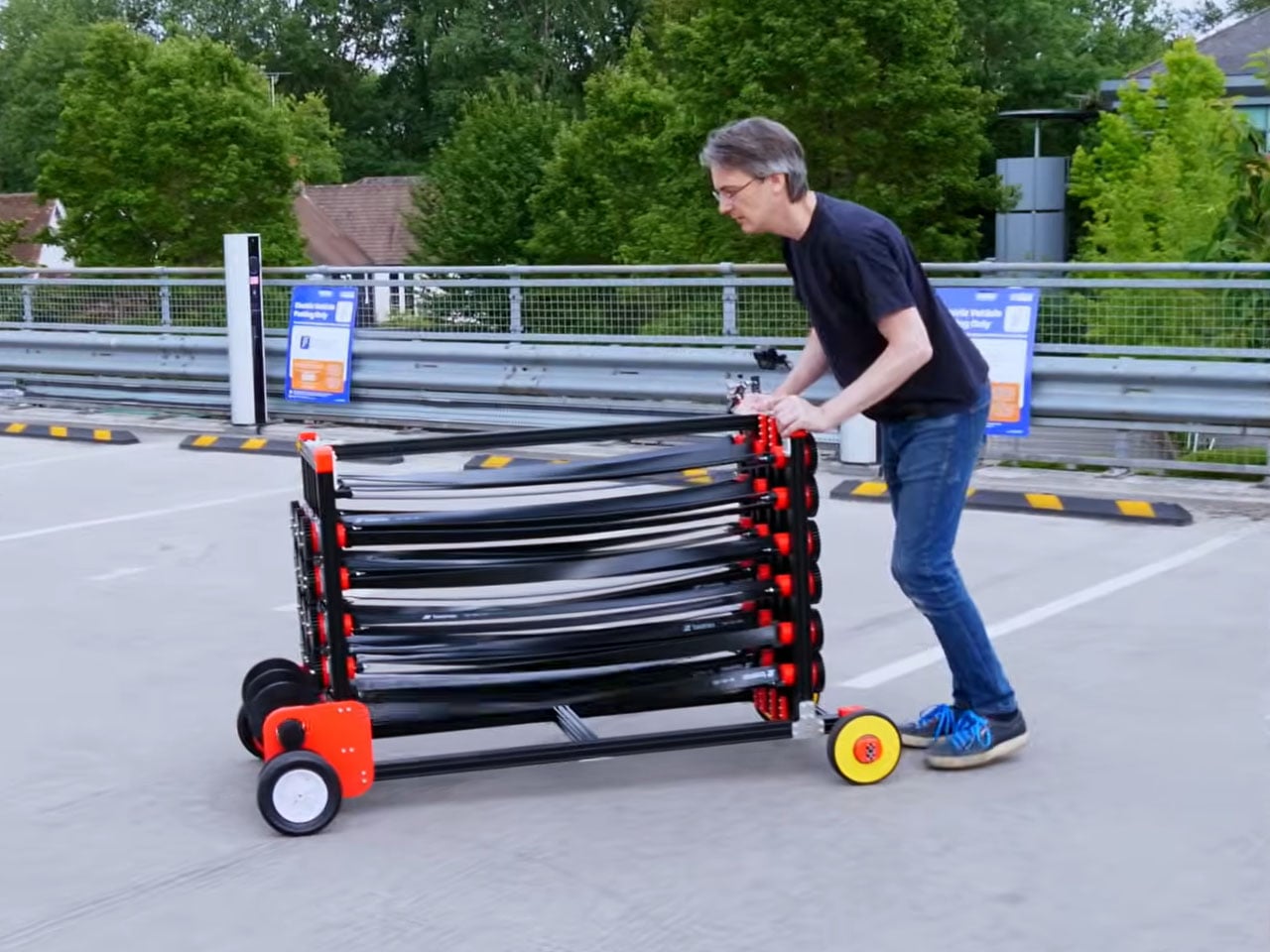
The next logical step is to increase the amount of stored energy itself. Instead of making the vehicle impractically long with one giant elastic band, Bruton develops an ingenious routing system that sends multiple bands back and forth through the chassis using intermeshing gears. CNC-machined aluminum brackets, industrial extrusions, custom 3D-printed components, and dozens of modified bearings come together to create a rigid frame capable of containing the enormous twisting forces generated by the growing elastic drivetrain.
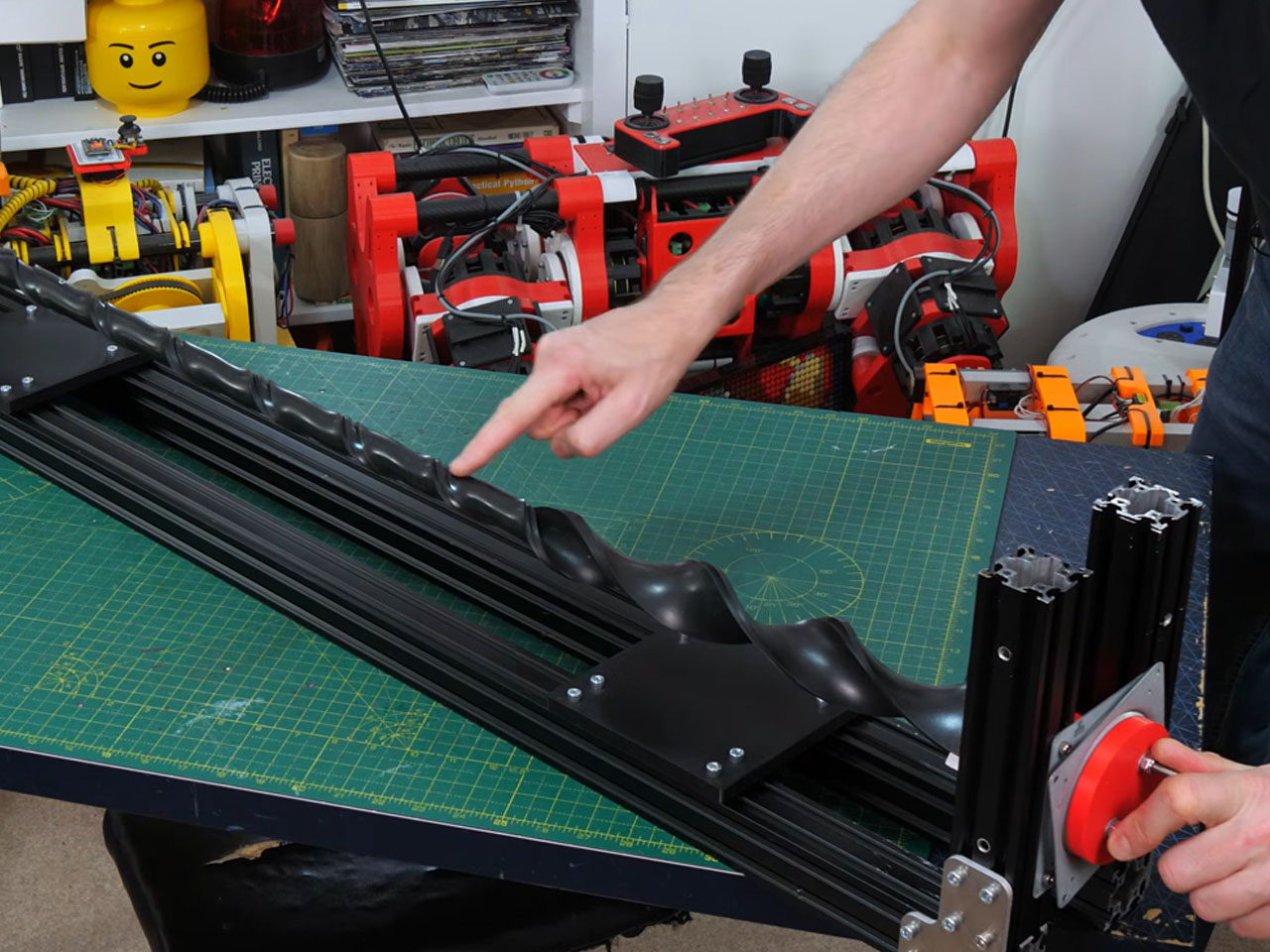
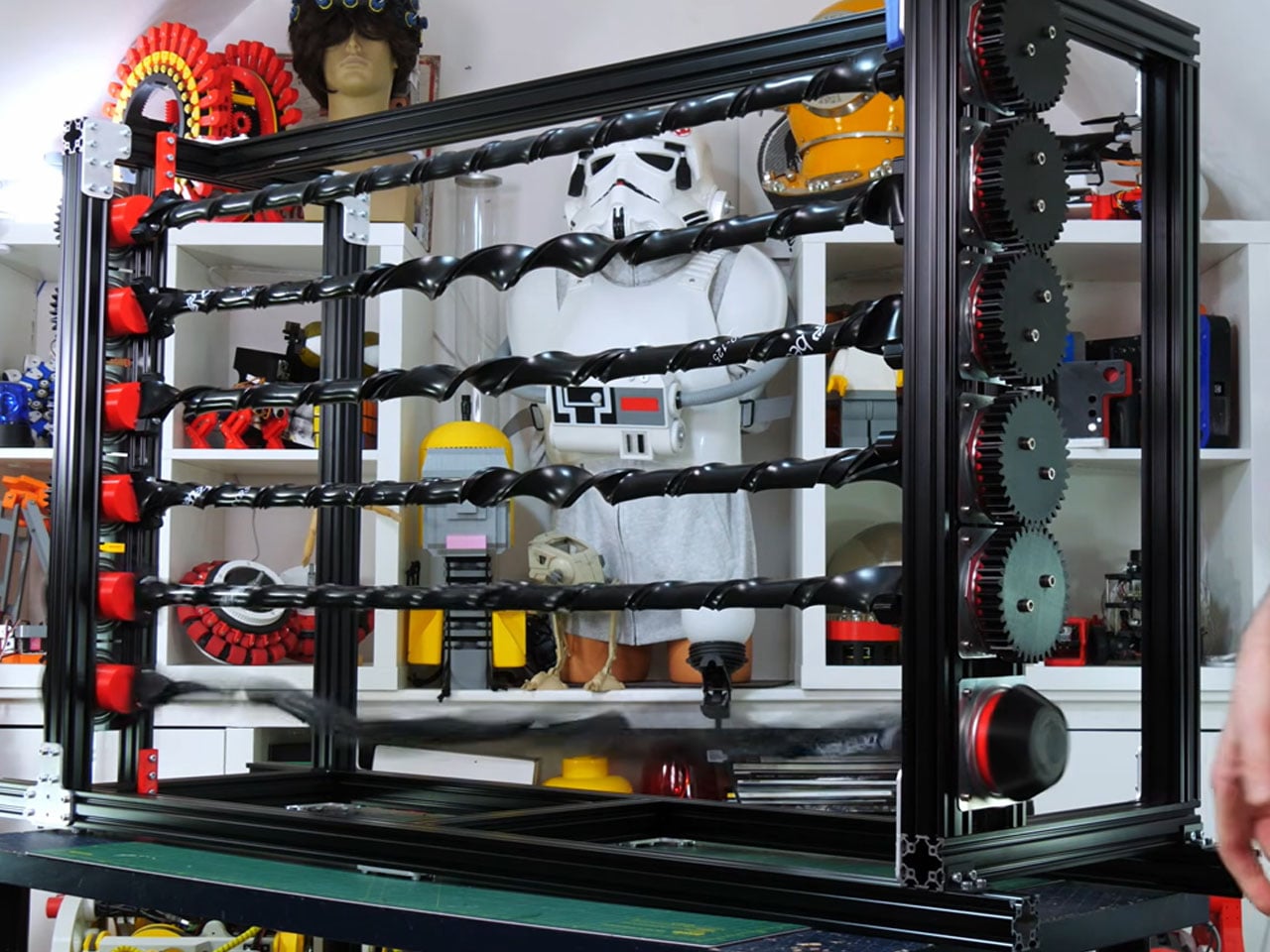
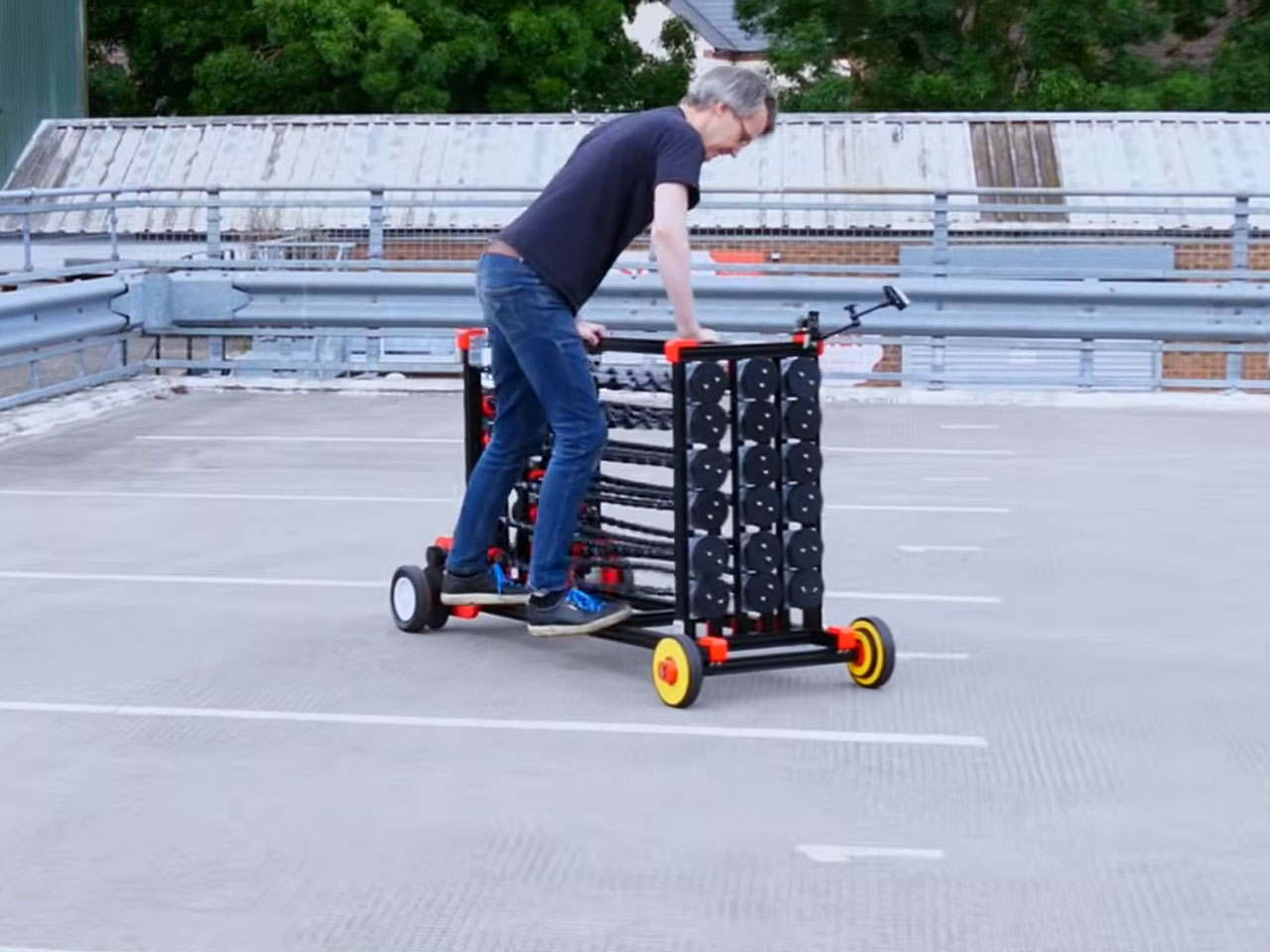
Experiments with six bands connected in series reveal an unexpected lesson in physics. While the system stores more energy, it doesn’t produce a proportional increase in usable torque, leaving much of the stored potential untapped. Rather than forcing the design to work, Bruton completely rethinks the layout by arranging eighteen resistance bands into three parallel columns, each feeding a common output shaft through bevel gears. The configuration increases available torque while preserving a useful amount of unwinding time, striking a far better balance between power and efficiency.
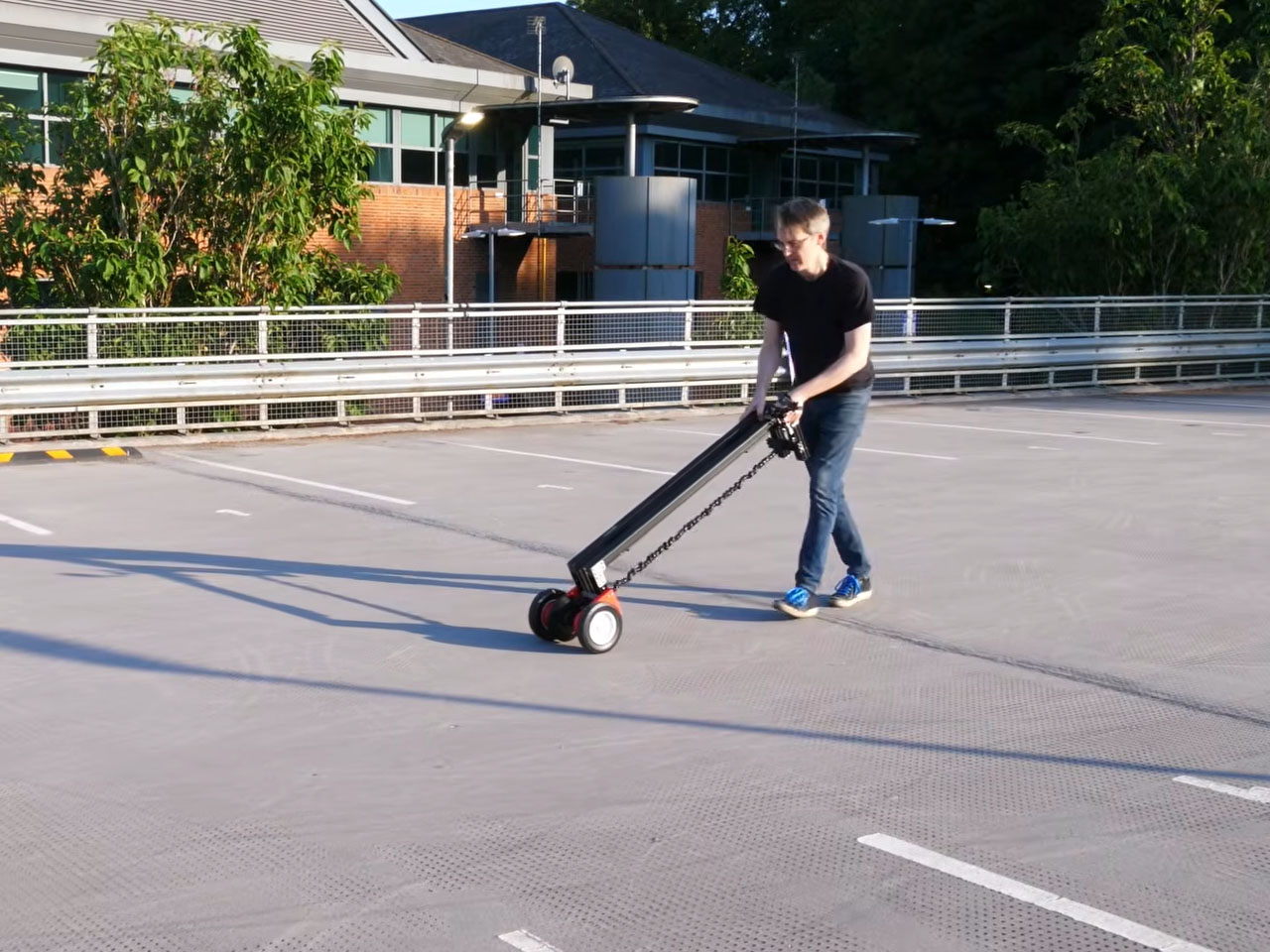
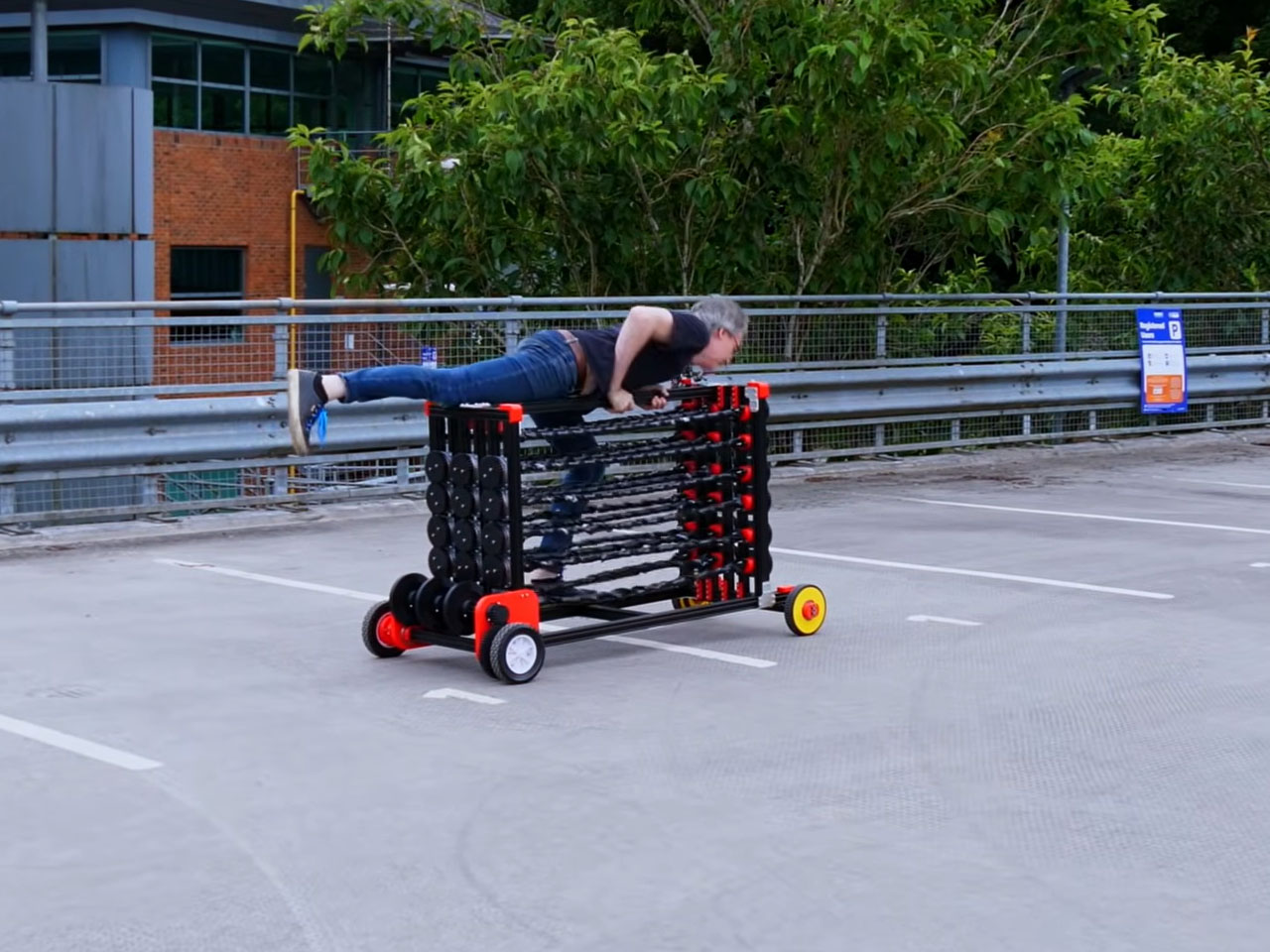
After countless iterations, careful winding, and more than a few anxious moments trying not to snap another band, the elastic-powered machine finally delivers the result Bruton had been chasing. The vehicle carries him almost 10 meters on nothing more than the energy stored in twisted resistance bands, with a best run measuring just under 9.9 meters before a final all-out attempt stretches that distance beyond 12 meters. It may not be replacing electric drivetrains anytime soon, but that’s hardly the point.