
There is a piece by kinetic artist Arthur Ganson called Beholding the Big Bang, a gear train stretching over a meter long, where the final gear is embedded in solid concrete. With a motor running at one end, the reduction is geared down so severely that even with the first gear spinning at speed, it would take 13.7 billion years for the last gear to turn. Ganson built it as an art piece, a meditation on cosmic time. But buried inside that sculpture is an engineering principle so tactile and immediate that it feels almost criminal to lock it in a gallery. Gear reduction, in its raw form, is one of the most satisfying mechanical phenomena a person can interact with.
MetMo appears to have agreed with that assessment. The Brass Gear Train takes the same physics and compresses it into a palm-sized, hand-assembled object machined to aerospace tolerances in a UK workshop. The reduction ratio is 16,384:1, which means the top gear and the bottom gear are functionally living in different time zones. Every gear in the stack doubles the torque of the previous one. What reads on paper as an engineering spec feels, in practice, like a magic trick that happens to be fully explainable… and a treat for the eyes and hands.
Designers: Sean Sykes & James Whitfield (MetMo)
Click Here to Buy Now: $148.58.
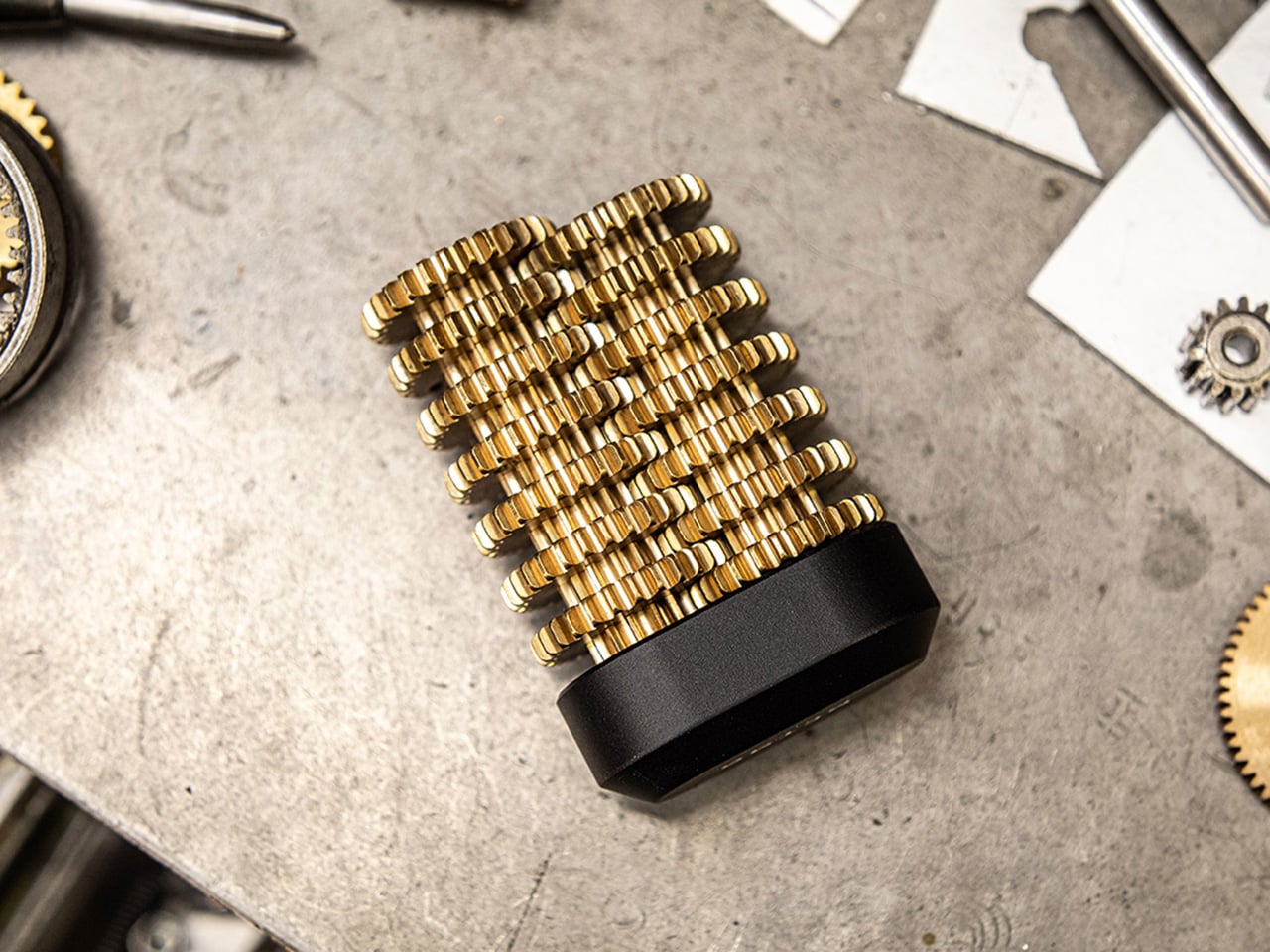

The trick plays out immediately the moment you start turning the gears. Spin the topmost gear at a comfortable pace, and the lowest gears in the stack appear frozen, barely registering motion. The visual disconnect is mesmerizing because your brain knows they should be moving, but the reduction is so steep that a full rotation at the top translates to near-invisibility at the bottom. You can reverse the operation too, gripping the lower gears and turning them while the top spins wildly out of control, the torque climbing exponentially as you work your way down the train. The interaction is simple enough for anyone to understand within seconds, but satisfying enough that most people who pick it up will keep spinning it for several minutes straight. If you are someone who thinks while touching things, who solves problems by turning objects over in your hands, or who just appreciates when engineering reveals itself rather than hiding behind a housing, this is built for exactly that impulse.

Each gear in the stack doubles the torque input from the gear above it, which means by the time you reach the bottom of the train, your effort has been multiplied 16,384 times over. Turning the first gear feels effortless, barely any resistance. Move down one level and there is a slight increase in drag. By the third or fourth gear, you start feeling real resistance. By the sixth gear, most people will struggle to turn it with just their fingers. The lower you go, the more mechanical advantage you are fighting against, and the feedback is immediate, visceral, and surprisingly addictive. It turns an abstract engineering principle into a tangible workout for your hand, and the challenge of working your way down the entire gear stack becomes a desk-toy dare that most visitors cannot resist attempting.
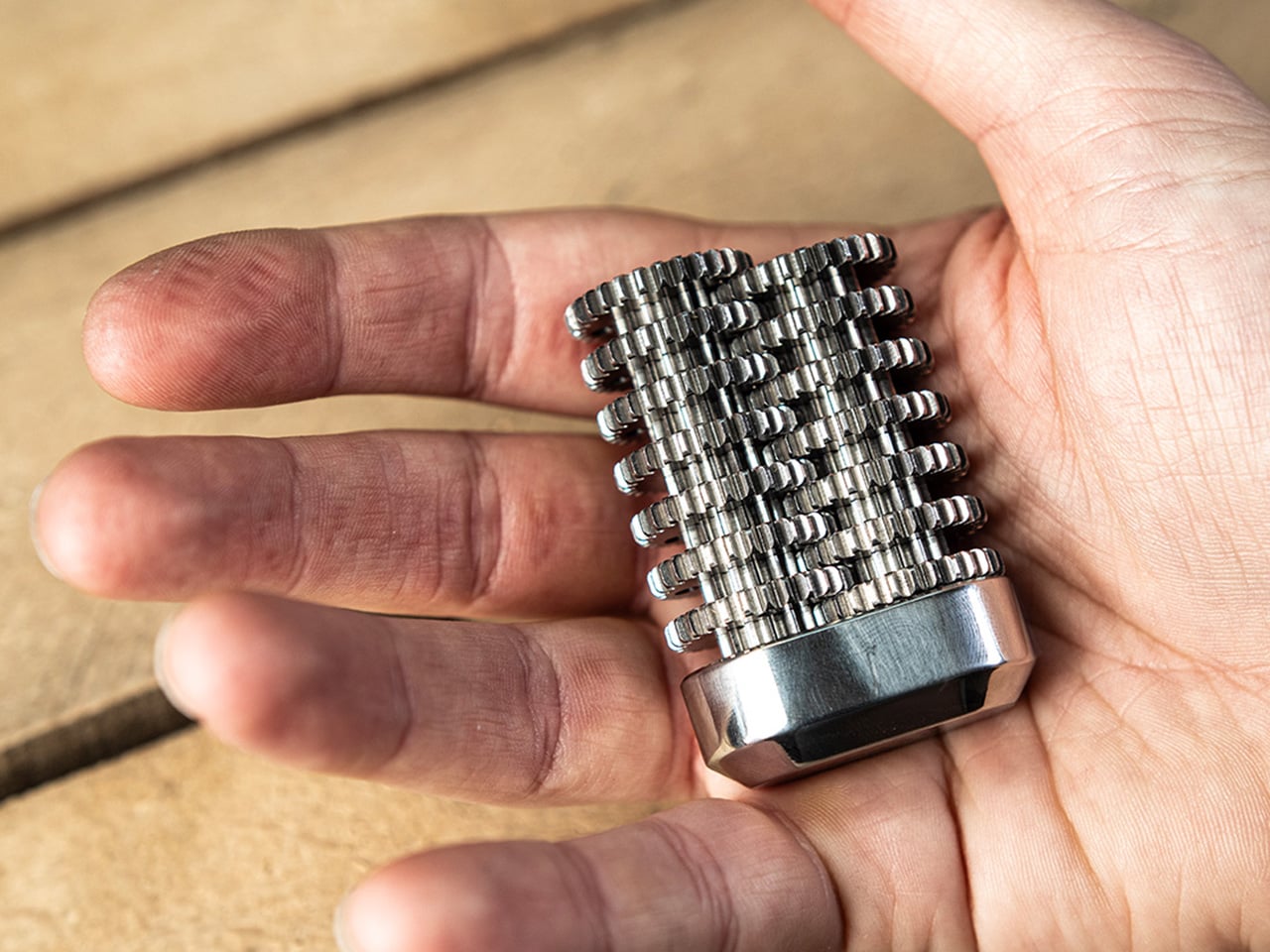
The gears are precision CNC-machined from solid brass, chosen specifically to echo the clockwork mechanisms of old. The warm metallic tone, the weight distribution, and the smooth meshing of teeth all call back to antique engineering, when gears were visible, celebrated, and built to outlast their makers. The gears sit on a hard anodized aluminum base, which serves a dual purpose: it provides a low center of gravity that makes the object comfortable to hold, and the hard anodizing prevents corrosion, ensuring the base stays flawless even after years of desk duty. The Gear Train comes with a pin that holds everything in place – taking the pin out lets you fidget with the gear’s movement. When you’re done testing the laws of physics, you can slide a pin back through the gears, locking them in place so they don’t shift around in your pocket and accidentally snag your earphone cable.
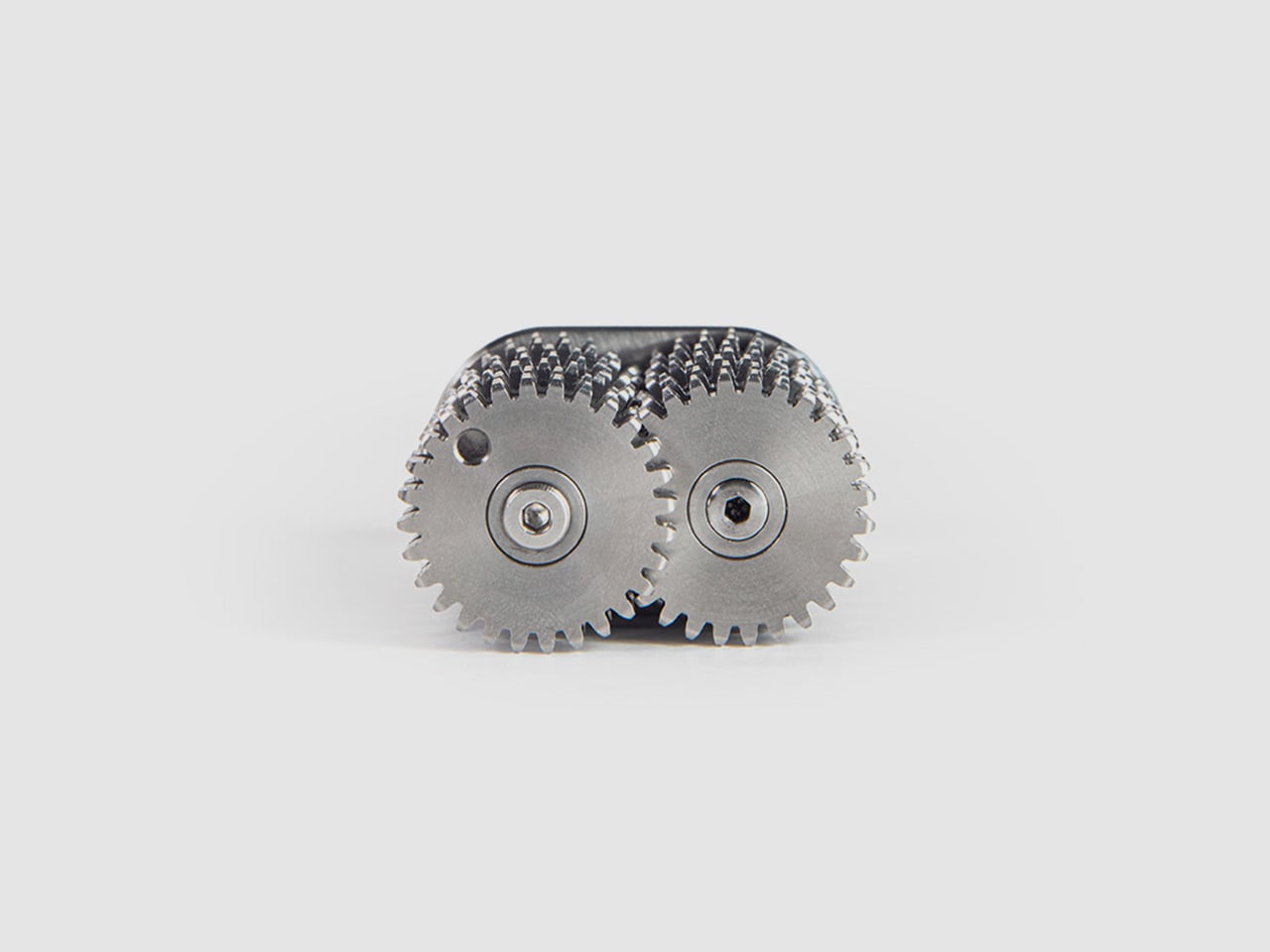
The only way to reinsert the pin is to rotate the gears back into perfect alignment, a 16,384-revolution journey where all the holes must line up simultaneously. It is planetary alignment in miniature, a needle threading that requires patience, memory, or just a willingness to turn the stack slowly until everything clicks into place. Some users will treat this as a one-time puzzle, solving it once and leaving the pin in. Others will pull it out deliberately, turning the Gear Train into an ongoing fidget challenge that resets itself every time.
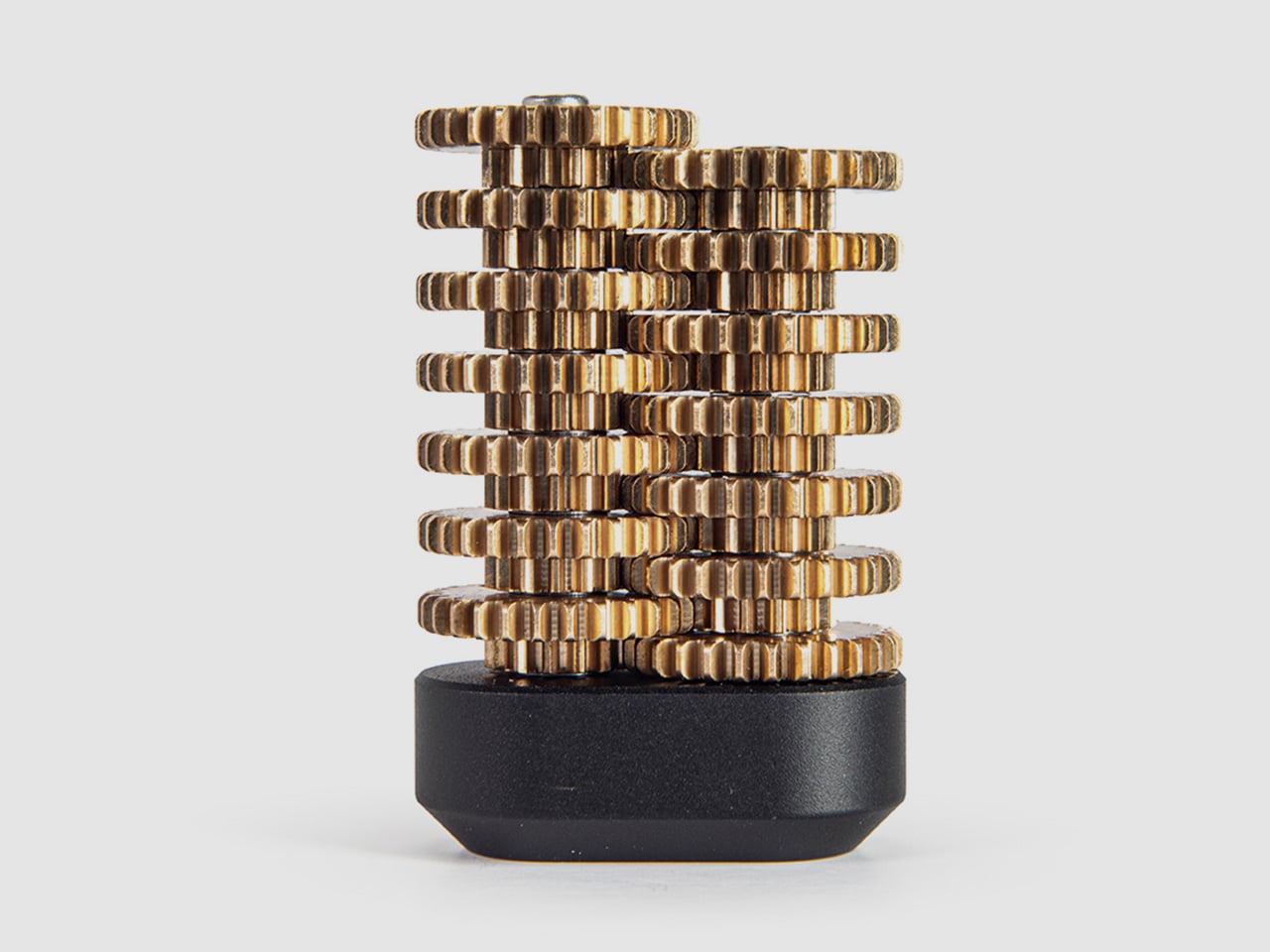
Every component is machined by Metmo in their UK workshop, running solid metal stock through CNC mills to the same tolerances used in aerospace engineering. There are no mass-manufactured parts anywhere in the assembly. Each gear is hand-finished, with edges smoothed to perfection so there are no sharp bits, no rough patches, nothing that interrupts the tactile pleasure of turning the stack over in your hands. The gears mesh perfectly, tight enough to eliminate backlash but smooth enough that the motion feels like silk. When the product page says the gears fit together like a Swiss watch, that is not marketing poetry, it is an accurate description of what you feel when you spin them.

MetMo built this object to live on a desk, and the visual presence reflects that intent. The stacked brass gears catch light beautifully, the gear-tooth profiles creating a repeating pattern that reads as both mechanical and decorative. The weight feels substantial without being cumbersome, and the passivated brass doesn’t patina like regular brass does, ensuring your gear-train looks shiny and precise even after years. People walking past will stop and ask what it is, which gives you the opportunity to demonstrate the reduction ratio in real time, and most onlookers will immediately want to try it themselves. It functions as a conversation piece, an engineering demo, and a desk sculpture simultaneously, occupying the same category as premium perpetual motion toys or kinetic sand timers, objects that justify their presence through sheer fascination rather than utility. For designers, engineers, makers, or anyone whose workspace doubles as a place to think, this belongs within arm’s reach.
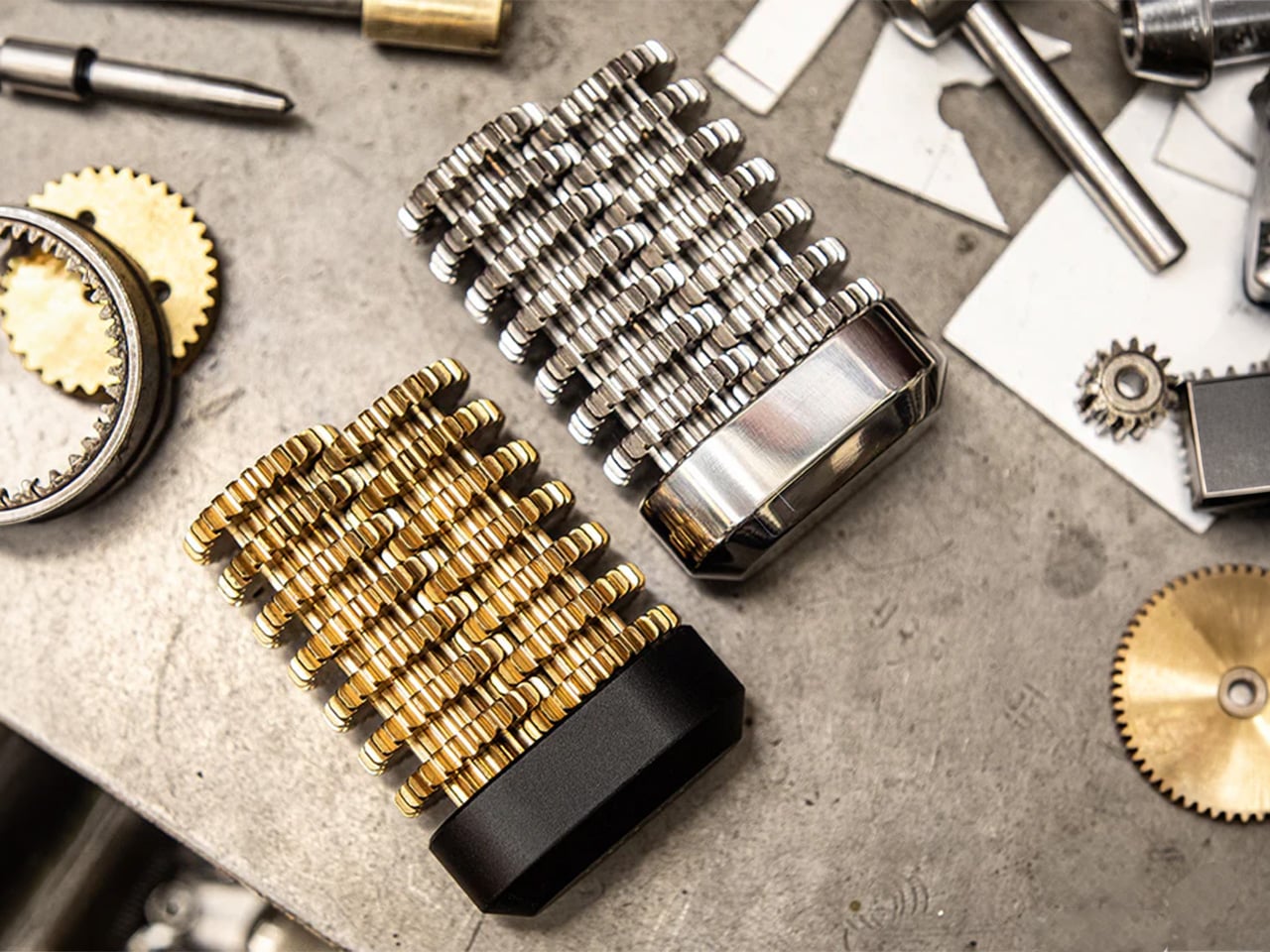
The Brass Gear Train is available in two material configurations. The brass version featured here uses solid brass gears with a hard anodized aluminum base, delivering that warm, vintage-clockwork aesthetic MetMo designed it around. There is also a stainless steel variant, which trades the brass warmth for a more industrial, corrosion-resistant finish with a heavier feel in hand. Both versions are hand-assembled, both carry the same 16,384:1 reduction ratio, and both come with the removable alignment pin for puzzle play. MetMo backs both configurations with a 200-year guarantee, the same confident warranty they extend across their entire product line, a statement that this object was built to outlast you, your desk, and probably your great-grandchildren.
The MetMo Brass Gear Train is priced at £99 GBP (approx $149 USD) and ships directly from MetMo’s UK workshop. For those interested in the stainless steel version, pricing and availability can be found on the MetMo website. Both versions qualify for free shipping on orders over £200.
Click Here to Buy Now: $148.58.