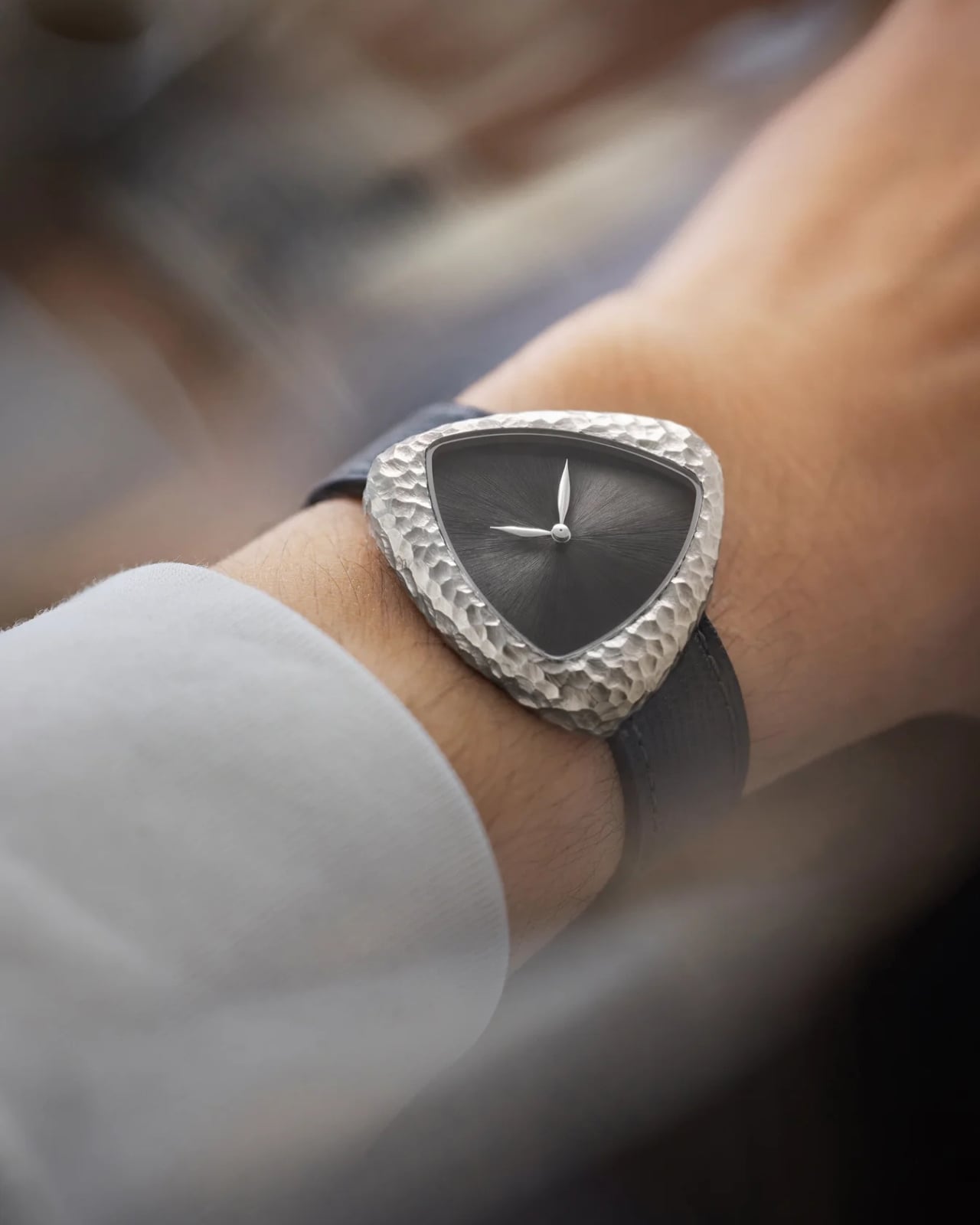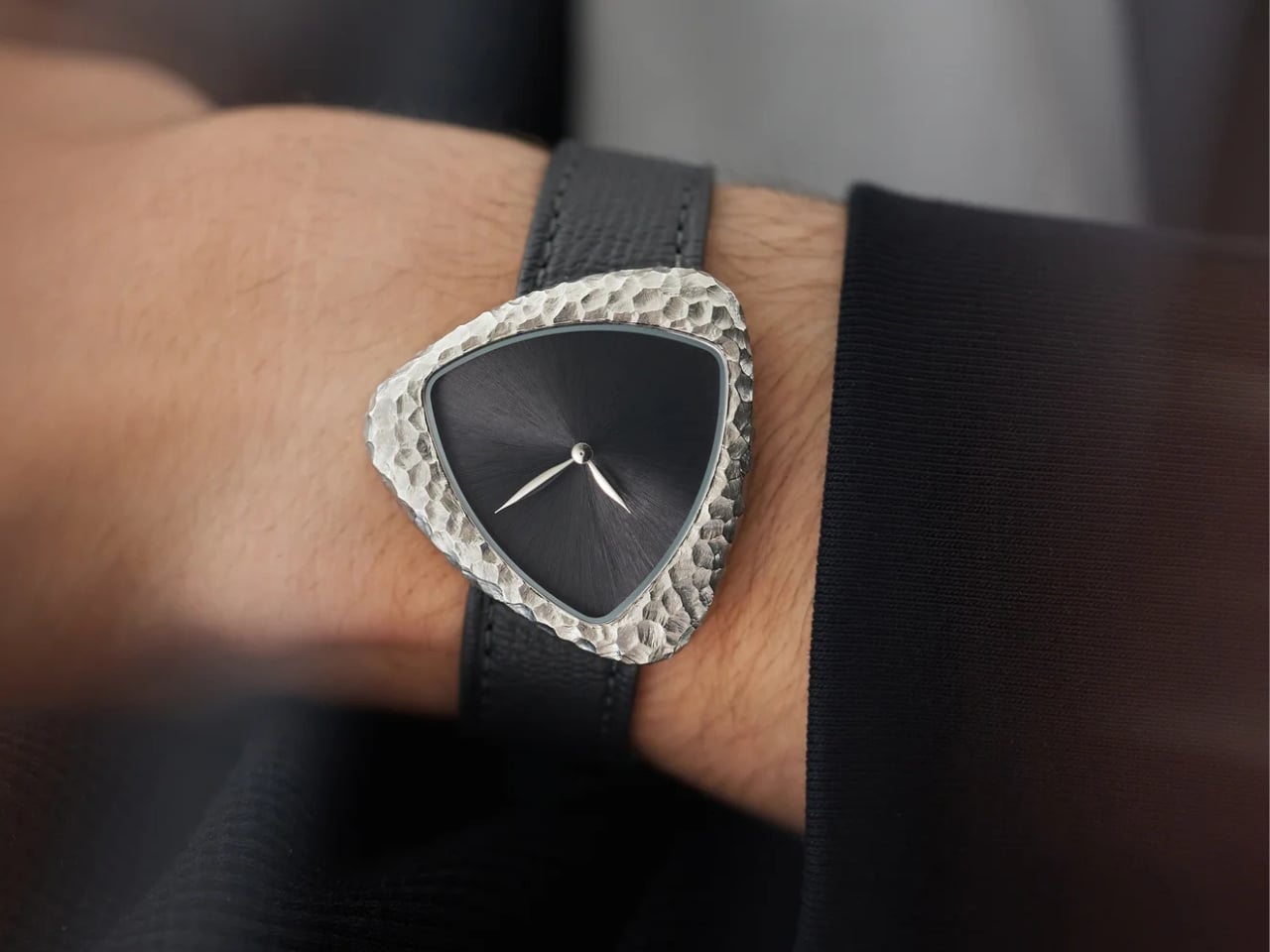

I’ve been staring at this watch for a while now, trying to figure out exactly what it is about it that makes me want to keep looking. It doesn’t gleam. It doesn’t catch the light the way luxury watches are supposed to. And yet, the Anoma A1 Prehistoric might be the most interesting watch to come out of 2026.
The story behind it starts at the Centre Pompidou in Paris, where Anoma founder Matteo Violet Vianello found himself standing in front of a Constantin Brâncuși exhibition. Brâncuși, one of the most celebrated sculptors of the 20th century, was famously fascinated by primitive artifacts. He collected ancient hand axes, arrowheads, and flint tools, not as relics, but as art. He believed they represented something pure: human creativity stripped of everything unnecessary. Vianello walked away from that exhibition with an idea that would become the A1 Prehistoric.
Designer: Anoma
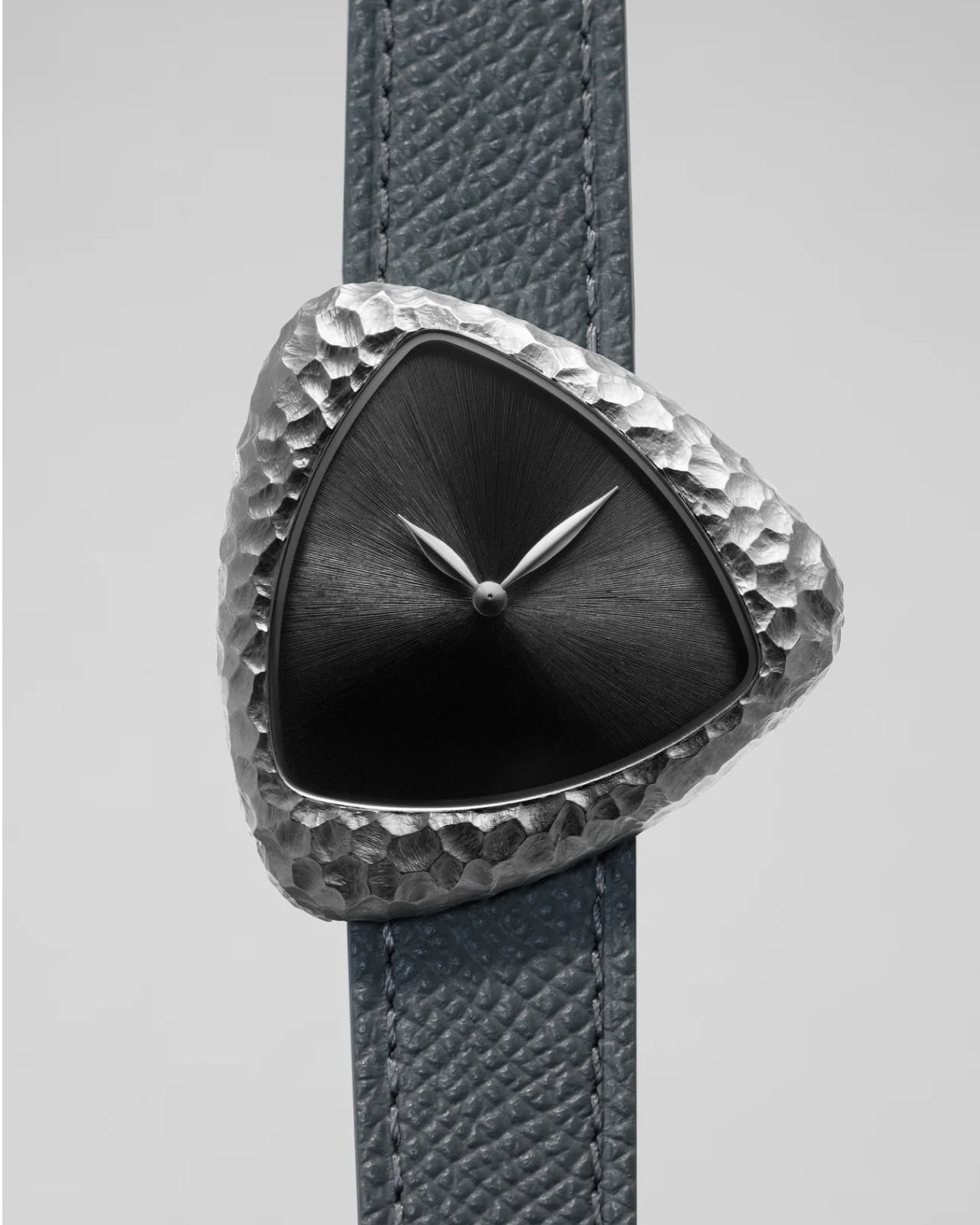

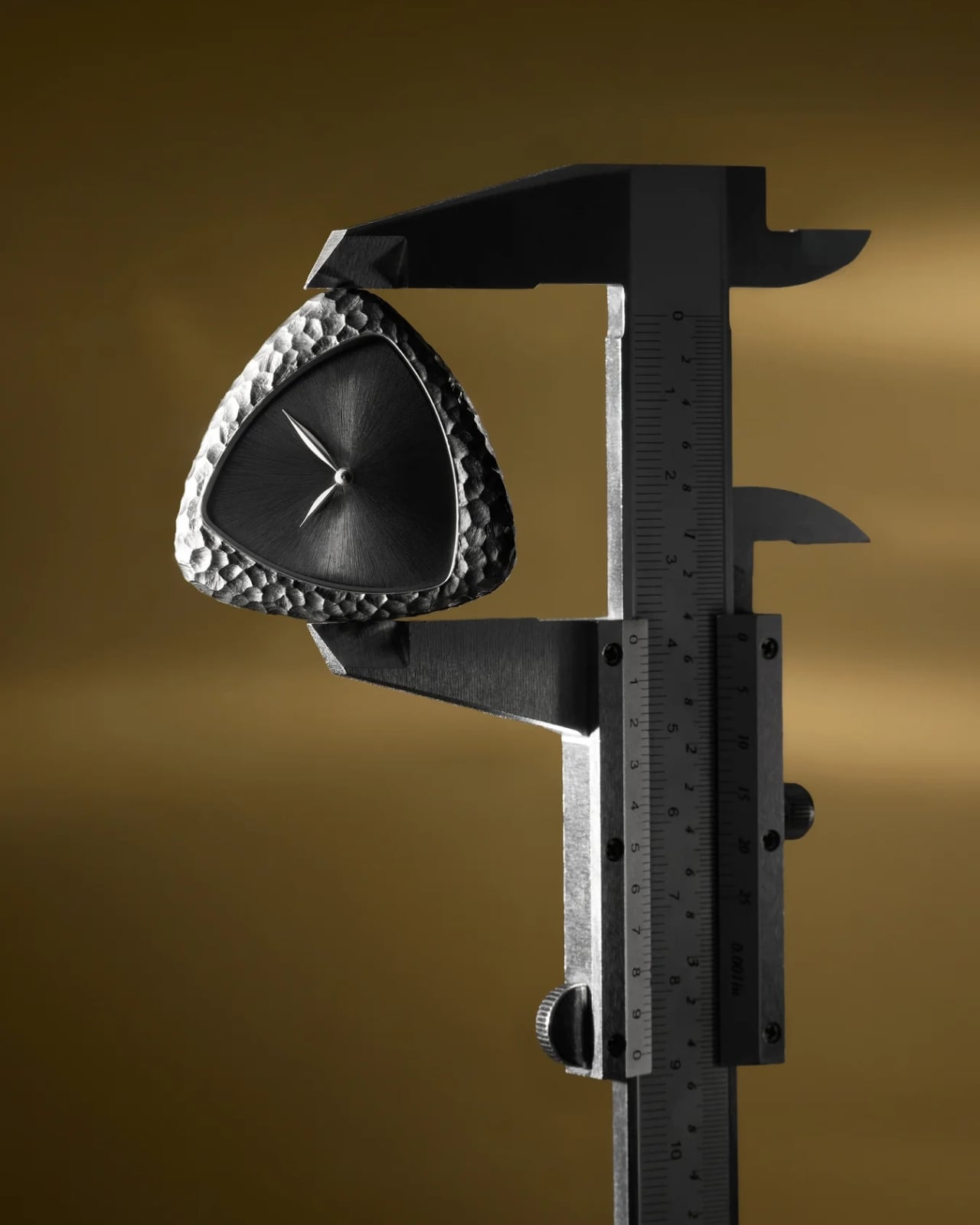
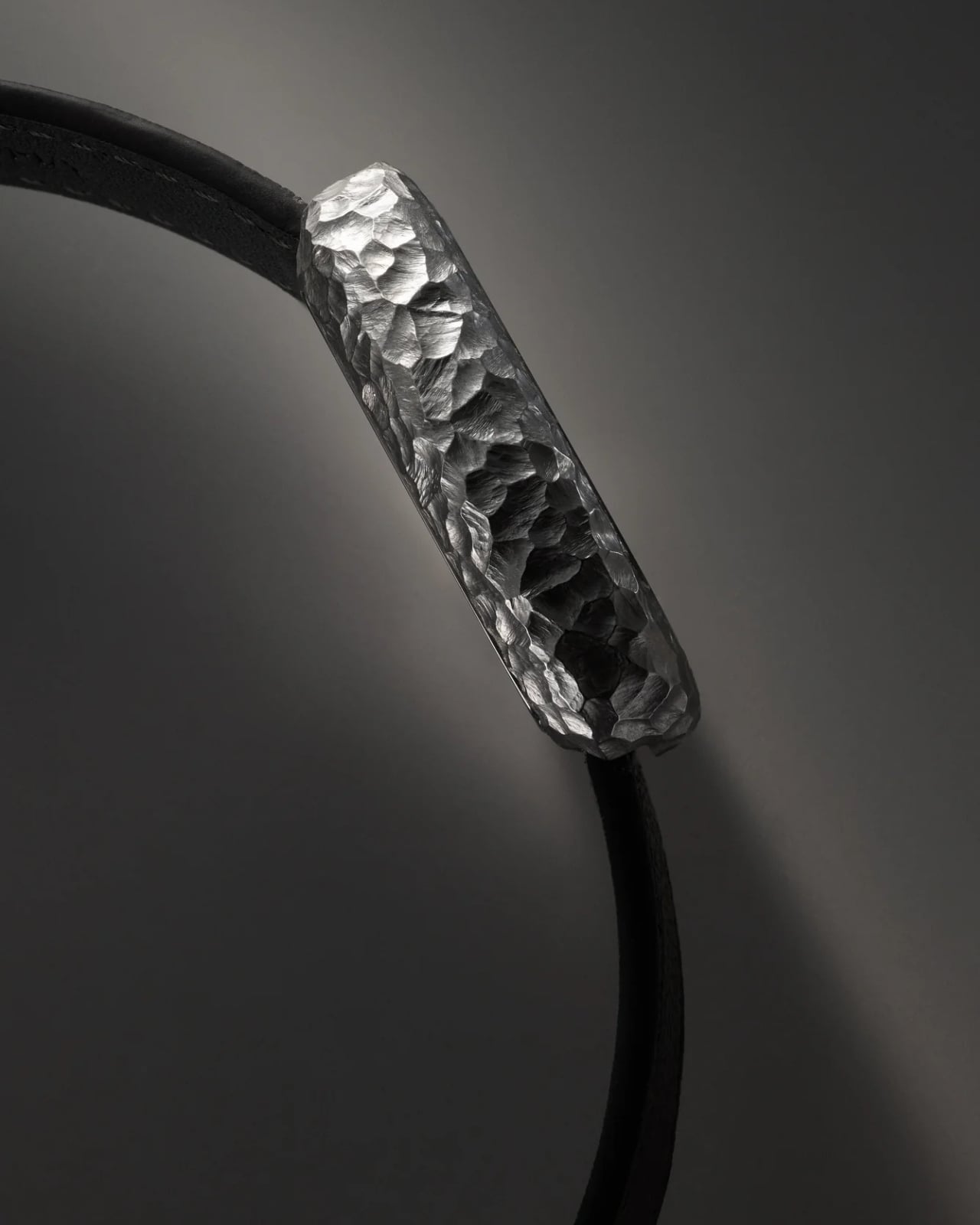
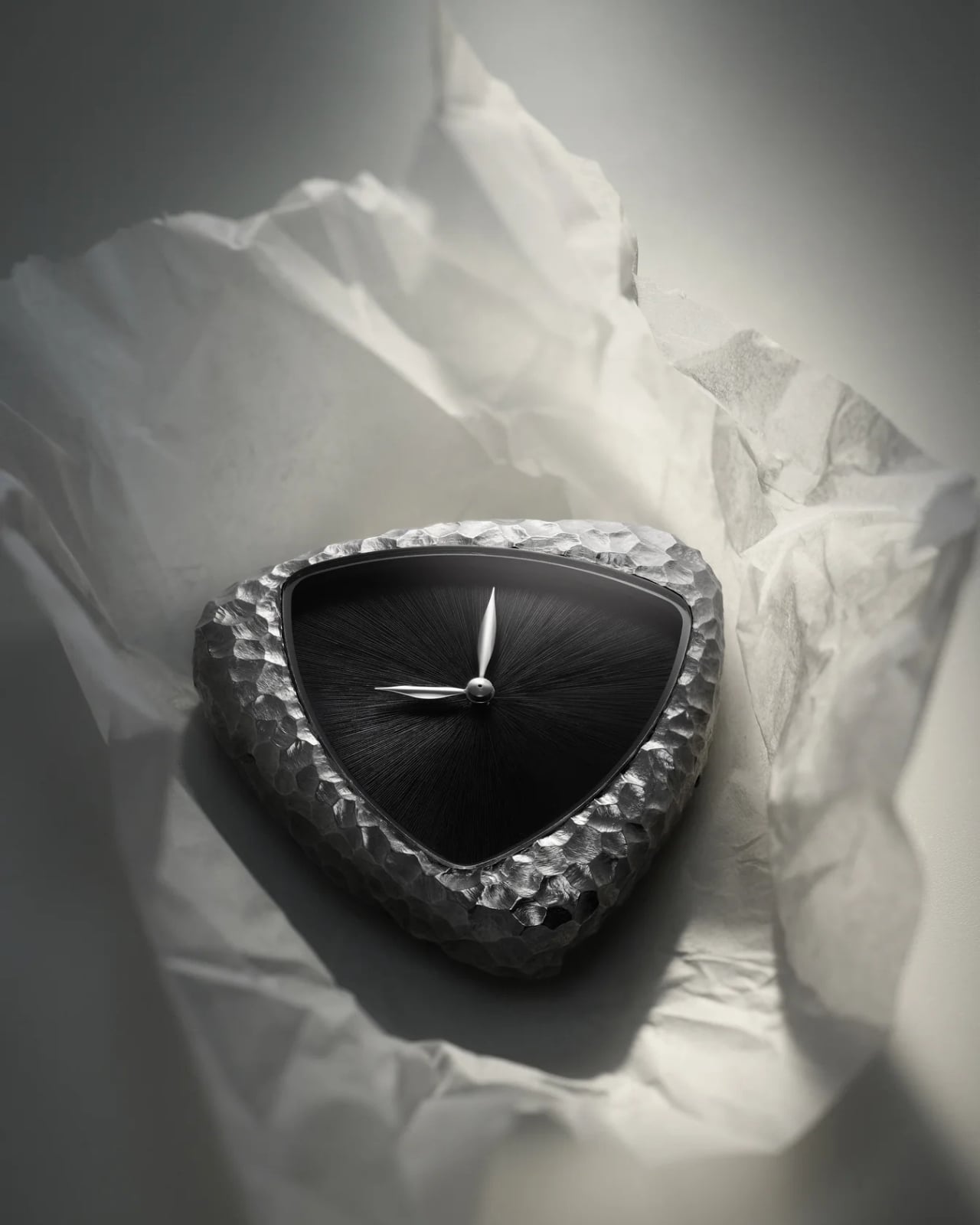
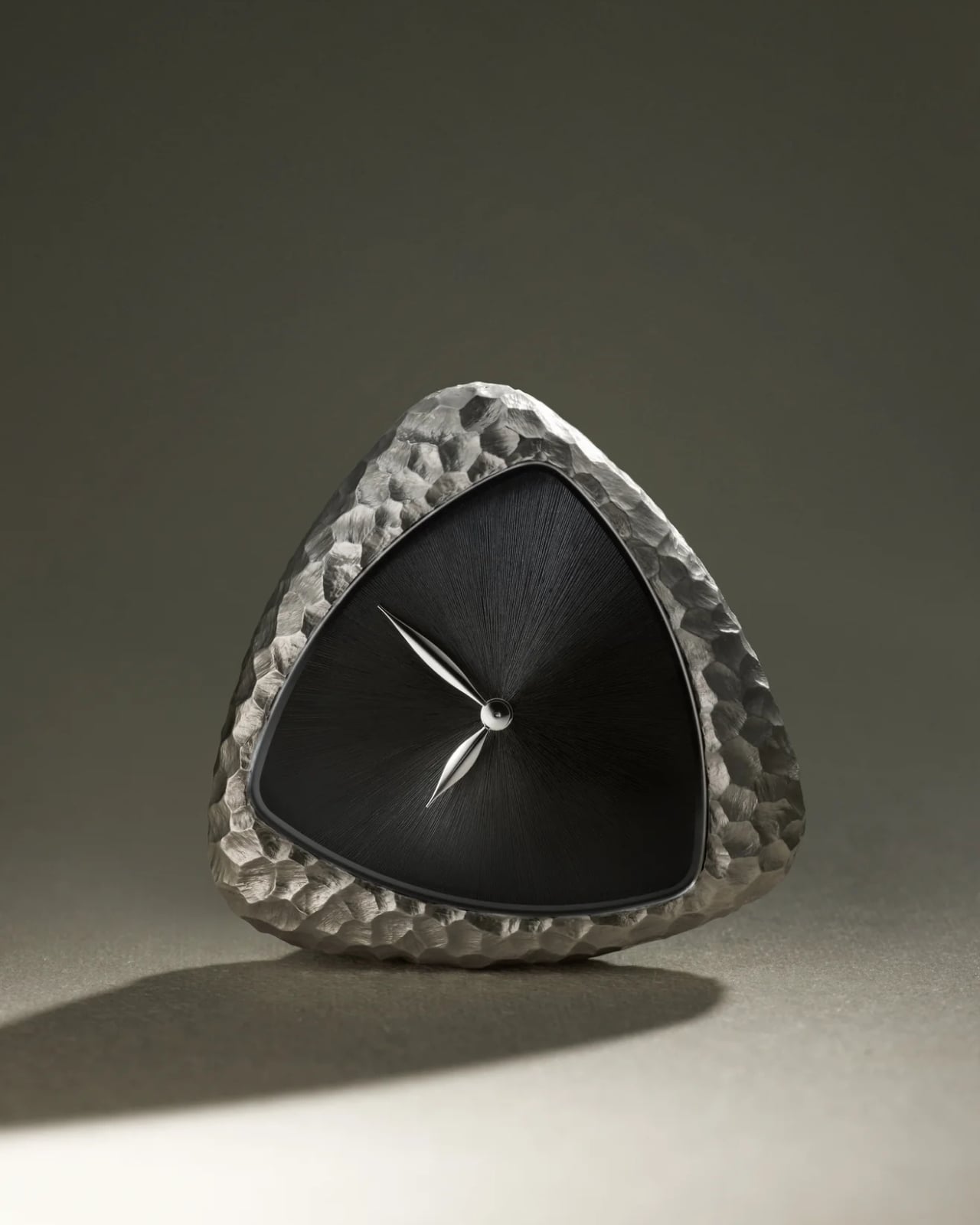
What followed was a deliberate rejection of polish. The A1’s signature triangular stainless steel case, already one of the more distinctive shapes in contemporary watchmaking, was handed over to French engraver Steven Brunel, whose work has been exhibited at the Louvre. Brunel works from a remote workshop in the Loire region of France, and for each watch, he spends approximately five hours with a chisel, striking the metal by hand over and over until the case looks less like a precision instrument and more like something you might unearth from a dig site. No two watches come out the same. The marks are freehand, the planes are uneven, and the surfaces bear the unmistakable evidence of human effort.
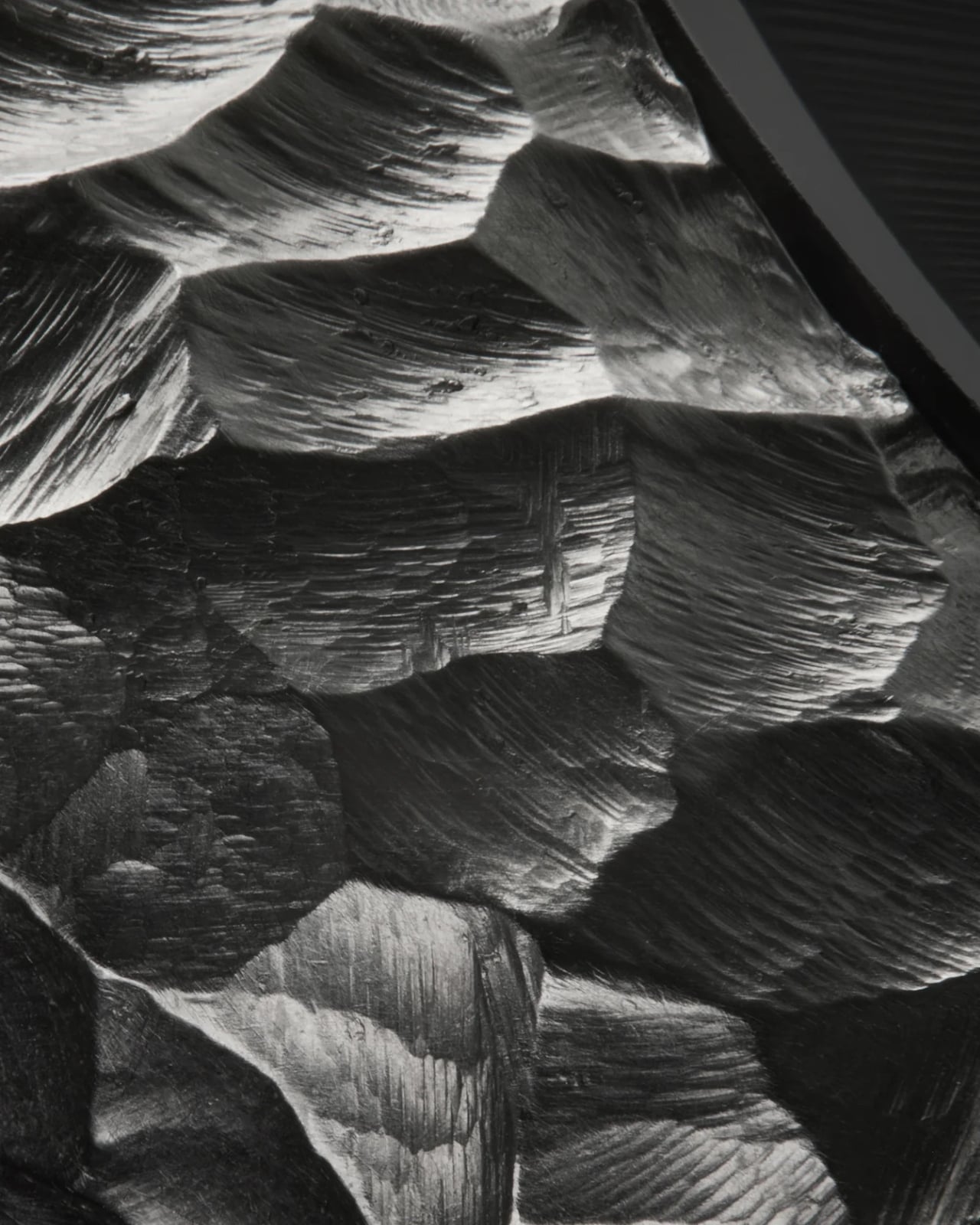
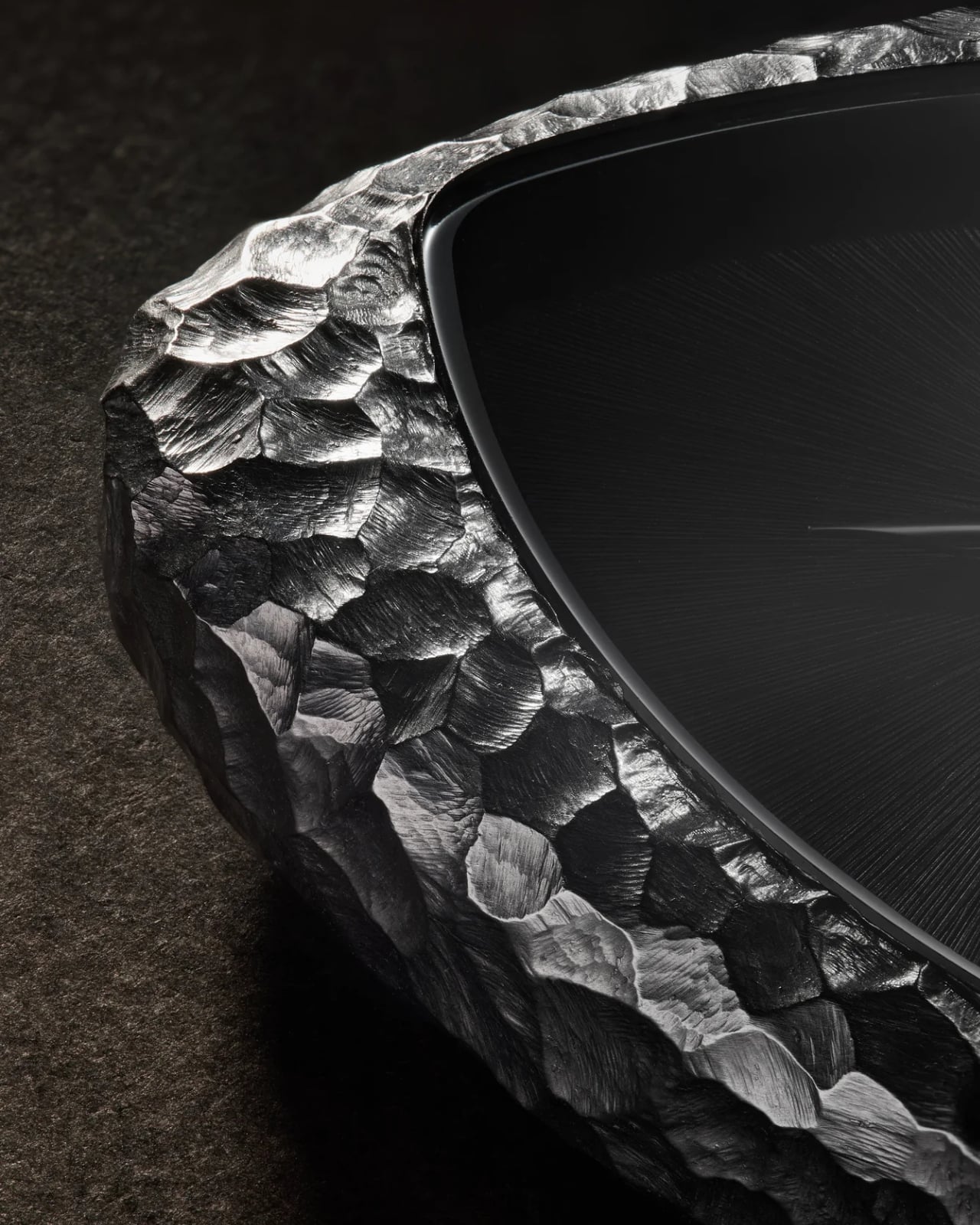
That process deserves a moment of appreciation. We live in an era of flawless machining and mirror-polished bezels, where the goal is often to make it look like no human ever touched it at all. The A1 Prehistoric does the exact opposite. It leans into the marks, the cuts, the irregular facets that would normally be buffed away. The technique echoes knapping, the ancient method used to shape flint and obsidian into early tools, but applied here to 316L stainless steel, which absorbs each impact differently, creating a finish that’s somehow both rough and refined.
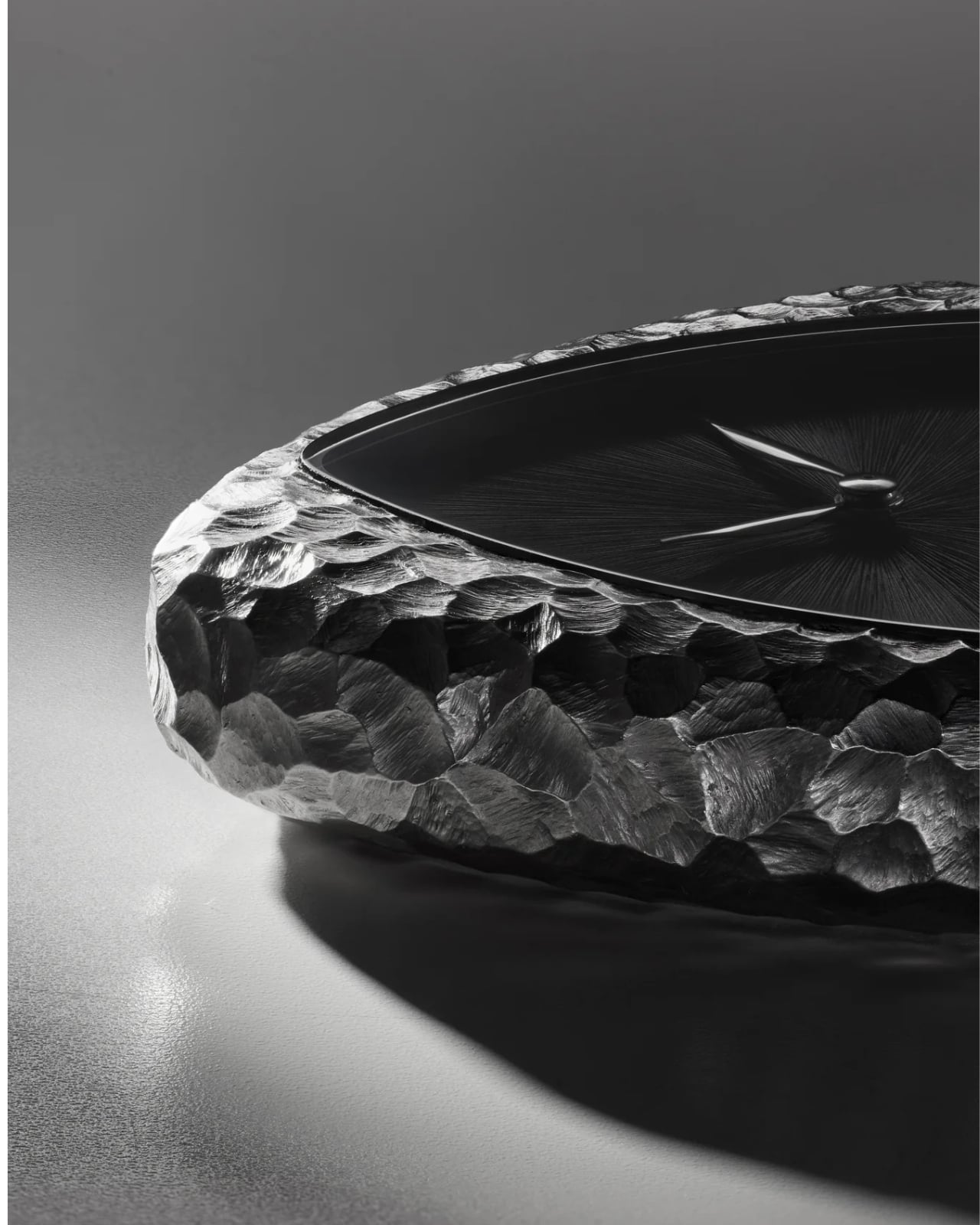
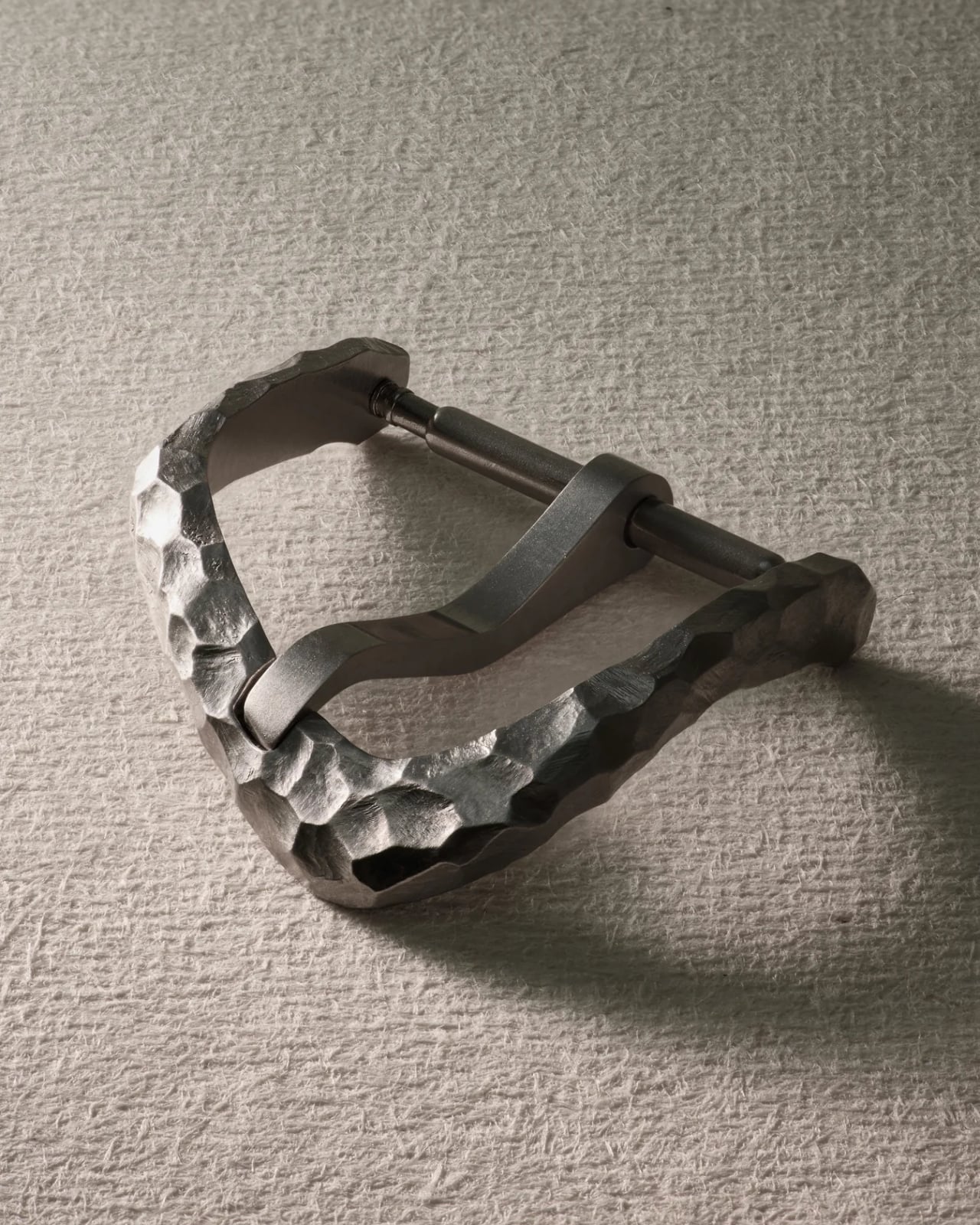
The dial continues that commitment to handwork. About 600 individual sunburst lines are engraved by hand into a brass base, then finished in deep anthracite. The result is monochromatic and deliberate, with curved leaf-shaped hands as the only interruption. It’s the kind of dial that rewards looking closely. The case measures 39mm by 38mm, which sounds sizeable, but because the A1 is lugless and triangular, it actually wears closer to 37mm, sitting comfortably without making demands on your wrist. At 9.45mm thick with 50 meters of water resistance, it’s very wearable for something that looks this sculptural.
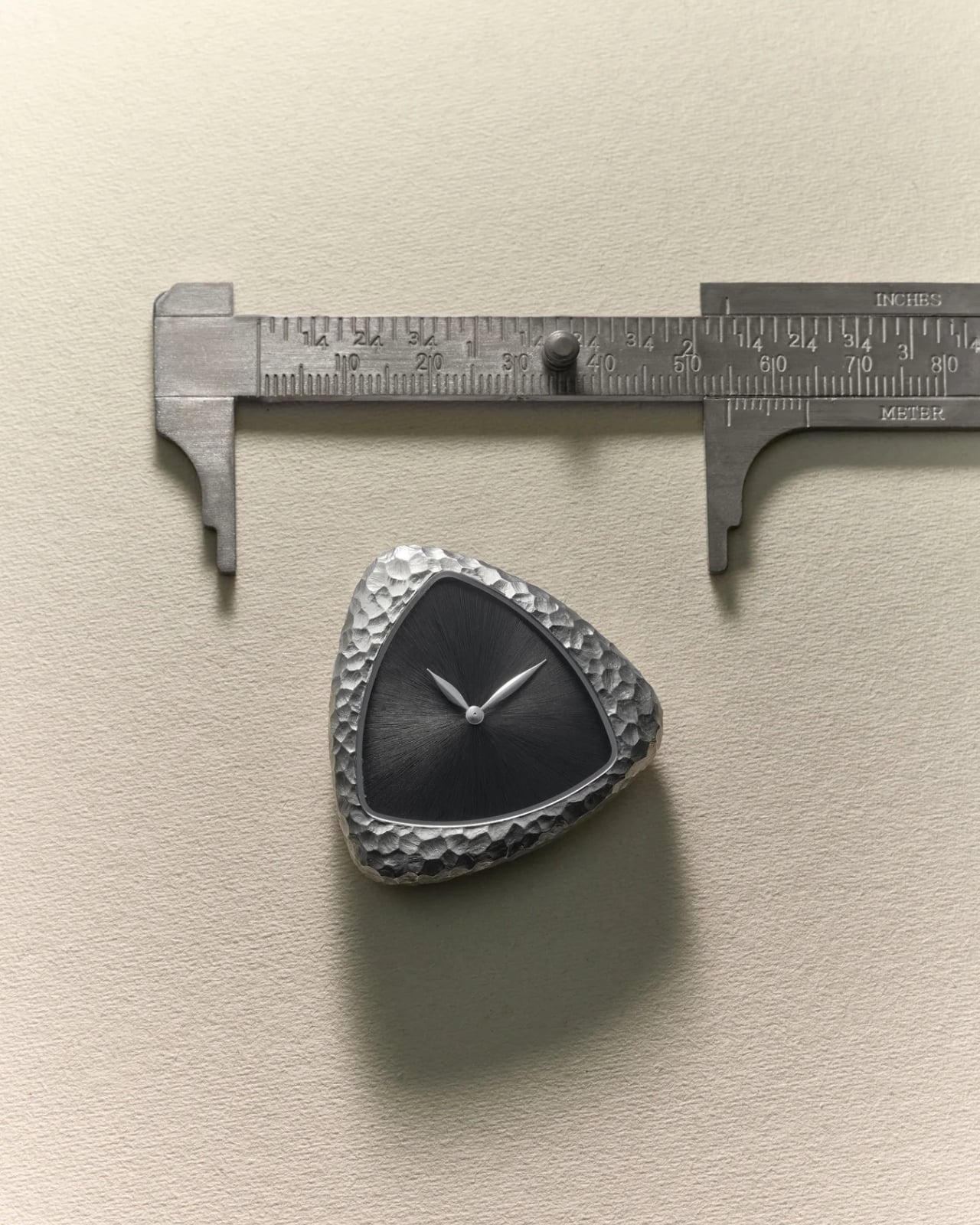
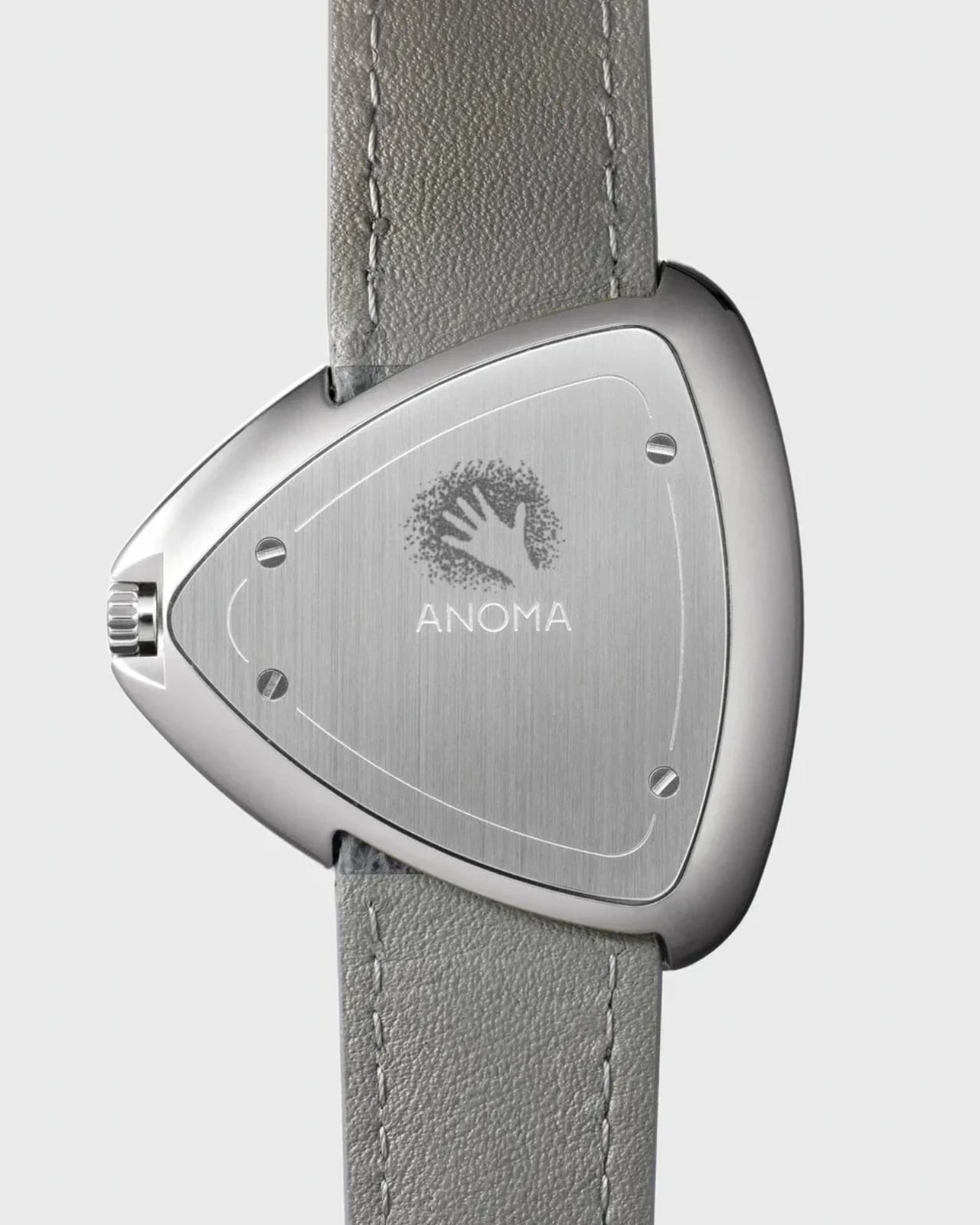
Inside is a Swiss automatic Sellita SW100 movement running at 28,800 beats per hour, displaying only hours and minutes. The 38-hour power reserve is on the shorter side, though daily wear handles that easily enough. A grey grained Italian leather strap keeps the focus exactly where Anoma wants it: on that case.
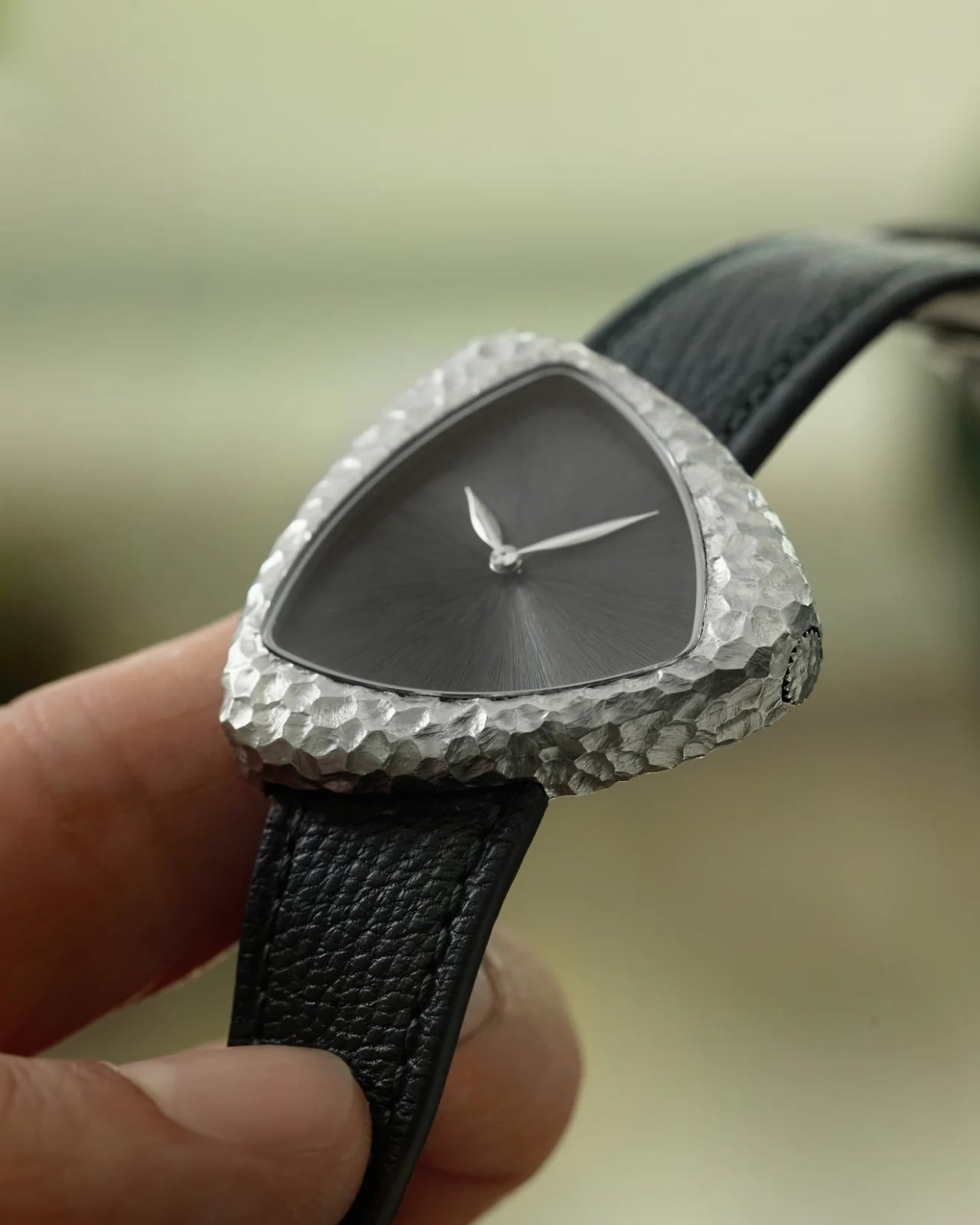
The price sits at £2,900 (approximately $3,700 USD), which puts it firmly in independent watchmaker territory, and that feels right. This isn’t a brand chasing volume or recognition through a long heritage alone. Anoma is London-based, relatively young, and clearly more interested in objects that make you think than objects that announce status. Only 100 pieces are being made, orders opened July 8th, and deliveries are expected in October 2026.
But what stays with me, even beyond the craft, is the philosophical position the A1 Prehistoric takes. At a moment when AI is generating synthetic perfection by the second, here is a watch that insists on the value of a human hand leaving a visible mark. The violence of the chisel, the irregularity of each case, the five hours of labor that go into something no algorithm could replicate: that feels like a statement worth wearing.