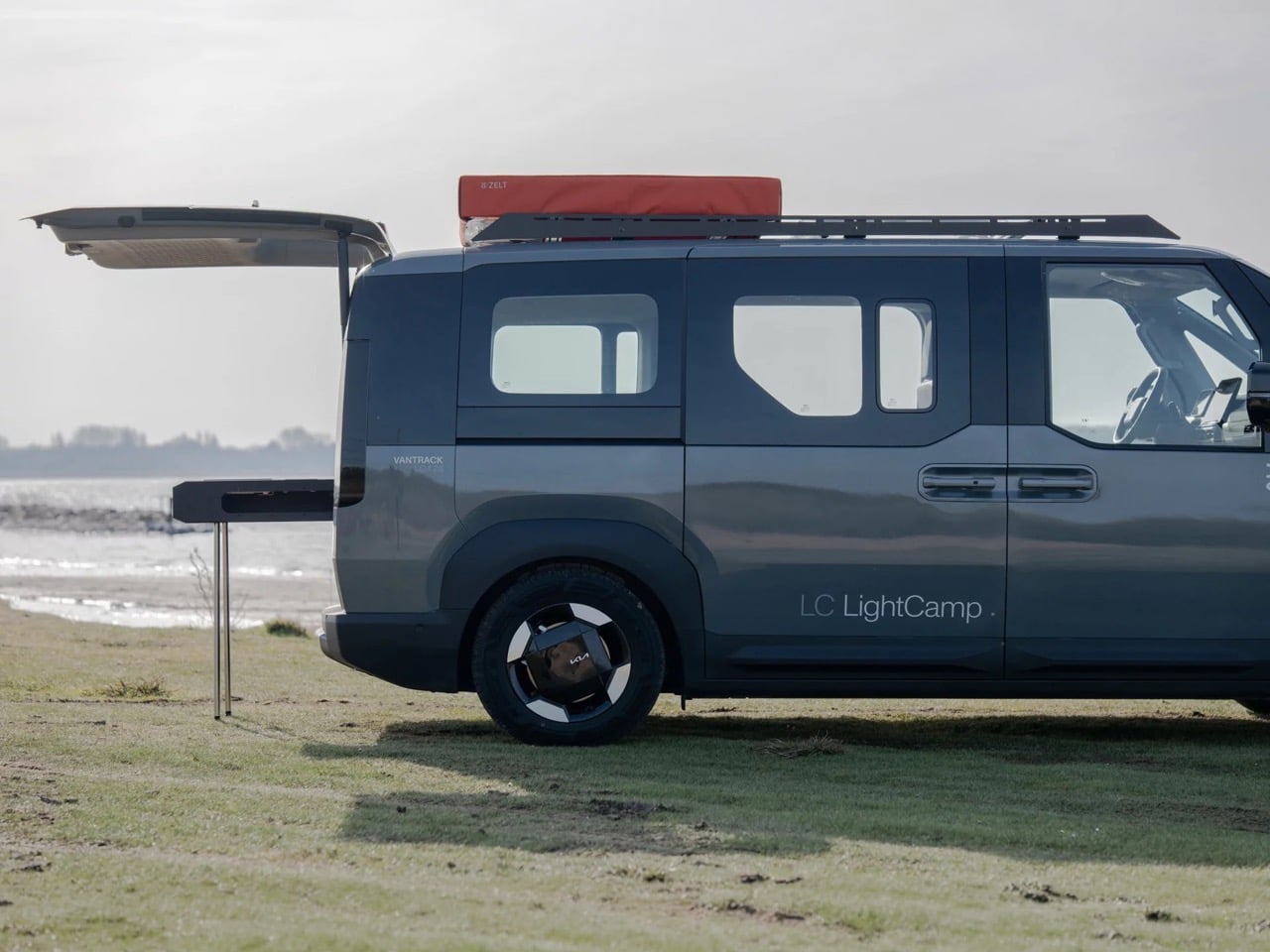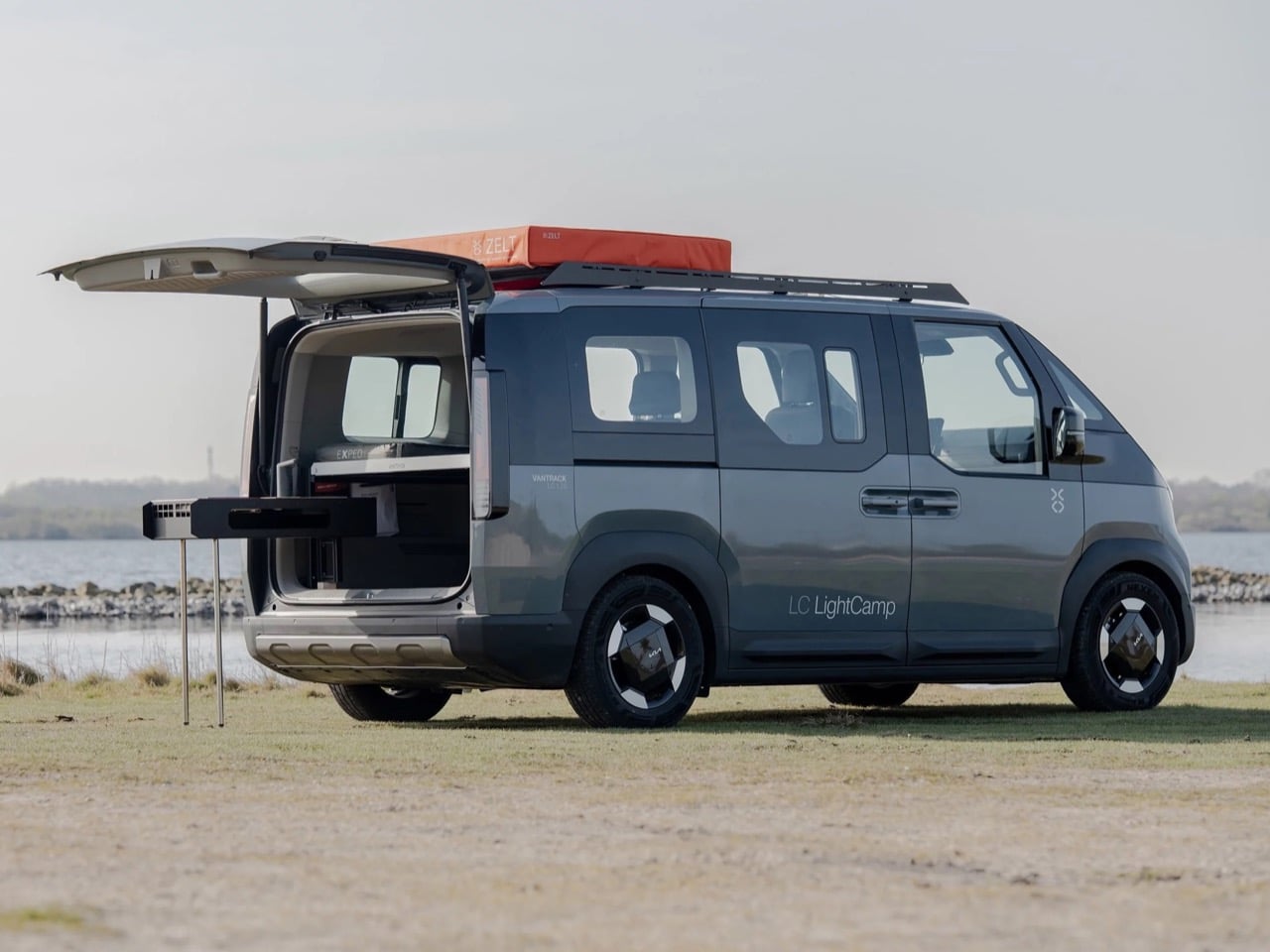

Camper conversions usually leave a mark. Cabinets get bolted in, headroom gets swallowed by a pop top roof, and the donor vehicle spends the rest of its life looking and feeling like a camper even when it is just running errands. Dutch outfit Vantrack decided that trade off did not have to be permanent, at least not for the Kia PV5 Passenger. Its Lightcamp package turns the compact electric van into a four person mini camper on Friday and hands it back as a stock e-MPV on Monday, with almost nothing left behind to prove the transformation happened.
The trick lies in how little of the kit actually stays attached. A slide out kitchen, an inflatable sleeping platform, and a rooftop tent all come off in minutes, leaving only a fixed skylight as evidence anything changed. Vantrack plans to reveal the production version in September at the Netherlands’ Camper Trade Fair, with complete conversions starting around €65,000 based on the PV5 Passenger Essential trim.
Designer: Vantrack
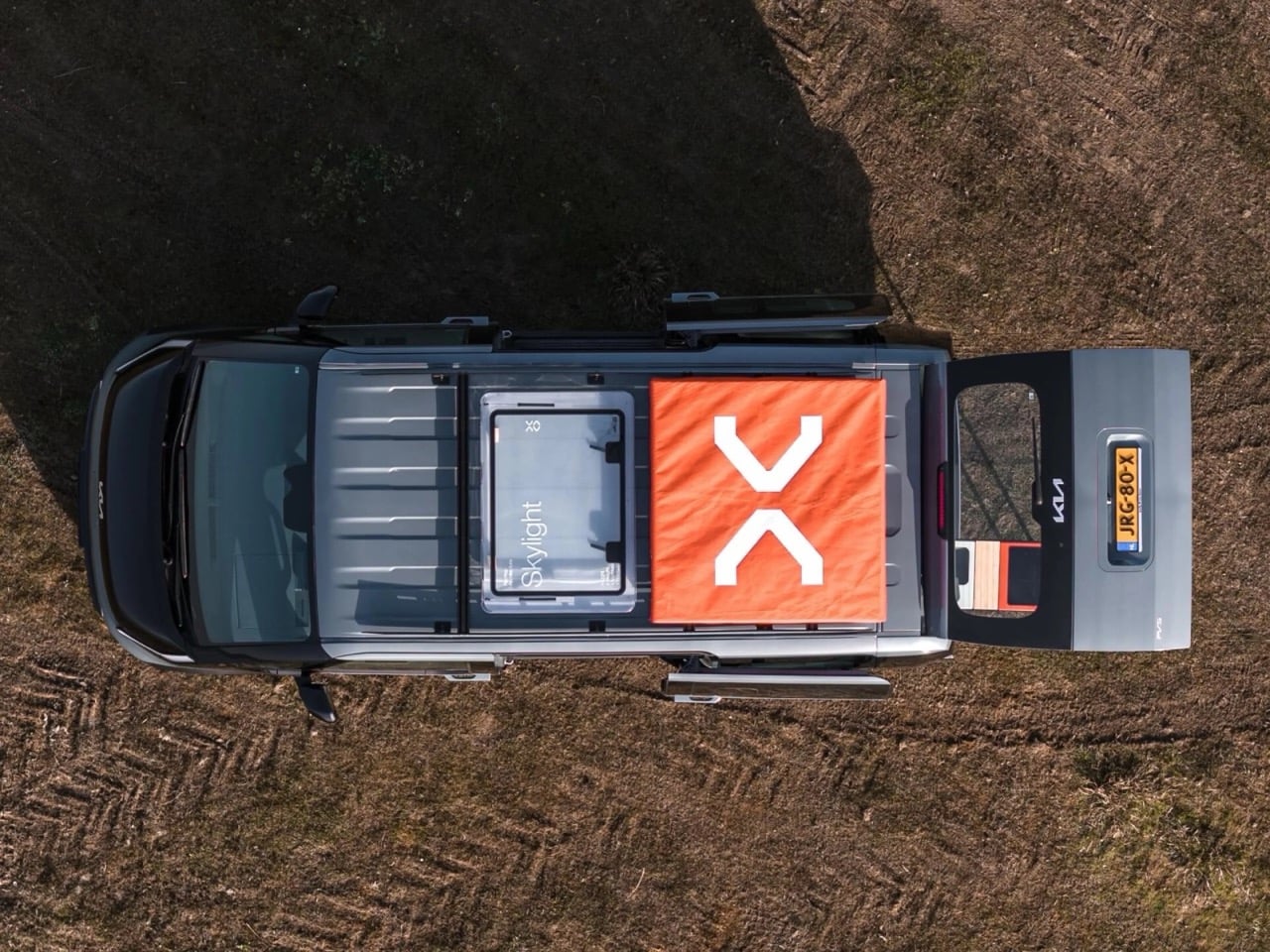
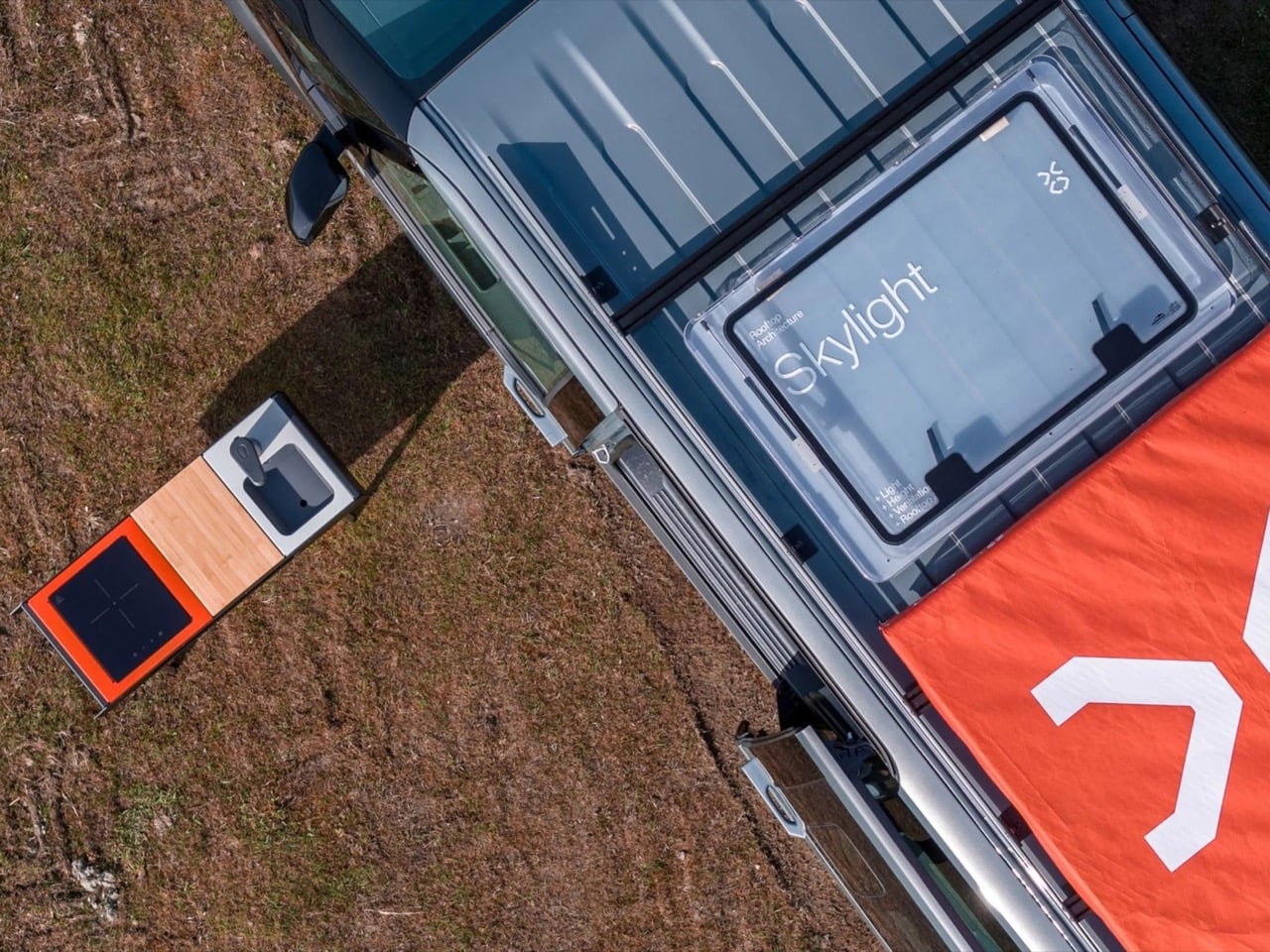
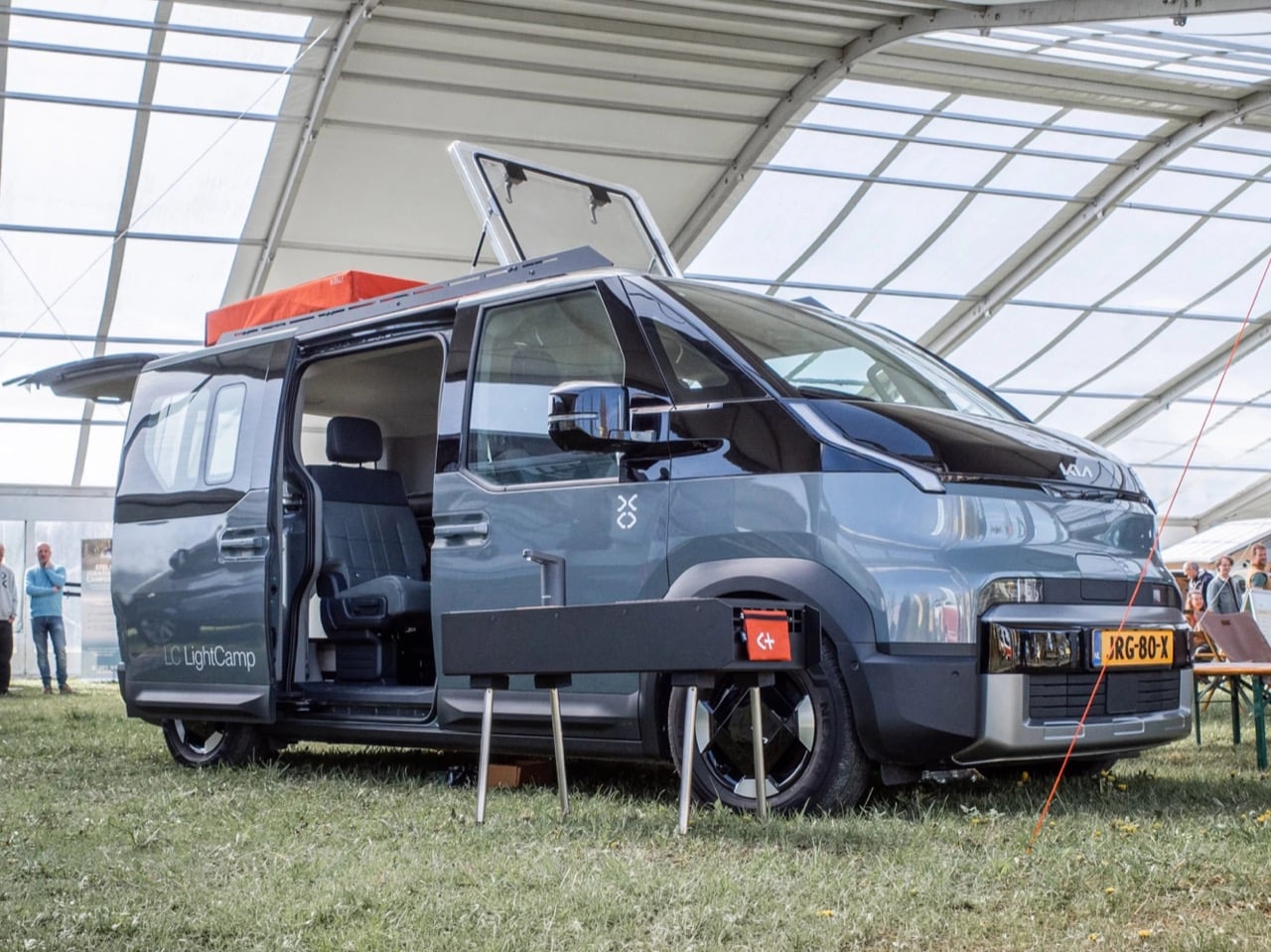
The exterior graphics set the tone before you even open a door. Large, neat lettering spells out “LC LightCamp” along the flank, paired with a stark X logo that reads more like a Scandinavian furniture brand than a typical outdoor equipment maker. That restraint suits the PV5 itself, a van whose crisp panel lines and boxy proportions already look like they were drawn with a ruler. The single splash of orange canvas on the roof, visible from a drone shot as clearly as from the ground, keeps the whole package from feeling clinical. It is minimalism doing actual work, not just decoration for a trade show floor.
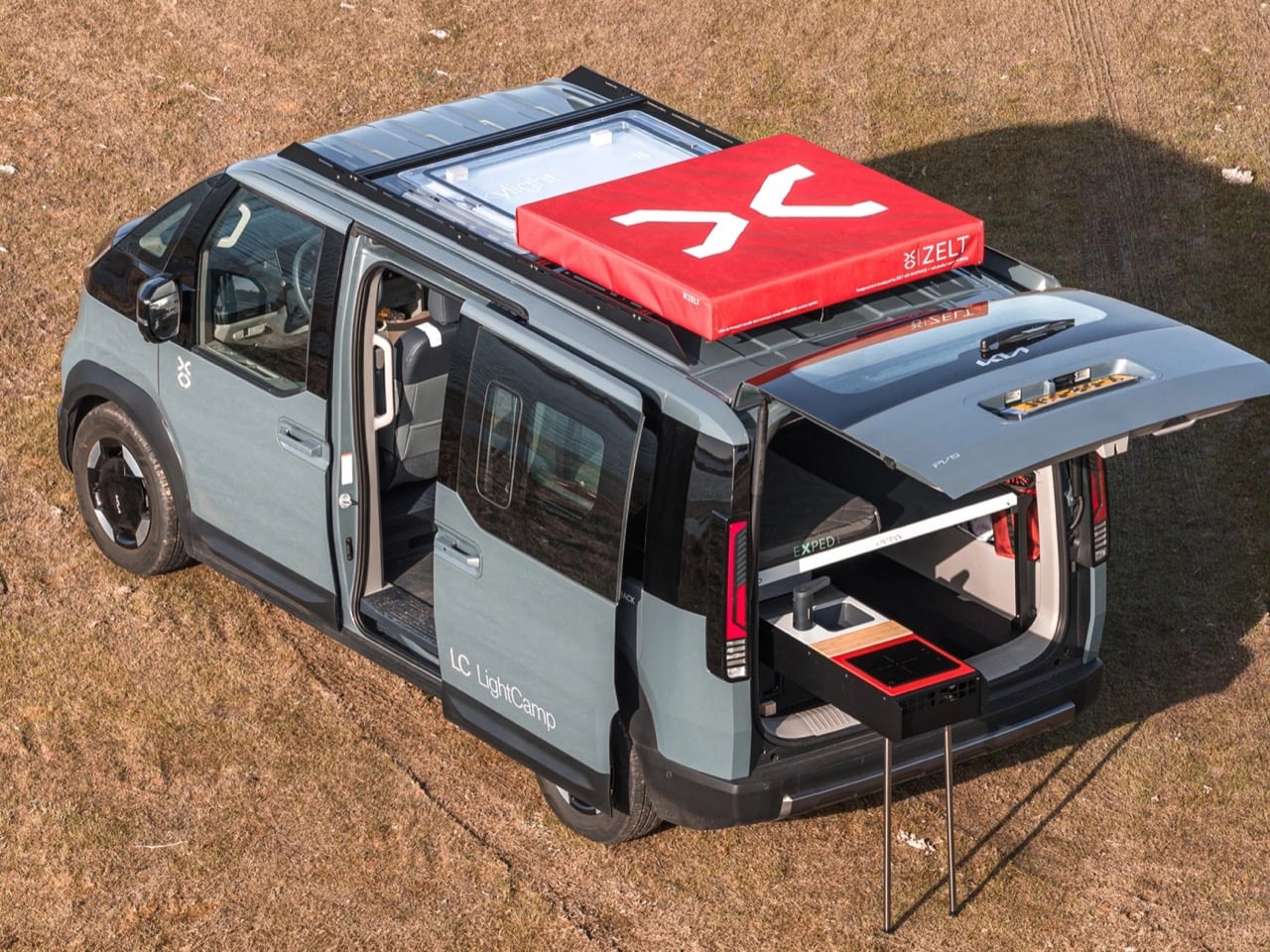
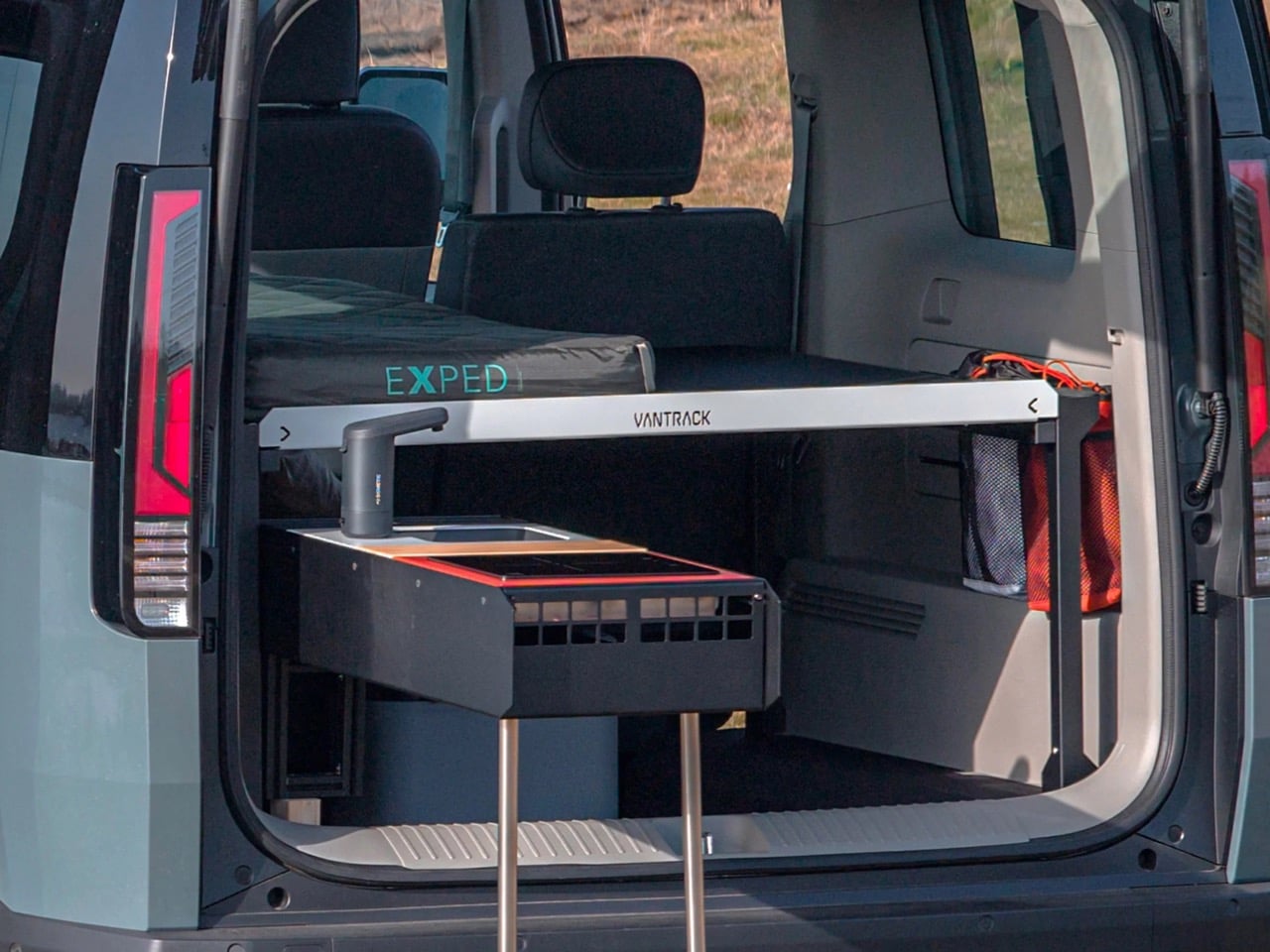
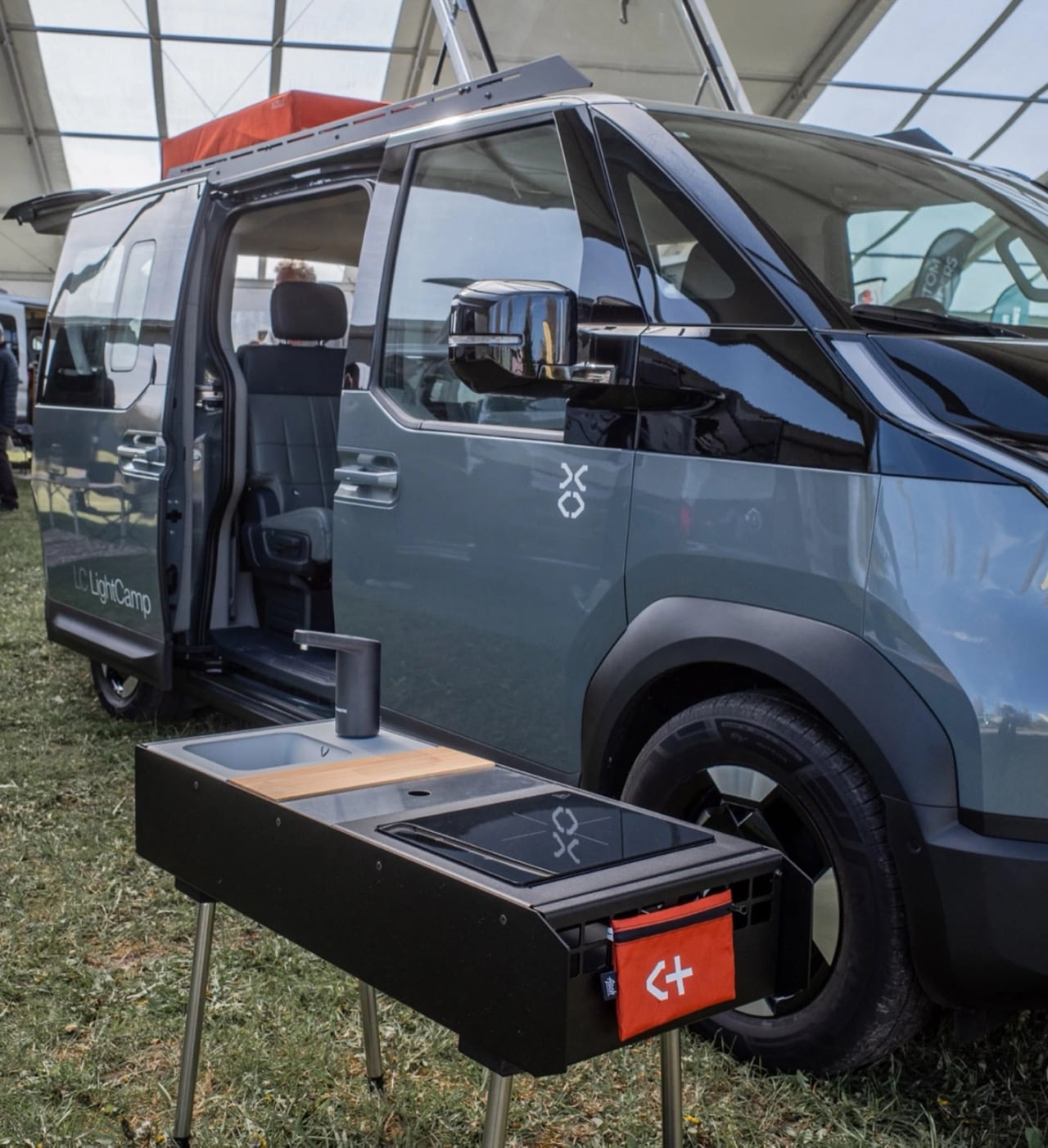
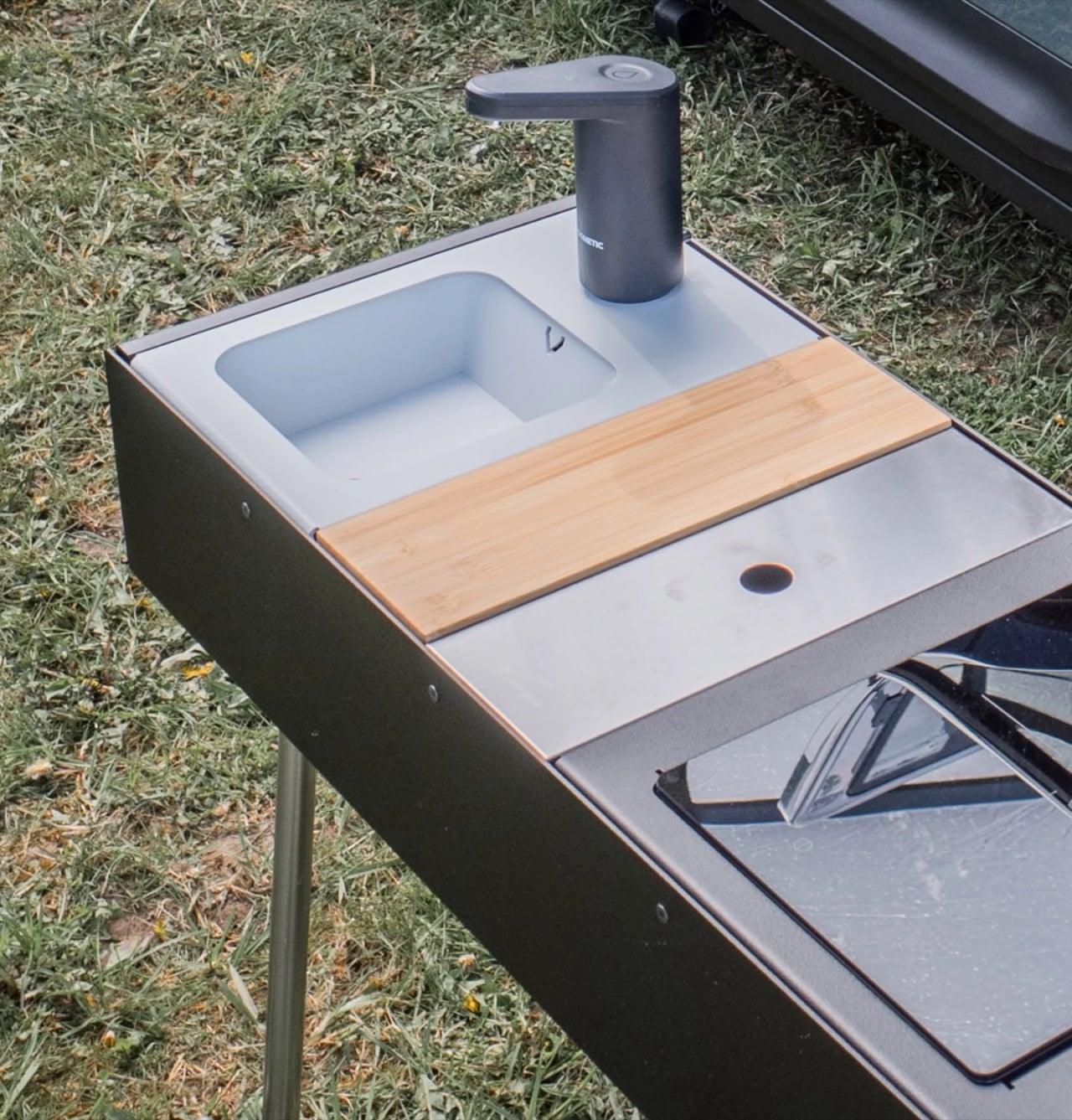
Vantrack’s real party trick sits at the tailgate. Instead of the thick, stacked foam mattress that most camper kits rely on, Lightcamp uses a slim pull out bed platform paired with two Exped Luxemat inflatable sleeping pads, each one rolling down to about 26 x 8 inches for storage underneath the platform itself. That frees up cargo space for gear rather than burying it under bedding. Below that platform rides the kitchen module, a compact unit with an induction cooktop, a bamboo cutting board, a small sink, and a Dometic Go faucet drawing from an 11-liter water canister. Slide it out on its own folding legs and it works as either a tailgate galley or a standalone cook station away from the van entirely.
Rather than fitting a heavy pop up roof, the company installed a fixed skylight that doubles as an access hatch into a rooftop tent it calls its Rooftop Architecture. The tent itself packs down small enough to sit on the rear of the roof rack, unfolding forward to create a two person sleeping area roughly 51 by 79 inches. That is lighter than a traditional pop top and, more importantly, it stays out of the way entirely when the tent gets pulled off for the off season. Vantrack has done similar rear cargo racks on its Volkswagen T6.1 builds, and Lightcamp borrows that same building block logic throughout.


None of this would matter much without a capable base vehicle underneath it. The PV5 Passenger’s Utility Mode lets owners tap the traction battery for climate control and V2L power while parked, running lights, a speaker, or a coffee maker without a separate leisure battery. Combined with a 256 mile WLTP range and 30 minute fast charging from 10 to 80 percent, the PV5 handles the drive to a campsite with more confidence than most dedicated camper vans manage on a full tank.

What makes Lightcamp worth watching is not any single component but the discipline behind leaving so much of it removable. Full pop top conversions commit an owner to a camper shaped life whether they are camping that week or not, while Vantrack’s kit lets the PV5 Passenger slide back into being an ordinary five seat van the moment the trip ends. Whether that modularity survives the jump from concept to the finished September reveal is the real question, but the underlying idea, that a camper should be something you deploy rather than something you permanently become, feels overdue.