
Japanese summer cooking has a quality that’s hard to name but easy to feel. Less rush, more presence. The kind of prep where you’re not trying to get dinner onto the table but genuinely inhabiting the act of making it. These eight tools are built for that pace. Each carries design decisions that reward attention, and together they make a summer kitchen feel less like a production and more like a practice.
What connects all eight is a commitment to material honesty. No chemical coatings, no plastic handles, no surfaces that approximate what they should be rather than simply being it. Carbon graphite that has never touched a coating. High-carbon steel forged at extreme temperatures and cooled to minus 196 degrees. Hinoki cypress that builds character through use. These tools don’t promise convenience. They promise that the effort you bring to them will be worth every minute.
1. Iron Frying Plate
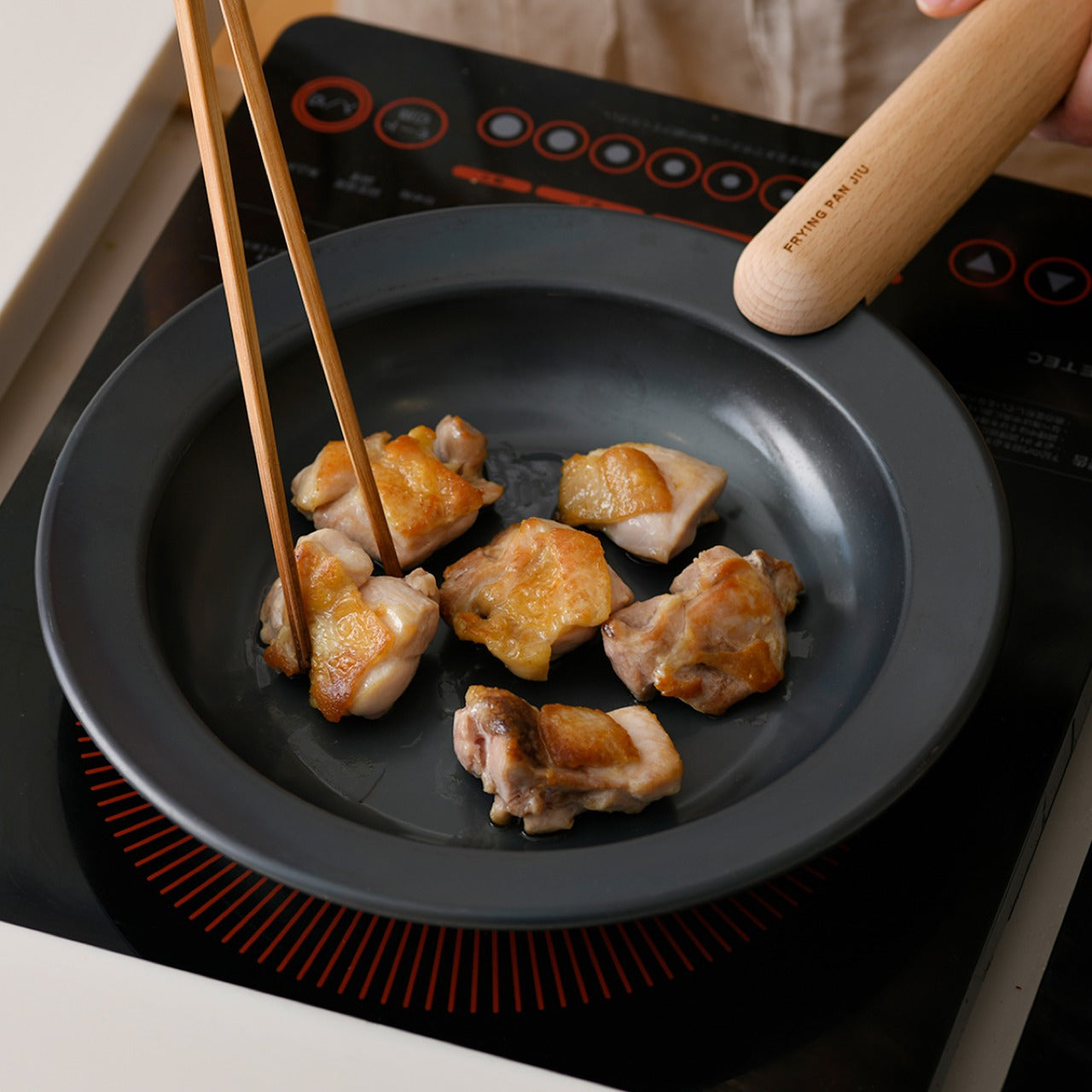

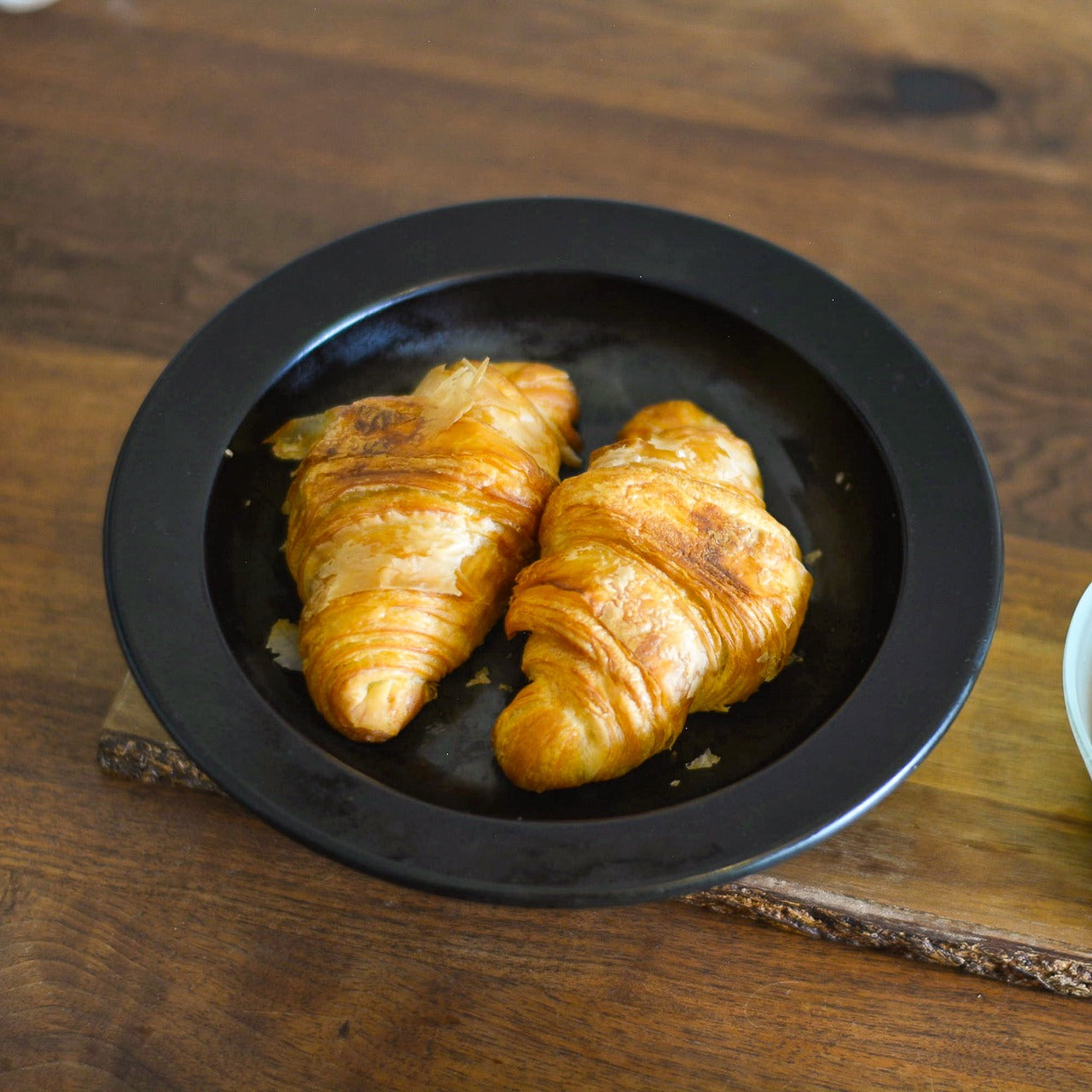
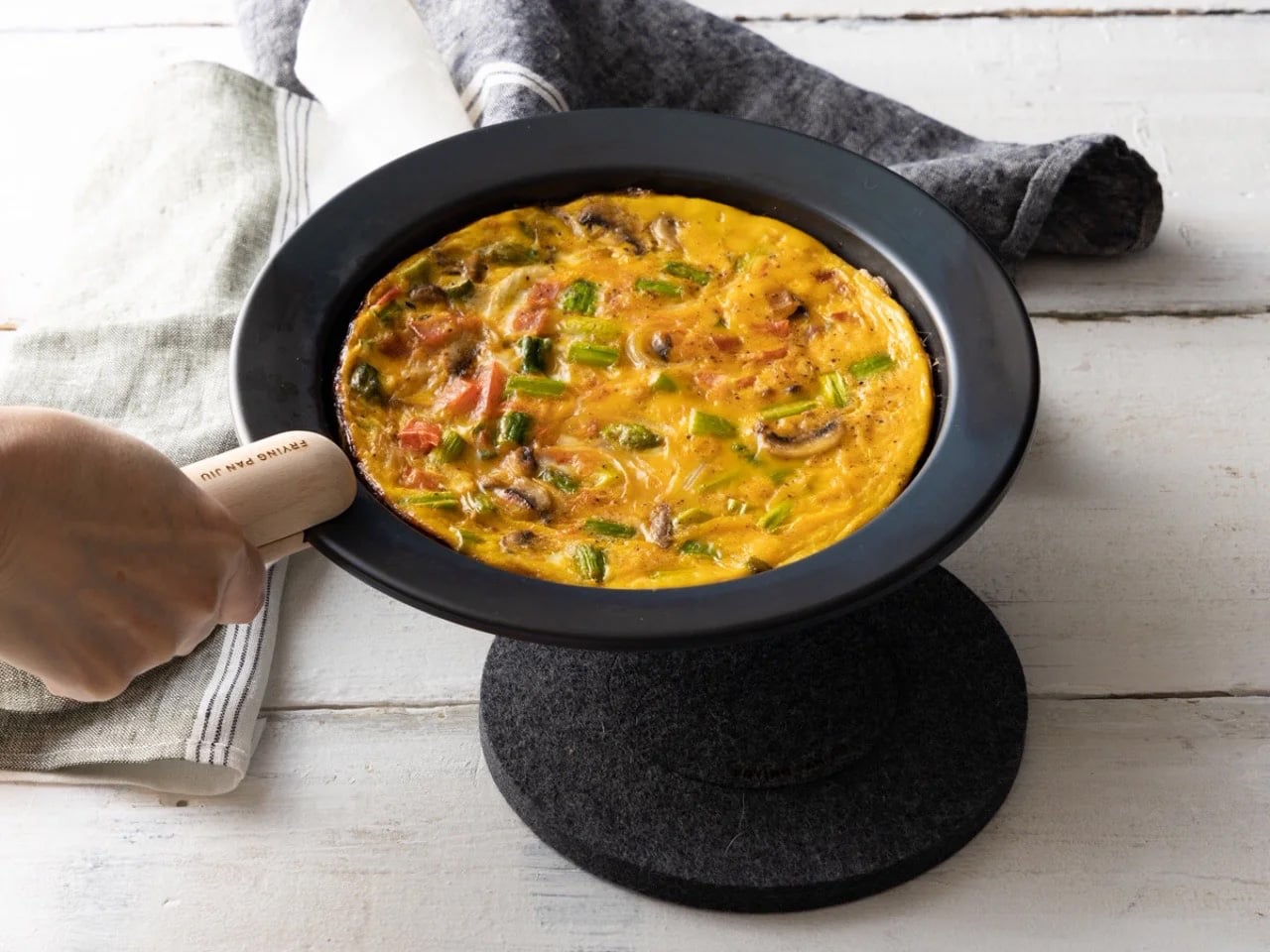
Western plating separates cooking from eating with an extra step nobody examines. Food leaves the pan, sits on a plate, and temperature and texture leave with it. The JIU Iron Frying Plate removes that step entirely. Made from rust-resistant mill scale steel with a detachable wooden handle, it moves from burner to table as a single object. You cook in it, you eat from it, and food arrives the way it was always meant to.
That might sound like a shortcut, but the effect is closer to a revelation. Eggs arrive still sizzling. Fish comes off the heat and stays at temperature while you decide what to pour over it. The uncoated surface develops natural non-stick properties through regular cooking, meaning it gets better the more you use it. The wooden handle attaches and detaches with one hand, and the transition becomes so fluid that going back to a separate plate feels like a small, unnecessary loss.
What We Like
- The cook-and-serve design preserves the temperature and texture that are lost the moment food transfers to a separate plate
- The uncoated mill scale steel develops natural non-stick properties through use, improving with every session rather than degrading like coated alternatives
What We Dislike
- The iron construction retains heat well past the point of serving, which requires careful handling at the table
- Heavier than a standard serving dish, which takes some adjustment if you’re accustomed to lightweight ceramics
2. ANAORI Kakugama
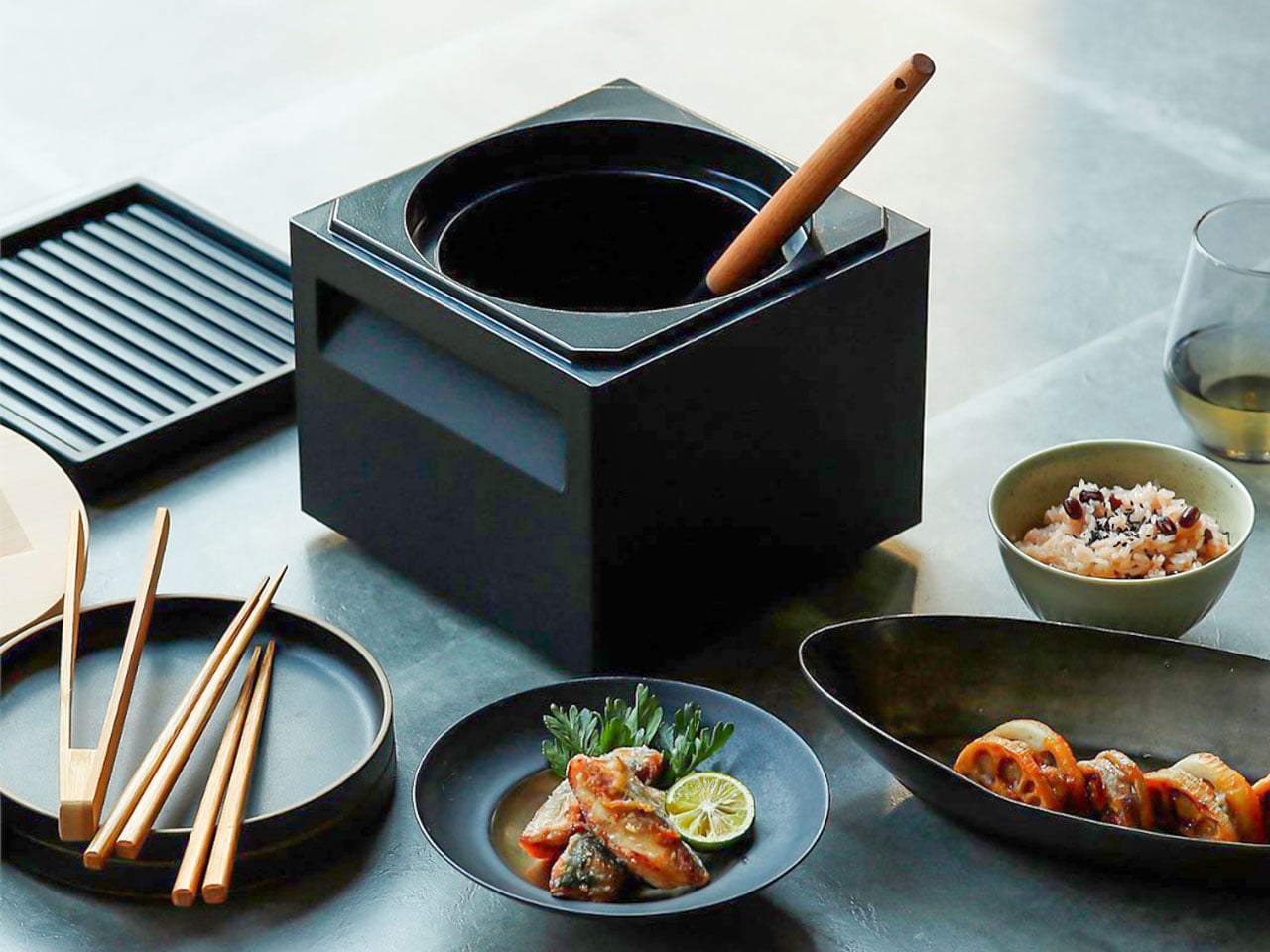
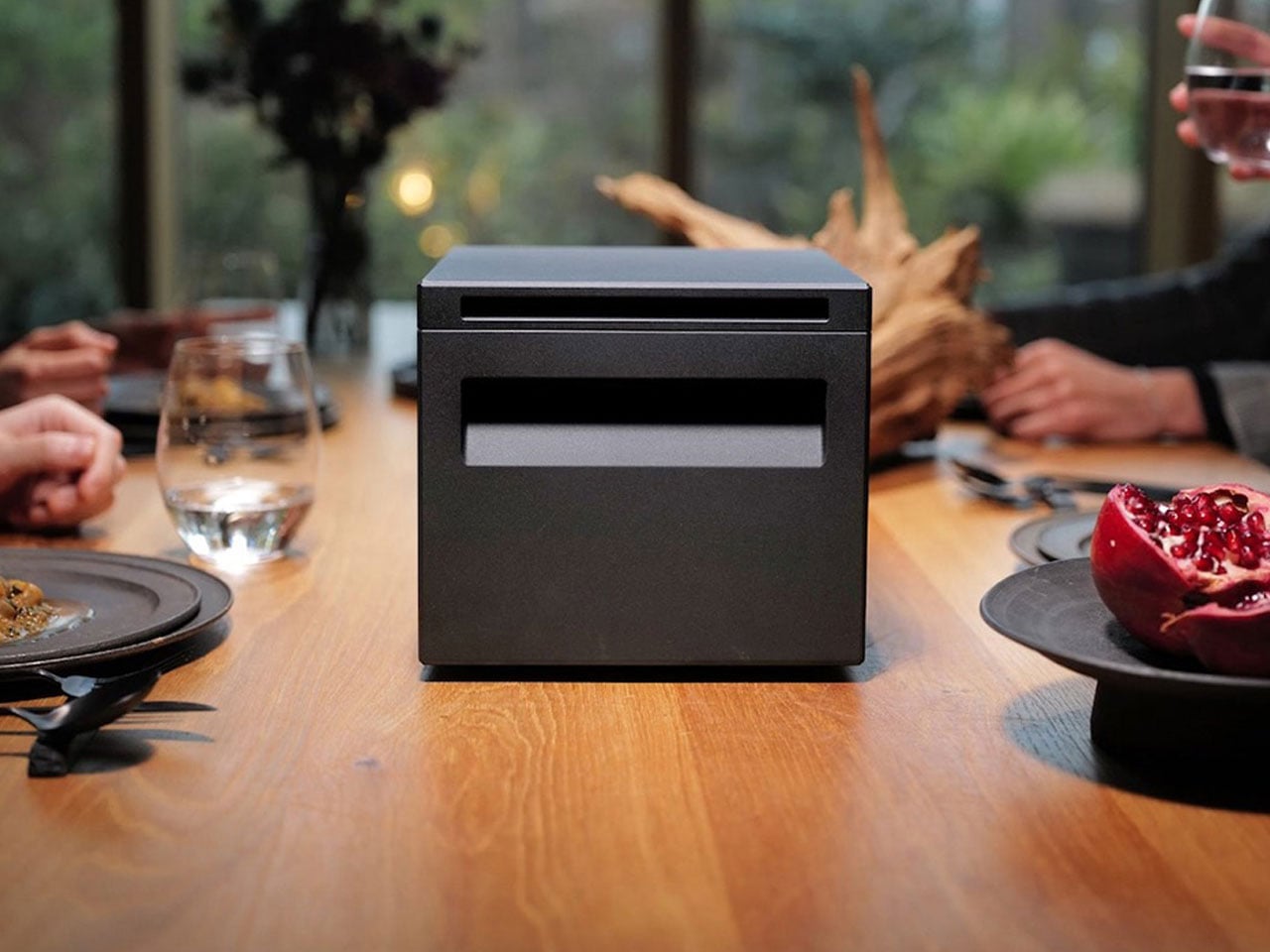
Carbon graphite is not a material you encounter in a kitchen, which is precisely why the ANAORI Kakugama stops you the moment you look at it. Crafted from solid carbon graphite in Japan, its matte black surface distributes heat with an evenness that coated pans cannot match, reducing the risk of scorching while preserving the natural flavors of whatever is being prepared. It steams, poaches, simmers, grills, and fries without complaint, the kind of vessel that earns a permanent position rather than a seasonal one.
The detail that elevates it from impressive to irreplaceable is the Japanese cypress lid. As it heats, hinoki releases a faint, earthy aroma that no synthetic lid can replicate. This is cookware that approaches the act of cooking with genuine respect for the ingredient. The carbon graphite body develops no off-flavors, imparts nothing to the food, and responds to heat with a consistency that makes it worth learning to cook around.
What We Like
- Carbon graphite distributes heat with an evenness that coated pans cannot replicate, making scorching a near non-issue across every cooking method
- The Japanese cypress lid releases a faint hinoki aroma during cooking, adding a sensory dimension that no synthetic material produces
What We Dislike
- The premium material and craft place this vessel at a price point considerably above conventional cookware
- Carbon graphite requires more attentive handling and storage than standard kitchen materials
3. JIA Inc. Rolling Mortar
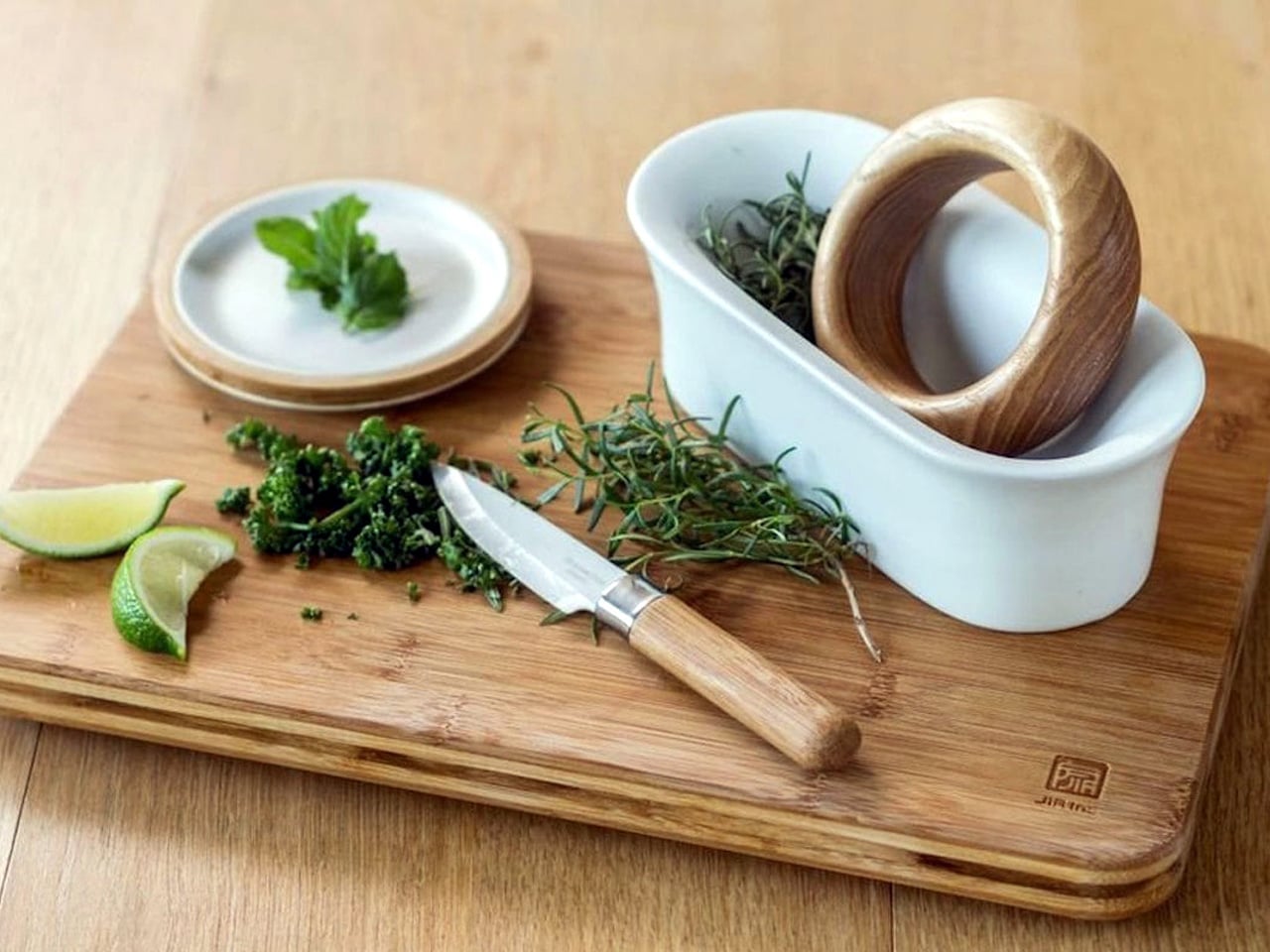
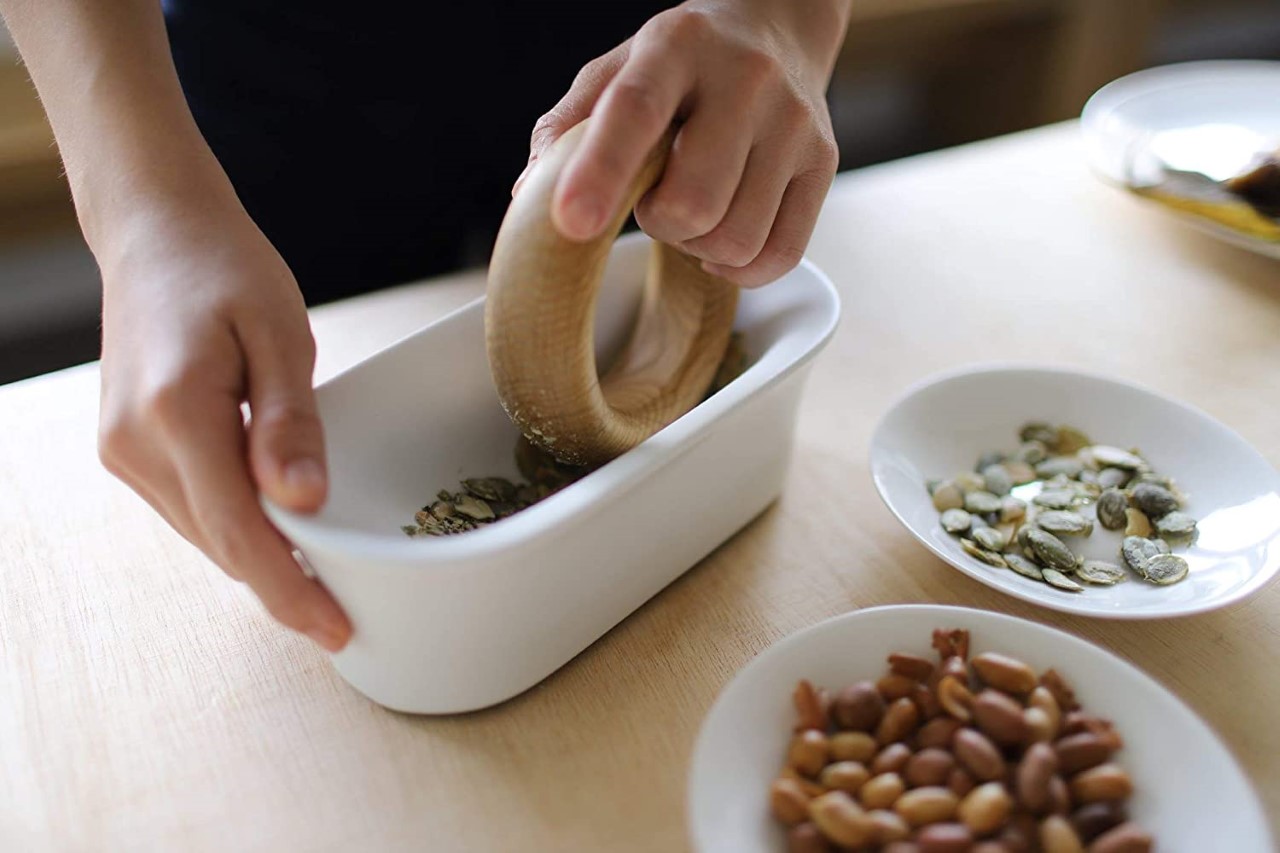

The mortar and pestle has been functionally unchanged for roughly 35,000 years. JIA Inc., a Taiwan-based design brand, chose to examine that assumption rather than honour it. Their Rolling Mortar replaces the vertical pounding motion with a rolling one: a stone sphere moves across a curved ceramic base, grinding herbs and spices through rotation rather than force. The gesture is more intuitive, considerably less tiring, and far more interesting to watch from across the kitchen.
Pesto comes out smoother. Spices release their oils more completely. The method produces results that standard crushing does not, because shearing and rolling extract differently from the same ingredient than pressure alone does. On the counter, the sphere and base form a sculptural composition that earns its space whether in use or not. It cleans easily, stores without cases or drawer space, and sits somewhere between a useful tool and a gallery object that happens to make excellent pesto.
What We Like
- The rolling mechanism shears rather than crushes, extracting oils and flavors from herbs and spices in a way that traditional pounding cannot replicate
- The sphere-and-base composition is sculptural enough to justify permanent counter display without looking out of place
What We Dislike
- The rolling action is slower than a food processor for coarse or particularly hard spices, and requires patience
- The sphere needs adequate clearance to move freely during use, demanding more counter space than a standard mortar
4. Sakura Petal Grater
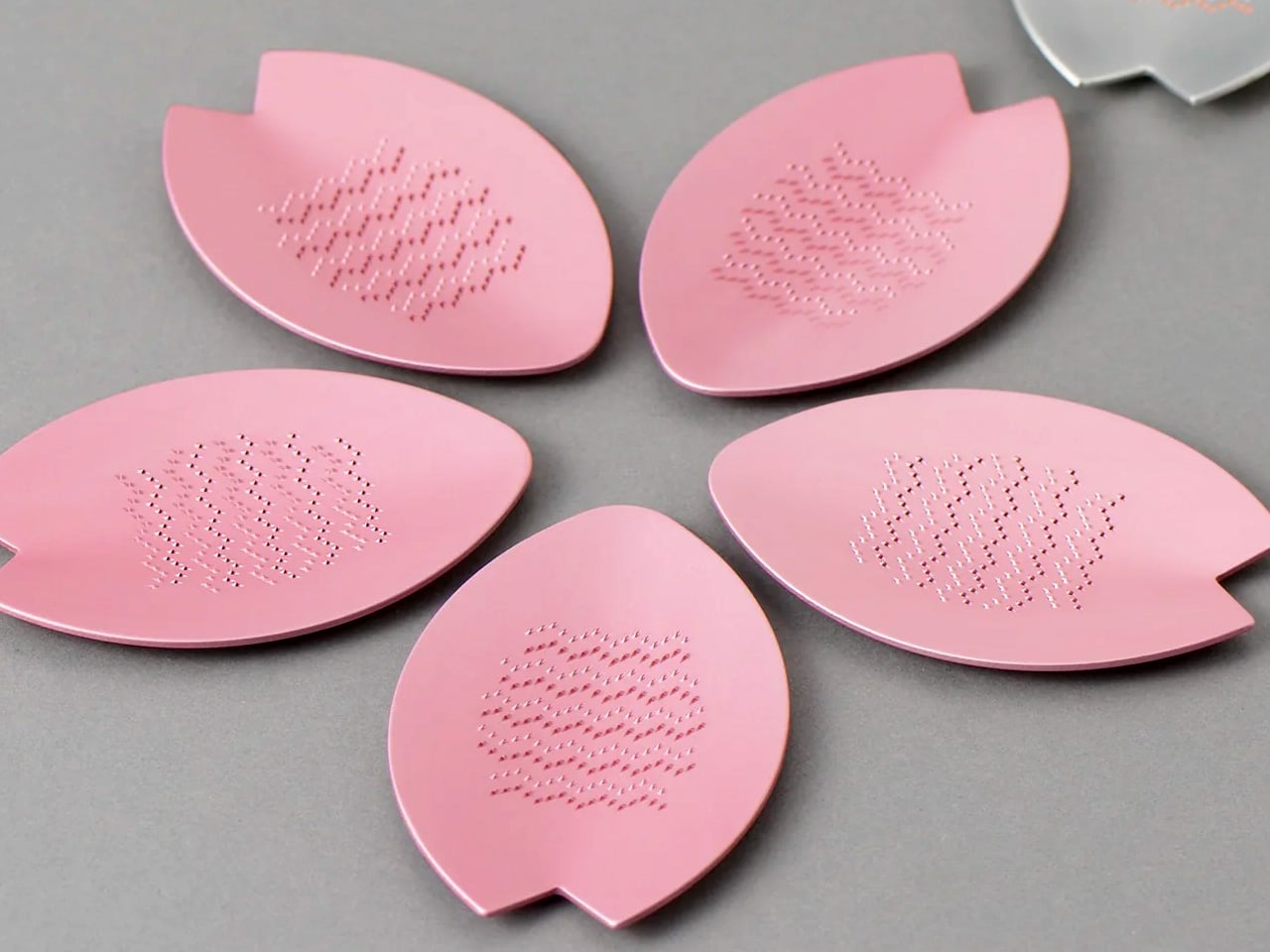
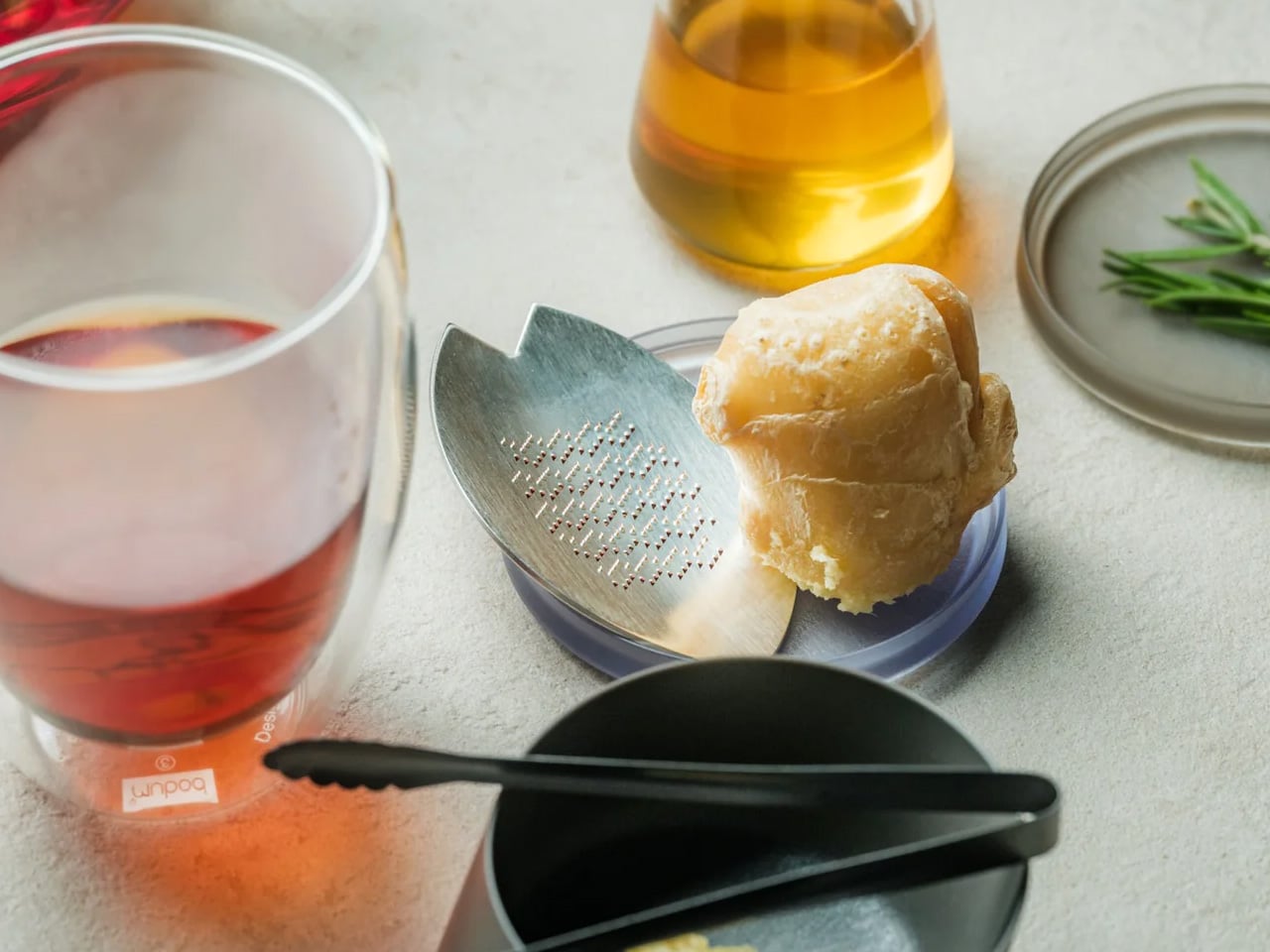
There is a specific moment in Japanese cooking that changes what you think condiments are. It arrives the first time you grate fresh wasabi at the table and realize that the paste in the tube and the root you’ve just reduced to a pale green cloud are, functionally, different ingredients. The Sakura Petal Grater is built around that realization. Its circular stainless steel surface is designed for tableside use, turning fresh ginger, daikon, and wasabi from prep tasks into part of the meal itself.
The form deserves attention separately from the function. The sakura petal shape is considered rather than merely decorative, a compact round that fits naturally at a table setting without crowding adjacent plates. The anti-slip silicone base stabilizes the grater during use and doubles as a protective cover during storage. The circular grating motion has a quality that other tools don’t offer. Once you’ve grated fresh ginger over miso soup this way, the action becomes something you look for reasons to repeat.
What We Like
- Tableside grating turns fresh garnish preparation into part of the dining ritual rather than kitchen prep done in advance and left to oxidize
- The compact sakura petal form sits naturally at a table setting, and the silicone base doubles as a protective cover when stored away
What We Dislike
- The small surface area makes this a garnish tool rather than a volume grater; larger quantities require a different piece of equipment
- The circular design works best with firm roots and vegetables and is not suited to soft produce
5. Hesslebach Dutch Oven
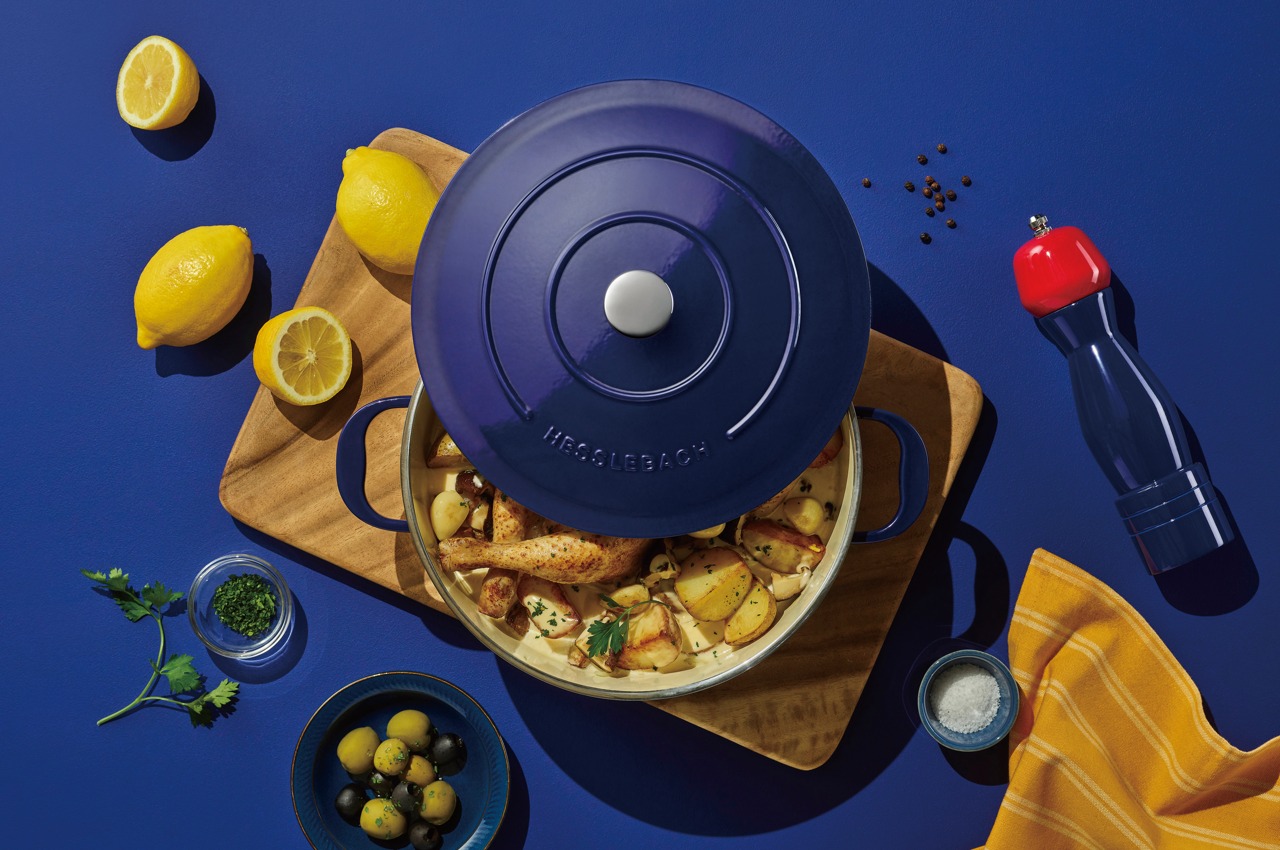

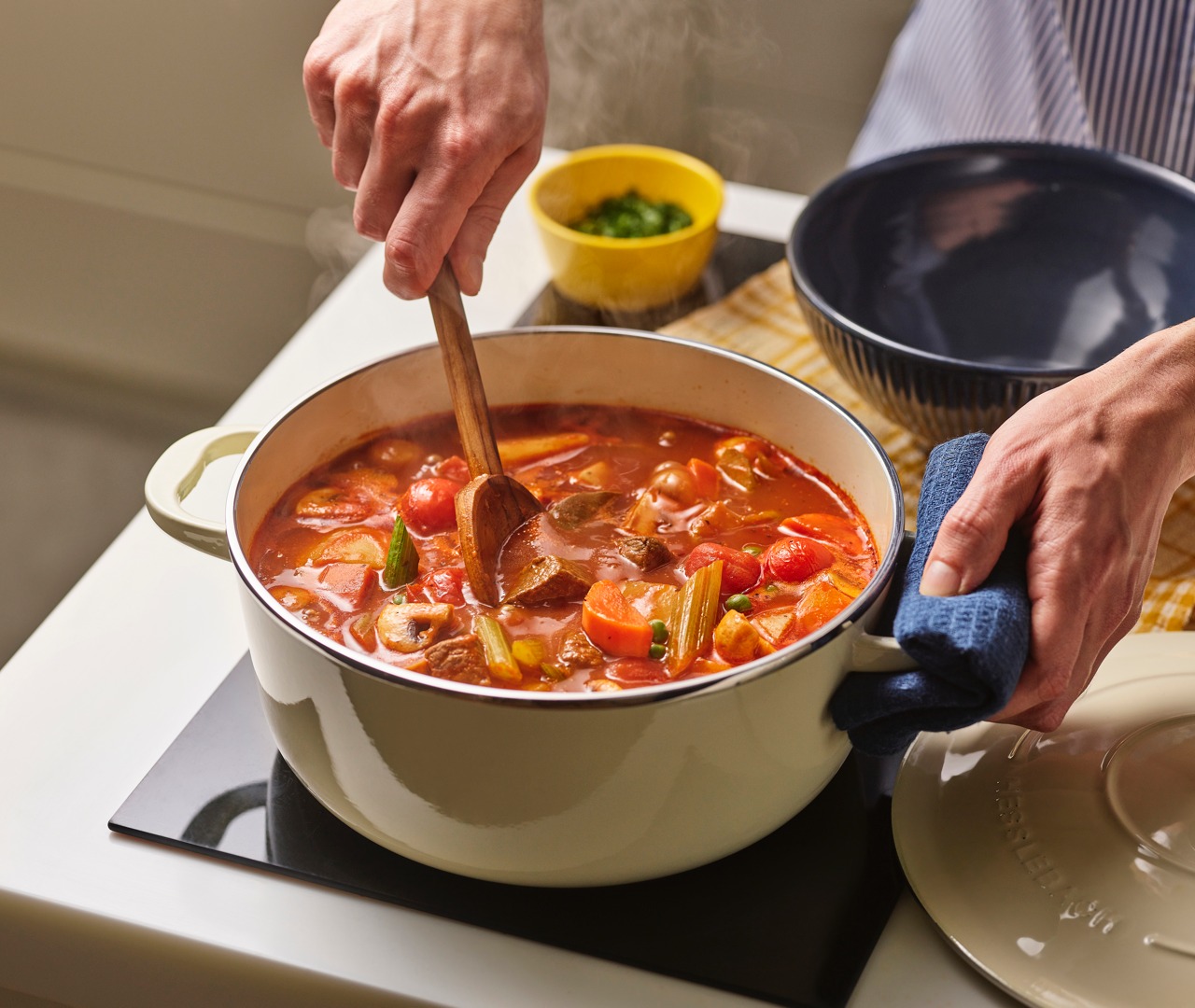

Most Dutch ovens are either functional objects that have no business being visible, or expensive pieces of cookware that work beautifully and look exactly like every other expensive Dutch oven on the market. HK Kim’s Hesslebach is neither. The design treats the vessel as an object worth placing rather than simply setting down. Its form communicates something deliberate about the kitchen it occupies, a quality that genuinely few pieces of cookware achieve regardless of price.
It retains and distributes heat in the way a good Dutch oven should. Braises develop deeper flavor, bread develops a crust that rivals a professional deck oven, and summer soups reach a depth that lighter pots cannot match over the same time. What makes it fit summer cooking specifically is the cook-to-table quality it enables. It moves from the hob to the dining table without looking like it traveled, and left out between sessions, it functions as an anchor for the kitchen around it.
What We Like
- Heat retention and distribution deliver results that lighter cookware cannot approach, regardless of the recipe or technique
- A form confident enough to move from stovetop to dining table without apology, functioning as a serving piece as much as a cooking one
What We Dislike
- The weight and material density demand more deliberate handling than lighter everyday cookware, particularly when the pot is full
- The investment required places it firmly above casual kitchen upgrade territory
6. BALMUDA The Kettle


Tokyo-based BALMUDA makes objects that look like they were designed by someone who could not tolerate the gap between how a thing functions and how it should look while doing it. The Kettle is the clearest expression of that position. A wide base tapers to a narrow gooseneck spout engineered for controlled, targeted pouring, and the proportions at every point feel considered rather than arrived at by convention. It handles the temperature precision that Japanese cooking requires with the same authority it handles the counter.
For summer cooking specifically, precise water temperature matters in ways that general-purpose kettles don’t accommodate. The difference between green tea brewed at 70 degrees and 90 degrees is the difference between something delicate and something sharp. The BALMUDA The Kettle gives you that control with a visual design that makes it worth leaving on the counter permanently. At the price it carries, it is an object that asks to be bought once and never thought about again.
What We Like
- The precision gooseneck spout allows the controlled, targeted pour that dashi preparation and temperature-sensitive tea brewing both require
- BALMUDA’s build quality and proportions make it as worthy of permanent counter display as it is of daily use
What We Dislike
- The premium brand carries a price considerably higher than functional alternatives with comparable temperature control
- Some users may want more granular degree-specific settings than the kettle’s temperature range provides out of the box
7. Hinoki Essence Cutting Board
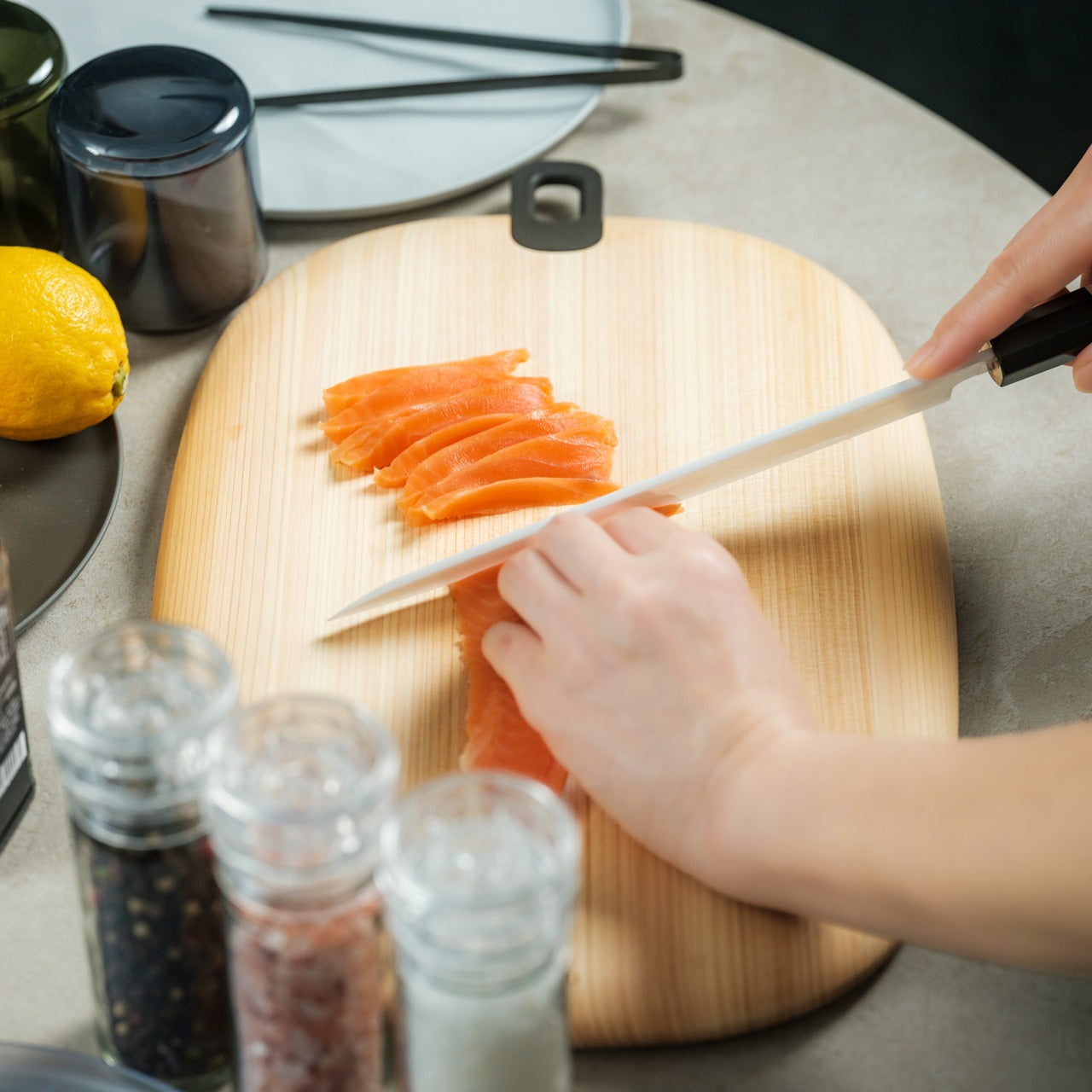
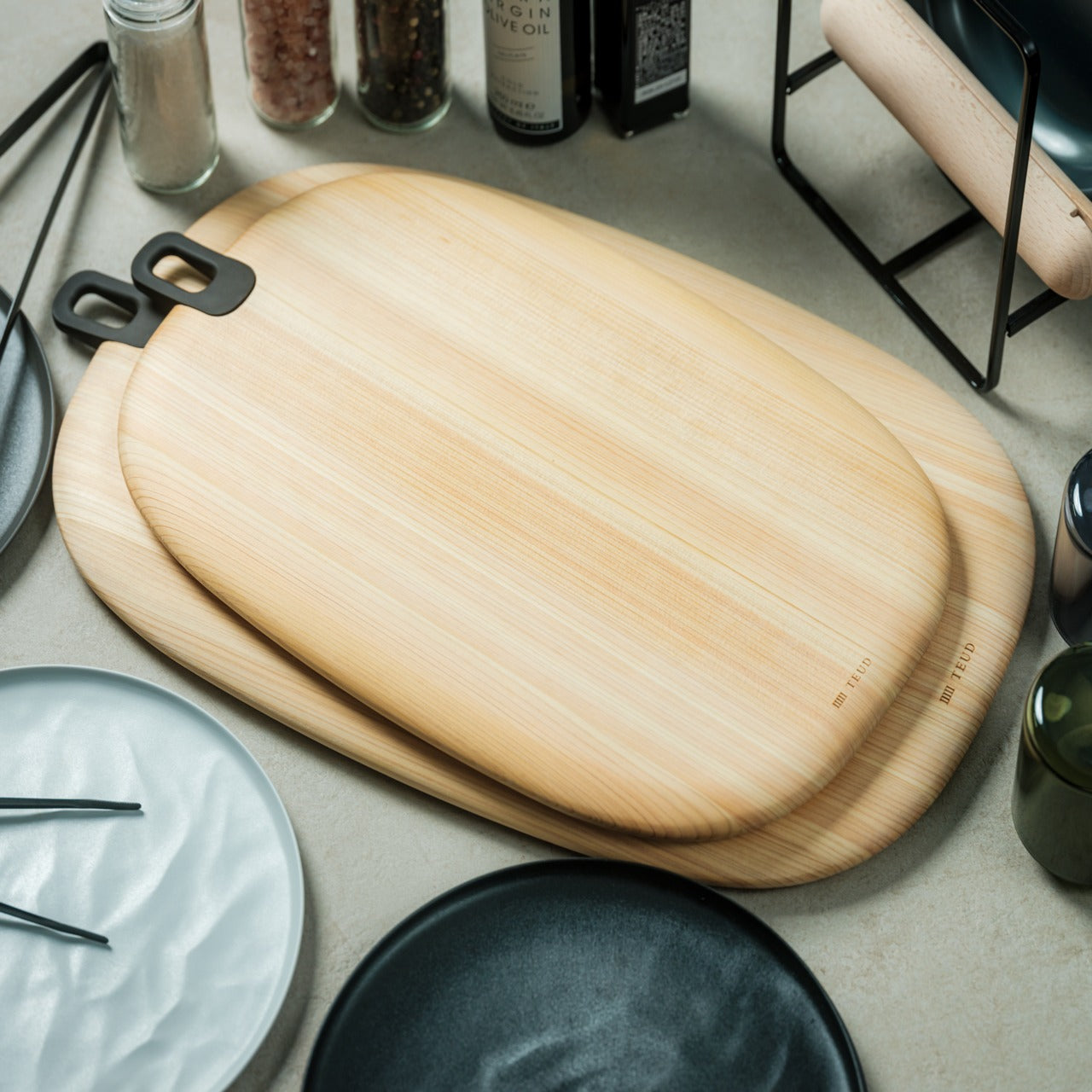
Most cutting boards argue for one virtue at the expense of another. Plastic is easy to clean and destroys knife edges. Bamboo is harder than it should be. Soft wood is forgiving but turns into a bacterial harbor within a month of regular use. Hinoki cypress is the material Japanese knife makers recommend because it sits at the right point on the hardness scale: firm enough to hold ingredient position cleanly, soft enough to absorb rather than blunt the cutting edge.
The Hinoki Essence Cutting Board adds a water-resistant silicone treatment that penetrates the wood fibers rather than sealing the surface, preserving the material’s natural aroma and feel. Hinoki has a clean, resinous scent that rises faintly during prep and turns the act of cutting into something more sensory than mechanical. The integrated handle facilitates hanging storage, keeping air circulating the board and preventing the trapped moisture that shortens the life of most wooden surfaces.
What We Like
- Hinoki’s position on the hardness scale protects knife edges while delivering cutting feedback that plastic and bamboo cannot replicate
- The silicone treatment penetrates rather than coats the wood, preserving its natural aroma and texture through regular use
What We Dislike
- Wood requires more care than plastic, including thorough drying after washing and occasional oiling to prevent surface cracking
- The premium cypress material commands a higher price than most cutting boards at this size
8. Yin Mo Star Kui Chef Knives
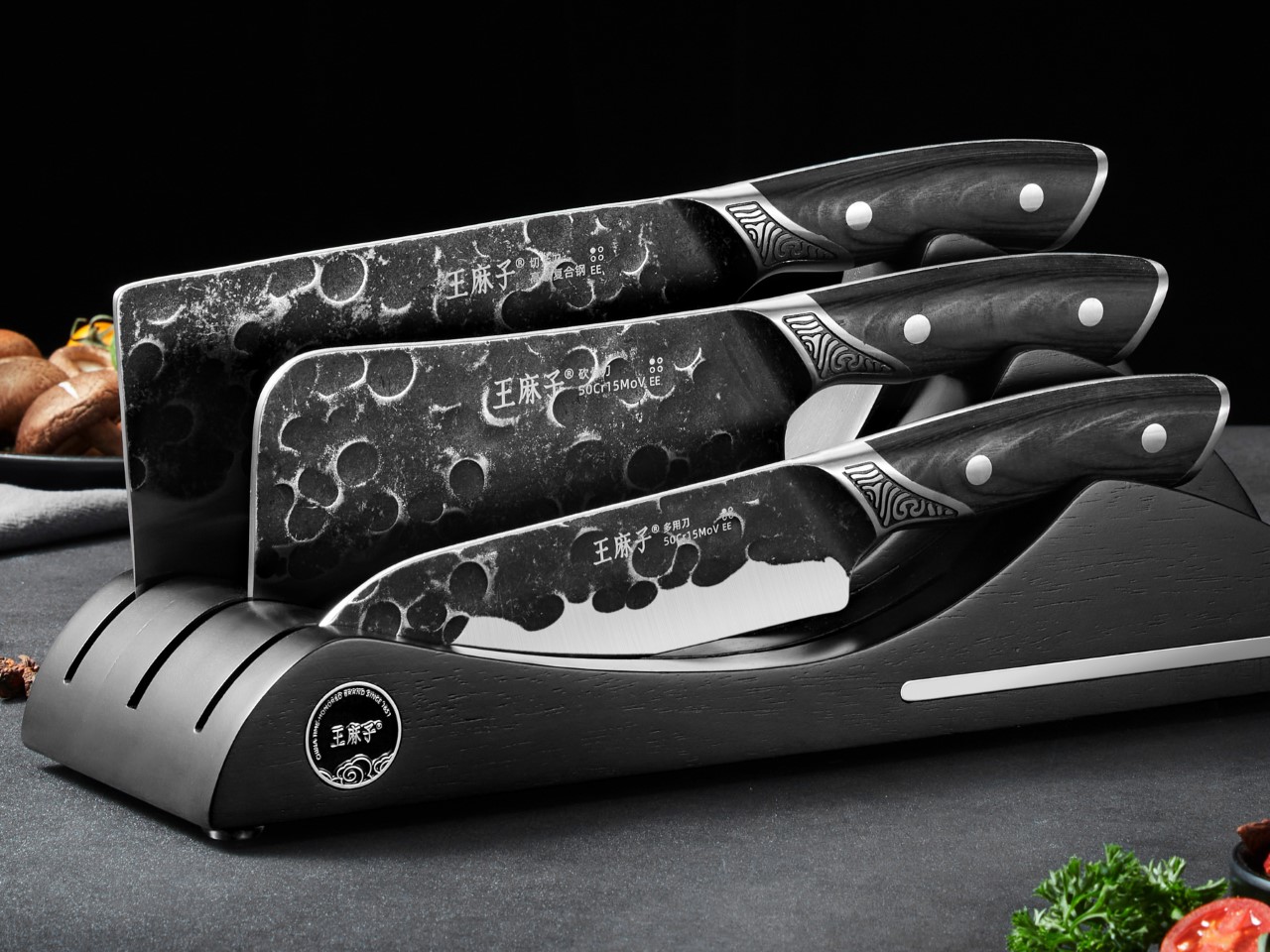
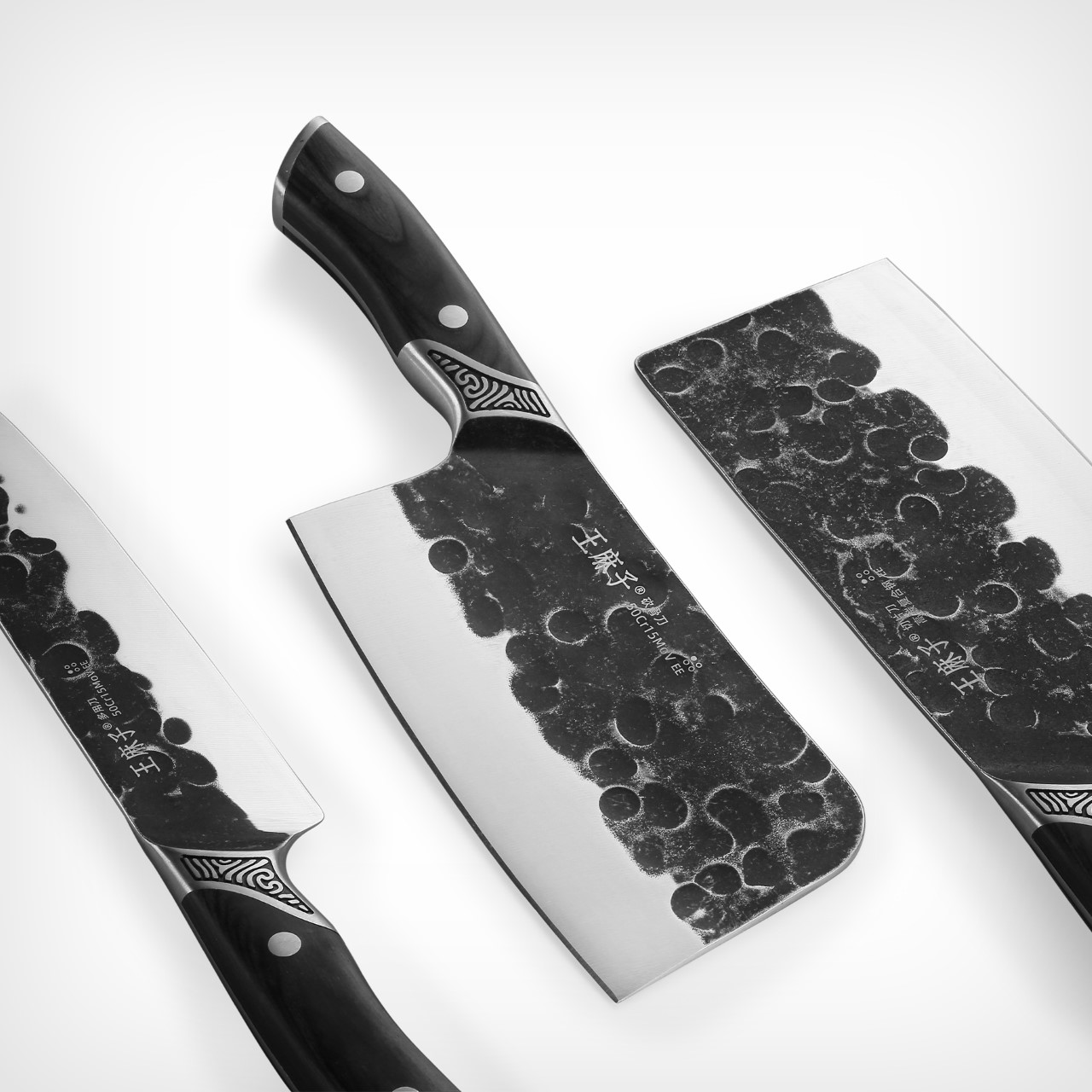
Most kitchen knives make a quiet case for themselves. The Yin Mo Star Kui make a loud one. Designed by Beijing Wang Mazi Technology and awarded the A’ Design Award, this set is built from high-carbon steel using a hot and cold forging method that few manufacturers attempt. The steel is heated to 1,040 degrees Celsius, then cooled to minus 196 degrees. Hot forging eliminates internal imperfections and improves toughness; the cold treatment reorganizes the crystal structure to increase resistance to deformation.
The texture is where the design earns its place in this article. The upper half of each blade carries a deliberately cratered surface, a visual decision that is as practical as it is dramatic. The rough texture creates micro air pockets that prevent starchy or sticky foods from adhering to the blade during slicing. Below the cratered zone, the surface transitions into a clean, polished cutting edge. Each knife comes with a display holder that exposes the cratered surface rather than concealing it, treating the blade’s most distinctive feature as exactly what it is.
What We Like
- The dual hot-cold forging process produces edge retention that standard manufacturing methods cannot replicate at this visual design level
- The cratered surface creates air pockets that release sticky and starchy foods cleanly from the blade during slicing
What We Dislike
- The textured upper blade requires more deliberate cleaning than a smooth surface, as residue can collect in the deeper craters over time
- The display holder does not conceal the cutting edge, which requires careful handling when accessing the knives
The Kitchen Is Already Enough
The tools above don’t share a common category. A carbon graphite pot, a flat iron plate, a kettle built like a sculpture, a grater shaped like a flower petal. What they share is design intelligence that reveals itself the moment you use them rather than the moment you look at them. Each was made with the understanding that the person cooking would notice, and that the noticing would change how the kitchen feels from one session to the next.
Summer is a good season to pay more attention in the kitchen. The ingredients ask for it: fresh fish that needs a clean blade, rice that deserves even heat, ginger best grated at the table rather than hours before. These tools create the conditions for that attention to become habitual, not through effort or instruction, but through objects designed well enough to make you want to keep returning to them.