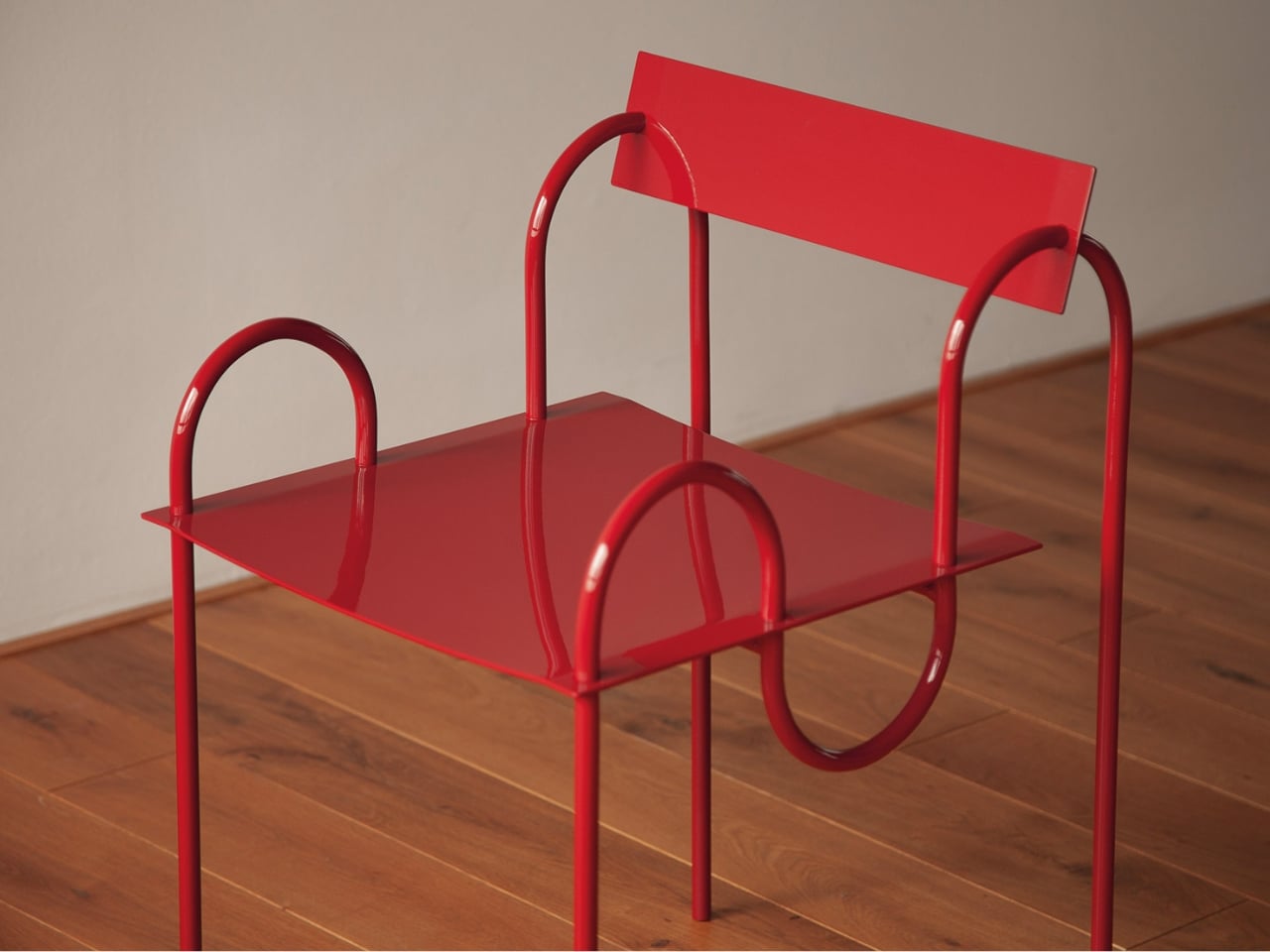

Most chair designs start with ergonomics, or materials, or a client brief. Emad Lajevardi started with a question. What if a single line could remain free and independent, yet still become the entire structural body of a chair? That question alone could have lived quietly in a sketchbook. Instead, it became the Stitch Chair, and it’s been impossible to look away from ever since.
Lajevardi is a designer and architect with Persian roots, now based in Frankfurt, Germany. He launched his independent studio in late 2023 with a clear focus on furniture design, and the Stitch Chair, completed in 2025, already reads like the work of someone who has been thinking deeply about the relationship between line, structure, and space for a very long time. The chair made its public debut at SaloneSatellite 2026, the prestigious platform for emerging designers under 35 held alongside Milan’s Salone del Mobile, where it was spotlighted by Interior Design magazine as one of the standout pieces of the entire fair.
Designer: Emad Lajevardi

That kind of early recognition is meaningful. SaloneSatellite has been the launchpad for some of the most respected names in contemporary furniture design, and being noticed there at the 27th edition, among over 700 designers from 43 countries, is not a small thing. But once you see the Stitch Chair, the attention makes complete sense.
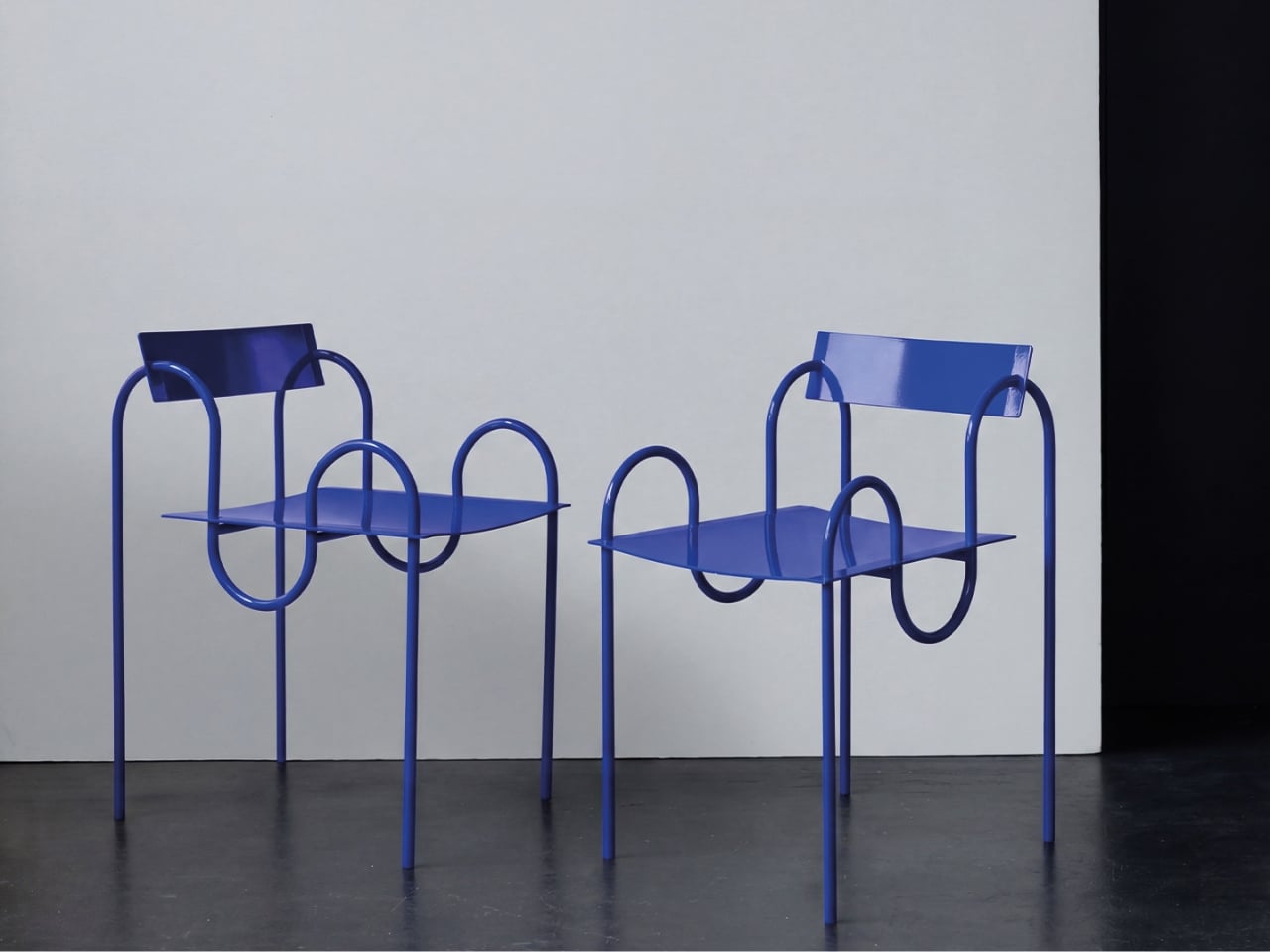
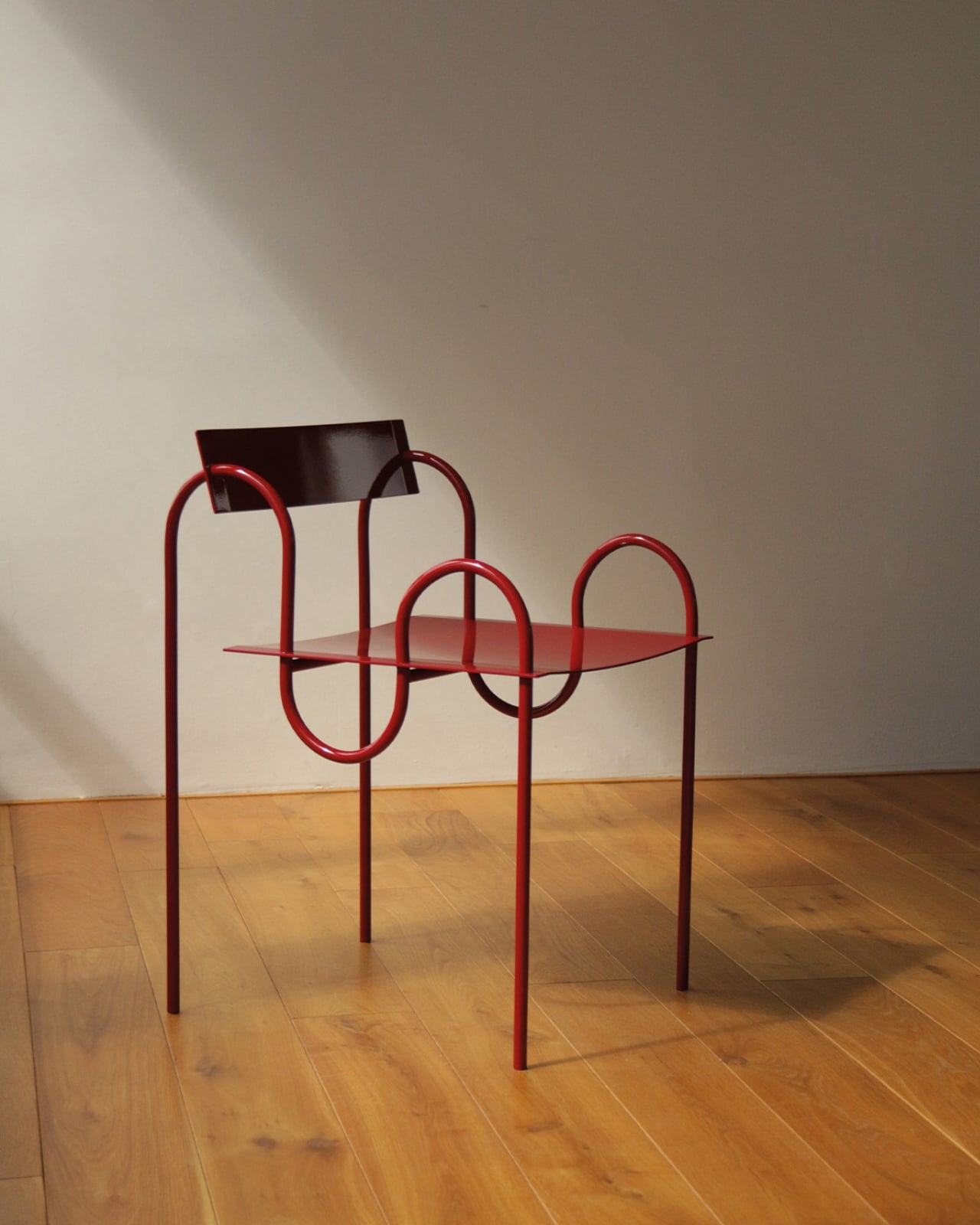
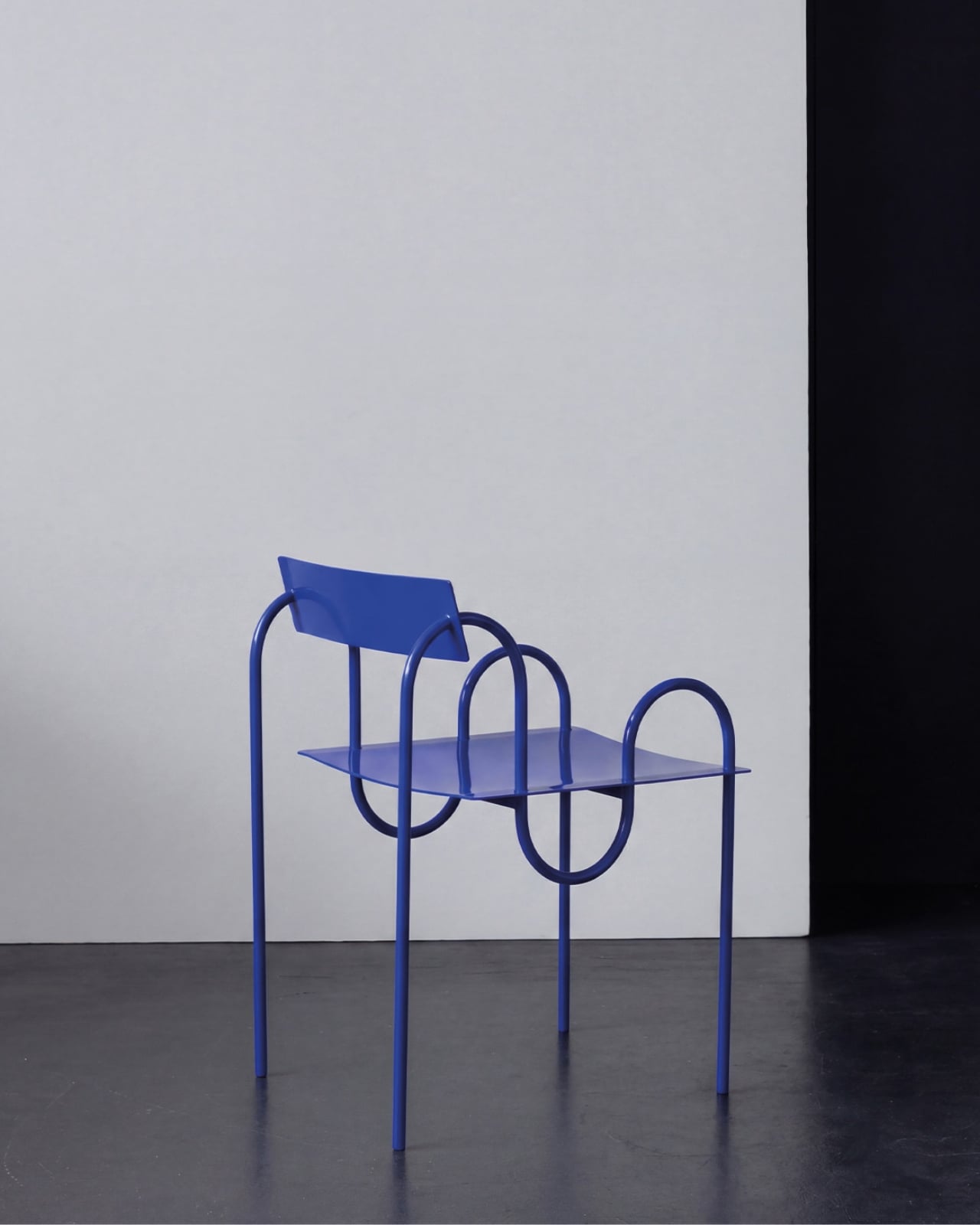
The concept is elegant in its premise. A single rhythmic thread, rendered in steel tube, weaves continuously to form the seat and backrest within a circular geometry. The loops don’t just carry the visual interest; they create the ergonomic angles and the prominent armrest handles that make this a chair you actually want to sit in, not just look at. Thin steel sheet panels anchor the seat and backrest where they need to be, grounding the composition just enough without breaking the visual language of the piece.
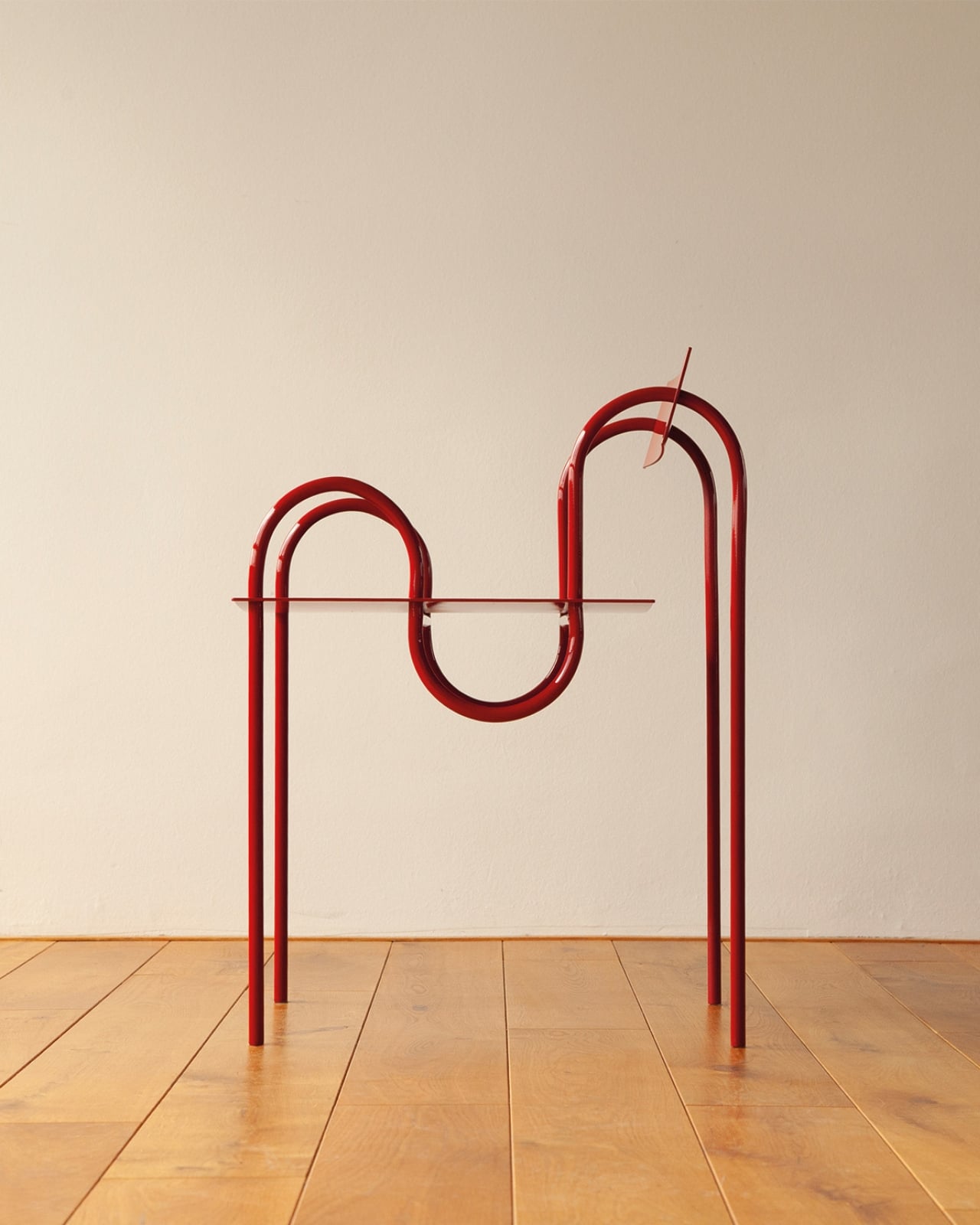
The result is a chair that looks completely different from every angle. Head-on, it reads as playful, almost architectural, with its symmetrical loops and squared seat. From the side, it becomes something closer to a drawing, a study in curves and planes that feels weightless despite being made entirely of metal. From behind, it takes on an almost abstract quality, the backrest panel seeming to float above the looping geometry below.
What Lajevardi has done is resolve a tension that most designers avoid entirely. Steel is a rigid, industrial material. A single continuous line implies motion and spontaneity. Getting these two ideas to coexist without one undermining the other is genuinely difficult, and the Stitch Chair does it without appearing to try. That ease, that studied nonchalance in the execution, is usually the mark of a very considered design process.
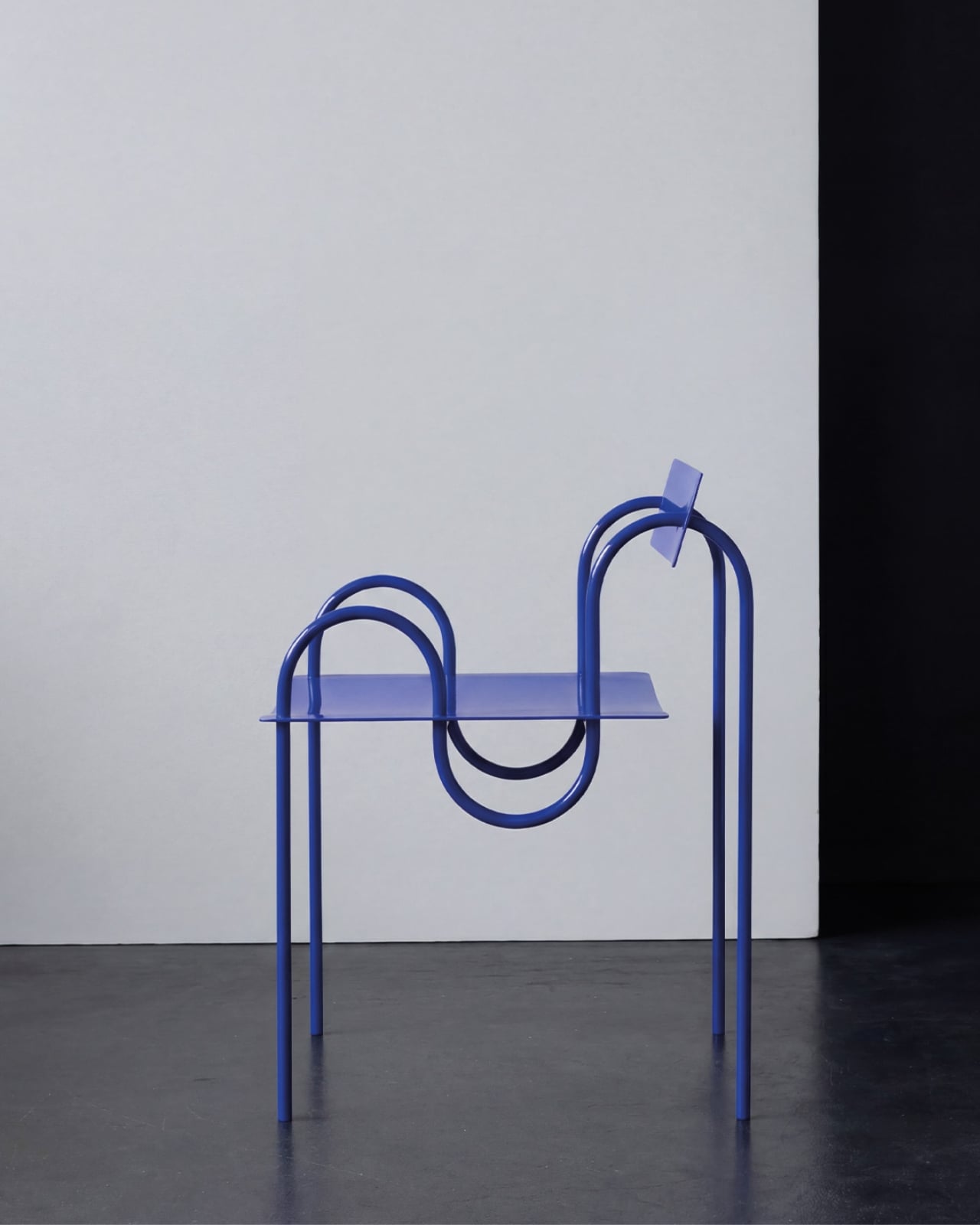
The color choices deepen the experience. The glossy ruby-red version is bold, almost theatrical, the kind of piece that anchors a room from the moment it enters. The cobalt blue reads differently, cooler and more sculptural, closer to something you’d find in a gallery than a dining room. Both feel intentional rather than decorative, as if the color is part of the argument the design is making about what furniture can be.
I think the Stitch Chair sits comfortably in a lineage of furniture that refuses to separate function from sculptural ambition. You can trace that thinking through Ron Arad’s early bent steel works, through the playful rigor of Konstantin Grcic, through the structural poetry of designers who insist a chair can carry a point of view. Lajevardi’s contribution to that conversation is that he started with a question rather than an answer, and the honesty of that starting point shows in every loop and curve.
Furniture design is having a genuinely exciting moment right now, with a new generation of designers treating the chair not as a solved problem but as open territory. The Stitch Chair is proof that the most interesting work still comes from the simplest, most stubborn kind of curiosity. What if just one line was enough?