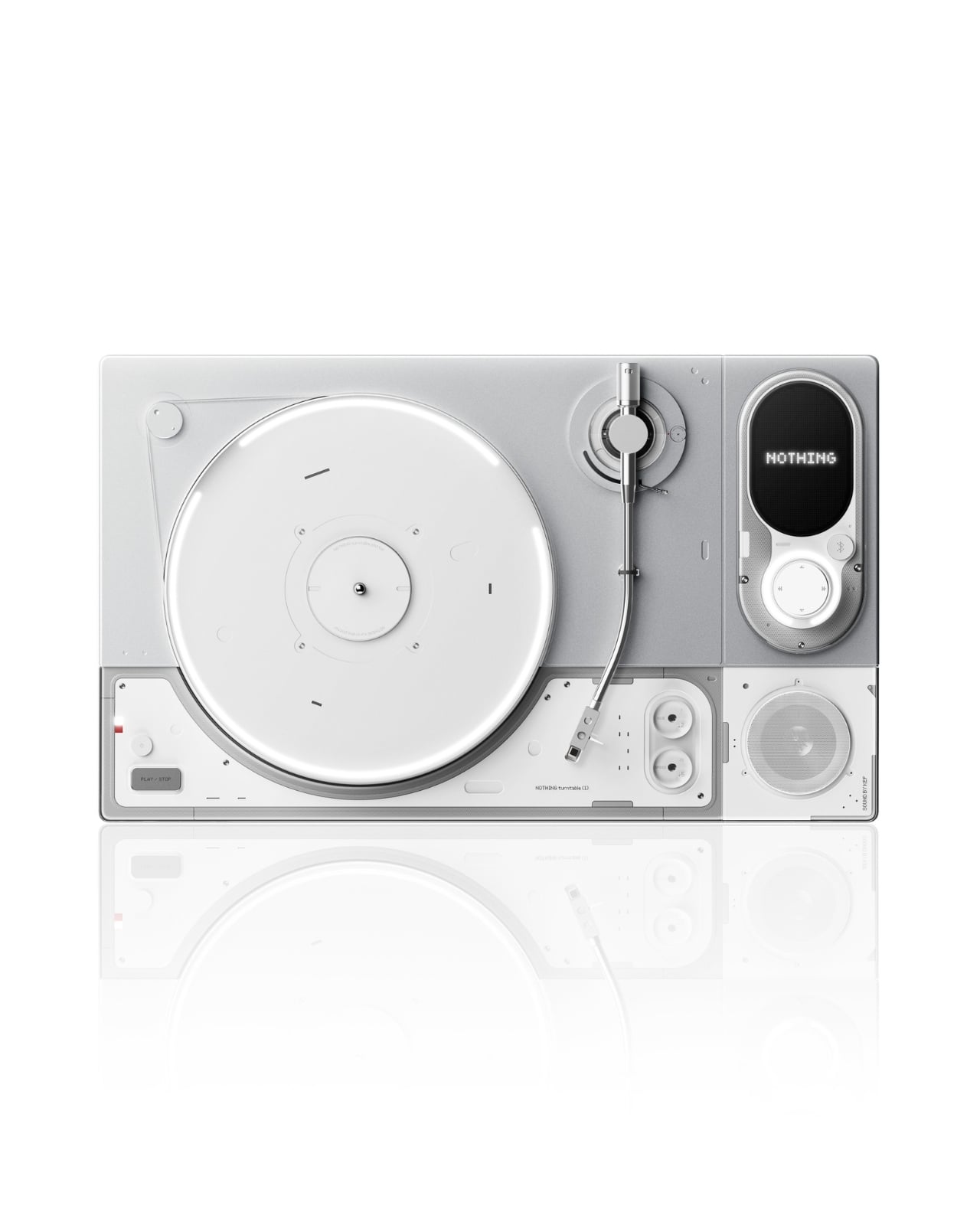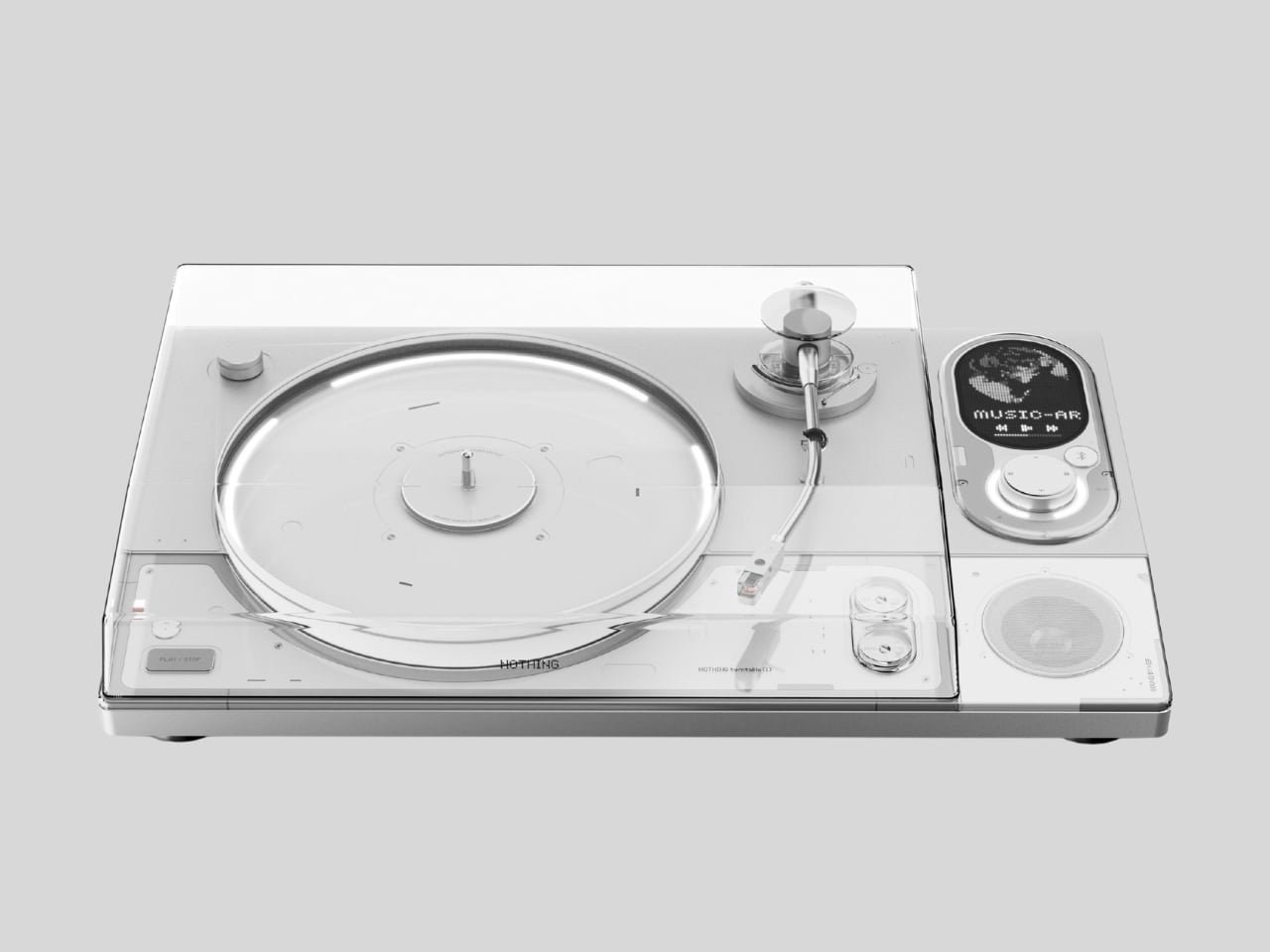

Sungwoo Choi is an industrial design student with one question: what if Nothing made a turntable? The answer is Turntable (1), a personal concept project with no official ties to the brand, and it’s been circulating online as exactly the kind of render that makes you briefly annoyed it doesn’t actually exist.
If you’ve spent any time in the vinyl revival conversation, you know most turntables fall into two camps: the warm, retro-wood-and-brass kind that lean hard into nostalgia, or the cold, purely utilitarian kind that audiophiles swear by but would never put on display. Very few designs ask the question that good industrial design should always ask. Can this be both beautiful and functional, without being precious about either? Choi’s concept does exactly that, in a visual language drawn directly from Nothing’s aesthetic, and it reads more resolved than many products that actually ship.
Designer: Sungwoo Choi
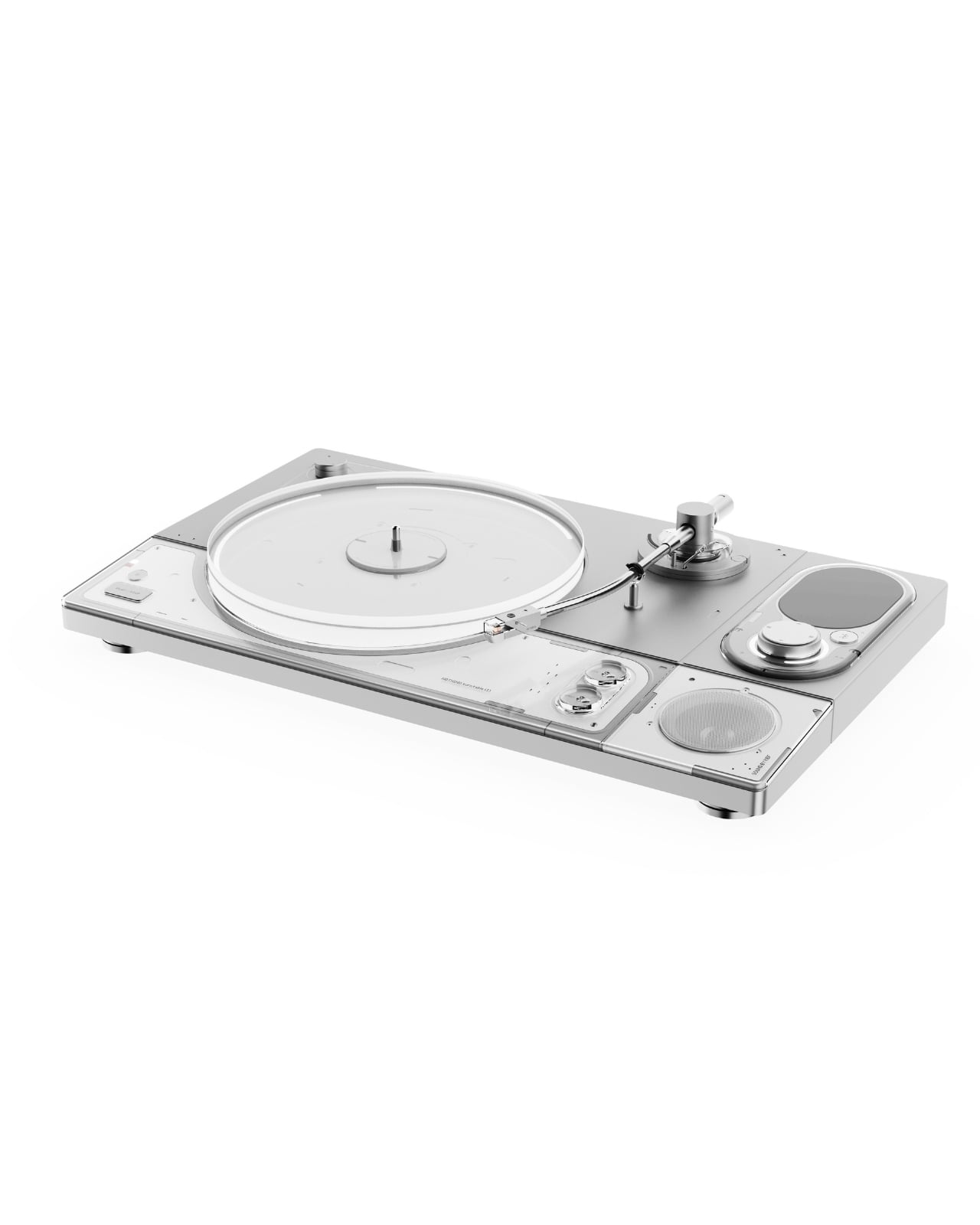

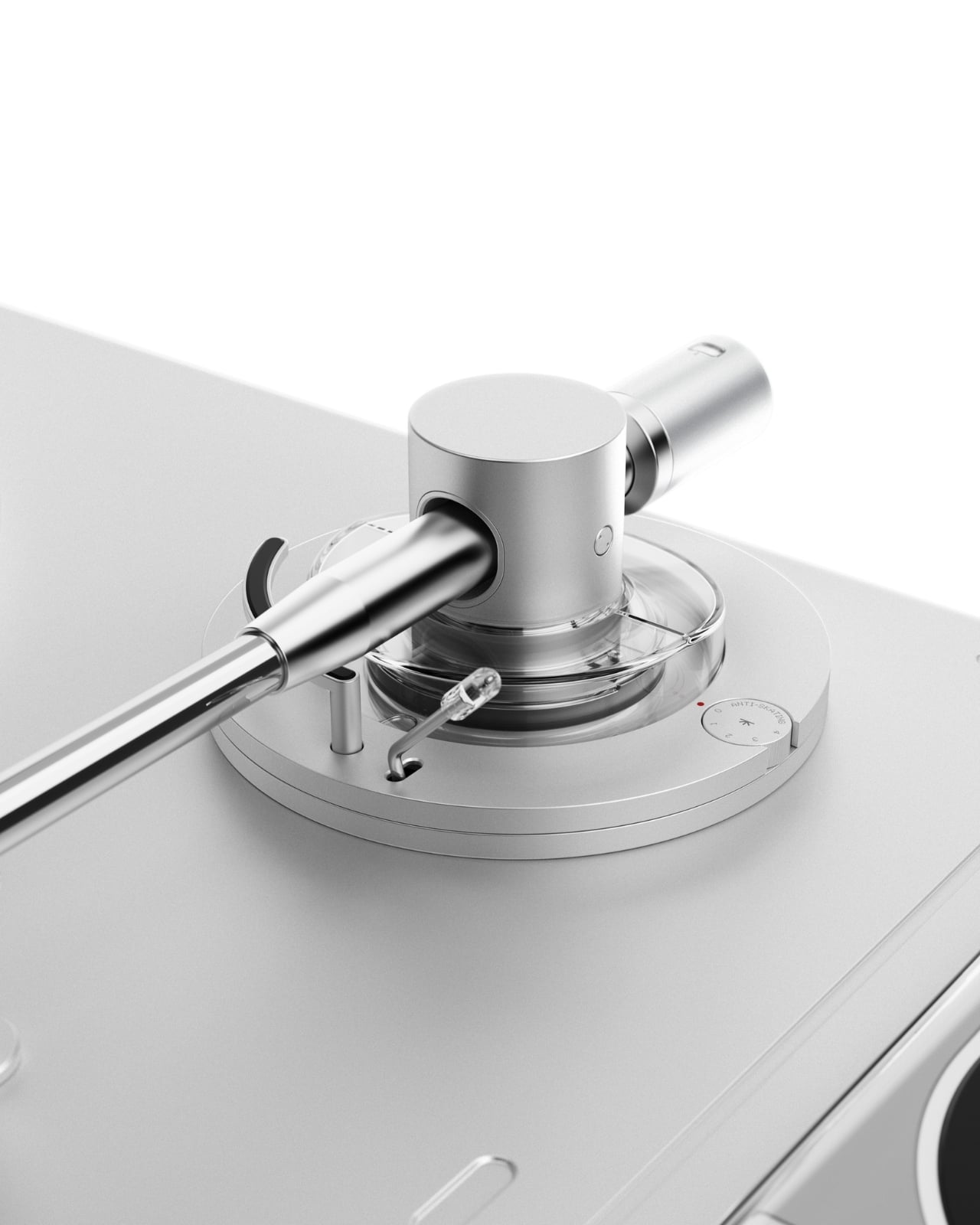
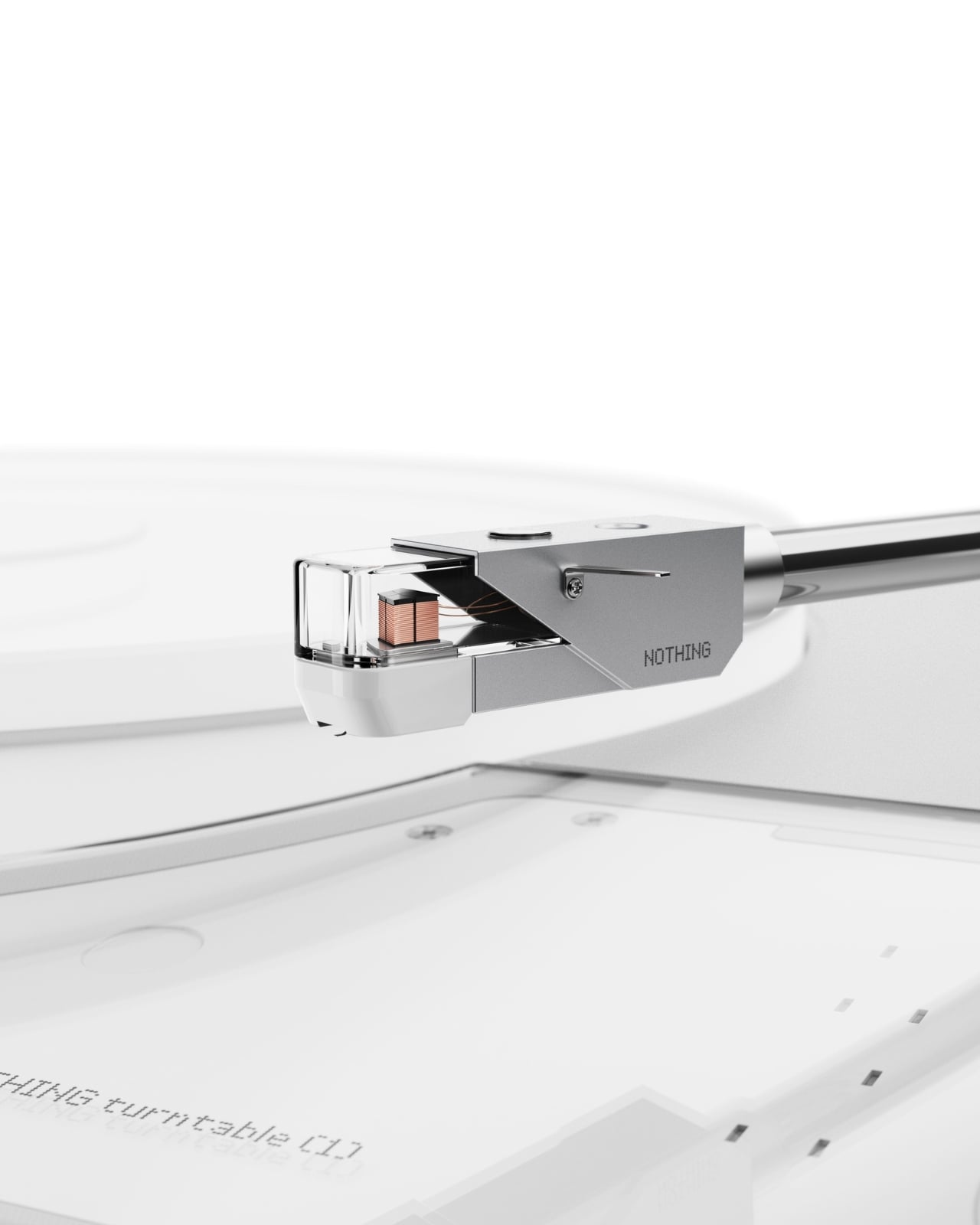
The design is clean in a way that reads as deliberate rather than sparse. The chassis is white with silver-tone aluminum accents, flat and rectangular with gently rounded module insets that divide the deck into distinct functional zones. The platter is rimmed in a transparent acrylic ring that catches light in a way that makes the whole unit feel alive without being showy. The tonearm is machined and substantial, seated on a circular mount encircled by concentric transparent rings, a detail that looks pulled from a scientific instrument. Nothing has built its entire reputation on making the internal visible, on transparency as both a literal and conceptual design choice, and Choi translates that language fluently into a format where seeing the mechanics only deepens the ritual of listening.
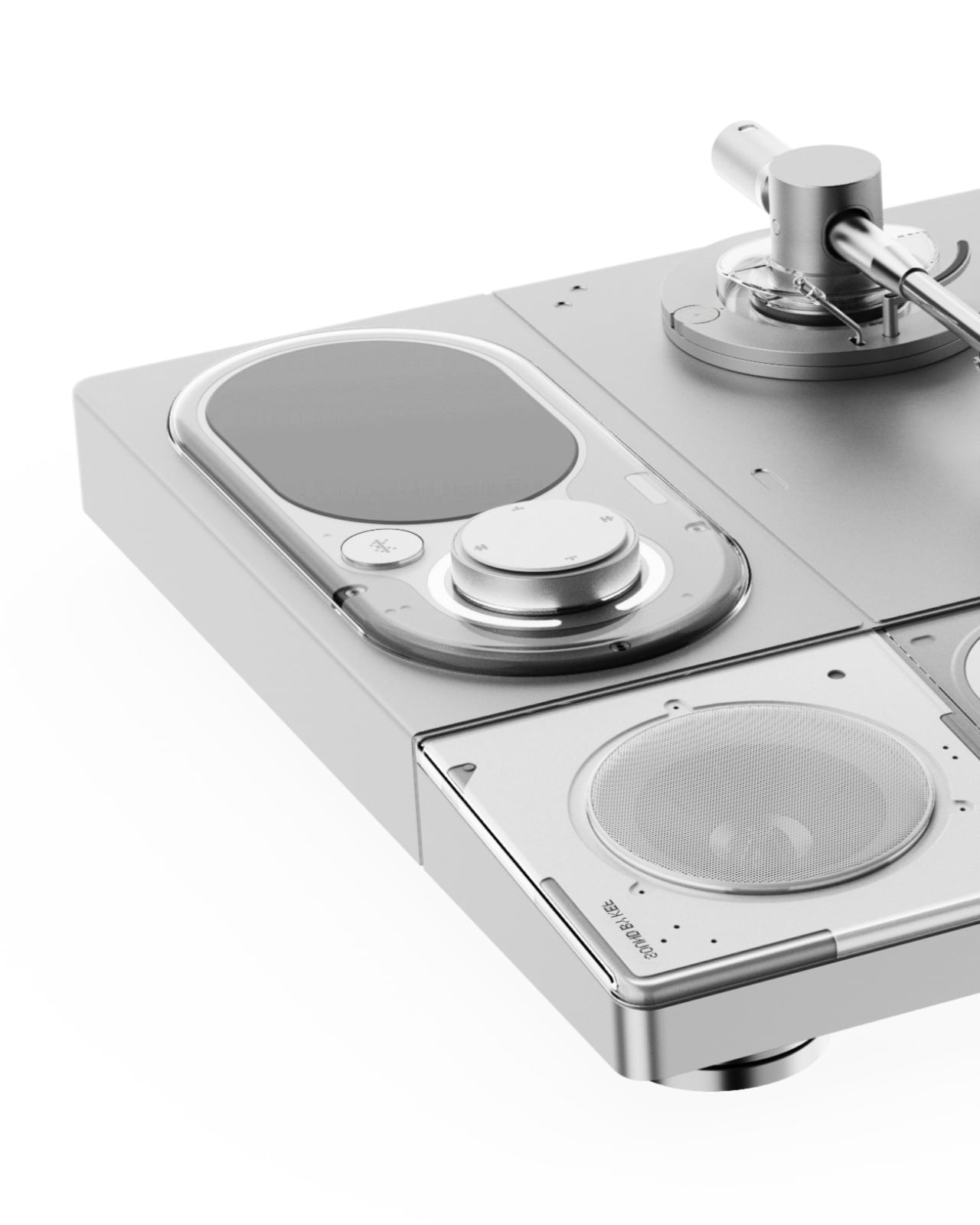
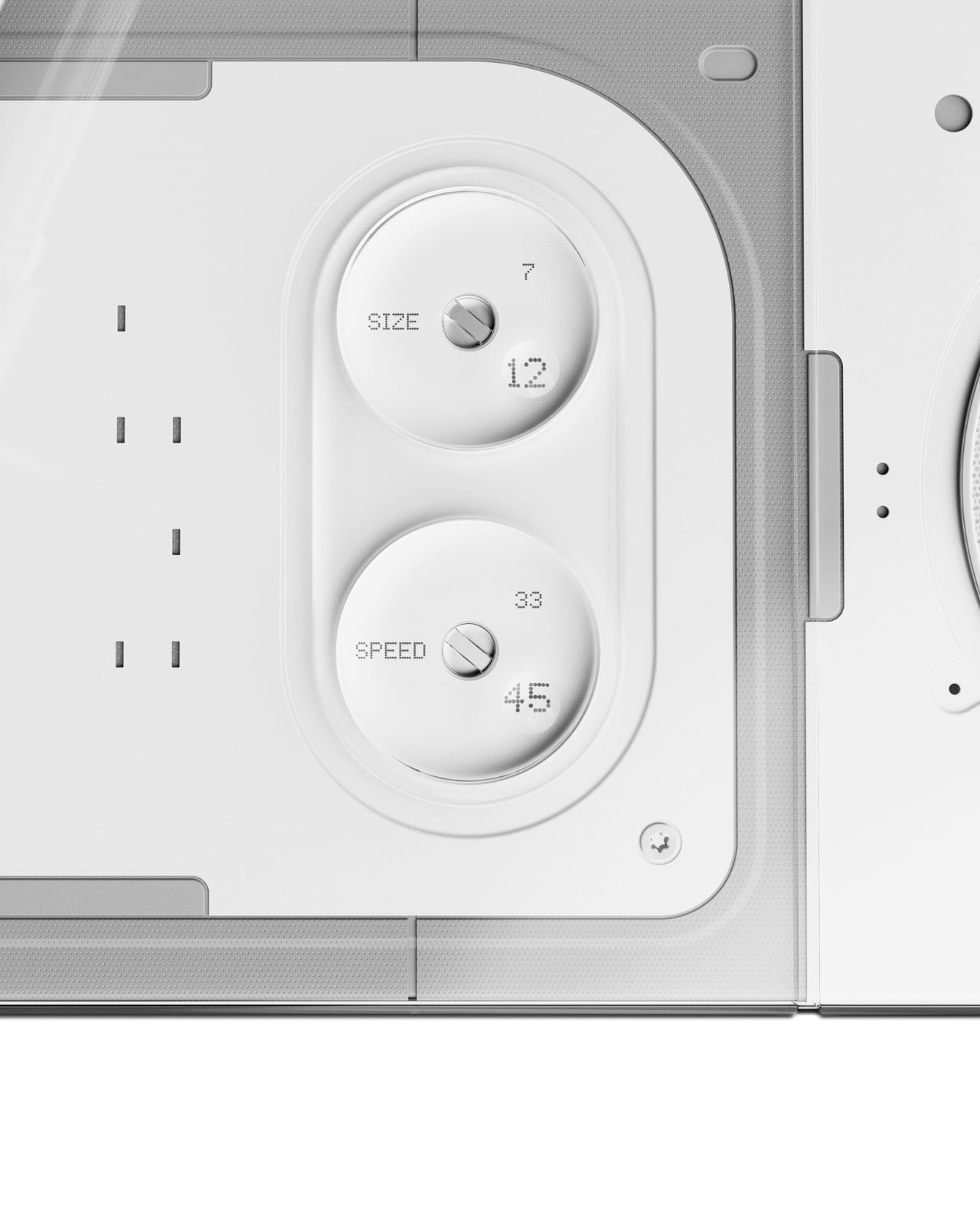
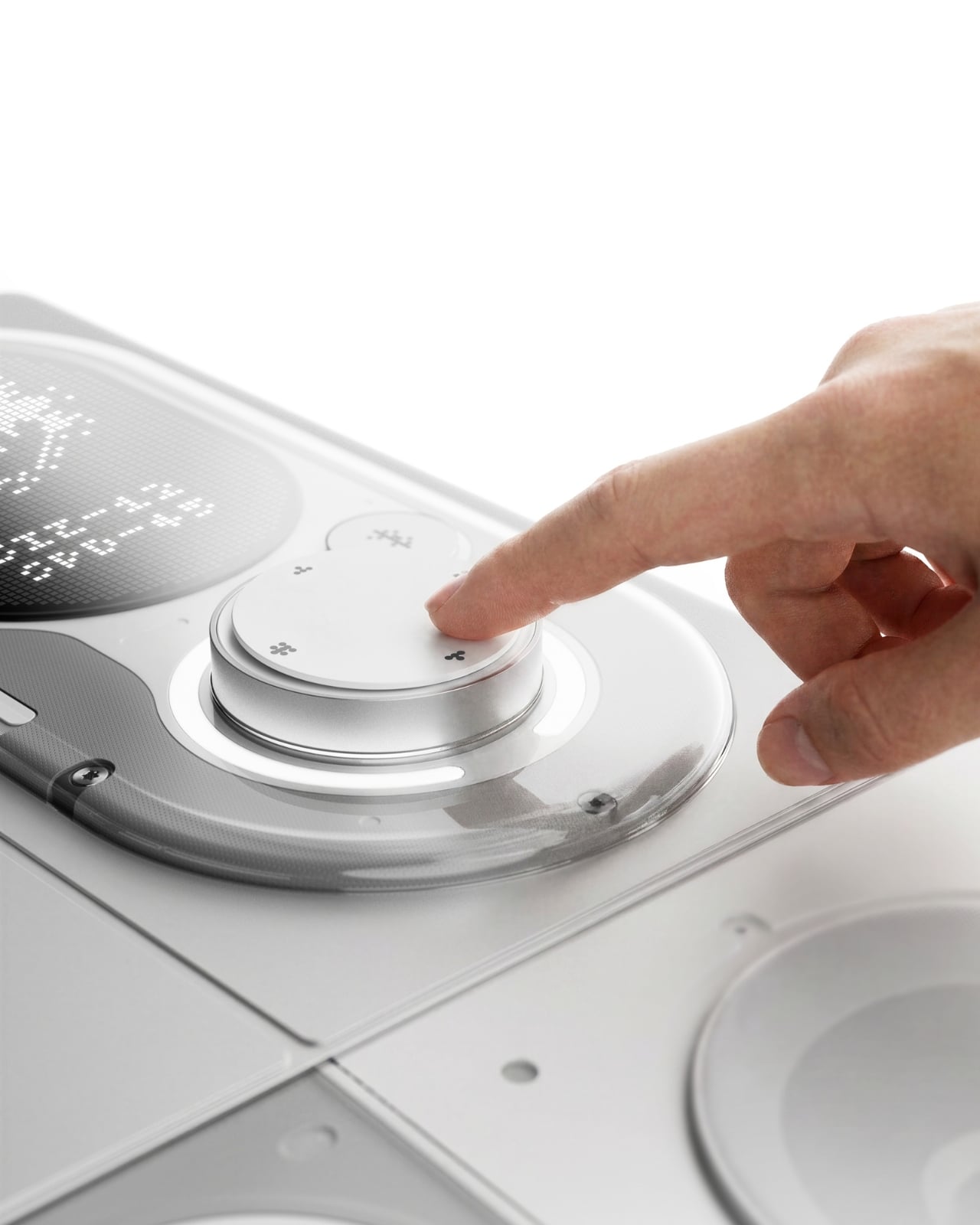
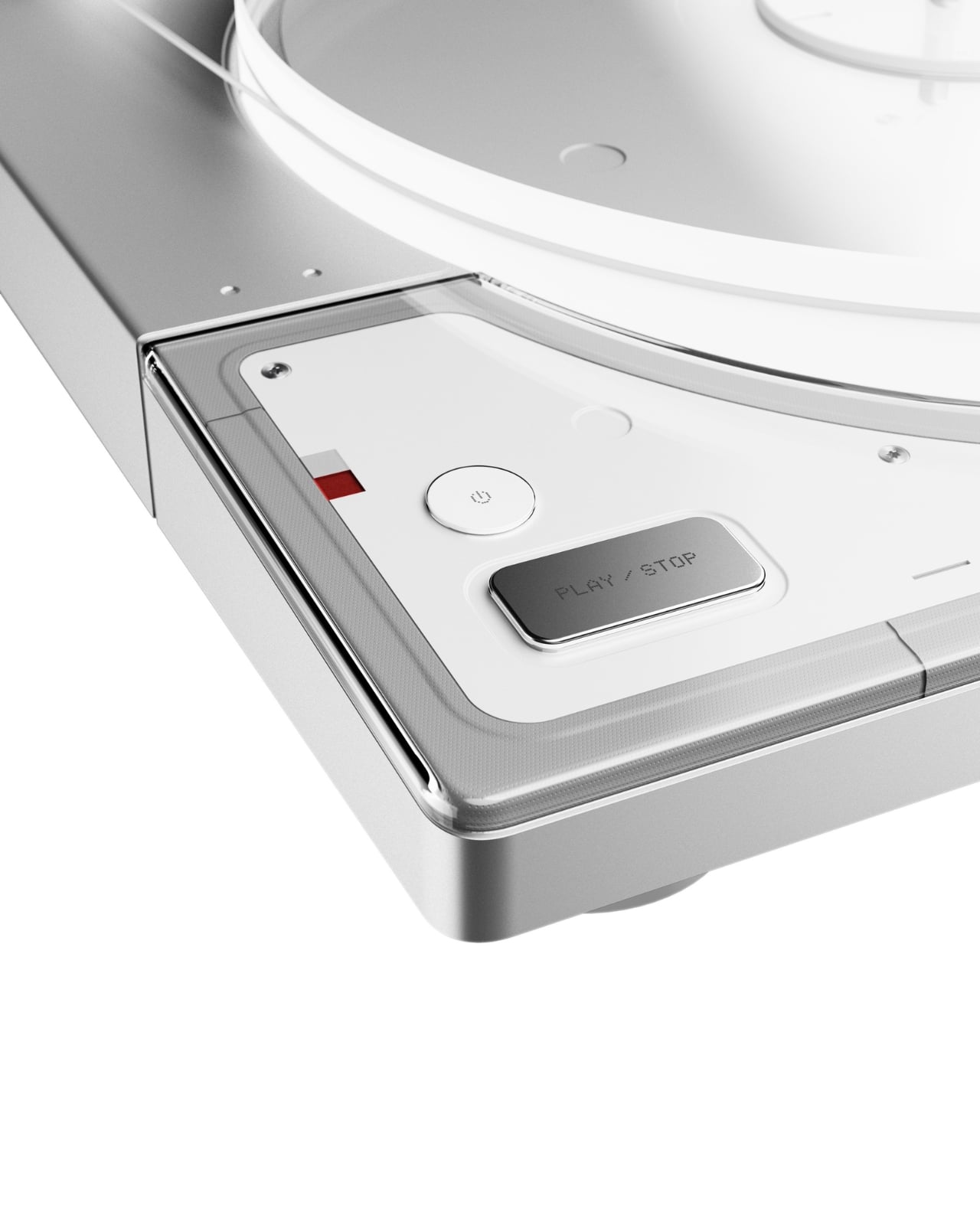
The control layout is where the concept gets genuinely interesting. Size (7/12) and Speed (33/45) dials are housed in a recessed rounded module, labeled with a matter-of-fact clarity that feels more like precision calibration than consumer product design. The volume knob is large and satisfying, surrounded by a clear acrylic trim ring and a small dot-matrix display panel marked “MUSIC-AR,” presumably a nod to some form of augmented reality integration. A flush-mounted speaker sits directly in the deck surface, making Turntable (1) a genuinely self-contained system. A Play/Stop button and a power button occupy the front-facing panel with quiet authority, like the designer knew exactly which controls needed physical presence.
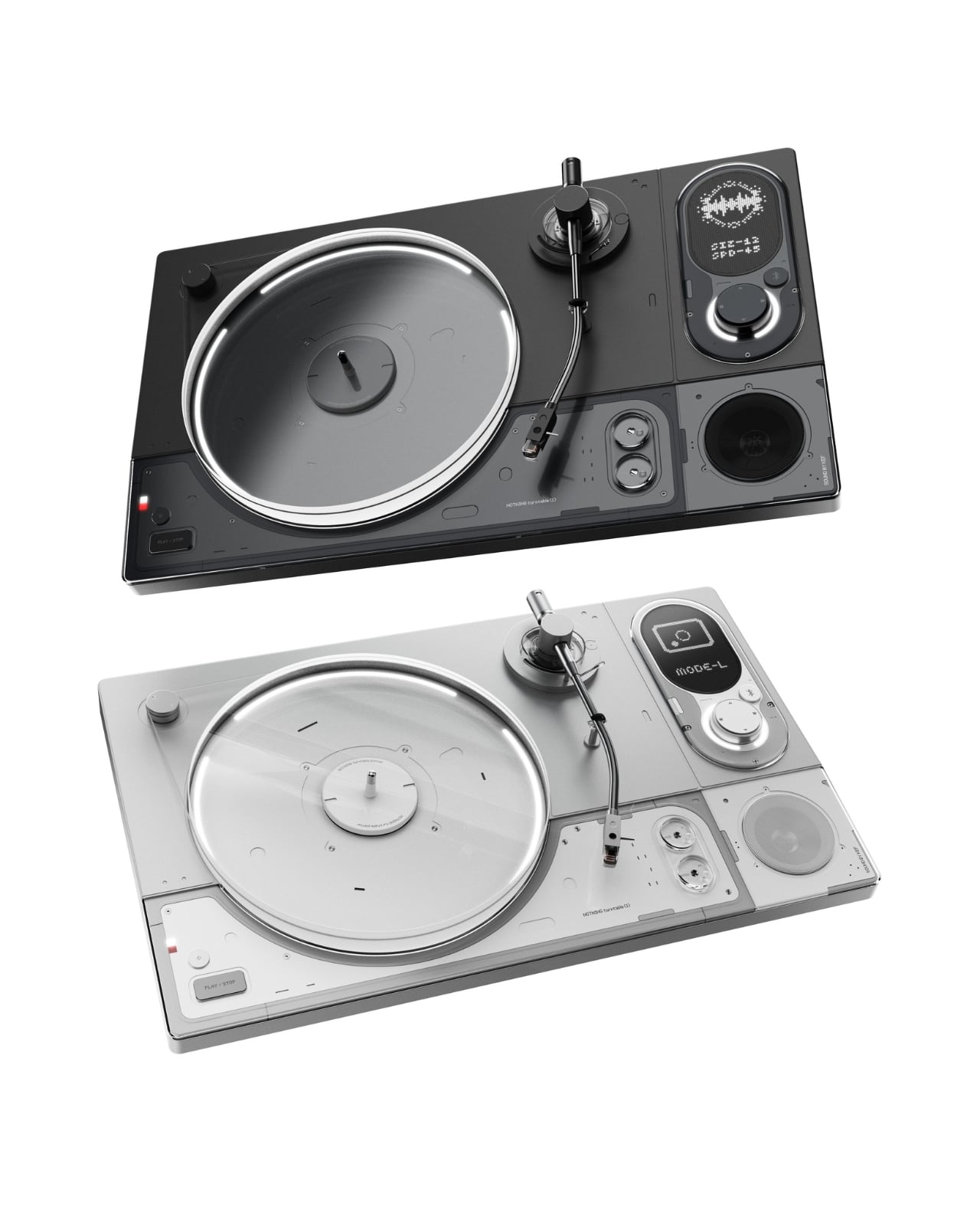
The naming is the detail that does the most work quietly. Turntable (1). Choi borrows Nothing’s signature naming convention deliberately: Phone (1), Ear (1), Ear (stick). The convention carries a specific kind of promise. The (1) implies a (2). It implies a roadmap, a lineage, a commitment to return. By applying it here, Choi isn’t framing this as a one-off fan exercise. He’s imagining an entire product category for a brand that has already proven it can take commoditized consumer electronics and make people genuinely want to look at them.
The vinyl market argument practically makes itself. Records have been in cultural resurgence for well over a decade now, and the market is robust enough to support a premium, design-forward turntable aimed at people who care as much about what sits on their shelf as what comes out of their speakers. Nothing’s core audience, younger buyers who are design-literate and culturally engaged, are the exact crowd that has been rediscovering vinyl. The overlap isn’t a stretch. In retrospect, it feels like an obvious move for the brand.
Choi’s Turntable (1) is a concept, not a product, and carries no official connection to Nothing. That distinction matters. But the best concepts are the ones that make you slightly resentful they don’t exist yet. The work is confident, cohesive, and rooted in a genuine understanding of both the format and the brand he chose to draw from. It’s built on the logic of Nothing’s identity rather than just borrowing its aesthetic surface. It isn’t the spectacle of the render that earns attention. It’s the quality of the thinking behind it. Someone at Nothing should be paying attention.