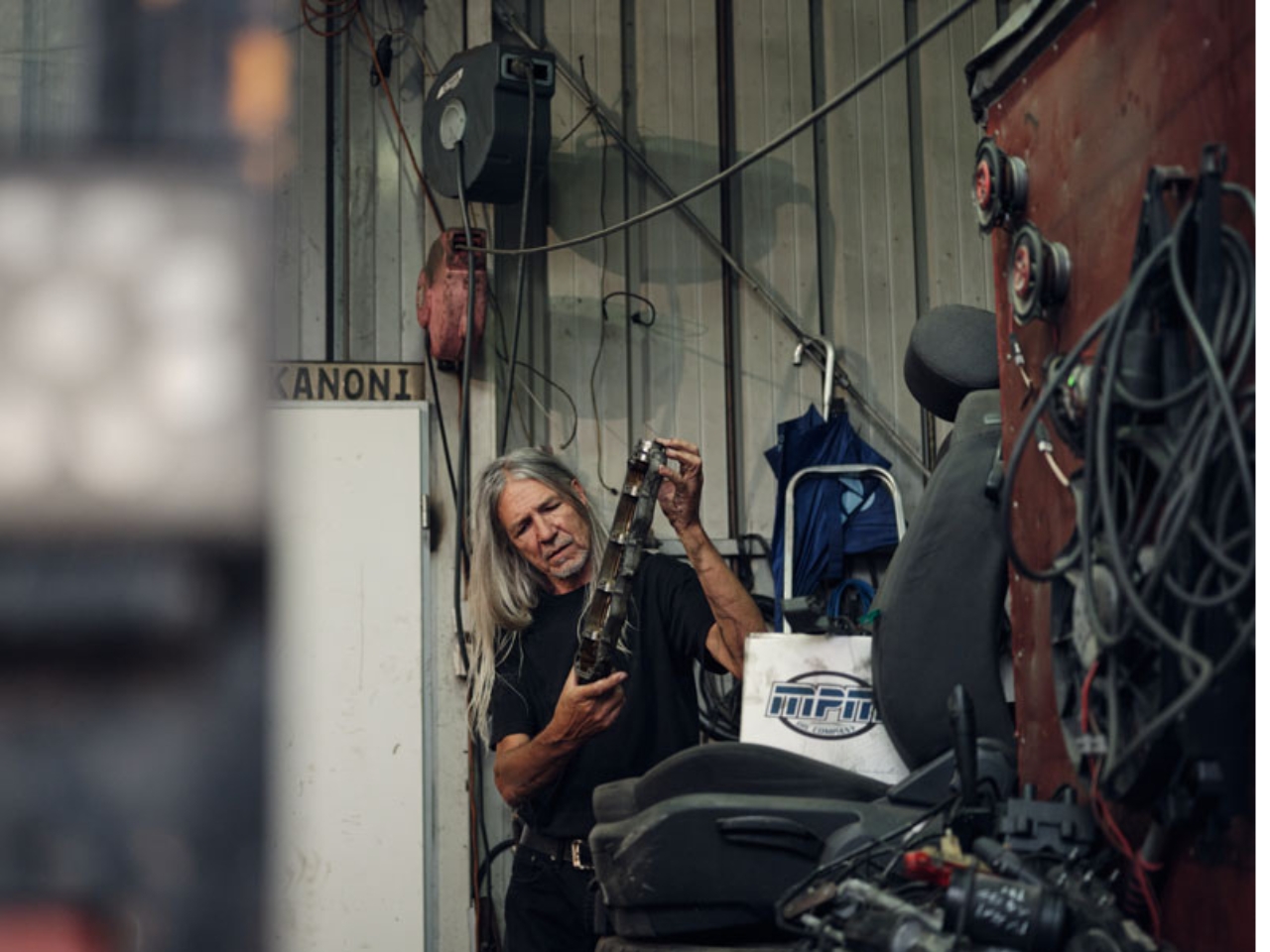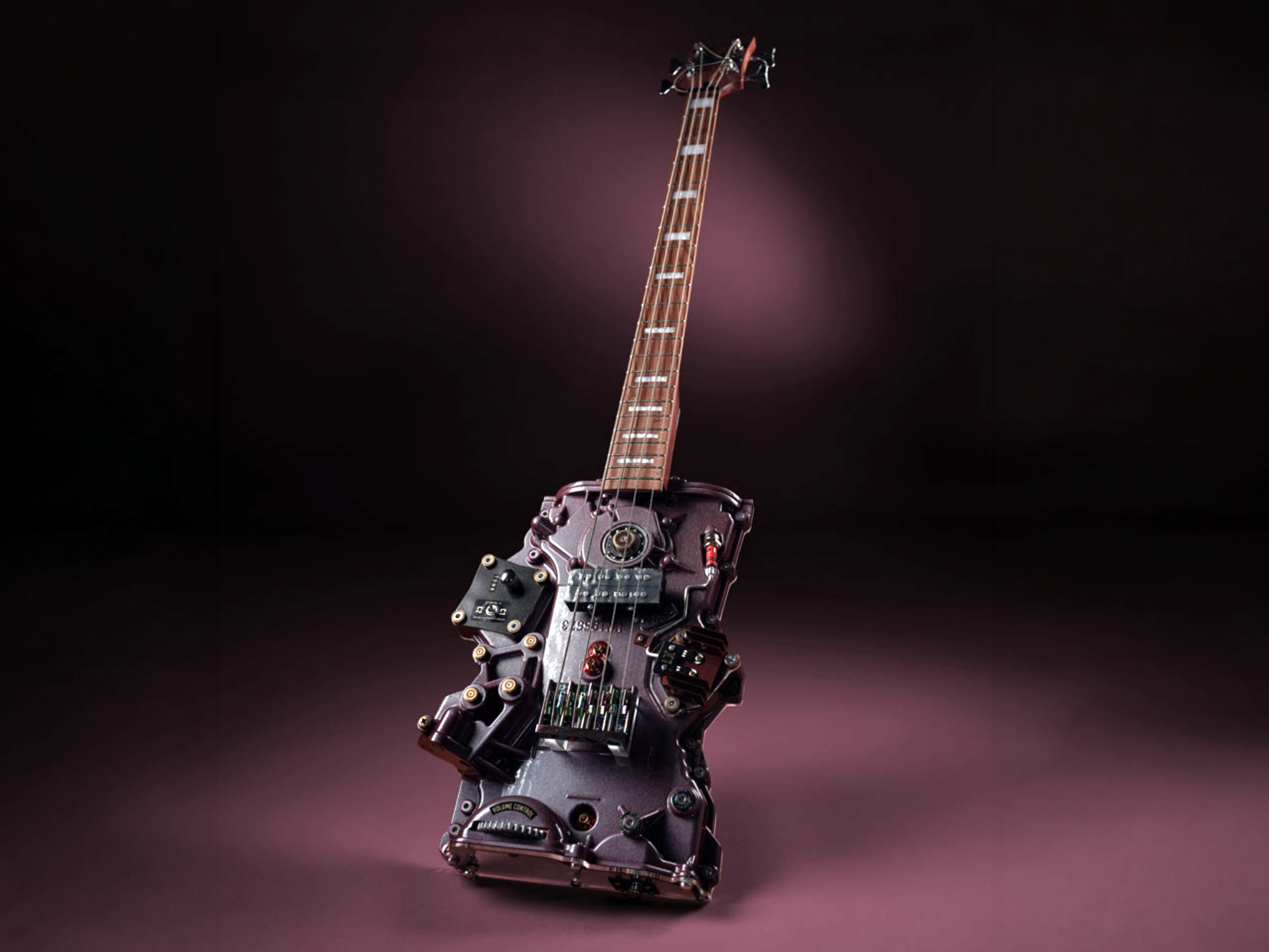

I’ve been thinking about this one for days. A Slovenian craftsman named Vlado Plateis is turning discarded car engine heads into fully playable electric guitars, and every time I look at the photos, I still can’t decide if I’m staring at a musical instrument or a sculpture. Maybe that’s exactly the point.
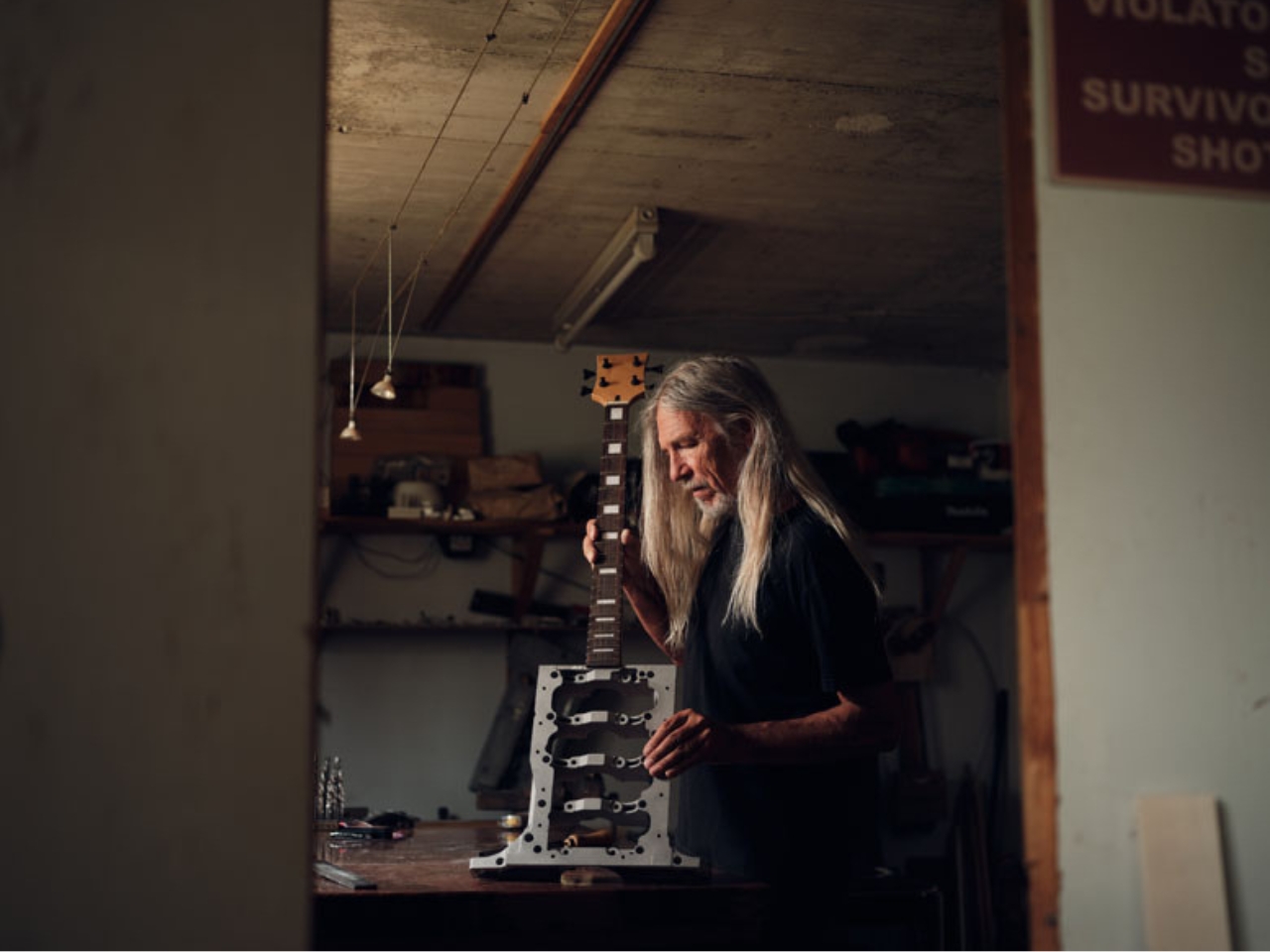
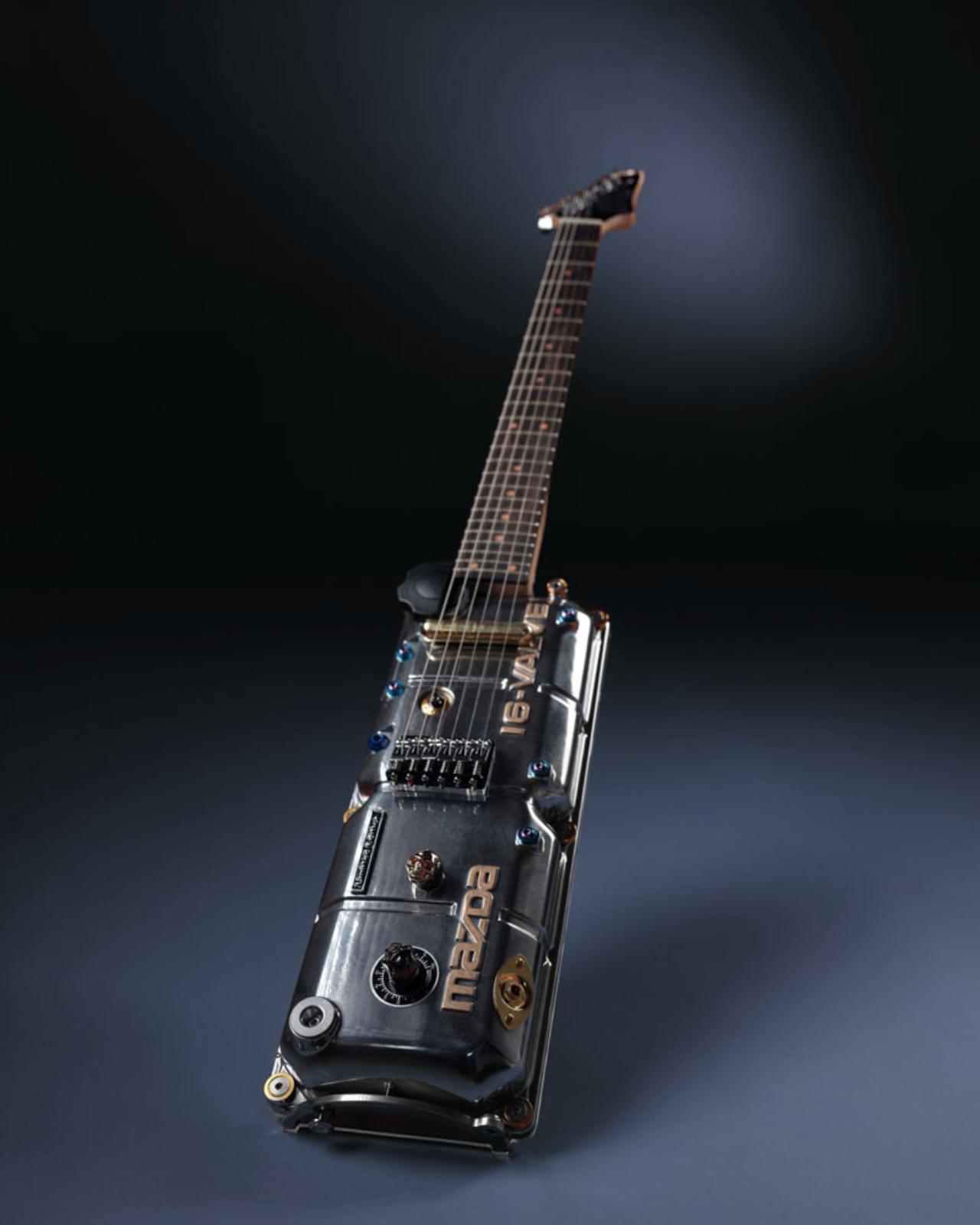
The design logic here is deceptively simple: take the engine head as the body of the guitar, preserve its raw industrial form, and build around it rather than in spite of it. Nothing is polished away, sanded smooth, or disguised. The cast metal arrives with its own surface history of machined edges, bolt holes, and combustion chamber cavities, and all of it stays. The visible scars and geometry of the original part become the visual language of the finished instrument. That restraint is a design decision, and it’s a brave one. Most makers would be tempted to refine. Plateis resists that impulse entirely.
Designer: Vlado Plateis

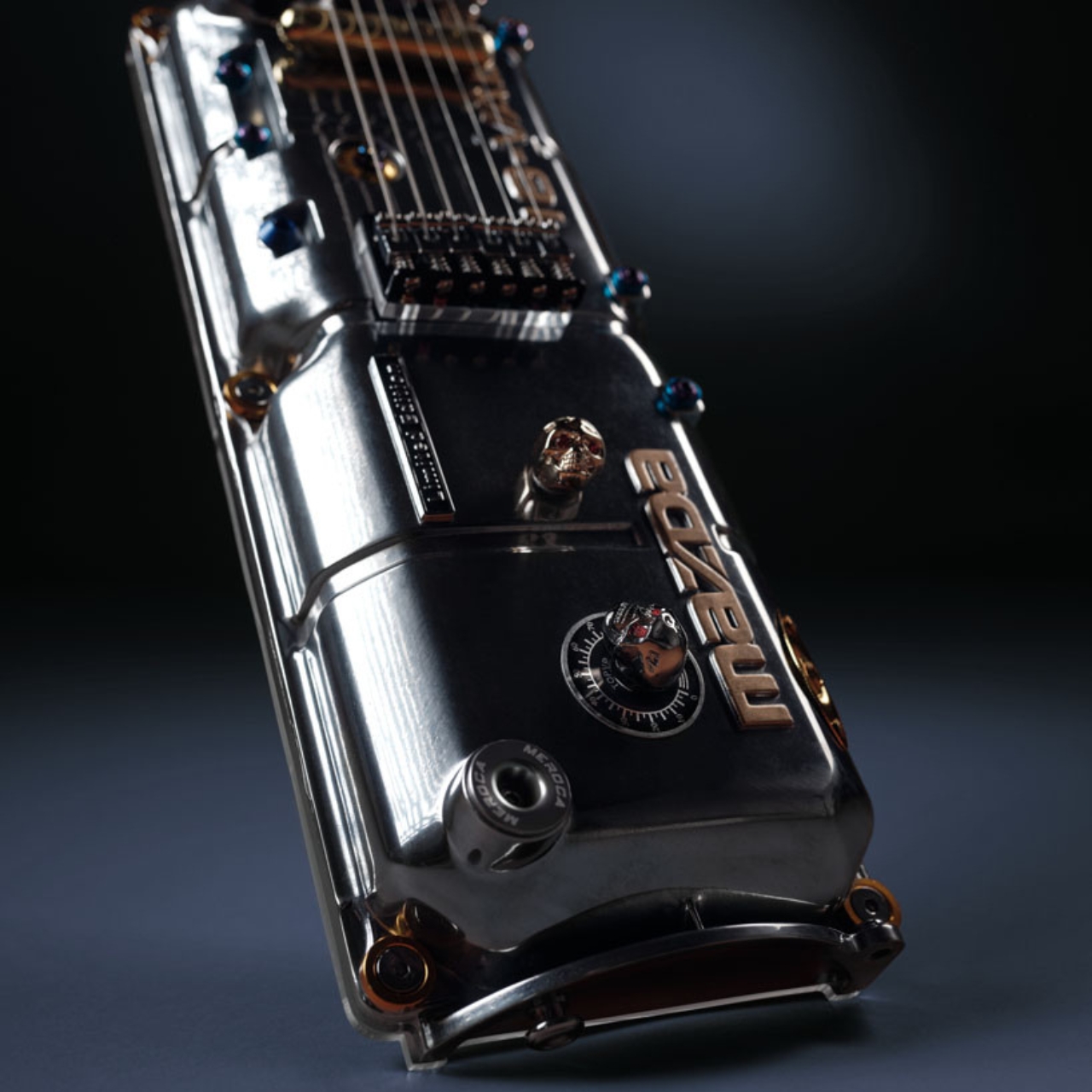

What makes the objects so visually arresting is the tension between their two identities. The pickups, tuning pegs, and strings are all standard guitar hardware, clean and purposeful. Set against the rough, irregular topography of the engine casting, they create a contrast that reads as almost confrontational. One material is mass-produced and precise. The other is heavy, asymmetrical, and marked by mechanical life. Together, they don’t clash so much as they hold a conversation, and that conversation is what you keep looking at.


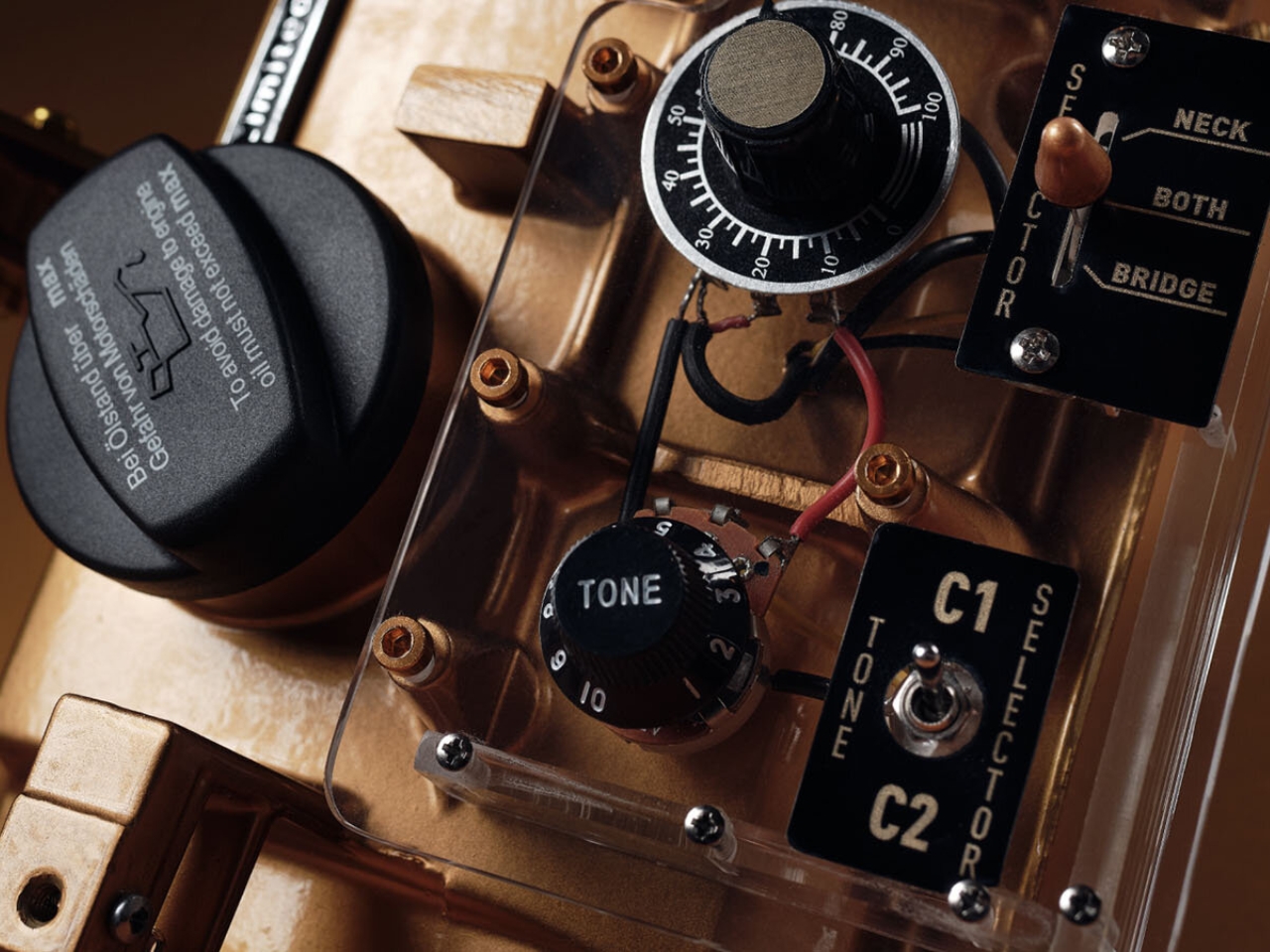
Each engine head also brings an entirely different geometry to the design, which means every guitar has a silhouette that could never be repeated. A guitar built from a Toyota Corolla head looks nothing like one built from a Mitsubishi Colt. The donor car determines the form. The bolt pattern, the fin arrangement, the overall mass and proportion are all inherited rather than designed, which paradoxically makes the final object feel more authored, not less. Plateis isn’t imposing a shape. He’s discovering one that was already there.
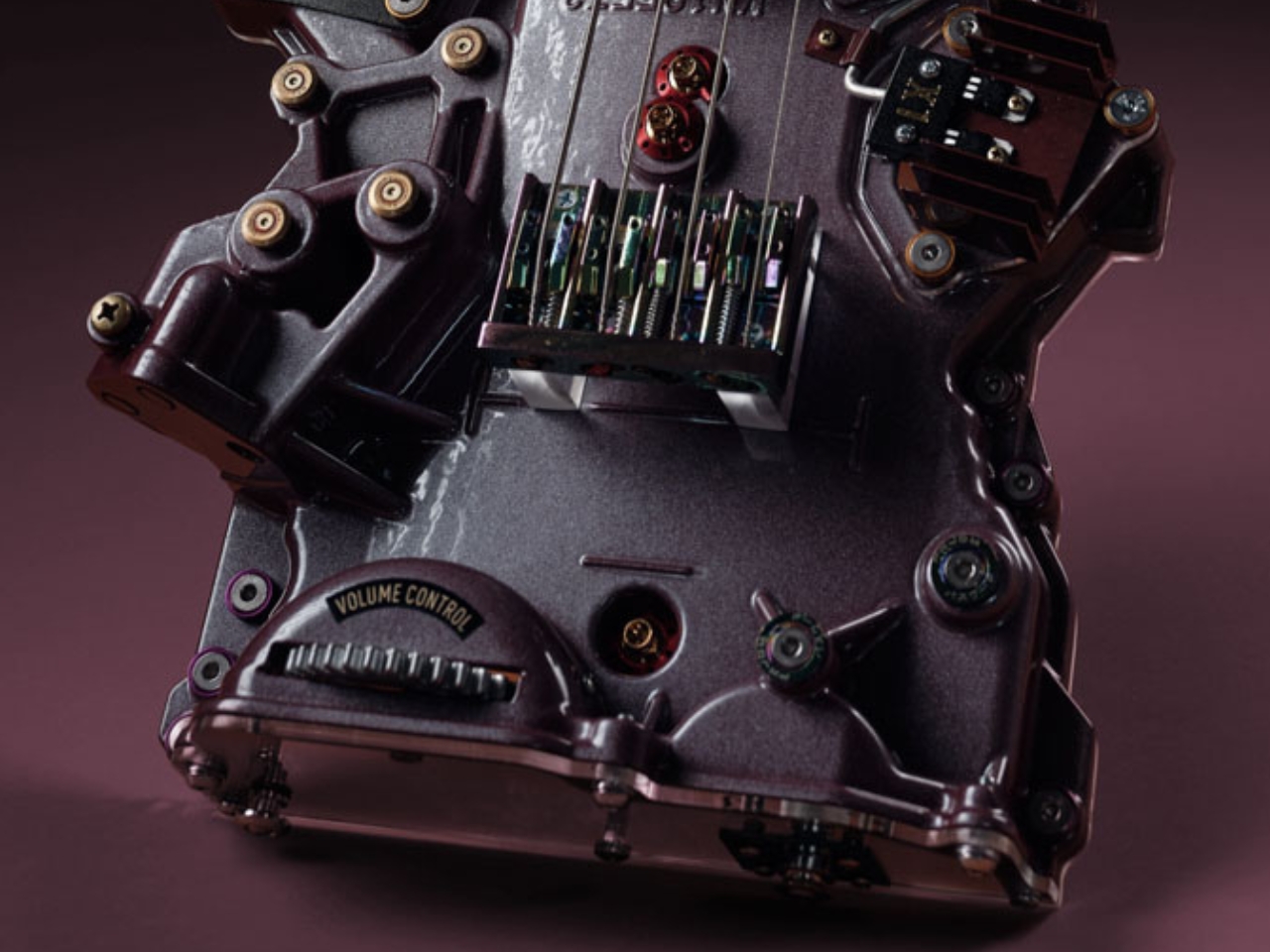
The weight is part of the design too, and I think it matters more than people initially consider. These are dense, substantial objects. You don’t pick one up and forget what it’s made from. That physicality communicates something about permanence that most contemporary design actively avoids. We’re so conditioned to lightweight, minimal, and frictionless that an object with genuine heft feels almost transgressive. It asks you to be present with it.
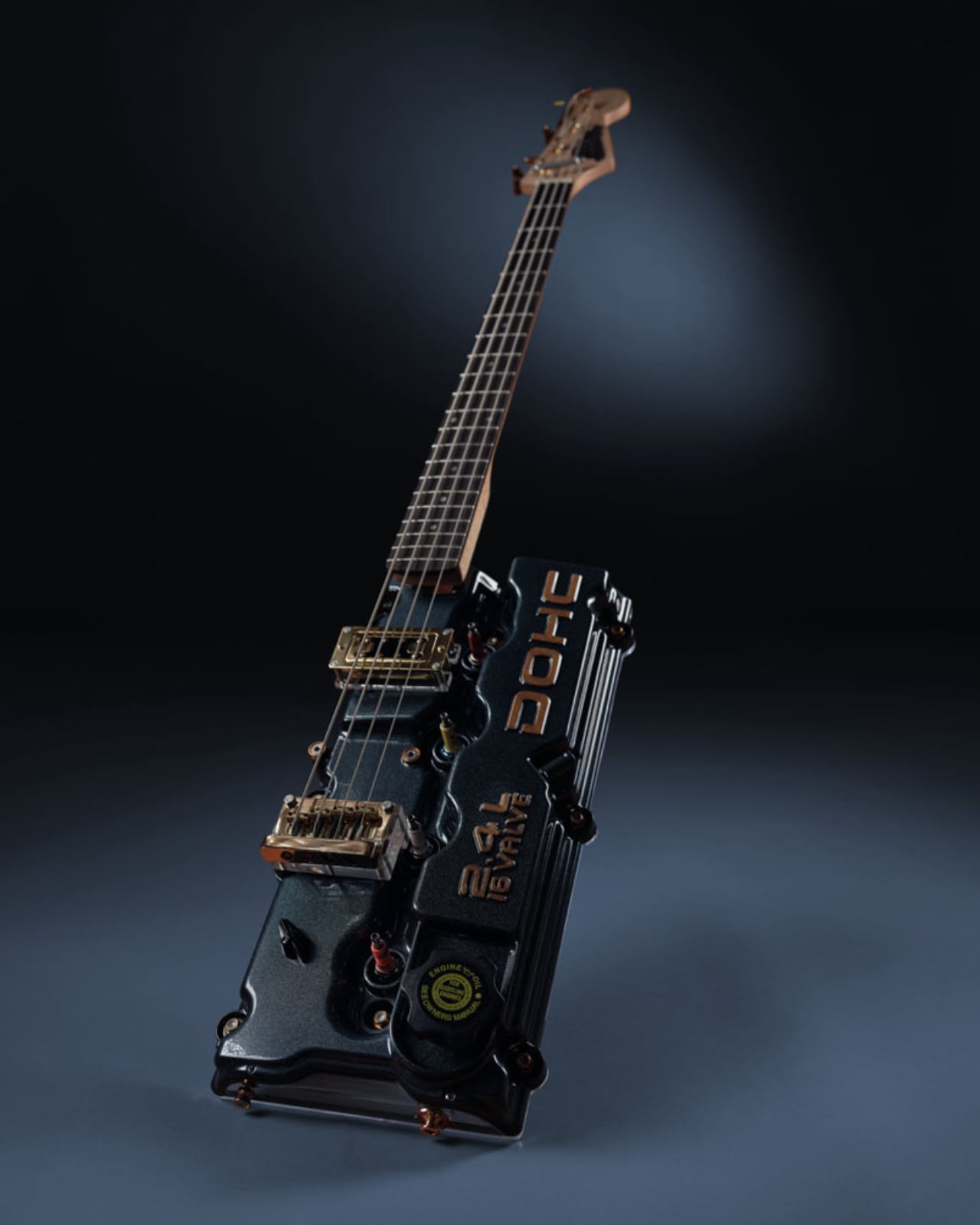
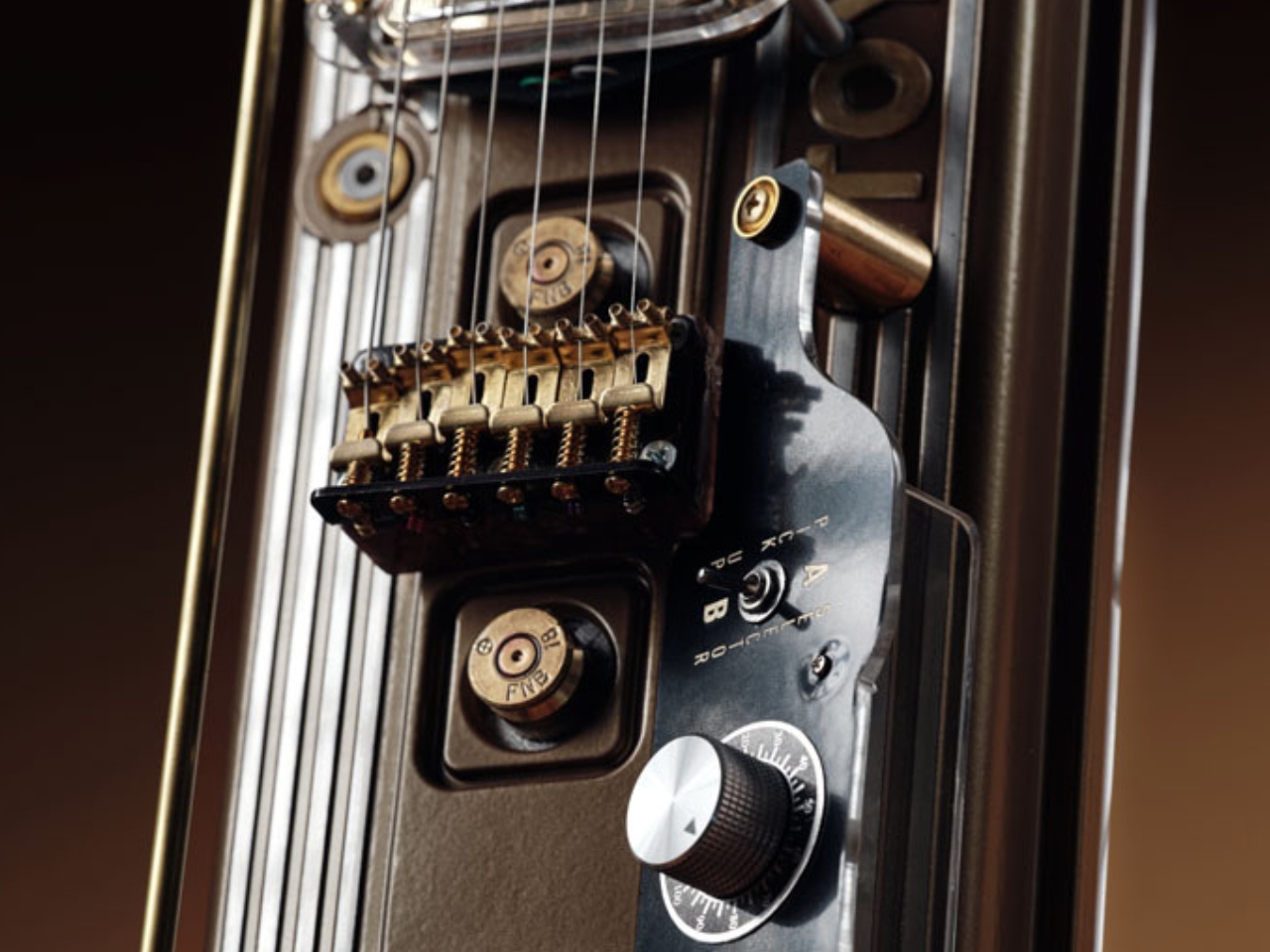
I also want to talk about what Plateis doesn’t do, because restraint is underrated in design. He doesn’t paint the metal. He doesn’t add decorative elements that aren’t structurally necessary. He doesn’t try to make the engine head look like something it isn’t. The honesty of the material is the aesthetic. That’s a philosophy rooted in the same tradition as Shaker furniture and Braun electronics, the idea that a thing should look exactly like what it is and nothing more. Applied to a guitar made from automotive scrap, it produces something genuinely unexpected.
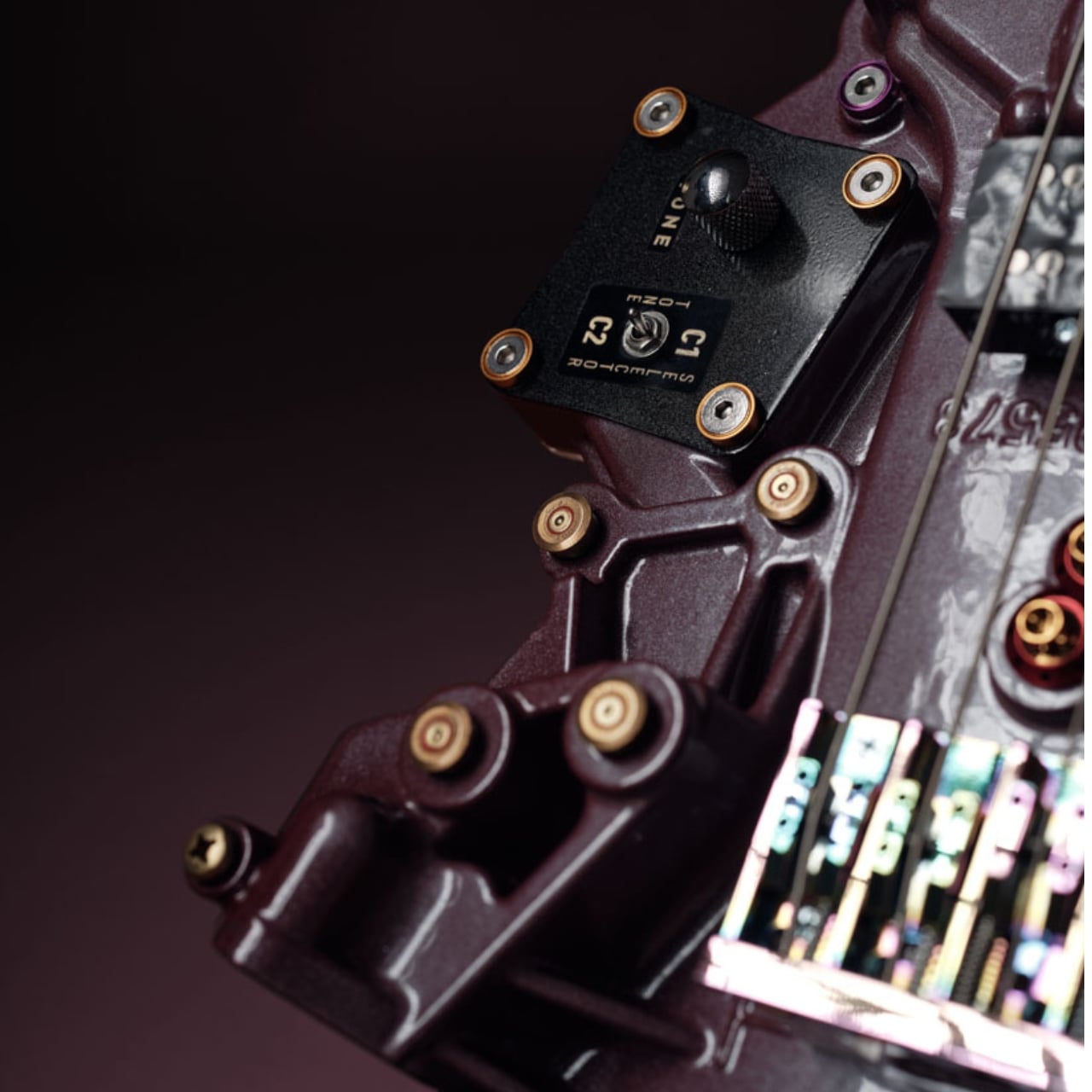
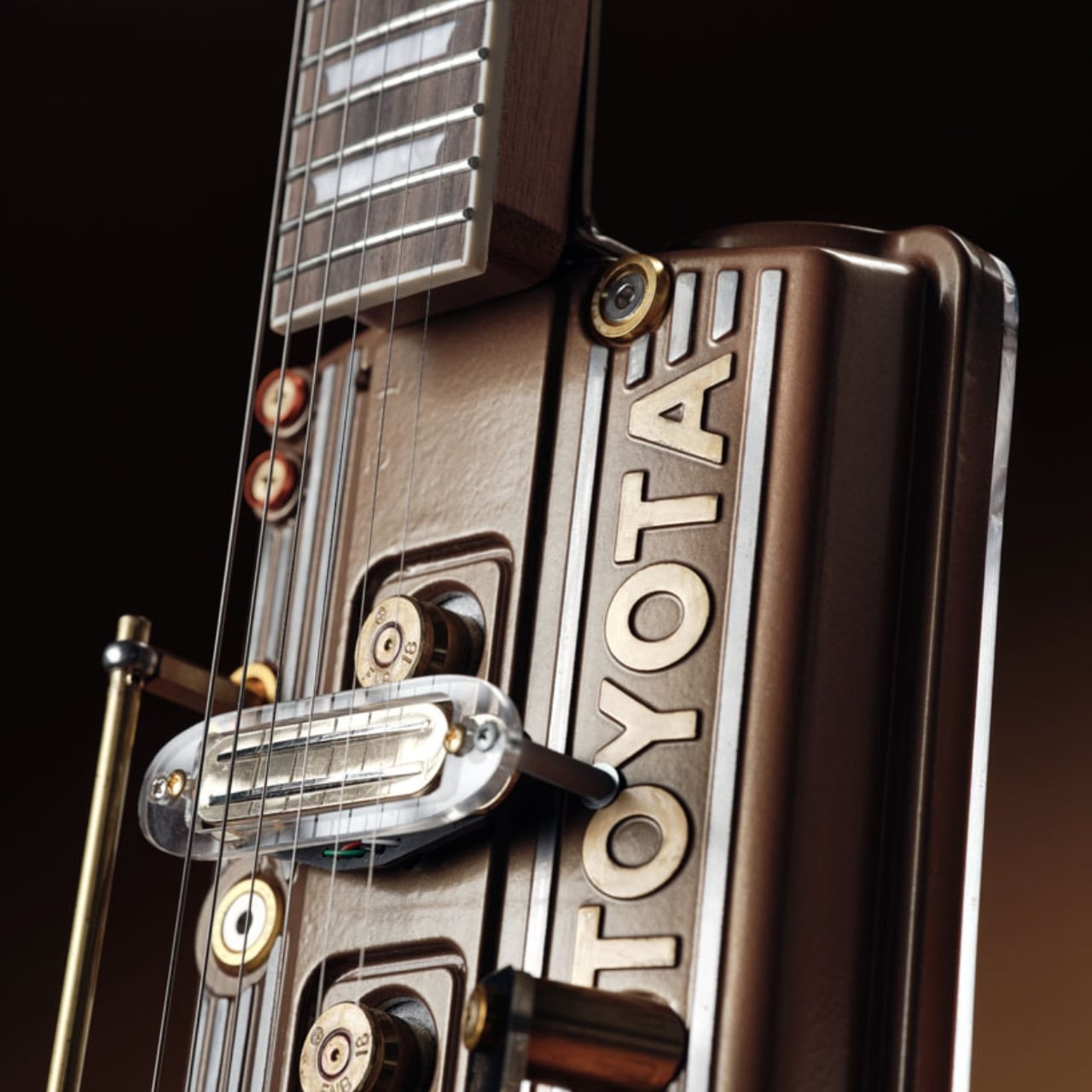
Upcycling in design is popular right now, often to the point of feeling performative. Brands slap the word “reclaimed” on something and call it sustainable, but the object itself is forgettable. Plateis sidesteps all of that because the material isn’t incidental to the design. It is the design. Because every engine head has a different geometry, every guitar is structurally and visually unique. You cannot order the same one twice. The scarcity isn’t manufactured. It’s inherent to the process.
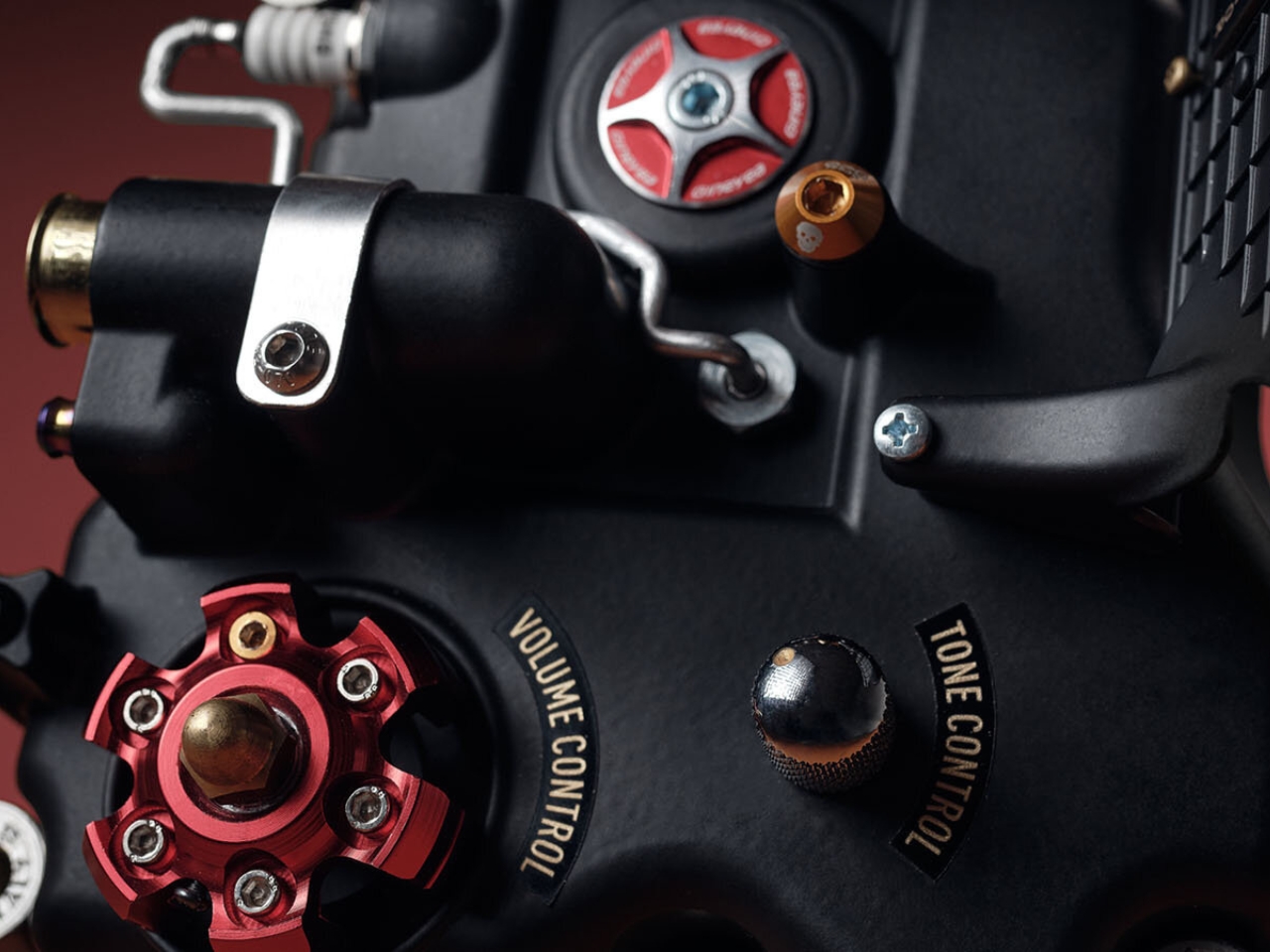
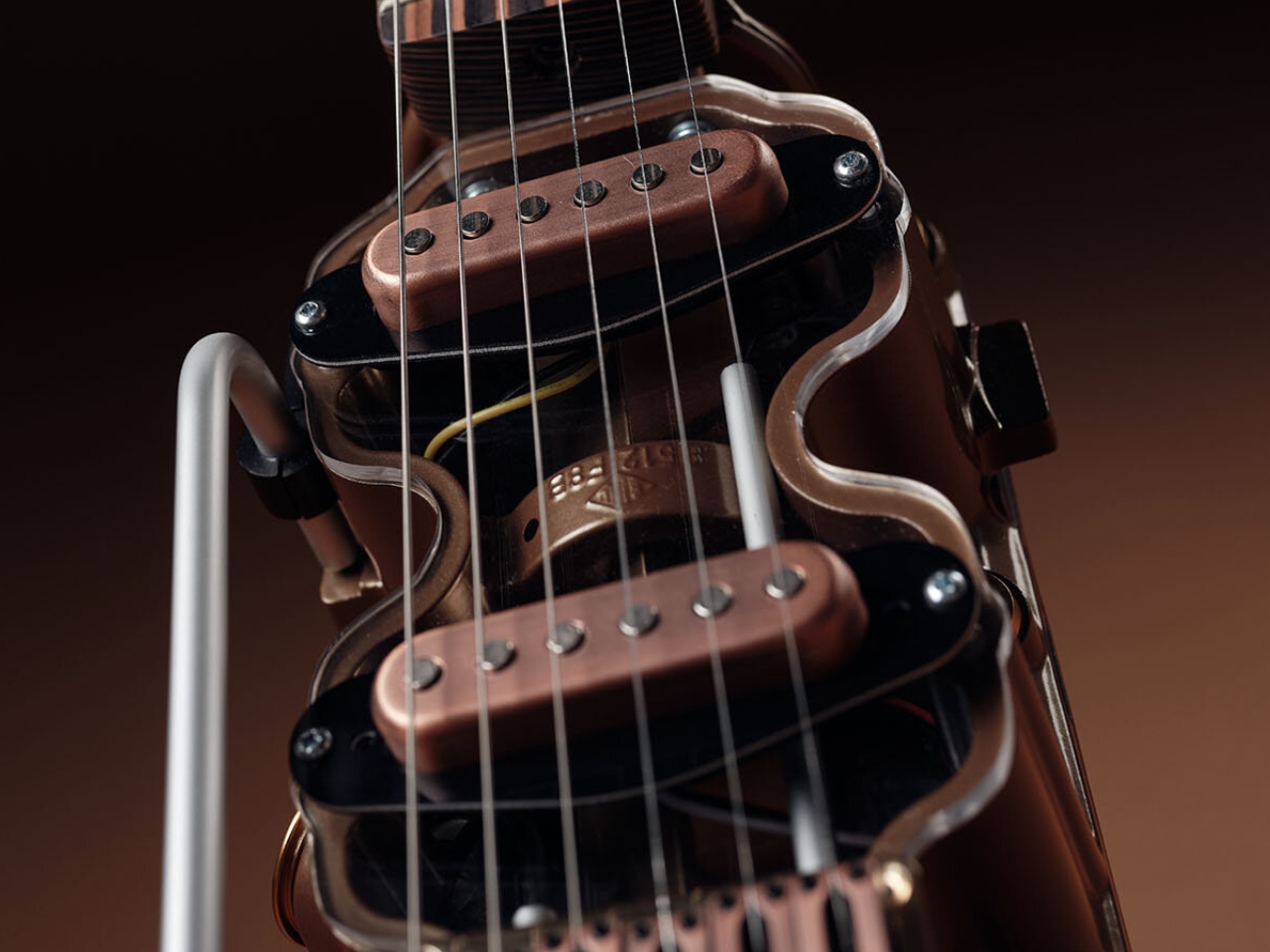
As someone who pays close attention to design, I think Plateis Guitars represents something genuinely interesting happening at the intersection of material culture, craft, and form-making. It’s a reminder that the most compelling design doesn’t always come from the biggest studios or the most advanced technology. Sometimes it comes from someone in Slovenia, a scrapped engine head, and a very considered eye for what already exists inside a piece of discarded metal.
Whether or not you play guitar, whether or not you care about cars, these objects deserve your attention. They are proof that constraints can be generative, and that found form, treated with patience and respect, can produce something completely new.