
Abel van Oirschot has aphantasia, which means his mind’s eye is permanently dark. No mental images, no visual memory, no ability to picture a face or a room or a color before committing to it physically. He is also a 24-year-old multidisciplinary artist based in Amsterdam, and his 2025 project Birch is proof that you do not need to see something in your head to build it with your hands.
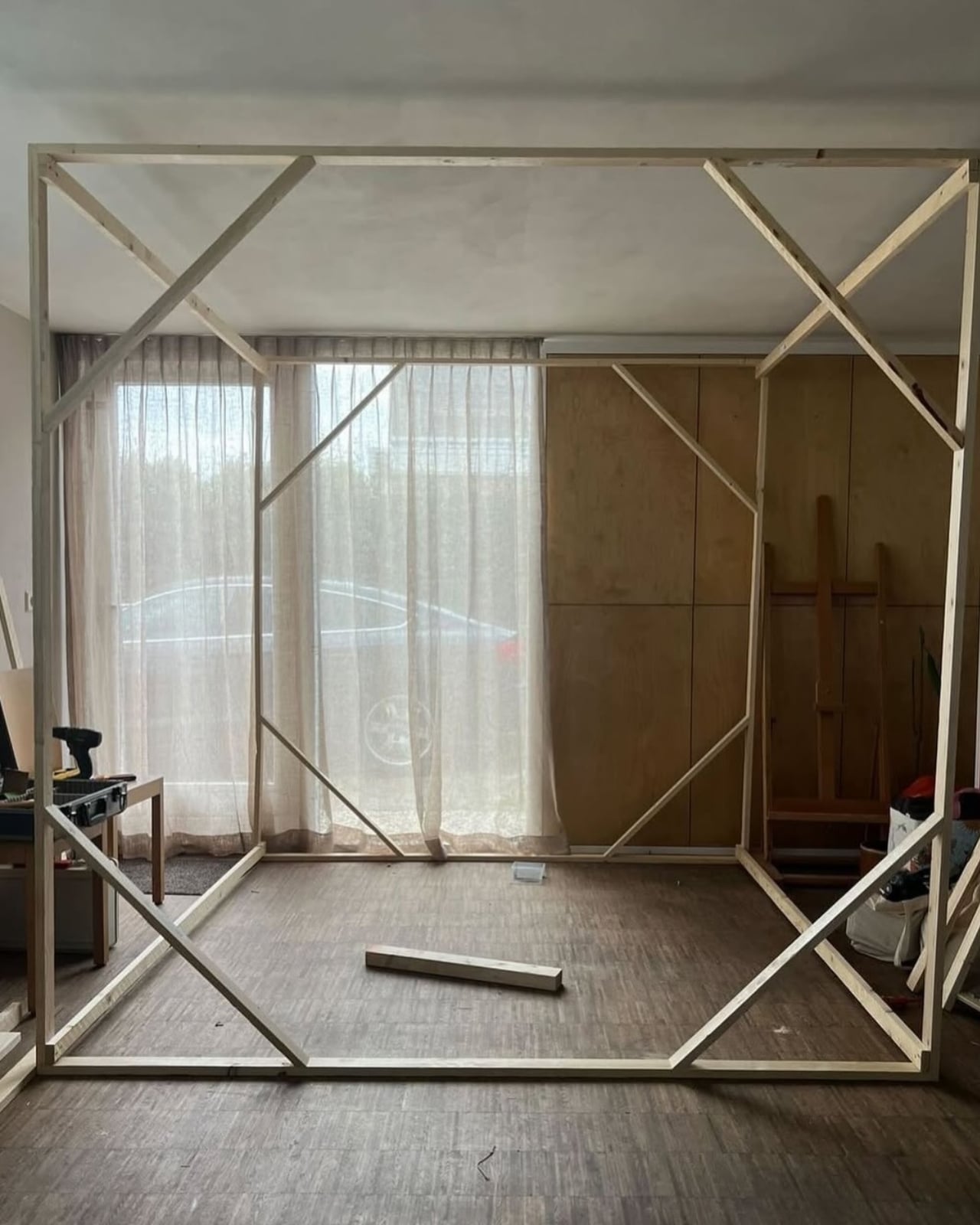
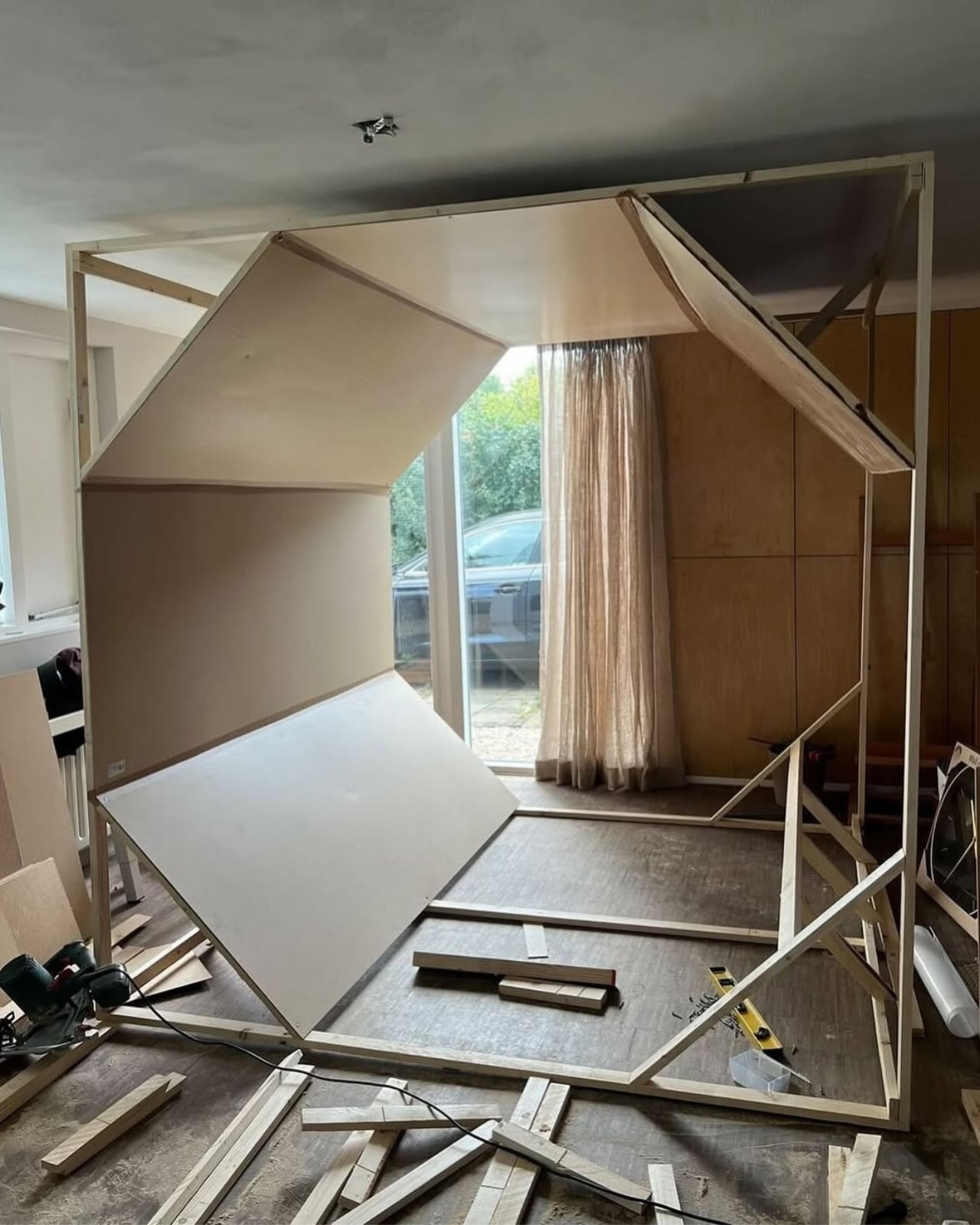
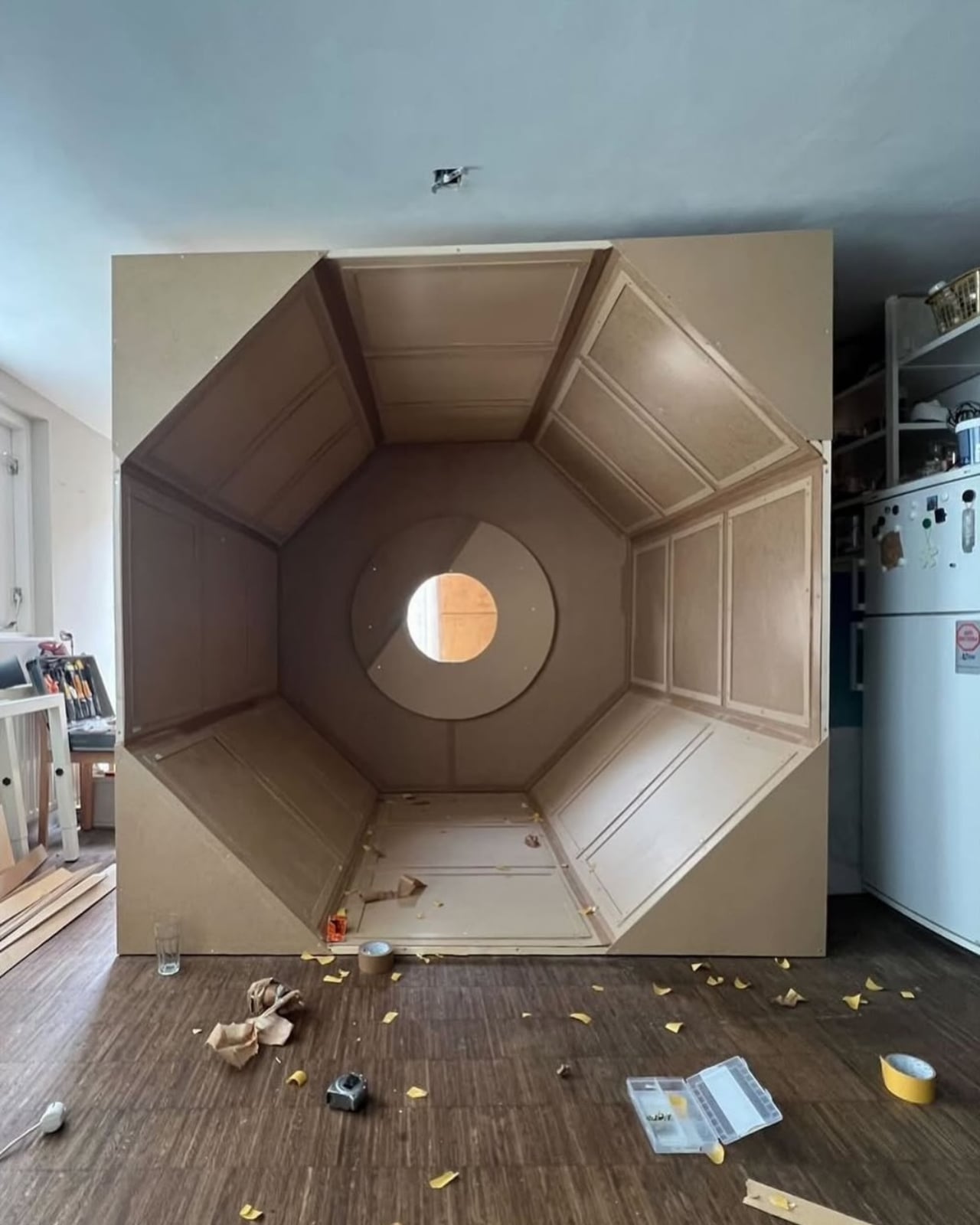
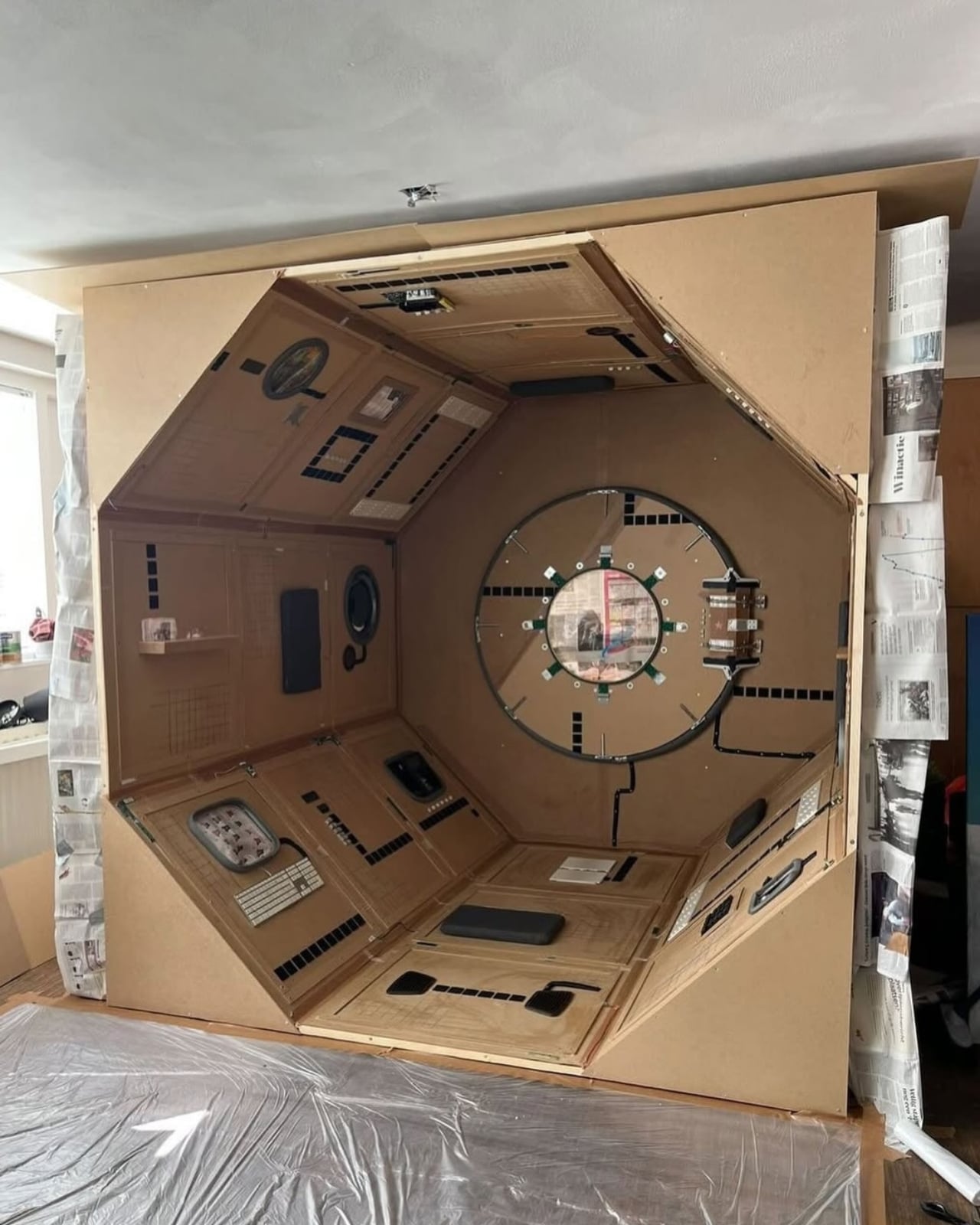
What he built is an octagonal spacecraft interior, life-size, constructed entirely inside his home garage from wood, cardboard, foam, and repurposed electronics. The build photos tell the story in stages: first a bare wooden skeleton, all angular geometry and exposed joints, the eight-sided form already unmistakable even stripped to its frame. Then the panels go on, MDF sheets cut and fitted to each faceted wall, a circular porthole carved into the center. Then the detail work arrives, hand-drawn panel lines suggesting pressurized compartments, small fixtures and hardware pressed into the surface to read as instrument panels from a distance. All of it painted white, uniformly, obsessively, until the wood and cardboard underneath disappears entirely.
Designer: Abel van Oirschot
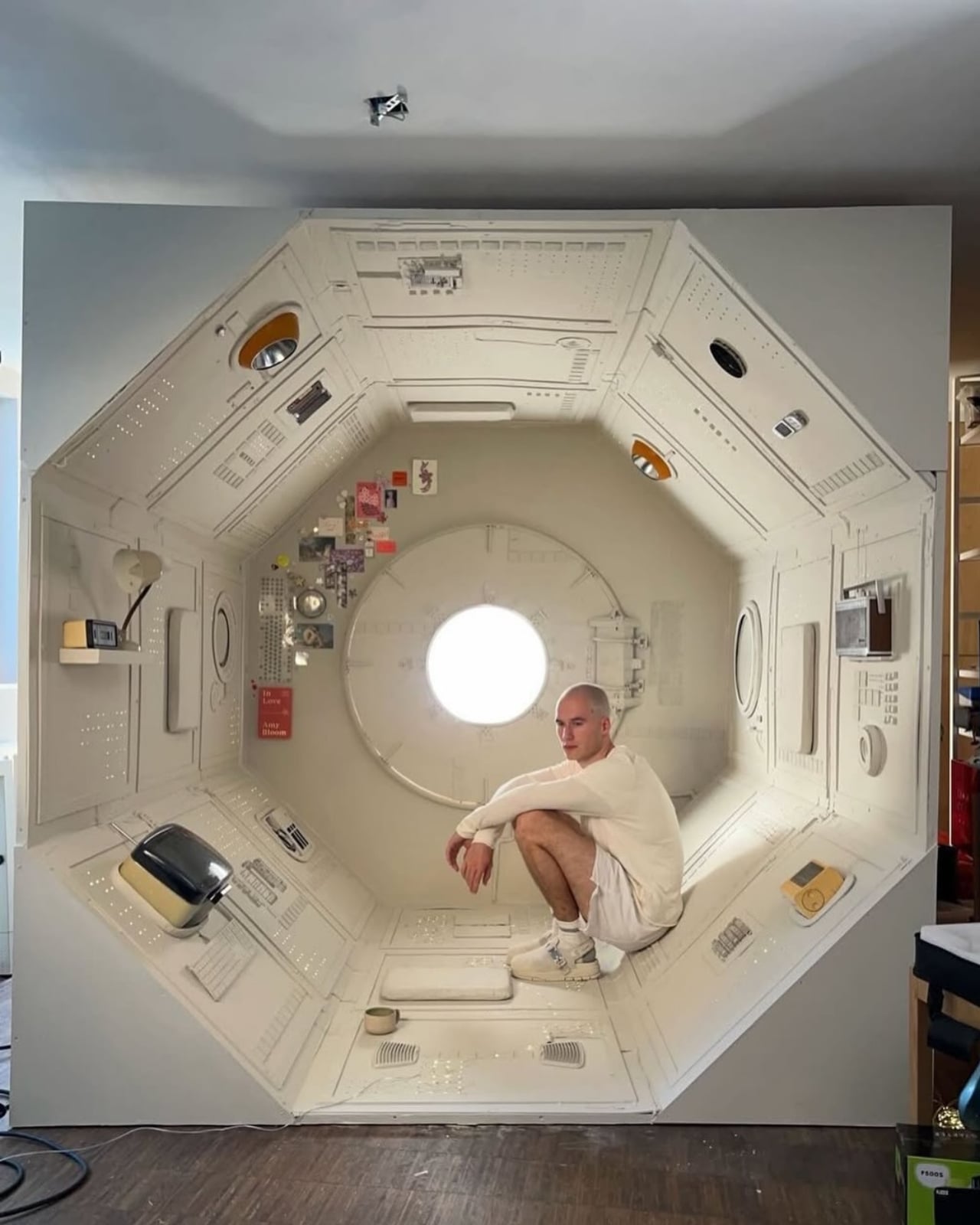

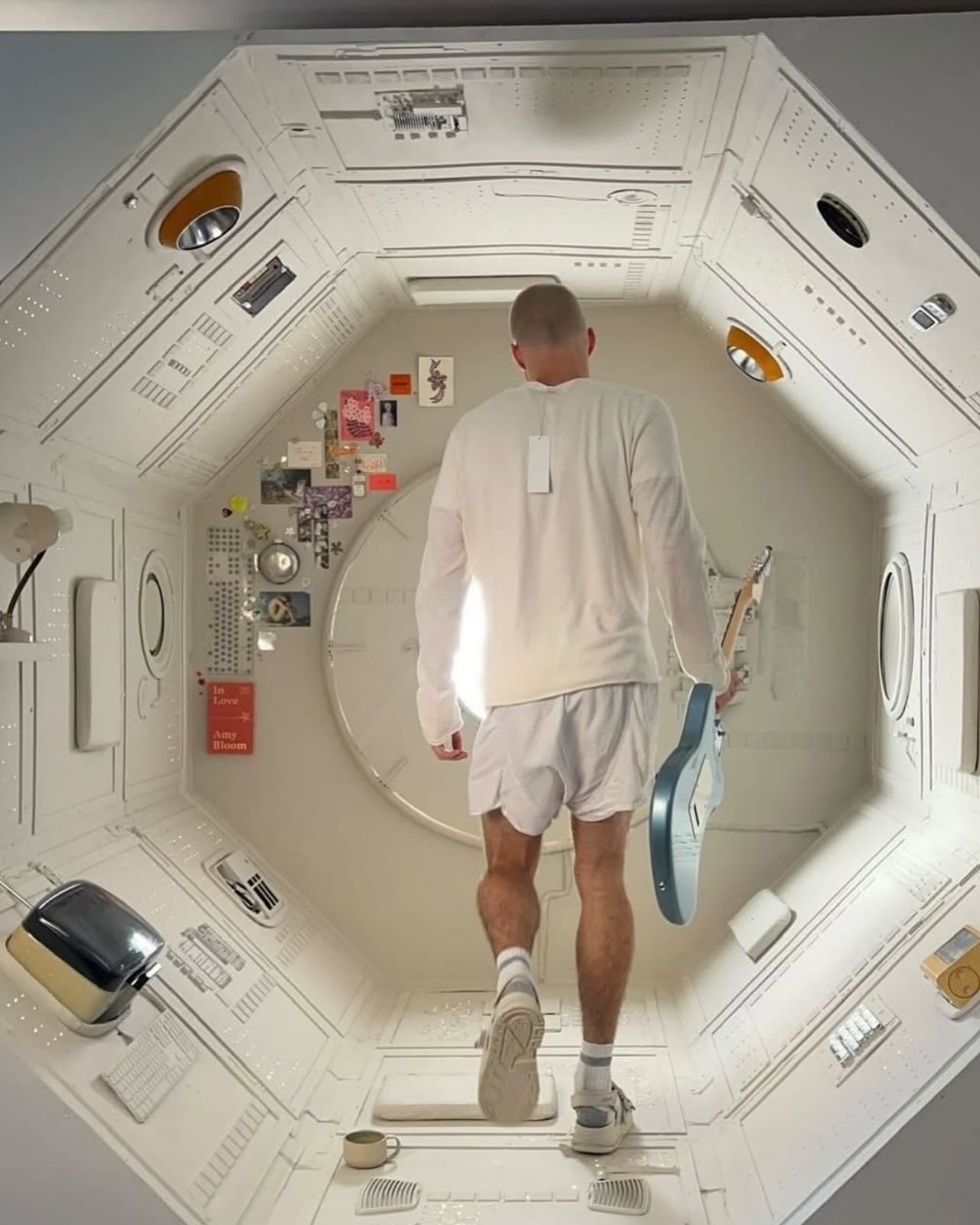
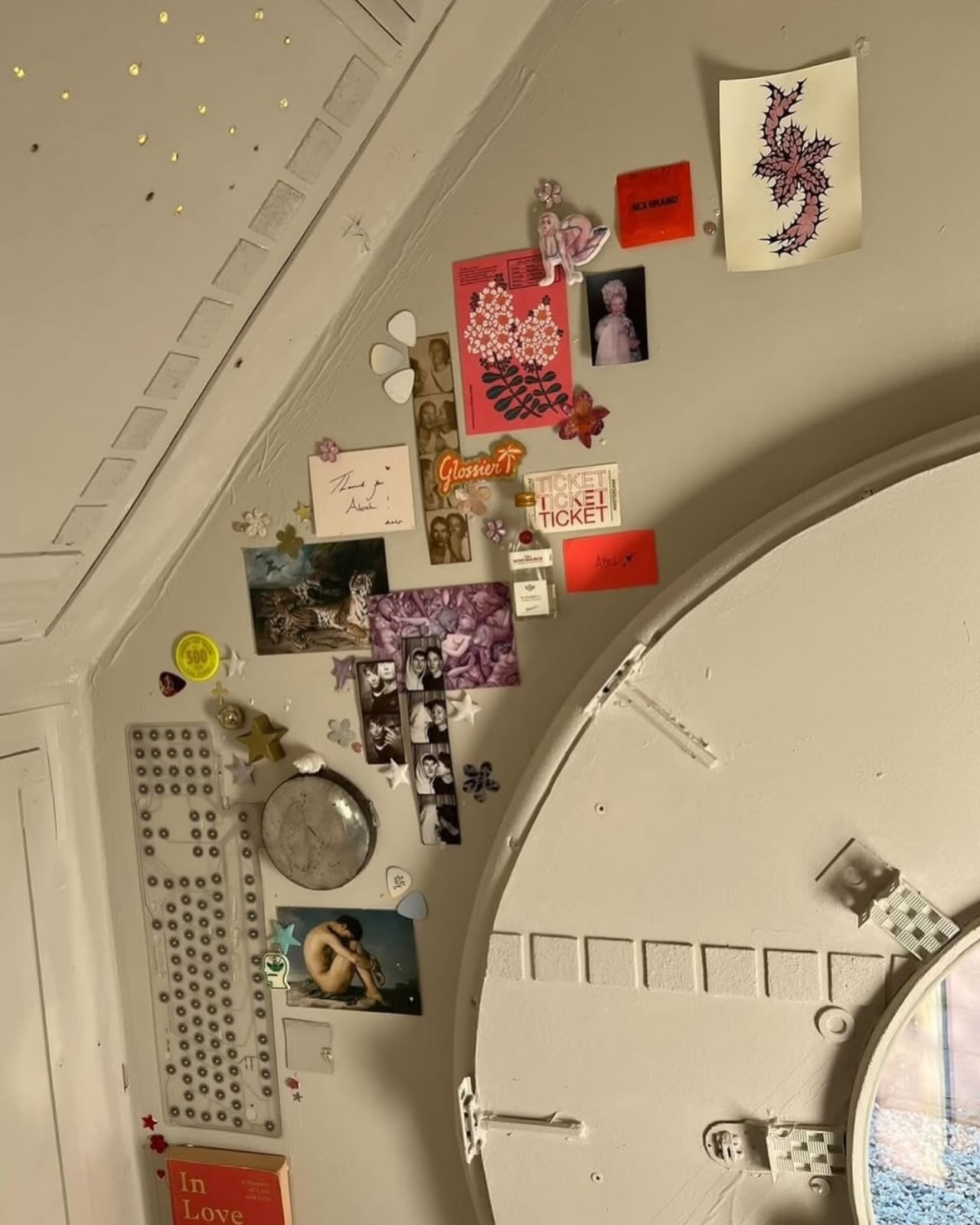
The choice to go white is not incidental. The finished interior has the quality of a cleaned-out memory, something that once held life and now holds only the traces of it. It reads almost clinical until you look closer and notice the personal details van Oirschot tucked into the design: a cluster of photographs and stickers pinned to one wall panel like a teenage mood board, photo booth strips, a Glossier sticker, ticket stubs, gold star confetti dotting the surfaces. A copy of Amy Bloom’s In Love sits propped in the corner. A yellow iPod nano rests nearby. A pale blue electric guitar leans against the porthole.
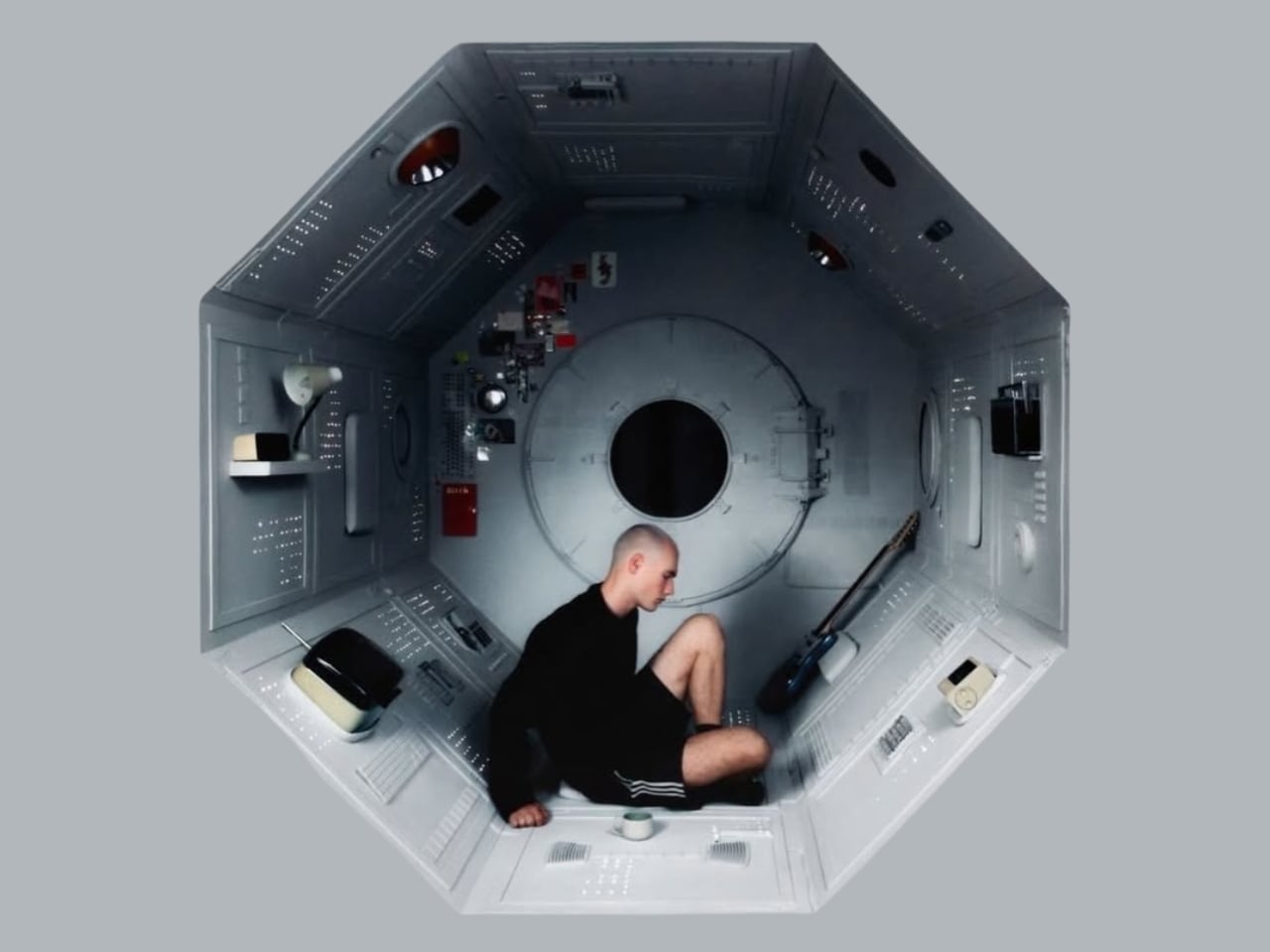
These are not set dressing in the conventional sense. They feel more like belongings, things someone brought on a very long journey with no clear destination. The tension between the cold geometry of the spacecraft and the warmth of those personal objects is where the design does its most interesting work. Van Oirschot is not trying to convince you this is a real spacecraft. He is asking you to sit with the feeling of someone who built one anyway, and why they might have needed to.
The 1960s influence runs through every decision. The porthole, the panel proportions, the rounded hatch detailing, the vintage desk lamp and chrome objects borrowed from Tom’s Vintage Shop, all of it gestures toward the Space Age aesthetic of that era, when the idea of leaving Earth was both a technological reality and a cultural obsession. That period had a very specific visual language: optimistic, geometric, forward-facing. Van Oirschot borrows it and then quietly complicates it. His astronaut is not launching toward something triumphant. He is sitting on the floor of a spacecraft that never left, holding a guitar, surrounded by the small evidence of a life lived inside.
The production photography completes the design work. Shot from slightly above and straight on, the octagonal form creates a near-perfect symmetry that makes the human figure inside it feel both central and small. The color grading shifts the warm white of the built set into something cooler and more distant, steely and grey, which gives the final images a cinematic weight the build photos do not have. The set and the photography are inseparable here. Neither would land without the other.
The whole thing, frame to final photograph, was made without any artificial intelligence involvement, funded in part by the Amarte Fonds. No digital generation, no shortcuts. Just a wooden skeleton assembled in a home living room, paneled and painted and filled with objects until it became something else entirely. It is a remarkable piece of production design for any artist. For a 24-year-old who cannot picture a single element of it in his mind beforehand, it is something harder to categorize. Call it proof that constraint, pushed far enough, stops being a limitation and starts becoming the work itself.