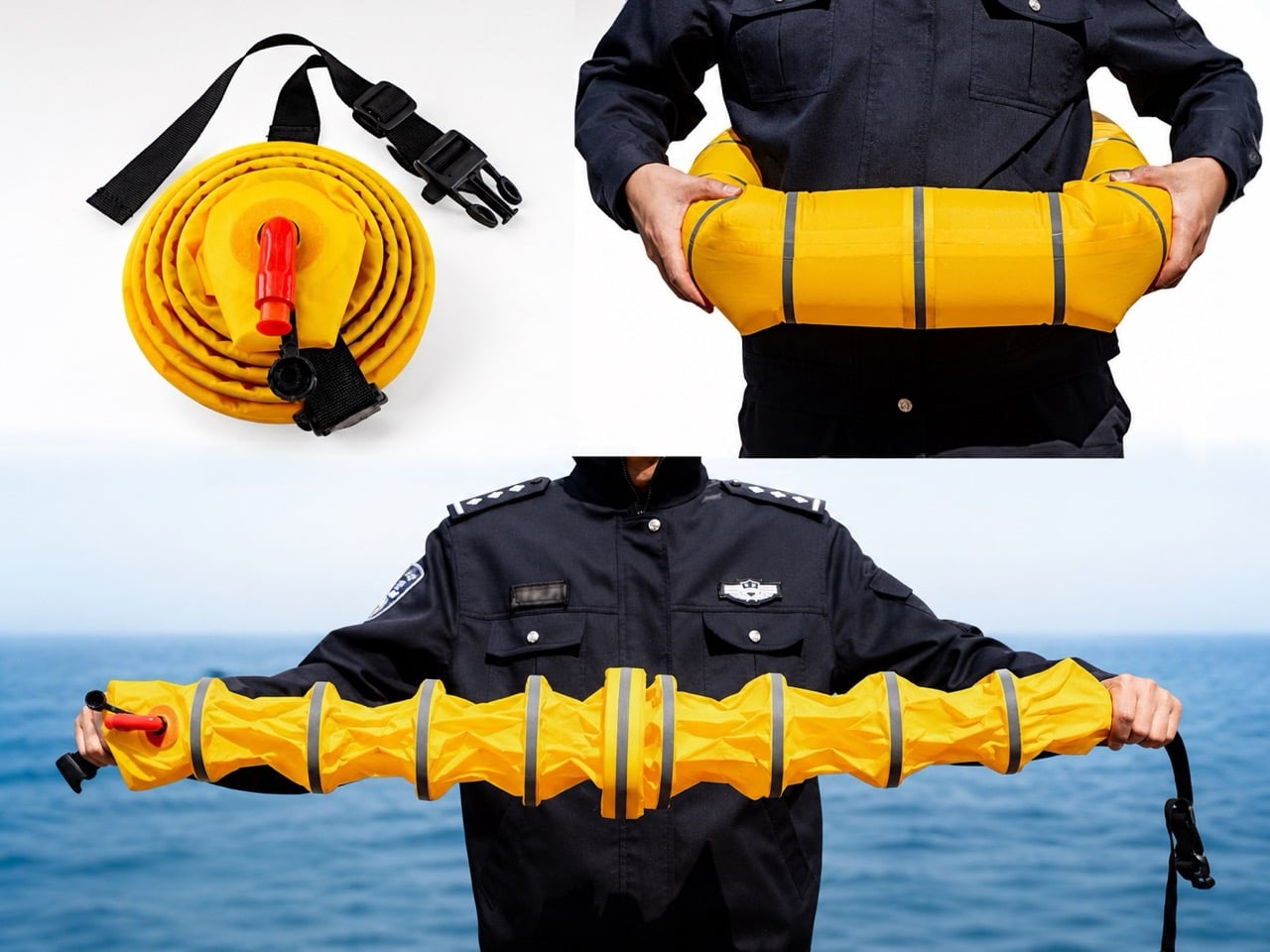

Rolled up, Ark Hero No.1 looks like a hockey puck with a zipper. Nothing about it announces itself as rescue equipment. Pop the shell open and a coiled yellow tube spirals inside, capped by a red hand pump that would look at home on a bicycle. Pump it for a few seconds and the coil stretches into a segmented shaft that spans shoulder to shoulder, jointed like a stalk of bamboo and wrapped in reflective silver bands built to catch headlights at 3 AM. The whole sequence takes about as long as opening a bag of chips.
That transformation, from puck to rescue tool, is the entire pitch. Ark Hero No.1 is a 2025 Design Intelligence Award Future Talents winner developed over three years by frontline police officers who kept watching the same tragedy play out from the same design gap. Traditional life rings live on piers and boat railings, tethered to places where drownings often do not happen. A car that leaves the road at 2 AM lands nowhere near a lifeguard tower. The brief was simple: build the life ring that could have been in the trunk.
Designer: wanglicheng
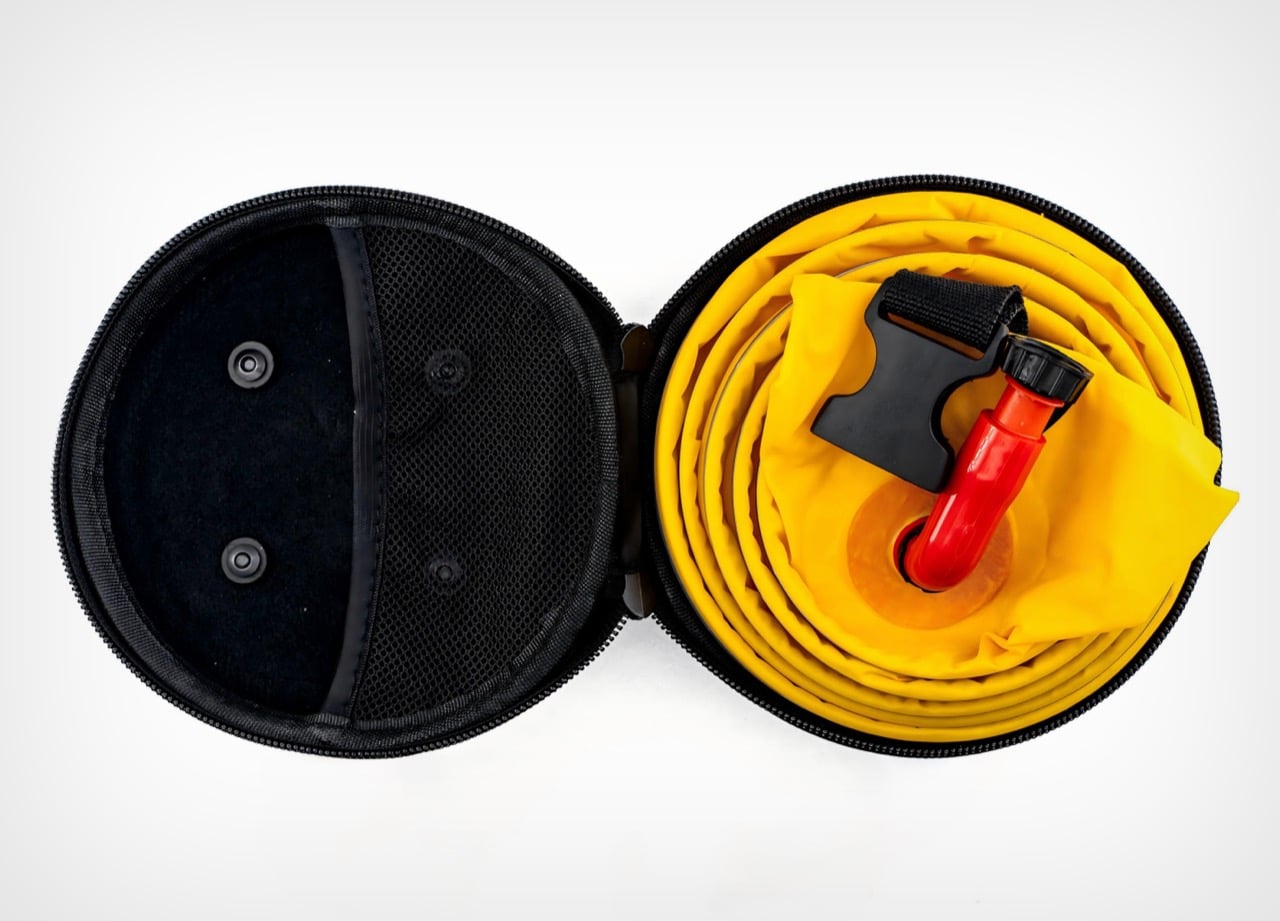

Losing the CO2 cartridge is the single biggest upgrade, more so than the actual innovative design. High-pressure gas kills casual storage: it expires, complicates air travel, sits inside a regulatory maze at customs, and demands specialist replacement after every deployment. Swap it for the red hand pump poking out of the case and the same ring can live in a squad car or family sedan for years without anyone thinking about it. The trade-off is a few extra seconds of pumping. Given that the alternative is often no life ring at all, that math works out fast.
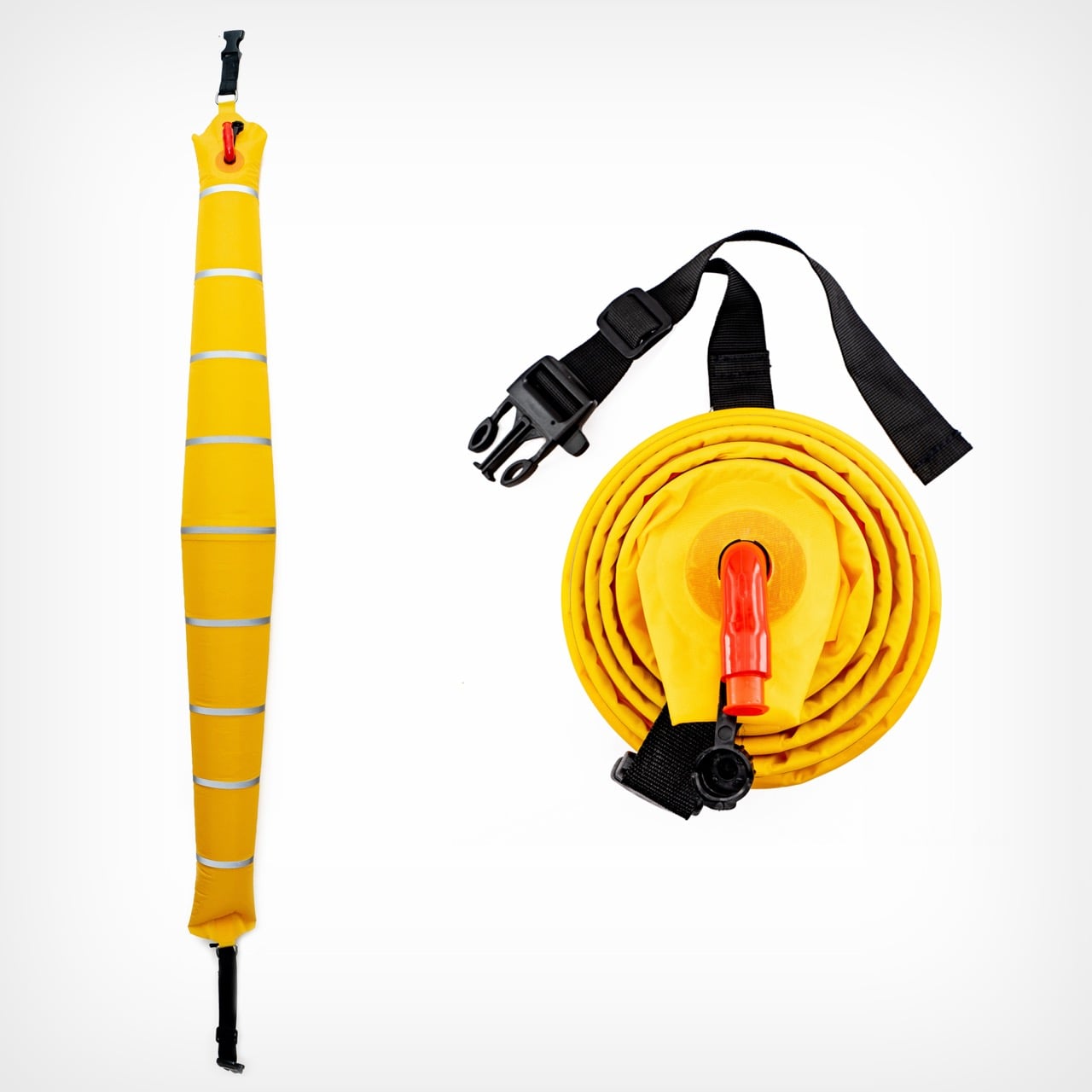

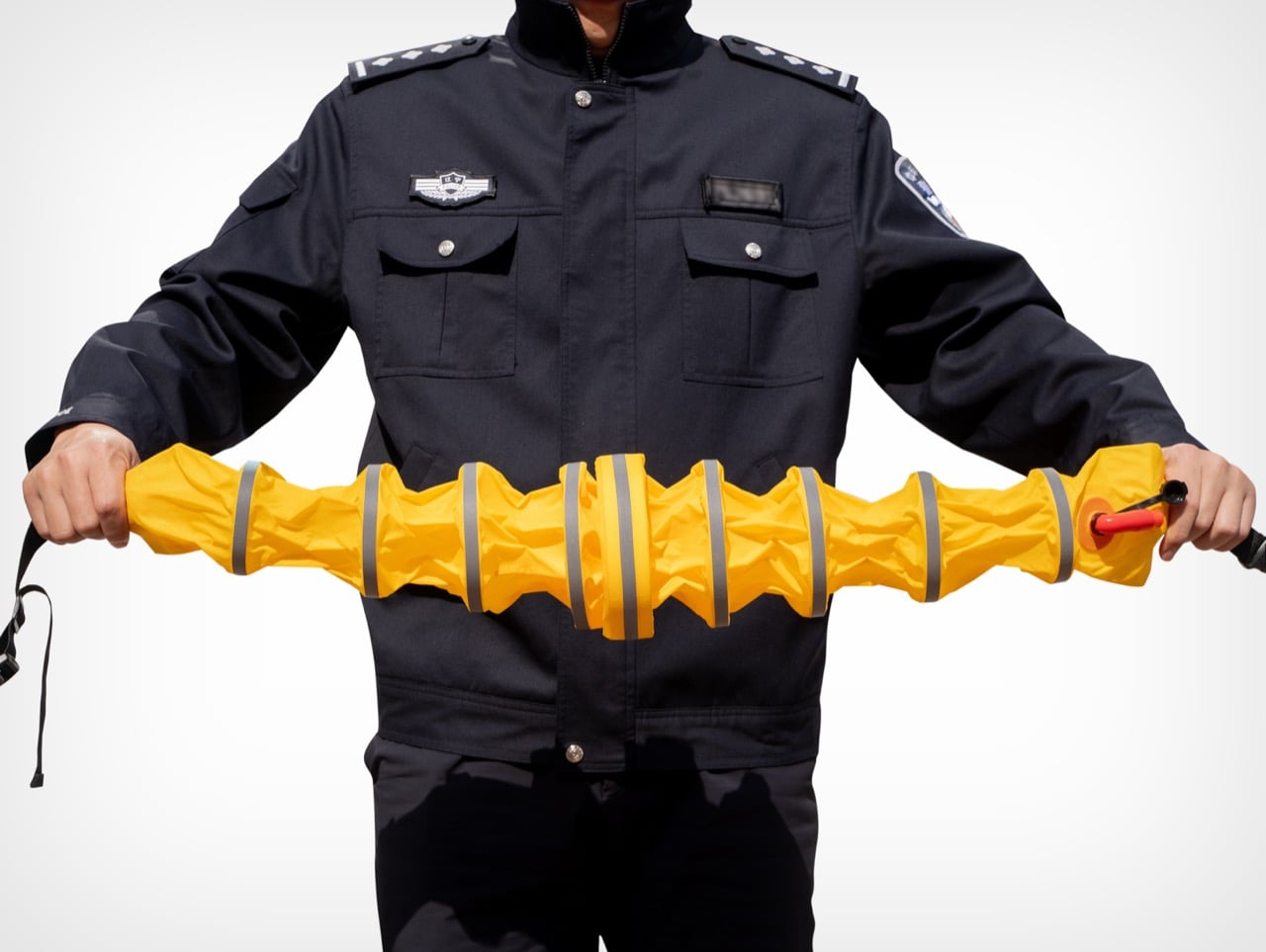
Ark Hero No.1 spreads its buoyancy across a chain of joined segments instead of pooling all the air in one giant doughnut. A conventional ring holds its air in a single chamber, so one puncture compromises the whole thing. The segmented design lets a tear in one pod leave the rest of the shaft floating, which matters when the tube is scraping metal edges or broken glass after an accident. The jointed geometry also lets the tube flex around a body or drape across a car window frame during rescue. Silver reflective bands wrap every segment, doing their real work in dark water where solid yellow gets lost in glare and chop.

The hard-shell case turns the whole system into something a procurement officer can plan around. Rolled up, the coiled tube snaps into a puck-shaped shell with a full-perimeter zipper and a mesh interior pocket that holds the pump and buckle in place. The form factor standardizes storage footprint, protects the fabric from years of abrasion, and clips easily to duty belts, headrests, and boat racks. An officer can carry one on the hip. A patrol vessel can rack a dozen without eating floor space.
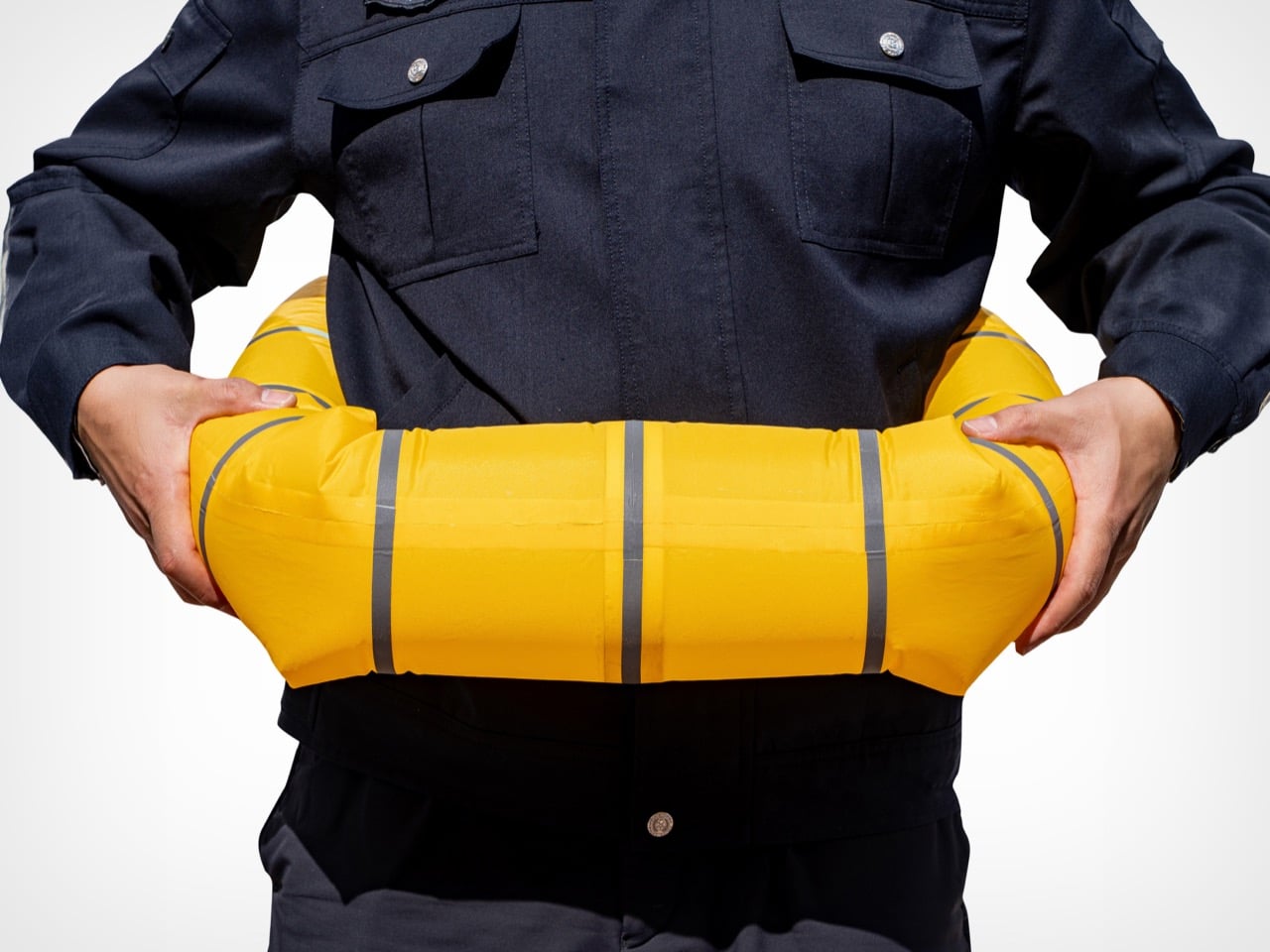
For a project born from three years of frontline police fieldwork, the visual restraint tells its own story. No branding drama, no styling flourish, no lifestyle gadget affectation. The yellow is loud because loud yellow gets seen from a helicopter. The red is loud because red hands find red pumps in a panic. Every element exists because someone once needed it and did not have it, and that tends to end well when the equipment finally reaches the people who kept improvising without it.