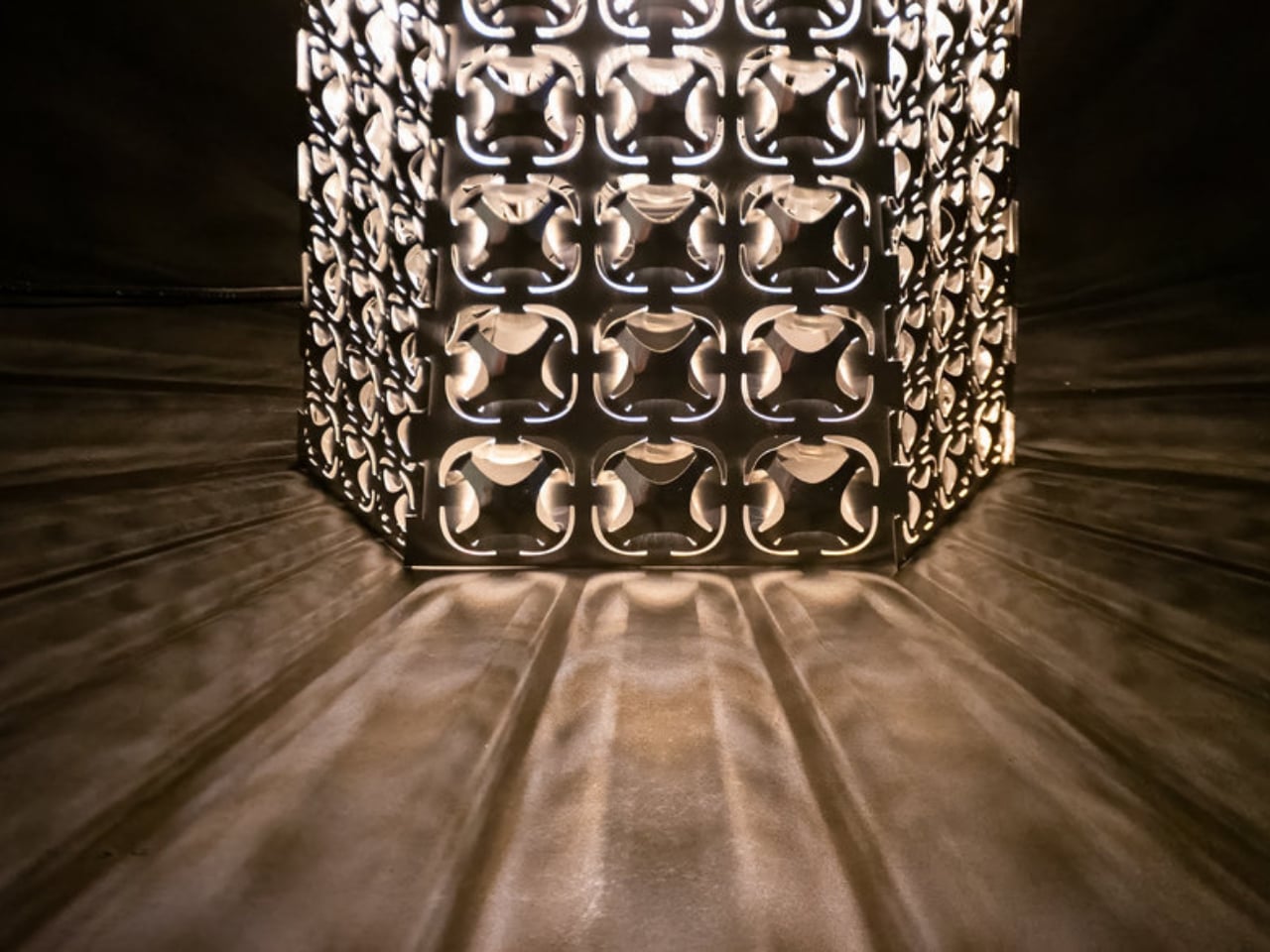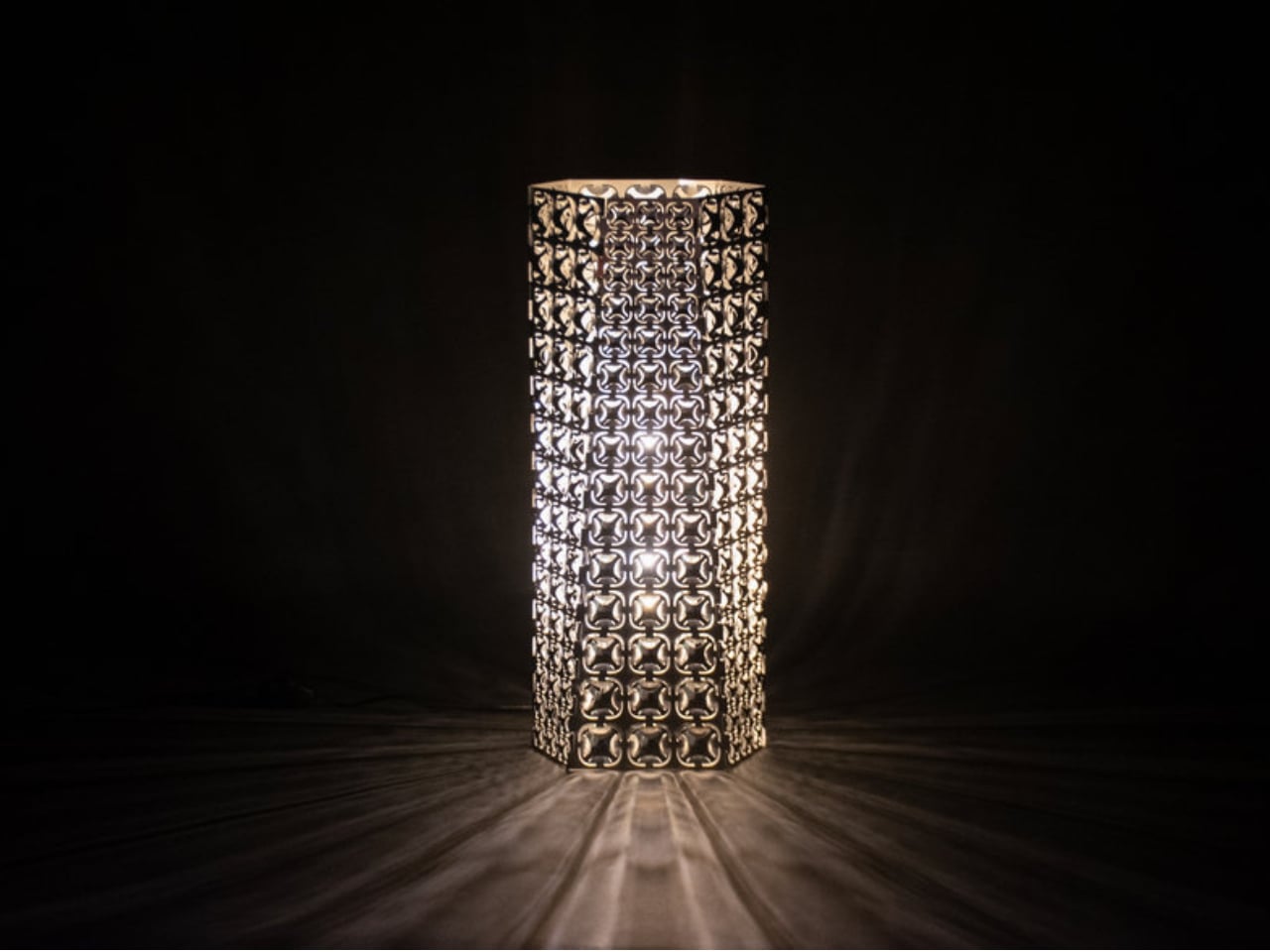

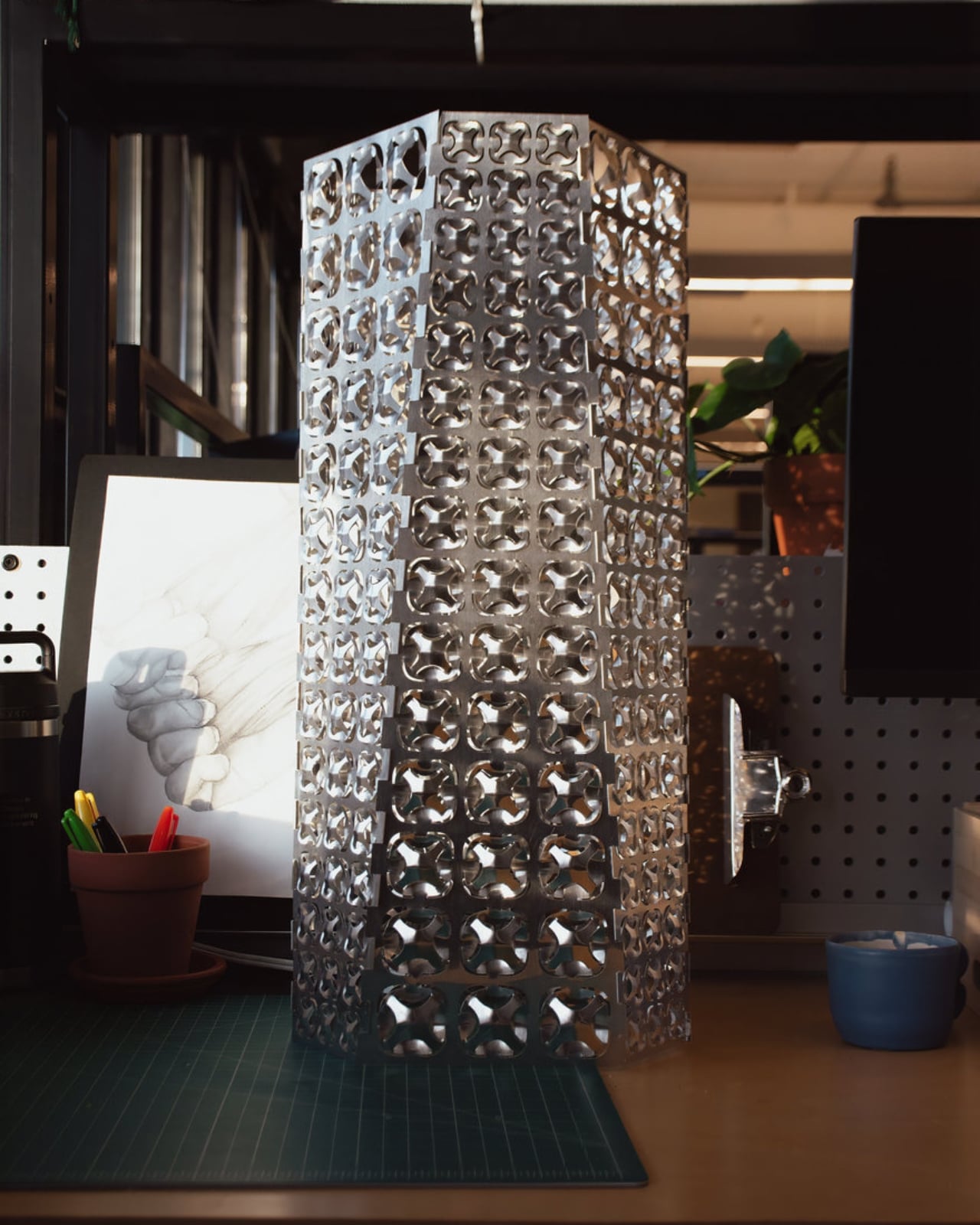
There are moments in design when your first thought isn’t “how does it work” but “how does it feel.” Hikarigami is one of those objects. Created by four Harvard Graduate School of Design students, Luke Fiorante, Joseph Fujinami, Annie Xing, and Chi Zhang, it’s a luminaire that looks, at first glance, like an intricate metal tower carved by a very patient and very precise hand. But the story behind it is far more interesting than the object alone, and the object itself is already extraordinary.
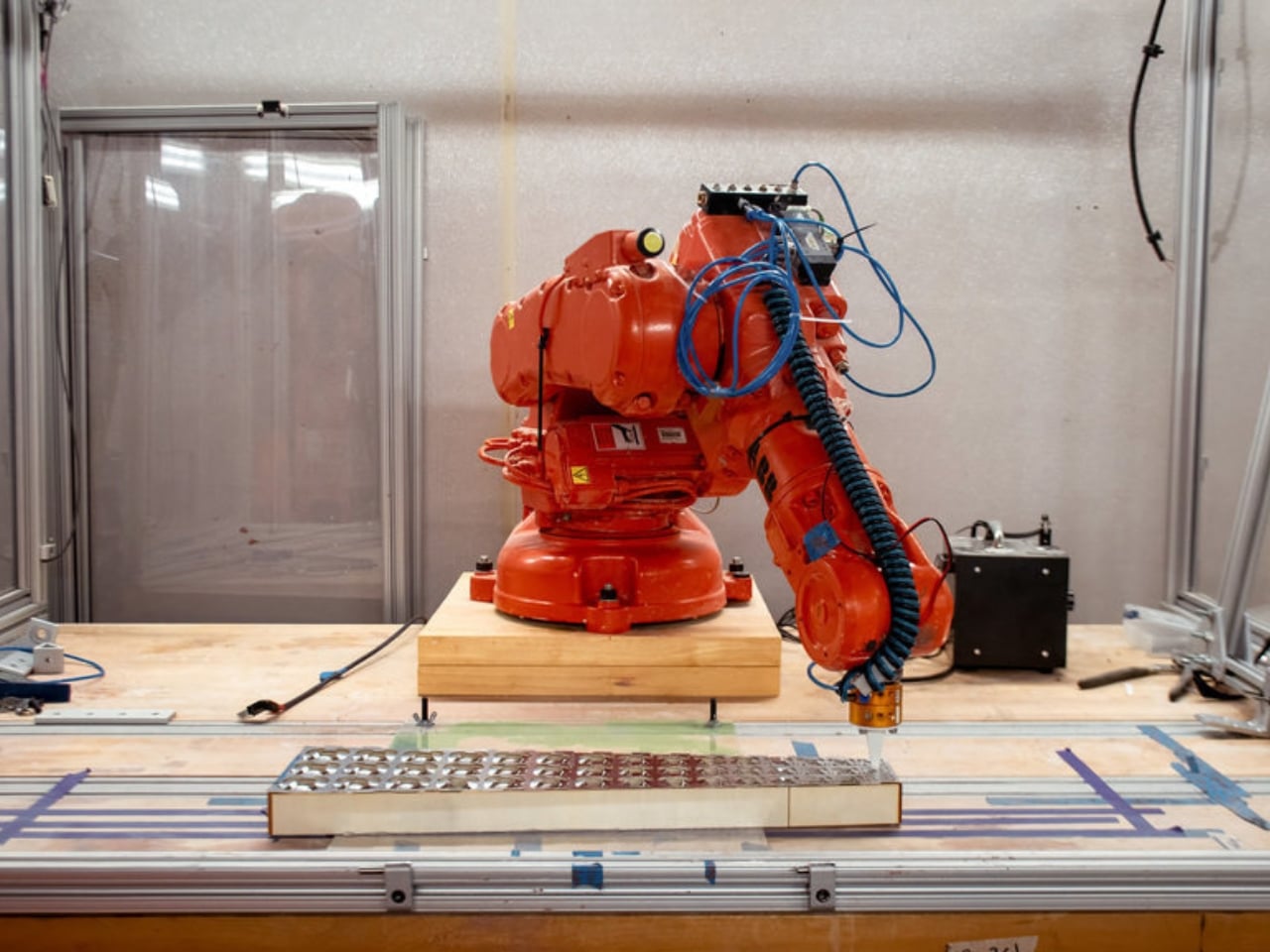
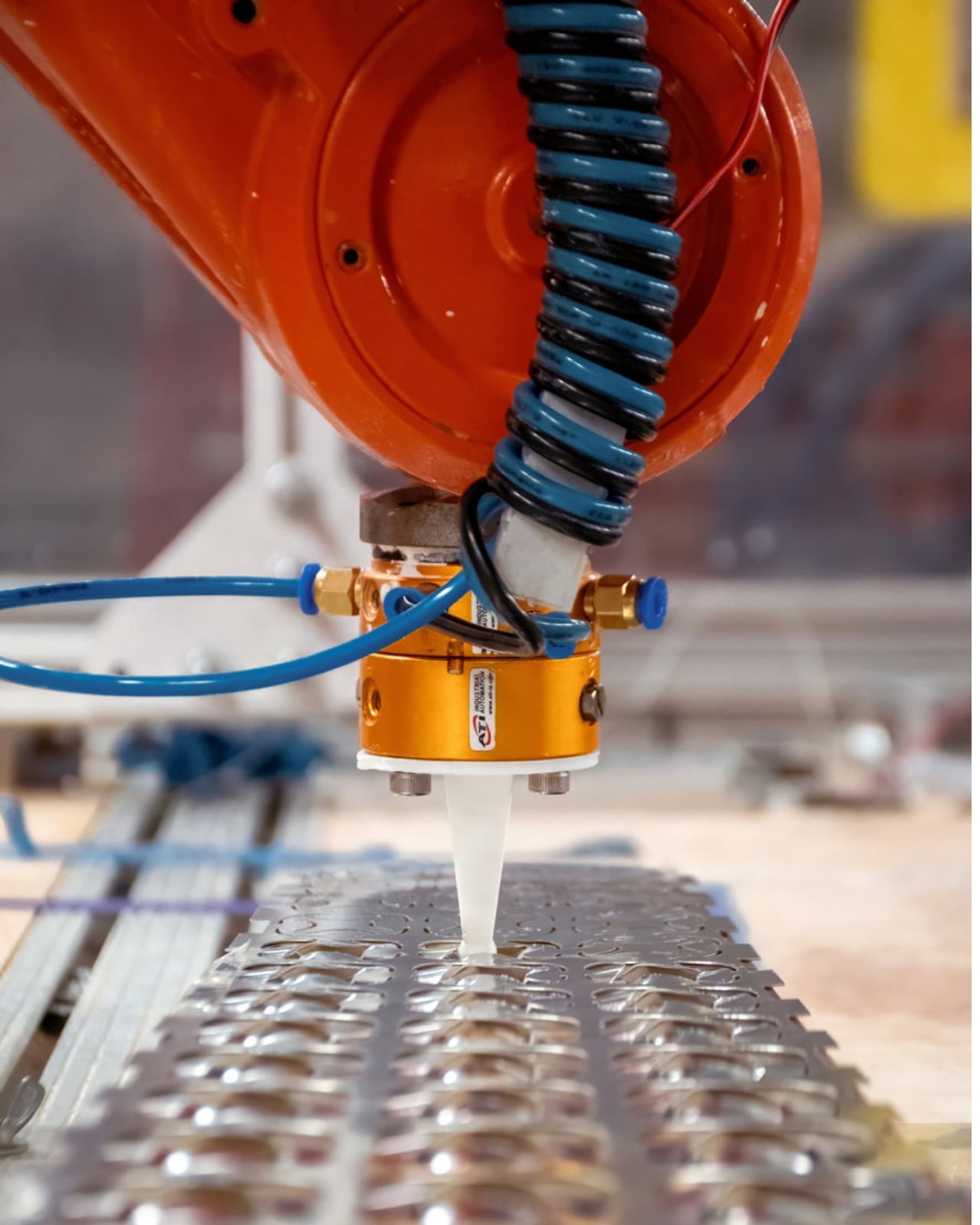
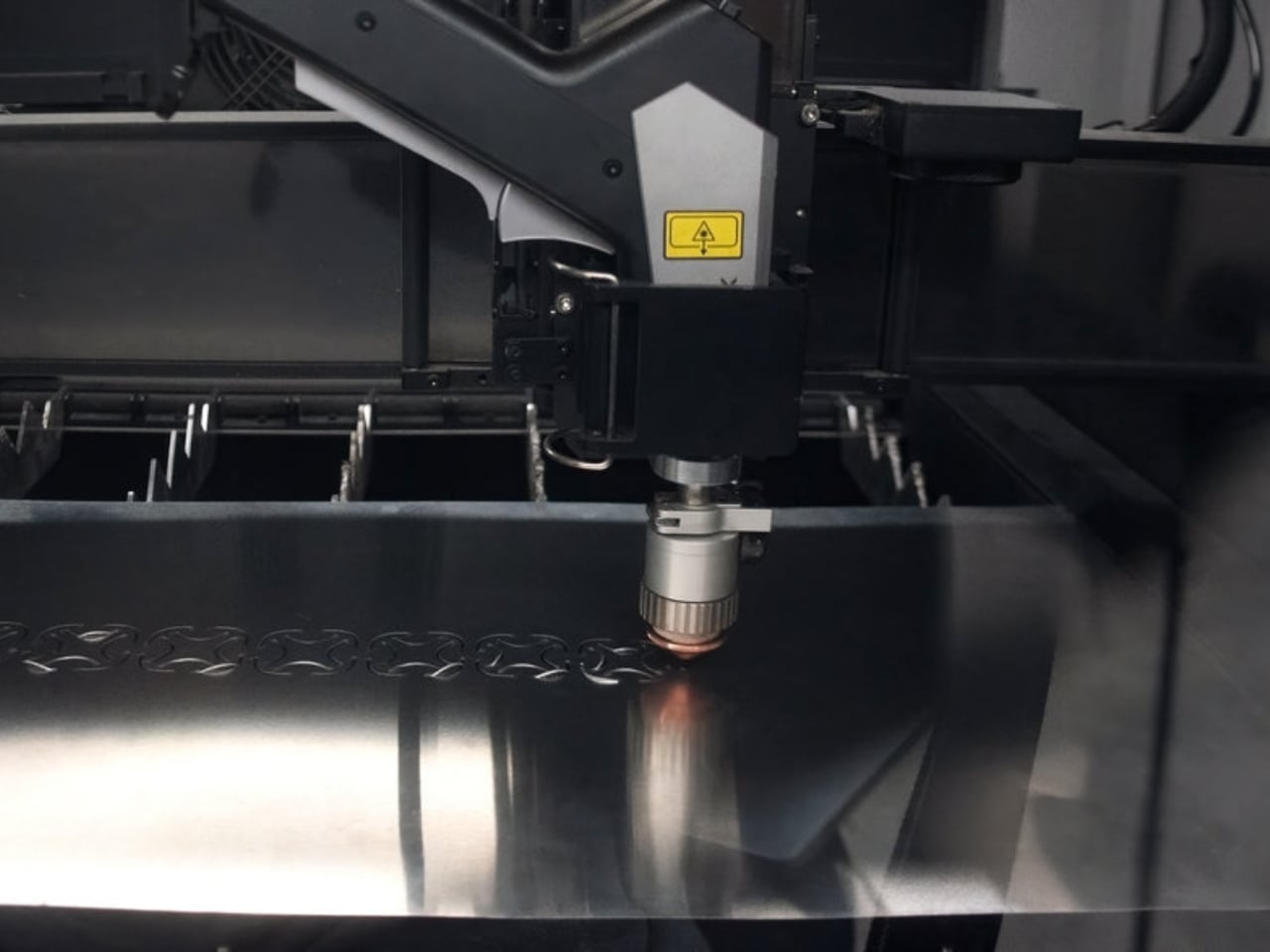
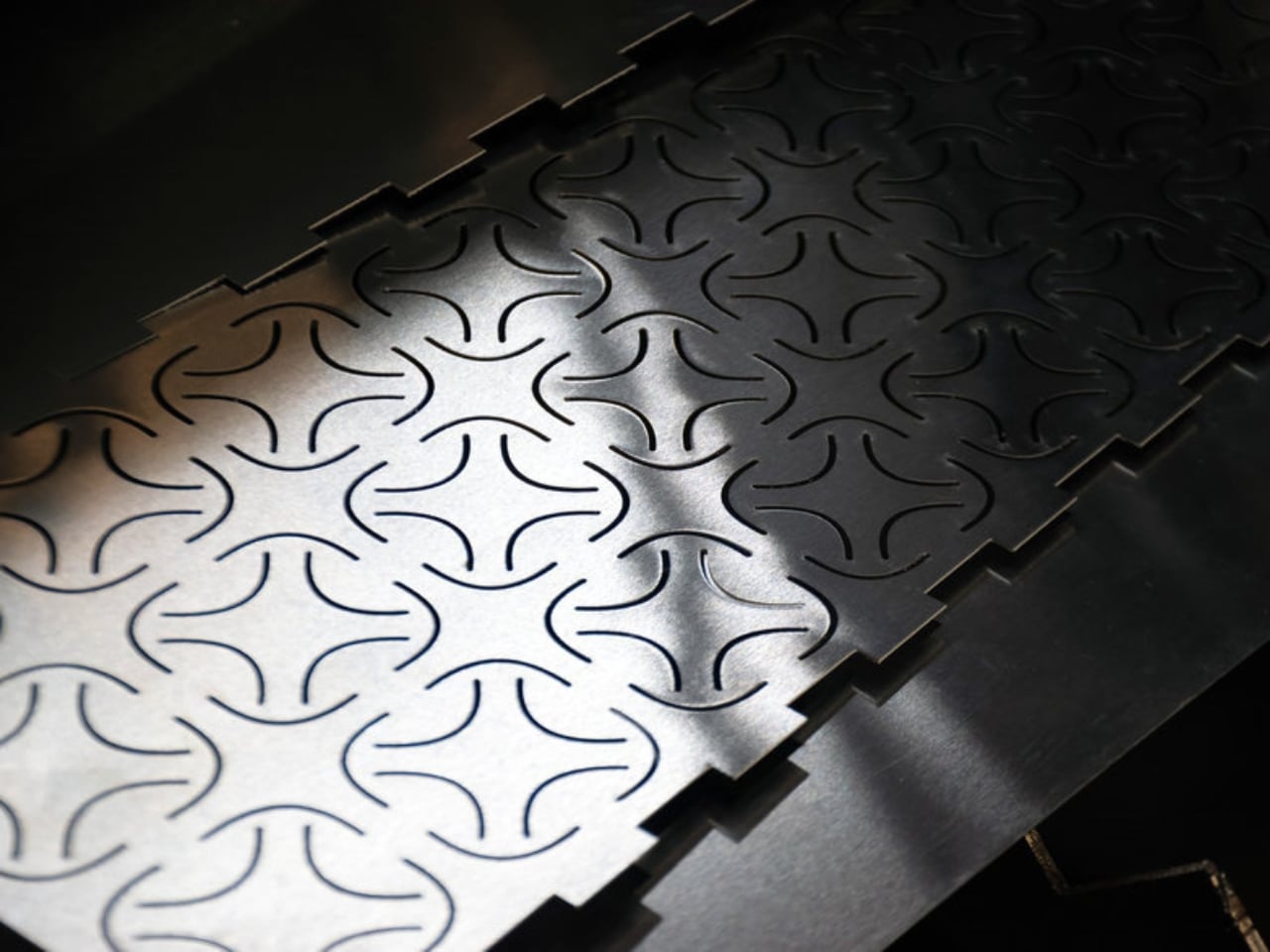
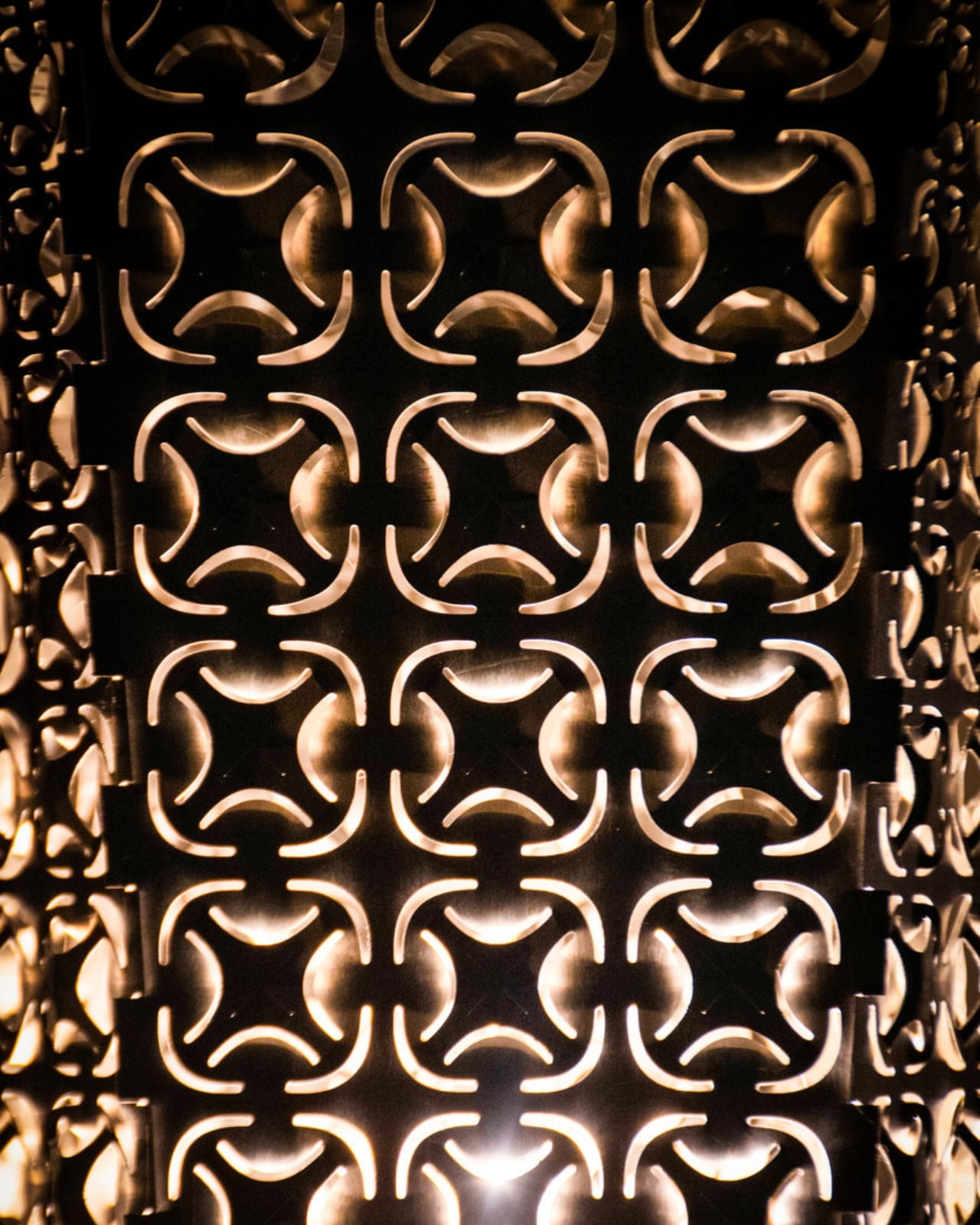
The name is a portmanteau of two Japanese words: hikari, meaning light, and kirigami, the traditional art of cutting and folding a single sheet of material into three-dimensional form. The fusion isn’t just poetic; it’s structural. The team took that ancient paper-craft logic and translated it into sheet aluminum, using an industrial robotic arm to press, deform, and expand the metal into a lattice of thousands of individual cells. Each cell is unique. Each one catches light differently. And every fold was made without a mold.
Designers: Luke Fiorante, Joseph Fujinami, Annie Xing, Chi Zhang

That last part is the quiet revolution tucked inside this project. Traditional metal forming depends on expensive, custom-made dies and molds, static tools that lock a design into one fixed shape and require significant capital before a single piece can be produced. Hikarigami throws that model out entirely. The team developed a custom script called Machina, which programs the robot to adjust its actuation depth for every single cell in the lattice. Because the cells vary in size across the panel, a uniform press would cause the metal to fail. The script scales the force to each cell’s geometry, working right up to the material’s yield limit without crossing it. It’s precision at a scale that a human hand simply couldn’t replicate.
But precision isn’t the point. Craft is. The team was genuinely asking whether robotic automation could learn the intuitions of handmaking: the responsiveness to material, the calibration to context, the sense that a gesture should change depending on where you are in the process. Most industrial fabrication doesn’t care about any of that. Hikarigami does. And to me, that’s the more interesting question.
The result is a tower made of six identical aluminum panels with no fasteners, no adhesives. The panels interlock through tabs built directly into the geometry, which means the whole assembly is a single material: pure aluminum, fully recyclable, and designed to age gracefully. The team noted that over time, the aluminum will develop a patina shaped by its environment. The lamp doesn’t resist change. It participates in it.
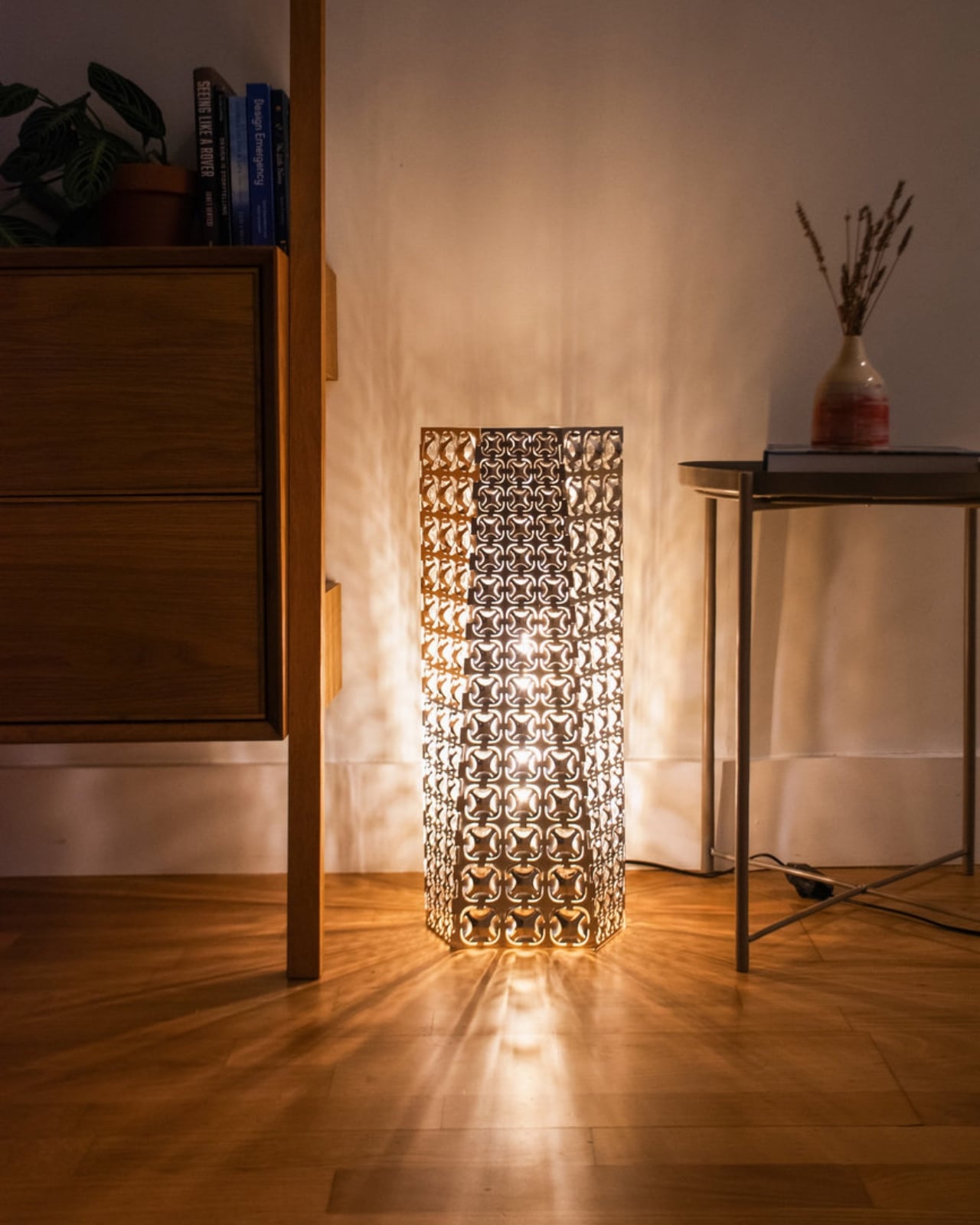
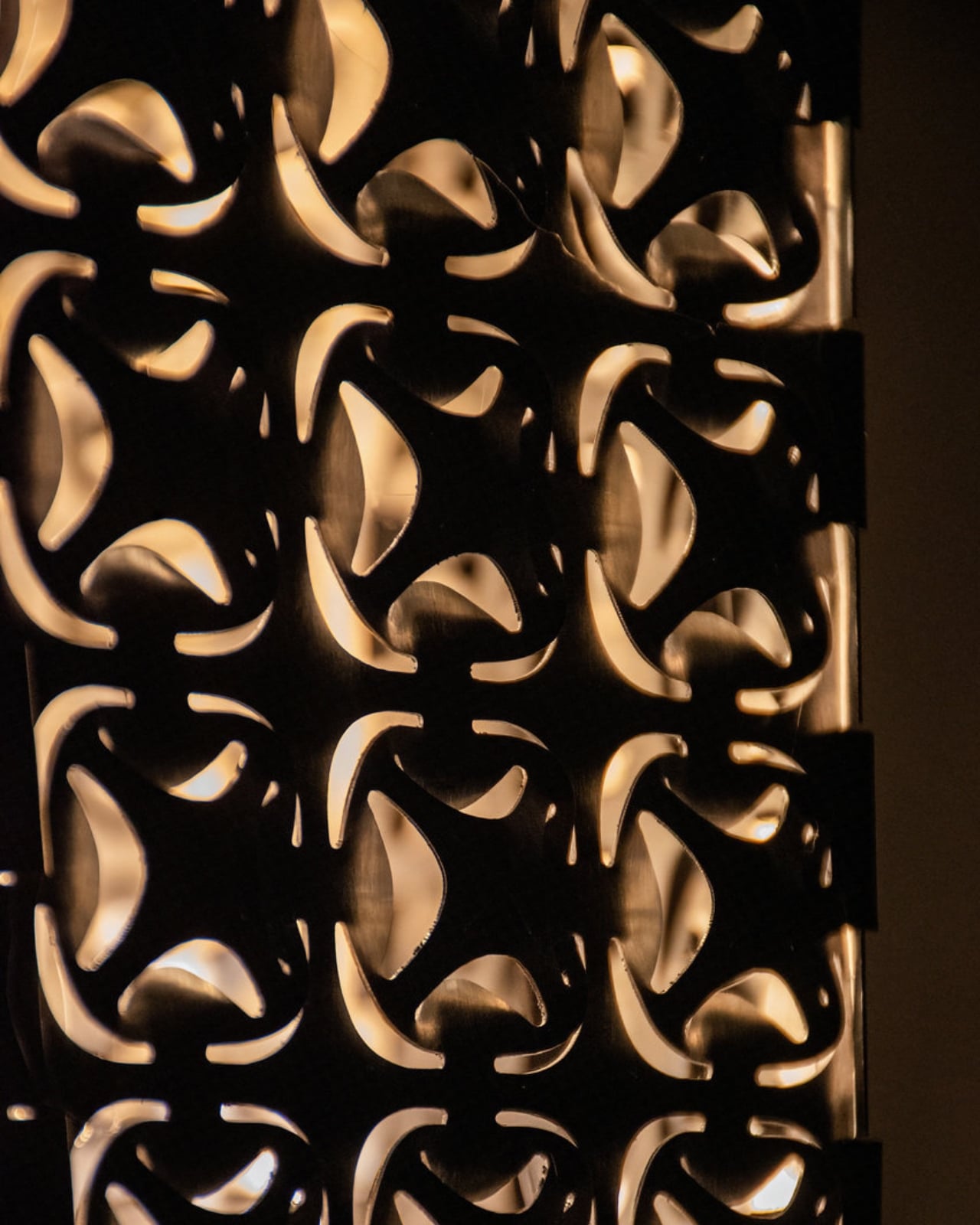
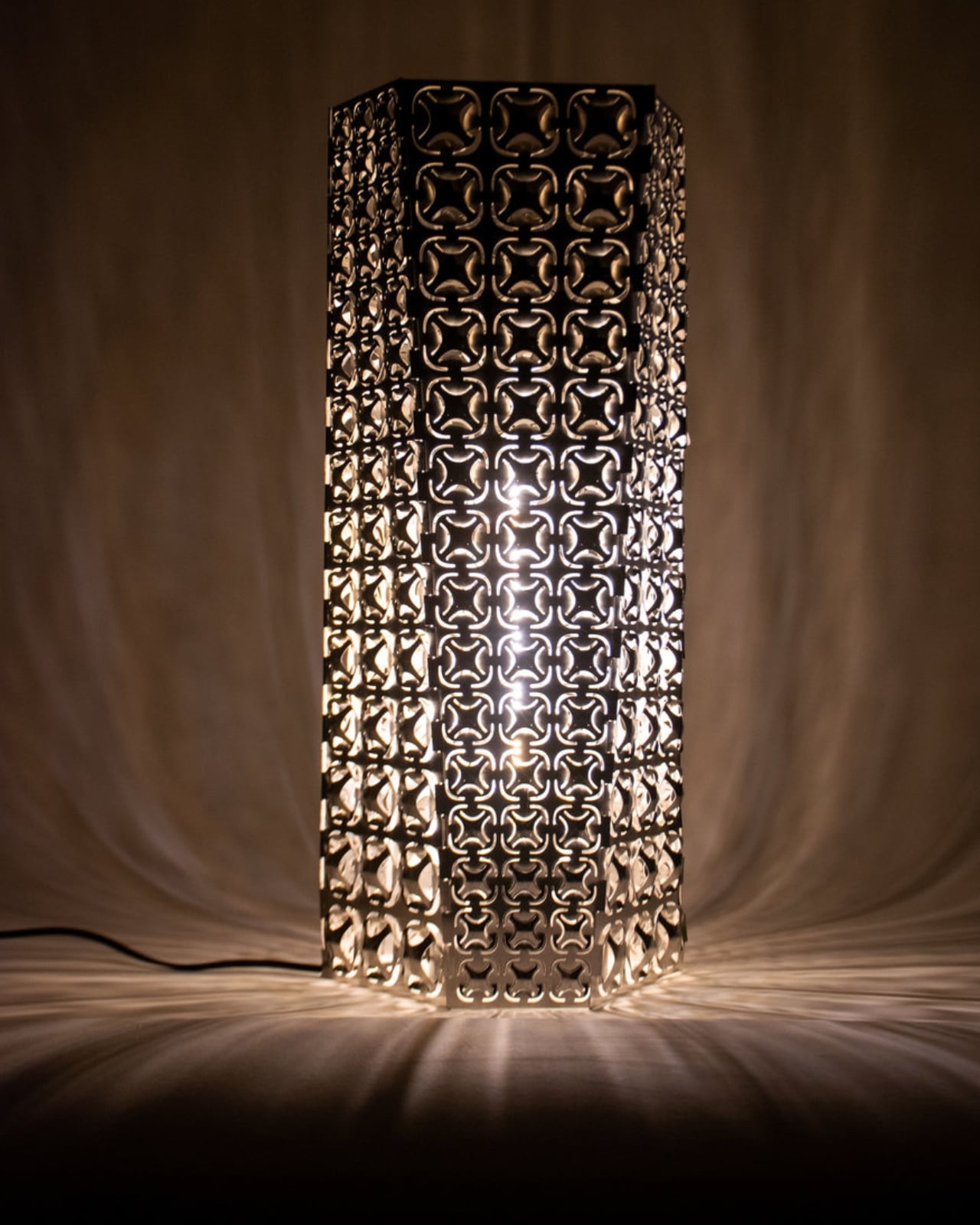
When you turn it on, the experience shifts completely. During the day, Hikarigami reads as architectural, almost industrial, the kind of object that would feel at home in a gallery or a thoughtfully designed living space. At night, with the central LED filament lit, the aluminum skin opens up. The thousands of robotically formed apertures cast overlapping pools of shadow and caustic highlights across every nearby surface. The room becomes part of the lamp. The lamp becomes the room.
It’s worth noting that this is a student project, and I find that genuinely refreshing. It won in the sustainability category at one of design’s most respected annual competitions, and it also picked up a notable distinction in furniture and lighting. For work produced inside an academic program, the level of technical and conceptual rigor here is striking. Beyond the accolades, Hikarigami feels significant because it takes a position. It argues, quietly but clearly, that sustainable design doesn’t have to mean sacrificing beauty or experimentation. That mold-free fabrication can be expressive. That a robot can be a collaborator, not a replacement.
The team divided their roles with intention: Xing led computational design and fabrication, Fiorante handled robotic toolpath programming, Fujinami managed structural assembly, and Zhang contributed to the robotic fabrication process. Together they didn’t just design a lamp. They designed a process, and the lamp emerged from it. That’s the kind of thinking that tends to outlast the object itself.