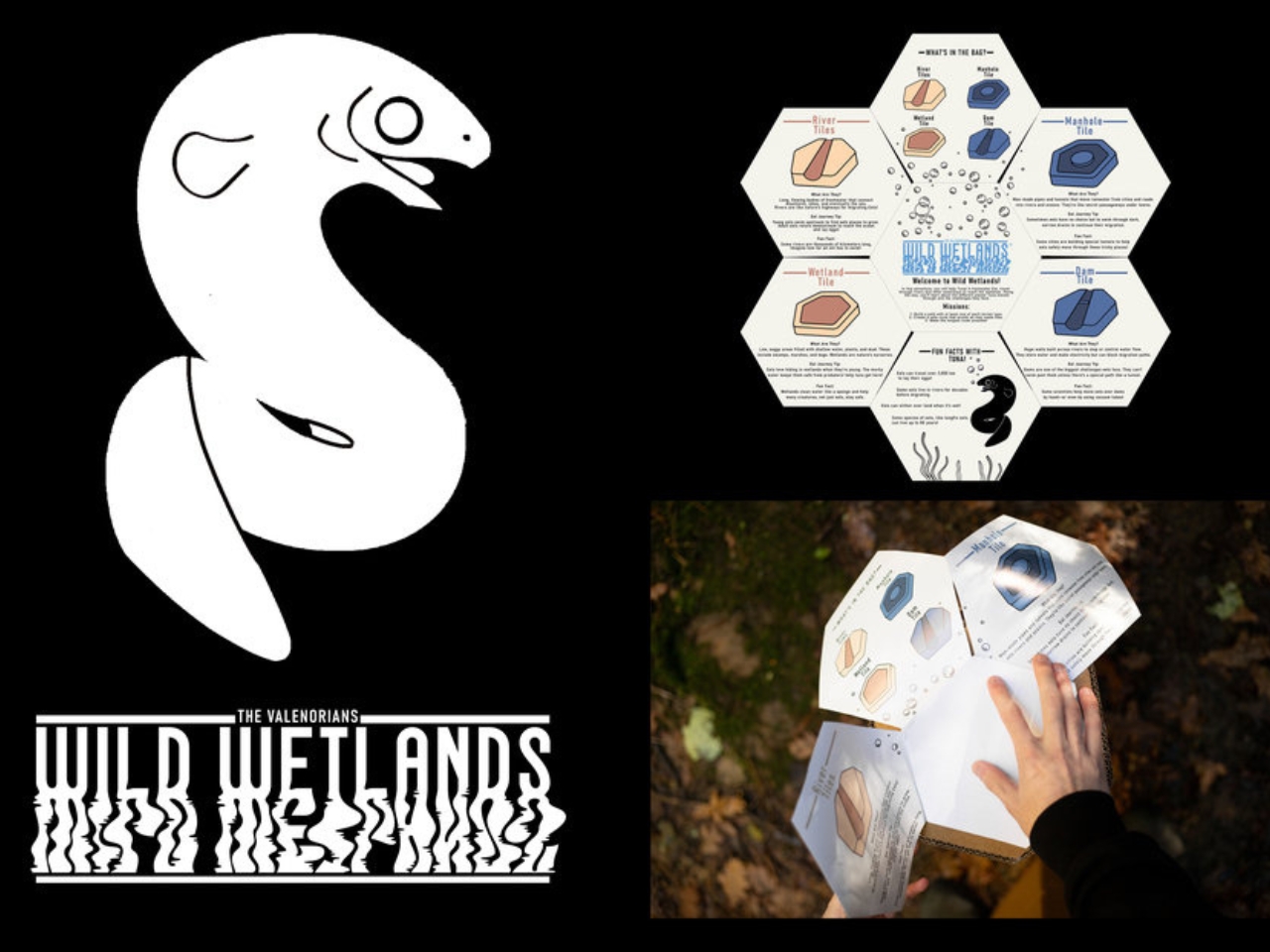

Most children’s toys today are remarkably good at keeping kids indoors. Between tablets, gaming consoles, and endlessly curated activity kits, the image of a child crouching in a stream, redirecting water with their bare hands, feels almost romantic. Which is exactly why Wild Wetlands, a modular outdoor toy designed by four students from Massey University’s College of Creative Arts, Cameron Murray, Corey Matheson, Jordan Gedye, and Rupert Shepherd, caught my attention.
Wild Wetlands is, on the surface, a modular tile game. There are 11 different tiles that children aged 5 to 12 can arrange and rearrange to create pathways for water. The main objective is simple: get the eel, known in Māori as Tuna, from the wetland tiles through a series of connected waterways down to the ocean tile. You build the river. You control the flow. You adjust, and adjust again, until it works. But calling it simple is a bit misleading, because the deeper you look at this concept, the more thoughtful it becomes.
Designers: Cameron Murray, Corey Matheson, Jordan Gedye, Rupert Shepherd
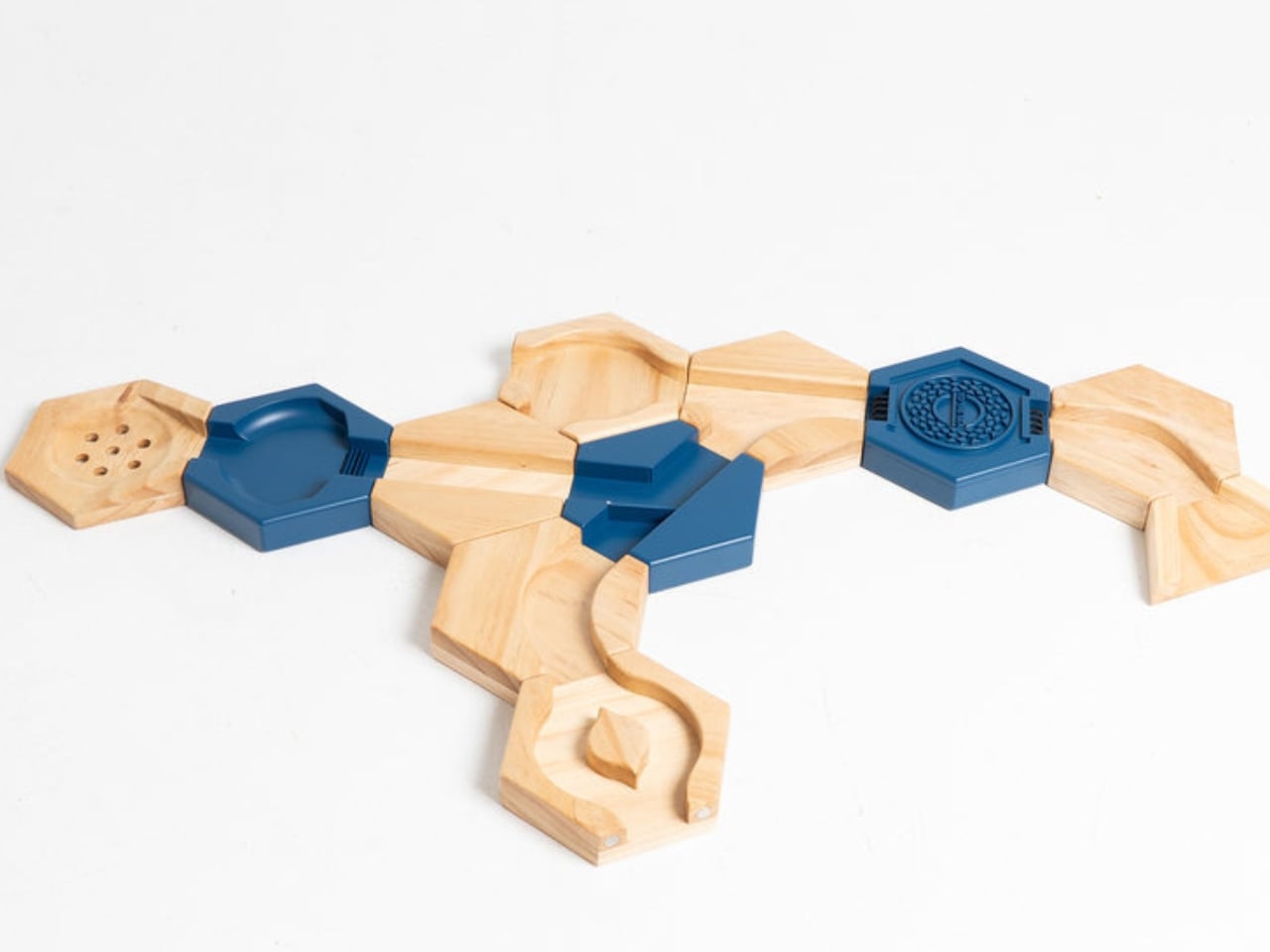
The game is rooted in a real ecological issue facing Aotearoa, New Zealand. Eels migrate from freshwater wetlands down rivers to the ocean to spawn. After hatching, young eels make the reverse journey upstream to mature in those same wetlands. It’s a remarkable life cycle, and for many New Zealand eel populations, it’s being disrupted by decades of human modification to waterways. Dams and culverts block these ancient migratory routes, and the consequences for eel populations across the country are very real.
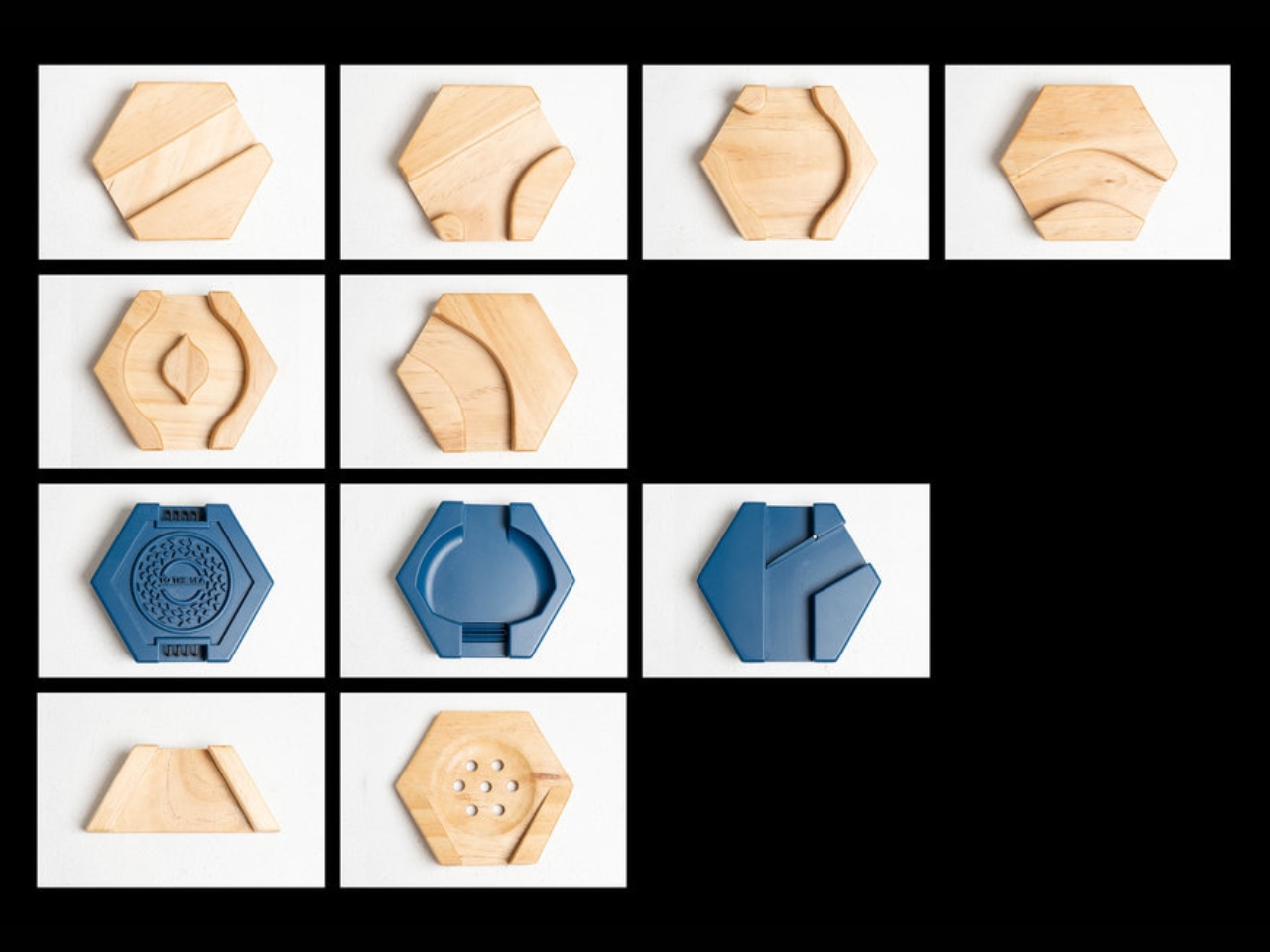
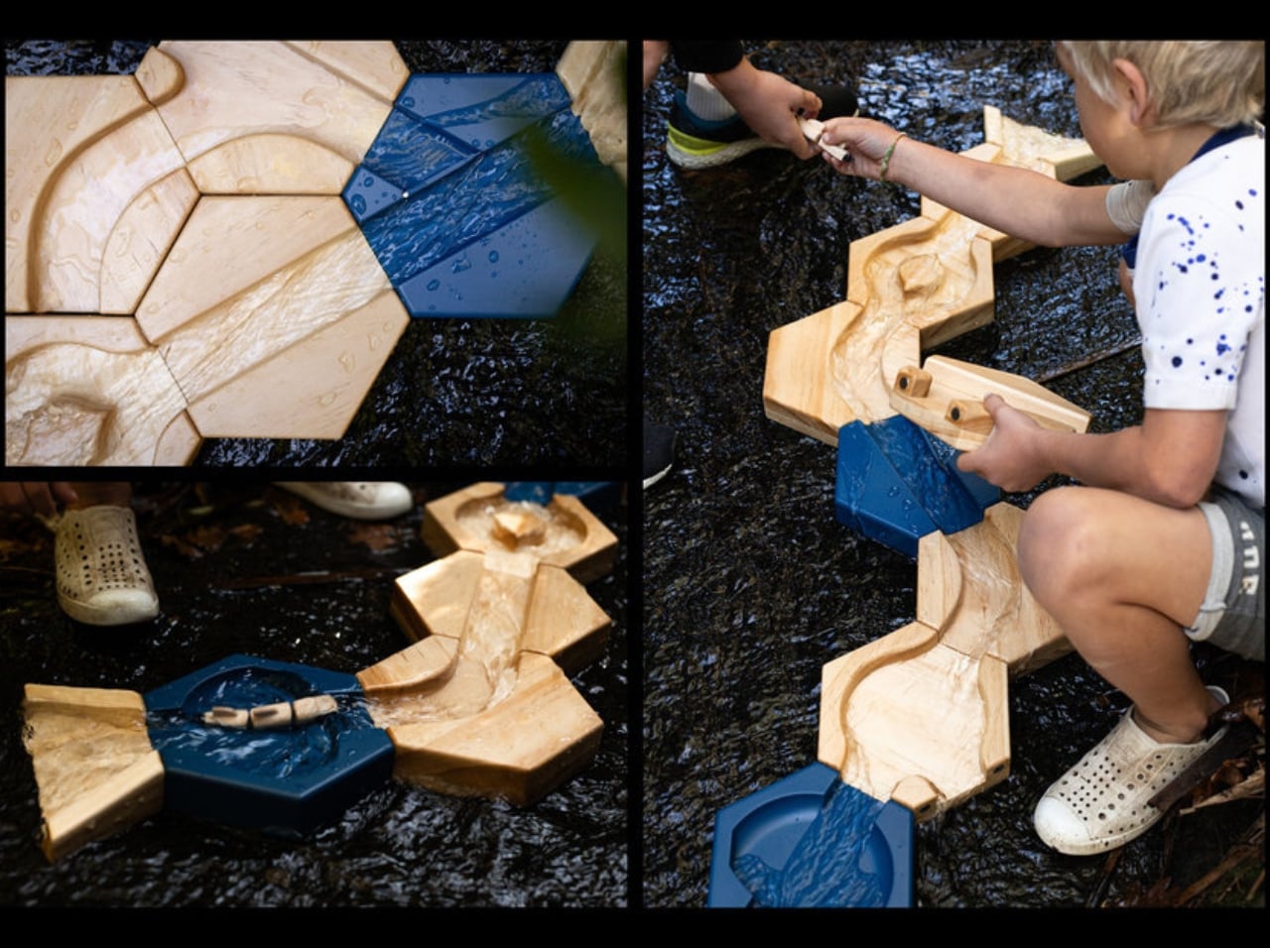
The designers translated that problem directly into the game’s mechanics. The tile set includes both natural tiles, designed to mimic the organic curves and multi-directional paths of rivers, and industrial tiles that represent human-modified waterways. Kids can configure and reconfigure these tiles to send water flowing in different directions, and they can also bring in natural materials like rocks, mud, and sticks to further adjust the flow. It’s trial-and-error play at its best, open-ended enough that no two sessions will look the same, but purposeful enough that there’s always a real reason behind the tinkering.
The materials are worth noting too. The tiles are made from New Zealand recycled pine, PLA, and neodymium magnets, finished with a polyurethane varnish designed to hold up in wet, outdoor conditions. The magnets are intentionally left visible rather than hidden beneath the surface, because the designers wanted the connections between tiles to feel intuitive. You see the connection point, you feel it click, and you immediately understand how the system works. That kind of transparency in design is something more toy makers should seriously consider.
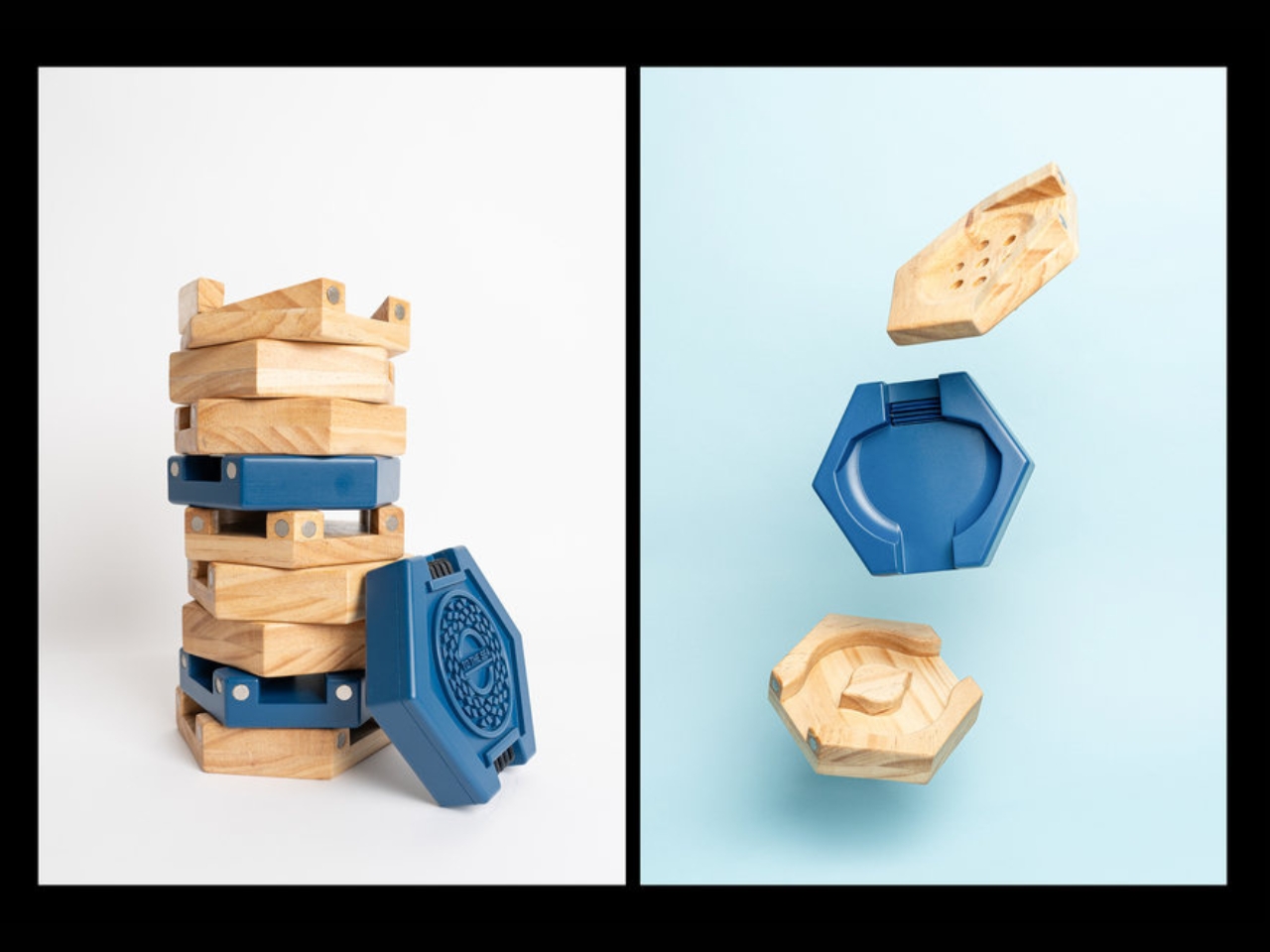
The question Wild Wetlands keeps raising for me is about how we teach kids to care about nature in the first place. Most toys built around environmental themes tend to explain the problem at you. They lecture. Wild Wetlands puts the problem in your hands and asks you to work through it. A kid isn’t told that dams block eels. They feel it when the water doesn’t flow right. They discover it when the eel doesn’t make it to the ocean. That’s a fundamentally different kind of learning, and it’s the kind that tends to stick.
The game supports one to five players and is designed to scale, with more tiles you can add for increasingly complex configurations. I love that it’s built to be played outside, near actual water, in the mud. The whole thing is made to get dirty and keep working, and somehow, that alone makes it feel more honest than most toys aimed at teaching kids about the environment.
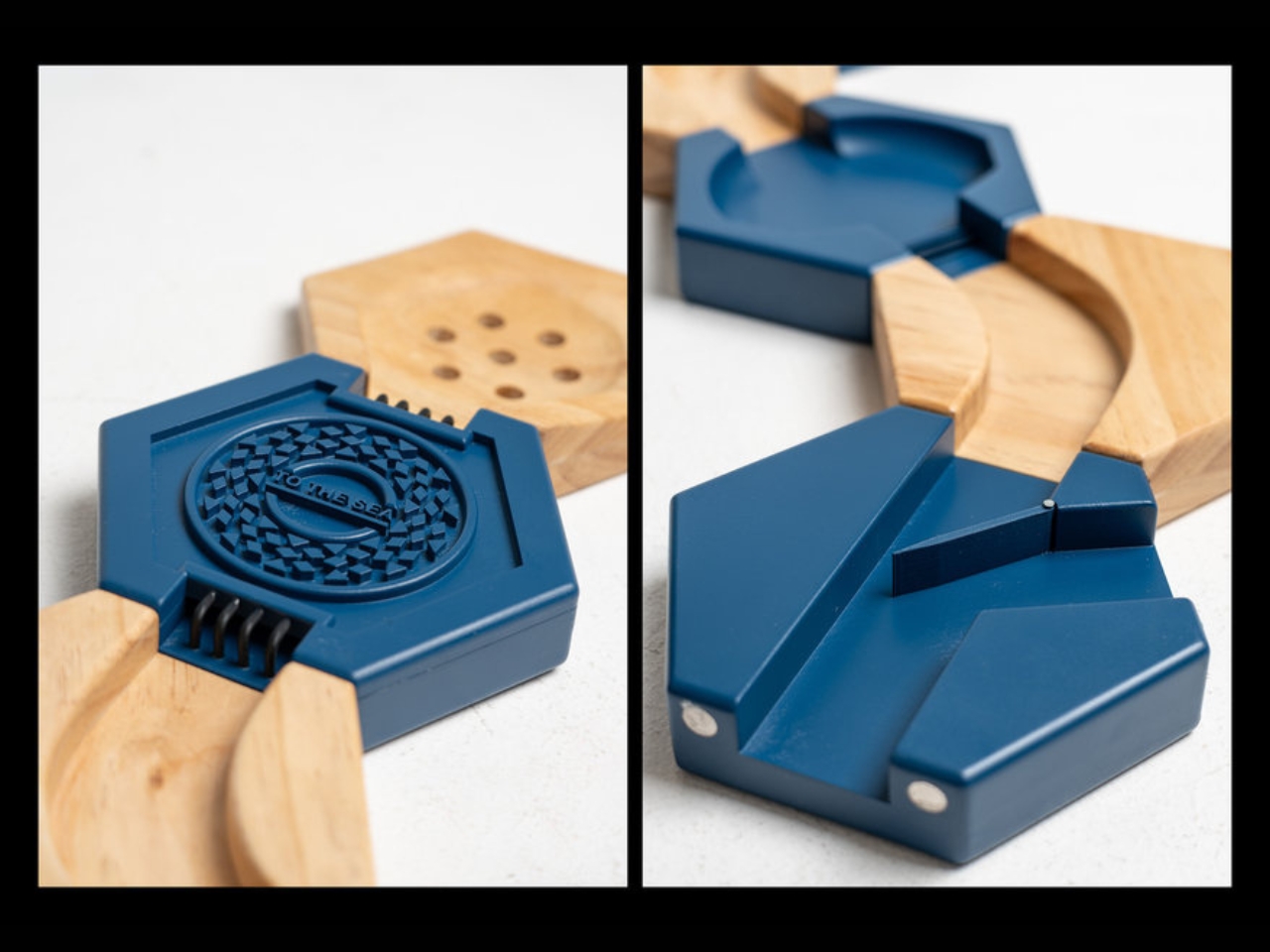
At a time when “eco-conscious design” has quietly become a marketing checkbox, Wild Wetlands feels genuinely earned. The designers didn’t just make a toy with natural materials and call it sustainable. They built a mechanic around a living ecological crisis, scaled it for a child’s hands and attention span, and trusted kids enough to let the play do the explaining. That’s good design. And it’s the kind of outdoor play we’ve been badly missing.