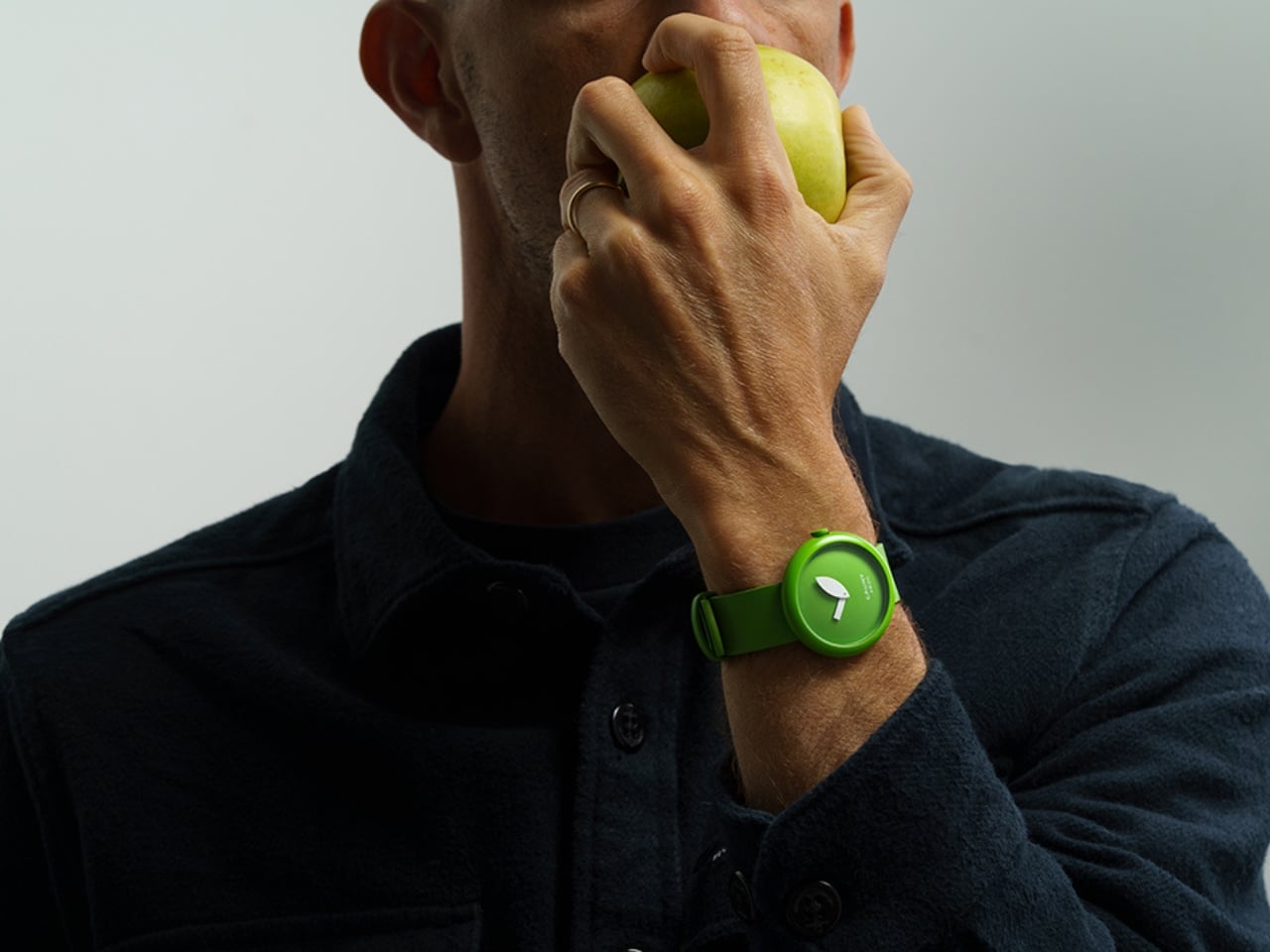

Tadao Ando is 83 years old, has won the Pritzker Prize, and has designed homes for Beyoncé, Kim Kardashian, Giorgio Armani, and Kanye West. His buildings are studied in universities around the world. His name alone tends to end conversations because there really isn’t much left to say after it. So when Cauny, the historic Swiss watch brand, approached him to design a timepiece as part of their Architects of Time series, the reasonable expectation was something severe, something stripped to its bones, maybe a slab of grey with hands. What nobody expected was an apple.
The Cauny Ando is built around a single, oddly poetic idea. For years, Ando has placed green apples outside his buildings. Not as decoration, not as a quirky signature move, but as a visual metaphor tied to Samuel Ullman’s poem Youth, which holds that youth “is not a stage of life, but a movement of the heart.” An apple, unripe and bright, carrying that same tension between potential and arrival. Ando has even created a giant green apple sculpture that has traveled internationally, including to the Museum SAN in Wonju, South Korea. The fruit has been part of his personal philosophy long before it became a dial color. And that’s the thing about this watch. The concept didn’t begin in a design studio. It began in a worldview.
Designer: Tadao Ando

Ando himself described it plainly: “This watch reflects the spirit of the green apple, unripe, a little sour, yet full of promise.” He went on to say it “honors those who keep moving forward, not because they’ve arrived, but because they still believe in the light ahead.” For a man who taught himself architecture through books and independent study, no formal degree, no architecture school, and then built one of the most recognizable careers in the field purely from persistence, those words carry real weight. This isn’t brand storytelling. It reads like something he actually believes.
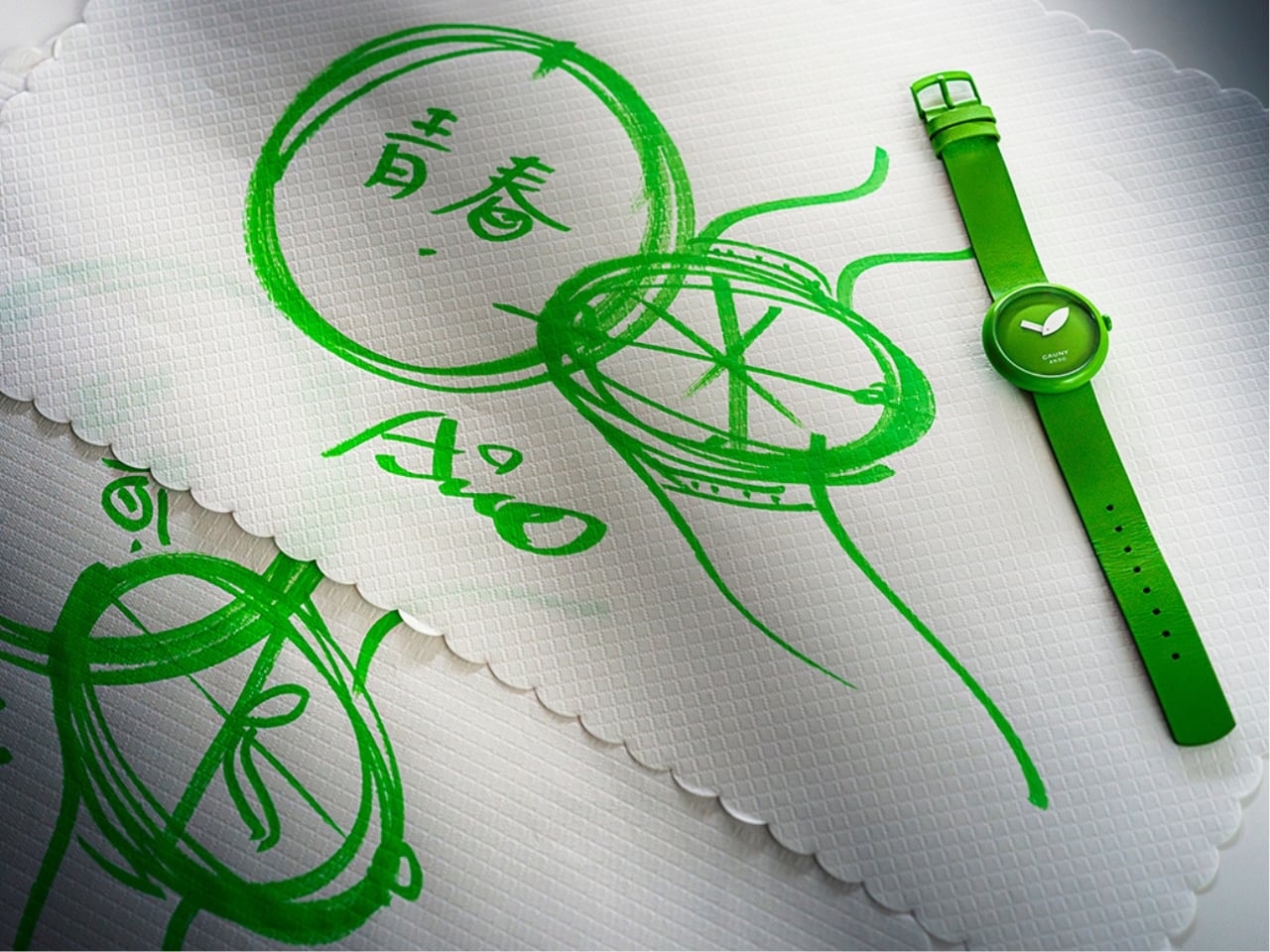
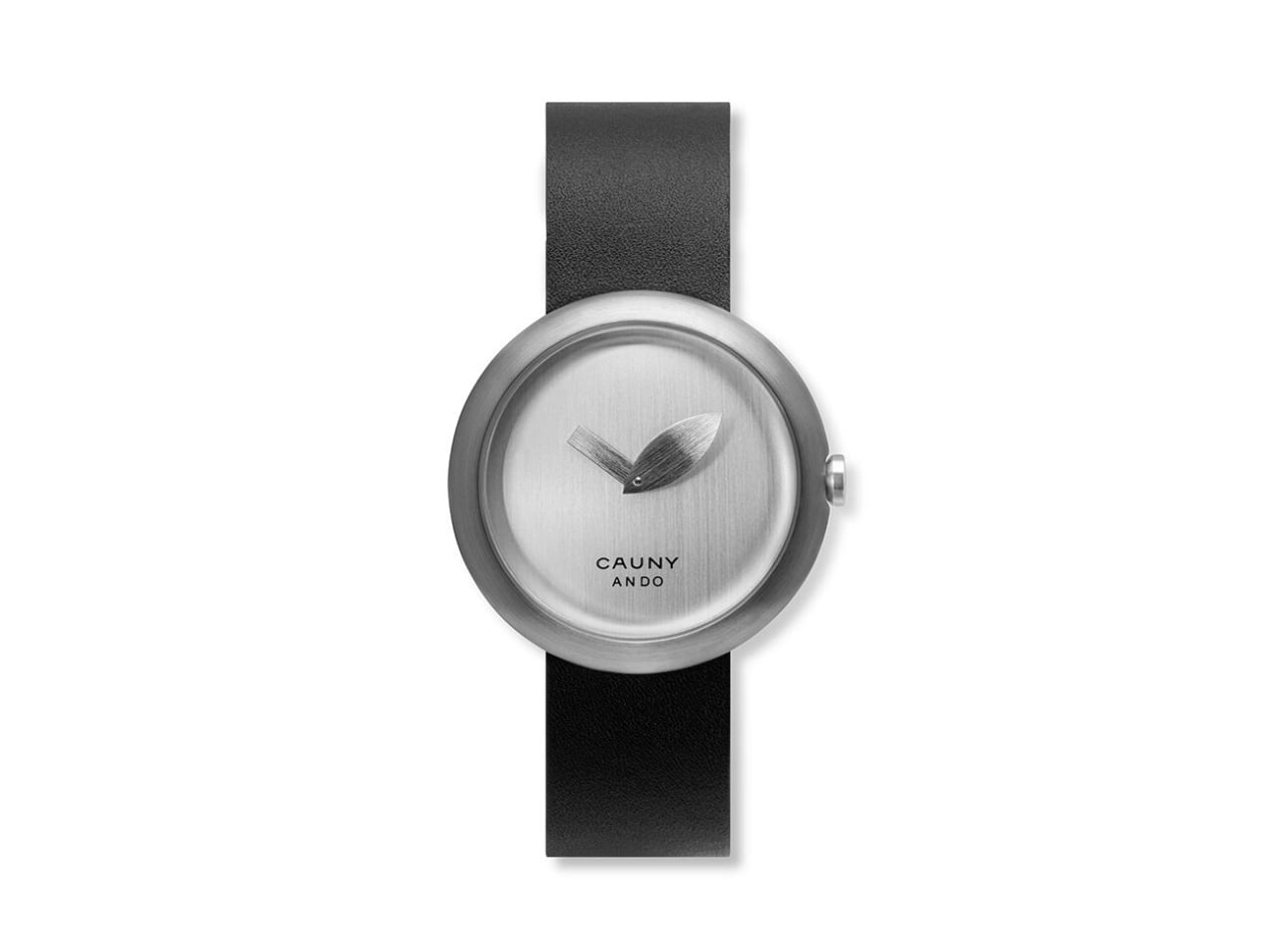
The watch comes in two versions. Ando Green, the more immediately striking of the two, wears that signature apple color on the dial, complete with a leaf-shaped hour hand that makes you pause the first time you notice it. It’s playful in a way that Ando’s buildings rarely are, which makes it more interesting, not less. The second version, in brushed steel, takes its cues from the exposed concrete Ando is so associated with, quiet and structural, the kind of piece you’d wear without needing anyone to recognize it.

Both run at 37.5mm, a size that works across genders and wrists without making a fuss about it. The quartz movement keeps things accessible rather than precious, and that feels intentional. Cauny has always occupied an interesting space in watchmaking, serious enough in craft but never trying to compete with the Swiss giants on their own terms. Pairing with architects rather than watchmakers has been a deliberate strategy, and it has produced consistently unusual results. Their Architects of Time series has previously included Eduardo Souto Moura and Rafael Moneo, both Pritzker laureates, suggesting the brief is less about watches and more about translating architectural thinking into something you can wear on your wrist.

With Ando, that translation feels particularly successful because the philosophy was already portable. He wasn’t adapting his aesthetic to a new medium. He was applying a belief he has been carrying around for decades, and it shows.
The broader conversation around design objects crossing disciplines gets exhausting sometimes. Not every collaboration deserves the attention it gets, and not every architect should be designing sneakers or fragrances. But occasionally, something lands right. Occasionally, the person behind the object has something genuine to say, and the object becomes a vehicle for that, rather than just a merchandise extension of a famous name.
The Cauny Ando lands right. It’s quiet without being boring, conceptual without being alienating, and rooted in something real. The green apple on your wrist isn’t a brand gimmick. It’s a reminder from a man who has spent his entire life proving that arriving is never the point.