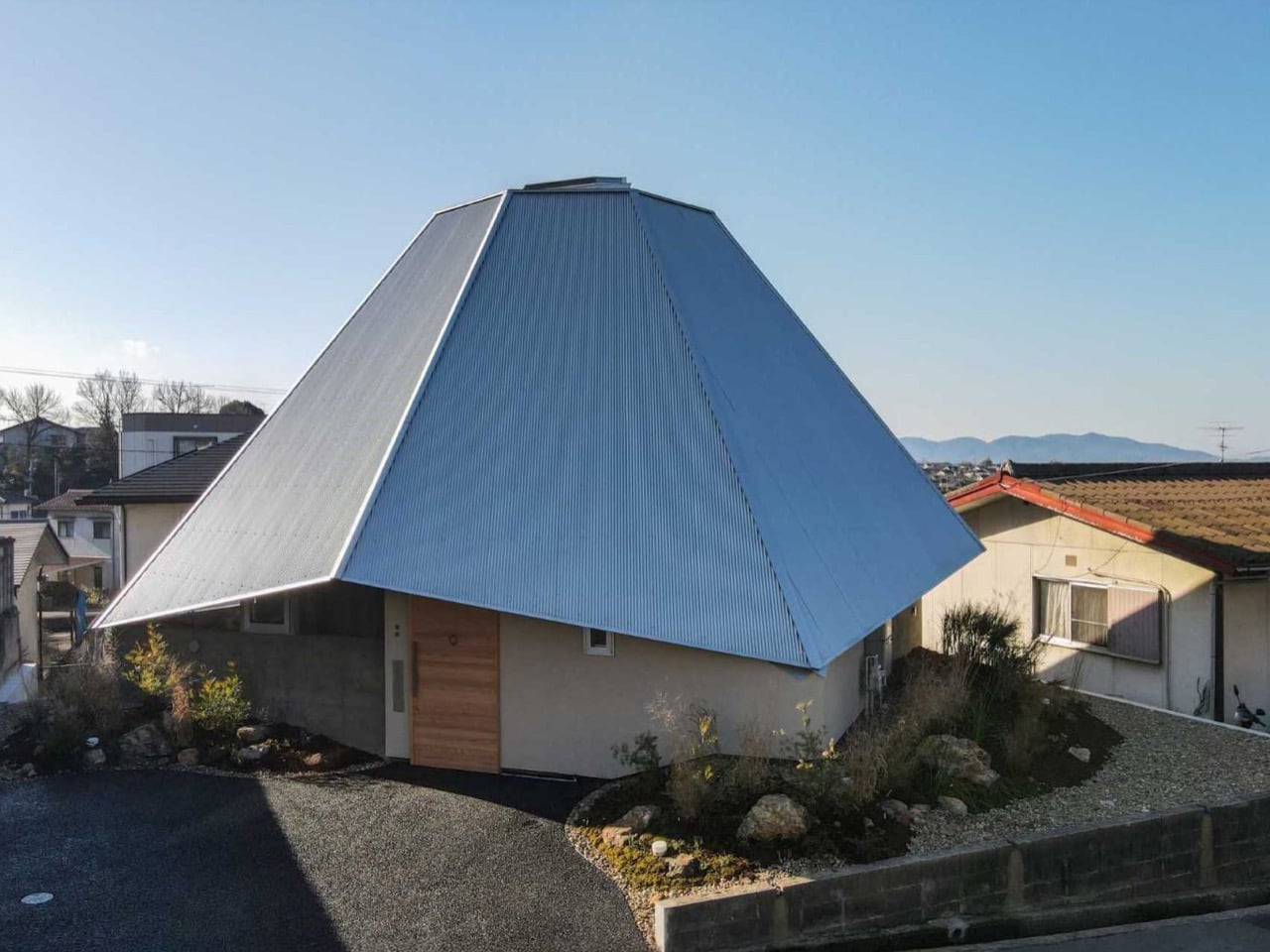

Spiders have been building radial webs for about 100 million years, spinning silk into a geometry that spreads weight around with an efficiency engineers spent centuries trying to copy. The web holds up because every strand pulls toward the center, so stress gets shared across the whole thing instead of piling up in one spot. Architecture has borrowed this trick before, from geodesic domes to tensile fabric roofs, but a regular family home almost never commits to the idea this literally. UID Architects looked at a spiderweb and saw a floor plan. In Fukuyama, Japan, they turned that into a house where a family of four actually lives.
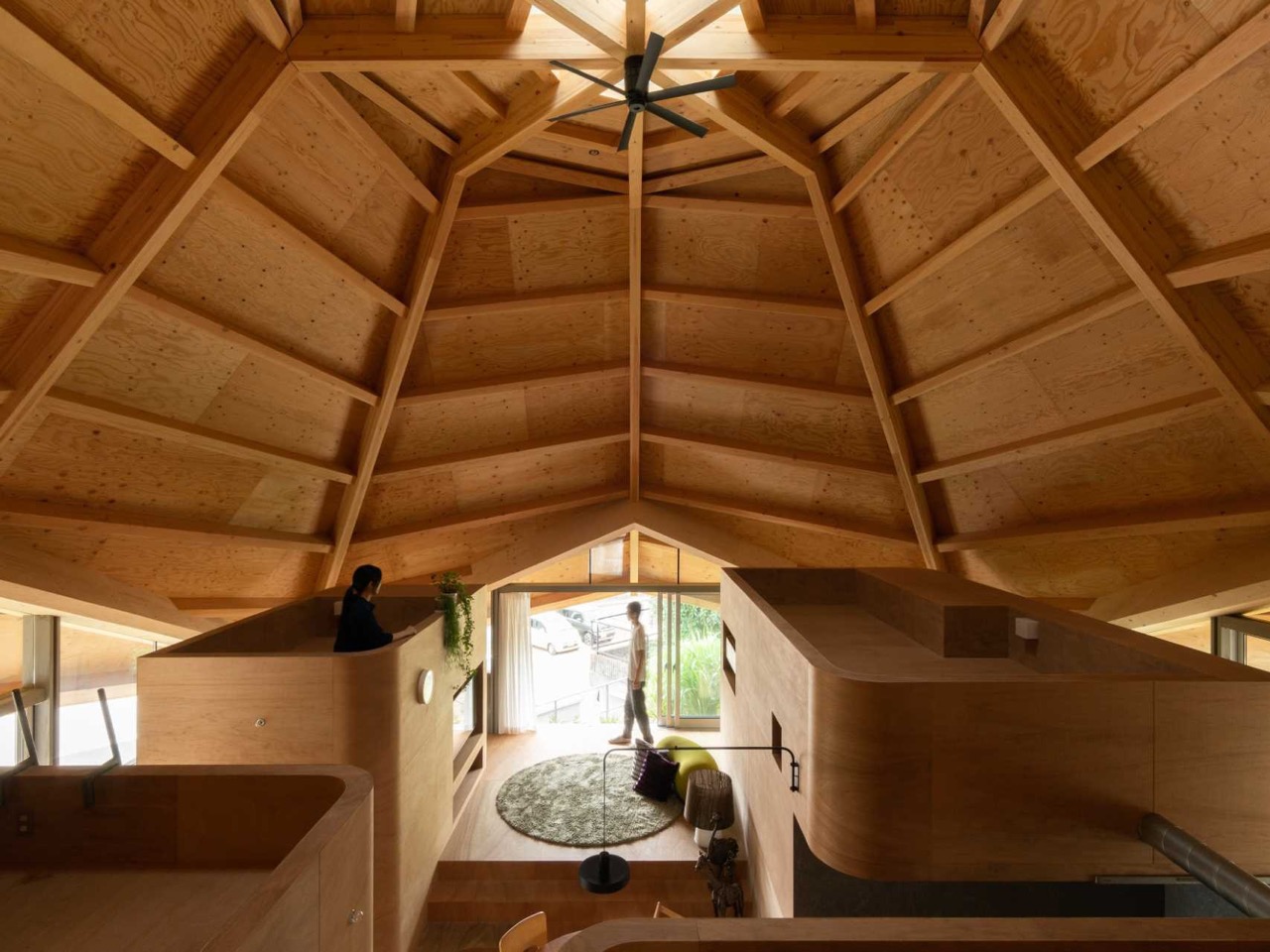
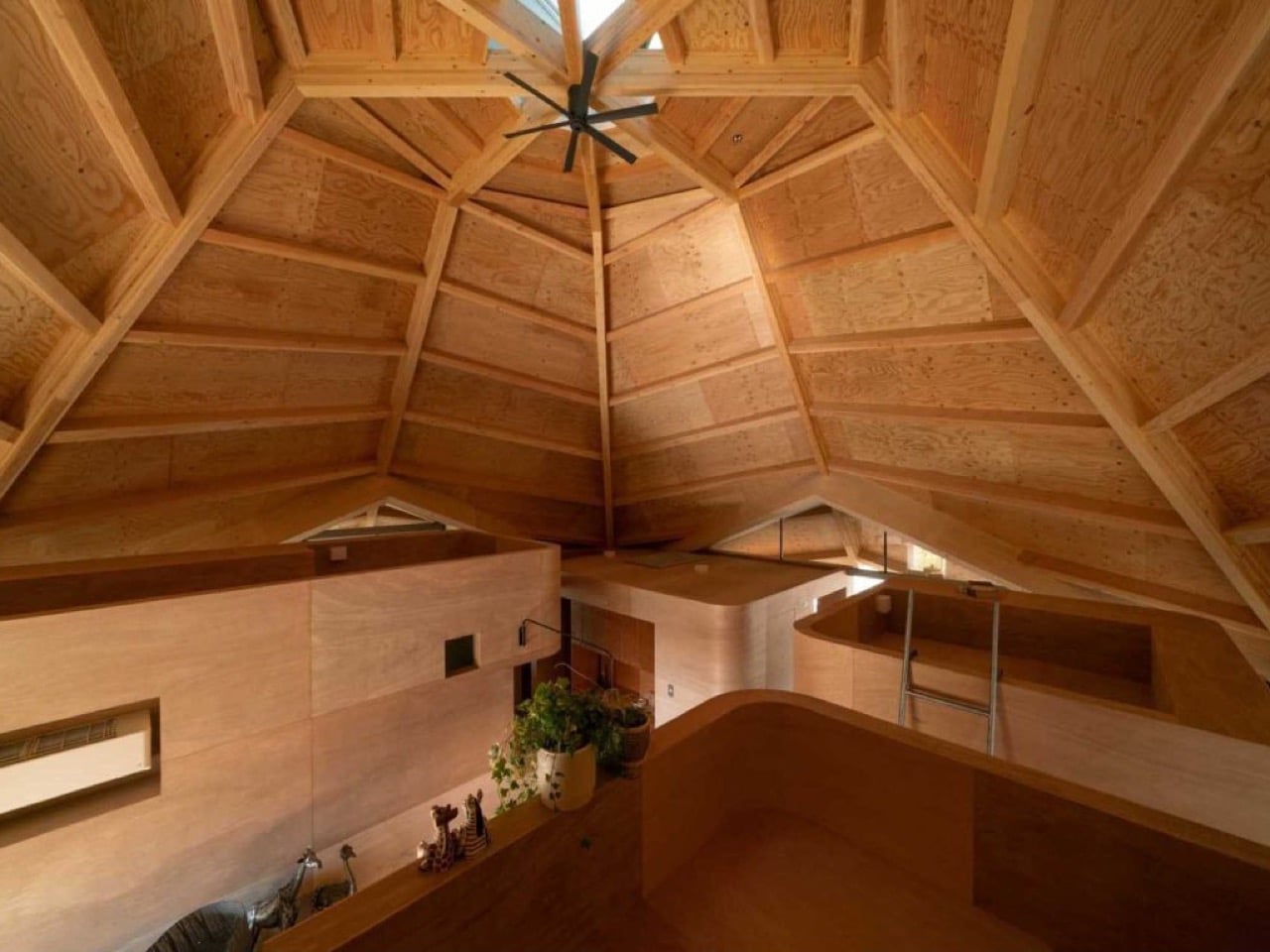
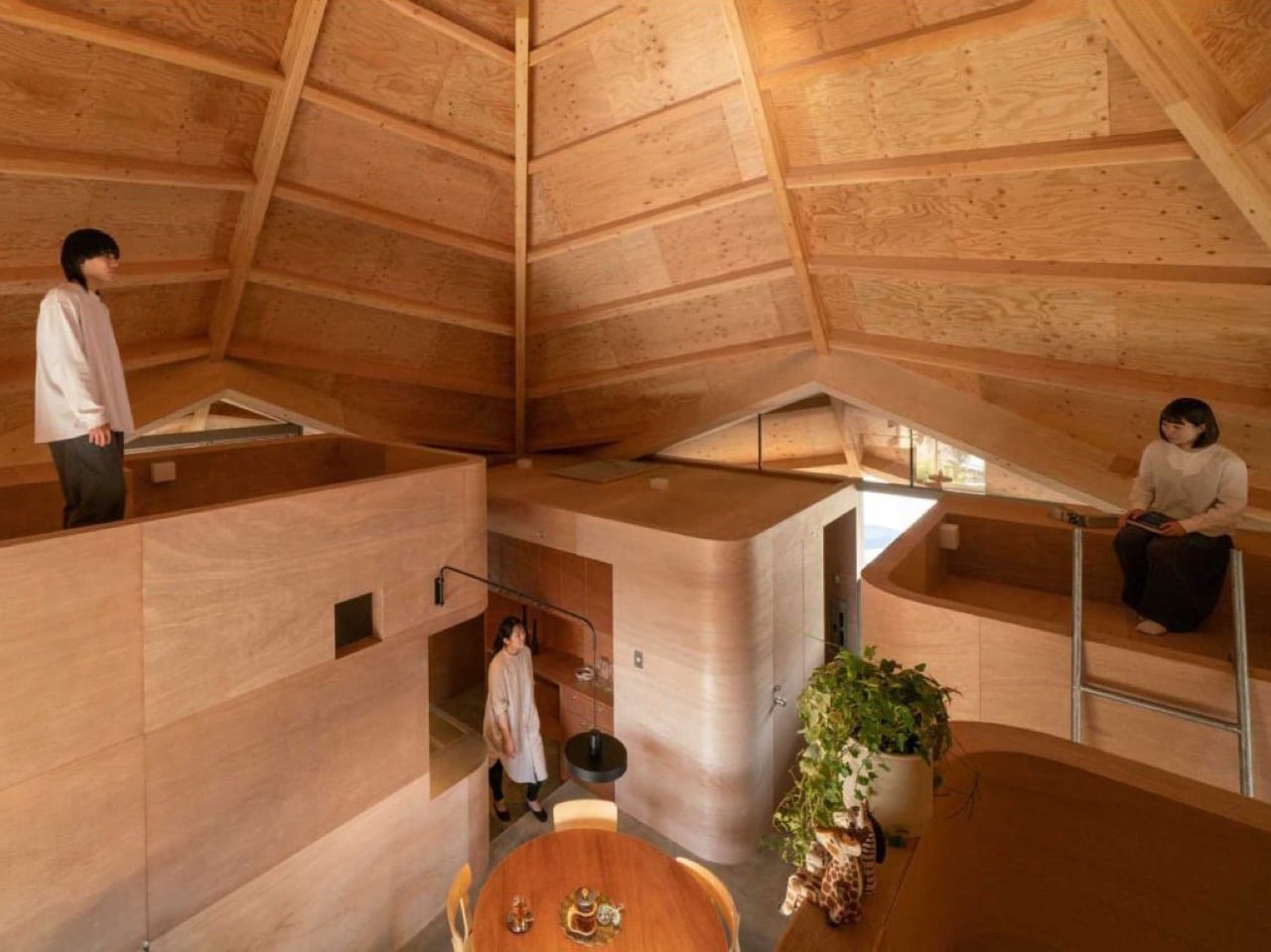
The home is an octagonal timber structure turned 45 degrees across its sloping suburban plot, topped by a roof whose beams all converge on a glazed opening at the center. UID balanced the entire volume on four points and wrapped triangular openings around the edges to pull in light from every direction. Inside, the roughly 828 square feet stays open on purpose, skipping conventional rooms in favor of four rounded plywood boxes that guide you through the space like a corridor. The dining table sits right under the middle of the web, putting the family’s social life at the structural heart of the house. It is a home you read from the ceiling down.
Designer: UID Architects
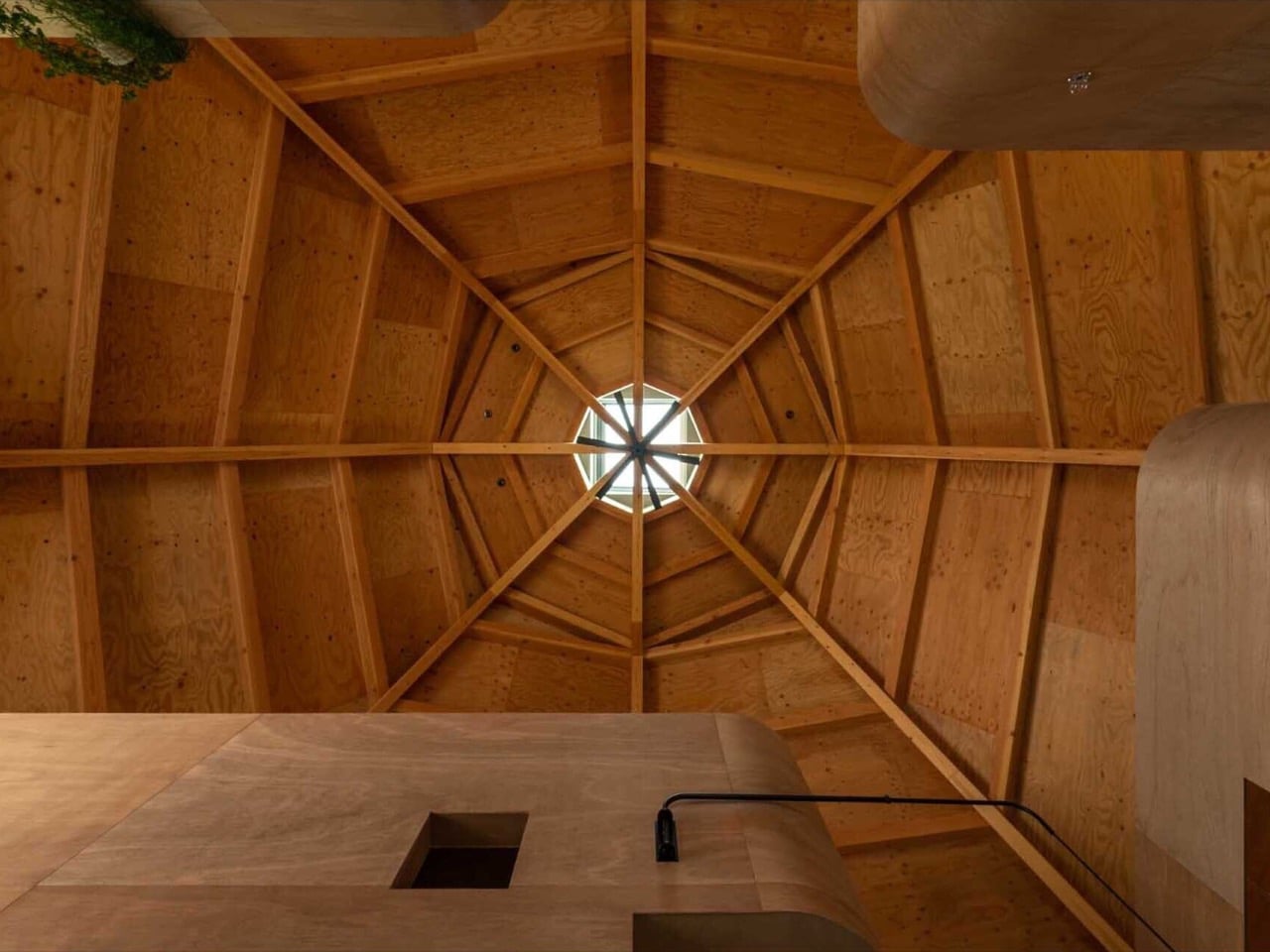
Eight timber beams run up from the perimeter and meet at a small glazed oculus that drops daylight straight into the middle of the plan. Looking up, the whole thing reads as a literal web frozen in wood, every strand under tension and pulling toward the same hub. From outside it flips into something else entirely, a faceted metal cone that rises over the neighboring rooftops like a spinning top someone left on the street. That shift between the warm wooden interior and the cool metal shell makes the house feel bigger and stranger than its footprint suggests. You read it as a tent from the driveway and a cathedral once you walk in.
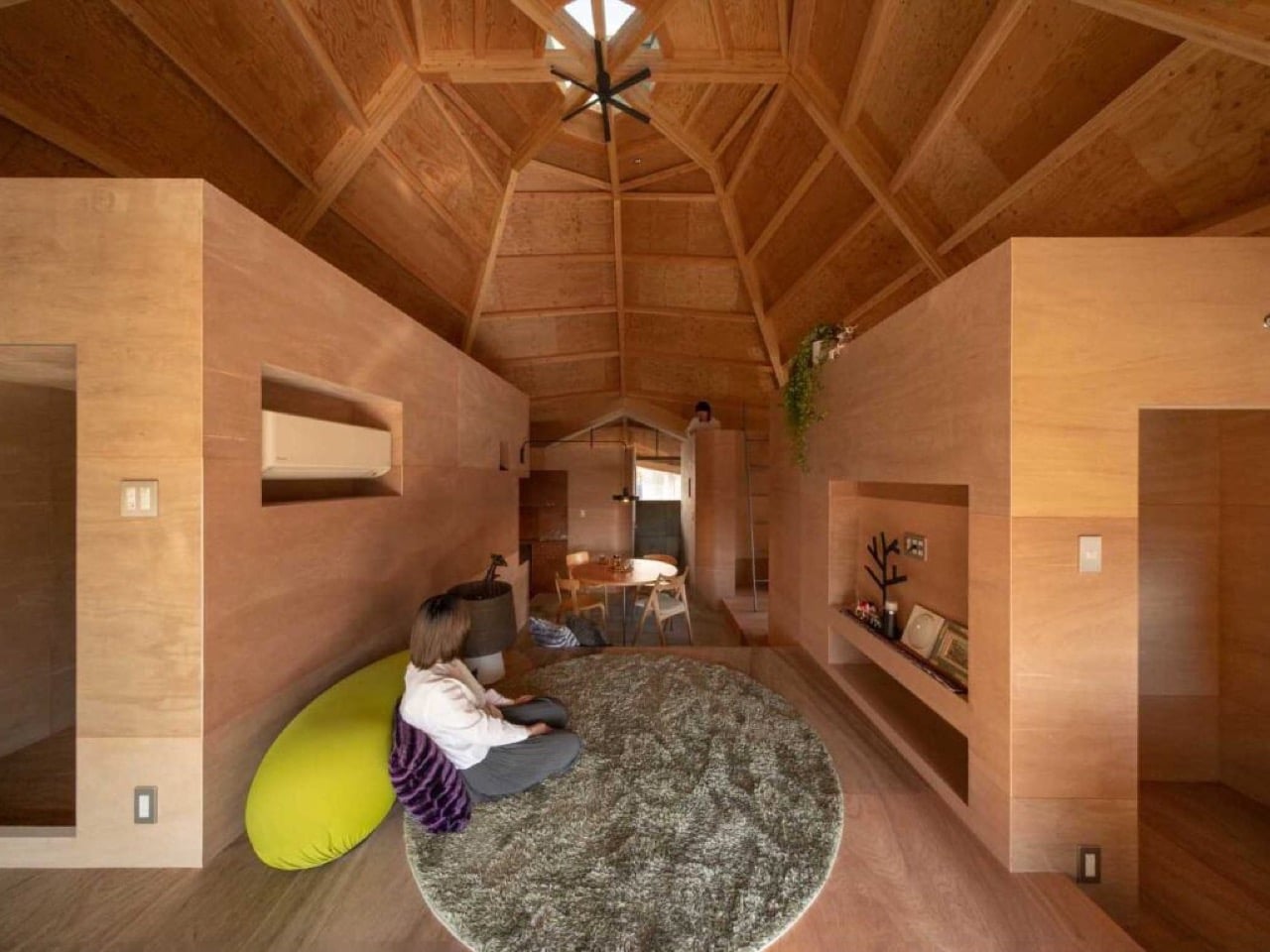
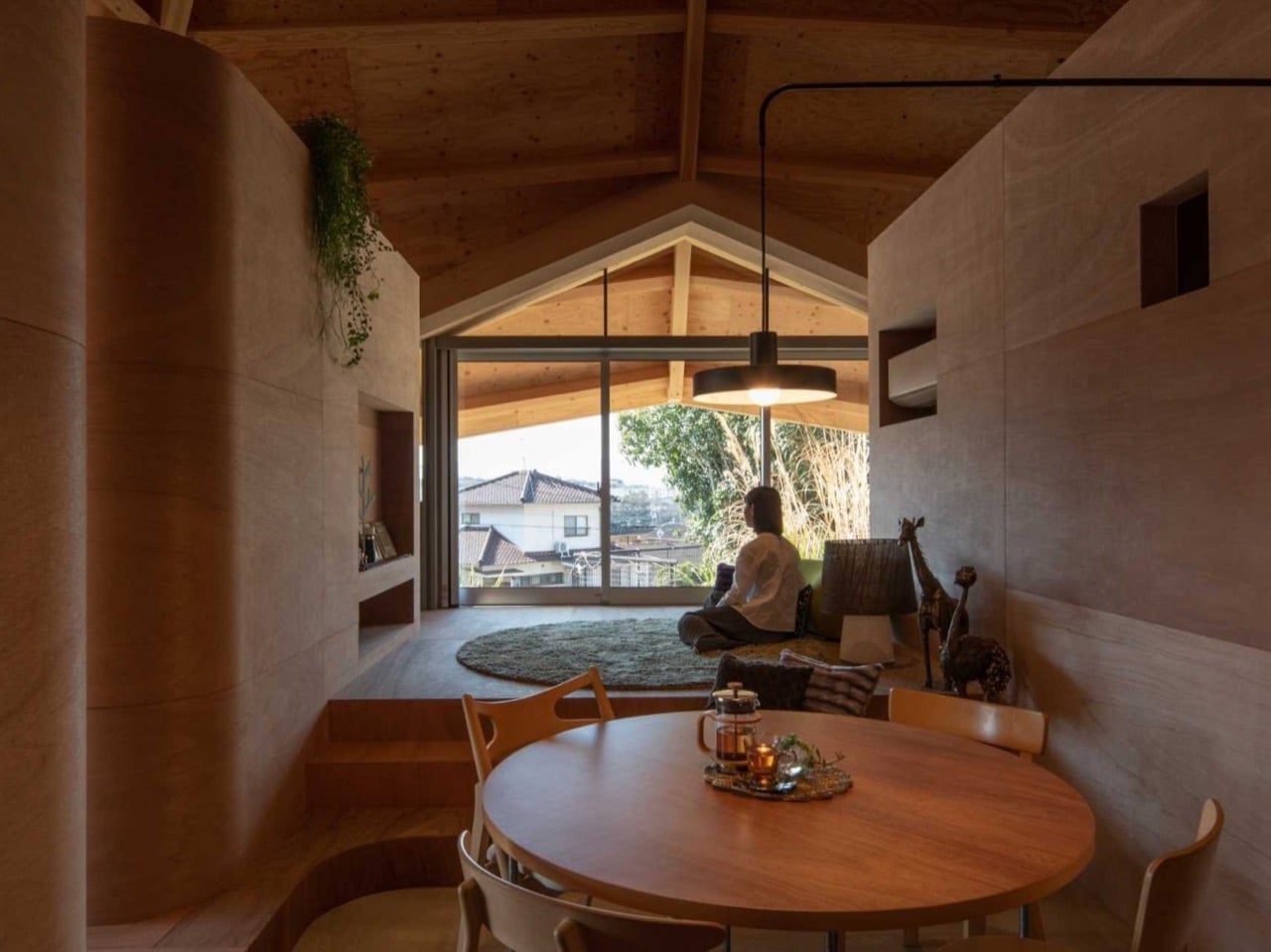
A sunken lounge with a round shag rug steps up to the raised dining level, so the open plan never collapses into one undifferentiated room. The four plywood boxes handle the rest of the organizing, standing low enough that the soaring ceiling flows over all of them without interruption. Their corners are rounded rather than sharp, a small move that softens the heavy plywood and keeps the place from feeling like a furniture warehouse. You move between these volumes the way you would wander through a small village, never quite walled in, never fully out in the open. The boxes suggest where to sit, cook, or gather without ever issuing an order.

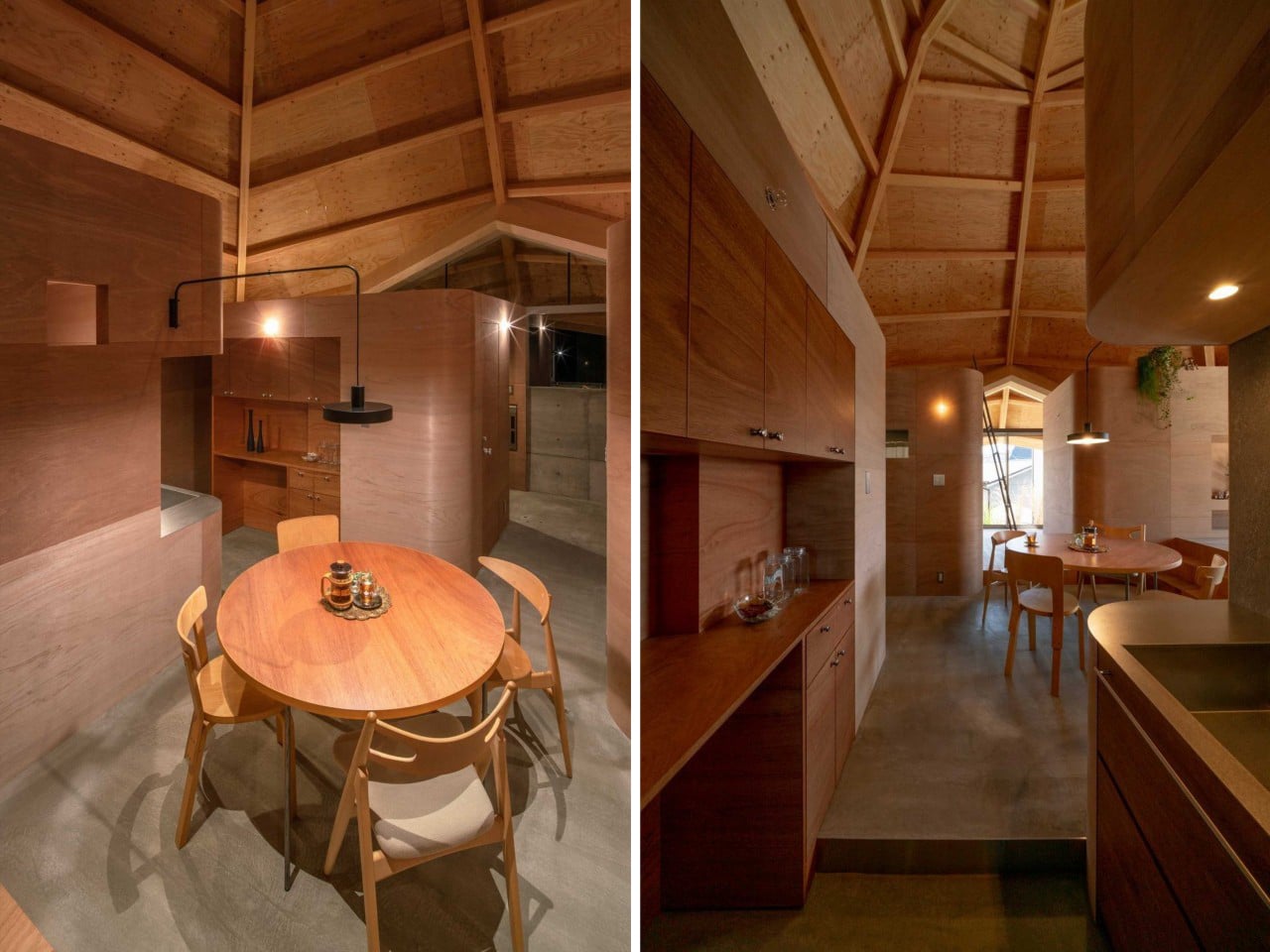
There are almost no permanent interior walls, which means the family can reassign space as their lives shift instead of calling a contractor. A corner that works as a play area now can quietly become a study, then a home office, all inside the same shell. Most homes get designed for one stage of family life and then fight the people living in them for the next thirty years. UID dodged that trap by building rooms that are really just zones, defined by furniture and habit rather than drywall. It is a smart, patient way to think about a house someone plans to keep for decades.
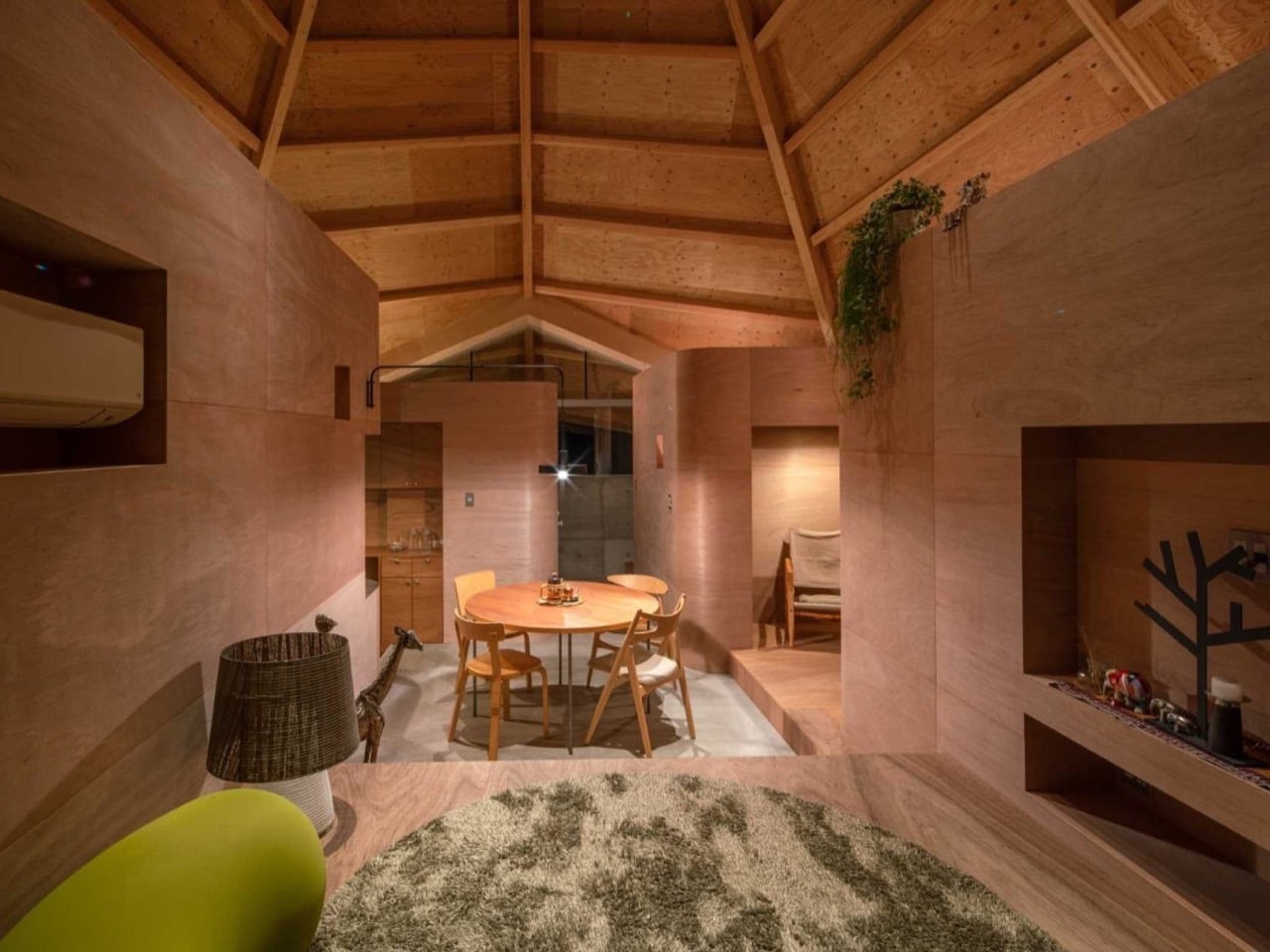
Plywood usually gets buried under veneer the moment a budget allows, treated as the cheap stuff you hide. UID does the opposite, letting warm plywood climb from the floor all the way up into the ceiling so the wood becomes both the structure and the finish. The one exception is the kitchen, where a darker, redder cabinetry tone marks it as its own little district within the larger space. That single shift in wood gives the cooking zone an identity without breaking the calm consistency holding the rest of the home together. Everywhere else, the material repeats until the house feels carved from a single block.
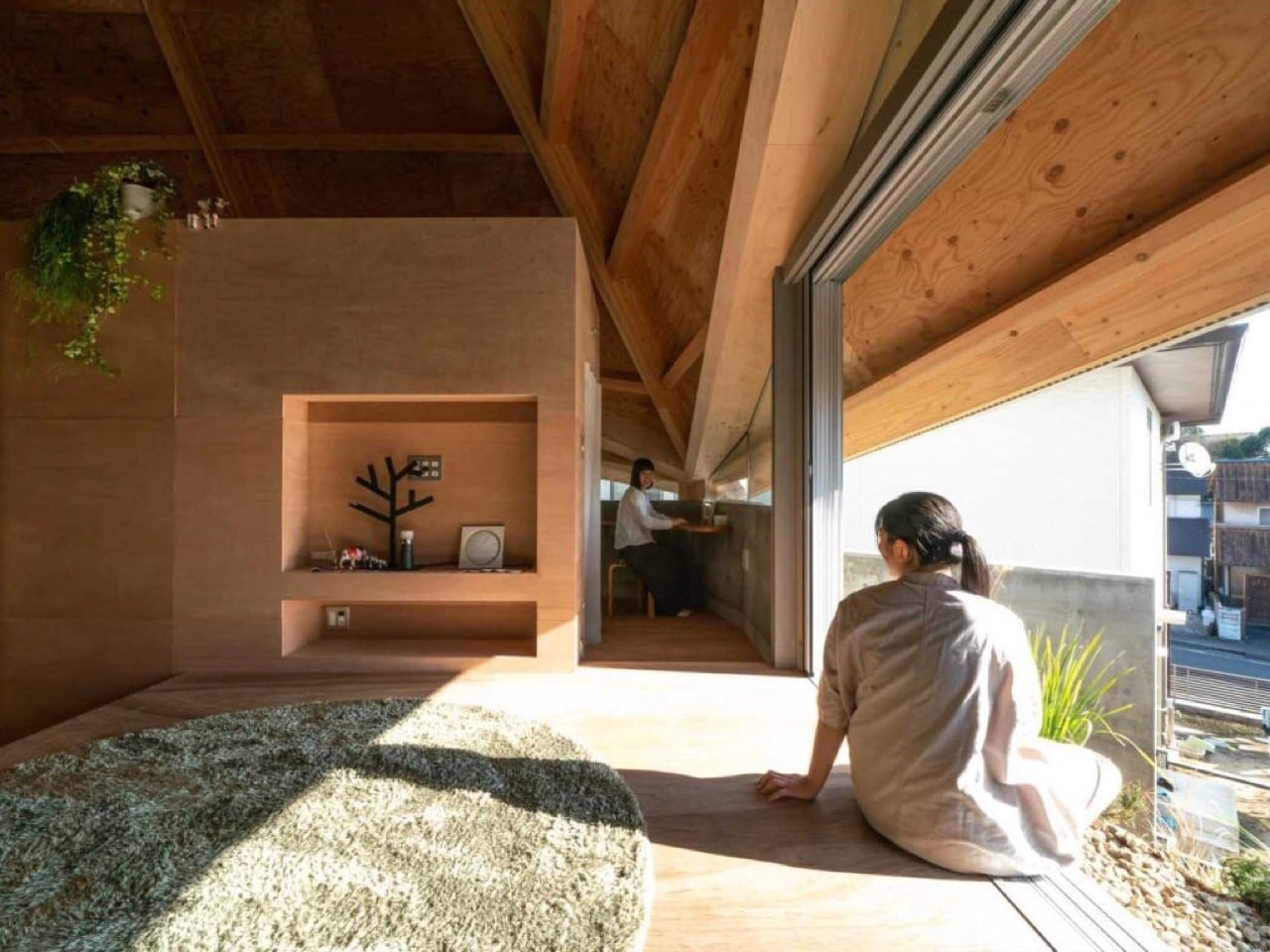
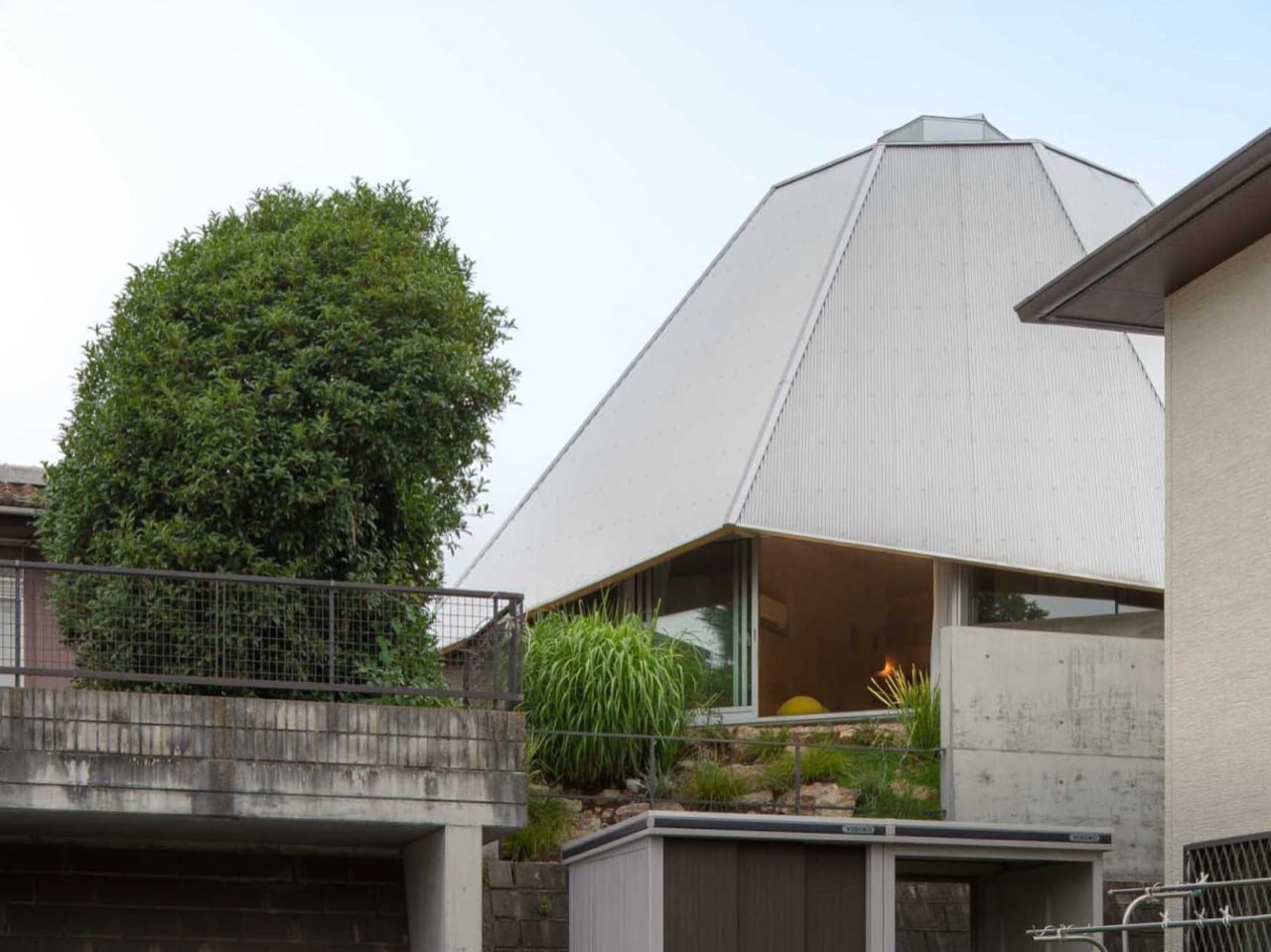
Building a giant timber web in a neighborhood of beige boxes takes real nerve, and the renderings could easily have collapsed into a gimmick once construction started. They did not, mostly because the geometry earns its keep, handling light, ventilation, privacy, and circulation in one gesture rather than decorating over them. Japan has a long history of small homes that punch far above their square footage, from the metabolist experiments of the sixties to the tight urban houses we cover constantly, and this one sits comfortably in that lineage. UID built a house that should still make sense long after the kids have grown and moved out. I keep thinking about who gets to redraw their own floor plan just by moving the furniture.