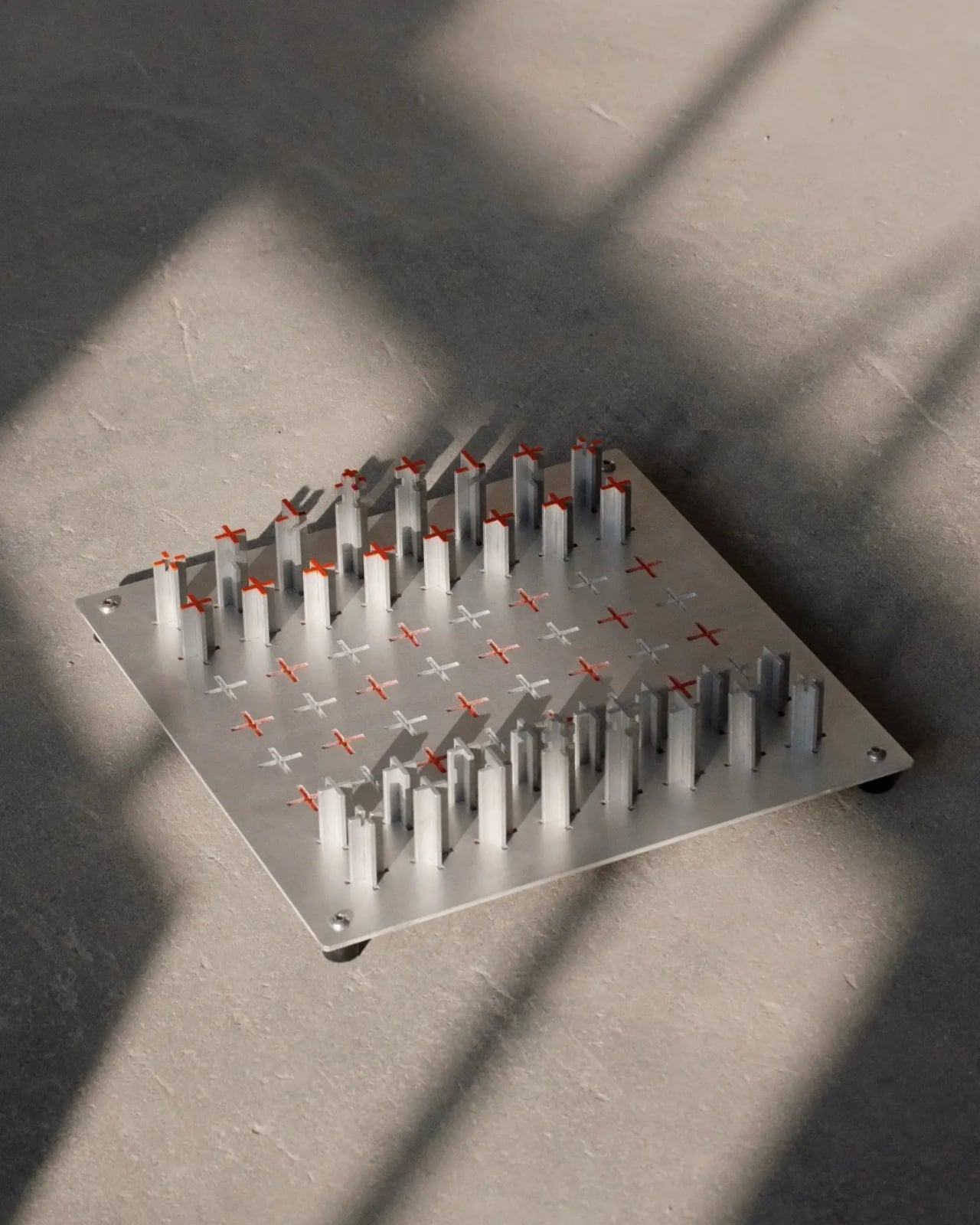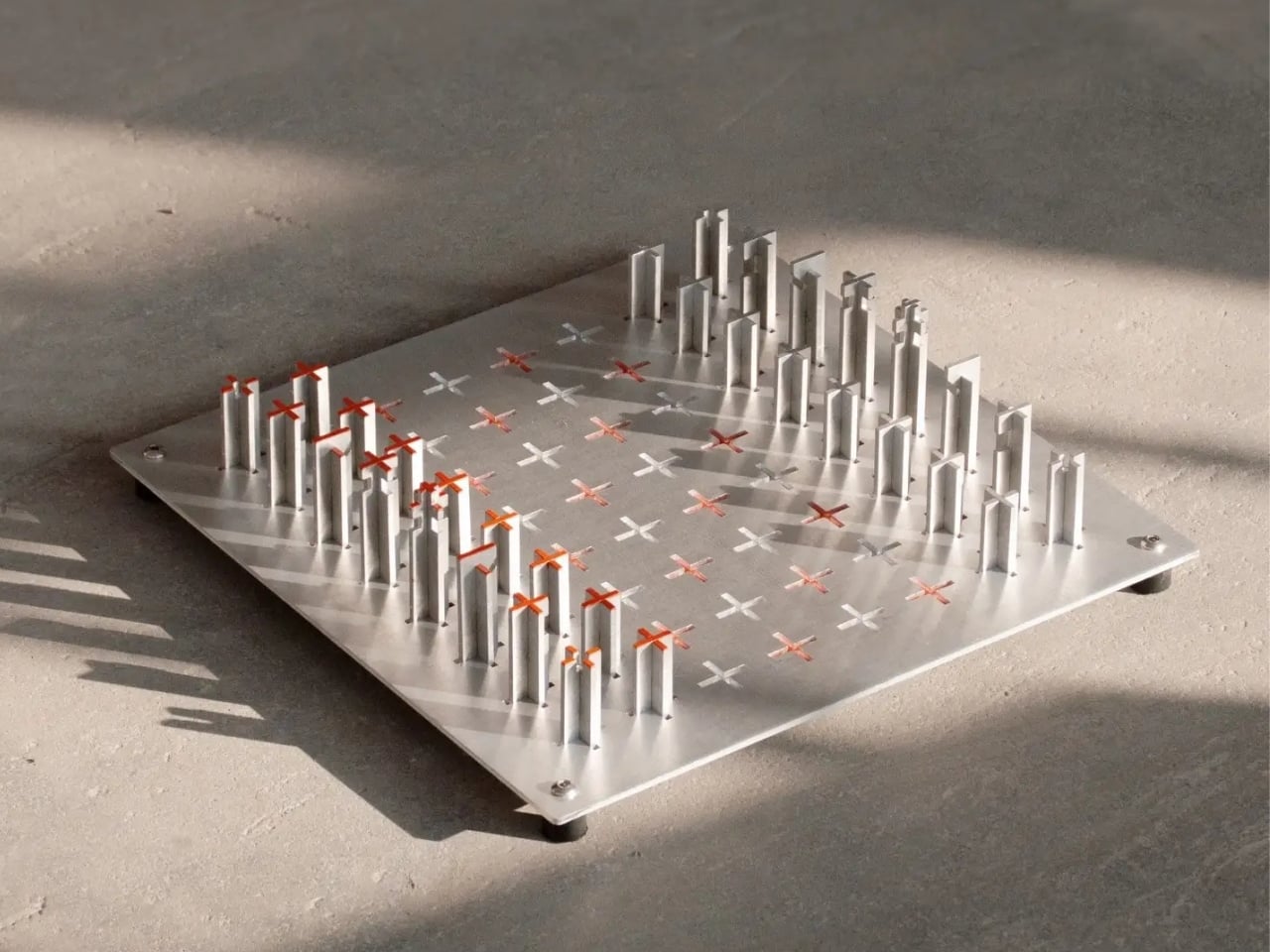

Chess has been around for roughly 1,500 years, and in that time, the chess set has been reimagined in almost every conceivable way. You’ve seen the hand-carved wooden sets passed down through generations, the marble ones that live on coffee tables as decor, the kitschy themed sets with medieval knights and castle towers. Every few years, someone tries to reinvent the most iconic board game in history, and most of those reinventions end up looking like a design school project that got a little too excited. Christian Borger’s CS-01 is different, and I think it matters that it’s different in the quietest possible way.
Borger, an architect and industrial designer based in New York, approaches furniture and objects the way an engineer approaches a problem: with an obsession over materials, weight, and structural honesty. His portfolio, if you haven’t gone through it yet, is worth a slow afternoon. It’s full of lightweight furniture experiments, chairs built from tensioned fabric and skeletal frames, tables that look like they’re barely touching the ground. CS-01 follows that same design instinct, just compressed into a 14 x 14 x 5-inch object that you play chess on.
Designer: Christian Borger
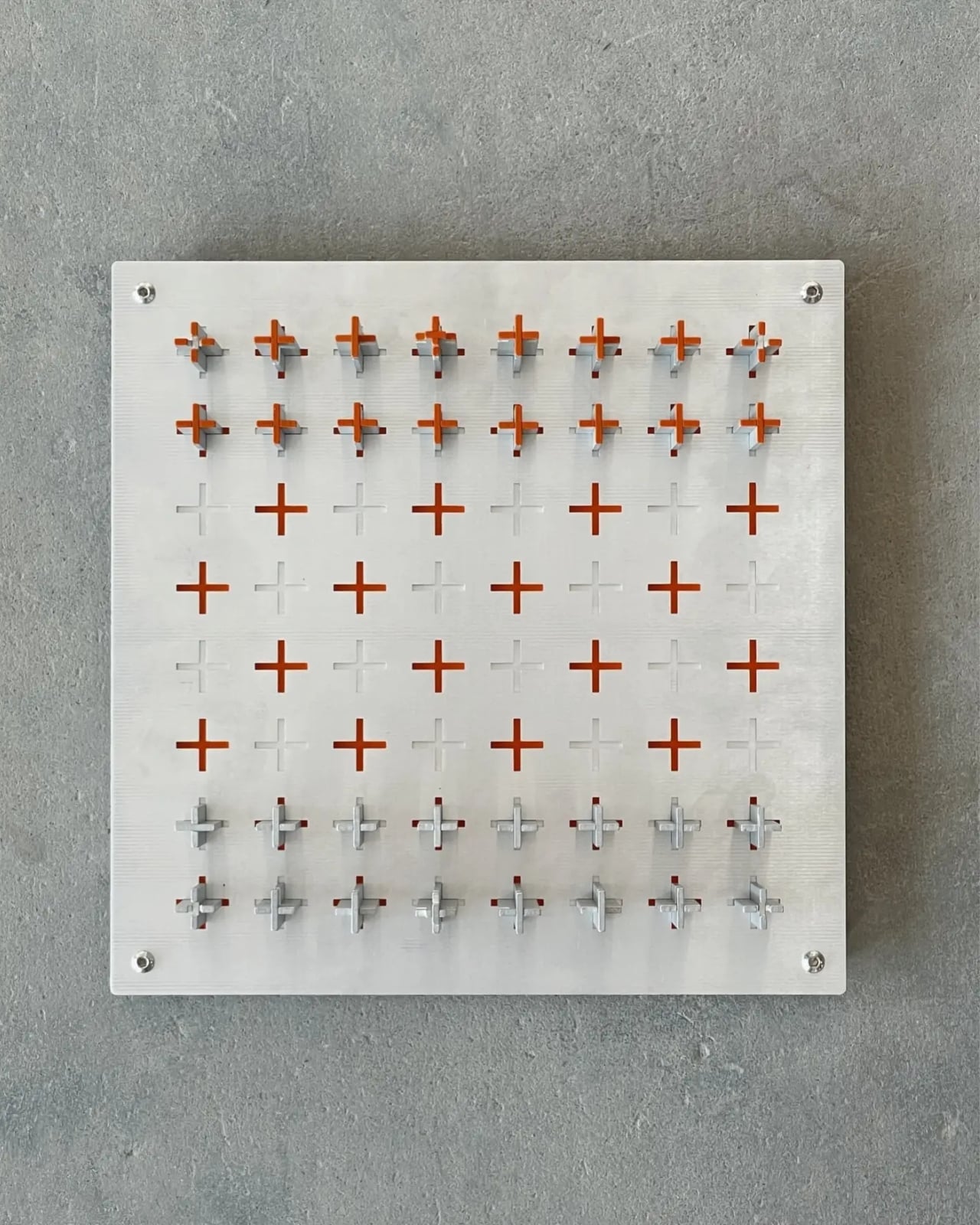

The set is built from aluminum, stainless steel hardware, rubber bumpers, and enamel paint. Powder-coated aluminum surfaces contrast against exposed stainless steel, and that word “exposed” matters here. Nothing about the assembly hides from view. The hardware isn’t tucked away or finished into invisibility. It’s right there, part of the aesthetic, because Borger seems to believe that a well-made object shouldn’t have to be embarrassed about how it’s put together. That kind of structural honesty doesn’t show up in chess sets often enough, and it’s genuinely refreshing to see it applied somewhere so unexpected.
The pieces sit at five inches tall, which keeps the whole set compact enough to live on a desk, a shelf, or a credenza without demanding too much space or attention. It integrates into a room rather than dominating one. That restraint is intentional. The design privileges clarity and permanence over decoration, which is a principle worth sitting with. Not because it’s some kind of grand manifesto, but because it’s a genuinely difficult thing to execute. Decoration is the easy default. Clarity requires real decisions.
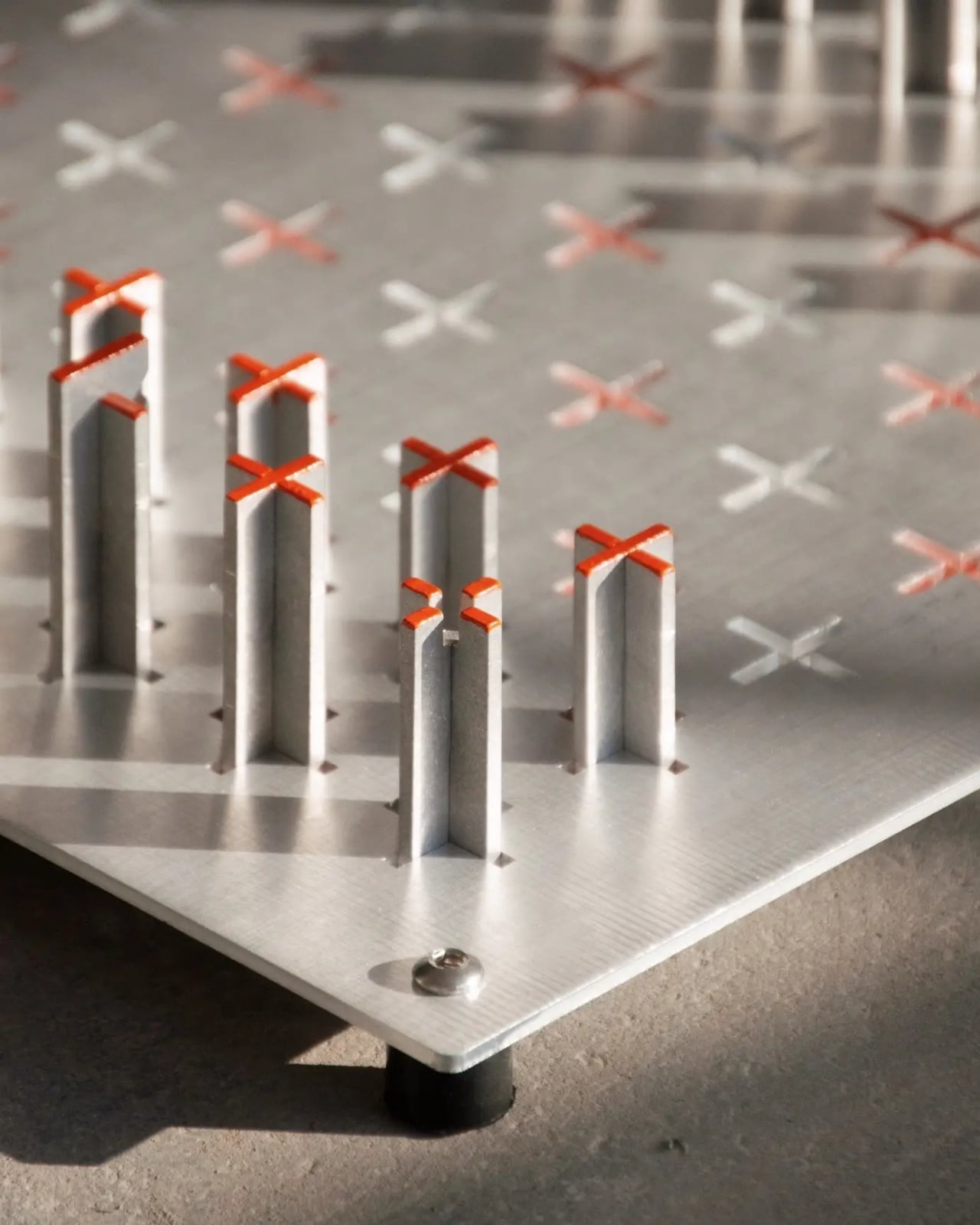
I’ll be upfront: there’s a legitimate conversation to be had about whether chess sets even need to be redesigned. The traditional Staunton set, which has been the global standard since the 1800s, is already a near-perfect solution. It’s legible, tactile, and elegant in its conventionality. Reinventing it for the sake of reinventing it usually results in something beautiful but unplayable, or worse, something that’s more display piece than game. CS-01 seems fully aware of that tension. It doesn’t abandon functionality to make a statement. The pieces are still readable by proportion and hierarchy. The board is still a board.
Where it distinguishes itself is in how it asks you to notice the object itself, not just the game being played on it. The cold touch of powder-coated aluminum. The small, deliberate weight of a piece lifted and placed. The hardware that catches light at the corner of your vision while you’re thinking three moves ahead. It turns the physical act of playing into something worth paying attention to, which is a pretty ambitious ask from a chess set, and one that CS-01 quietly delivers on.
Borger describes it as a prototype, and it still carries that energy of something being actively worked out rather than finished and packaged. That’s part of what makes it compelling. It reads less like a product and more like a point of view, one that argues you shouldn’t have to choose between an object that performs well and one that rewards close attention. That’s a harder case to make than it sounds. The most interesting design objects are the ones that make you rethink something you assumed was already solved. A chess set, of all things. Here we are.