
Every coat of paint on every car that ever rolled through an American assembly line left a ghost of itself somewhere. On the jigs, the racks, the fixtures that held body panels steady while the spray guns did their work, microscopic layers of overspray built up over years into something dense and multicolored and entirely unplanned. The auto industry called it waste. Lapidary artists eventually called it Fordite, and a small, obsessive collector community has been hunting it ever since.
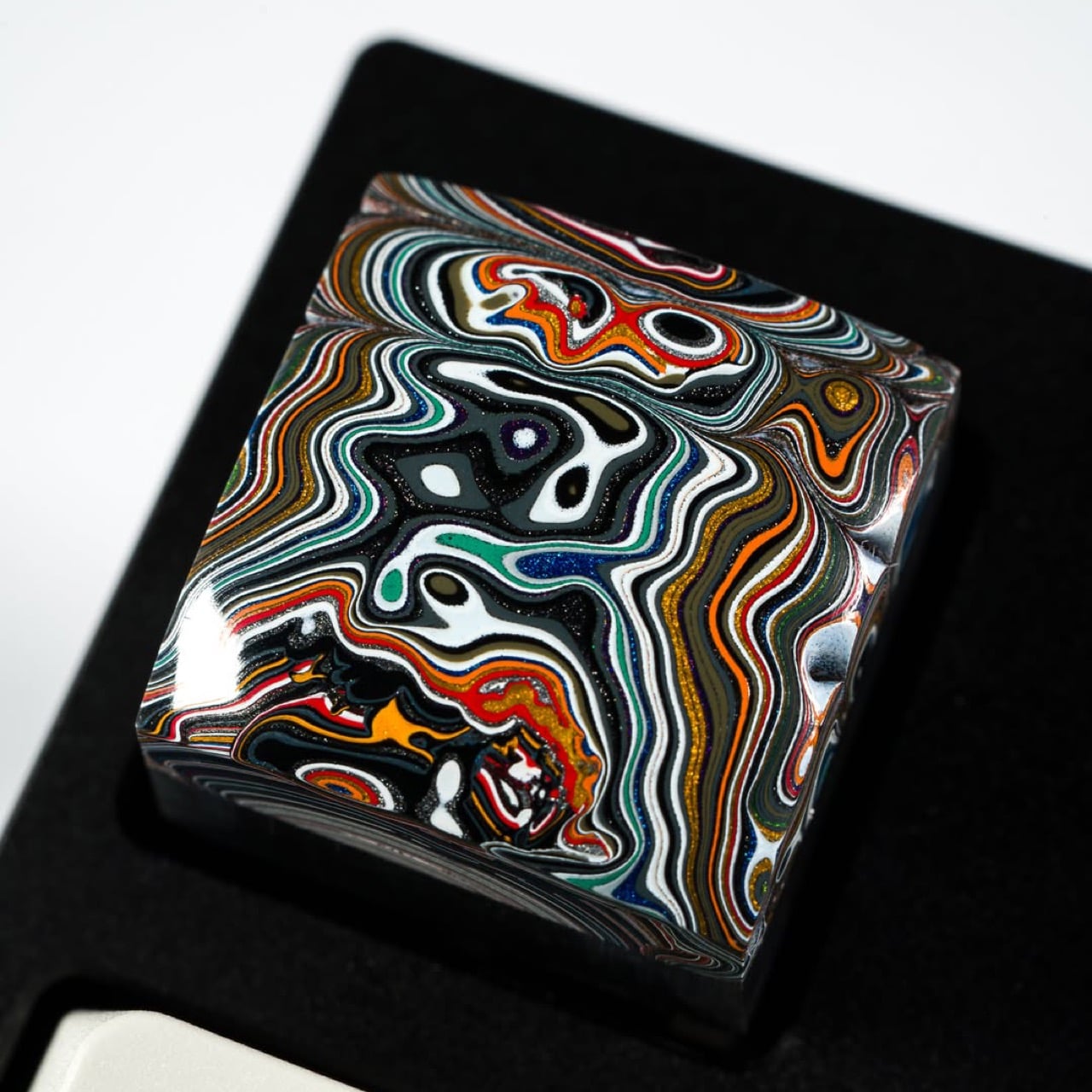
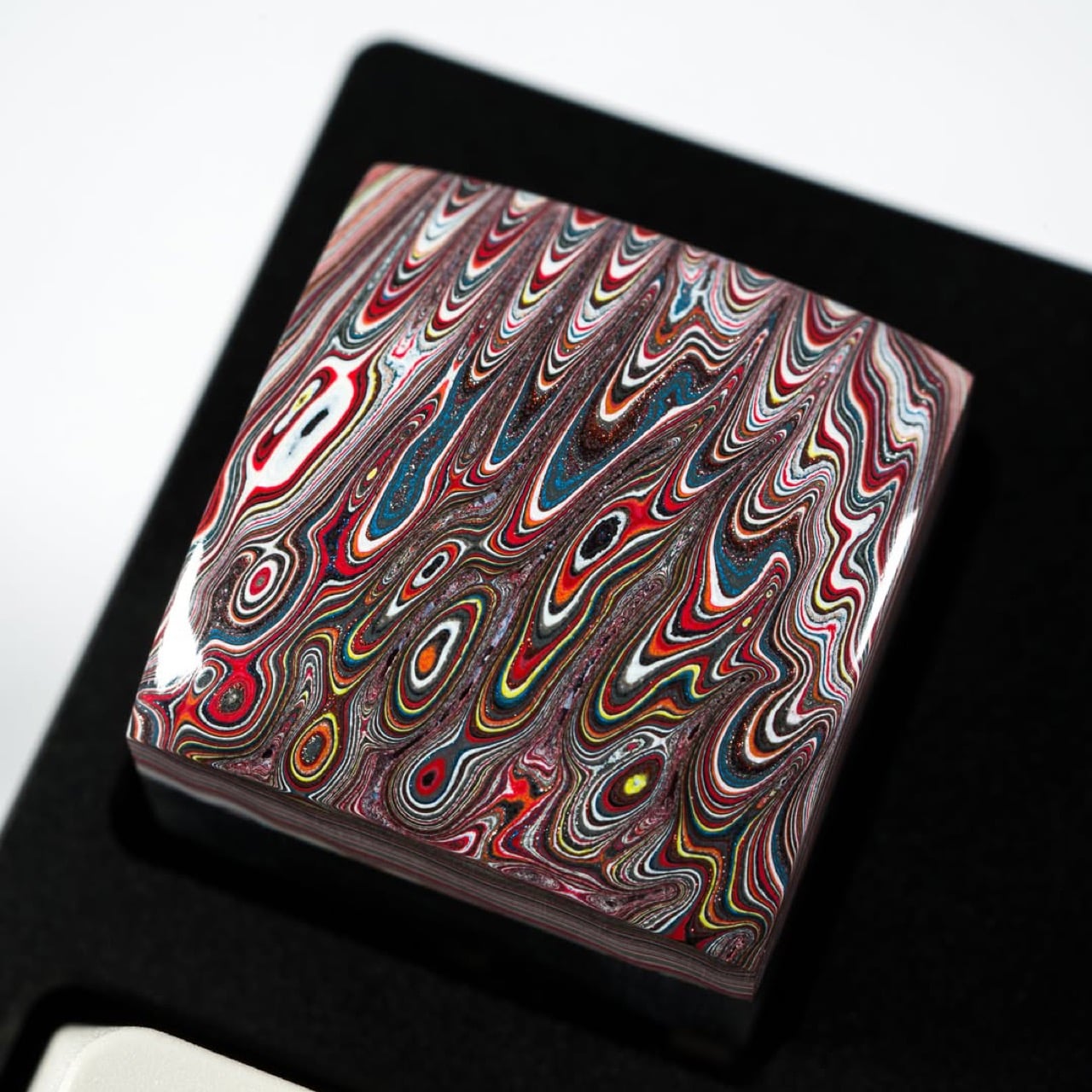
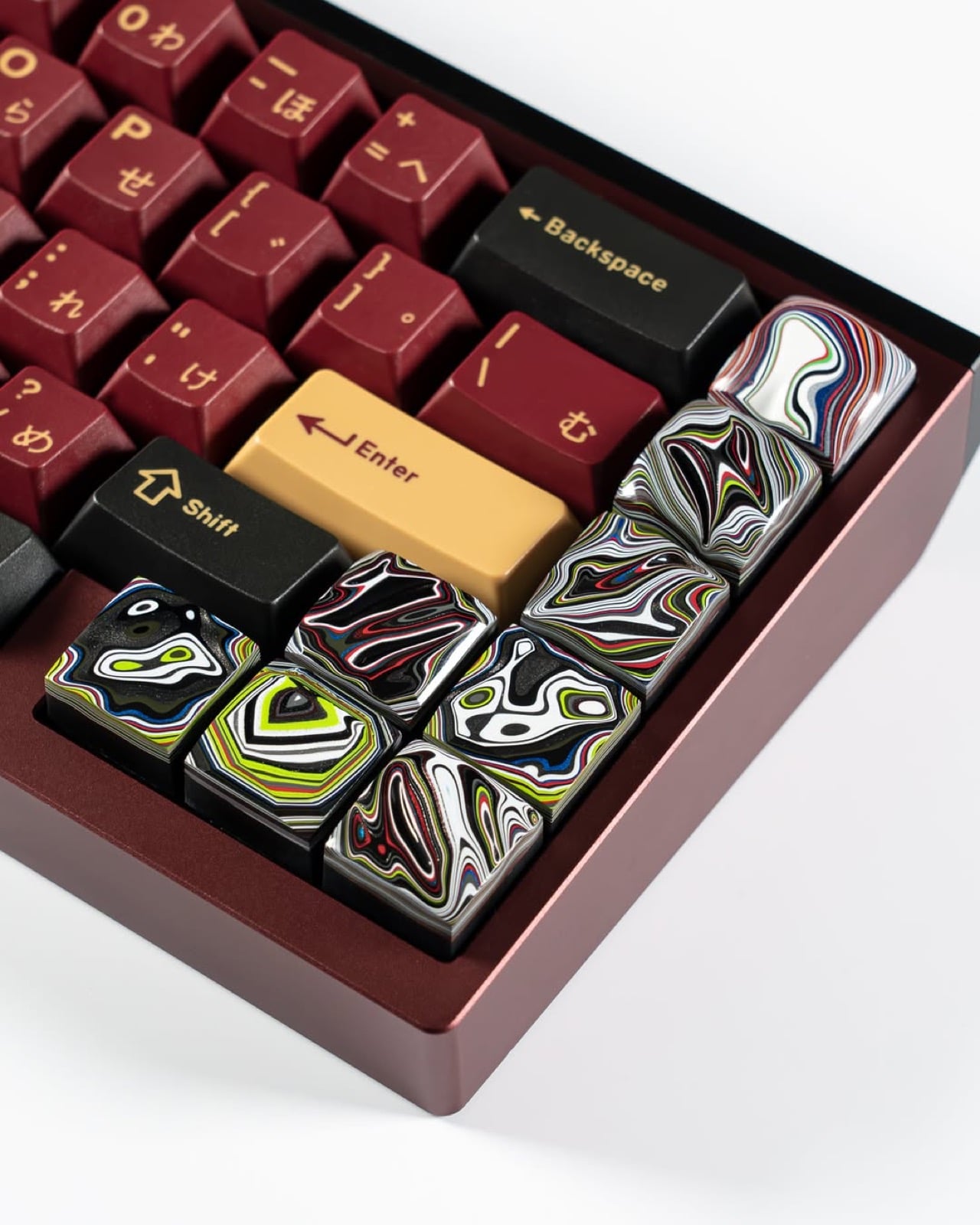
Carter Stay of Keycap Quarry is hunting it too, but with a different destination in mind. His Fordite keycap collection draws raw material from Ford, Jeep, Kenworth, and Corvette production sources, each bringing a distinct color palette shaped by decades of model-year decisions made by designers who never imagined their work ending up on a mechanical keyboard. Stay cuts, polishes, and stems each piece by hand, and the cross-sections that emerge look like nothing the artisan keycap world has produced before.
Designer: Carter Stay (Keycap Quarry)
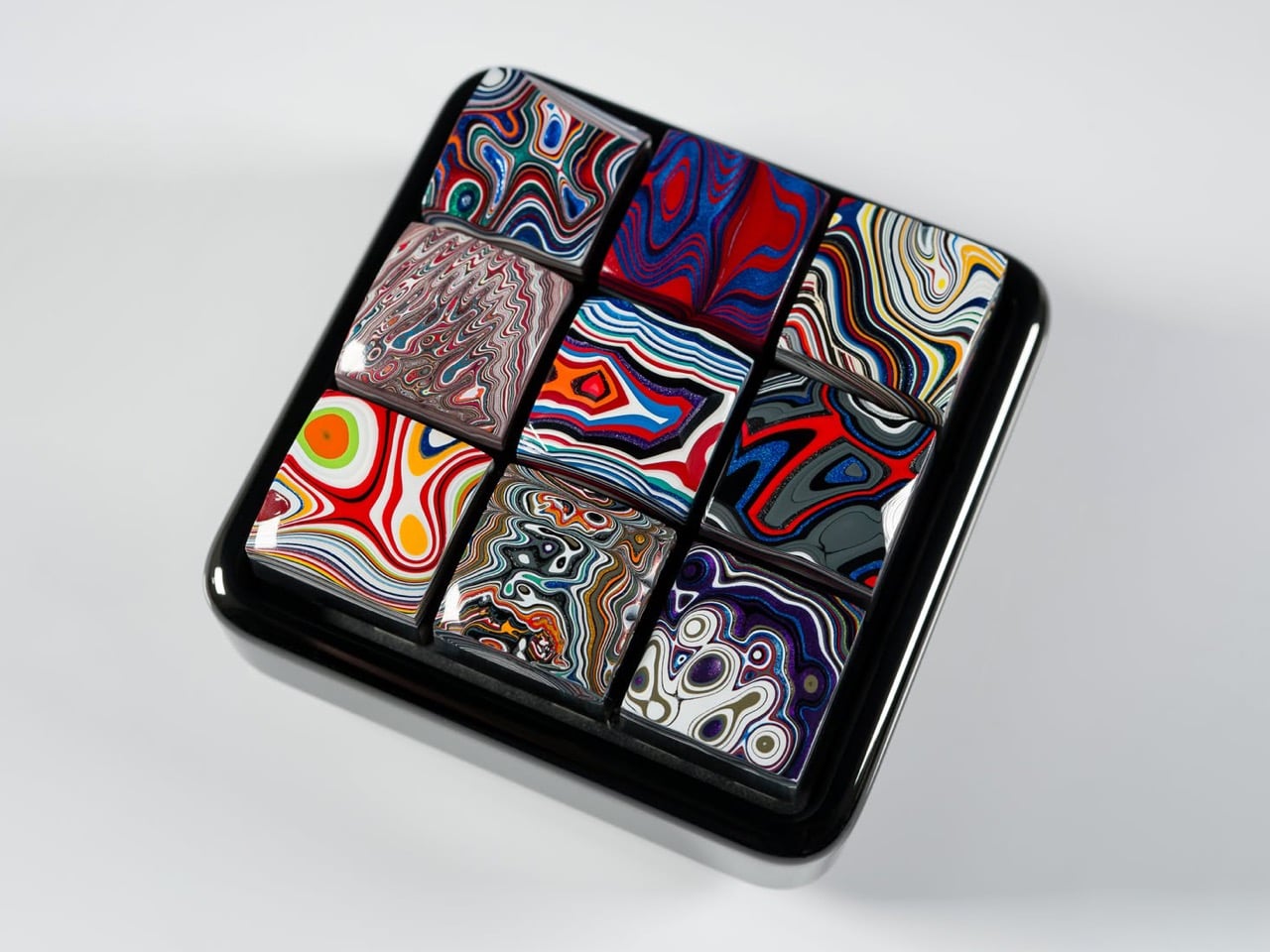
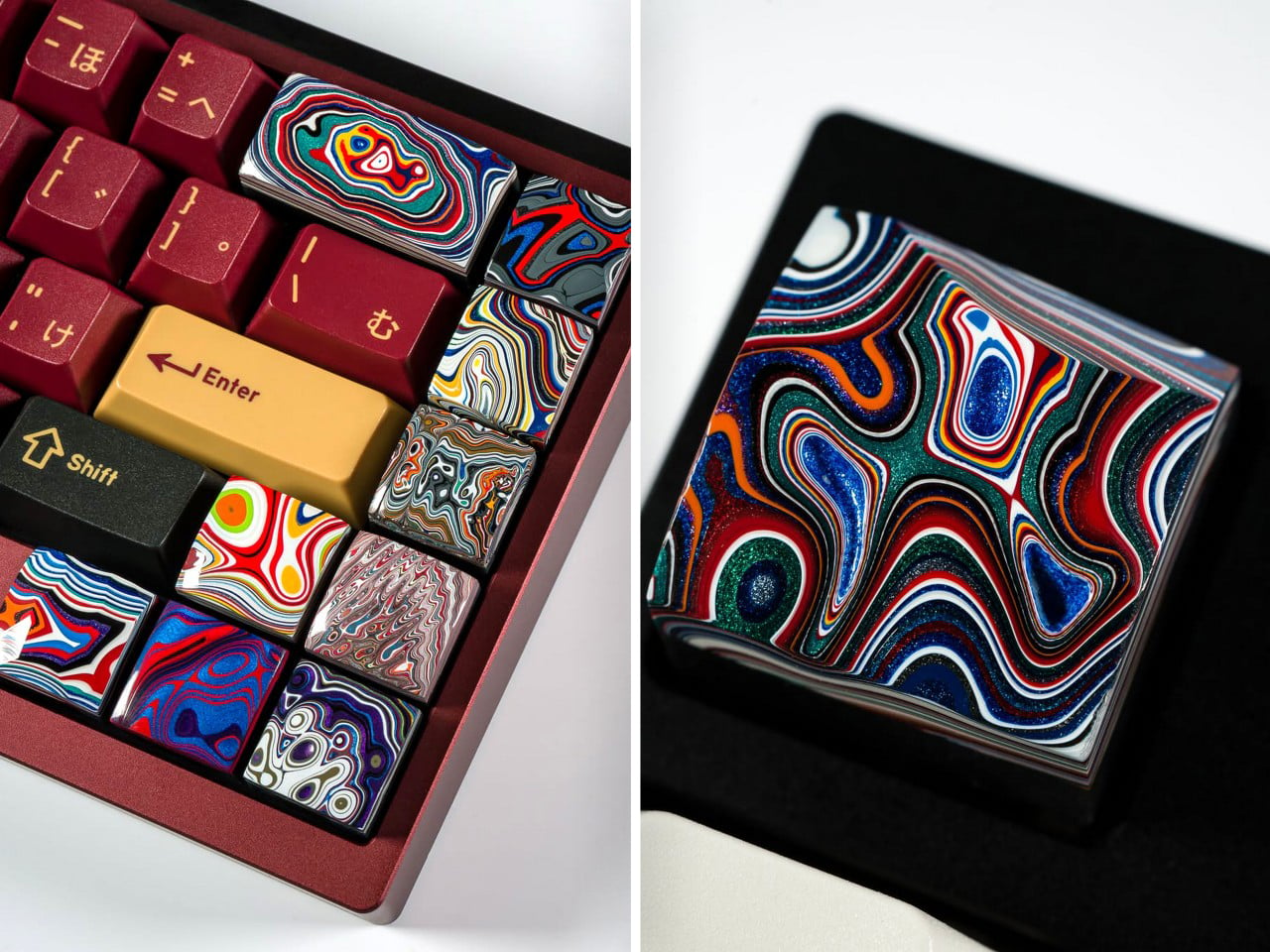
The striation pattern on every cap is a direct consequence of which assembly line the source block came from, how many model years it absorbed, and precisely where in the slab Stay’s saw made contact. A cut taken two millimeters in any direction produces an entirely different composition, which means every piece in this collection is unrepeatable by definition. No two caps share the same color sequencing, the same strata width, or the same relationship between the metallic flake layers and the solid paint coats sandwiching them. The material arrives pre-authored, and Stay’s job is to find the best cross-section hiding inside each block and liberate it with a polishing wheel.
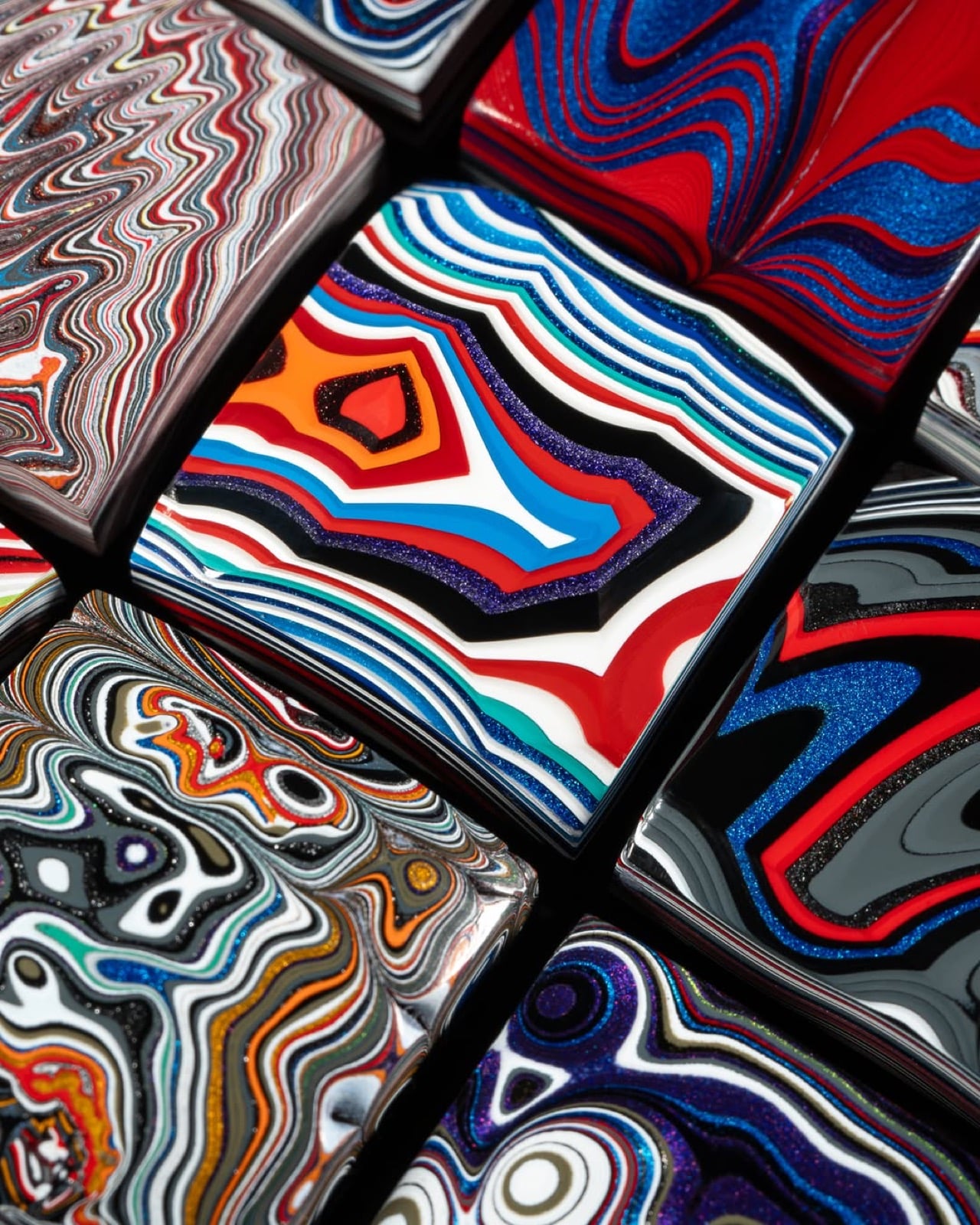

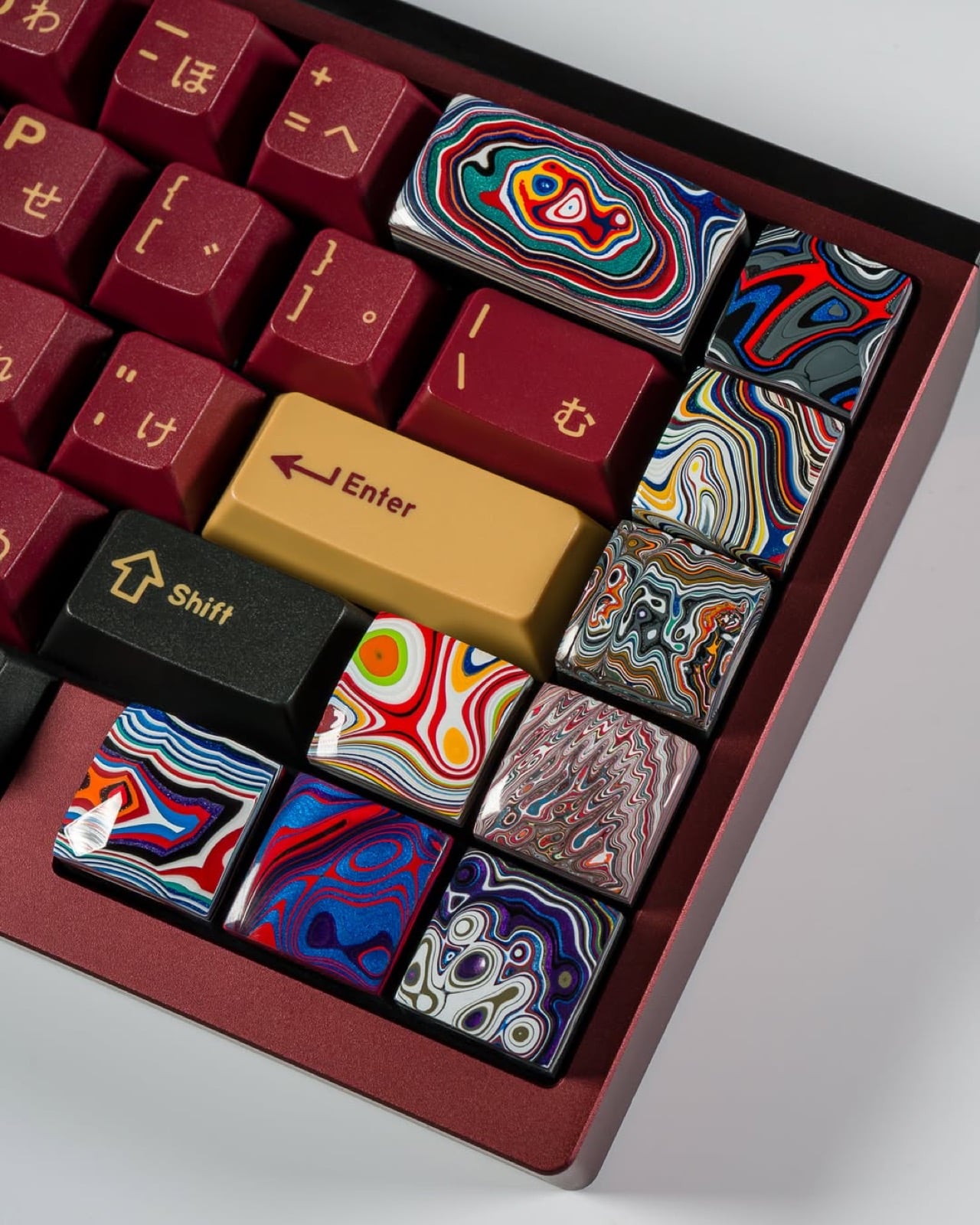
The four source materials produce genuinely distinct visual identities, and spending time with the photos makes that difference legible. Ford stock tends toward broad sweeping color fields with strong primaries, bold and almost graphic when polished flat. Corvette material runs hotter, with tighter striations and a higher frequency of metallic flake layers that shift under different lighting conditions in a way that photographs can only partially capture. Kenworth, coming from commercial truck production rather than passenger vehicles, carries heavier industrial greys and blacks punctuated by surprising flashes of color that read almost like geological intrusions into an otherwise muted palette. Jeep stock sits between utilitarian and vivid, reflecting decades of a brand that never fully committed to either identity.
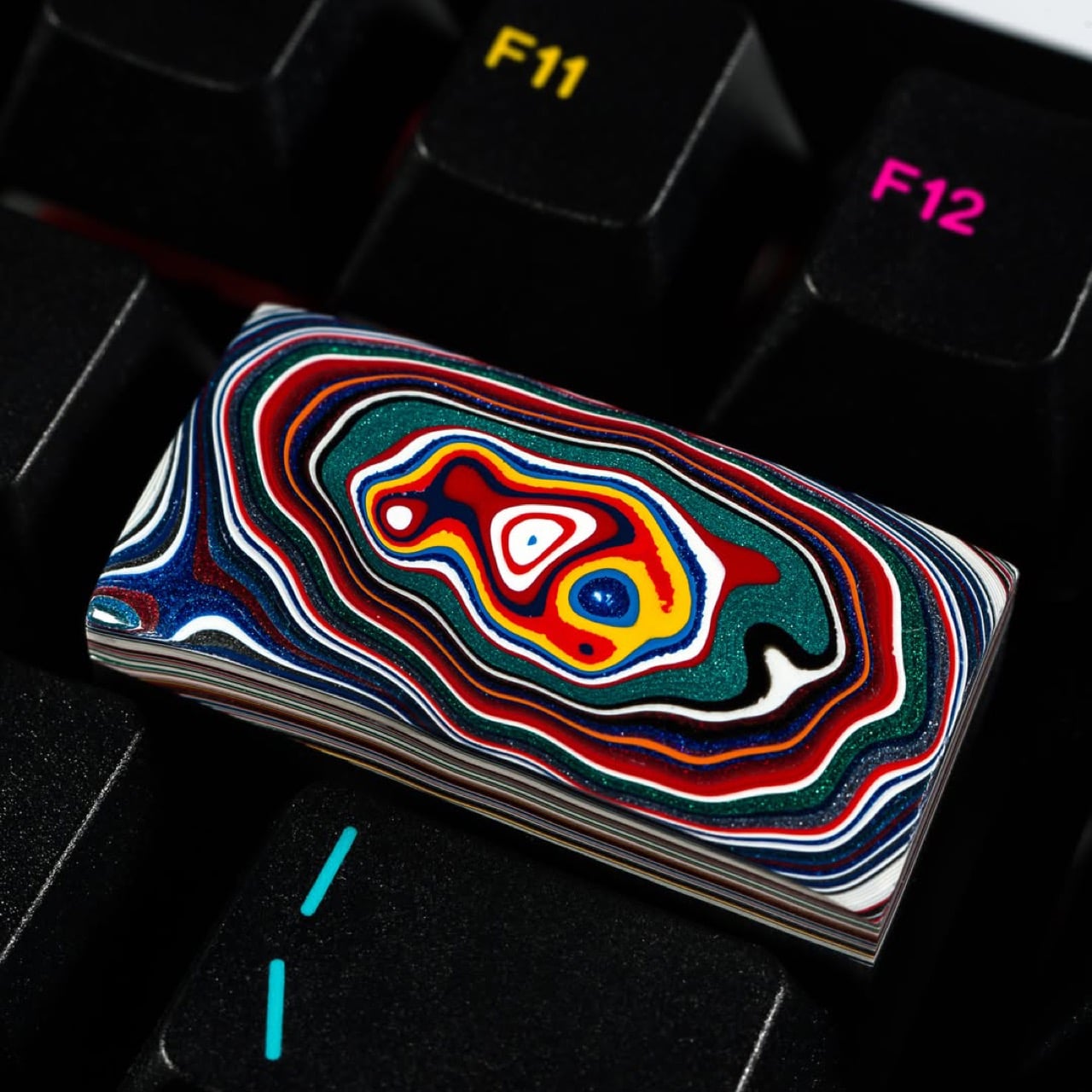

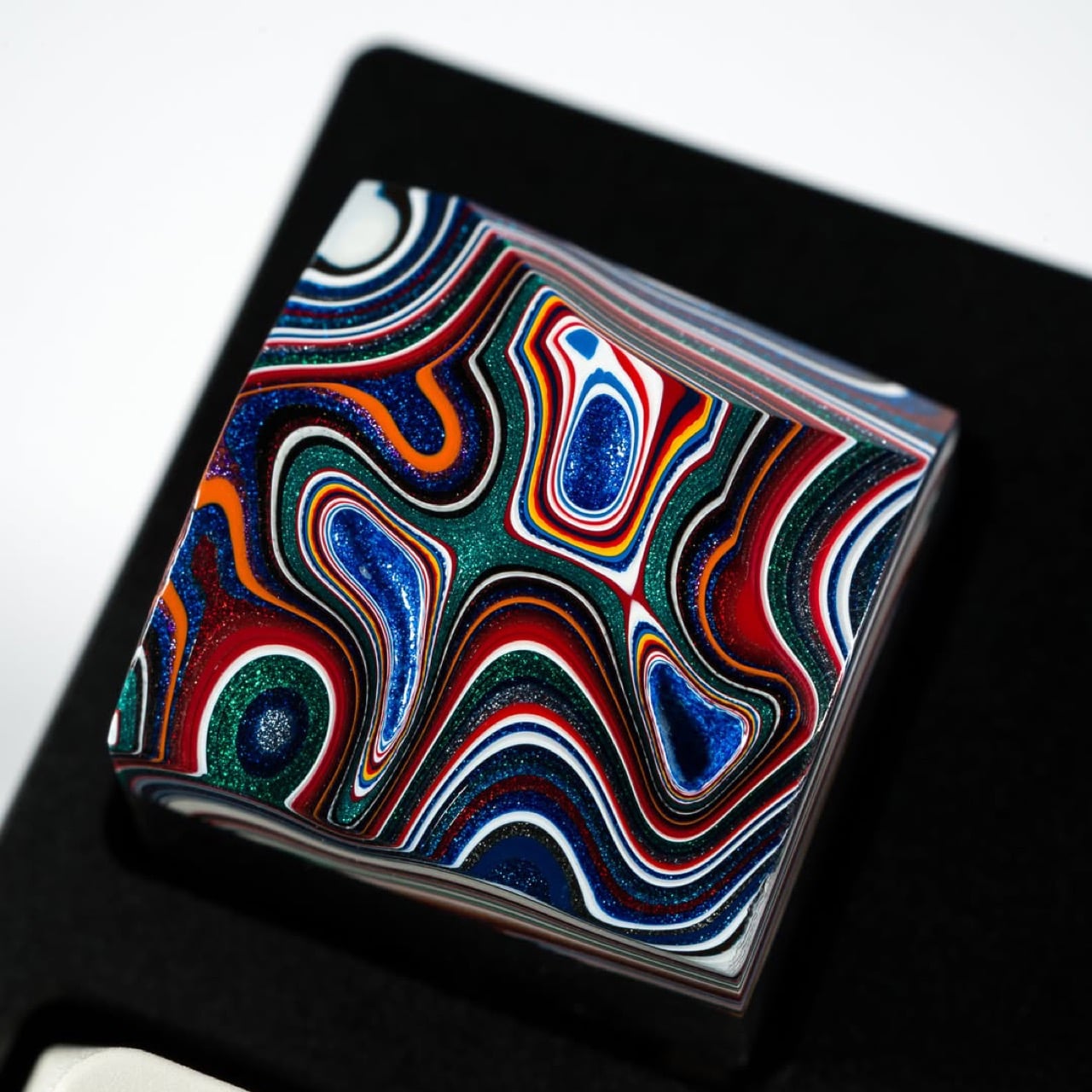
The glitter-fleck layers embedded throughout all four source materials are not decorative additions applied during the lapidary process. They are original automotive metallic paint, compressed in place over decades of production, and they give the polished surface a depth that shifts depending on the angle and intensity of the light hitting it. Under direct light the flake layers spark. Under diffuse light they recede into the surrounding color bands and let the striation geometry take over. A single cap can look like two completely different objects depending on where you position it on your desk, which is a property that puts these firmly in the category of objects worth owning rather than just admiring in photos.
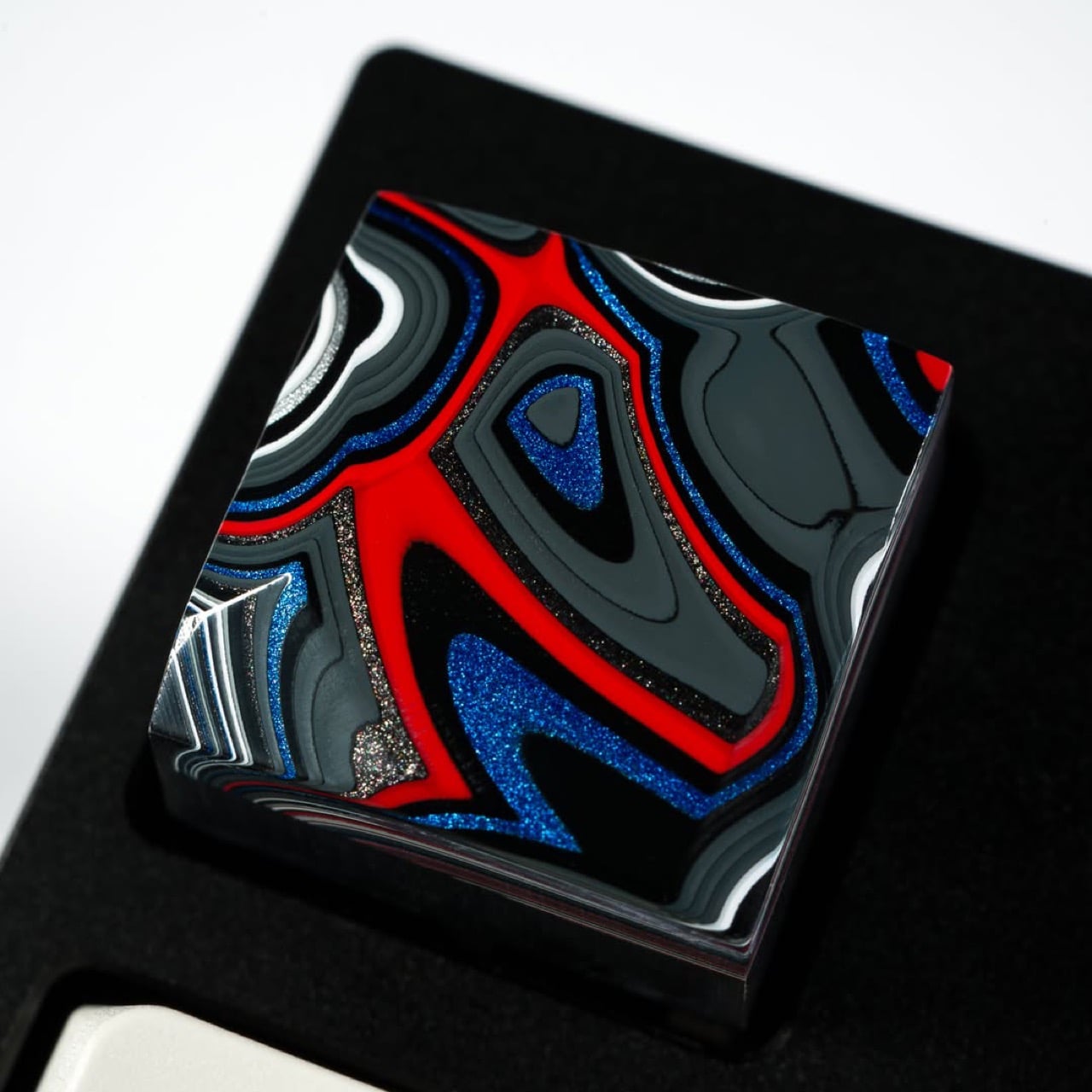
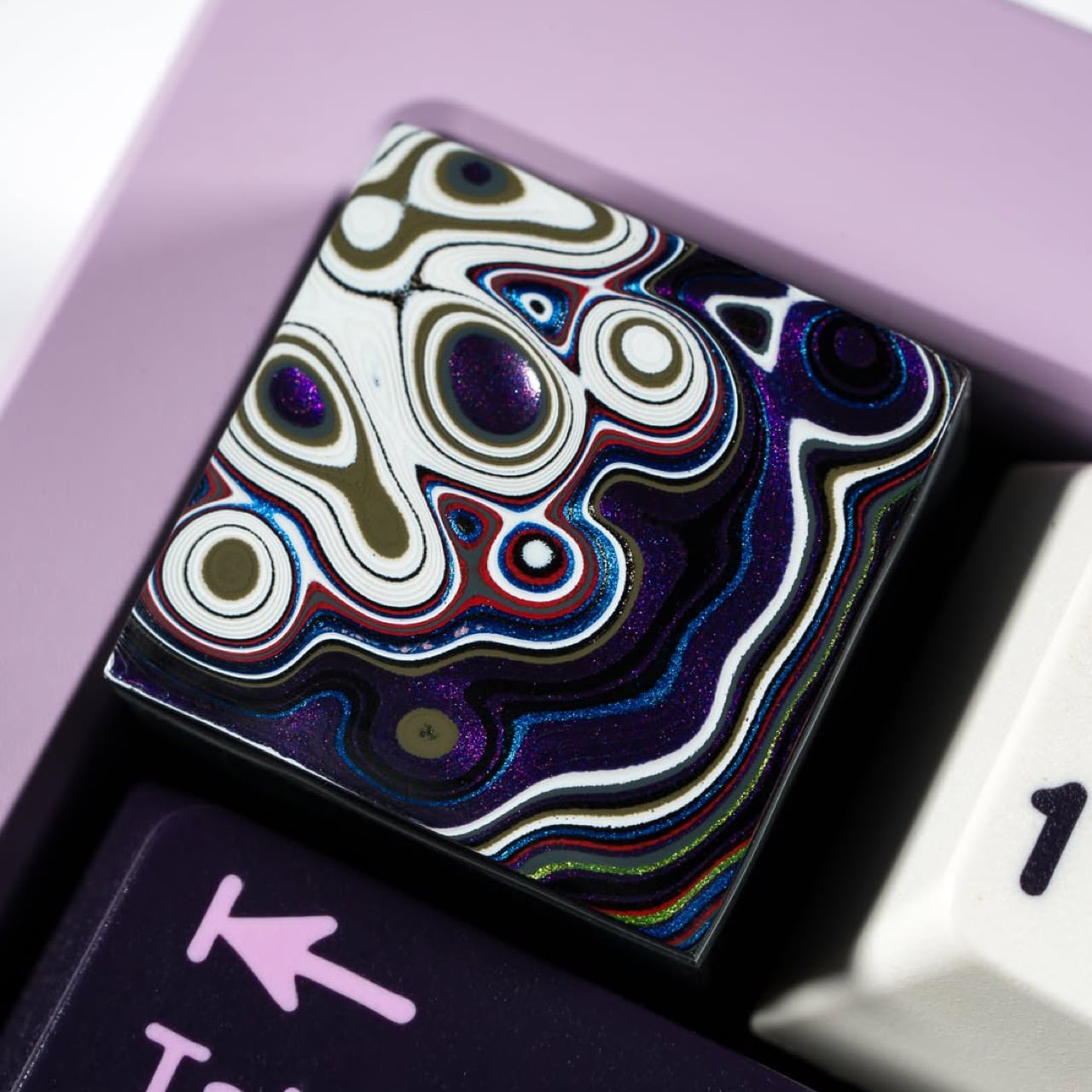
The caps span 1U and 2U footprints on Cherry MX-compatible stems, and the pattern logic scales beautifully across both sizes. Stay’s ammonite fossil keycaps, which we covered recently, operated on the same material philosophy: source something with genuine embedded history, process it through lapidary craft, and let the object speak for itself. The Fordite collection takes that same instinct and points it at a completely different timeline, not 200 million years of geological compression but decades of American manufacturing muscle, model-year color decisions, and assembly line accumulation that nobody planned and everybody should want on their keyboard. The keycaps are already sold out, pretty much showing you how in-demand they are… However, Carter often ‘drops’ new caps on his website through announcements on Instagram, so be sure to give him a follow to stay in the loop.