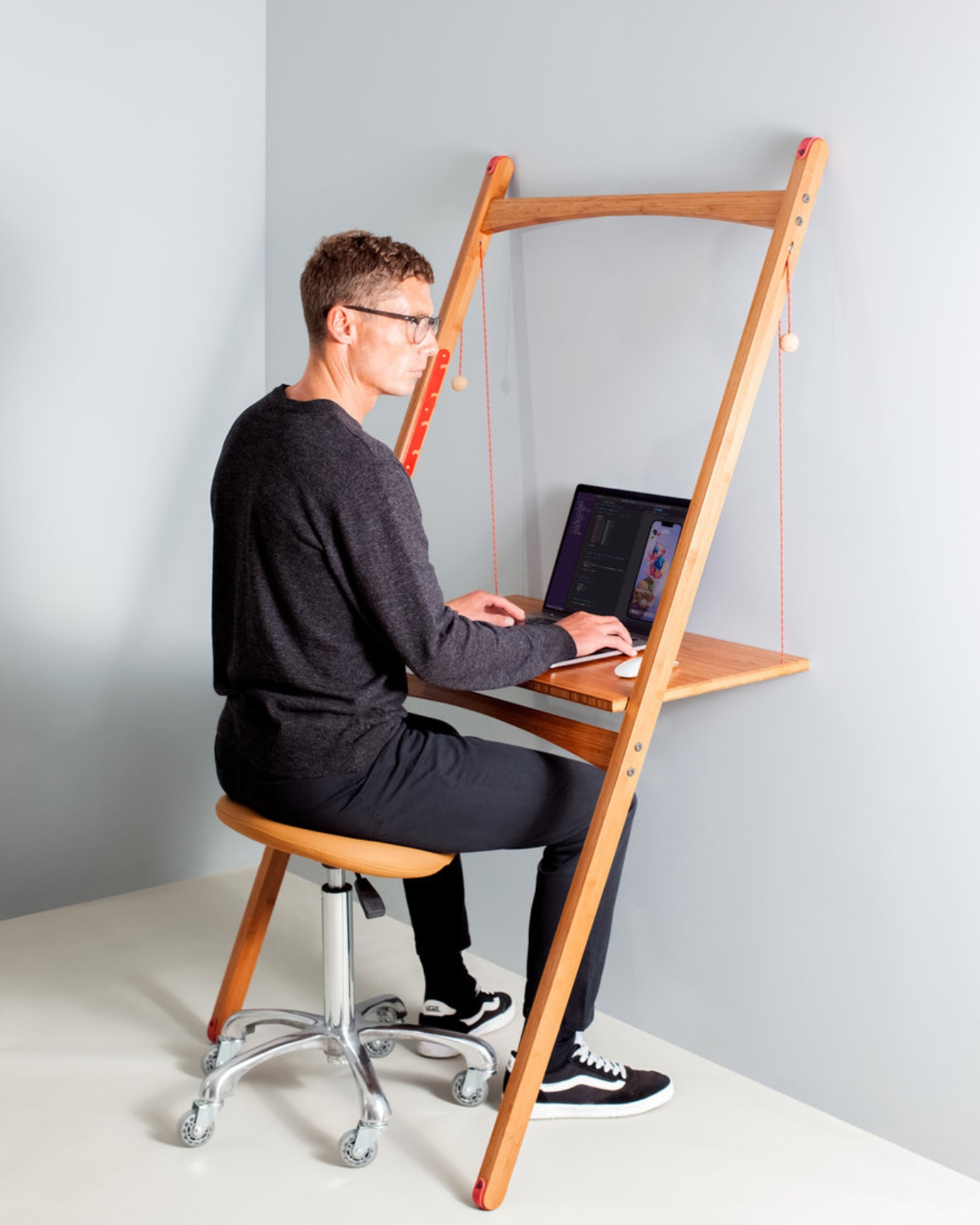

Most of us have made peace with the idea that a proper workspace takes up space. It claims a corner, demands a room, or at least stakes out a permanent spot in your home where it will sit indefinitely, collecting cables and coffee cups. The Leandesk, designed by Cornwall-based Henry Swanzy, politely disagrees.
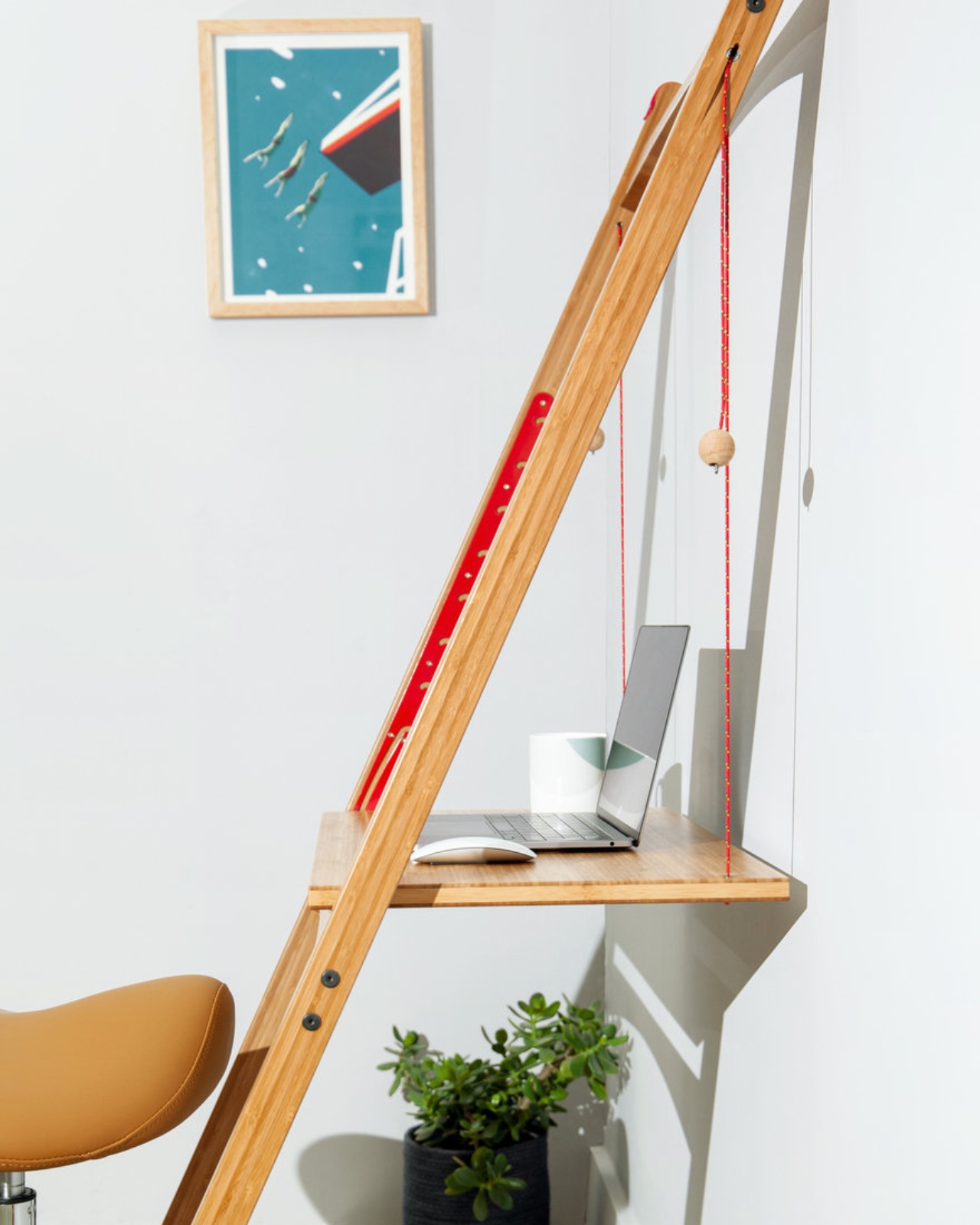
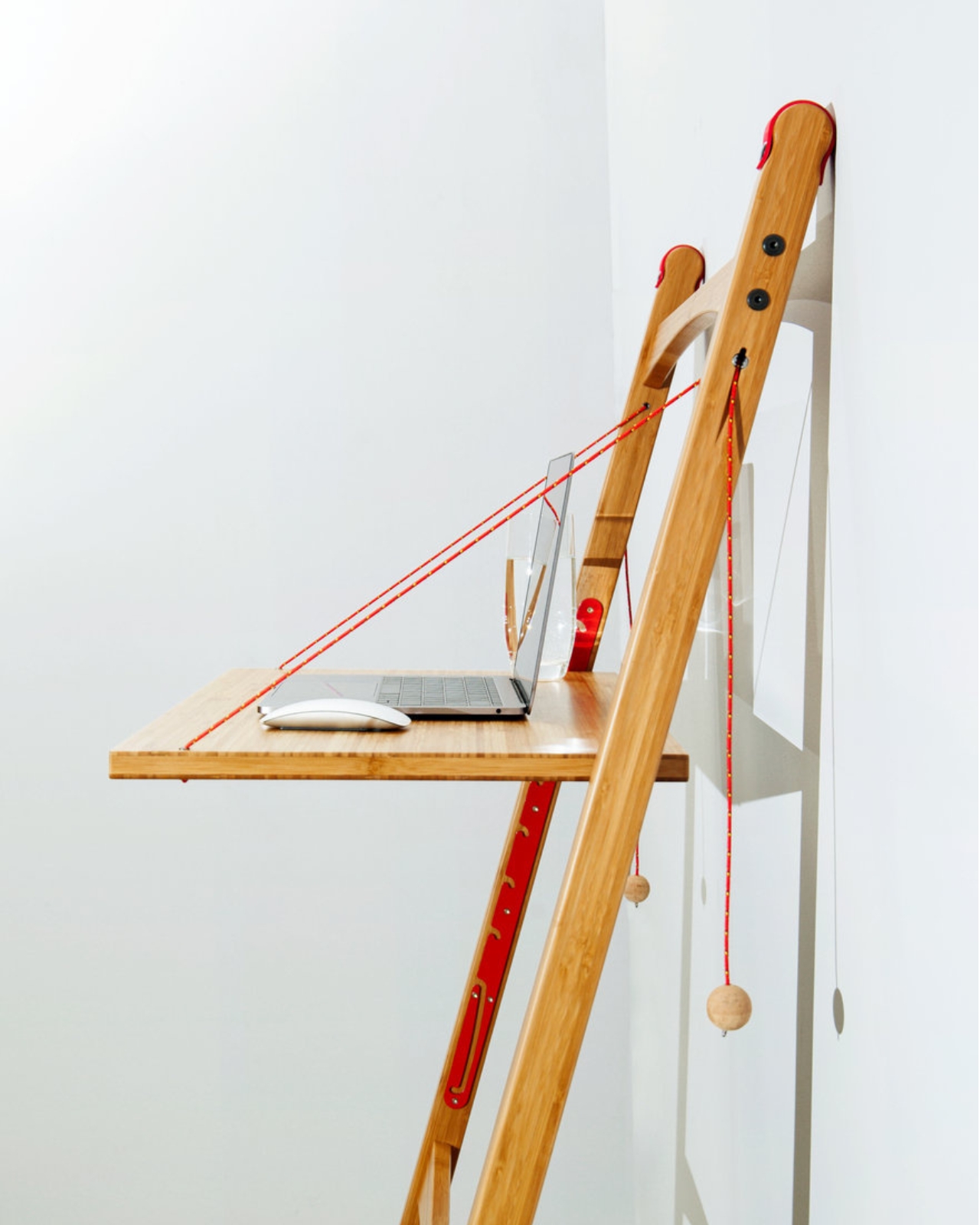
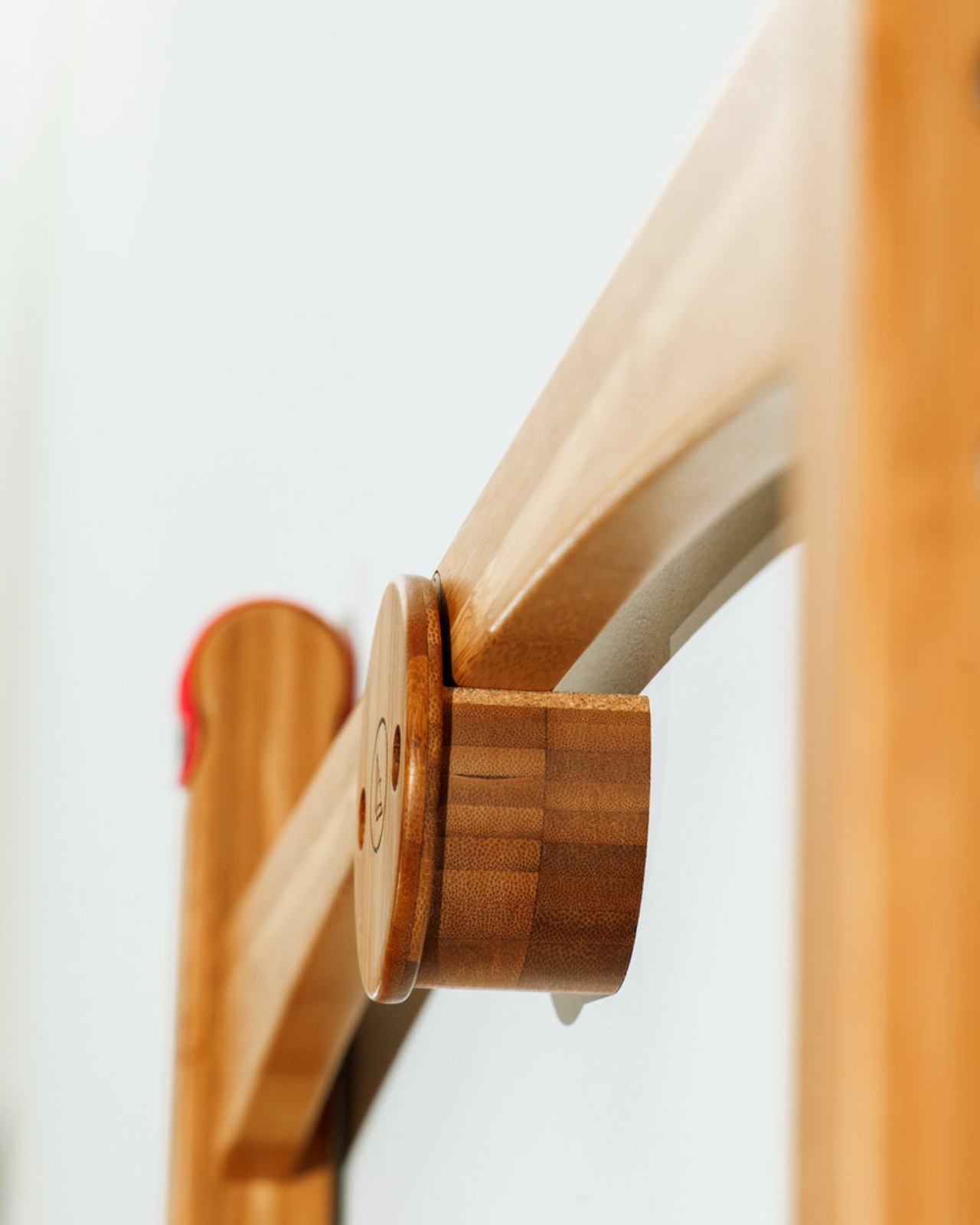
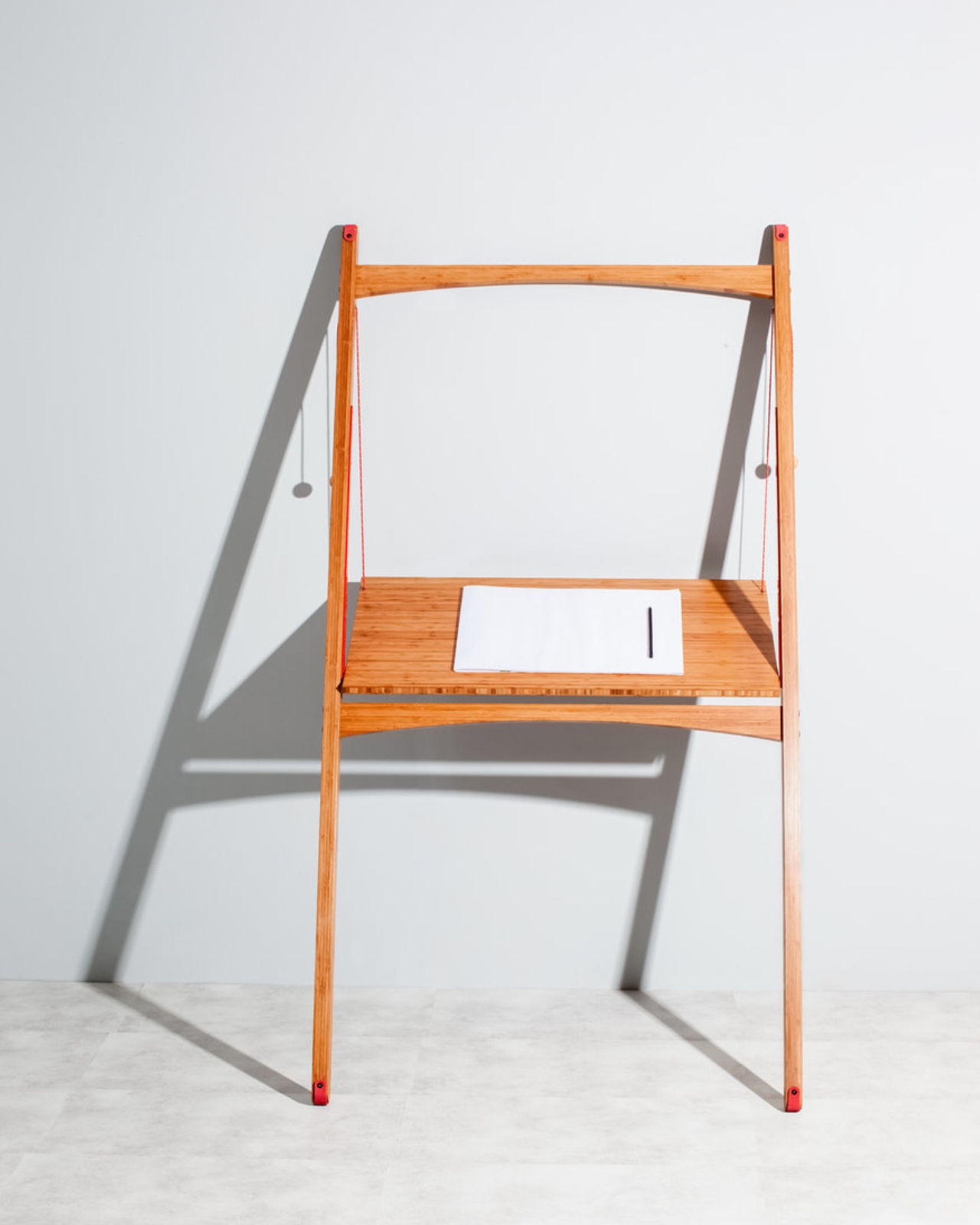
The concept is elegantly counterintuitive: a sit-stand desk that doesn’t sit on the floor. Instead, it leans against a wall or window using nothing more than physics, weight distribution, and a pair of non-marking rubber pads to hold itself in place. No drilling. No brackets. No landlord negotiations. The harder you lean into it, the tighter its grip. It’s the kind of mechanic that makes you wonder why we’ve been bolting things to walls for centuries.
Designer: Henry Swanzy
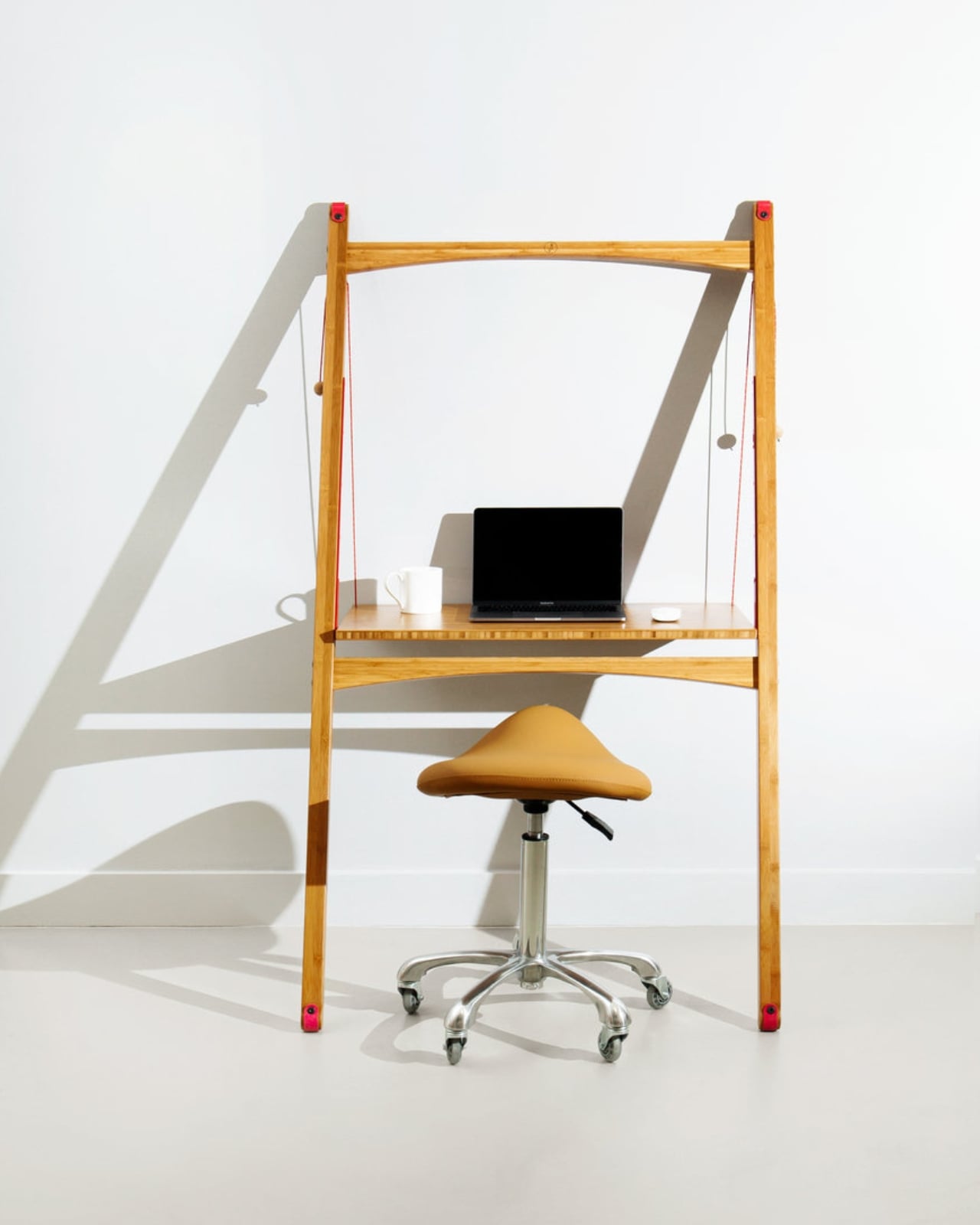

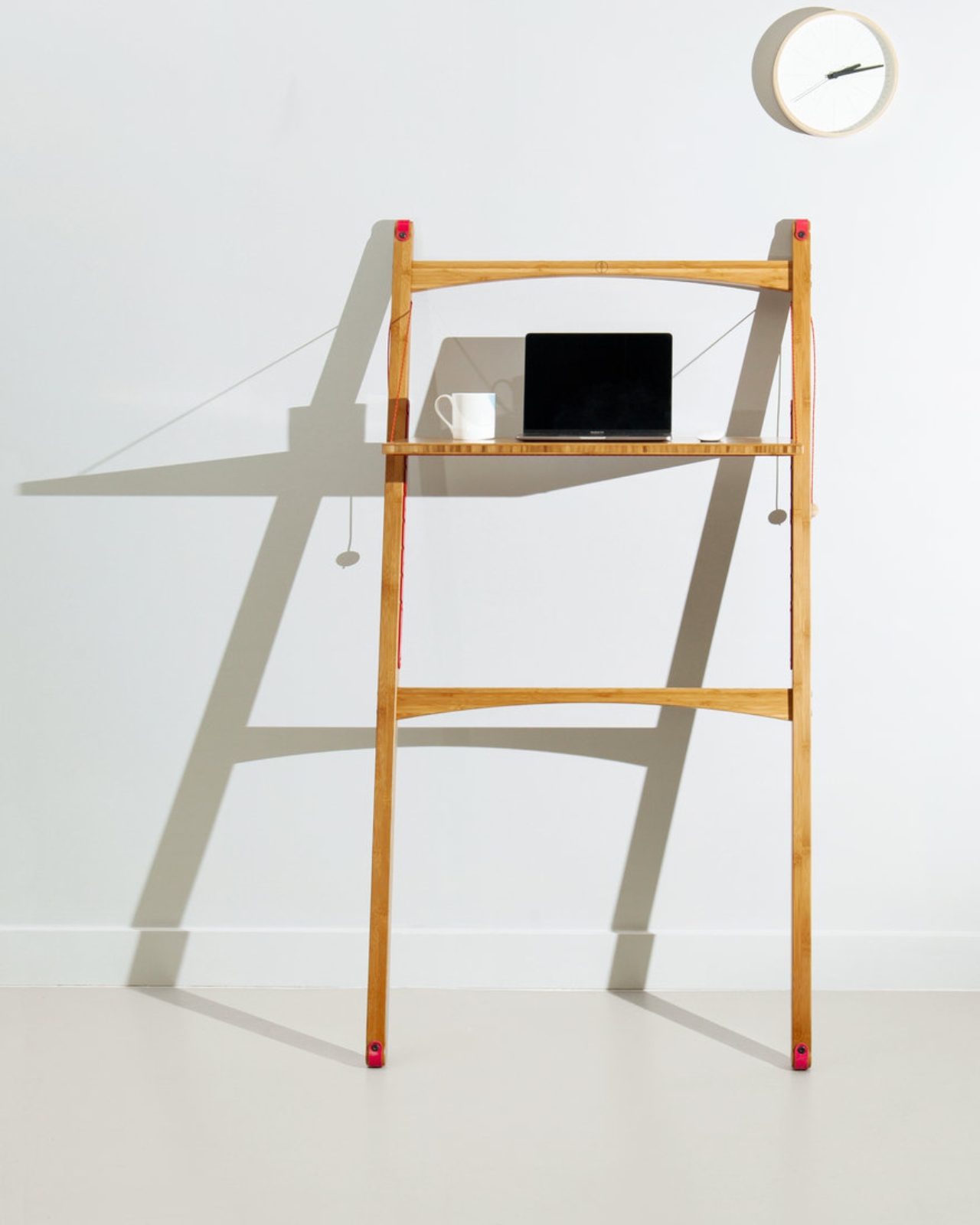
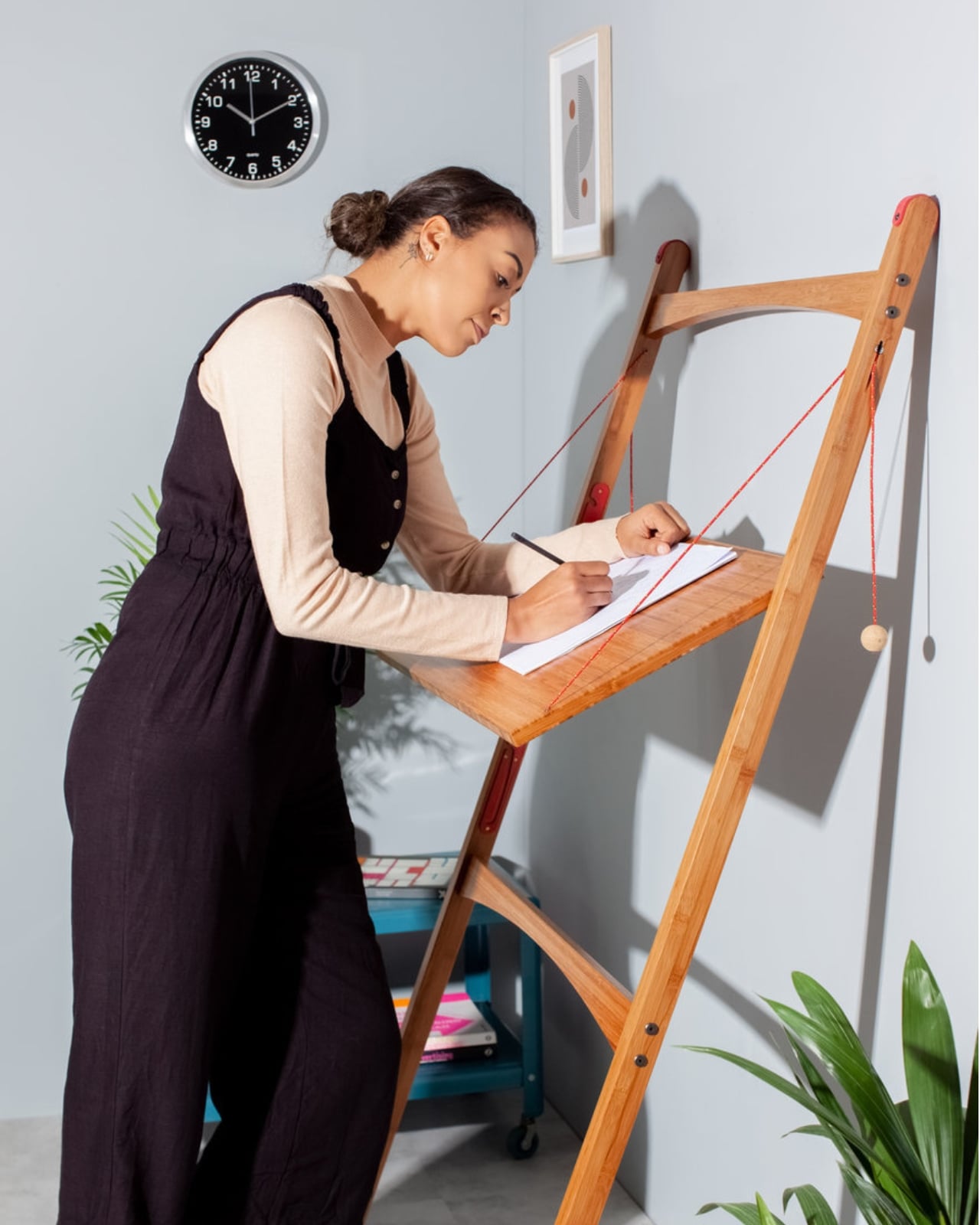
Swanzy’s background is in cabinet-making, which might explain why the Leandesk feels so considered in its construction. The desk is built from FSC-certified bamboo and uses Dyneema cord, a material borrowed from performance marine sports, to achieve its exceptional strength-to-weight ratio. The whole thing weighs under 8kg, yet it’s independently load-tested to hold 65kg. You can raise or lower the working surface, or tilt it to any angle, by simply pulling a cord through hidden alloy cleats, a mechanism drawn from maritime rigging. No motors, no buttons, no app required.
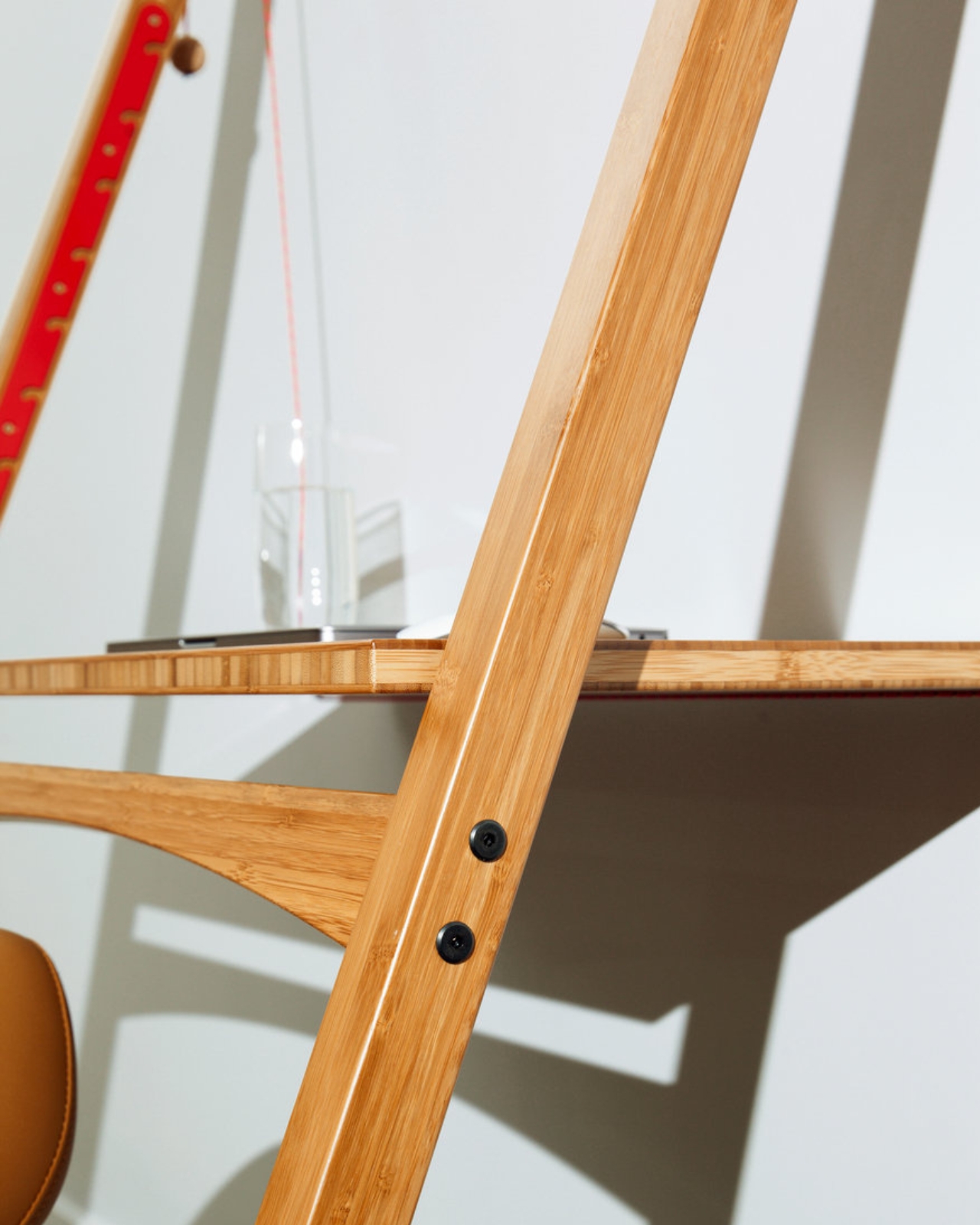
That last point matters more than it might seem. The design world has a complicated relationship with simplicity right now. We keep layering technology onto things that didn’t need it, calling it innovation when it’s often just addition. Swanzy went the other direction entirely. His philosophy is to pare down to essential elements and be as efficient with materials as possible, and the Leandesk is the full expression of that thinking.
The sustainability piece is genuinely impressive, and not in a vague, aspirational way. Over 97% of Leandesk’s components are reusable or recyclable, and its carbon footprint has been independently assessed at as low as 10.7 kg CO₂e over five years. Manufacturing runs on solar power, and there’s a take-back programme at end of life. It’s the rare product where the environmental claims have actual numbers attached to them.
When the workday is done, the desk folds flat to just 50mm deep. It can slide behind a door, tuck under a sofa, or hang on its own dedicated wall hook. That last detail, the fact that storage was designed into the product rather than treated as an afterthought, says a lot about how Swanzy approached the whole project. This is a desk that was designed to disappear when you need it to, which makes it remarkably well-suited to how many of us actually live.
It’s worth pausing on that, because it runs against a trend. The dominant image of the home office is still something maximalist: a dedicated room, a substantial L-shaped desk, a monitor stand, a ring light. The pandemic made that aspiration common, and the furniture industry followed accordingly. But a lot of people are working out of apartments, spare bedrooms that double as guest rooms, and living spaces that were never meant to absorb an office. The Leandesk was conceived exactly for those realities.
The desk is available in two widths, Original at 860mm and Compact at 660mm, both under 8.5kg. It has picked up recognition from serious design critics, including a longlist from Dezeen Awards, which is not the kind of accolade handed out for novelty alone.
I’ll be honest: I don’t think every person needs a Leandesk. If you have a dedicated office and love your setup, this isn’t for you. But if you’ve ever stared at a bulky desk that eats your room and wondered whether furniture has to work this hard against you, the Leandesk is a genuinely interesting answer. It’s proof that the best design solution isn’t always more. Sometimes it’s just less, leaned against a wall, and ready to fold away before dinner.