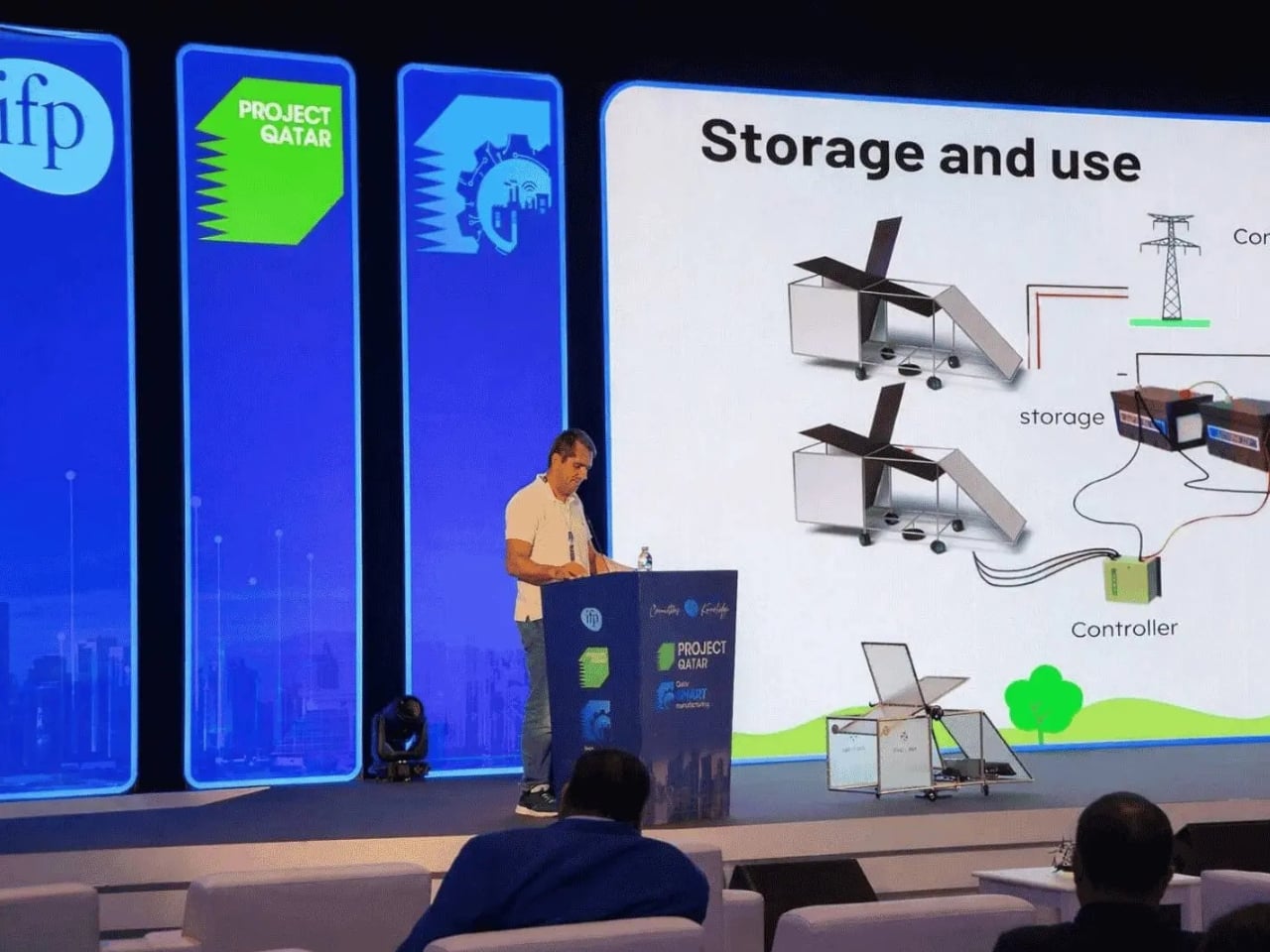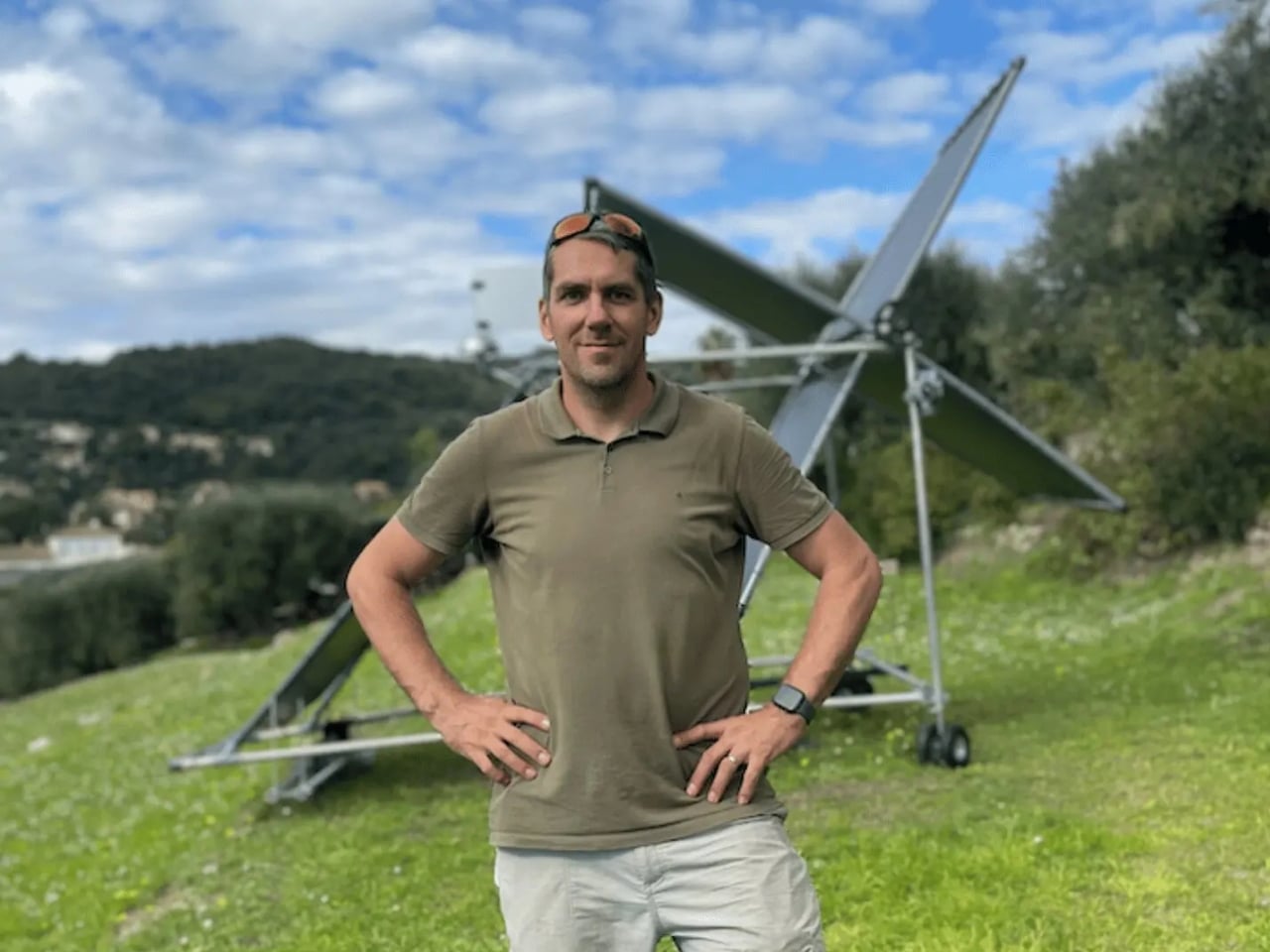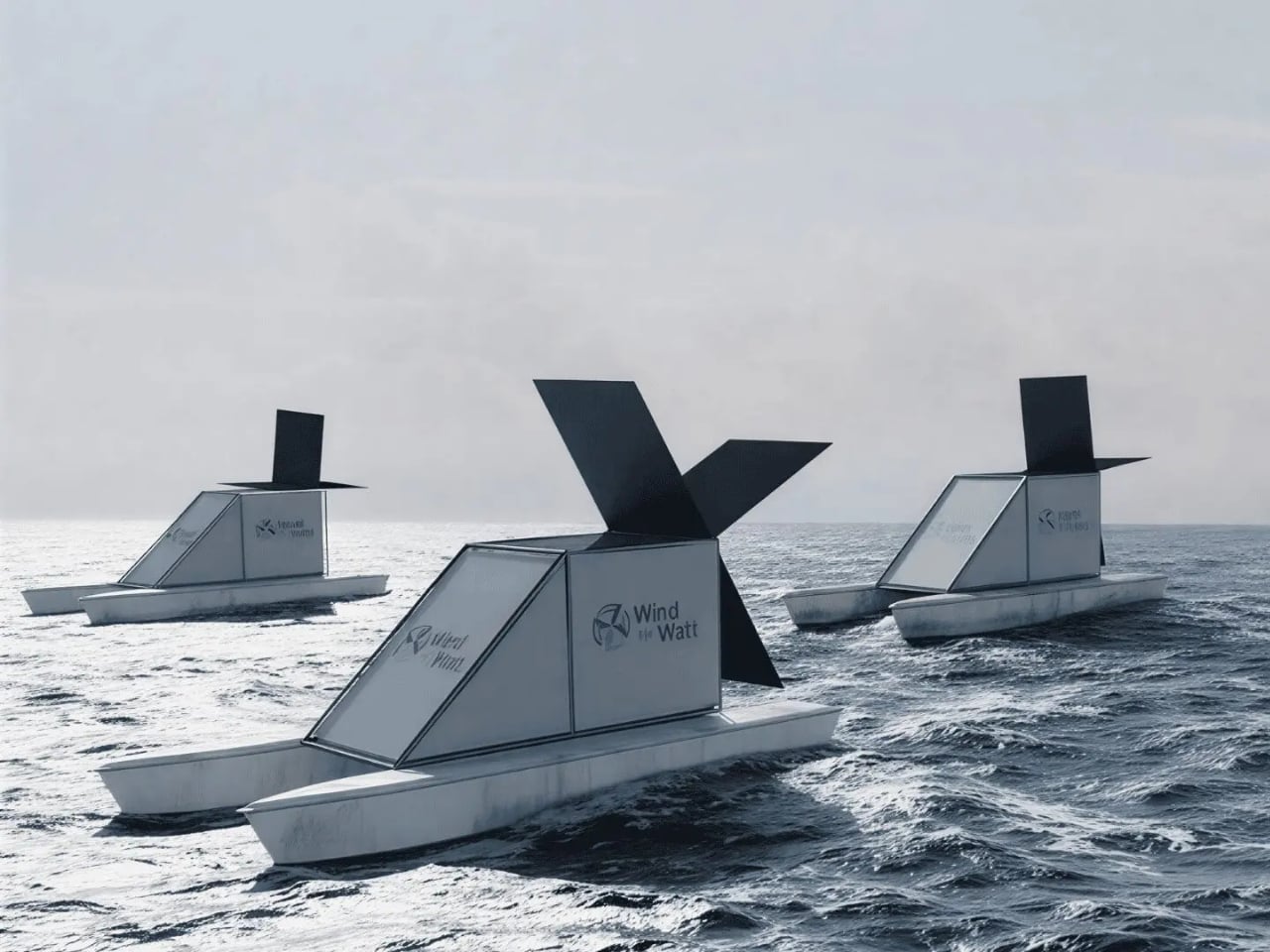

Most of us picture wind turbines the same way: massive, industrial, planted firmly on a hillside or out at sea, part of a choreographed grid infrastructure that took years and millions of euros to build. That image isn’t wrong, but it’s incomplete. And French designer Fabien Brun is one of the people quietly trying to fill in the gap.
Brun’s project, Wind to Watt, is a modular wind turbine concept that challenges the assumption that clean energy has to arrive at scale or not at all. The pitch is simple: wind is everywhere, so the technology that captures it should be too. Whether you’re on a rooftop in Morocco, a remote construction site in the Sahara, a farmland in Eastern Europe, or an offshore platform in the middle of the ocean, Wind to Watt is designed to work there, without drama, without heavy machinery, and without rerouting the landscape to accommodate it.
Designer: Fabien Brun
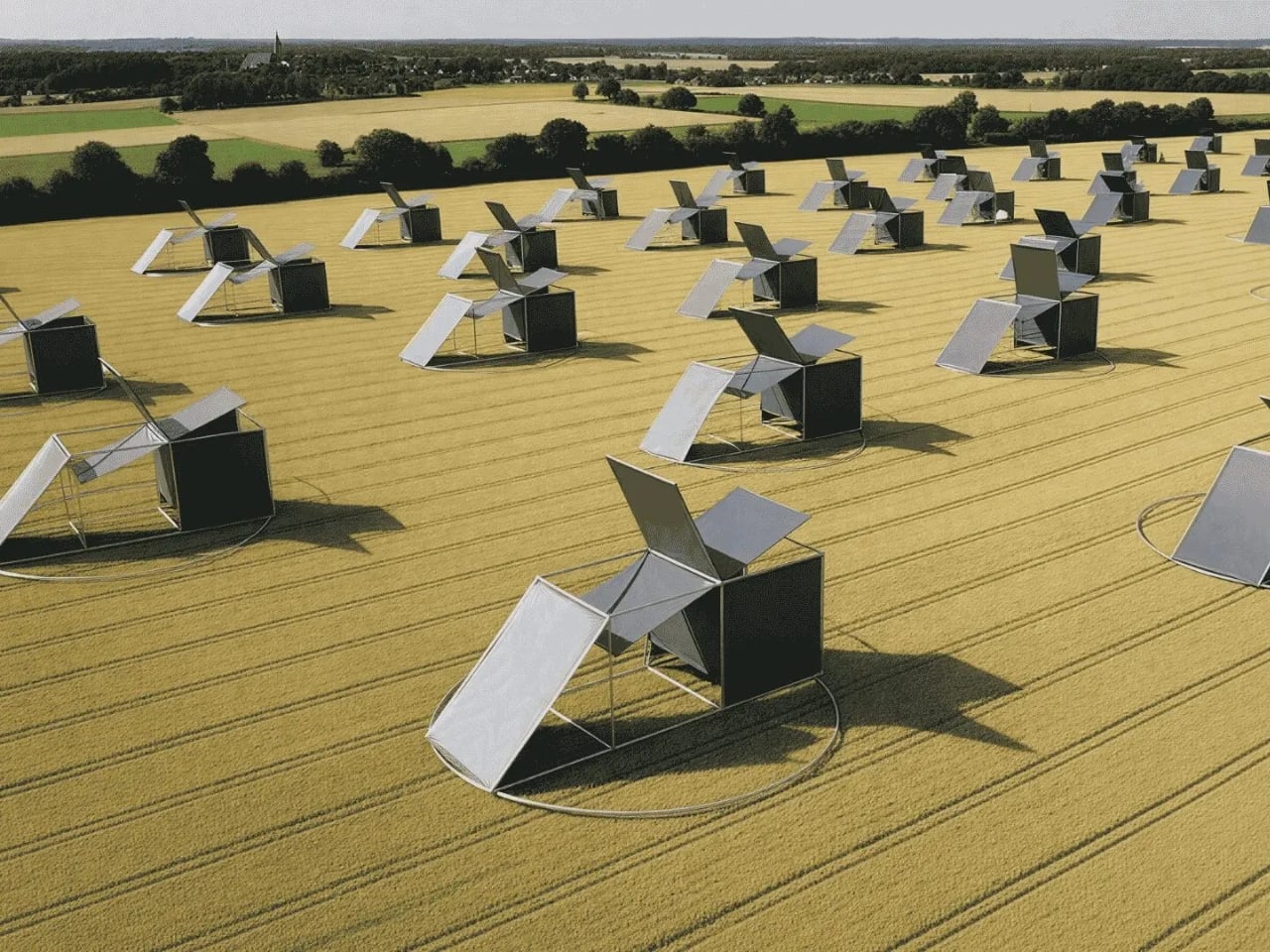
What makes the design genuinely interesting isn’t its ambition alone. It’s the materials. The turbine is built from aluminum tubes and plastic tarpaulins, which sounds almost too simple, but that simplicity is entirely the point. Rustic, lightweight, and practical. Heavy machinery needs cranes and specialists. This needs neither. The terrain doesn’t need to be modified, no concrete bases poured, no complex grid hookup required. You bring it, you assemble it, and the wind does the rest.
That low-tech philosophy runs all the way through the product. The aluminum and plastics used are 100% recyclable, which puts it well ahead of most conventional turbines, whose composite blades have been making headlines for all the wrong reasons lately. Blade waste is a genuine and growing crisis in the wind industry right now, with older turbines reaching end-of-life and their non-recyclable fiberglass components heading straight to landfill. Wind to Watt sidesteps that problem entirely by making recyclability a design principle from the very beginning, not an afterthought.
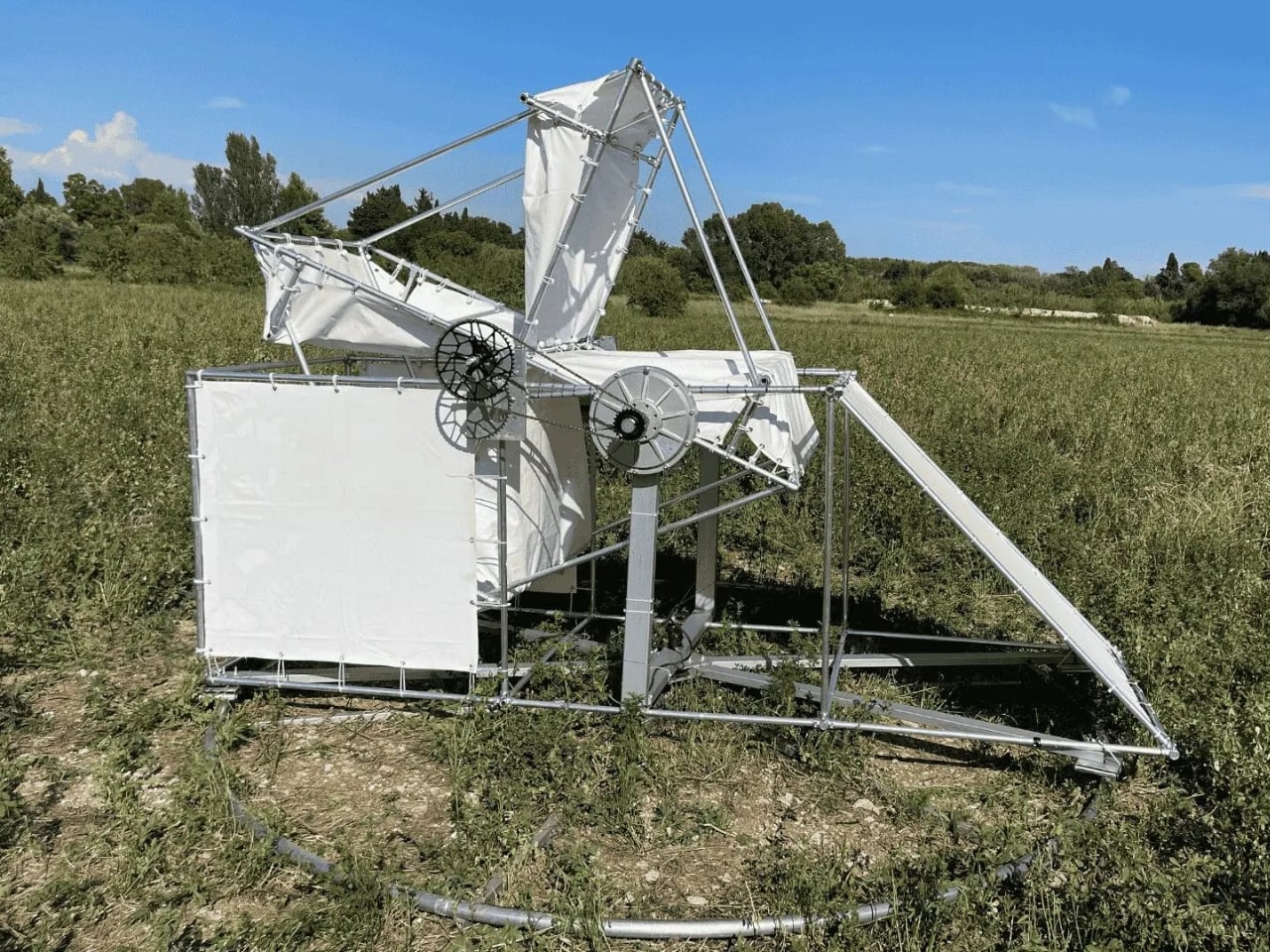
The price point is also hard to ignore. At €2,500, with a projected return on investment in five years and maintenance costs of just €50 per year, this is a product designed to be within reach, not just for utility companies but for individual communities, farmers, isolated worksites, and regions of the world where extending the traditional grid is simply not viable. Over 25 years, the projected gain sits at €10,000. Those numbers are not flashy, but they are honest. And in the renewable energy space, honesty about cost and return is rarer than you’d think.
From a design perspective, the modularity is where the real elegance lives. Modular systems are forgiving by nature. They scale up or down depending on need, they’re easier to repair, easier to transport, and far more adaptable than monolithic structures that were designed for one location and one purpose. Brun’s approach treats wind energy less like a fixed infrastructure project and more like a tool, something you deploy where it’s needed rather than something that demands the world reshape itself around it.
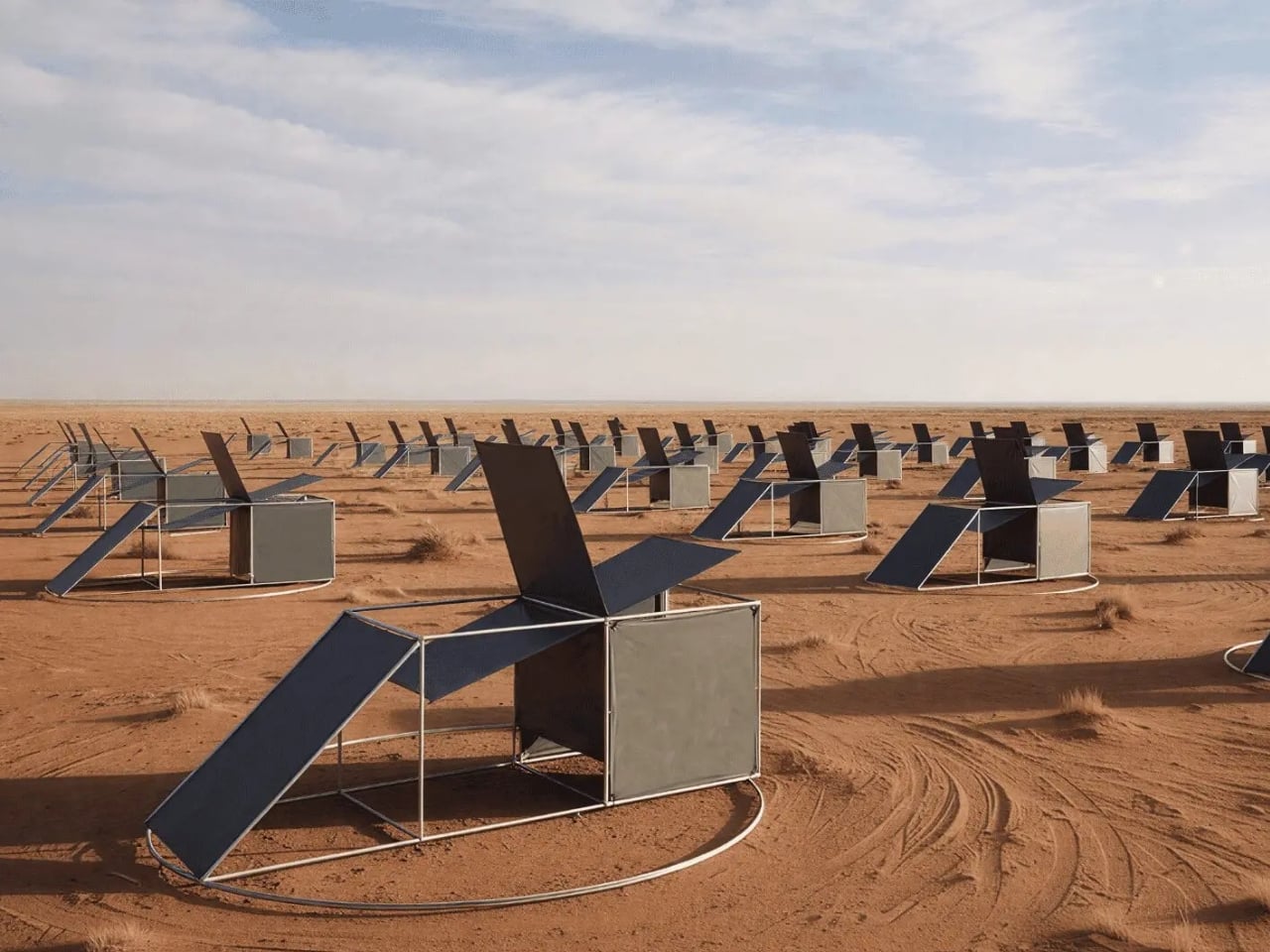
Wind to Watt is still in development, but it has already been technically and commercially validated internationally, with a pipeline of over 90 strategic contacts spanning Europe, the Middle East, Africa, and India. That’s a wide net, and it makes sense. The communities that have the most to gain from accessible, affordable, off-grid energy solutions are often the ones most underserved by traditional renewable energy rollouts, which tend to favor established infrastructure and wealthy markets.
The broader conversation about renewable energy often gets stuck in the spectacular: offshore mega-farms, hydrogen pipelines, solar arrays blanketing entire deserts. Those solutions have their place and they’re necessary. But they’re not the whole story. The practical, low-tech end of the spectrum matters just as much, maybe more, if we’re serious about treating energy access as a global issue rather than a first-world design challenge.
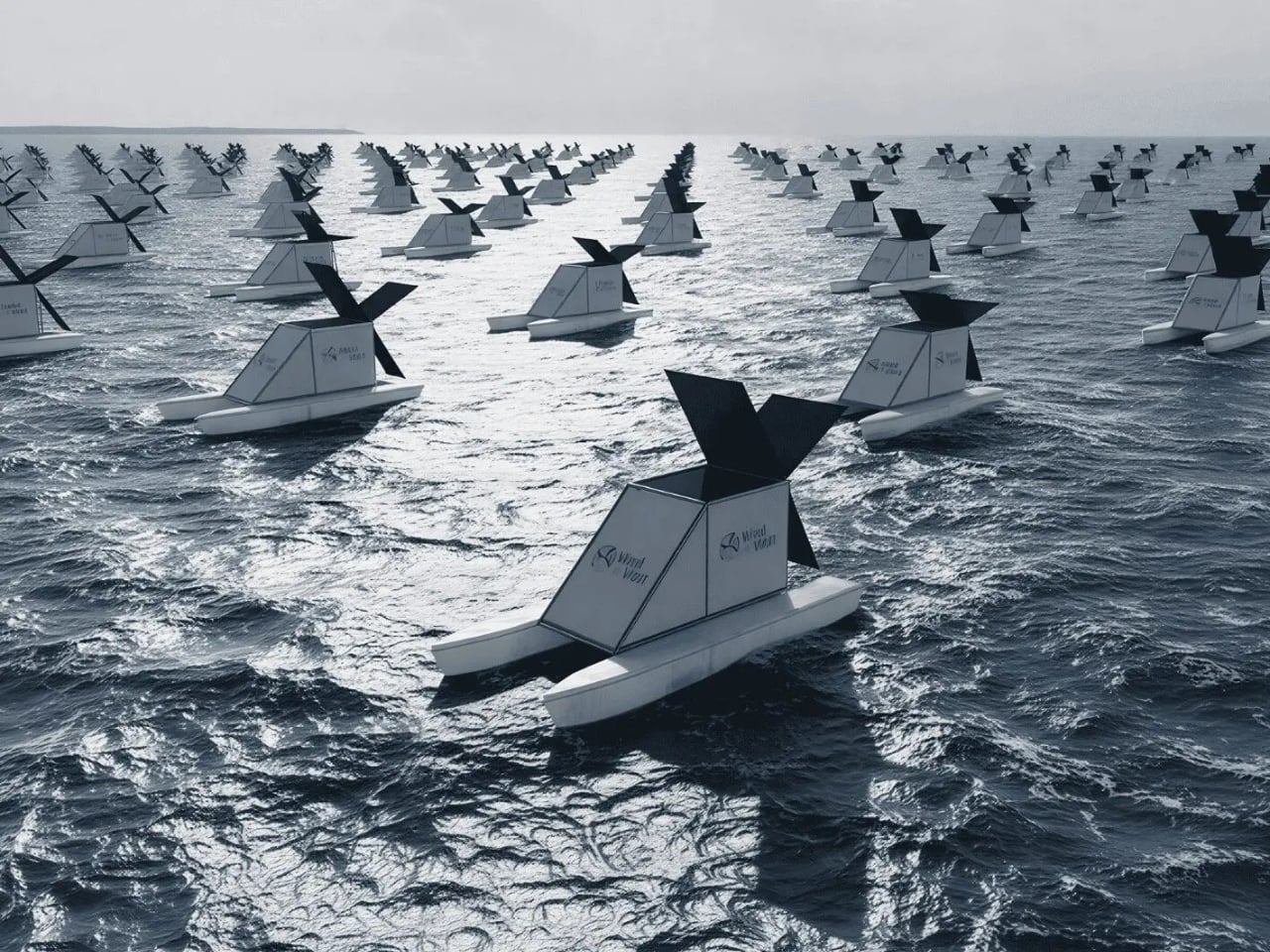
Wind to Watt doesn’t promise to solve everything. It promises to be useful, deployable, and affordable in places where those three things rarely arrive together. For a design world that sometimes mistakes scale for ambition, and ambition for impact, that restraint might be its most radical feature.