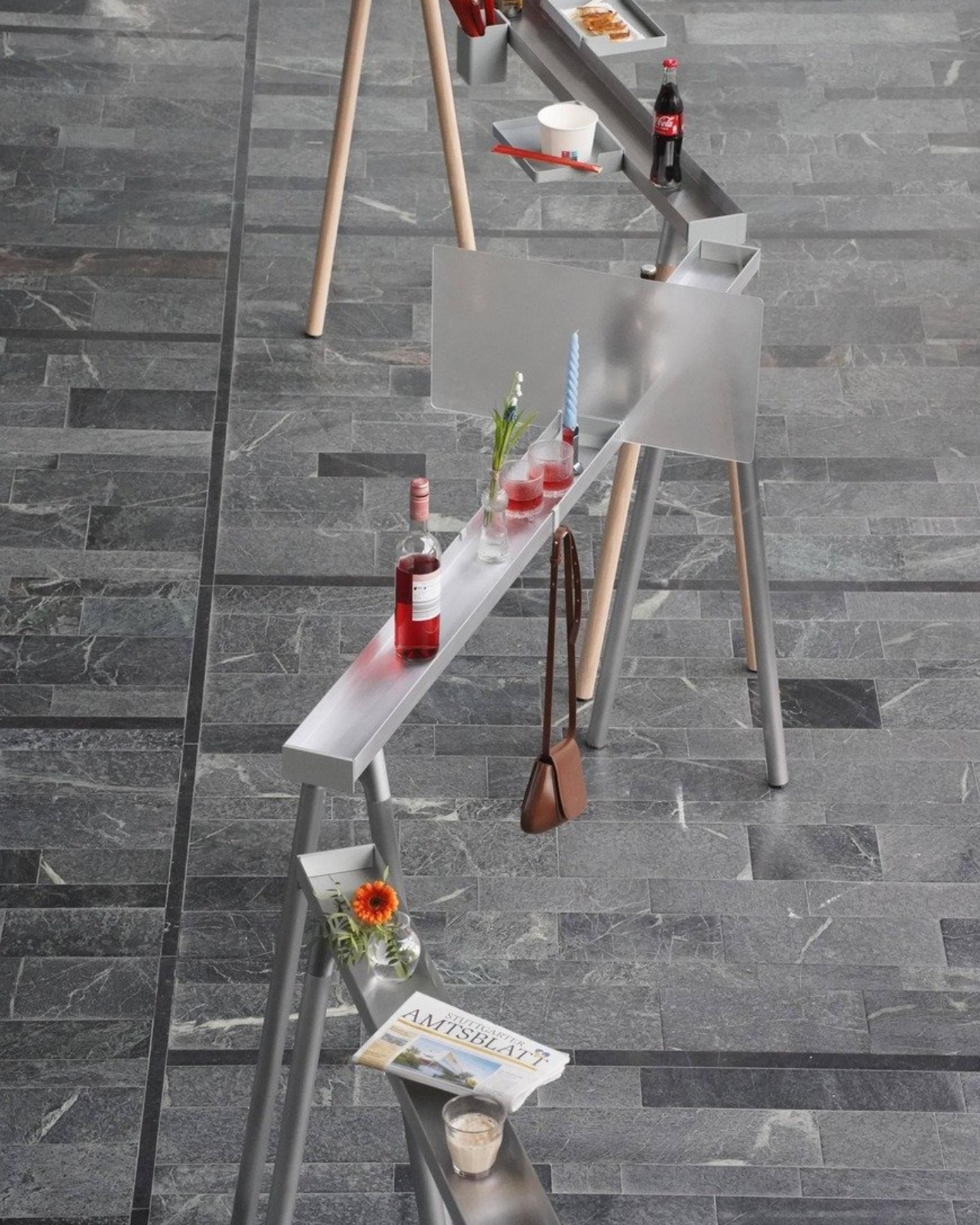

A table is arguably the most taken-for-granted object in design. Four legs, a flat surface, repeat. We have been manufacturing and sitting around tables in essentially the same configuration for centuries, and most of us have never once stopped to ask whether the table itself is actually working for us. Fengfan Yang clearly did.
Yang is a Stuttgart-based industrial designer who recently collaborated with Danish furniture brand +Halle on a project called Hang On, and the result is one of those rare designs that makes you feel a little embarrassed for not questioning it sooner. The concept is deceptively simple: strip the table back to its most essential structural elements, then let everything else hang. Literally.
Designers: Fengfan Yang + Halle
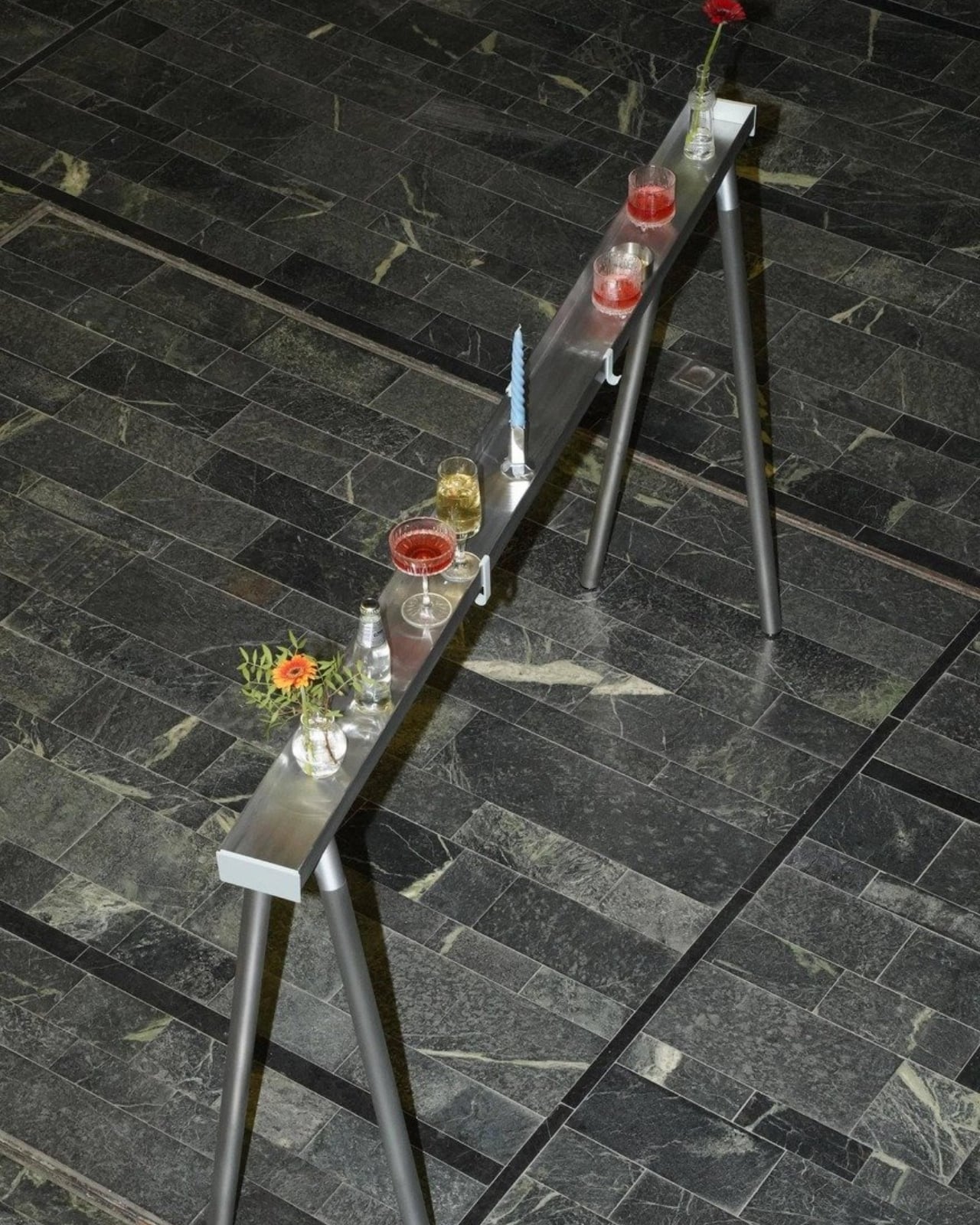

The premise behind Hang On is that the conventional table carries a lot of unnecessary baggage. Fixed components, bulky frames, surfaces that are either too large or too rigid for the spaces they occupy. Anyone who has ever tried to clean under one in a busy canteen, or rearranged furniture at a festival venue, or watched an airport food court struggle to seat an unpredictable surge of travelers knows exactly how inflexible the standard table can be. Yang noticed this, and instead of making a prettier version of what already existed, he went back to the architecture of the object itself.
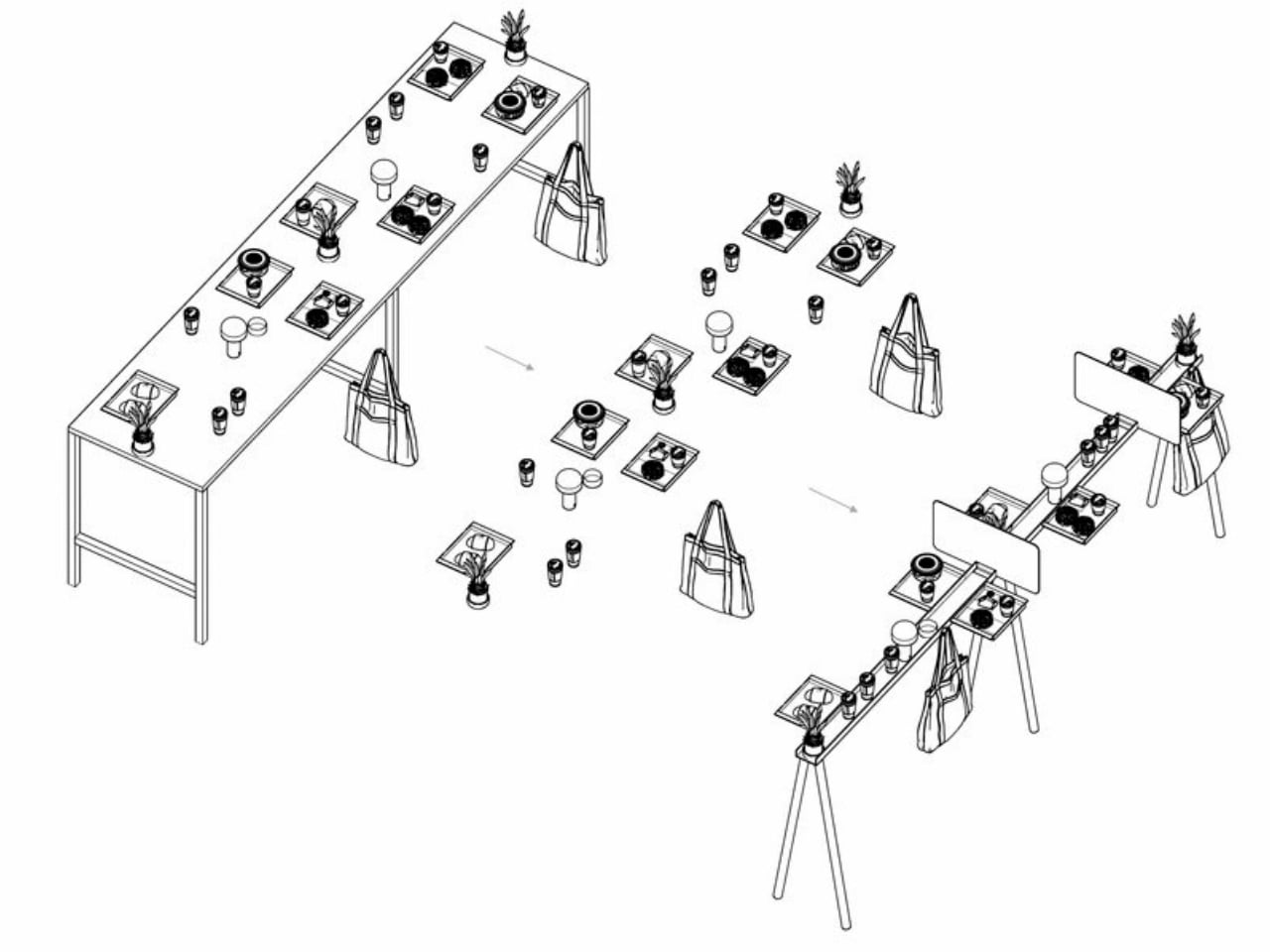
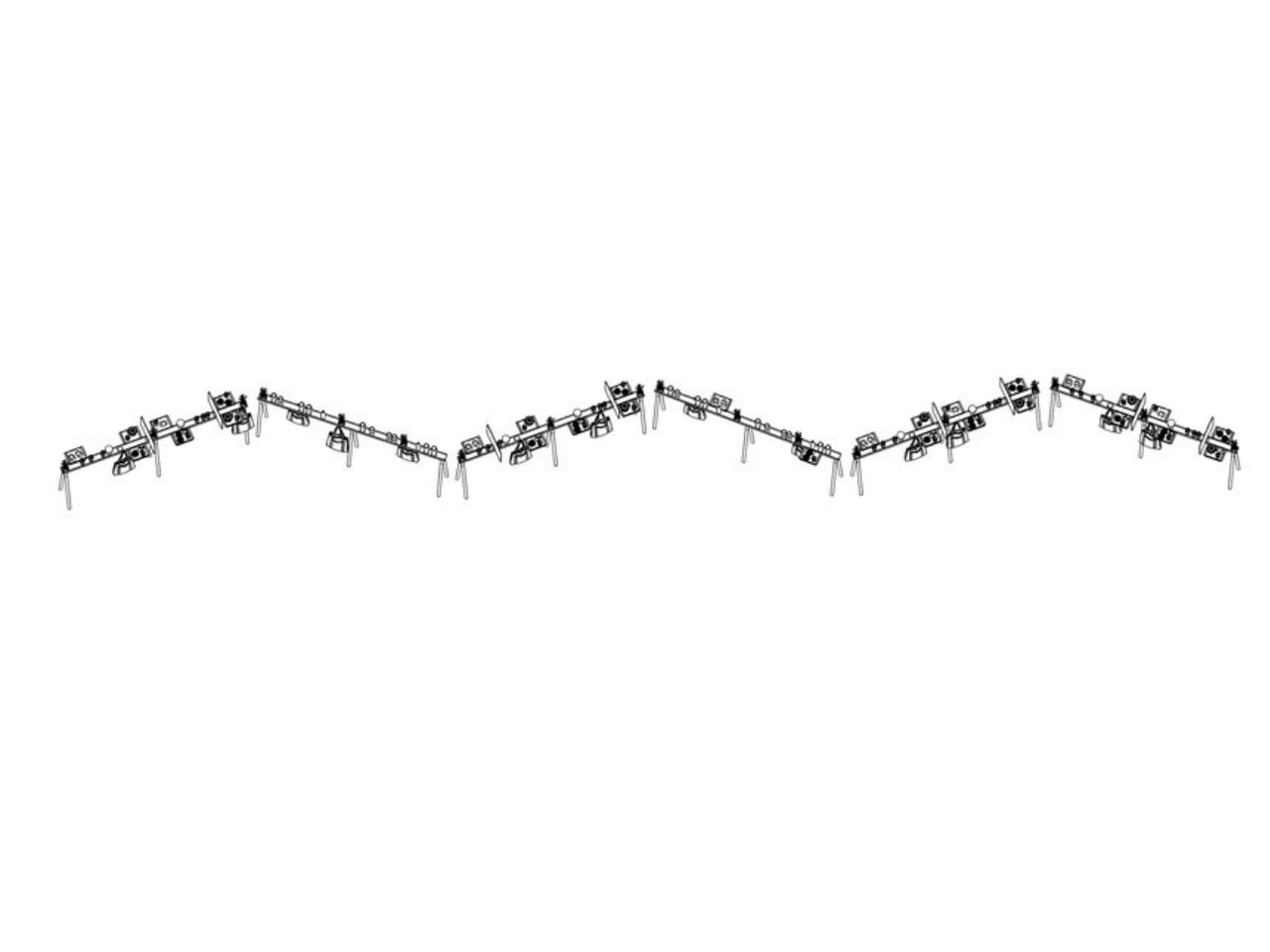
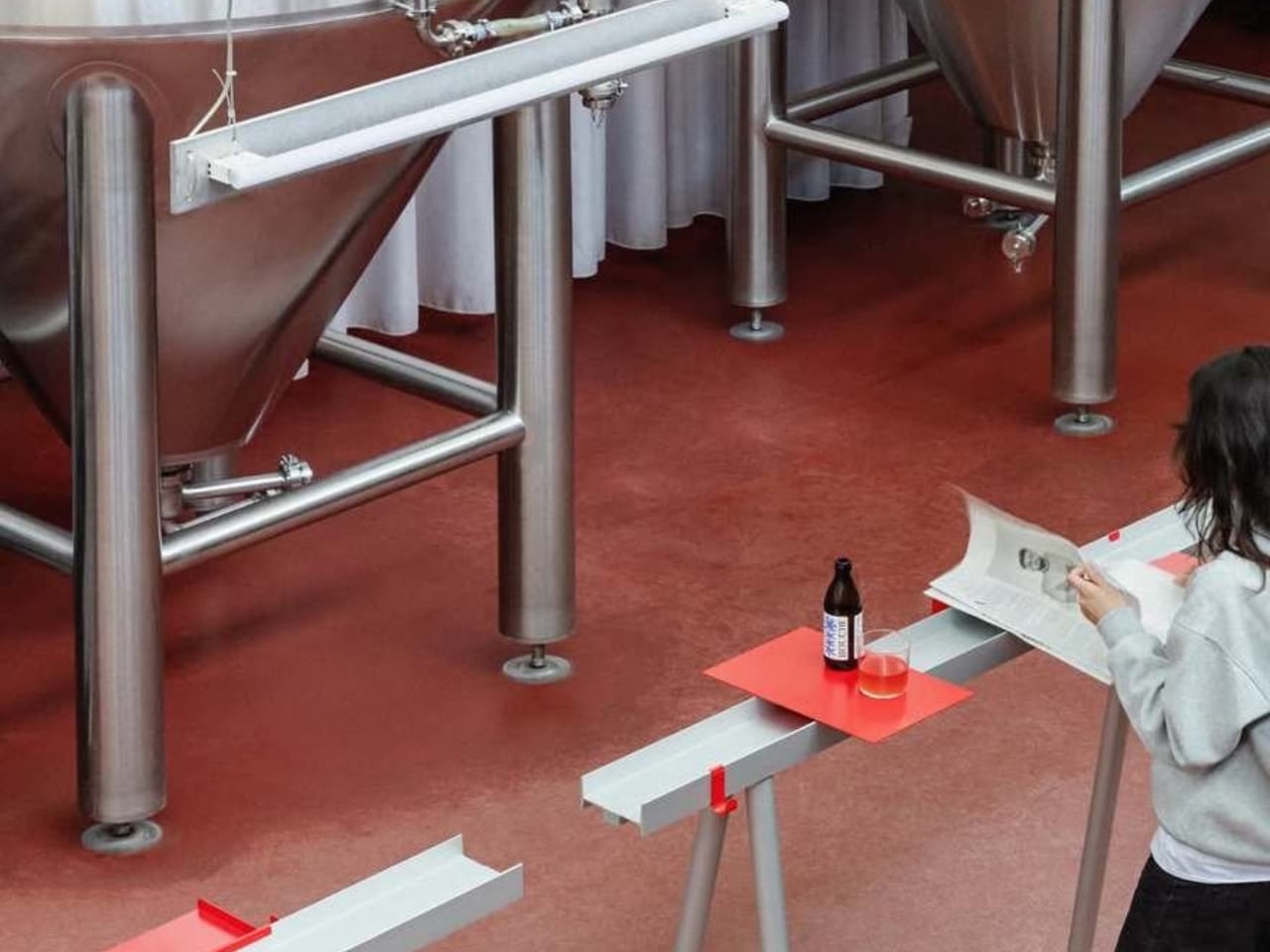
The system works through an extruded profile structure, where the table’s add-ons, things like tabletop surfaces and functional accessories, simply hang onto a core frame. Assembly is quick, disassembly is just as fast, and the whole setup is customizable depending on what a space actually needs at any given moment. That “hanging” action is not just a clever name. It is the entire design logic, and it holds up beautifully.
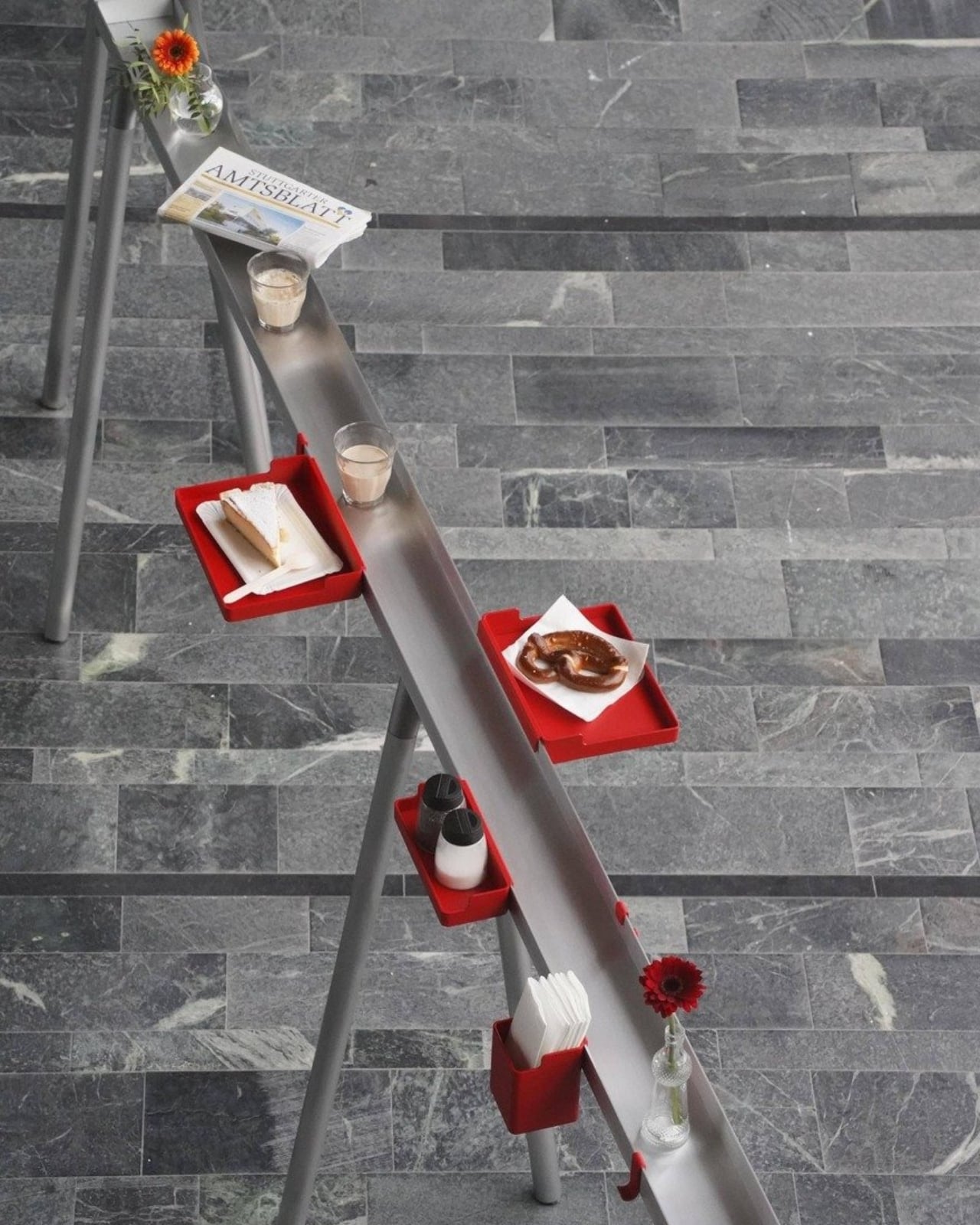
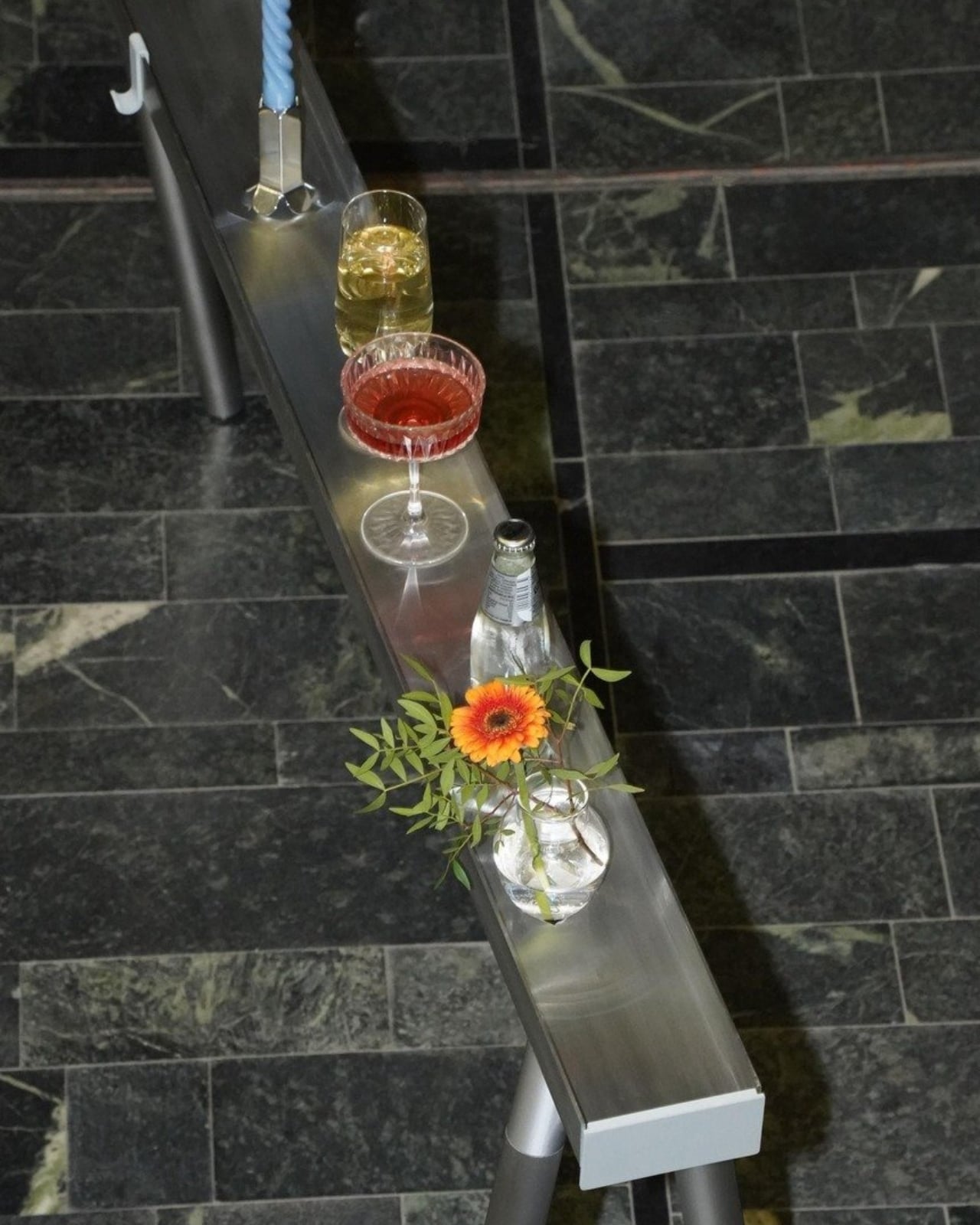
What makes Hang On genuinely exciting is not the novelty of modularity, because modular furniture has been a design buzzword for years. It is the specificity of the problem Yang chose to solve. This was never meant to be a living room conversation piece or a collector’s item. It was designed for the messy, high-traffic realities of restaurants, markets, airports, canteens, outdoor festivals, and shopping centers. Spaces that demand flexibility, easy cleaning, and fast reconfiguration. Public furniture has historically been treated as an afterthought, chosen for durability over intelligence. Hang On treats it as a design challenge worth solving properly.
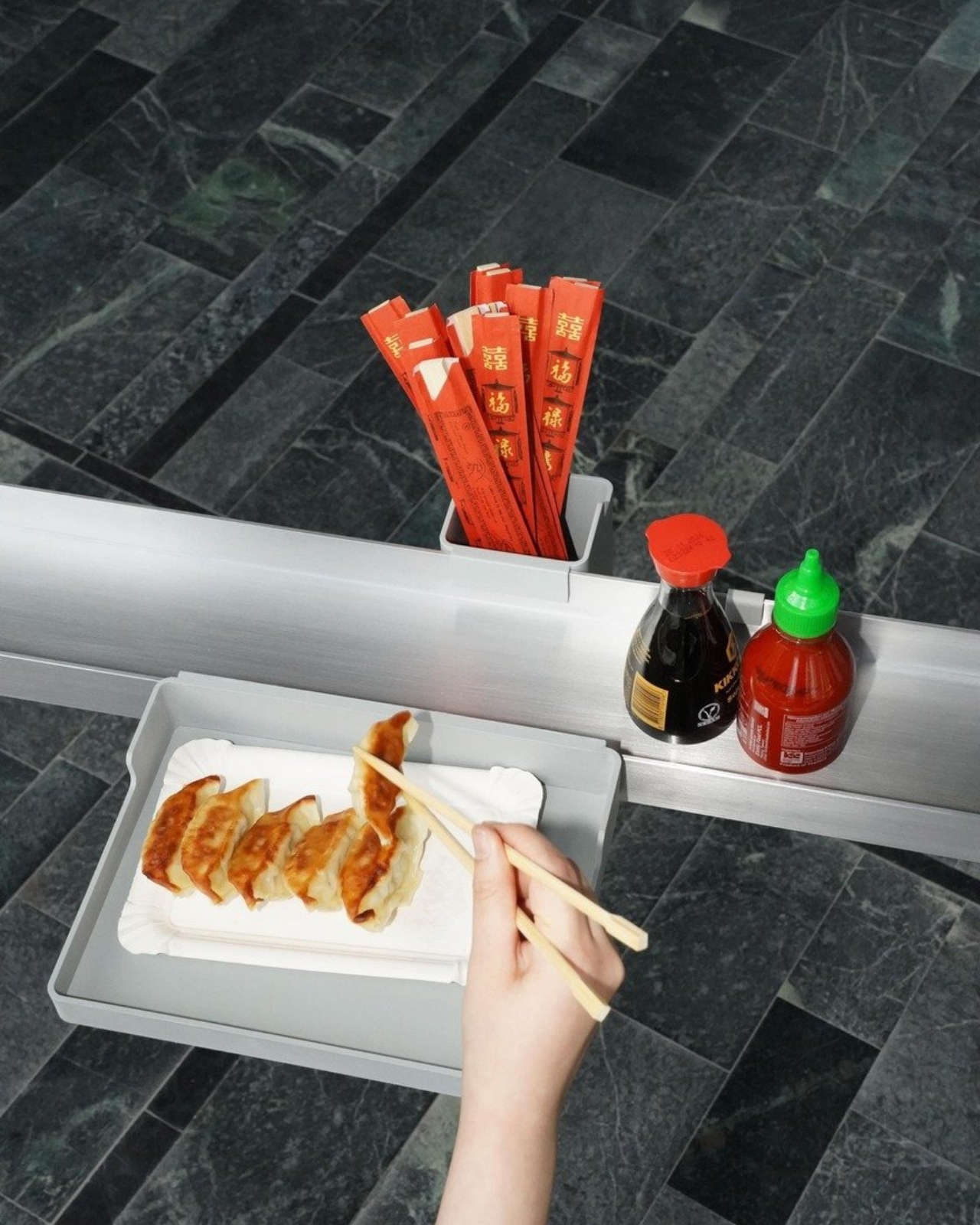
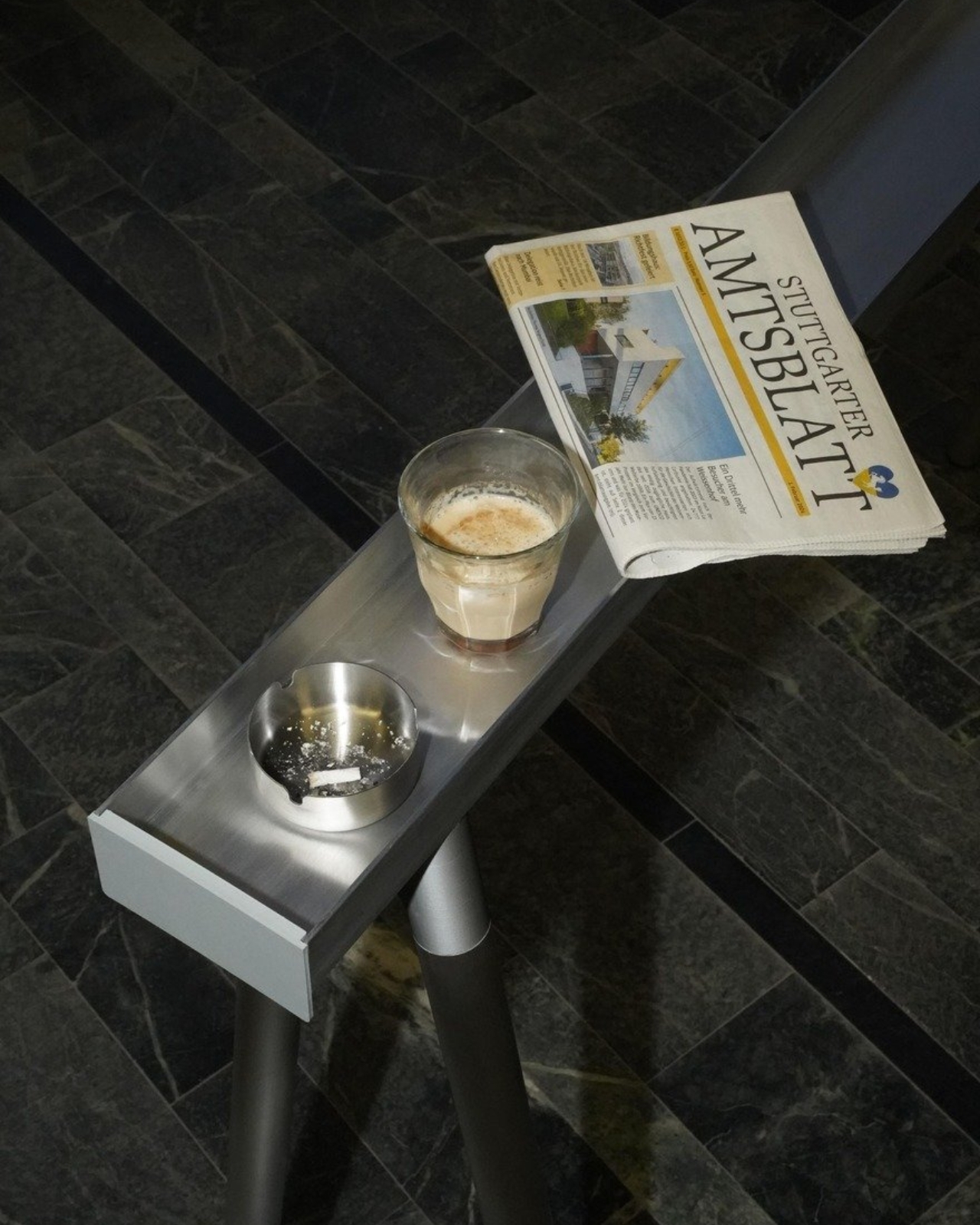
The collaboration with +Halle makes sense here. The Danish brand has a reputation for thoughtful, durable furniture built for communal environments, and that sensibility aligns well with Yang’s approach. The extruded profile construction also means the piece is cost-efficient to produce and more sustainable than a comparably functional table that relies on complex manufacturing. The design was longlisted for Dezeen Awards 2025 in the furniture category, which tells you that the broader design industry has taken notice.
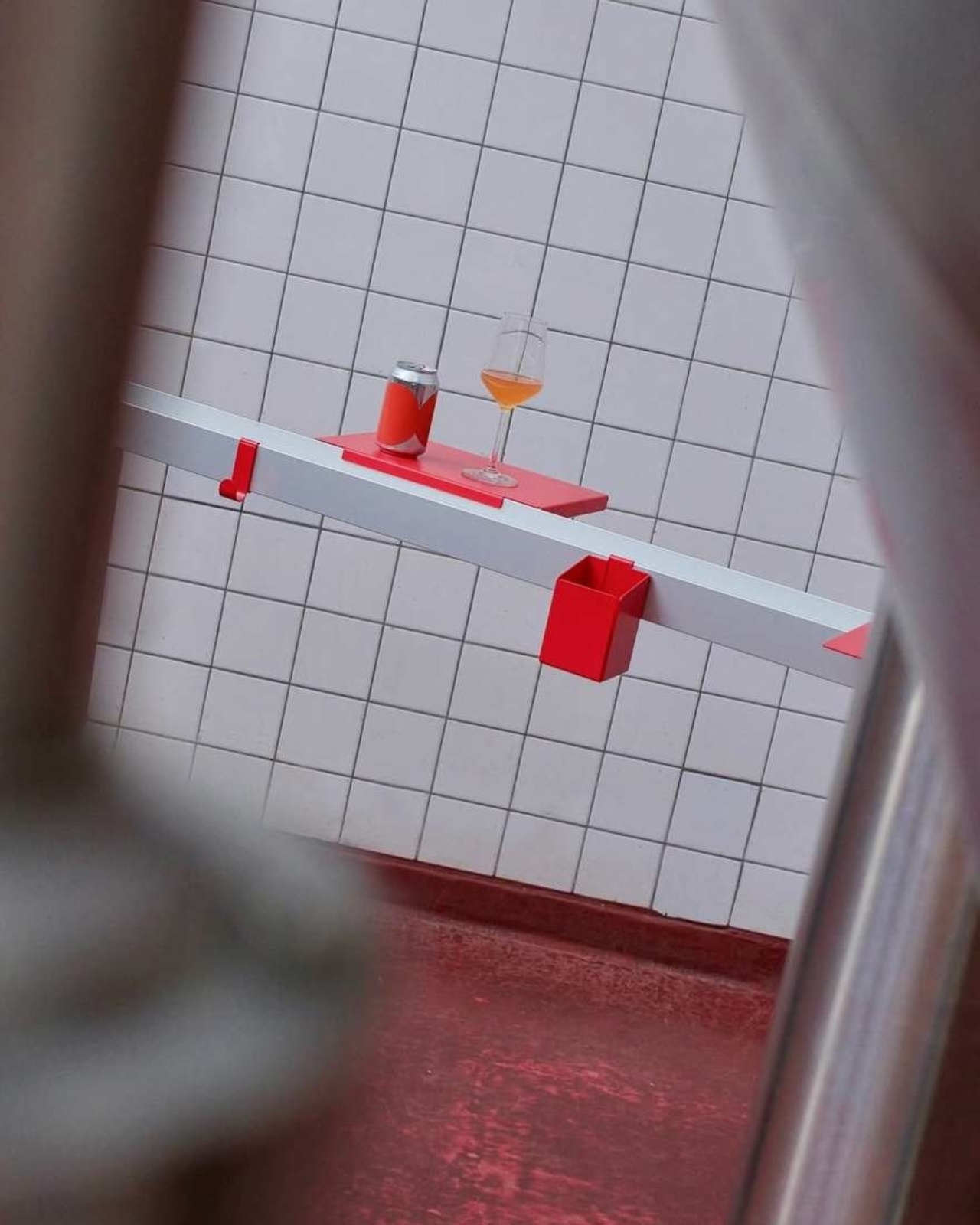
What speaks most loudly about Hang On is the restraint of it. Designers are often tempted to make their mark through addition, by piling on features or leaning into visual drama. Yang did the opposite. He removed, simplified, and reduced until what was left was just the logic of the thing. The name is both a literal description and, depending on how you read it, a small instruction to pay attention.
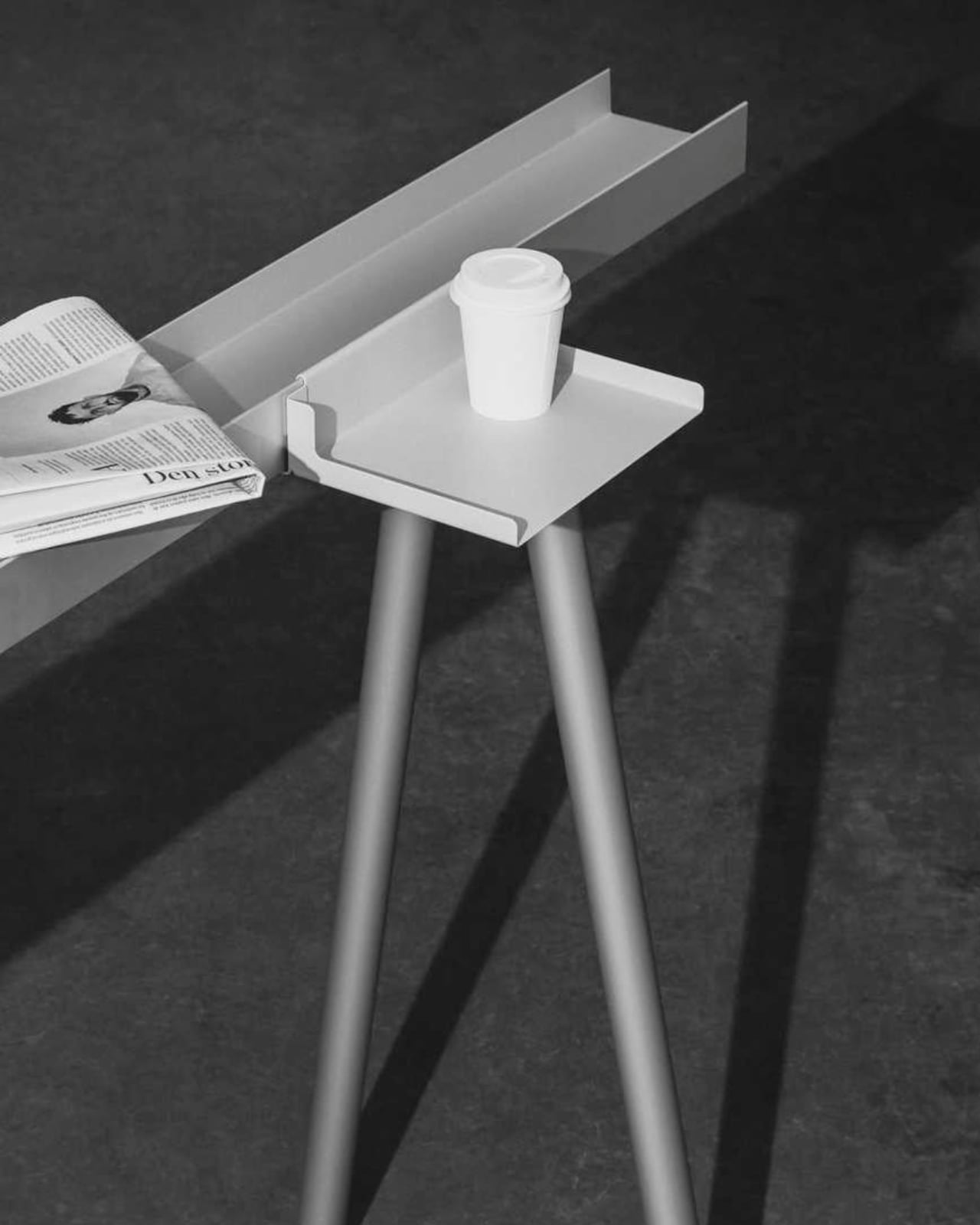
Public space design rarely gets the careful, considered treatment reserved for residential or high-end commercial interiors. We tolerate wobbly café tables and undersized airport counters because we have always tolerated them. Hang On is a quiet argument that we do not have to. That the furniture serving crowds of strangers every day might actually deserve the same level of thoughtful design as anything you would put in your own home. And that sometimes, reimagining something as fundamental as a table starts simply by asking why it was built that way in the first place.